Takachiho Shrine - Miyazaki, Japan
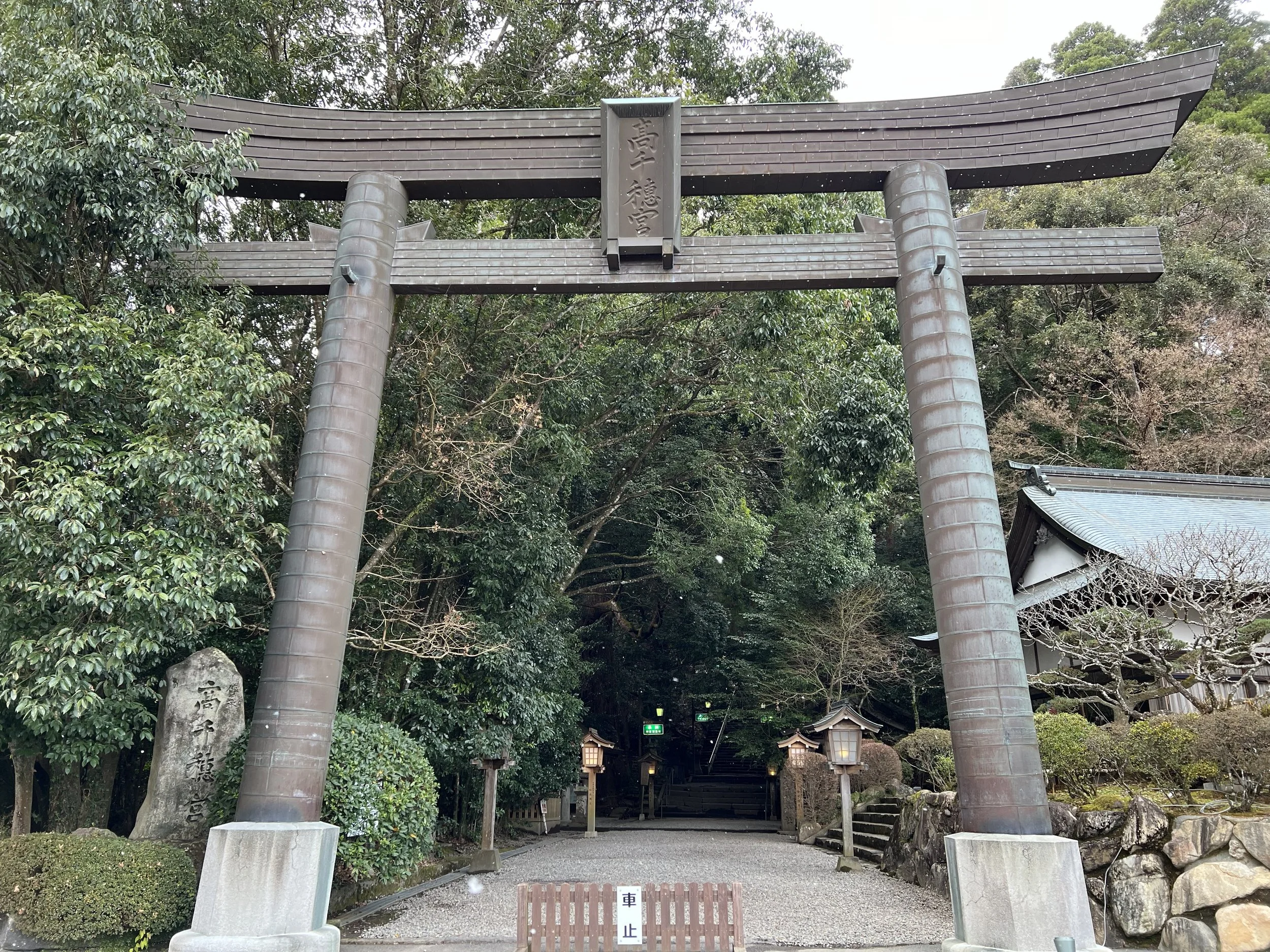
Aside from Takachiho Gorge, Takachiho Shrine is an essential stop when visiting the Takachiho area. It’s a place that deserves to be experienced twice—once during the day and again at night for the evening Kagura performance.
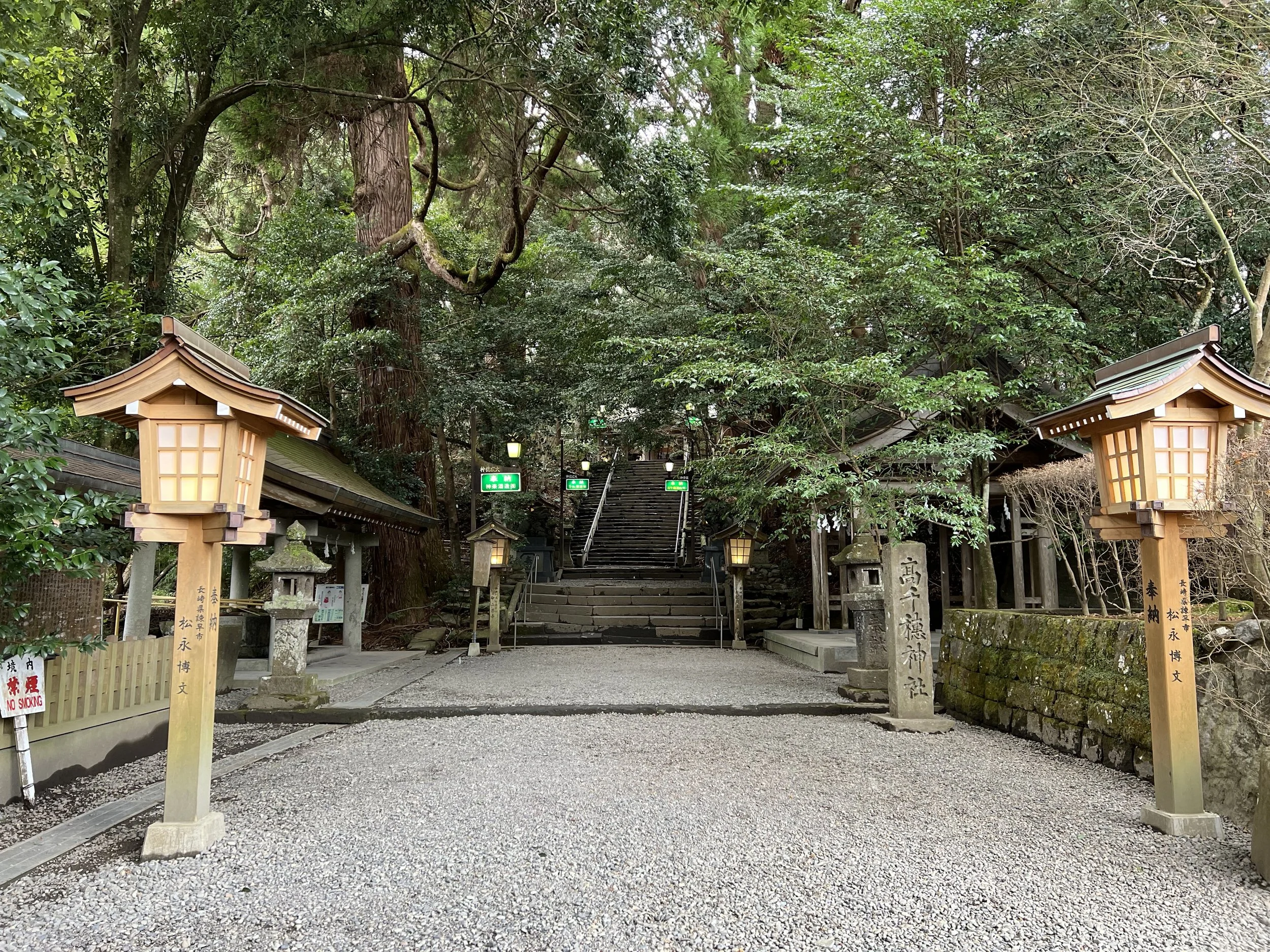
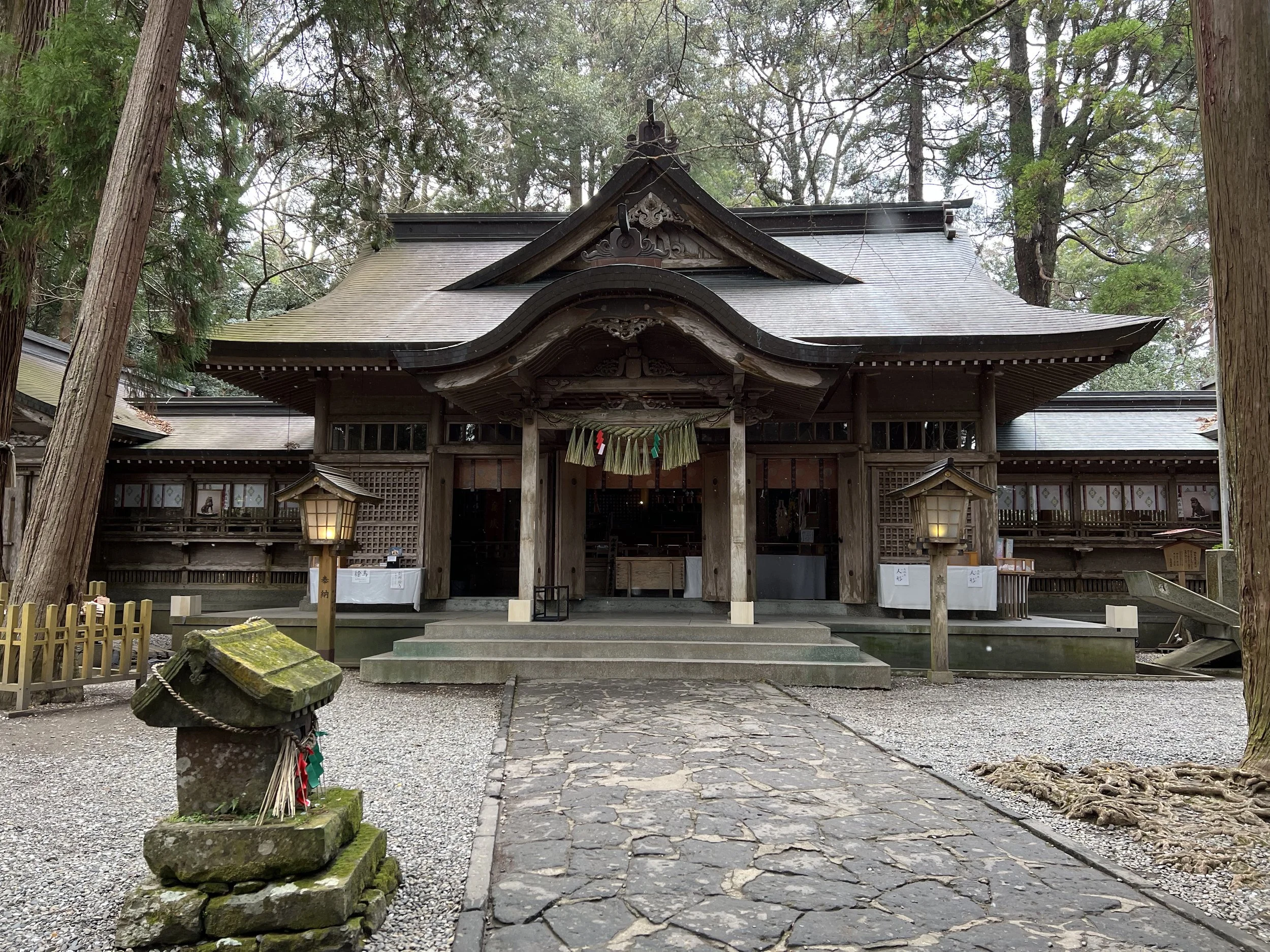
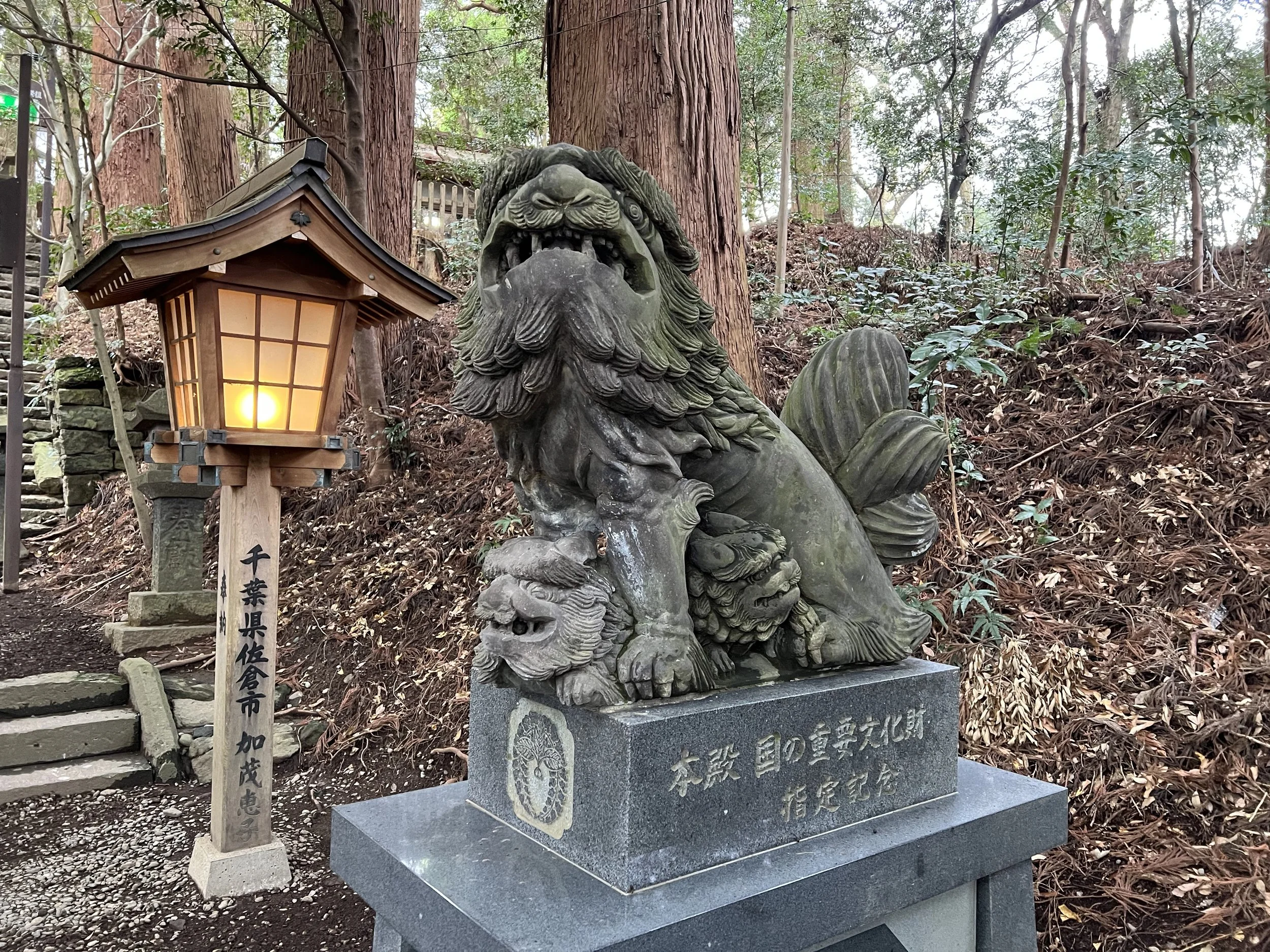
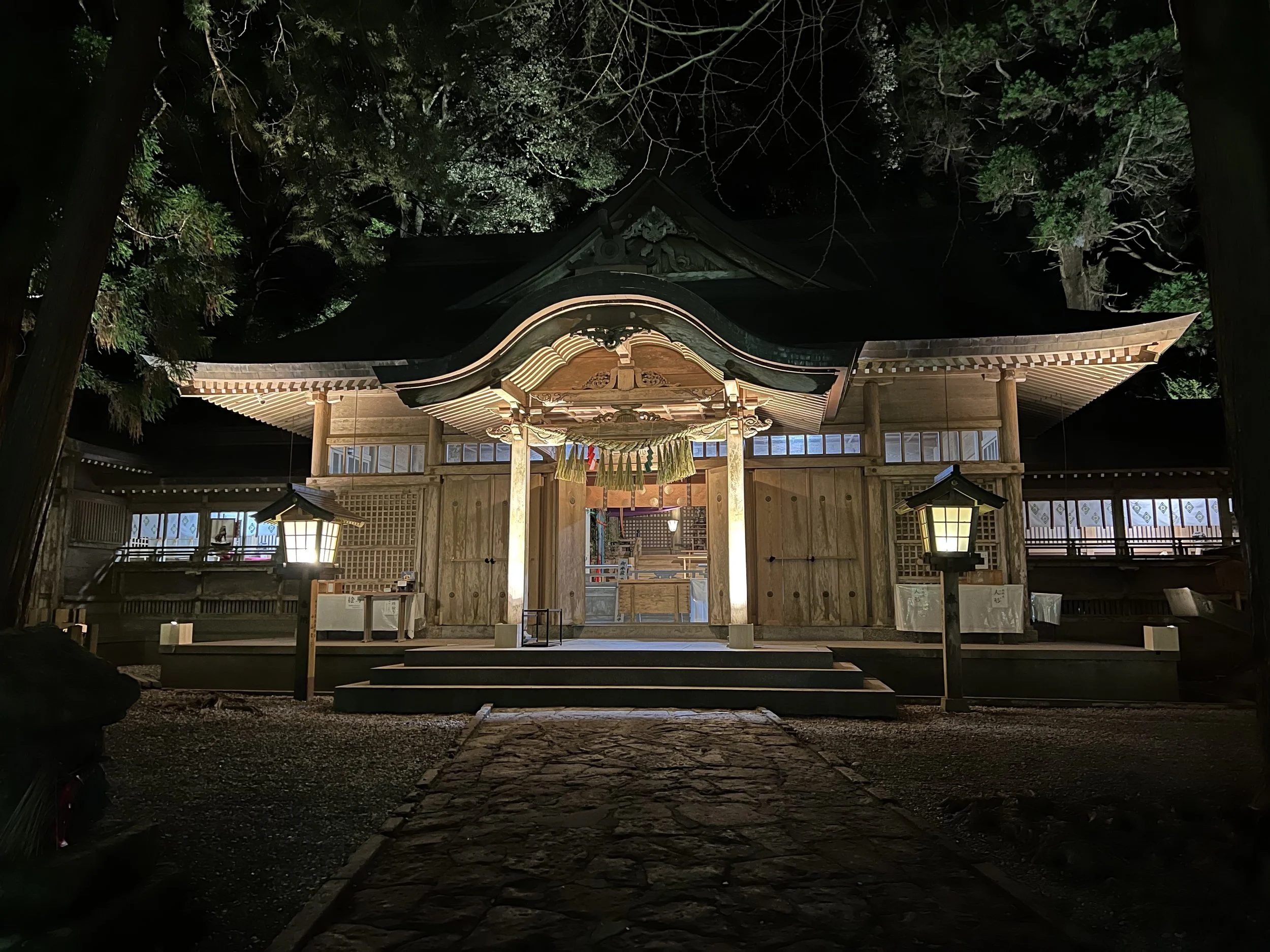
Takachiho Shrine is set within a quiet grove of towering cedar trees. Surrounded by dense trees, the shrine buildings blend naturally into the landscape, creating a calm and grounded atmosphere. Founded approximately 1,900 years ago, the shrine sits at the heart of Takachiho, a region deeply connected to some of the most important legends in Japanese mythology.
According to legend, Amaterasu, the Shinto sun goddess, became enraged by the disruptive behaviour of her brother, Susanoo, and withdrew into a cave, plunging the world into darkness. In response, the assembled gods and goddesses attempted various ways to lure her out. Their efforts succeeded only when the goddess Ame-no-Uzume performed a humorous and provocative dance, causing the other deities to erupt in laughter. Curious, Amaterasu emerged from the cave, restoring light to the world.
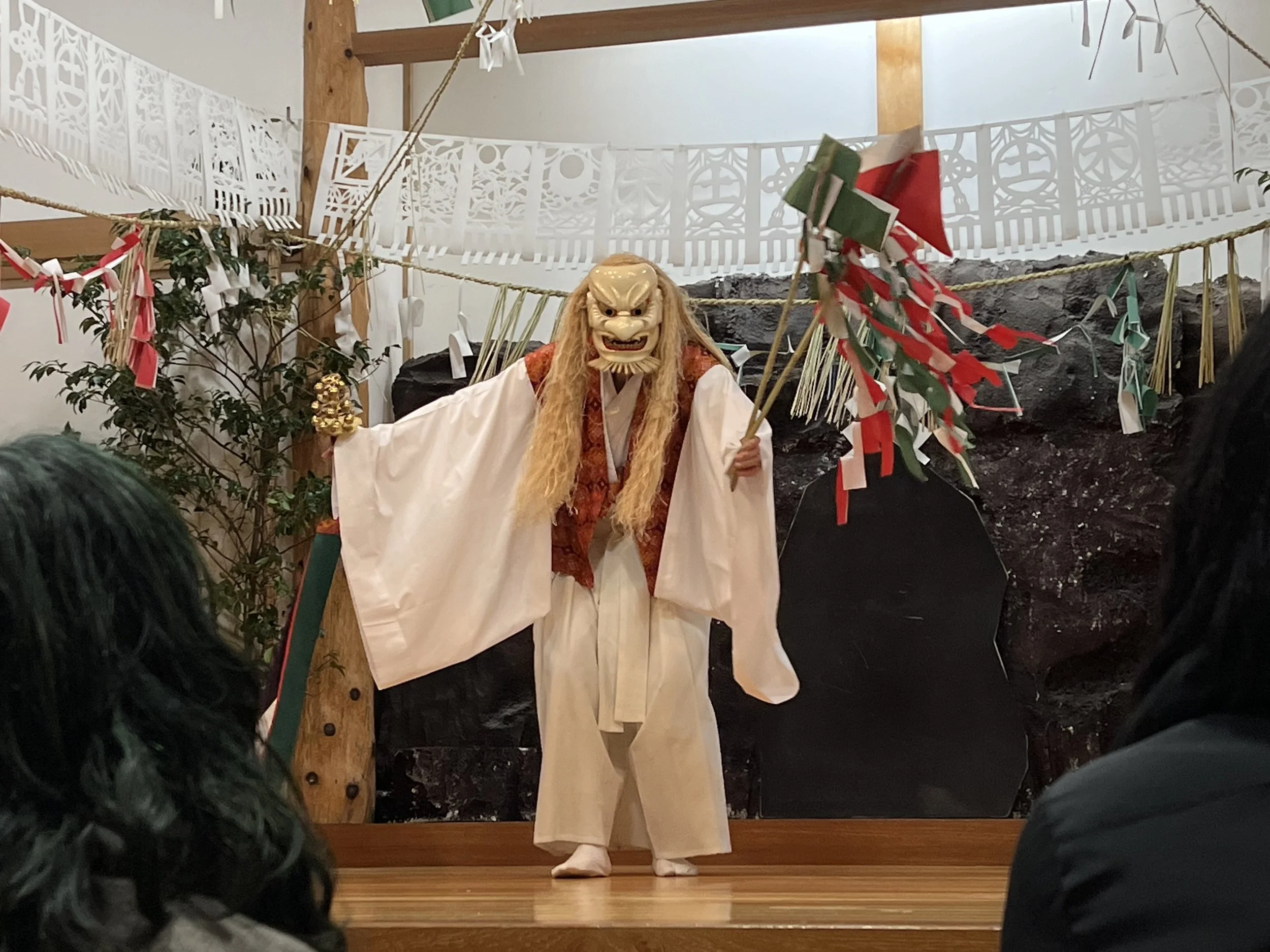
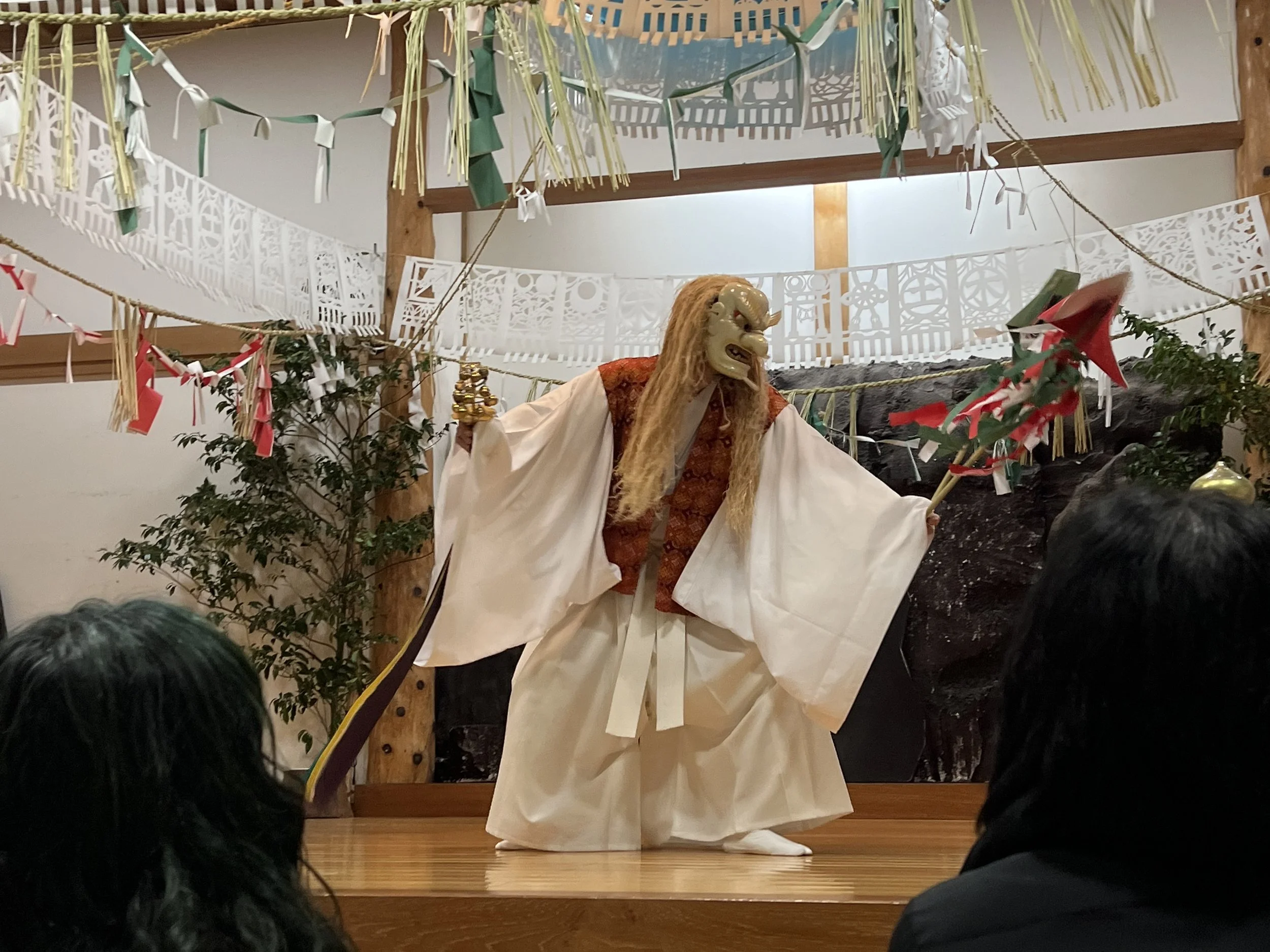
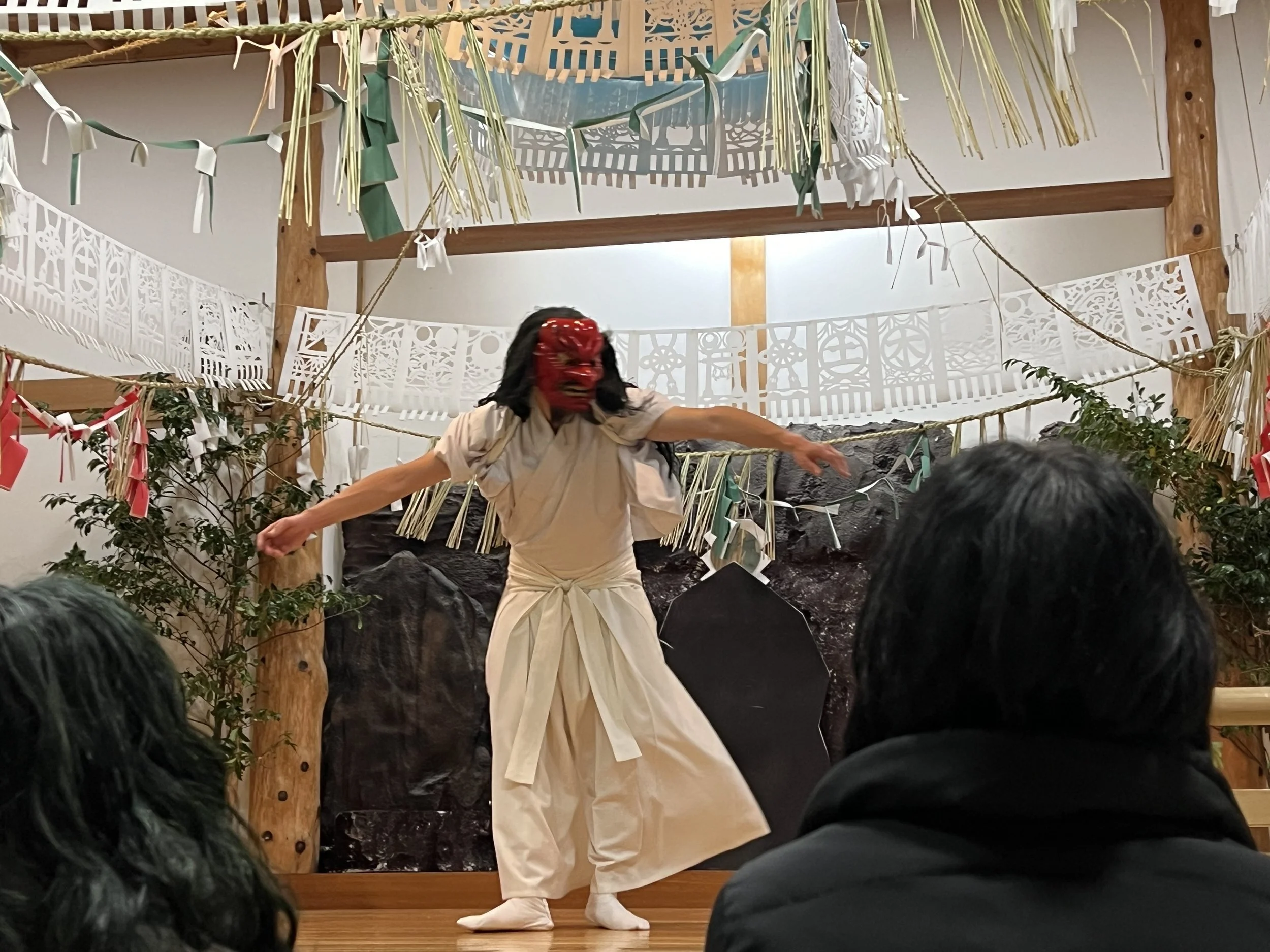
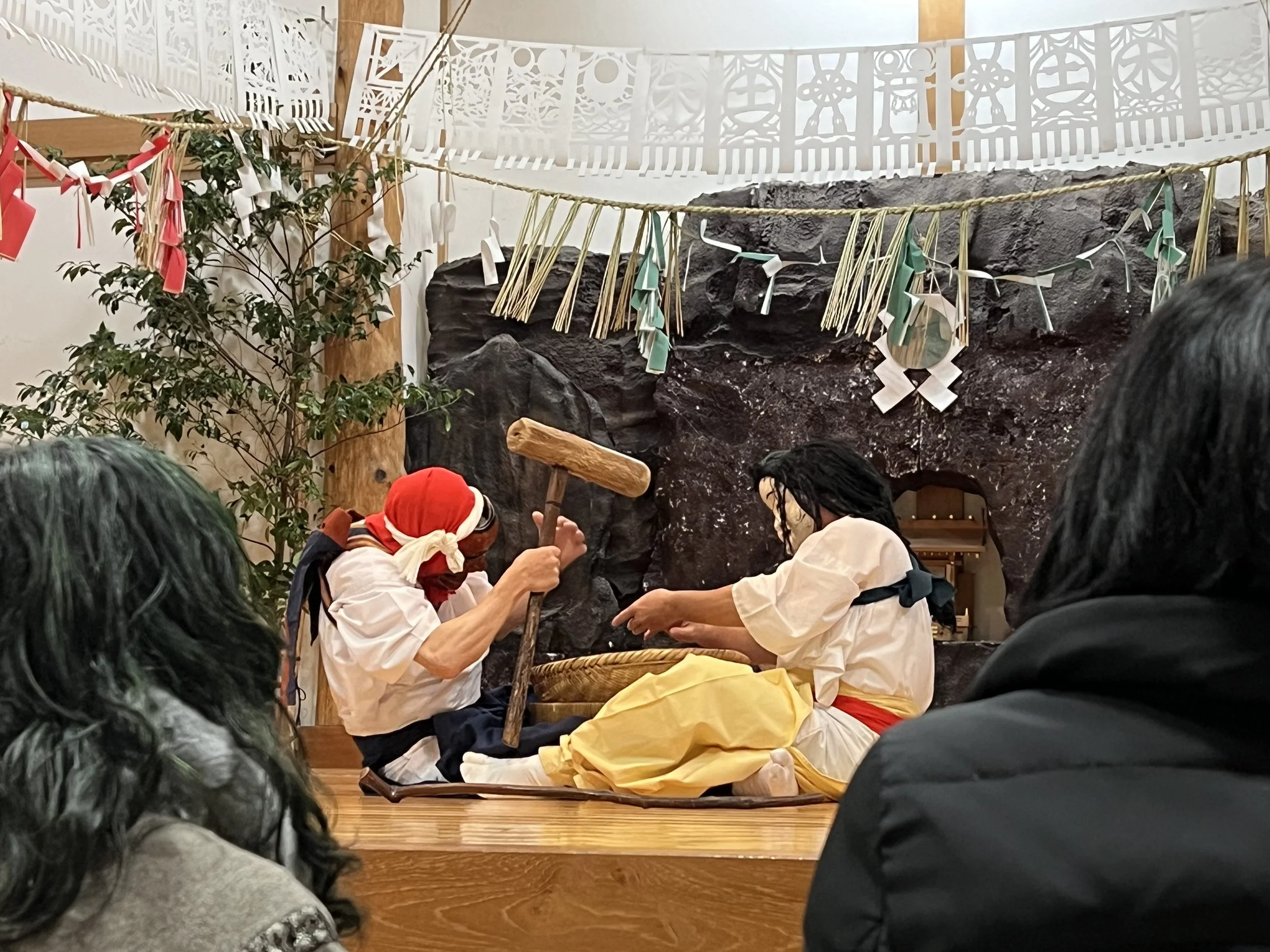
This myth is deeply interwoven with sacred sites across Japan. One such connection is Togakushi Shrine in Nagano, where it is believed that the stone door sealing the cave was thrown aside by the gods and landed there, forming the mountains of Togakushi. The dance performed by Ame-no-Uzume is preserved today in the form of Kagura, a sacred Shinto dance that continues to be performed at Takachiho Shrine. While the full Kagura cycle consists of 33 episodes, only a selection is performed each evening at the shrine.
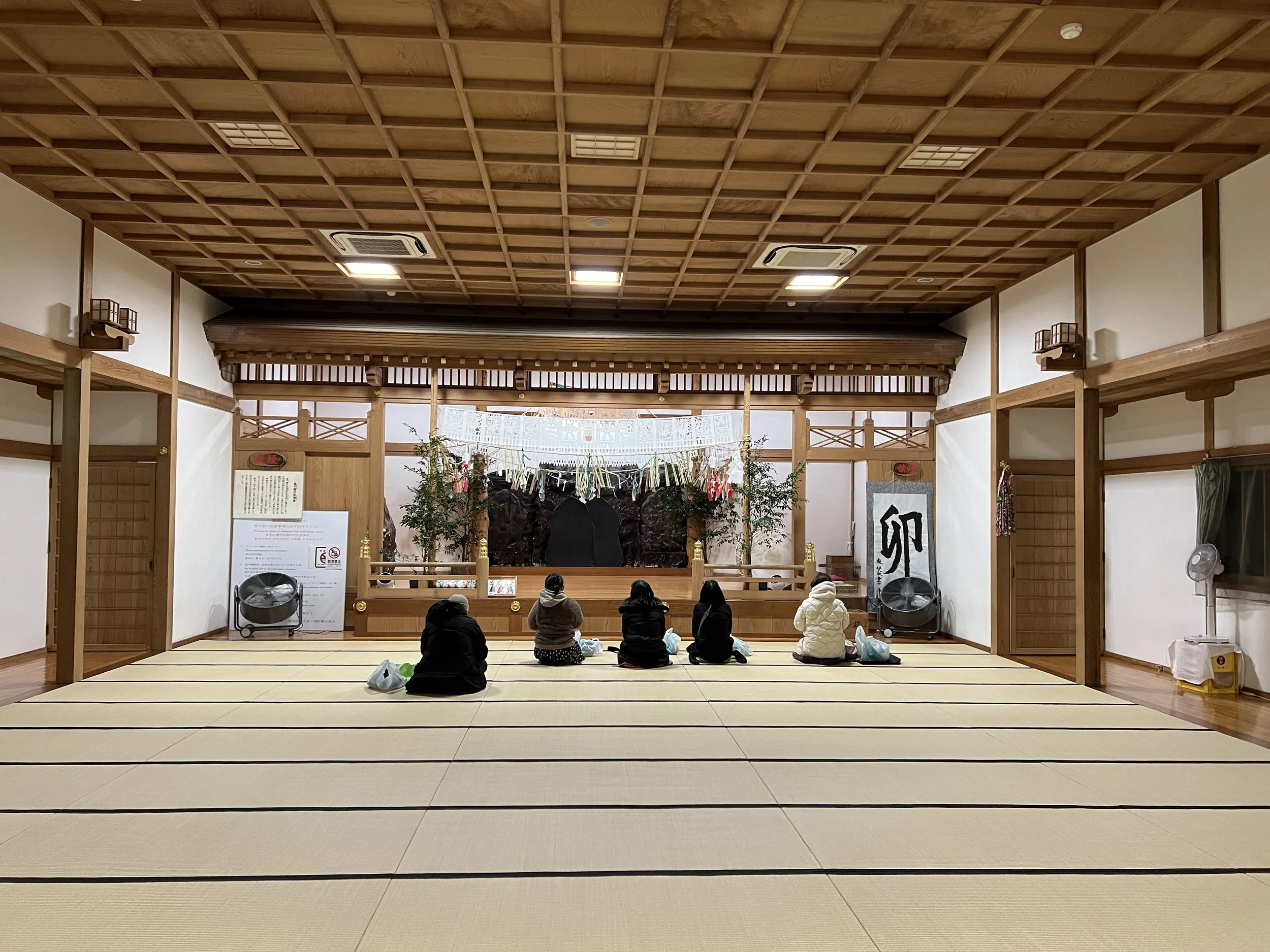
After dinner at my ryokan, I walked to Takachiho Shrine for the night performance. The ryokan provided seat cushions for guests attending Kagura, which I was grateful for later. I had purchased my ticket in advance through the Takachiho tourism website, and upon arrival, simply showed the QR code on my phone. Arriving early allowed me to secure a seat close to the stage—an excellent vantage point for the performance.
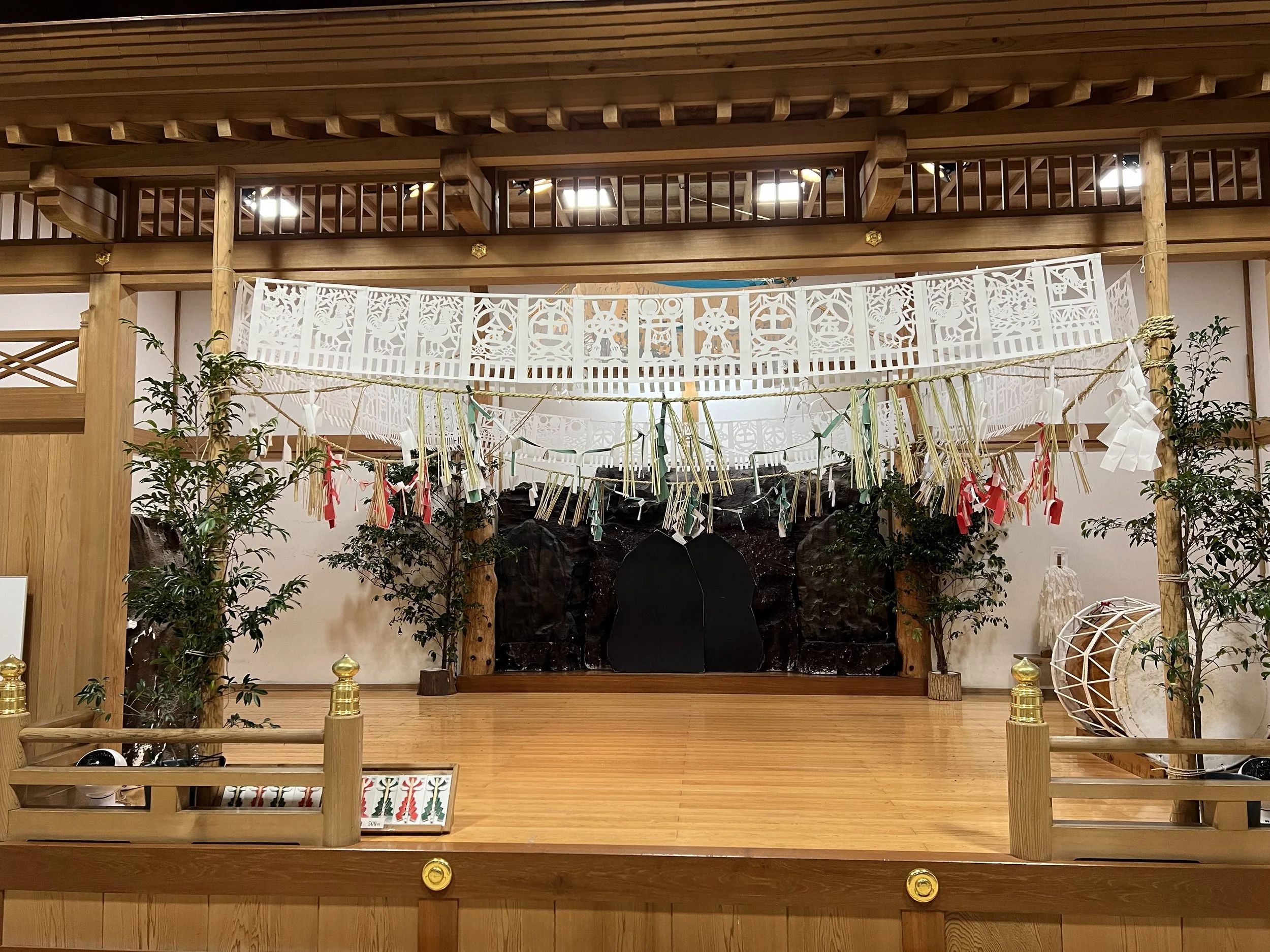
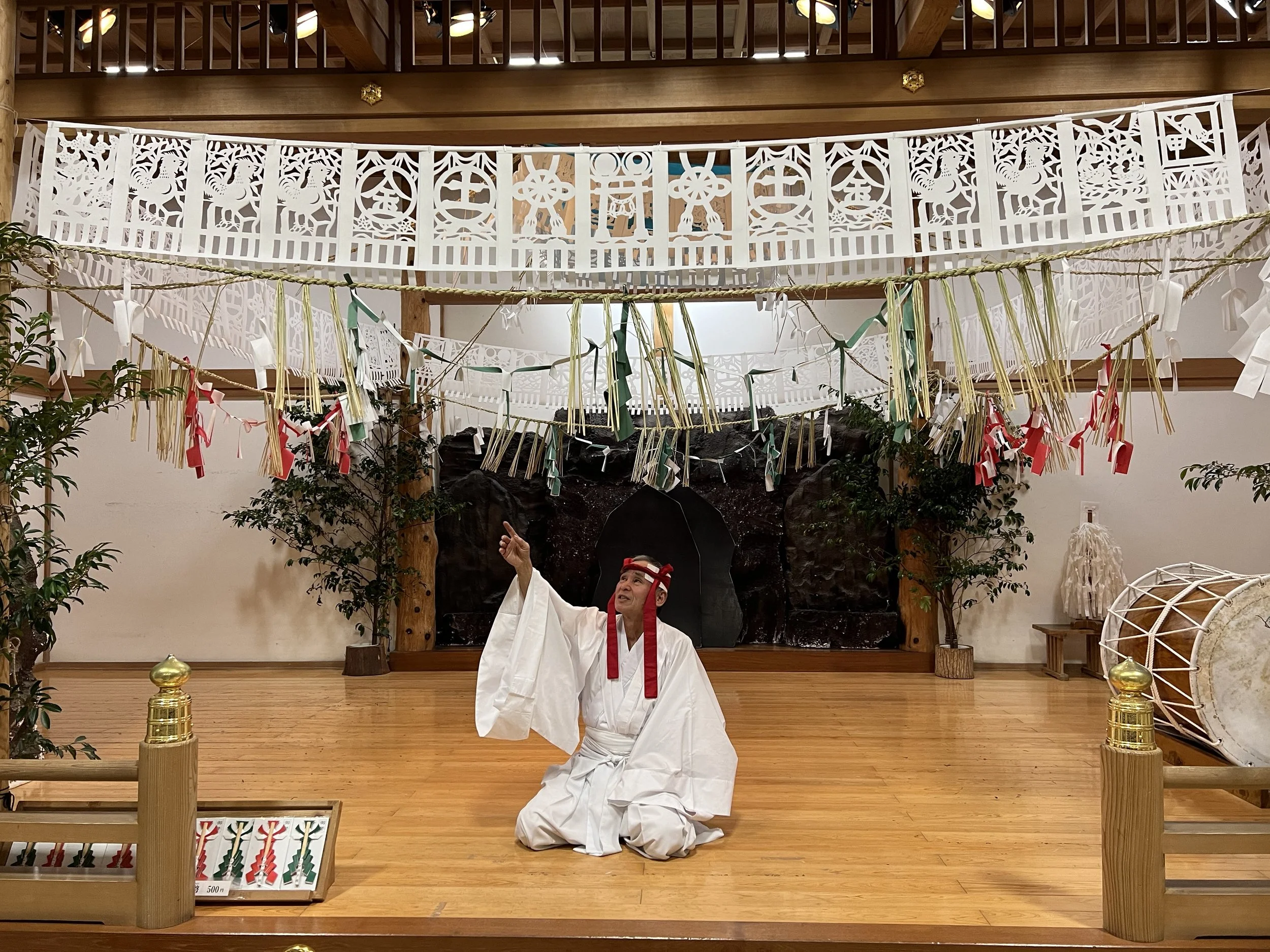
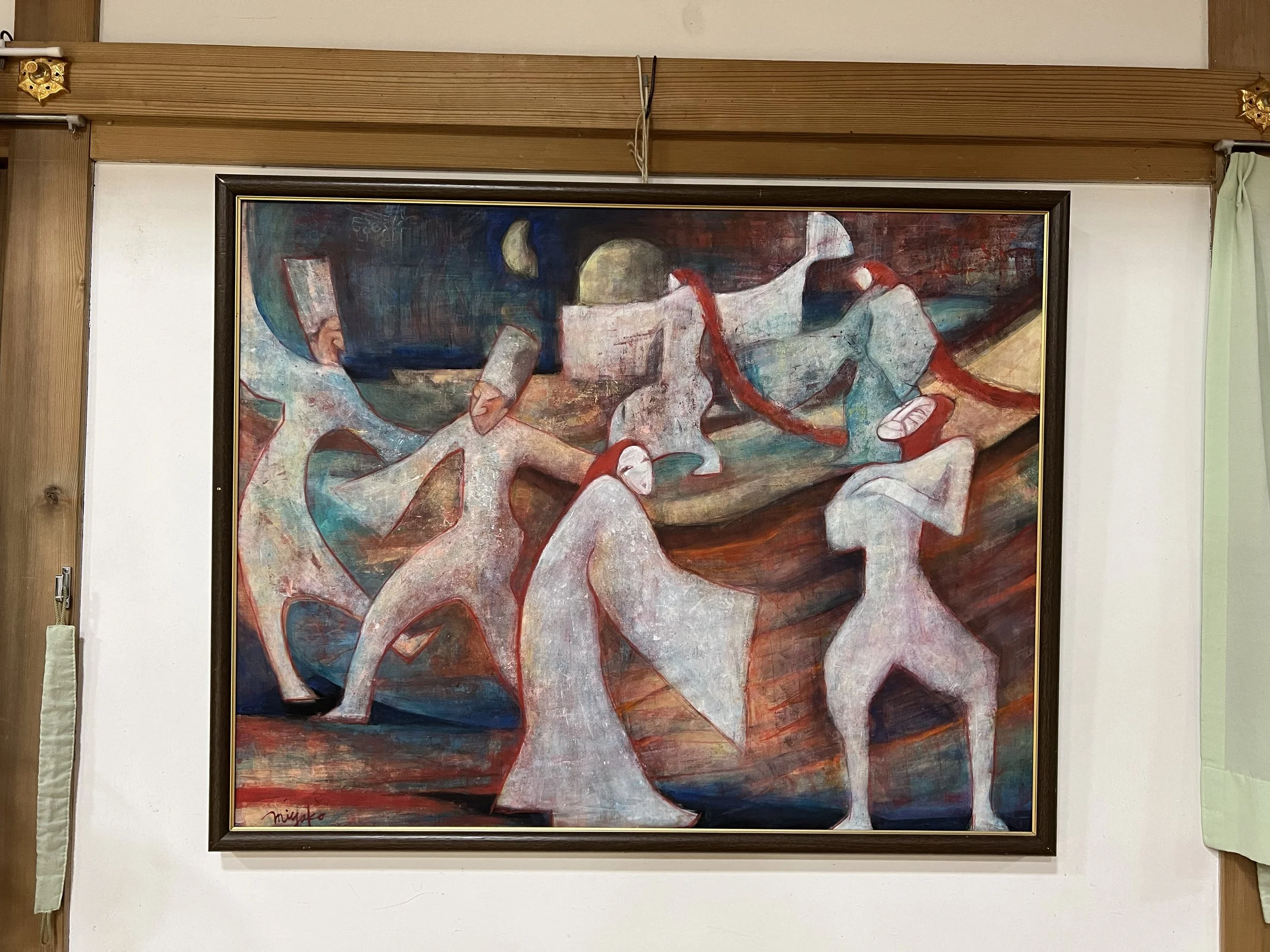
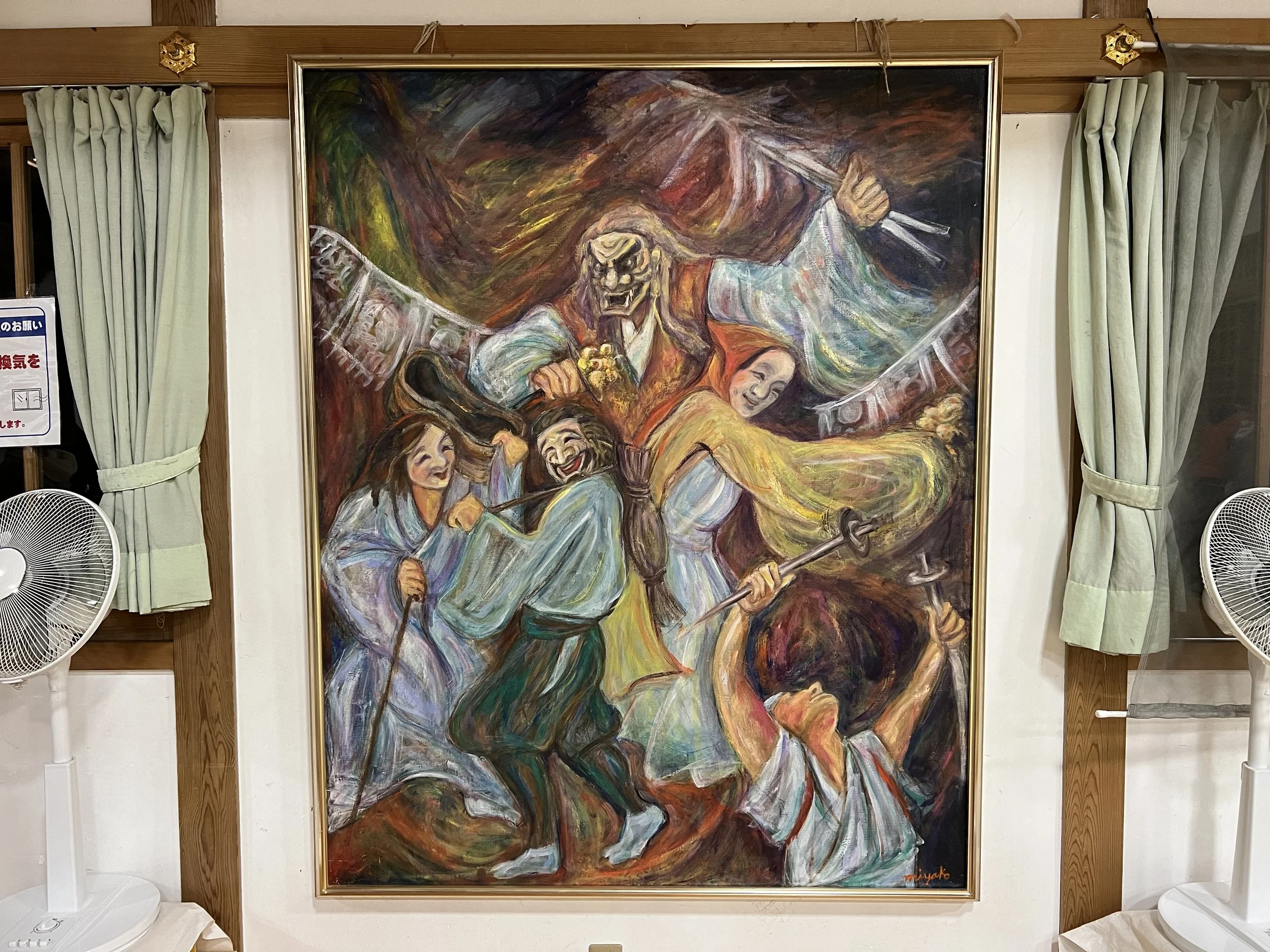
Before the hall filled, I took some time to photograph the stage, the performance space, and the artwork displayed around the hall. I also read through the brochure provided, which was available in English and offered helpful context for the stories being performed that evening. When the Kagura began, the presentation was understated yet expressive, conveying the narrative clearly through movement, music, and ritual gestures. I found myself fully absorbed, occasionally glancing down at the brochure to follow the story more closely.
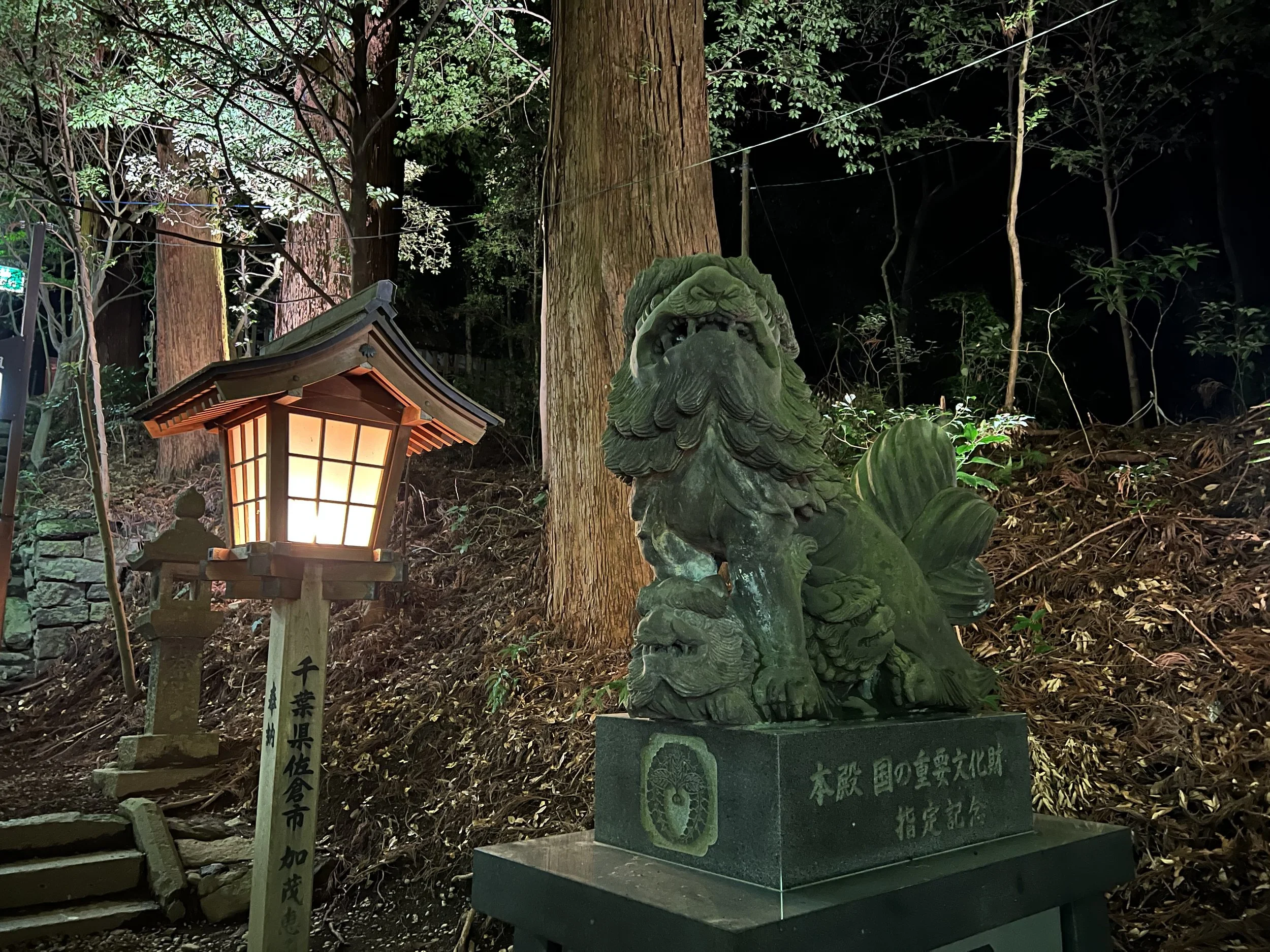
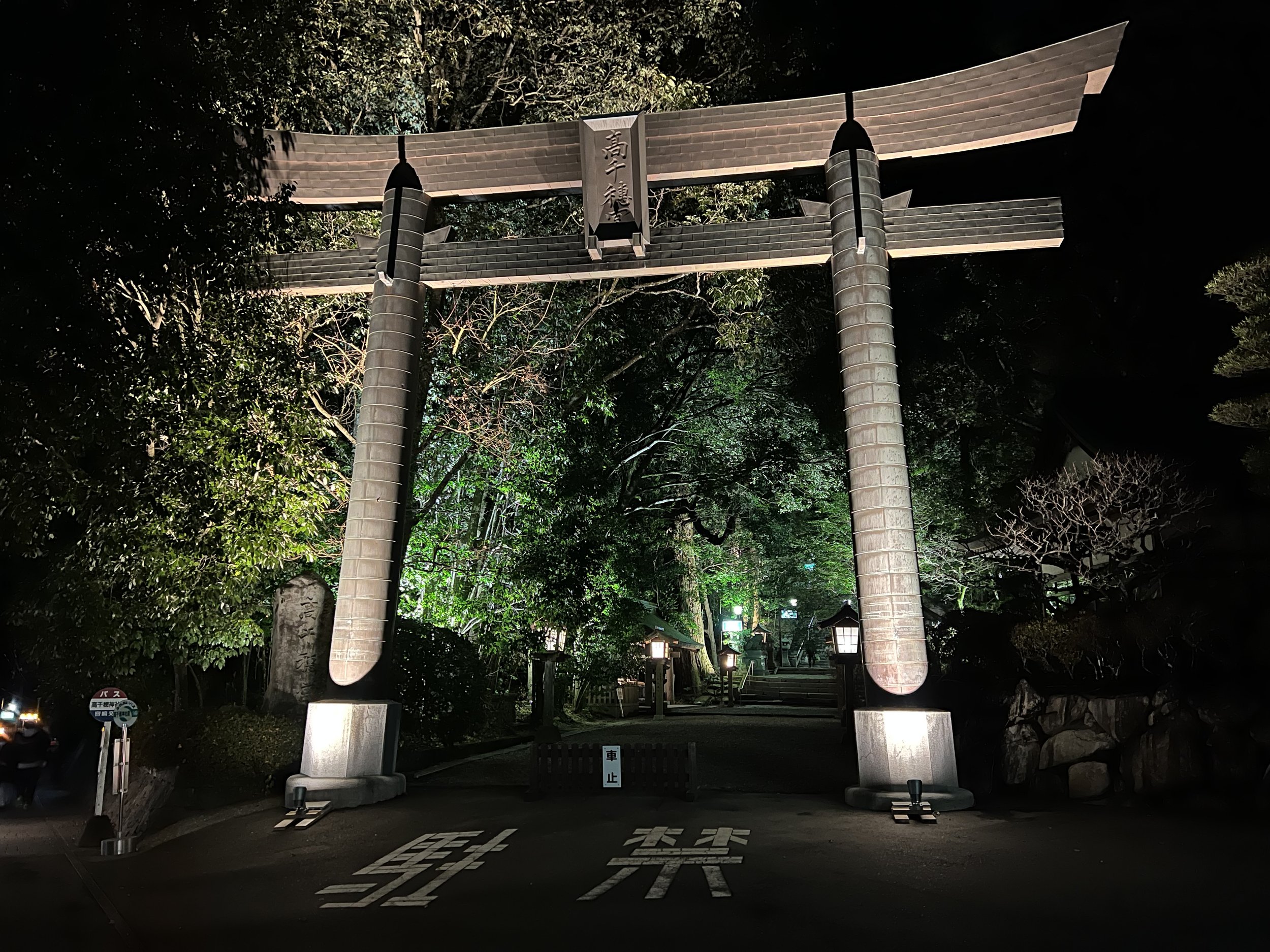
The performance lasted about an hour and time flew by. Afterward, I wandered through the shrine grounds once more. Experiencing the space at night felt entirely different from my daytime visit—quieter, more intimate, and deeply atmospheric. Staying overnight in Takachiho allowed me to experience this side of the shrine, and missing it would have meant missing an essential part of the area’s cultural and spiritual identity.
History & Background
Takachiho Shrine (高千穂神社) is one of the most significant spiritual sites in Miyazaki Prefecture and plays a central role in Japanese mythology. The surrounding region is traditionally considered the setting for the myth of Amaterasu’s retreat into the cave, making Takachiho a focal point for Shinto belief and ritual.
Kagura performances at the shrine serve both as entertainment and as religious offerings, preserving ancient myths through ceremonial dance and music. The nightly performances provide visitors with a rare opportunity to witness this tradition in an accessible yet authentic setting.
Getting There
Takachiho Shrine is located in central Takachiho town and is accessible on foot from many local accommodations. From Nobeoka Station, buses operate to the Takachiho Bus Centre, which serves as the main transportation hub for the area. From there, the shrine is a short walk away. Bus services are limited, particularly in the evening, making overnight stays a practical option for those attending the nightly Kagura performance.
Route Overview
Distance: 1 km out & back (Ryokan Yamatoya)
Total elevation gain: 5 m
Duration: 10 min
Difficulty: Easy
Cost Breakdown
Ticket: Kagura Performance — ¥1,000