Michinoku Coastal Trail - Same Station to Okuki Station - Aomori, Japan
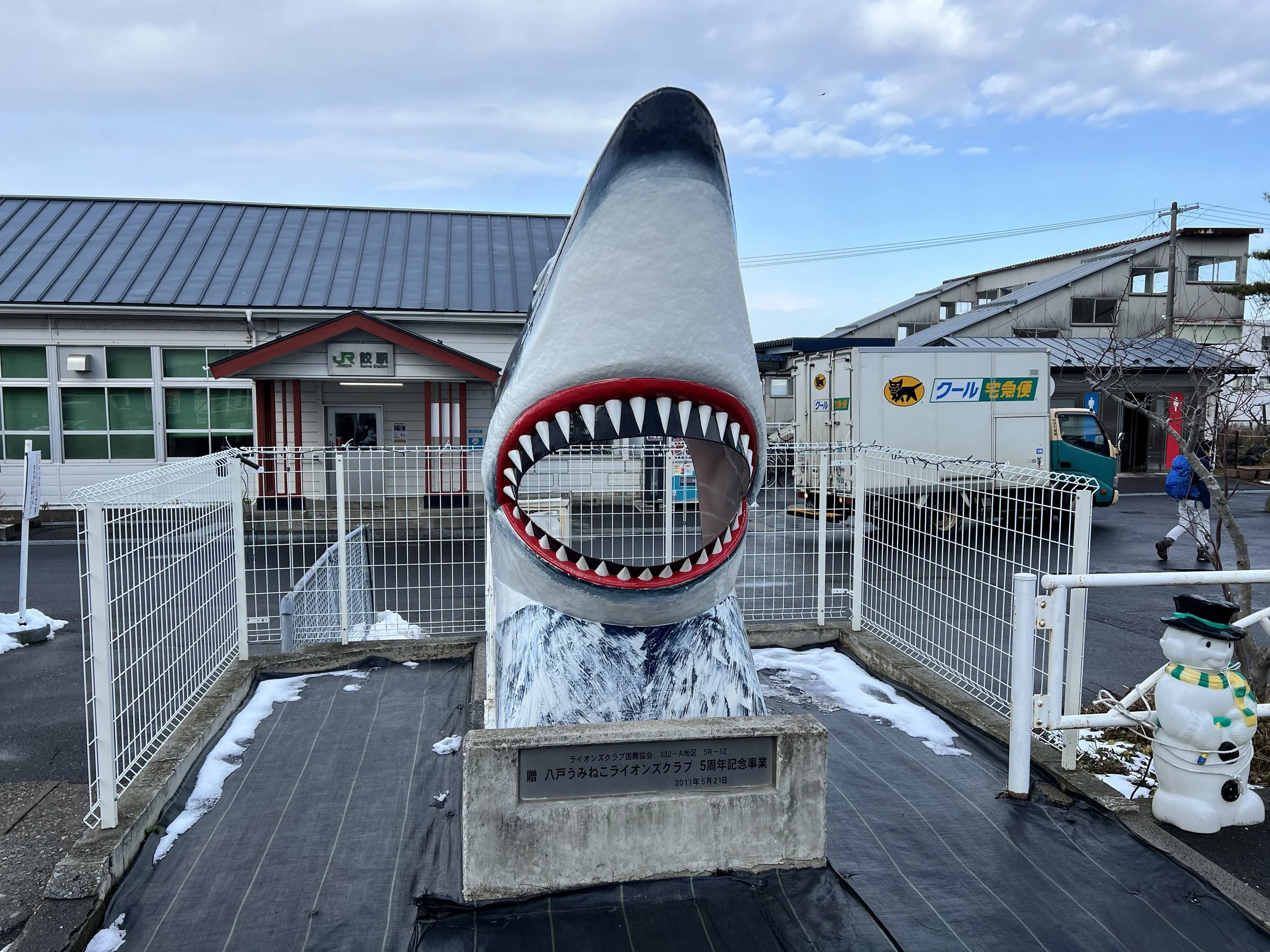
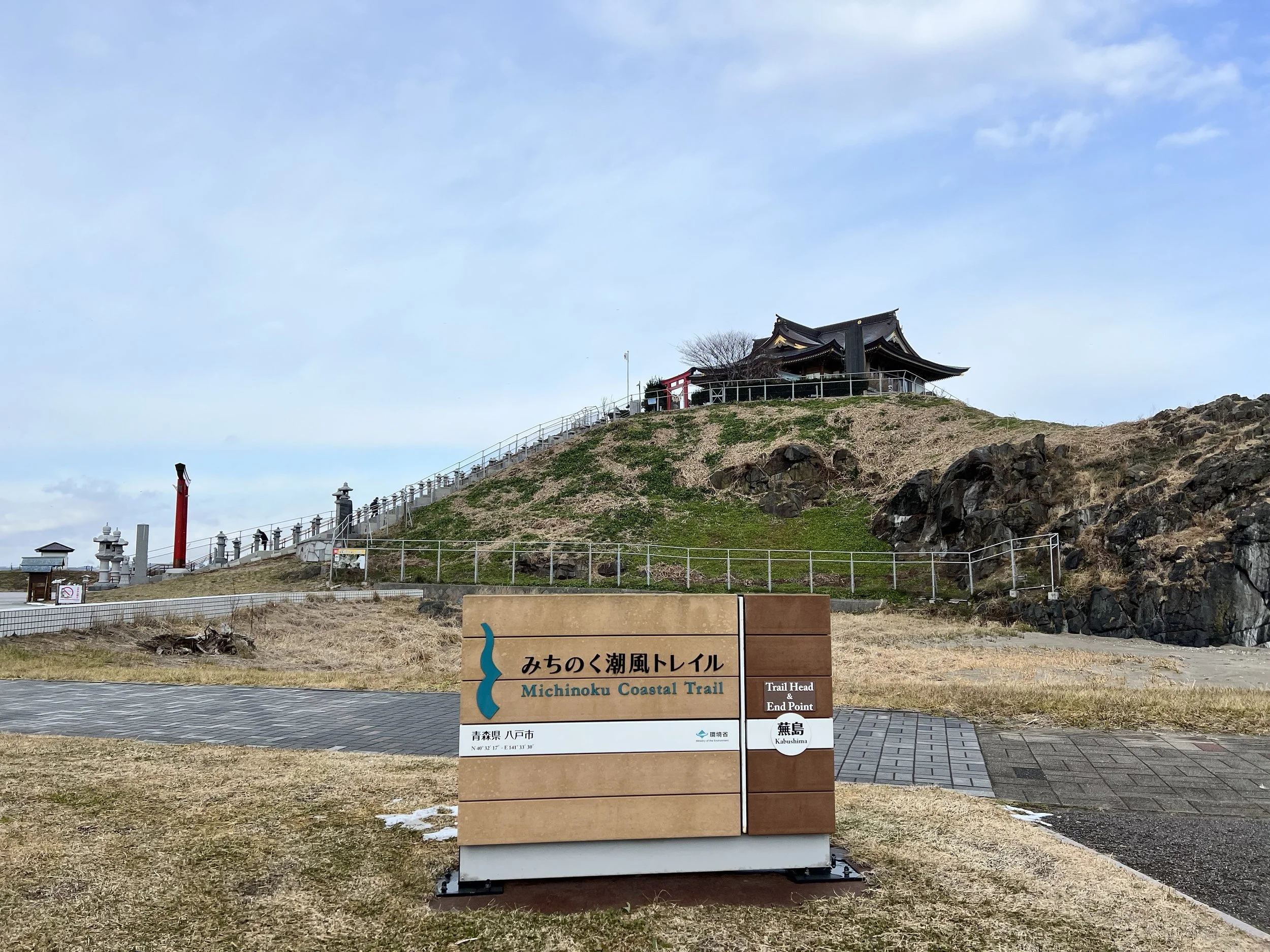
I was excited to start my journey today. With snow still covering the streets, I hoped the trail wouldn’t be too icy. I left my hotel early in the morning and took the train toward Same Station—a short 24-minute ride from Hachinohe. Same Station turned out to be one of the coolest I’ve visited. The name “Same” means “shark” in Japanese, and right outside the station stood a massive shark head sculpture. Naturally, I had to stop for a few photos before setting off toward Kabushima Shrine, the official starting point of the Michinoku Coastal Trail.
Kabushima Shrine was unique in more ways than one. It’s not just a spiritual landmark but also a breeding ground for black-tailed gulls, which gather here each year starting around February. Next to the shrine is an information center with displays about local wildlife and the surrounding area. After looking around, I officially began my hike.
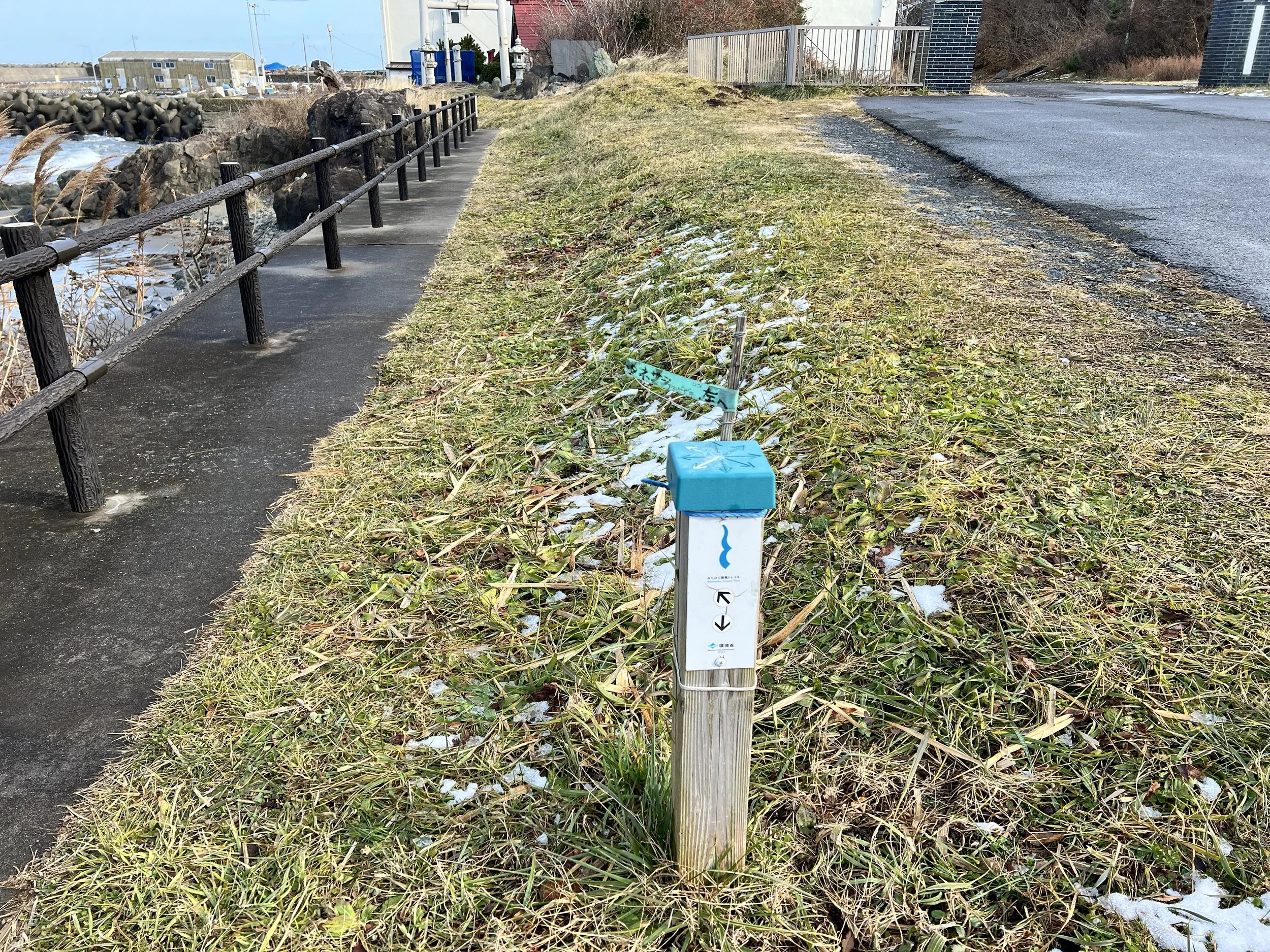
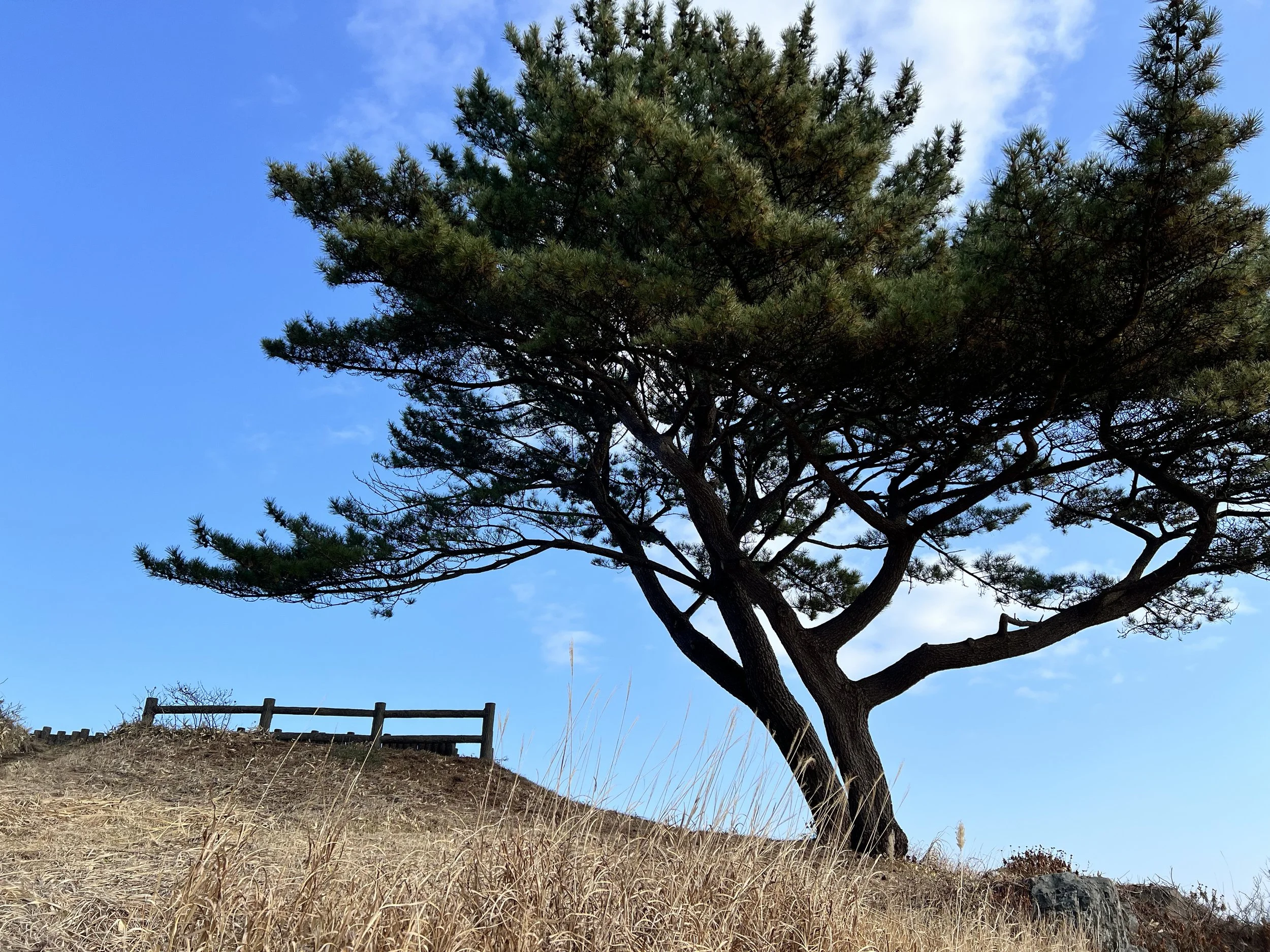
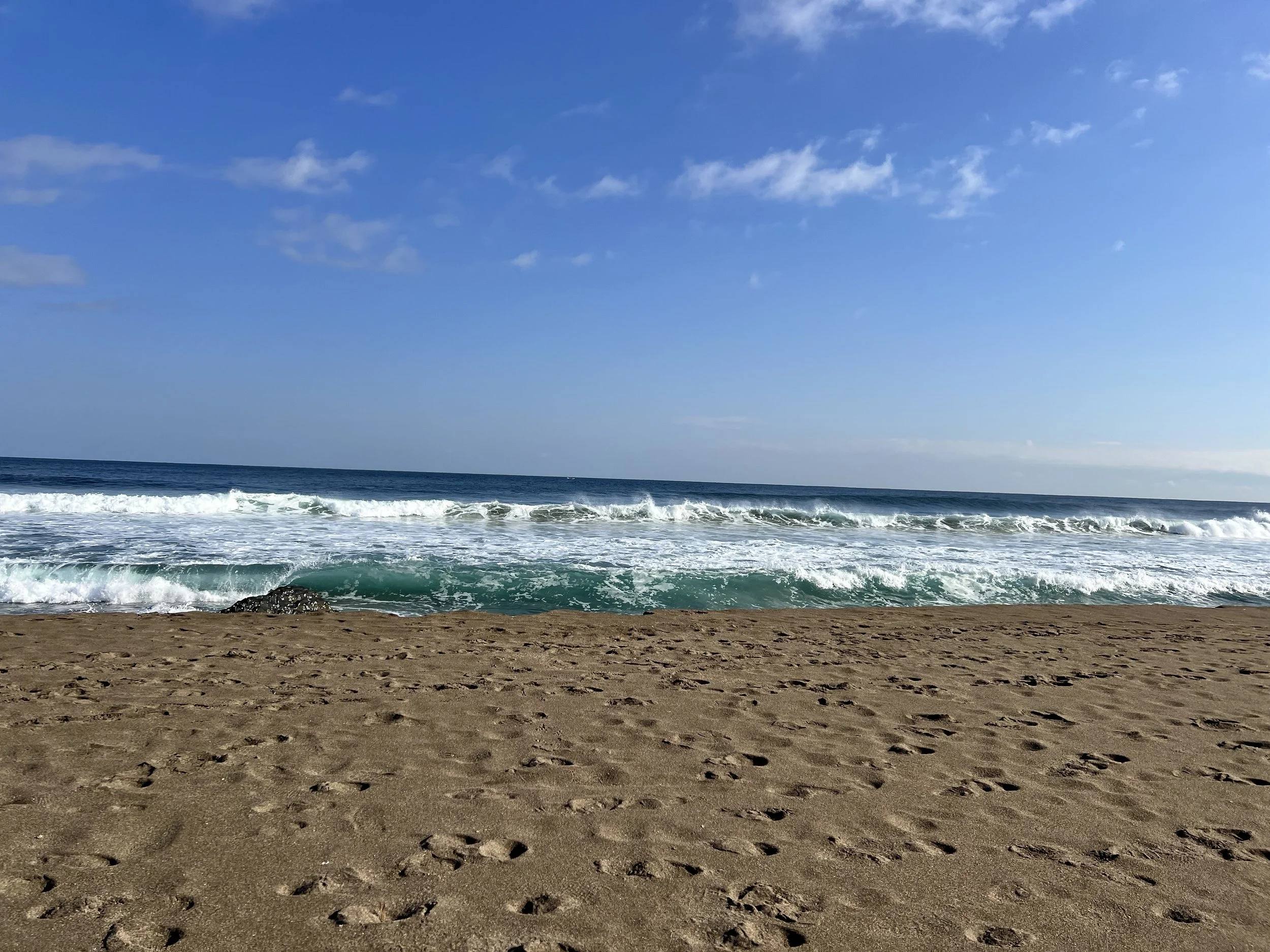
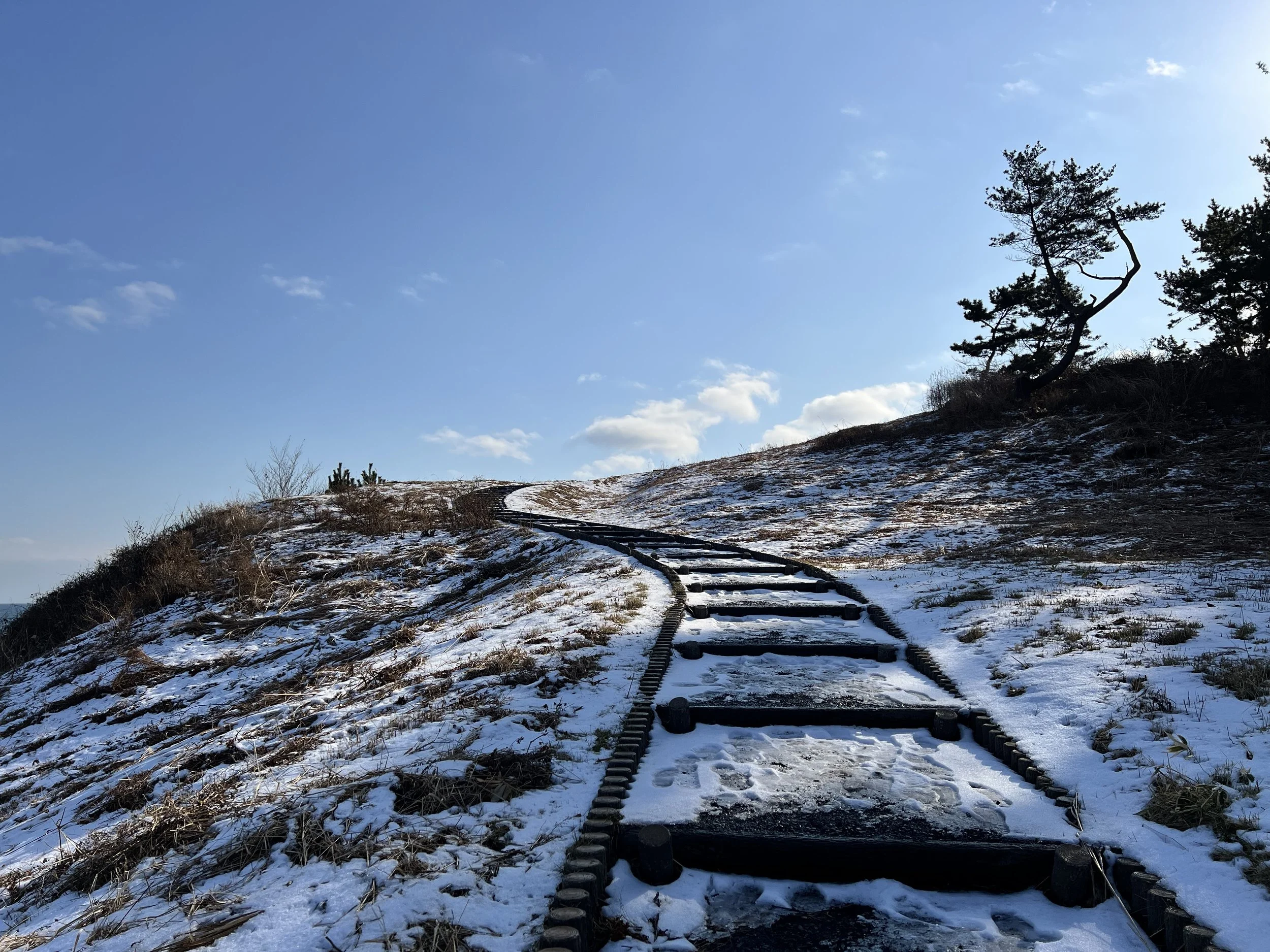
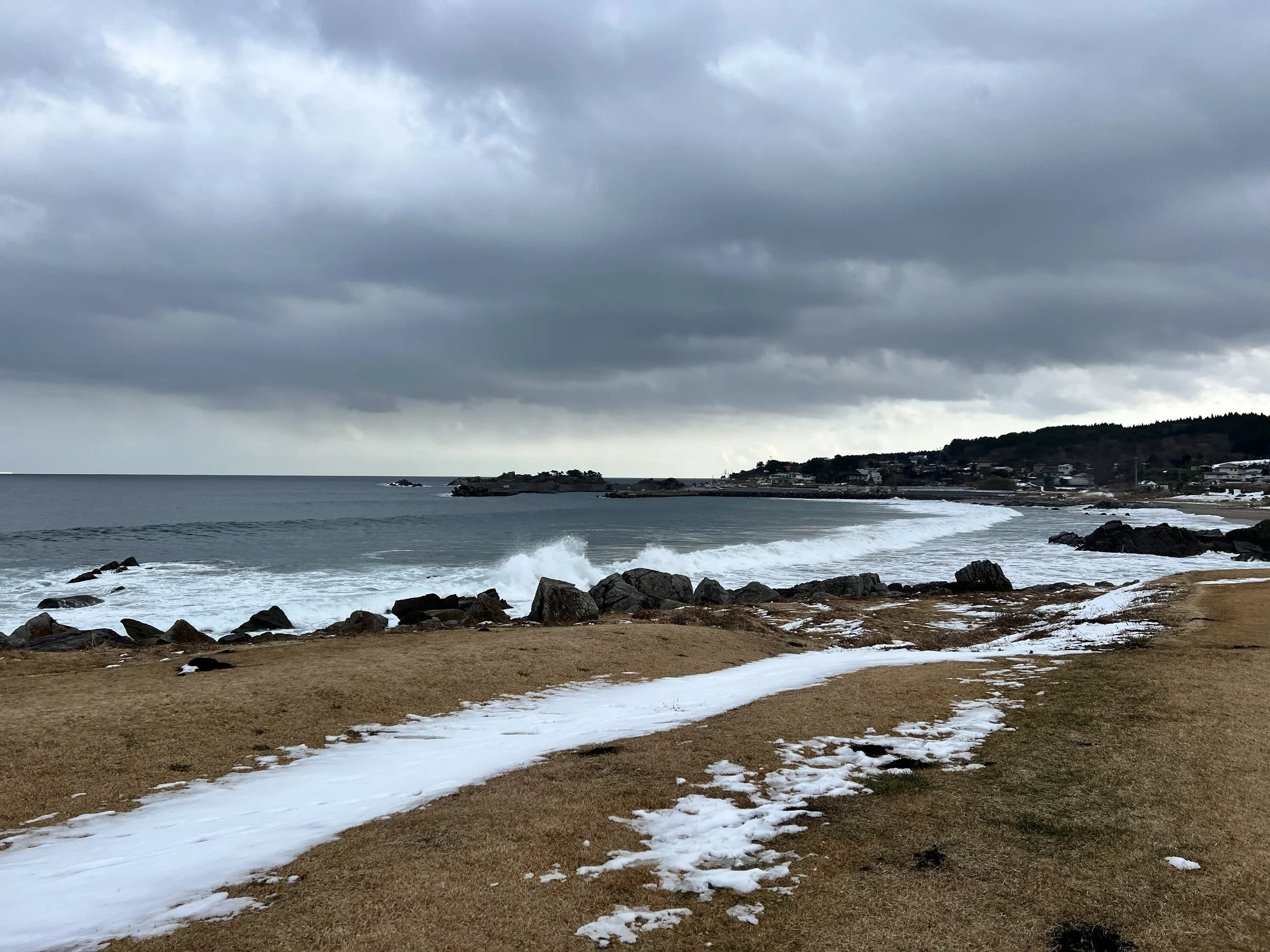
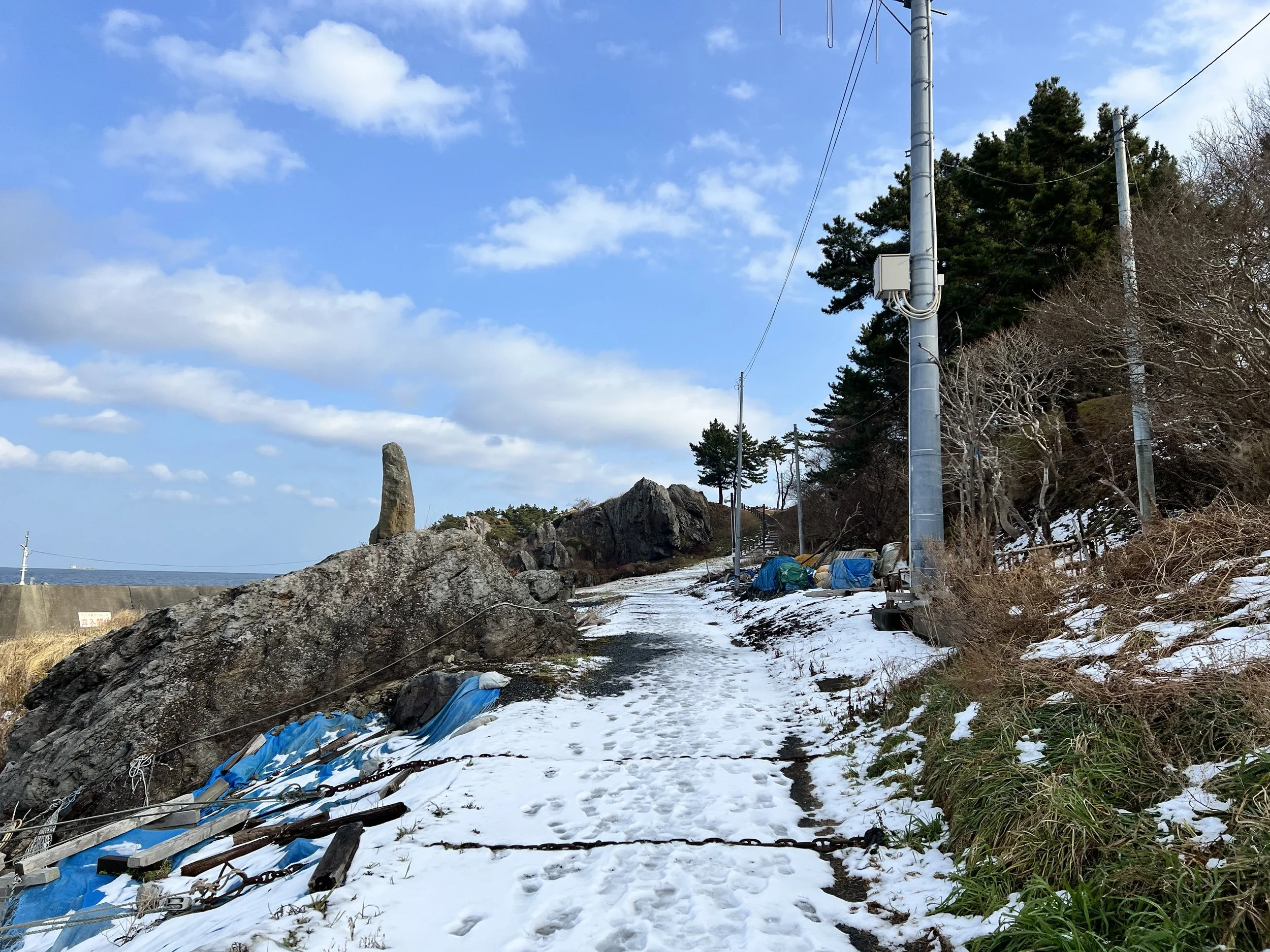
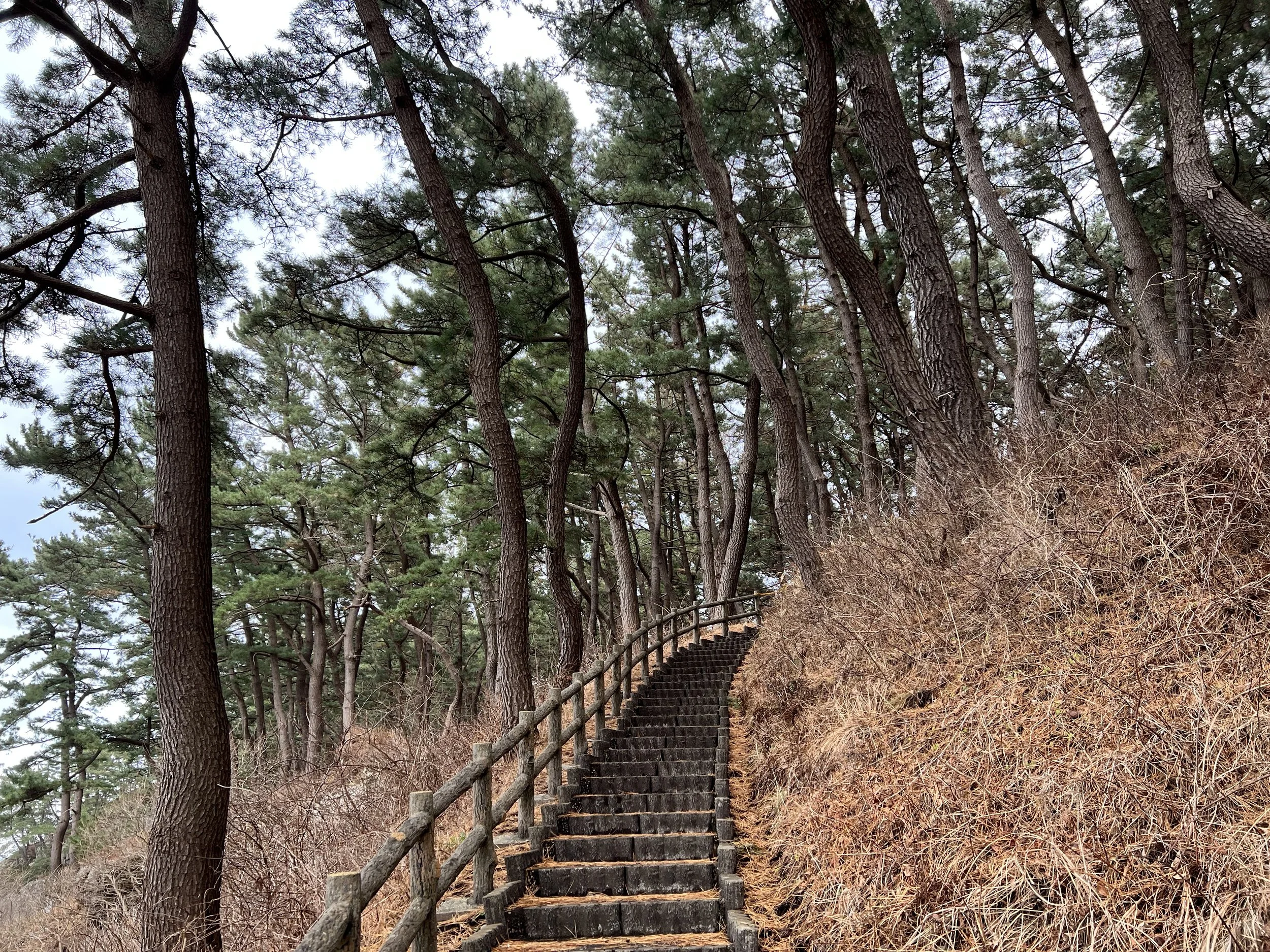
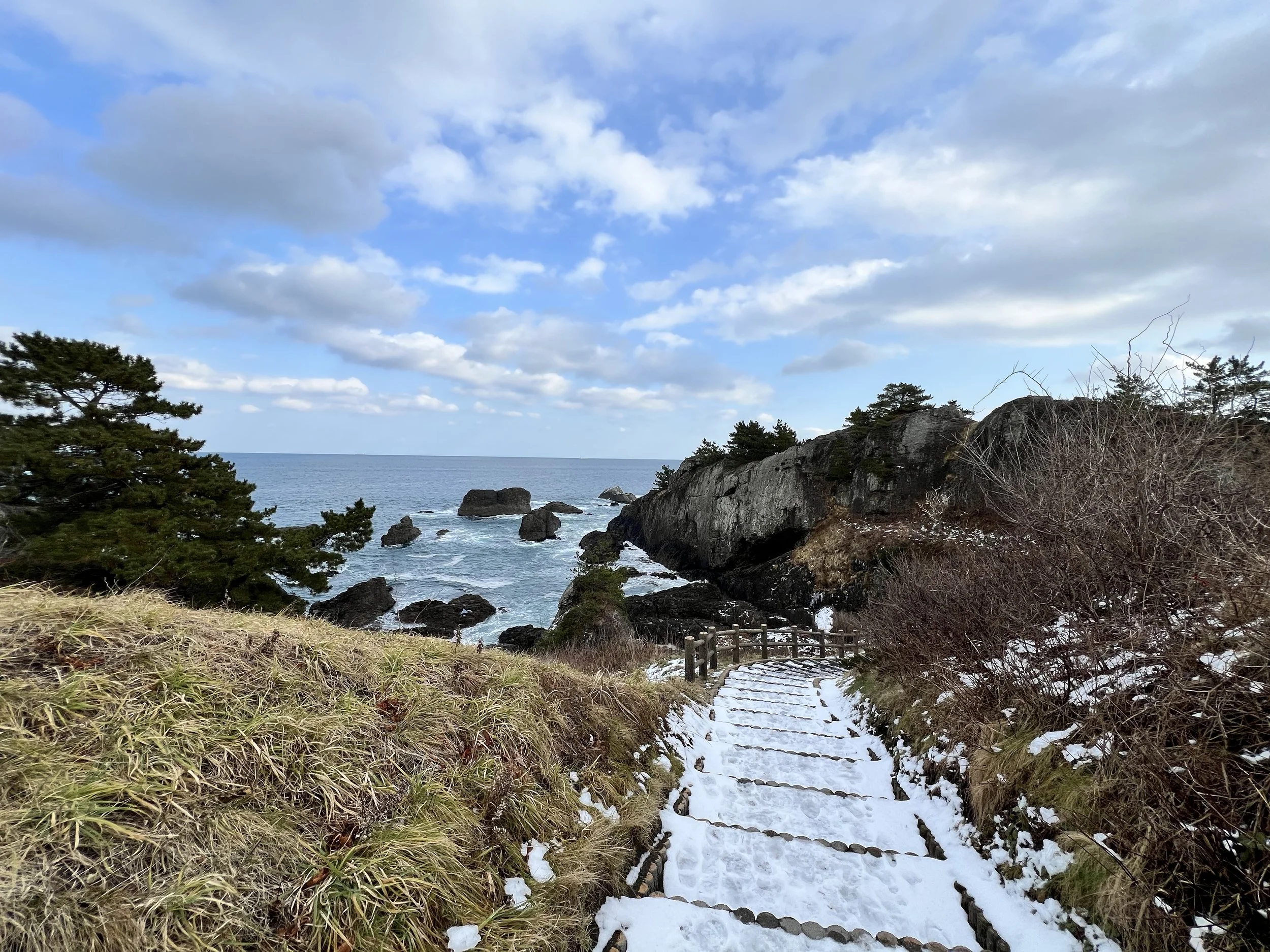
Heading south along the coast, I relied on my offline GPS since trail markers were sparse at first—but it wasn’t hard to follow. Much of the first stretch followed paved roads before the trail shifted onto a coastal path near the Ashigezaki Tenbodai Observatory. The path was still snowy, with some icy and muddy patches from melting snow. My shoes picked up clumps of mud and pine needles, forcing me to scrape them off now and then. A few sections had me walking right on the beach, and passing through small fishing ports added charm to the route.
At one point, a closed gate at one of the ports made me panic, but I spotted a sign for Michinoku hikers letting me know I could walk around it. One thing I hadn’t accounted for was how many public washrooms would be closed for winter. While the trail remains open year-round, most facilities—including toilets—close for the season, so it’s best to use one whenever you can!
When I reached Takaiwa Tenbodai Observatory, I took a short break to enjoy a snack while watching students from a nearby school sprinting along the beach during training. It was fun watching them dash back and forth as I sat there soaking in the snowy coastal view.
About 2 km from my destination, the snow and wind picked up. I knew I was close to Okuki Station, so I checked the train schedule and realized one was coming soon. I ended up speed-walking the last stretch and barely caught it—missing it would have meant a two-hour wait!
History & Background
This section of the Michinoku Coastal Trail marks the northern starting point of the 1,000-kilometre route, beginning in Hachinohe City, Aomori Prefecture. The trail starts at Kabushima Shrine—famous for its black-tailed gull colony and its deep connection to the sea. For centuries, fishermen have prayed here for safe voyages and plentiful catches.
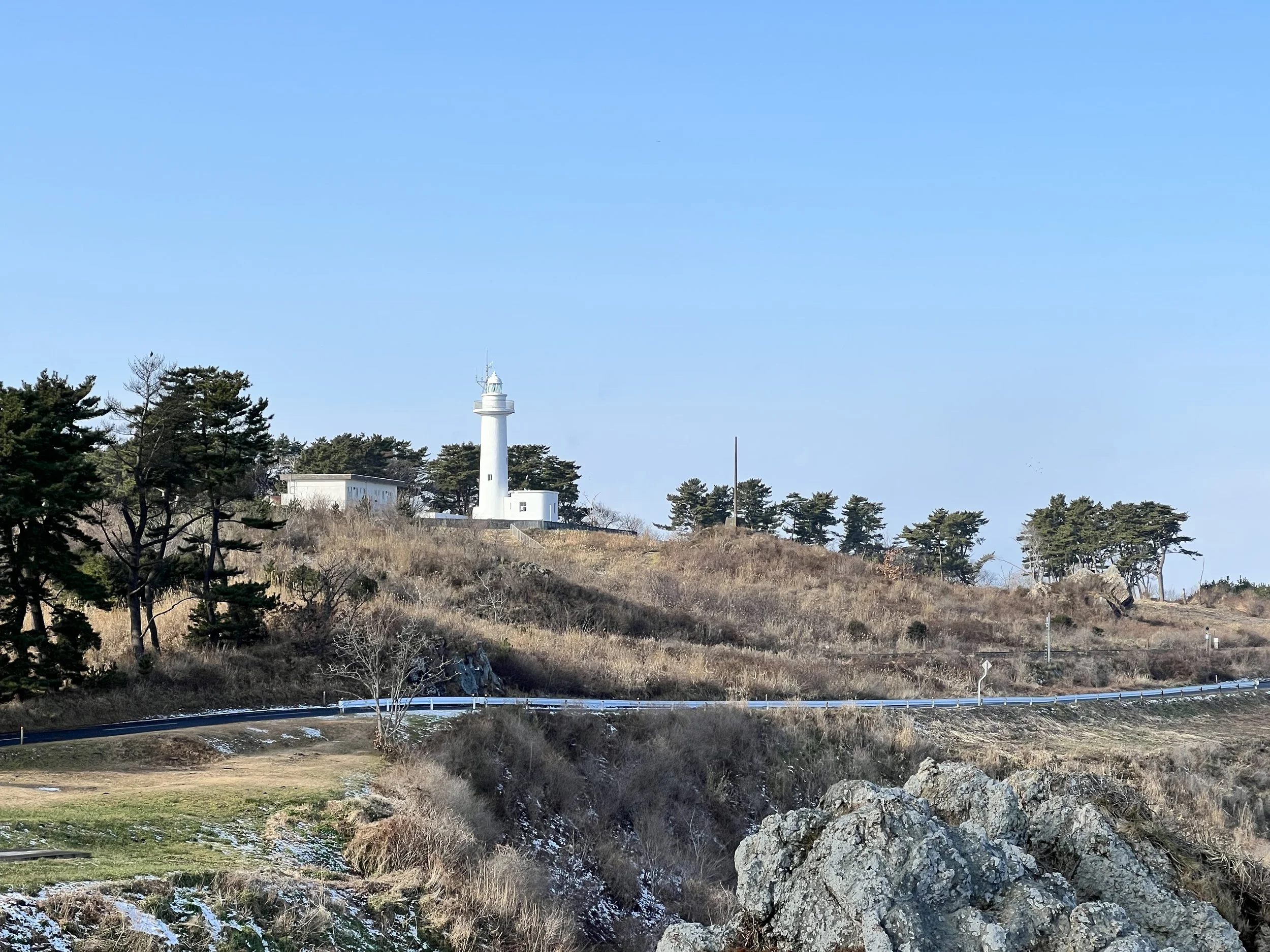
The coastline from Same to Okuki winds through the Tanesashi Coast, part of the Sanriku Fukko (Reconstruction) National Park. Its mix of sandy beaches, dramatic cliffs, and grassy headlands makes it one of Japan’s most scenic coastal stretches. While this area was spared the worst of the 2011 tsunami, it stands as a symbolic beginning of a trail created to reconnect and revitalize the entire Sanriku coast through nature and community.
Getting There
The fastest way to reach Hachinohe from Tokyo is by Shinkansen, which takes about three hours. For a more budget-friendly alternative, long-distance buses also run from Tokyo, though the trip takes around eight to ten hours.
Once in Hachinohe, take the local Hachinohe Line to Same Station. From there, it’s about a 15-minute walk to the official starting point of the trail, Kabushima Shrine.
Route Overview
Distance: 12.49 km (Same Station → Okuki Station)
Total elevation gain: 238 m
Duration: 2 hr 45 min (with breaks 3 hr)
Difficulty: Intermediate
Cost Breakdown
Train: Hachinohe Station → Same Station — ¥240
Train: Okuki Station → Kuji Station — ¥860
Accommodation: Kuji Daiichi Hotel (booked direct) — ¥6,100