Kunozan Toshogu - Shizuoka, Japan
Kunozan Toshogu is a shrine dedicated to Tokugawa Ieyasu, the leader who brought Japan’s long period of civil wars to an end and unified the country under the Tokugawa shogunate. Near the end of his life, Ieyasu requested that a mausoleum be built for him on Mount Kunōzan. Among all the Tōshōgū shrines across Japan dedicated to him, this one in Shizuoka is considered the second most important after Nikko Toshogu.
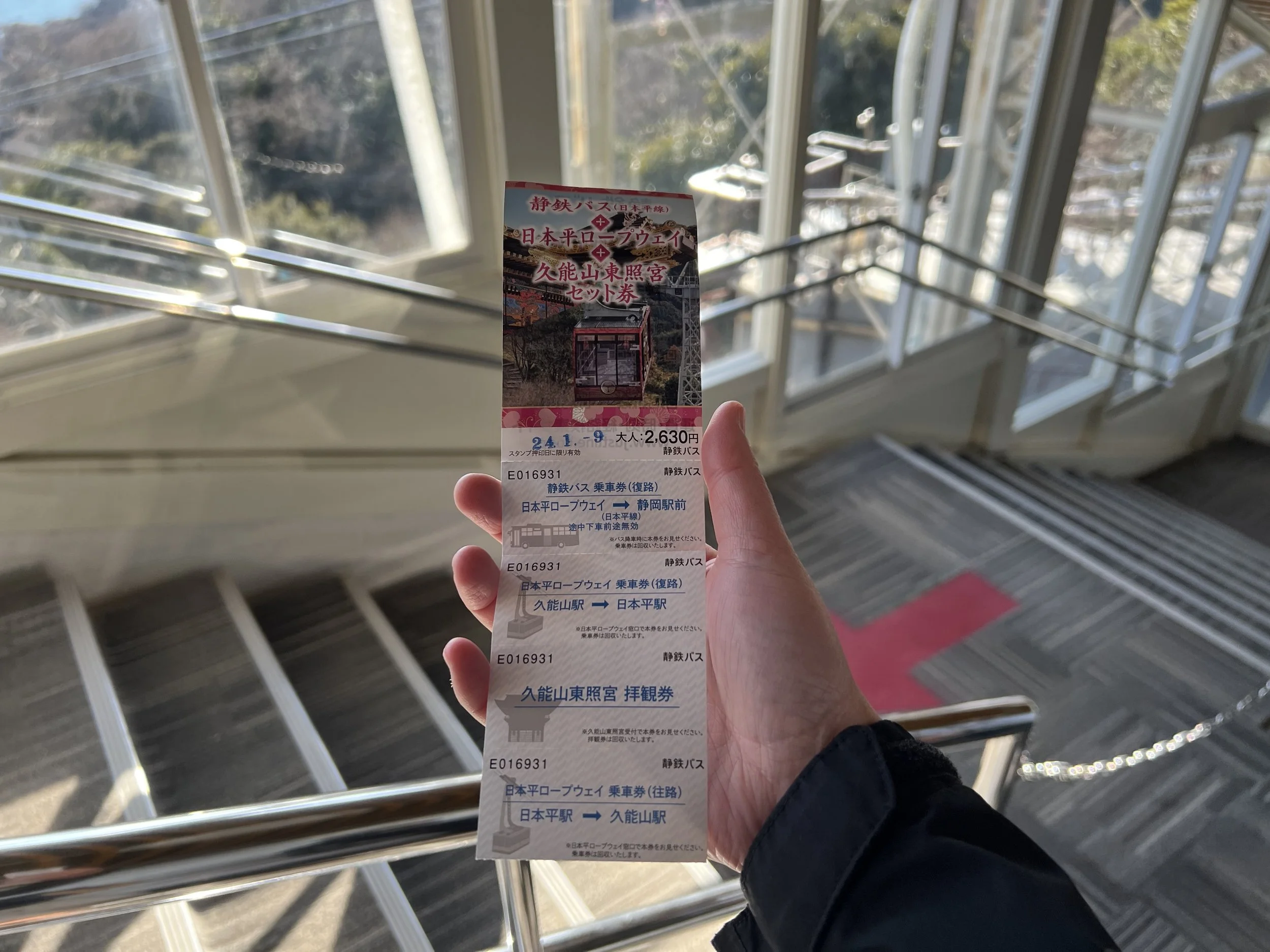
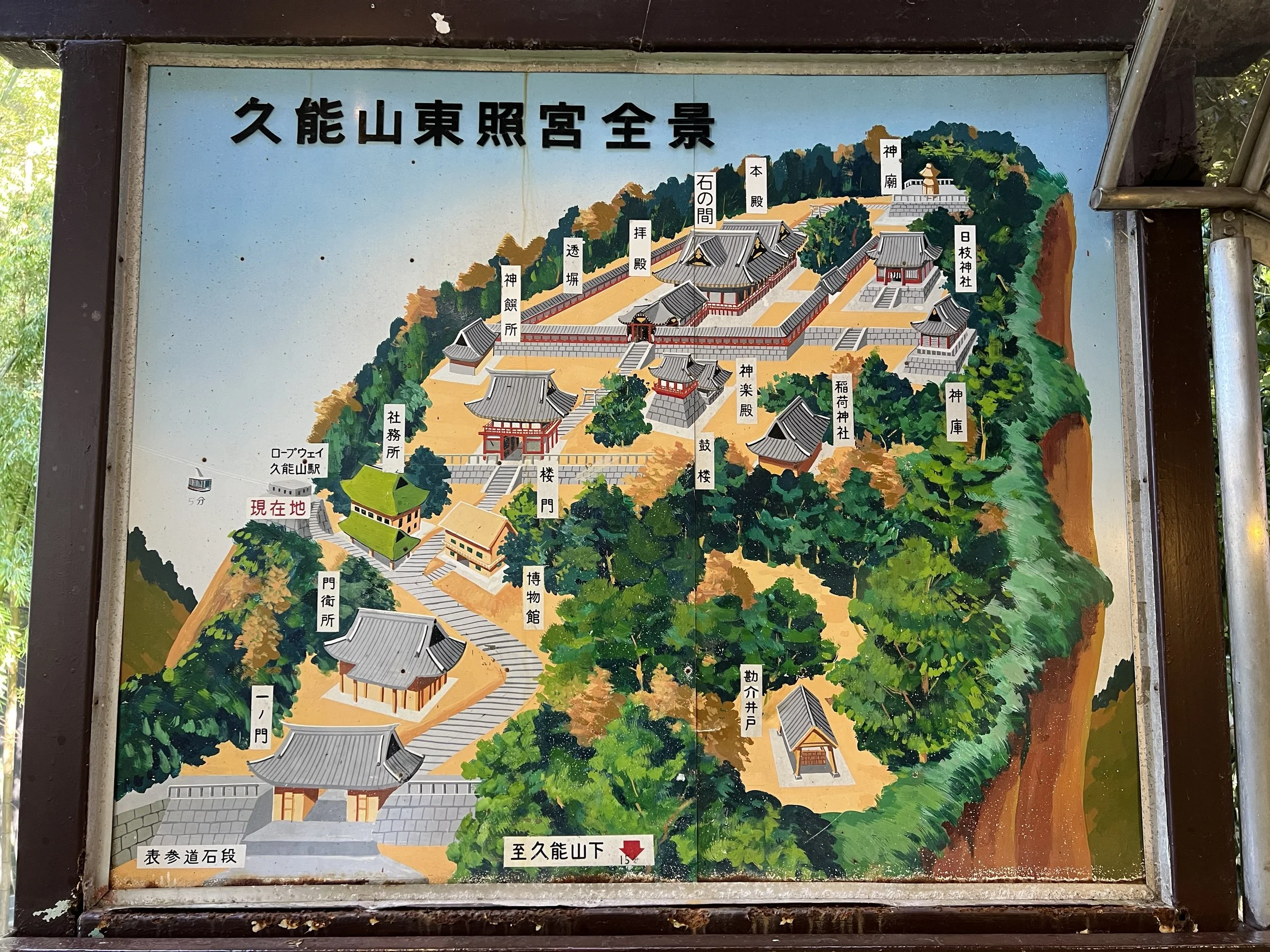
There are two ways to reach Kunozan Toshogu: from the south side via more than 1,000 stone steps, or from the north via the ropeway. I arrived in Shizuoka later in the afternoon and didn’t have much daylight left, so I chose the ropeway option, hoping that if time allowed, I might descend partway via the southern staircase. I stopped by the tourist information centre first to purchase a combination ticket that included the return bus, round-trip ropeway, and shrine admission. The bundled ticket was significantly more economical than paying separately.
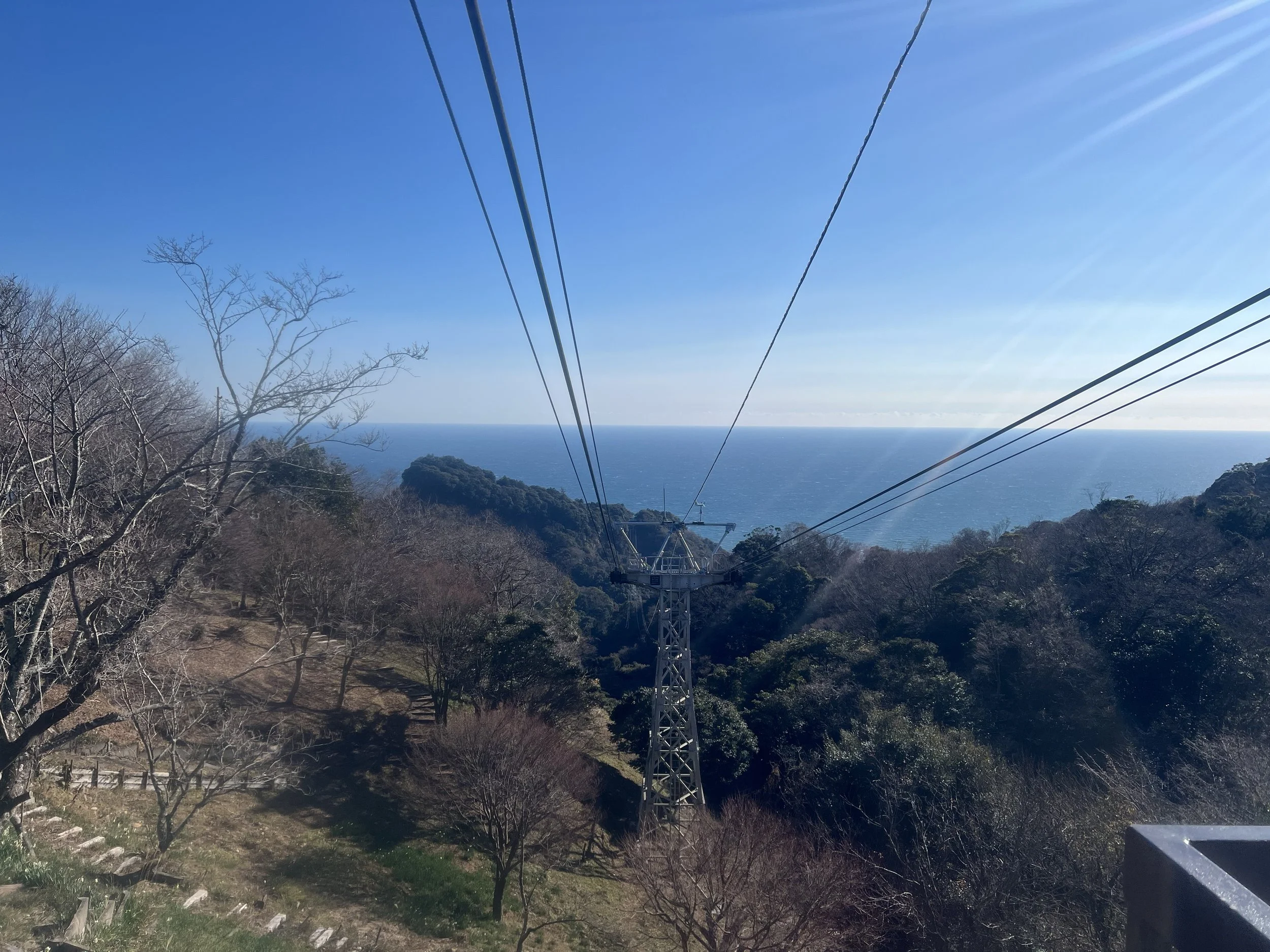
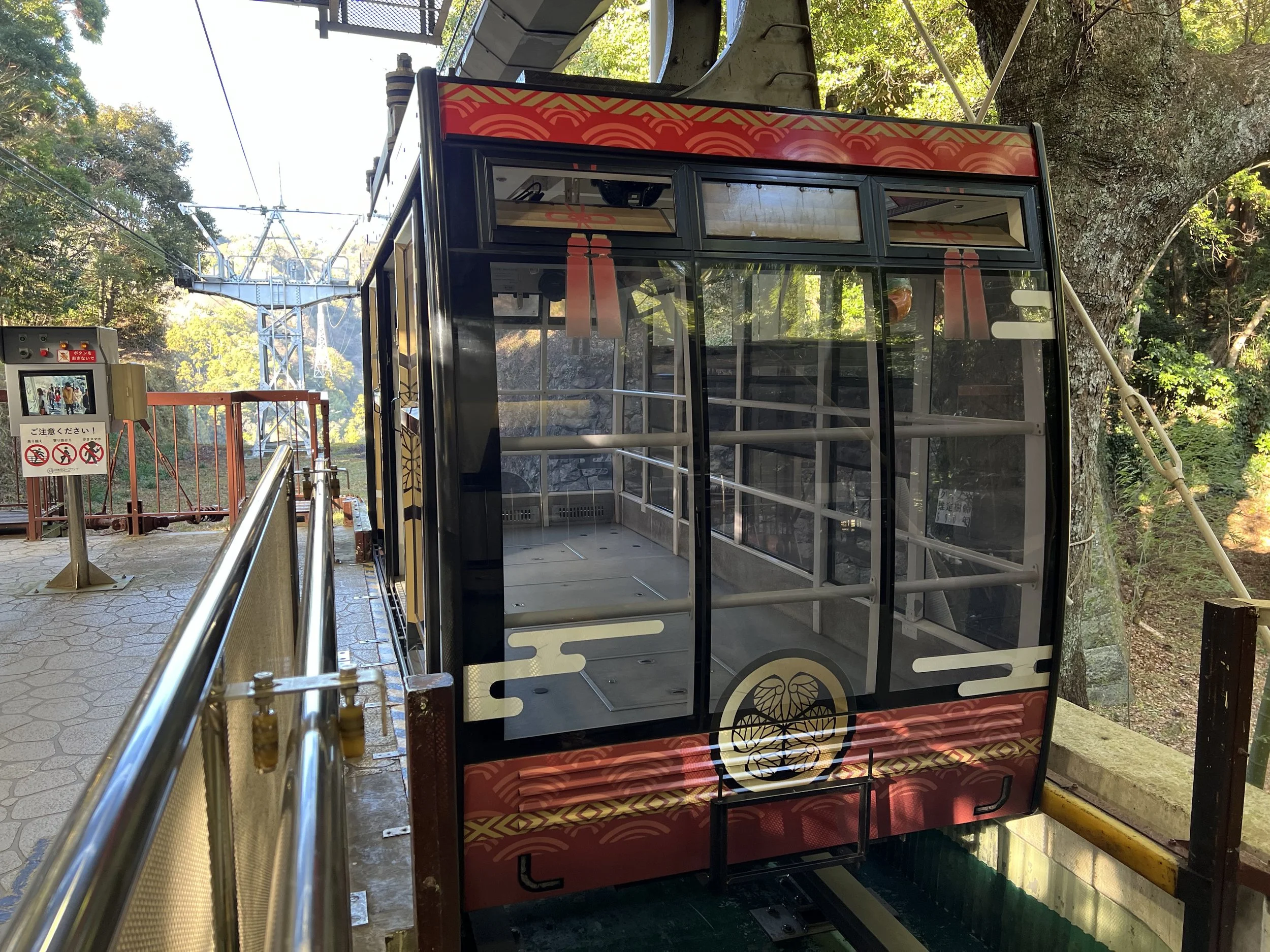
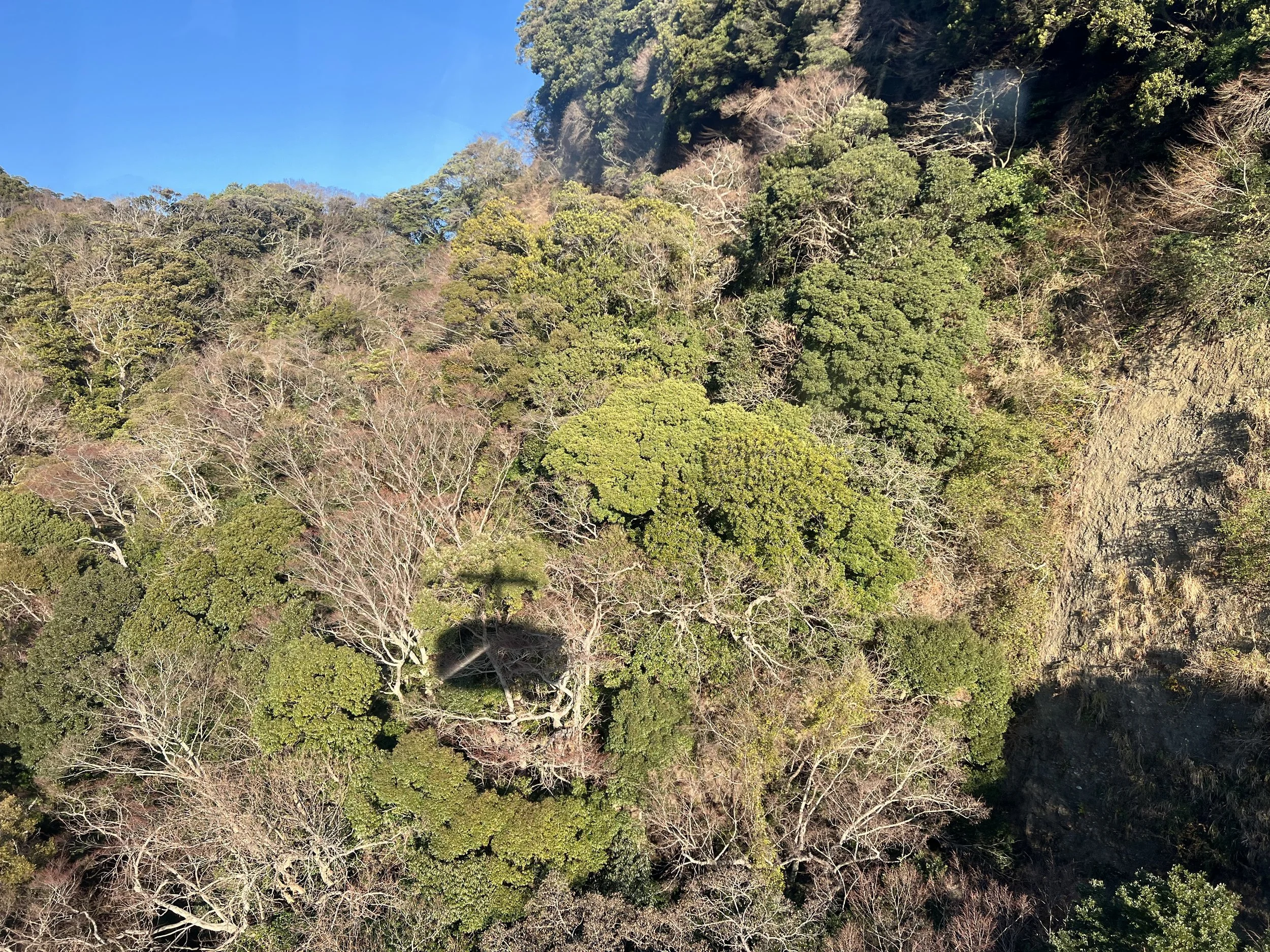
The bus ride from Shizuoka Station to the Nihondaira Ropeway stop took just under an hour. From there, the ropeway ride itself was short but scenic. As soon as I stepped out, I was greeted with sweeping views — and then made my way toward the shrine complex.
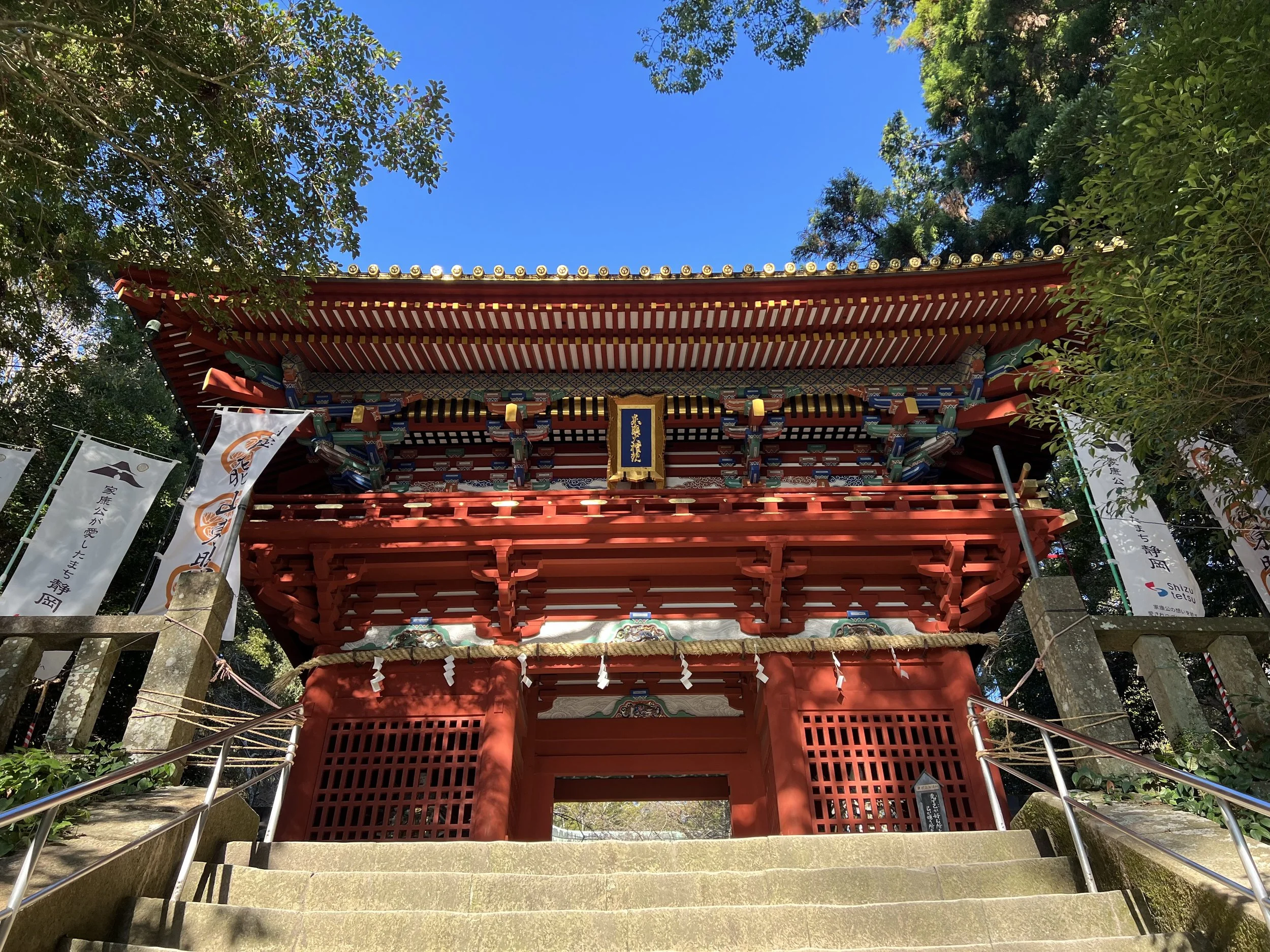
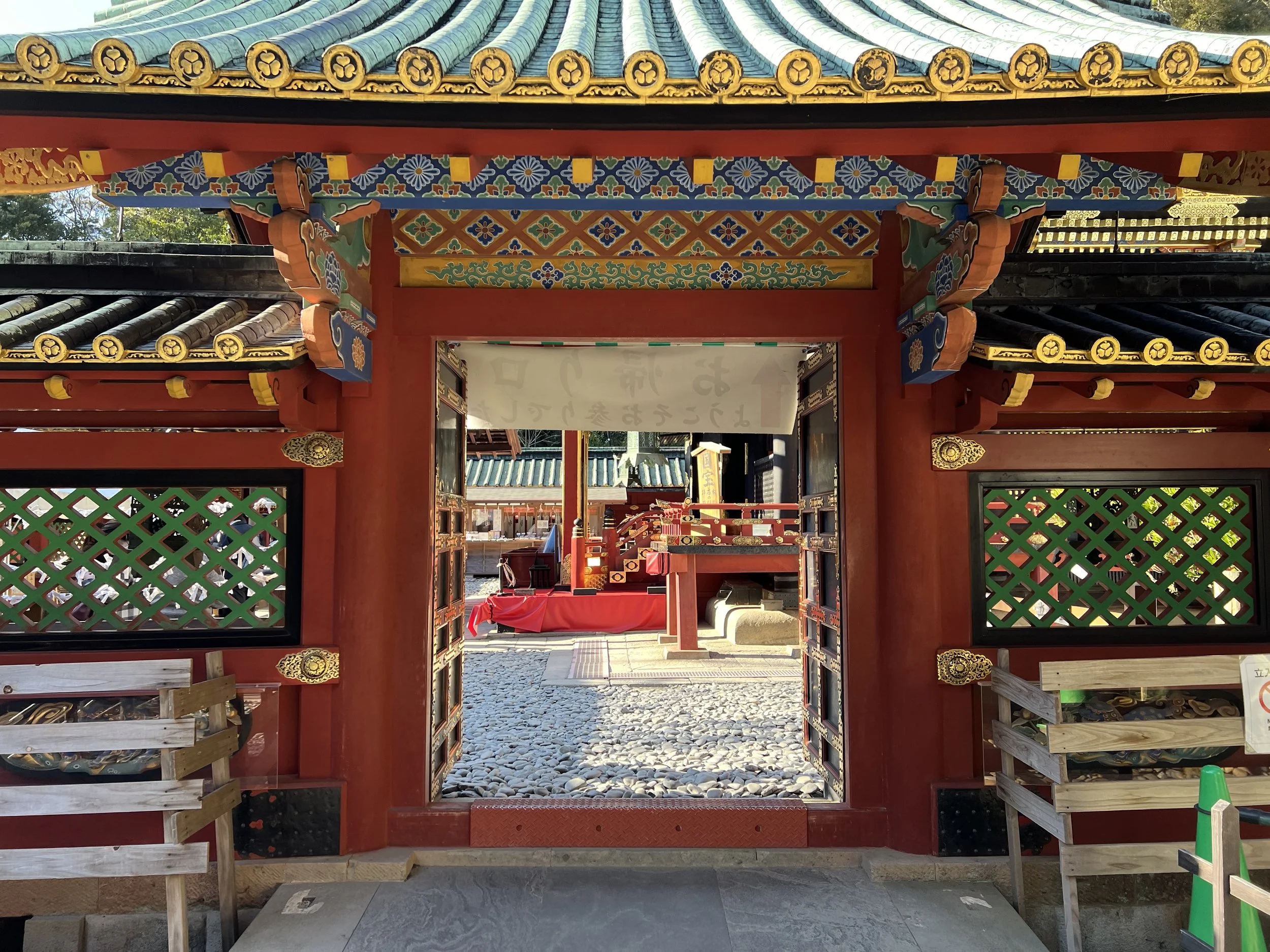
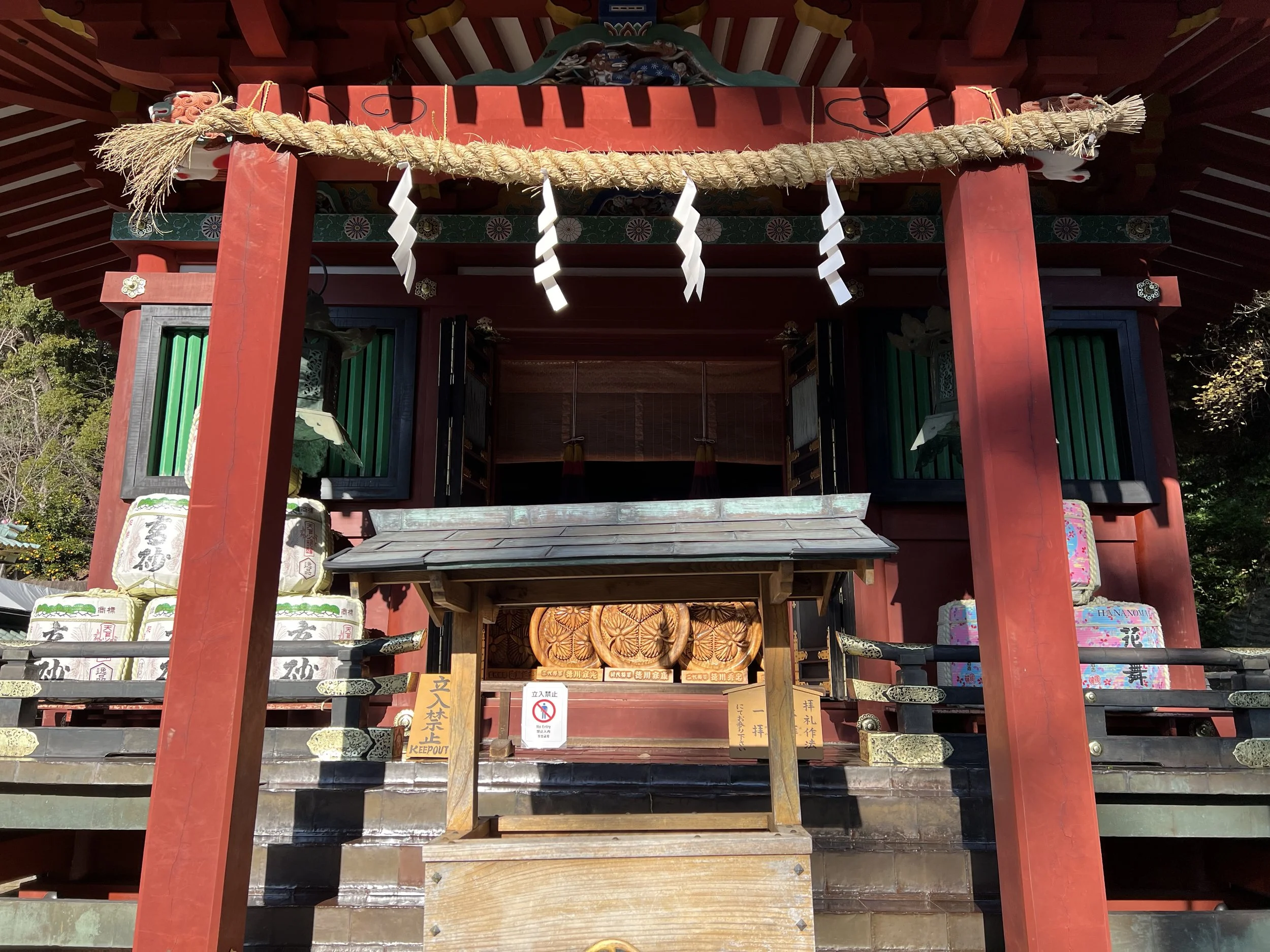
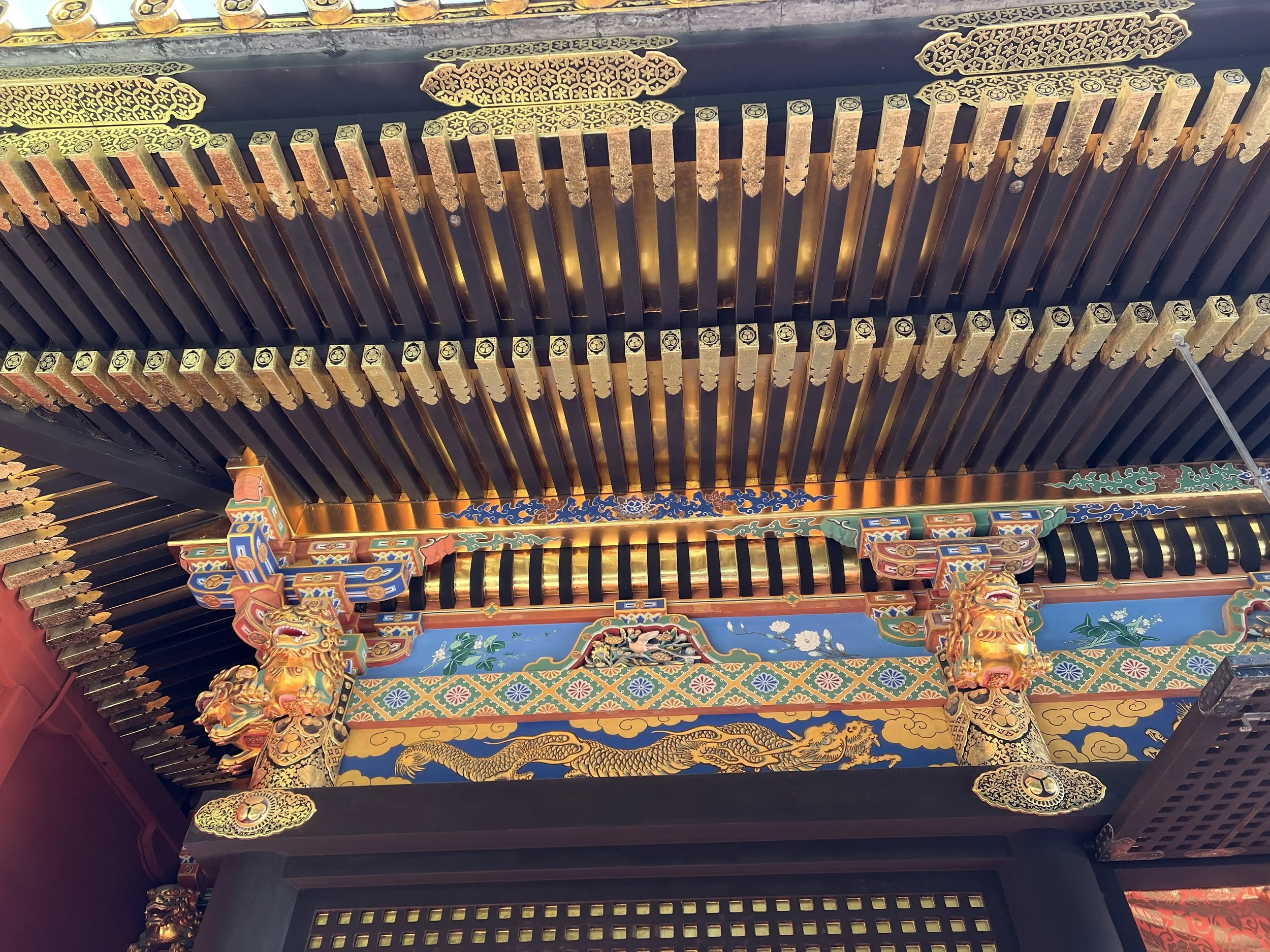
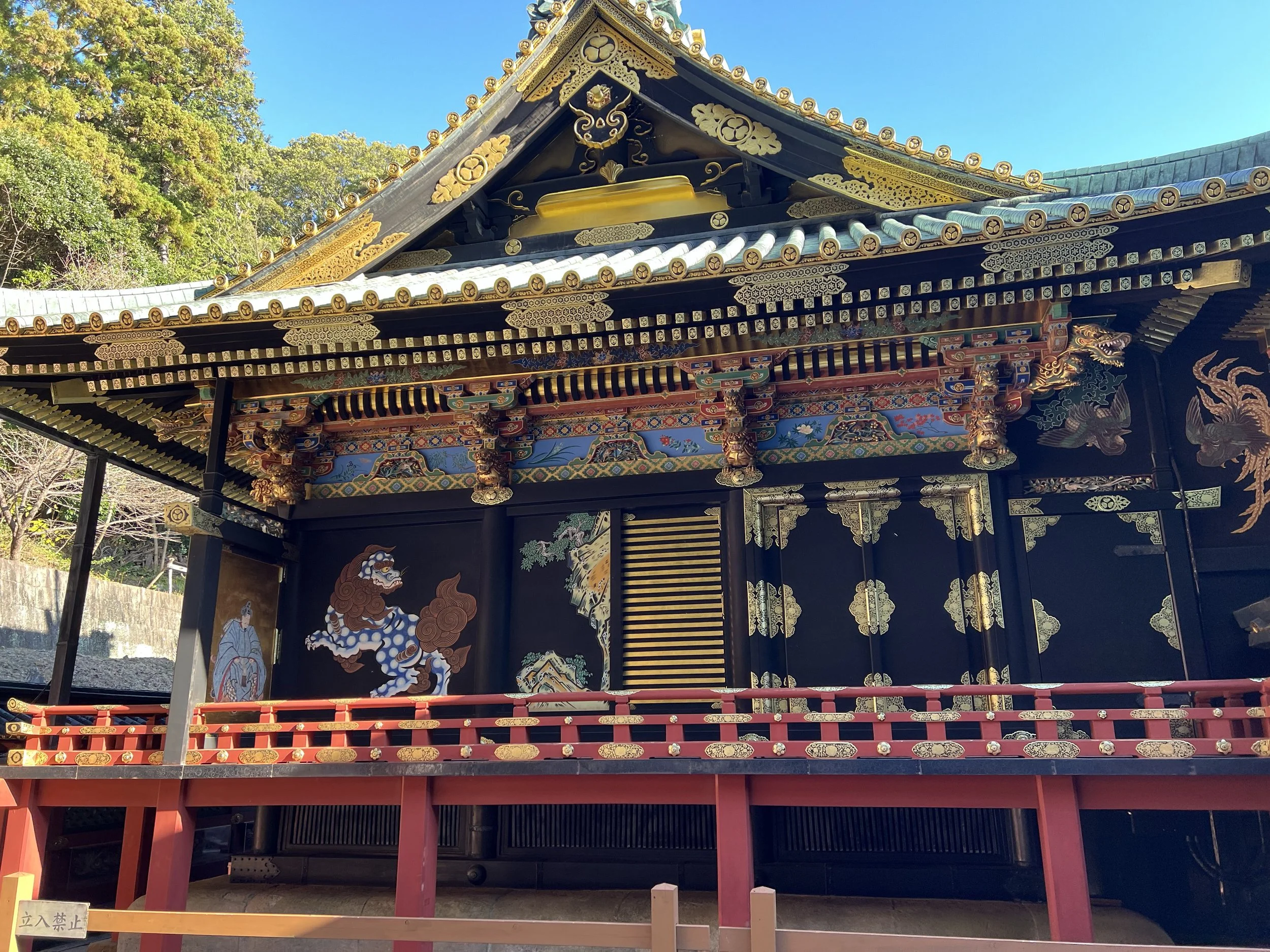
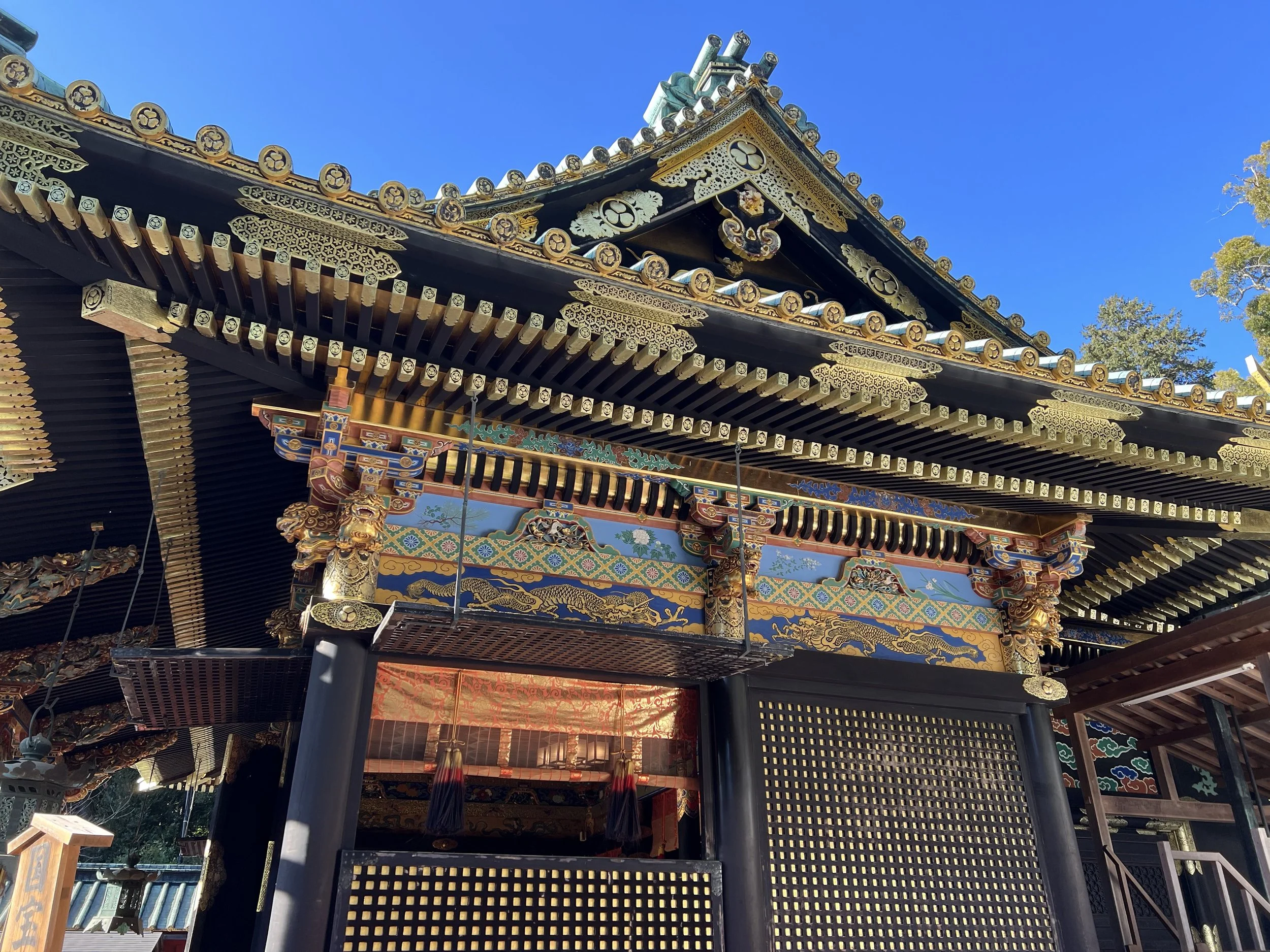
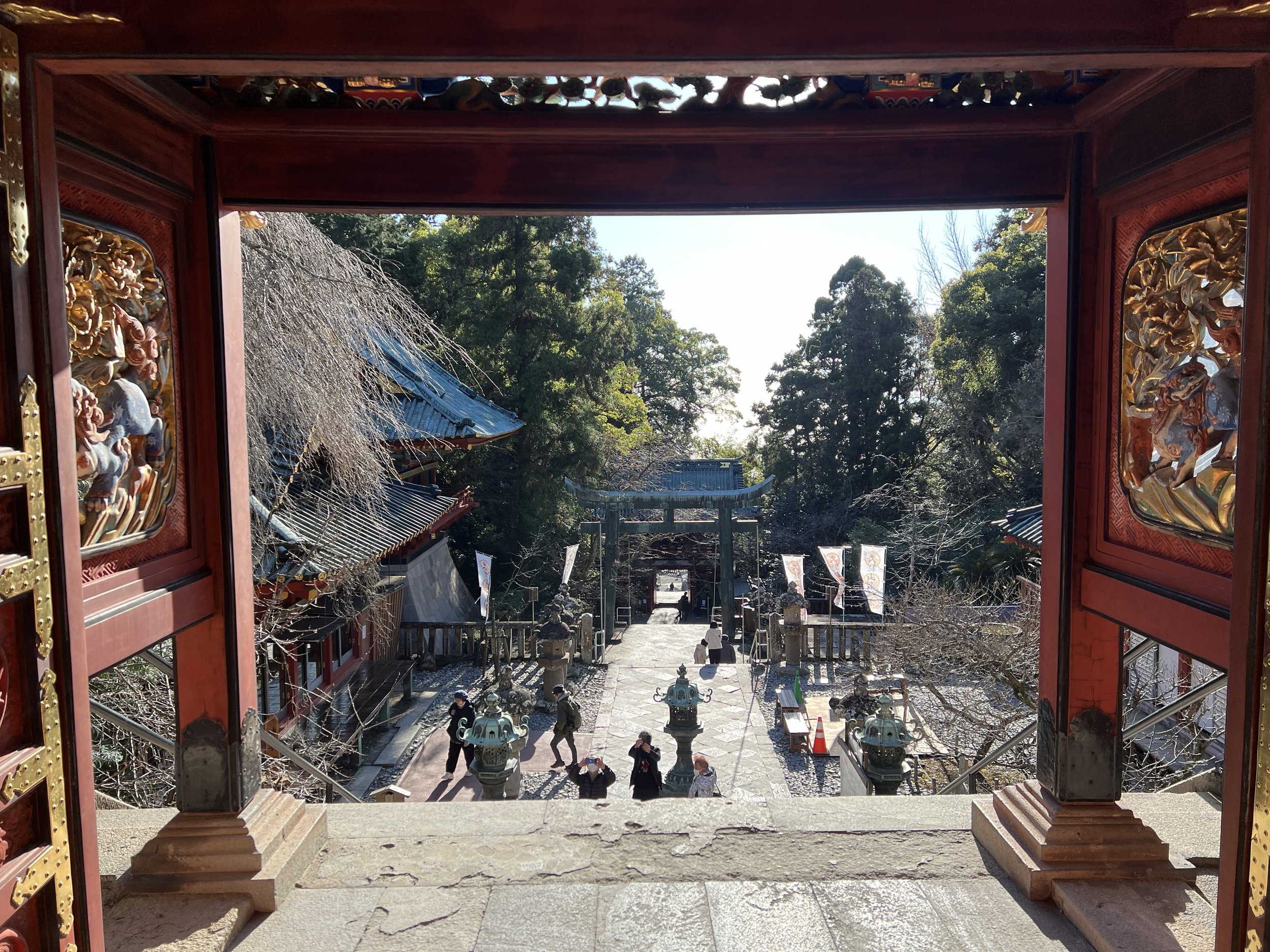
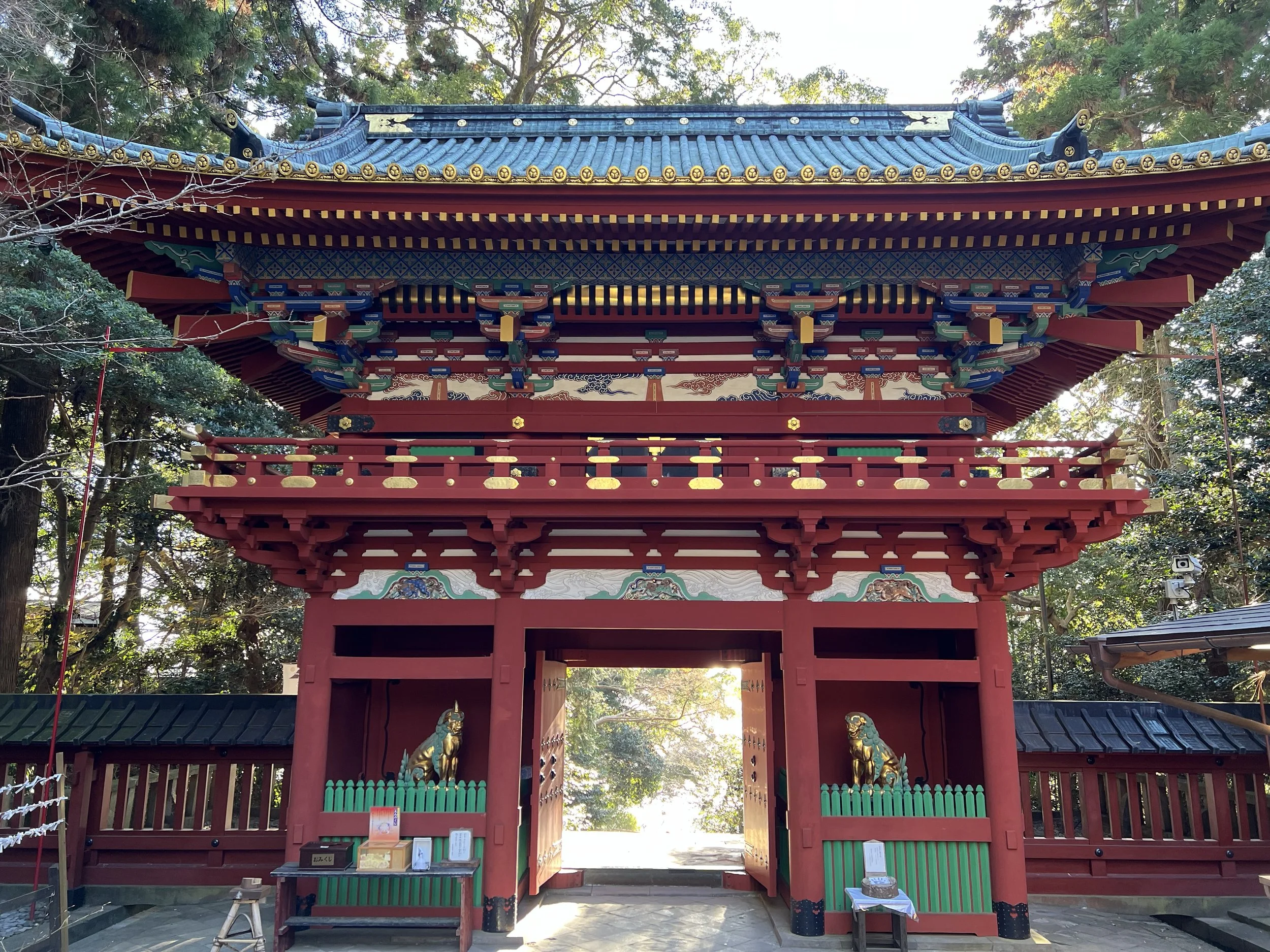
The grounds are expansive and require some stair climbing. The shrine buildings stand out immediately: bright vermilion structures accented with gold leaf, intricate carvings, and richly coloured paintings. From the Romon Gate at the entrance, the path gradually ascends deeper into the complex toward Ieyasu’s mausoleum. The craftsmanship was striking — detailed woodwork, ornate relief carvings, and decorative elements that felt far more elaborate than many other shrines I had visited.
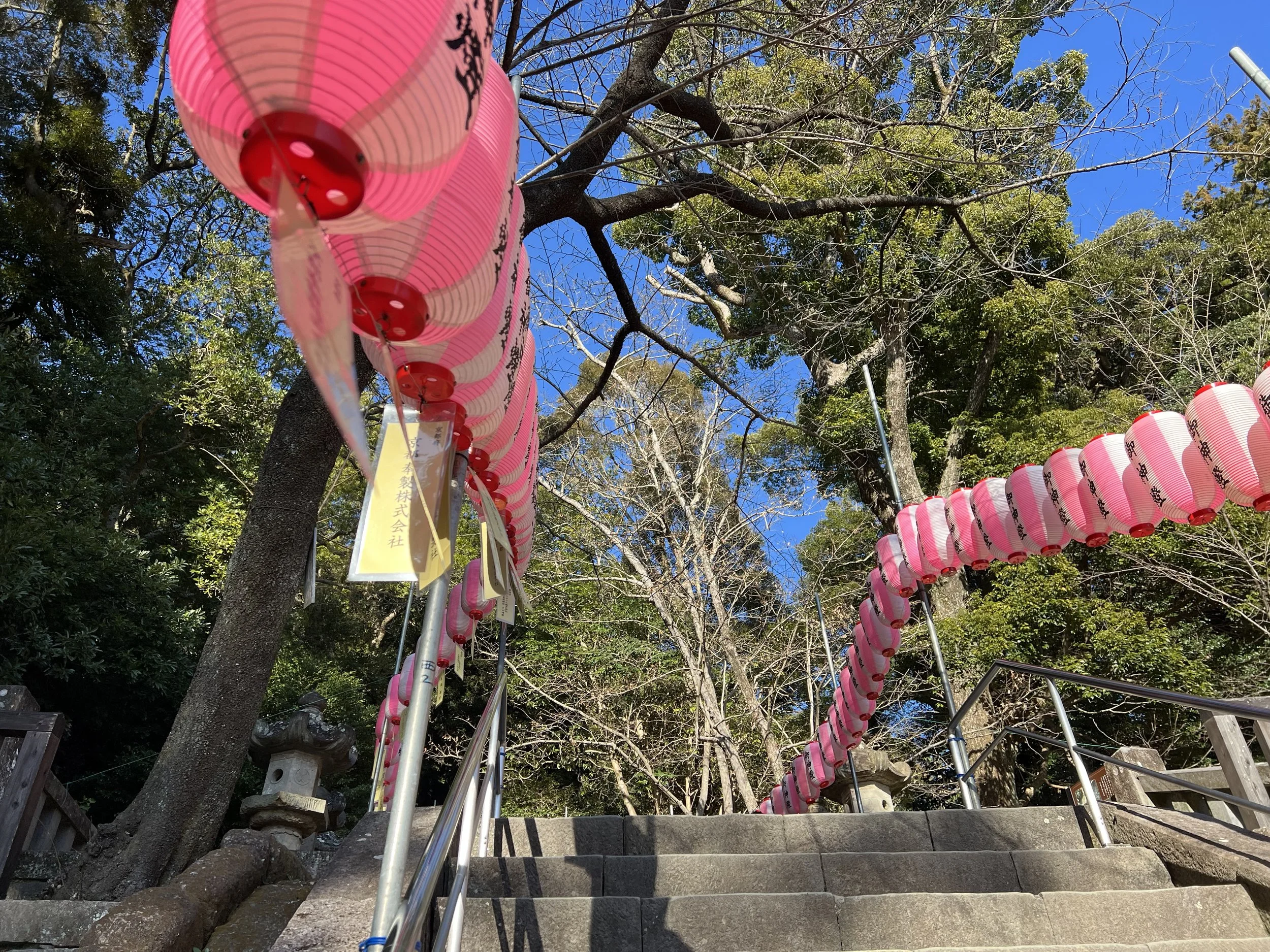
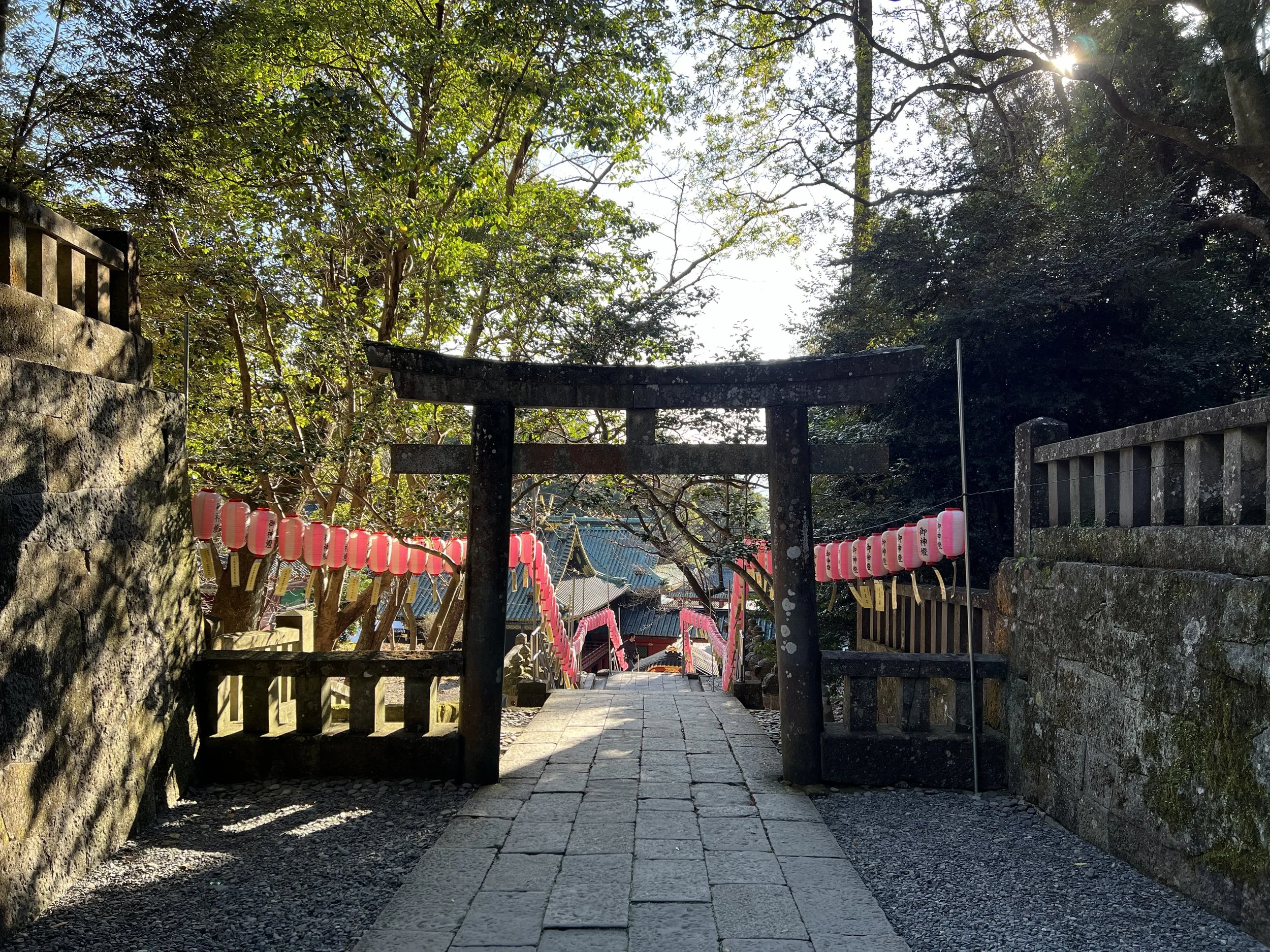
Along the staircases, I noticed shrine staff hanging pink lanterns, though there were no signs explaining the occasion. It added a festive yet slightly mysterious atmosphere to the visit. I slowly walked through the grounds, taking photos and pausing to admire the architectural details.
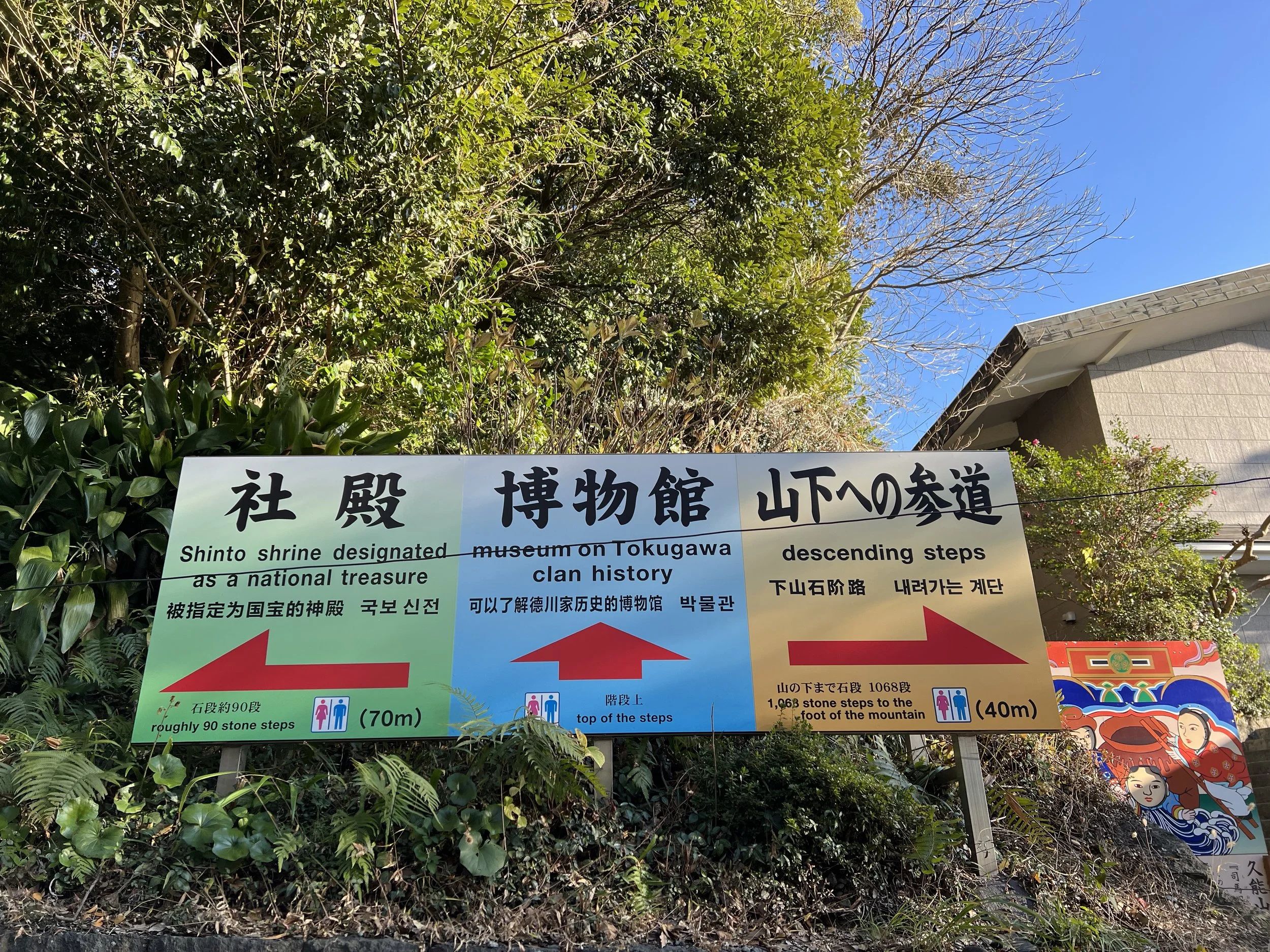
After exploring the shrine, I headed toward the Museum of Kunozan Toshogu. Unfortunately, by the time I completed my circuit of the shrine complex, the museum had already closed for the day. The museum houses personal belongings of Tokugawa Ieyasu along with shrine treasures such as swords, armour, and scrolls — I would have liked to see those displays, but my late arrival meant I had to skip it.
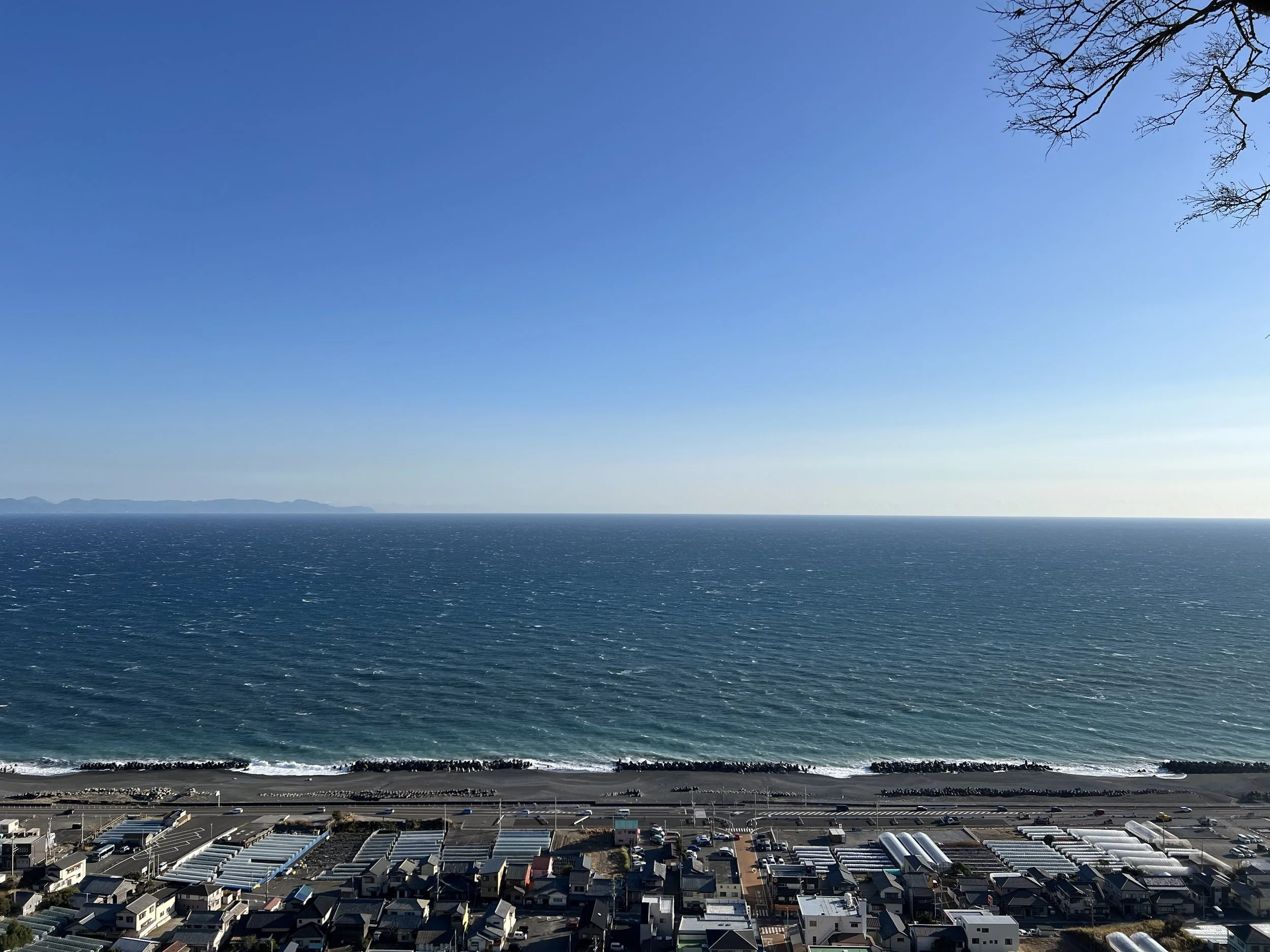
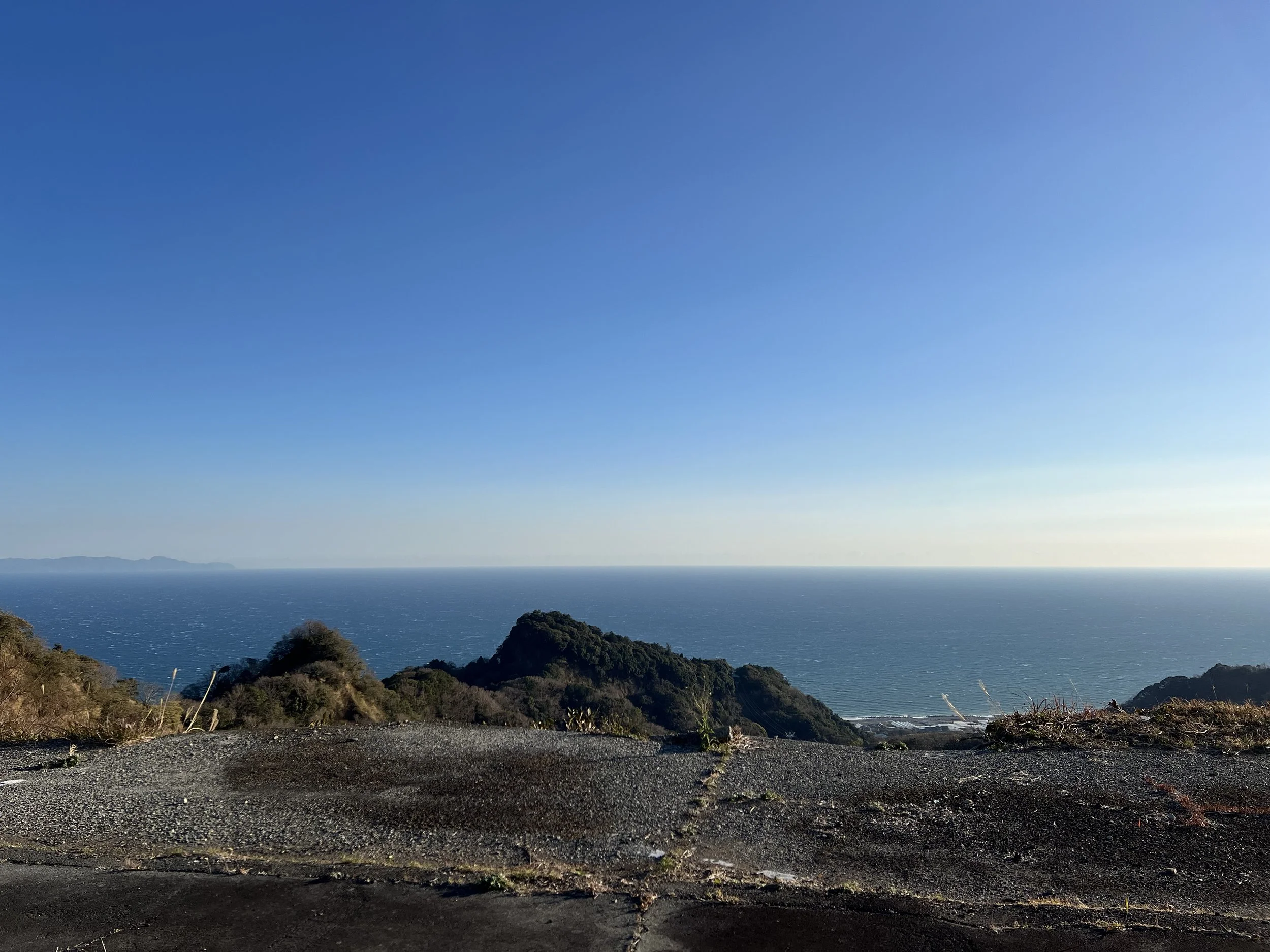
Instead, I wandered toward several viewing platforms overlooking Suruga Bay. The panoramic views were stunning — the coastline stretching below with the Pacific horizon beyond. From this southern approach, I had the option to descend the full 1,000+ stone steps. However, doing so would have required arranging separate transportation back to Shizuoka Station, as it wasn’t covered by my combo ticket. I ended up walking down about 500 steps simply for the experience and the views, before climbing back up to return via the ropeway.
If I had more time and wasn’t rushing before closing hours, I would likely choose to ascend from the south side. Climbing the full stone staircase with the bay unfolding behind you would make for an even more dramatic approach.
History & Background
Kunozan Toshogu (久能山東照宮) was established in 1617, one year after the death of Tokugawa Ieyasu. Before his remains were transferred to Nikko, he was initially enshrined at Kunozan in accordance with his wishes.
The shrine’s architecture reflects early Edo-period opulence, featuring intricate carvings and vivid lacquerwork. Unlike many traditional shrines that emphasize simplicity, Toshogu shrines often display elaborate decorative styles symbolizing the authority of the Tokugawa shogunate.
The complex also includes a museum housing important cultural properties, including weapons, armour, and artefacts connected to Ieyasu. Due to its historical and artistic significance, Kunozan Toshogu is designated as a National Treasure of Japan.
Its dramatic hilltop location overlooking Suruga Bay further enhances its symbolic presence — both spiritually and strategically.
Getting There
Kunozan Toshogu can be accessed from Shizuoka City via two main routes:
From the north side, take a bus from Shizuoka Station to the Nihondaira Ropeway stop (approximately 50–60 minutes). From there, the Nihondaira Ropeway provides direct access to the shrine grounds.
From the south side, visitors can take a bus to the Kunozan Shita stop and climb approximately 1,159 stone steps to reach the shrine. This route is more physically demanding but offers scenic coastal views along the ascent.
The ropeway route is the most time-efficient option, especially for those visiting later in the day.
Route Overview
Distance: 1.44 km out & back (from → to)
Total elevation gain: 52 m
Duration: 20 min (with breaks 27 min)
Difficulty: Easy
Cost Breakdown
Bus: Shizuoka Station → Nihondaira Ropeway Bus Stop — ¥0 (Included in the combo ticket, normal cost ¥710)
Ropeway: Nihondaira Ropeway — ¥0 (Included in the combo ticket, normal cost ¥700)
Entrance Fee: Kunozan Toshogu Shrine — ¥0 (Included in the combo ticket, normal cost ¥700)
Combination Ticket: ¥2,630
Food: ¥200