Yura Coast - Wakayama, Japan
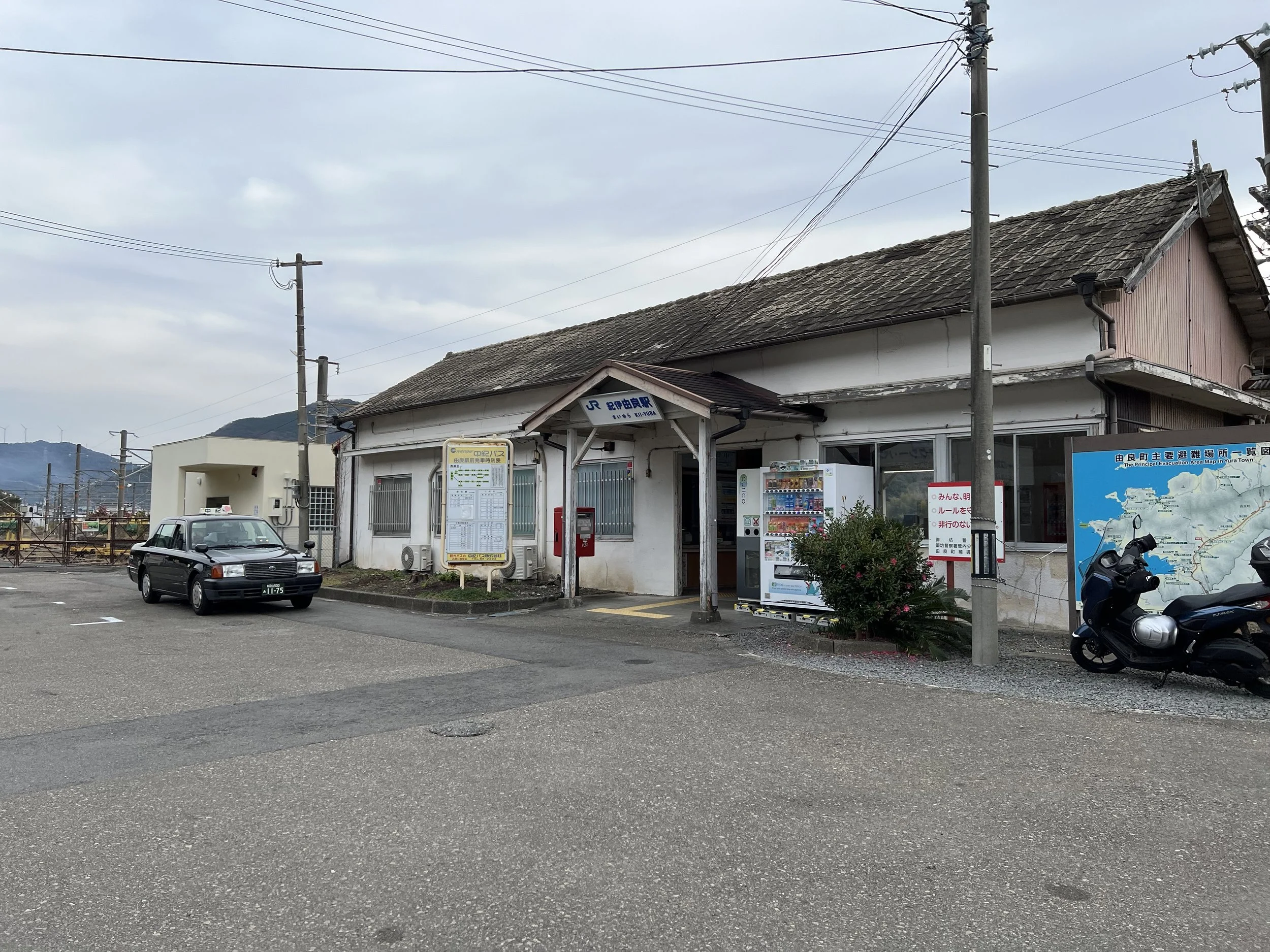
There were two places I wanted to visit along the Yura coastline in Wakayama: Totsui Limestone Cave and Shirasaki Marine Park. My original plan was to take the bus from Kii-Yura Station to get closer to the coast, but when I arrived, I noticed a sign posted near the bus stop explaining that buses wouldn’t resume service until January 4th due to the New Year holiday. Since it was January 3rd, that option was off the table.
I briefly considered taking a taxi, but since I would still have to walk part of the way anyway, I decided I might as well walk the entire route and see what the area had to offer along the way.
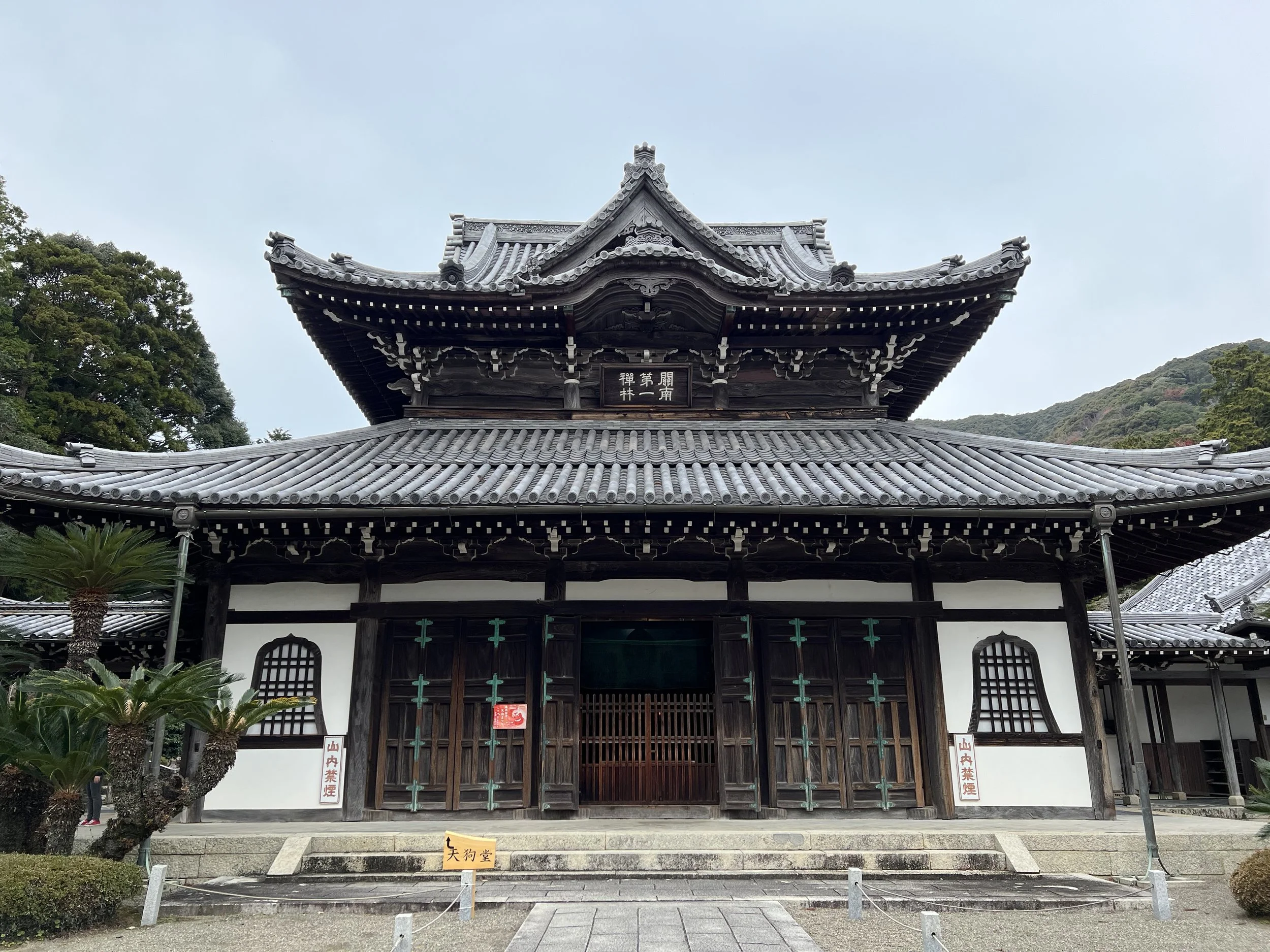
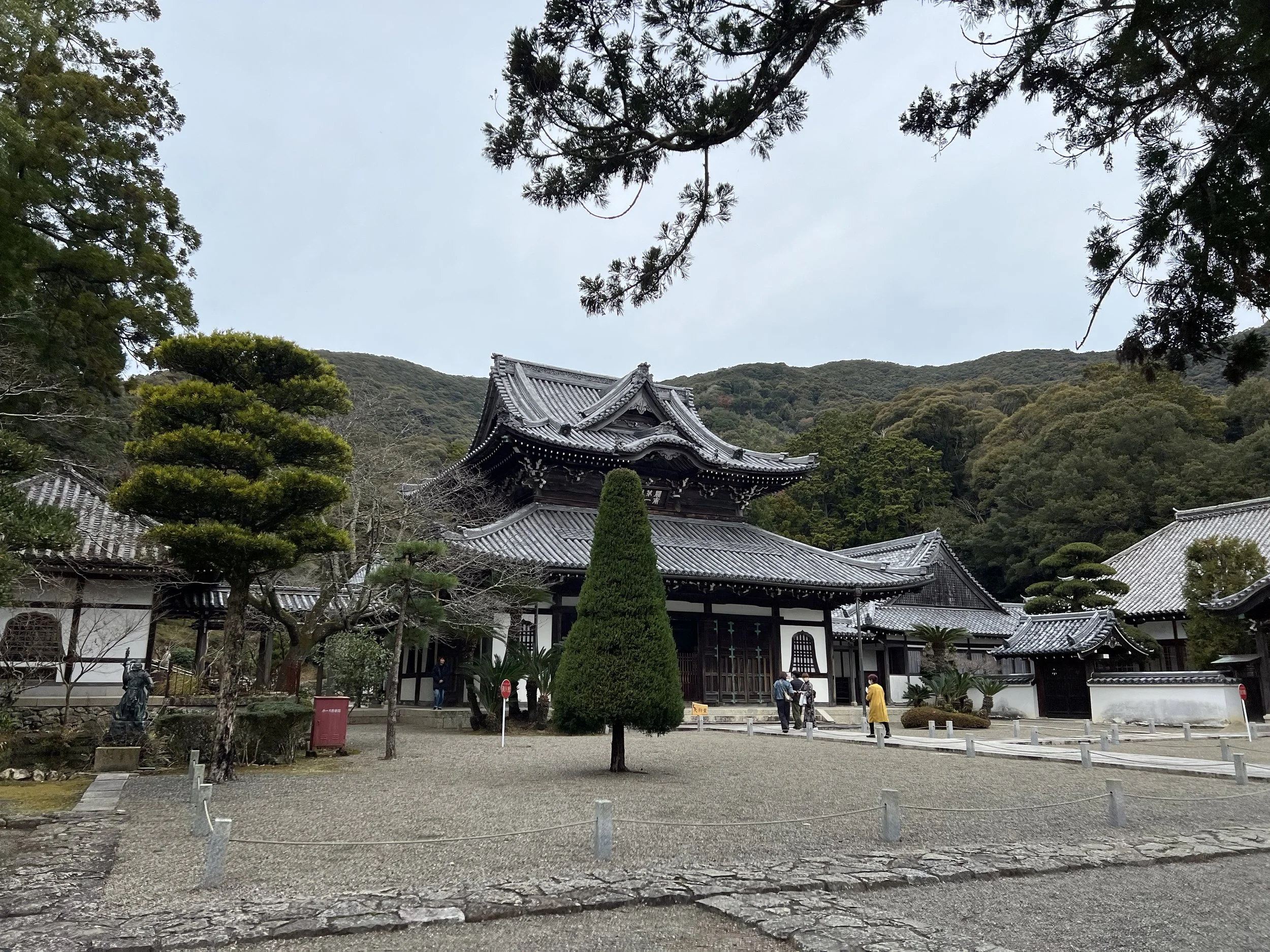
I began my walk from Kii-Yura Station toward Kokoku-ji Temple. It wasn’t originally part of my itinerary, but with my transportation plans changed, it now sat directly along my route. The temple is about one kilometre from the station, and the path leading there was clearly marked.
Founded in 1227, Kokoku-ji Temple was built in memory of Minamoto no Sanetomo, a Kamakura shogun who was tragically assassinated by his own nephew. According to local legend, the temple was once destroyed by fire but rebuilt in a single night by a mountain spirit known as a Tengu. Because of this story, the temple today pays homage not only to the shogun but also to the mythical Tengu.
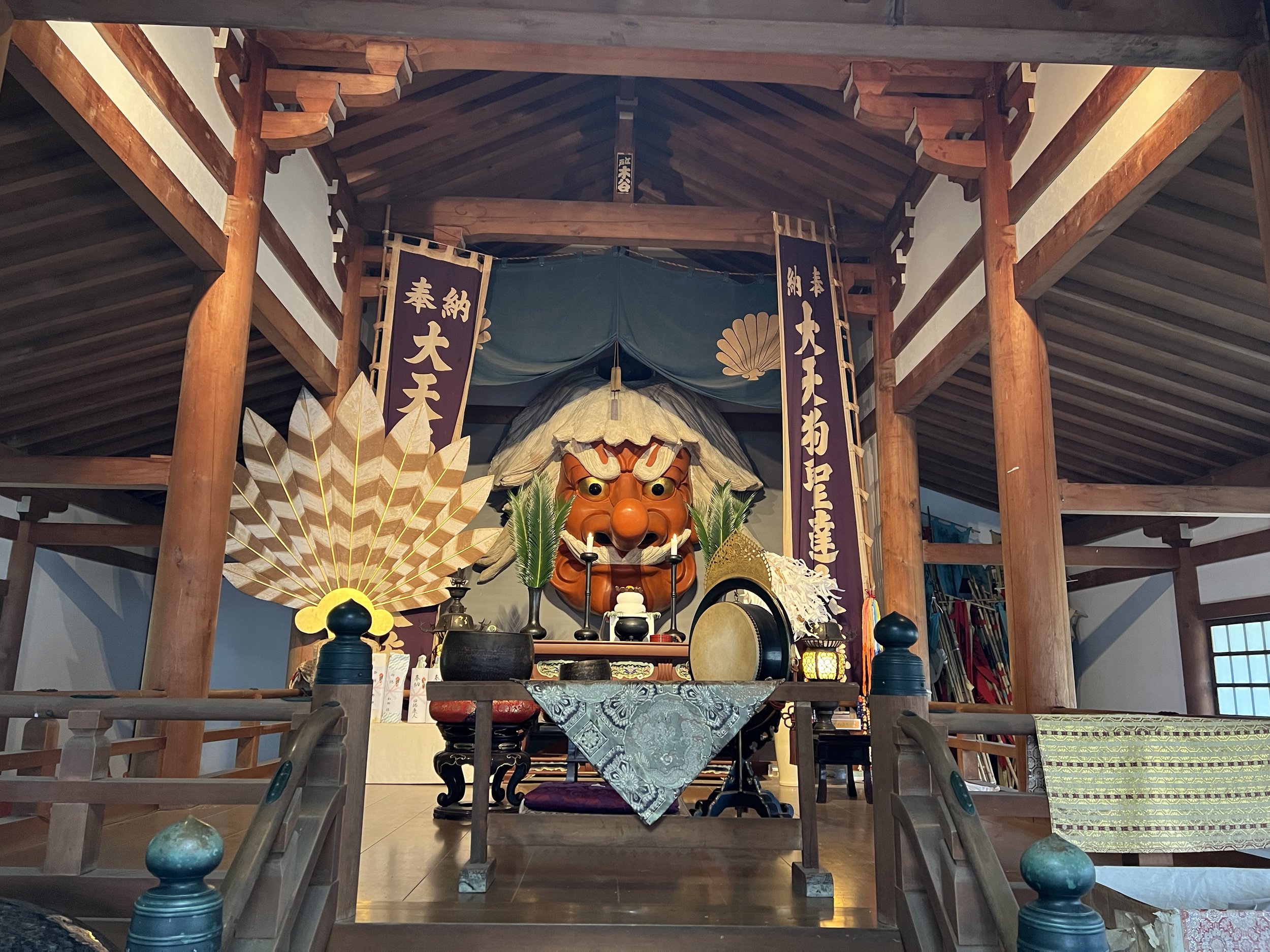
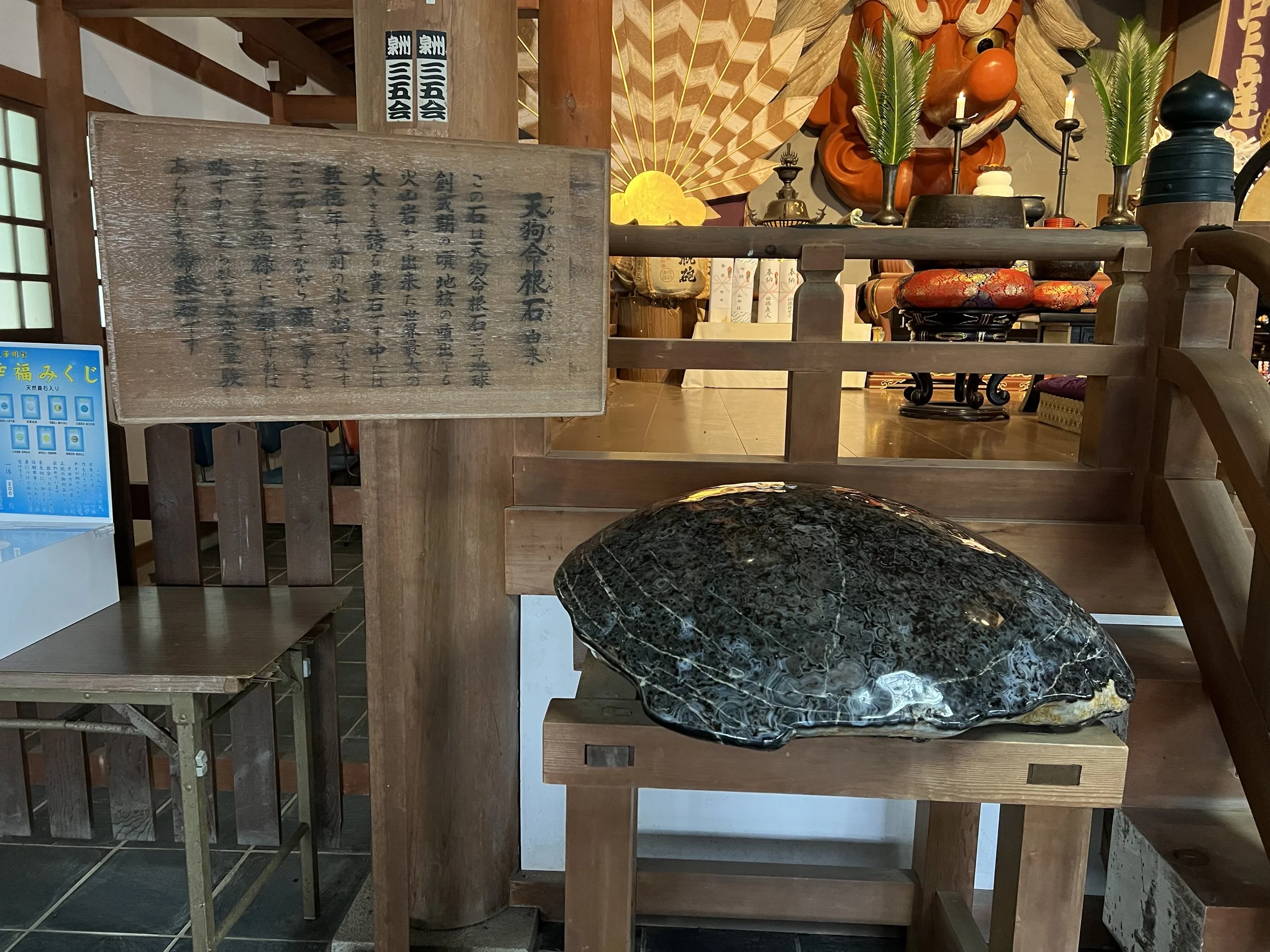
Walking through the quiet temple grounds, surrounded by forested hills, I soon came across a hall dedicated specifically to the Tengu. These legendary beings are often depicted with bright red faces, long noses, and wings. Inside the hall stood a large Tengu mask mounted above the altar, its exaggerated features immediately recognizable. Tengu are believed to be guardians of the natural environment, particularly in mountainous regions, and hikers and pilgrims often pray to them for protection while travelling through the mountains. They are also associated with protection against fires and natural disasters.
There were a few small benches inside the hall, and I sat there for a moment simply taking in the sight of the giant mask. Afterward, I followed a short trail behind the temple that leads up into the hillside to several smaller shrines tucked into the forest. Once I had finished exploring the grounds, I returned to the road and continued walking toward my next destination: Ena Hachiman Shrine, about 2.3 kilometres away.
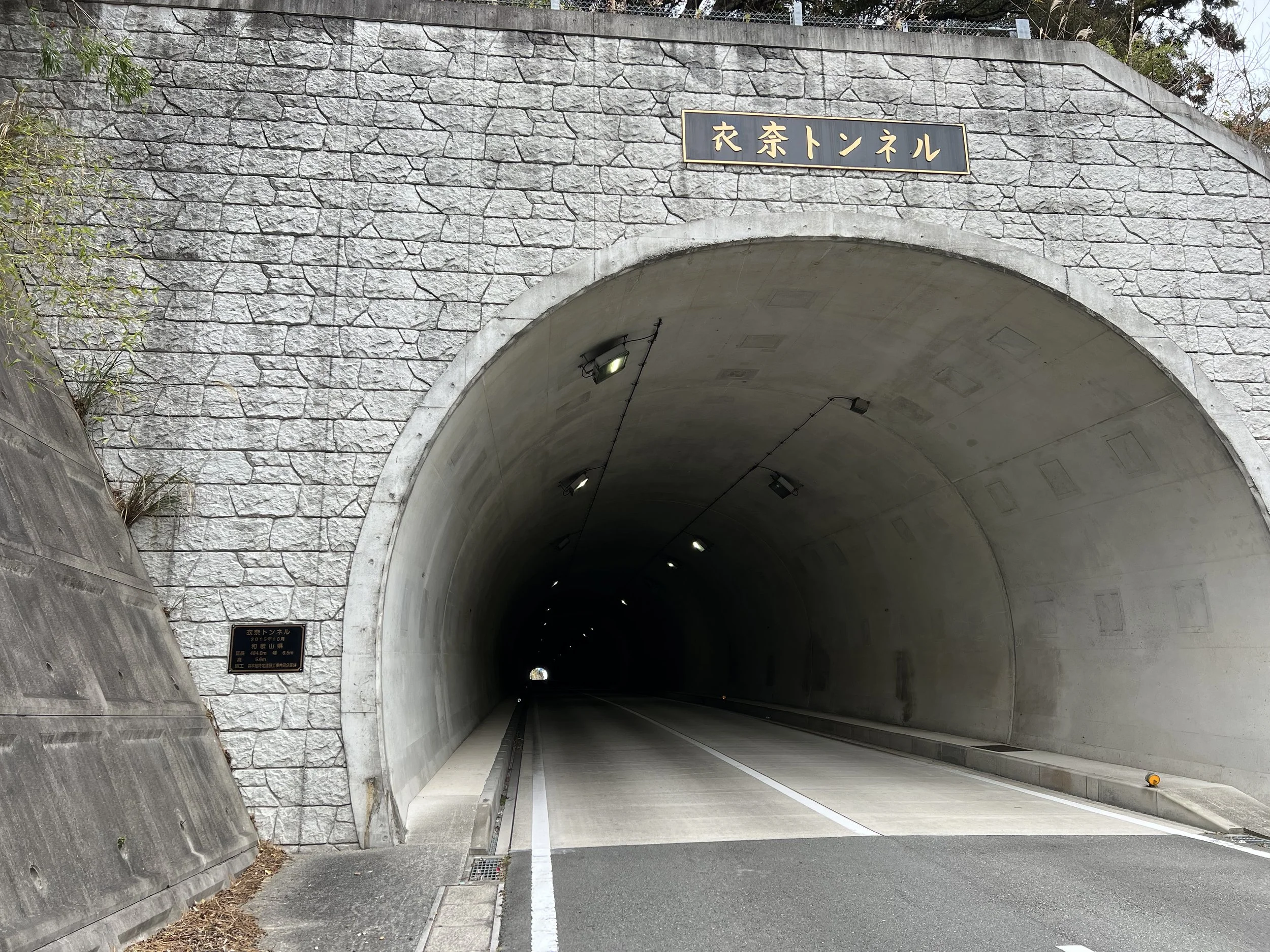
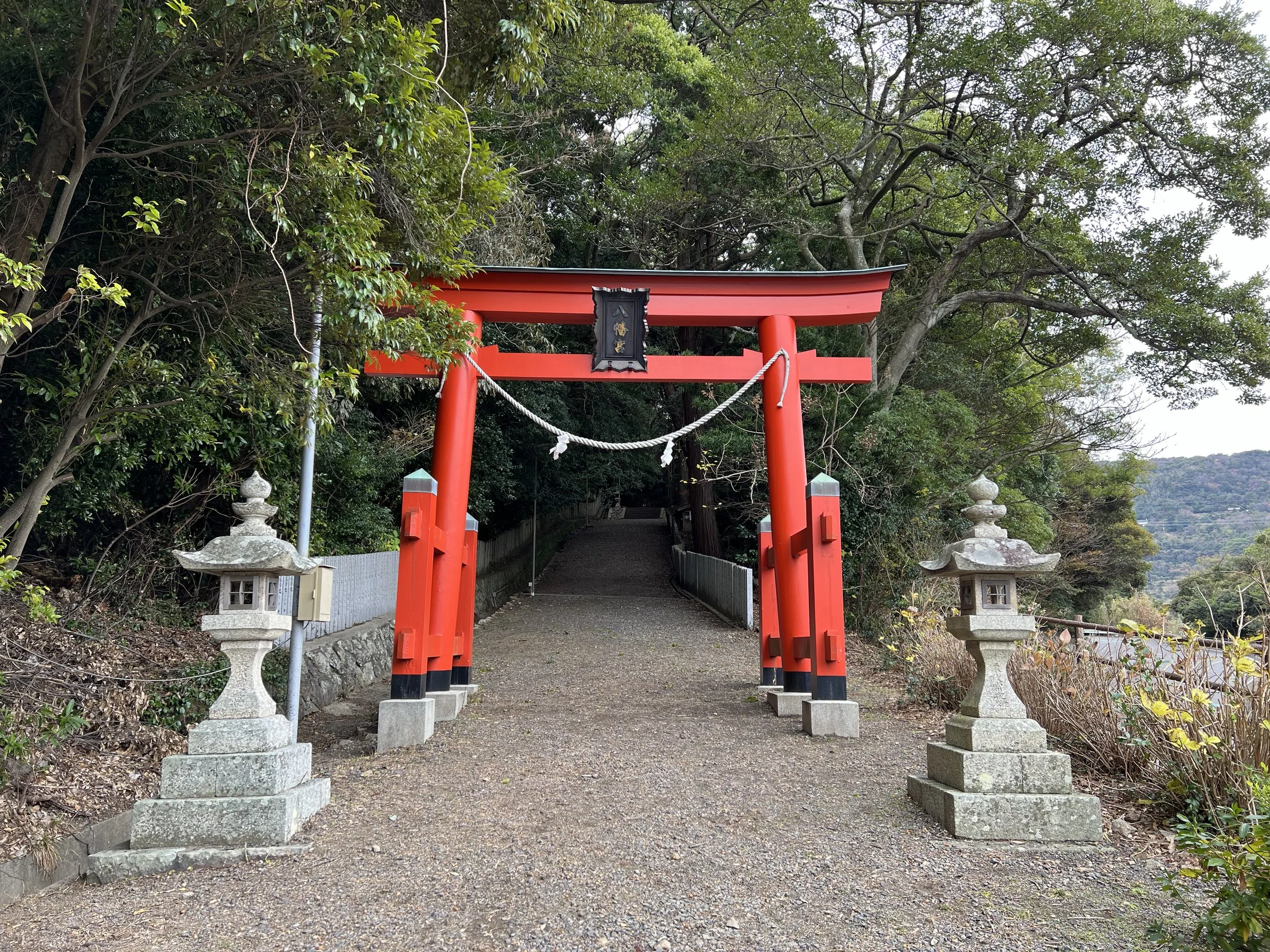
This portion of the walk followed the main road, which unfortunately didn’t have a sidewalk for most of the way, so I had to be careful with passing vehicles. Thankfully, the tunnel along the route did include a pedestrian walkway, which made that section much safer. Not long after exiting the tunnel, I arrived at Ena Hachiman Shrine.
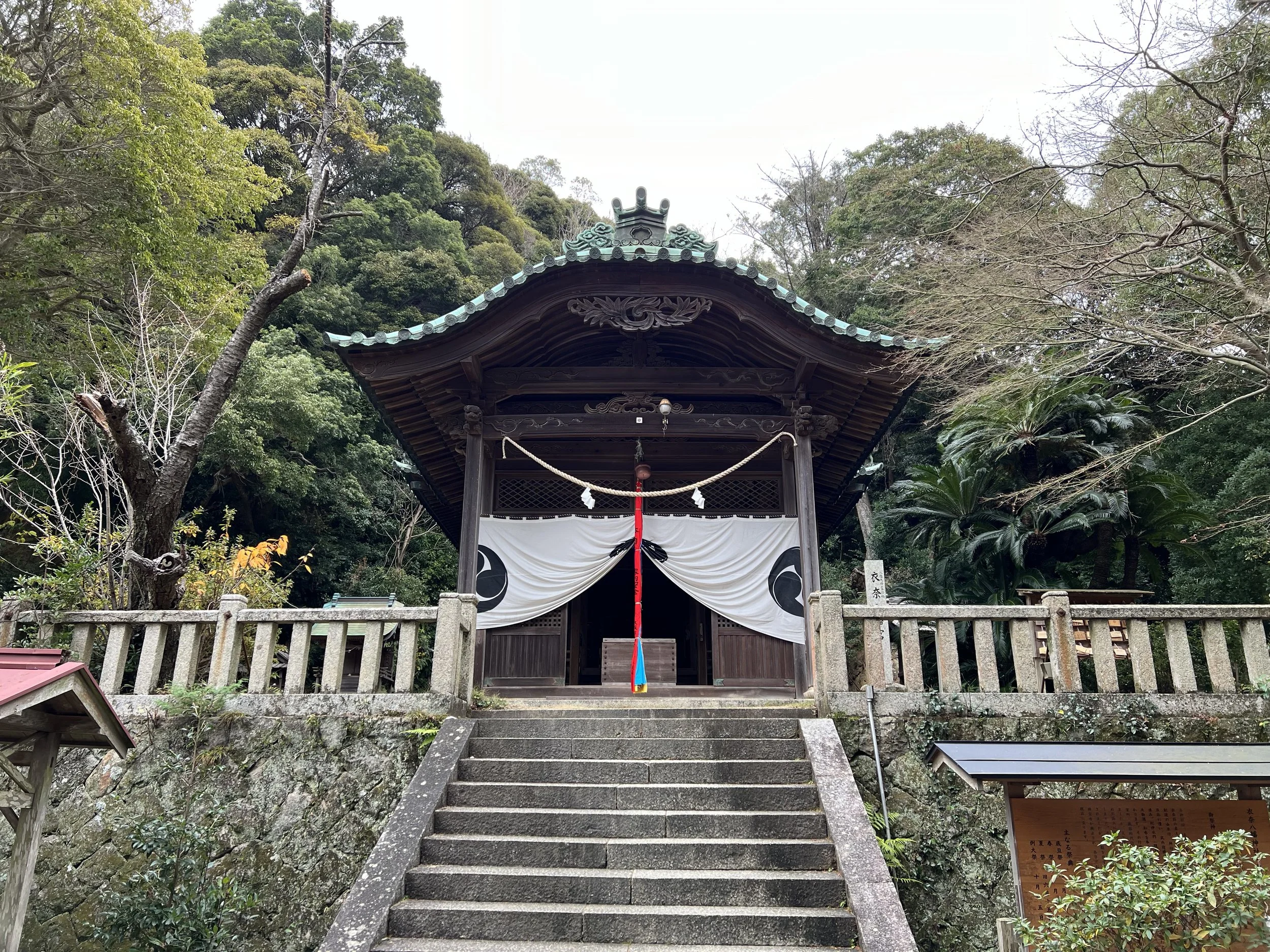
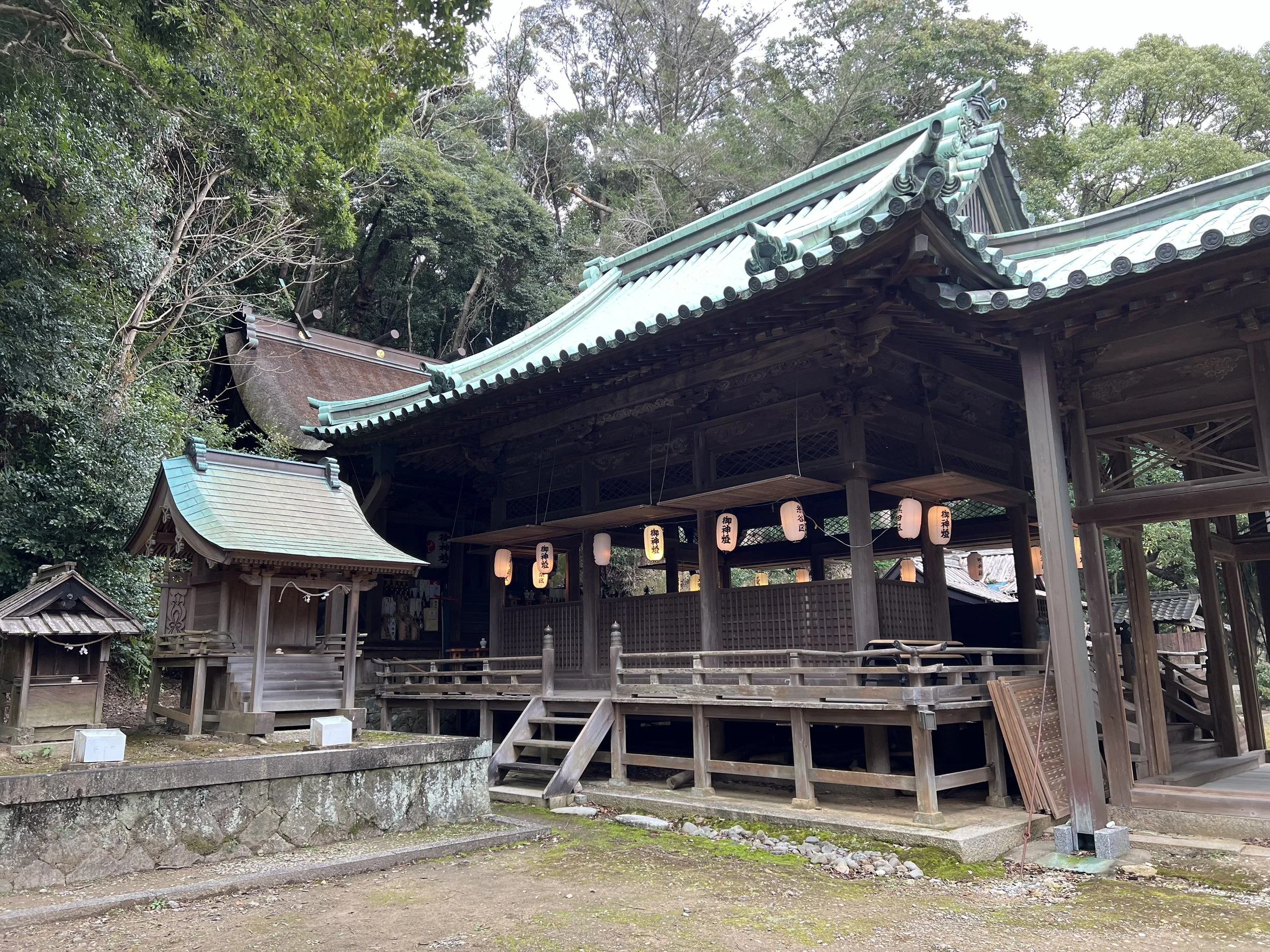
There are many Hachiman shrines across Japan, most of them dedicated to Hachiman, the deity associated with protection of warriors as well as farmers and fishermen. Because this particular shrine sits near Ena Fishing Port, it also serves as a place where local fishermen pray for safety and successful catches, in addition to its connection with Emperor Ojin, who is commonly worshipped as Hachiman.
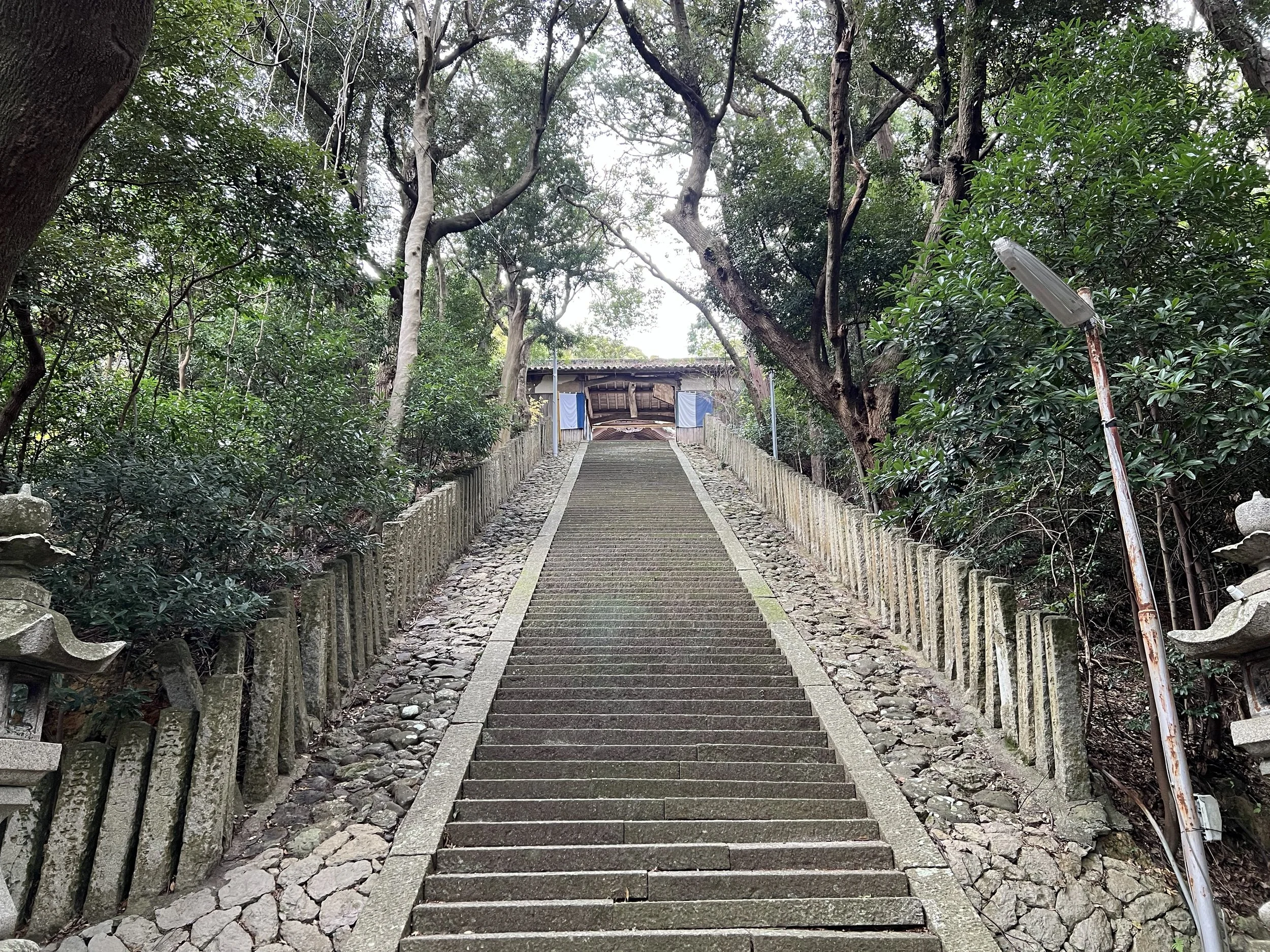
To reach the main shrine required climbing a steep flight of stone steps. Standing at the base and looking up, I briefly wondered if it might be enough just to admire the shrine from below. In the end, though, I climbed the stairs and reached the small but beautifully maintained shrine grounds at the top. Lanterns lined the approach, adding a quiet charm to the space. After spending a short time there, I made my way back down toward the fishing port.
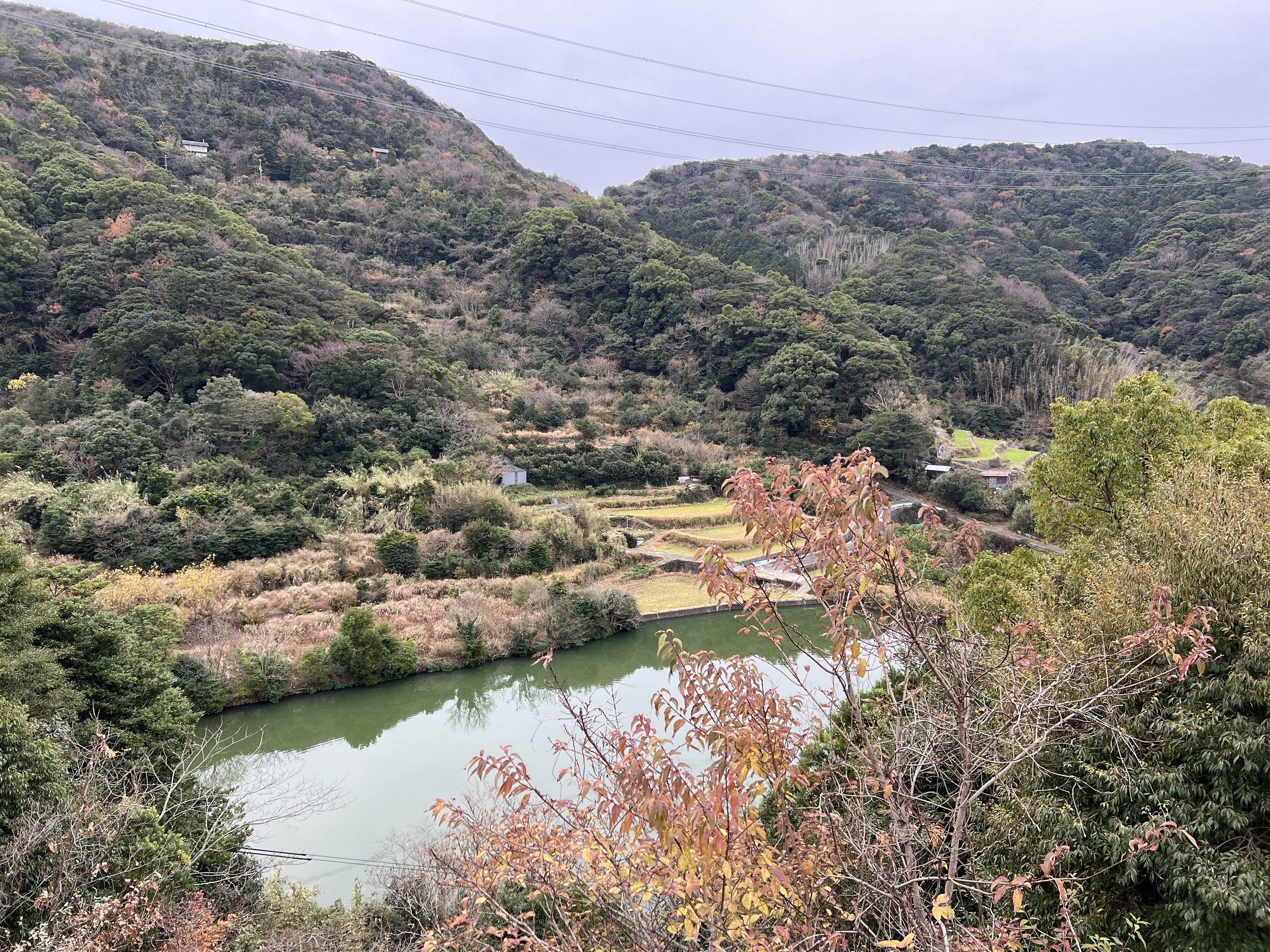
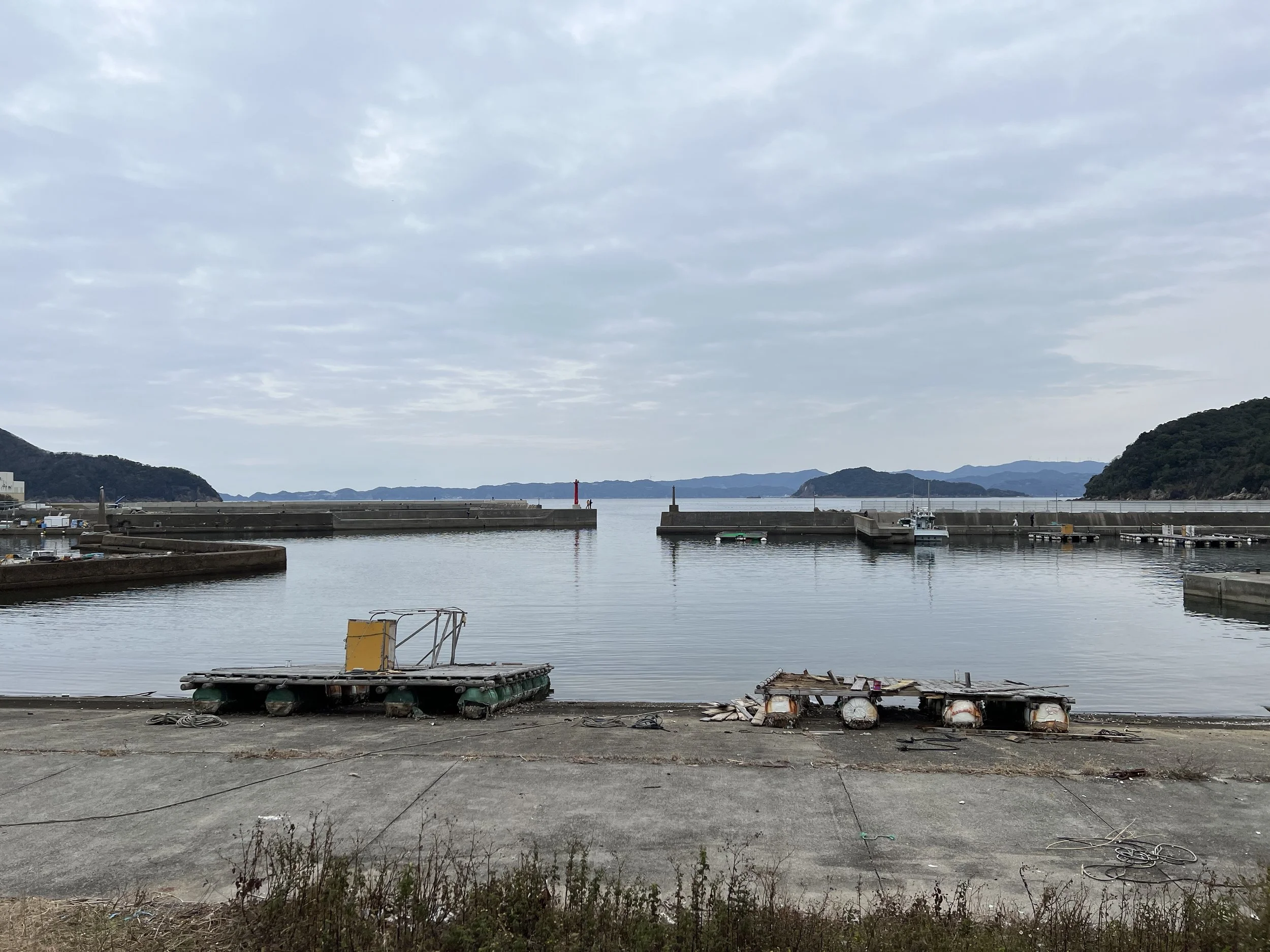
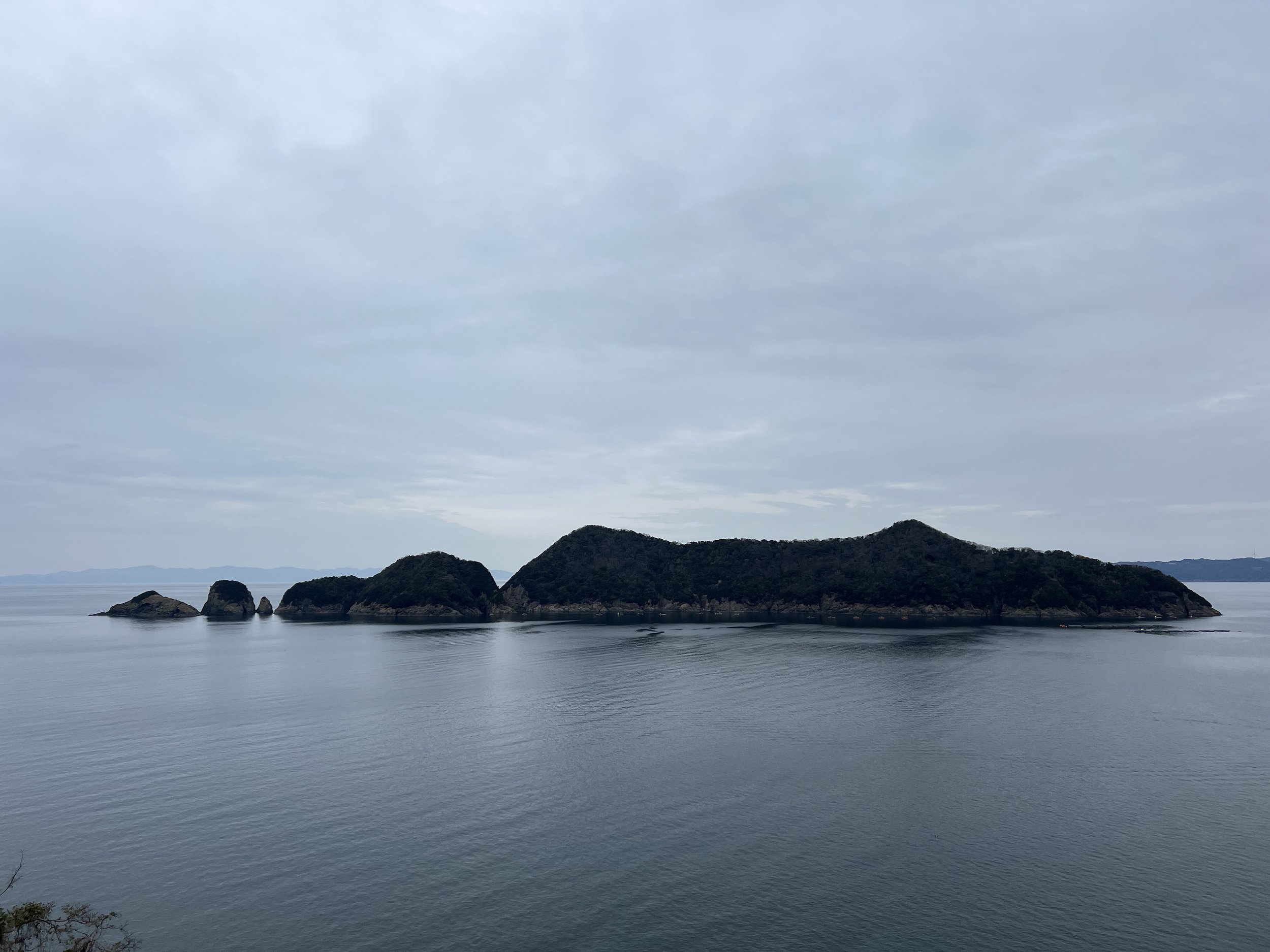
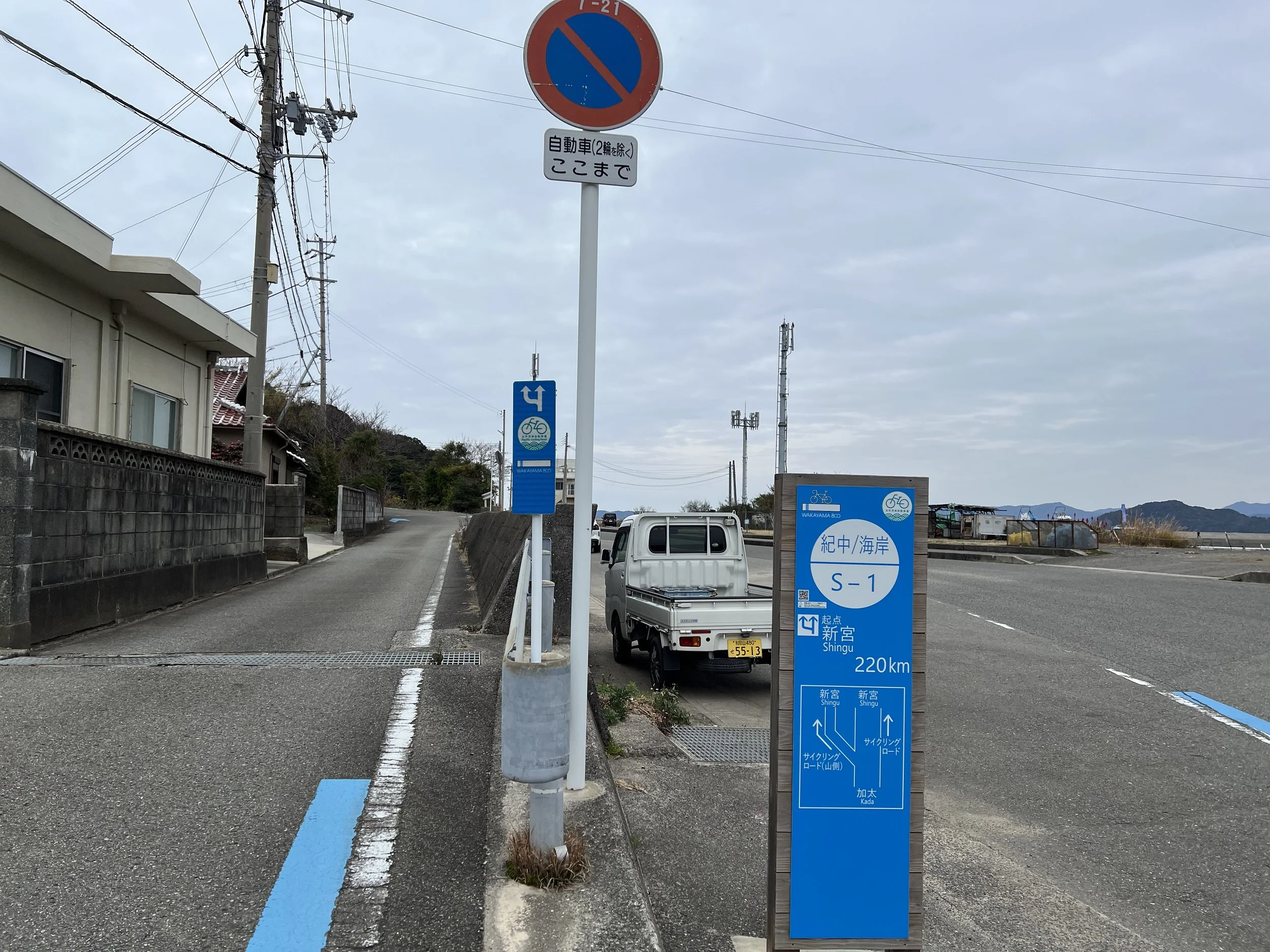
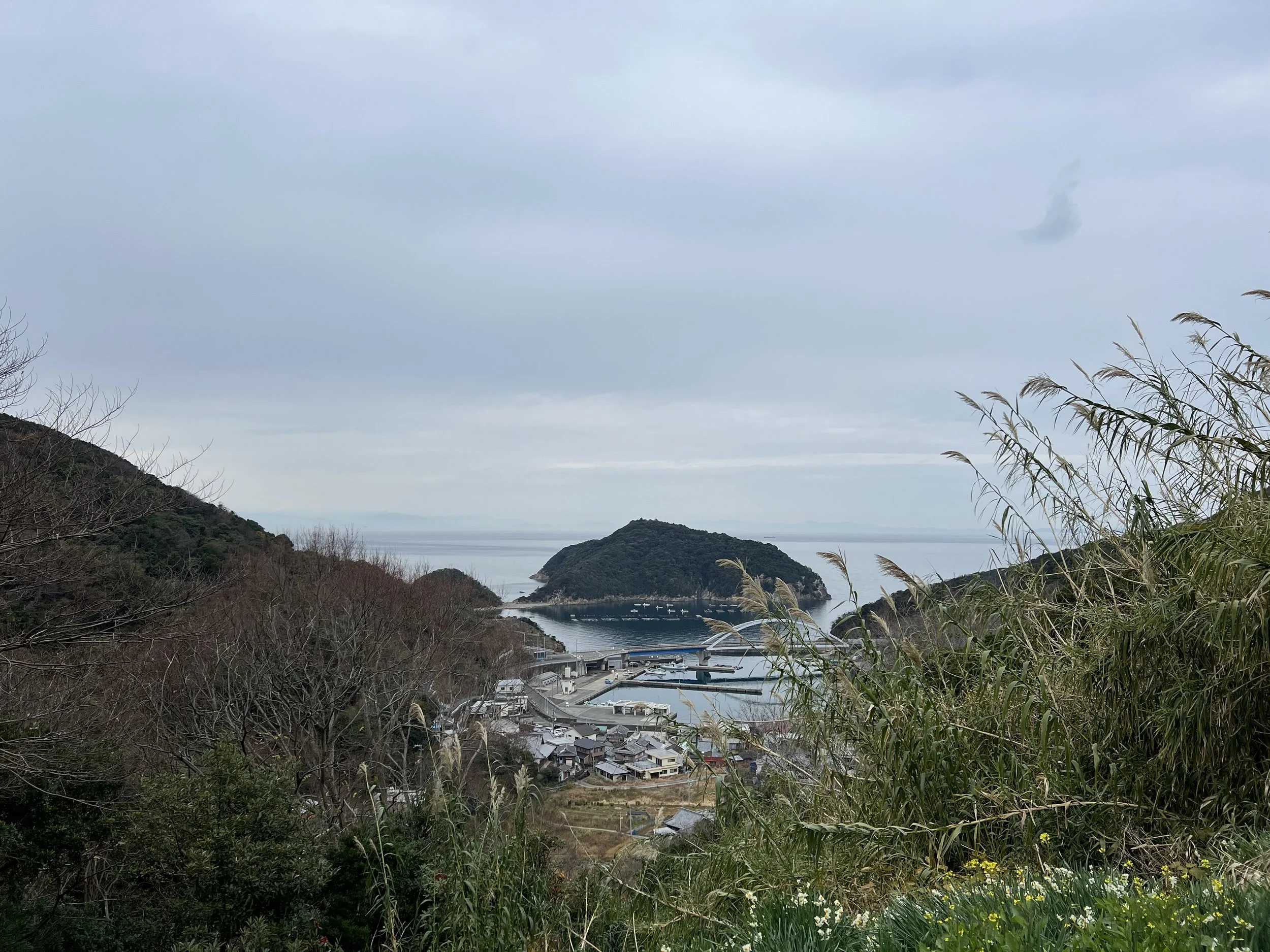
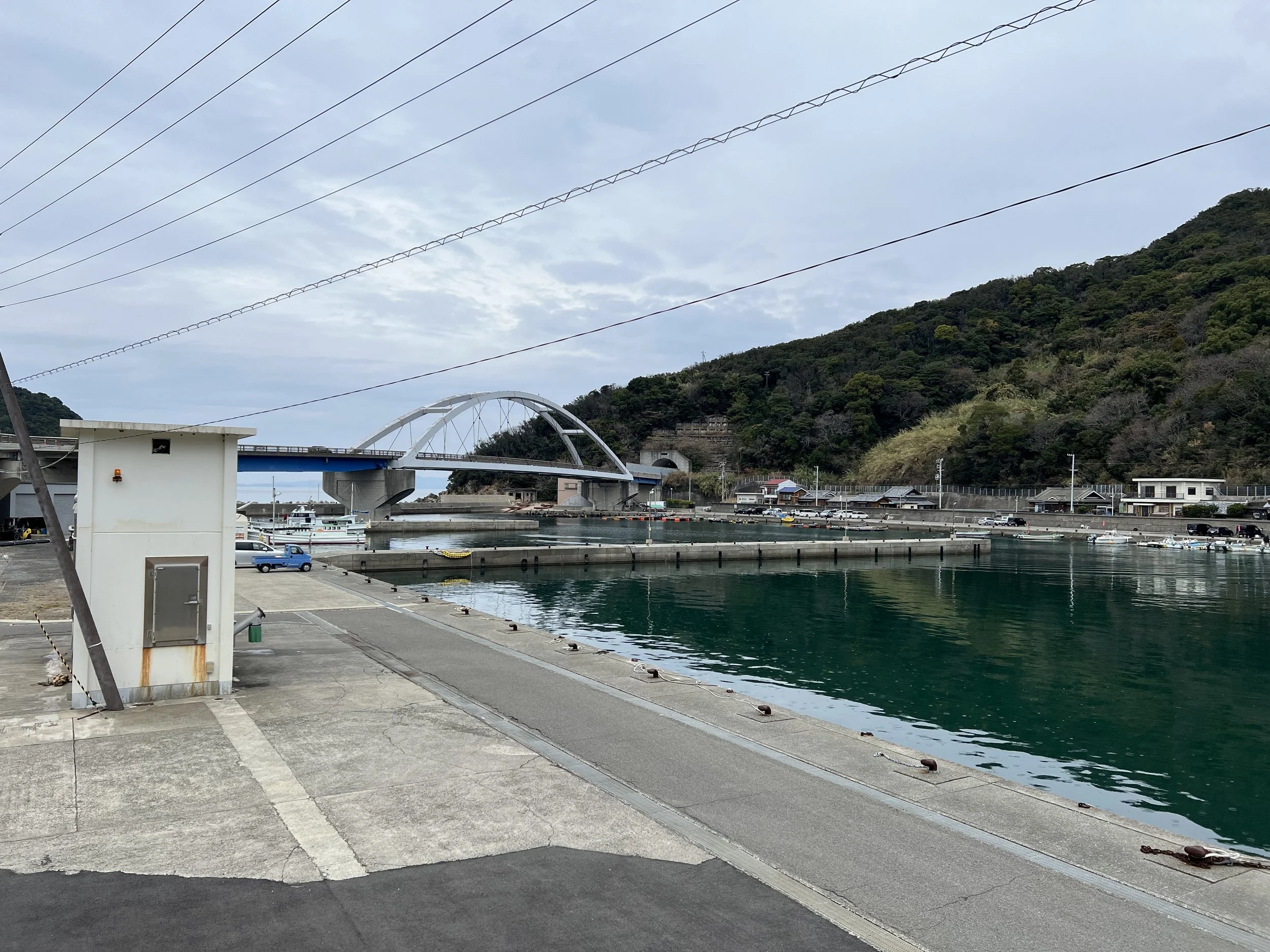
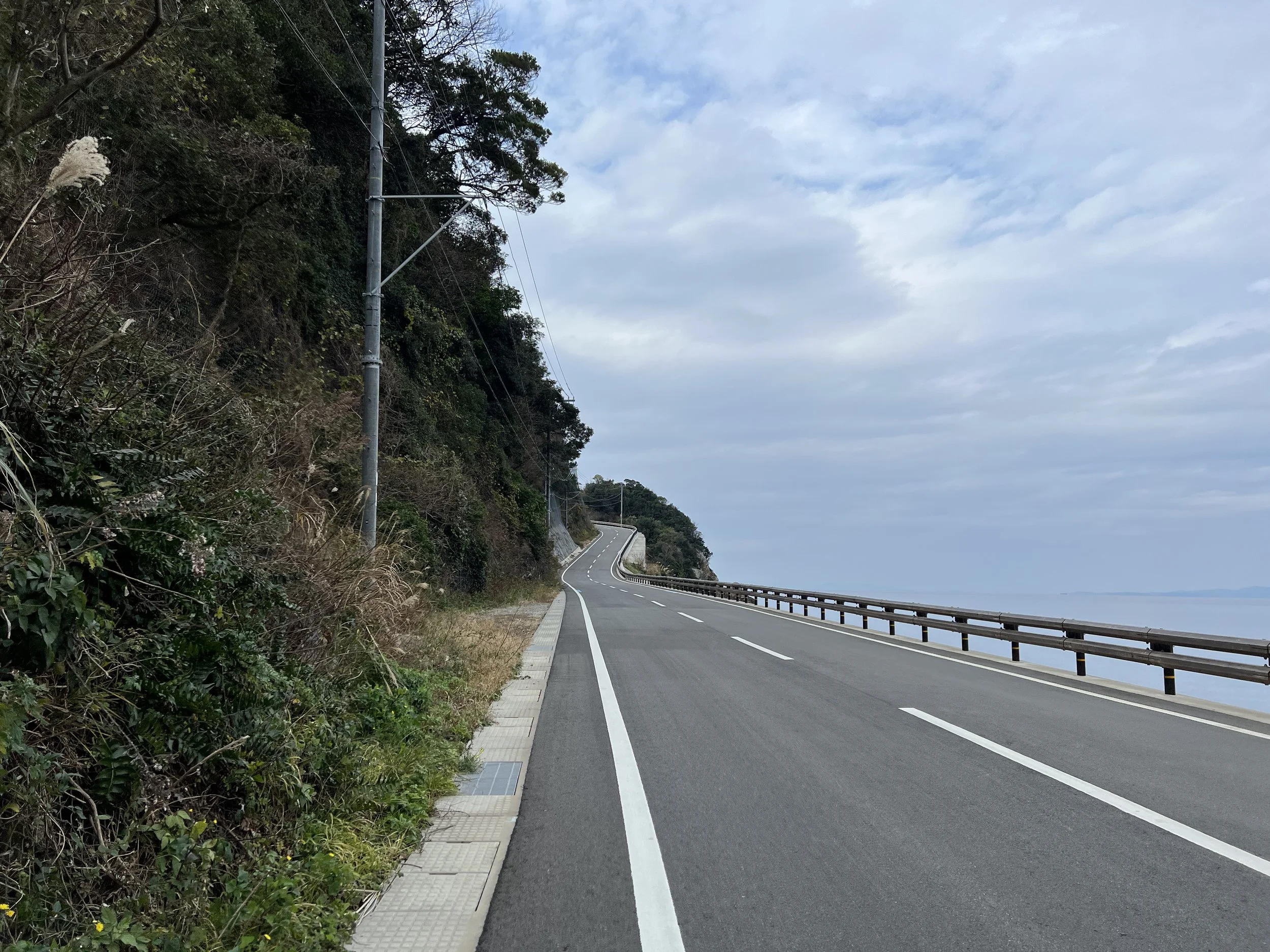
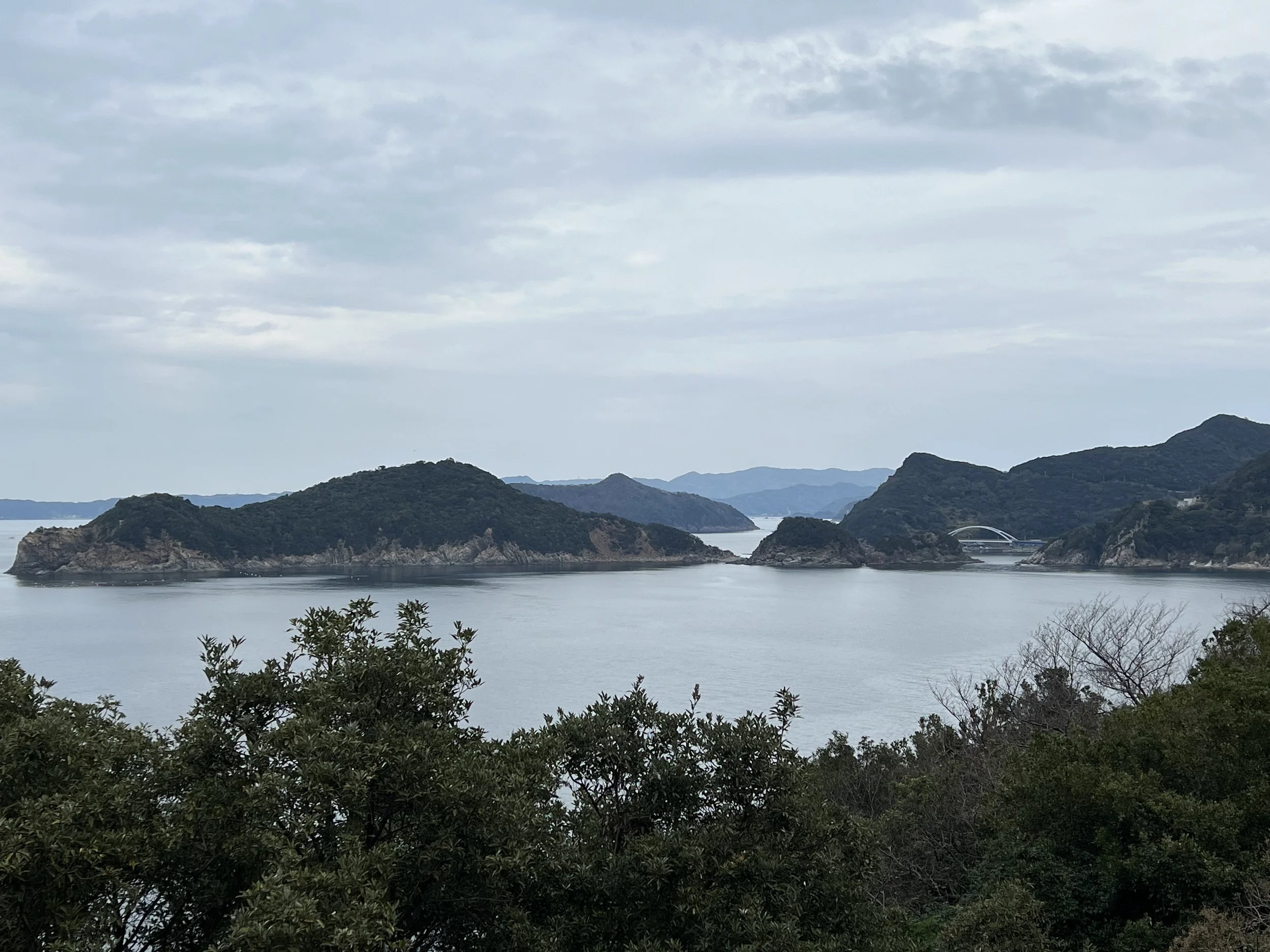
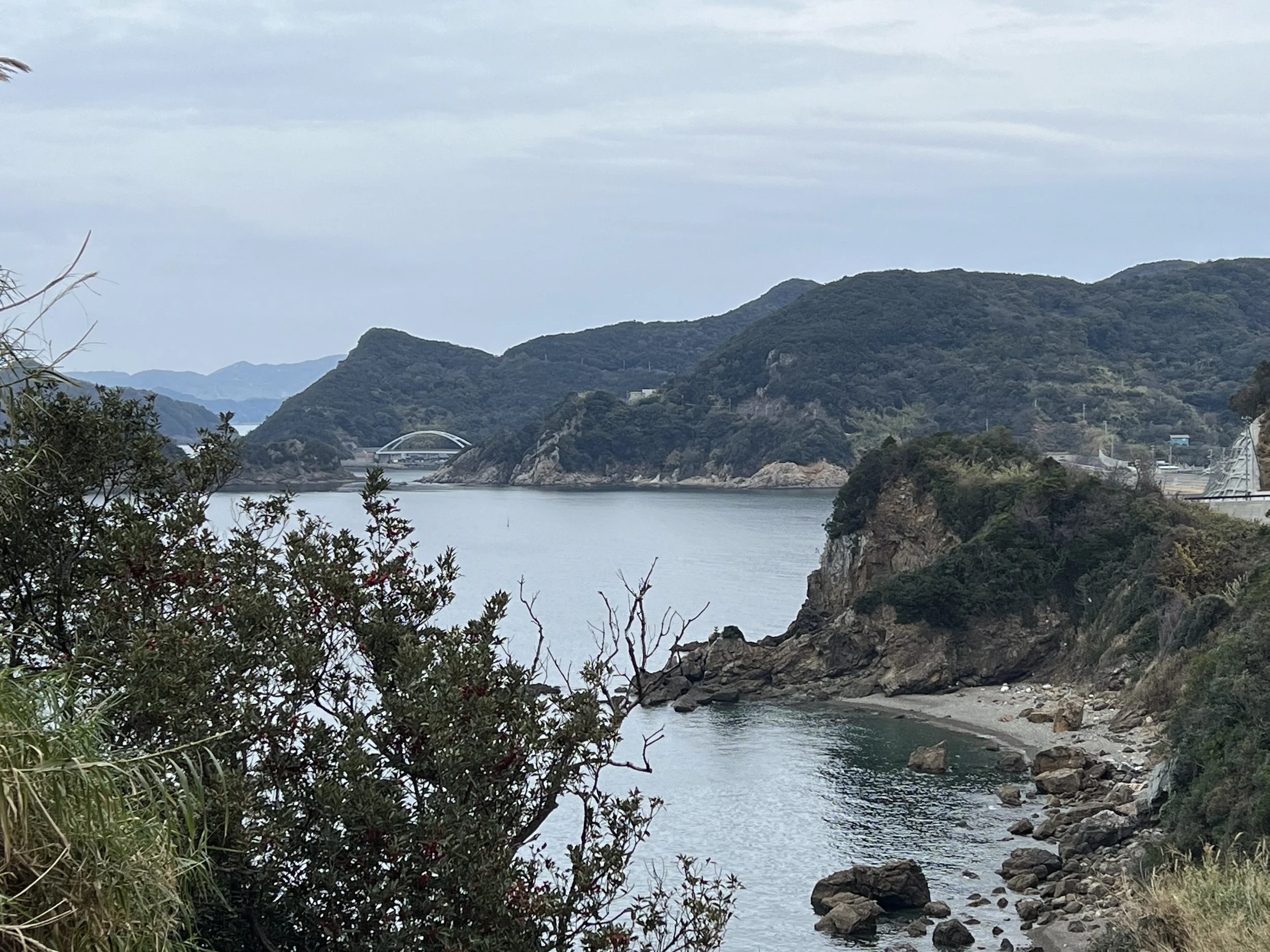
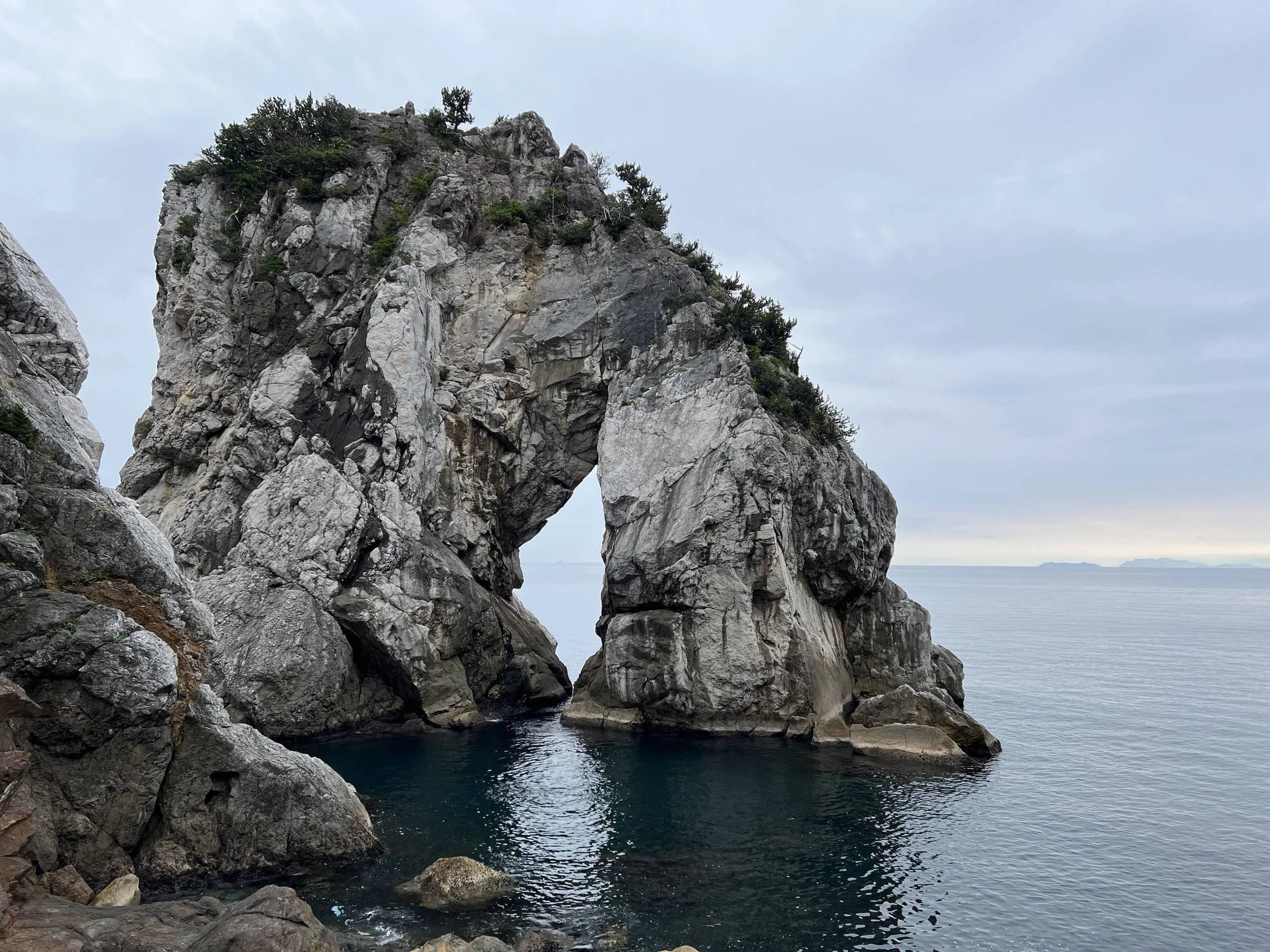
As I approached the port area, I started noticing blue markings on the road indicating designated cycling routes. Curious, I looked it up and learned that this region is considered one of Wakayama’s premier cycling destinations. The coastal roads are relatively quiet but offer dramatic ocean views along the Pacific coastline. Walking along the road, I could definitely see why cyclists are drawn here—the views out over the ocean were spectacular.
The road leading toward Totsui Limestone Cave follows one of these cycling routes, marked by a blue line painted along the pavement. The route climbs gradually higher into the hills, which also provides better vantage points over the coastline. Eventually I reached a fork in the road where the path climbs further into the mountains toward the cave. Thankfully, there was a sign right there indicating whether the cave was open that day, as the entrance itself lies another 650 metres up the narrow mountain road.
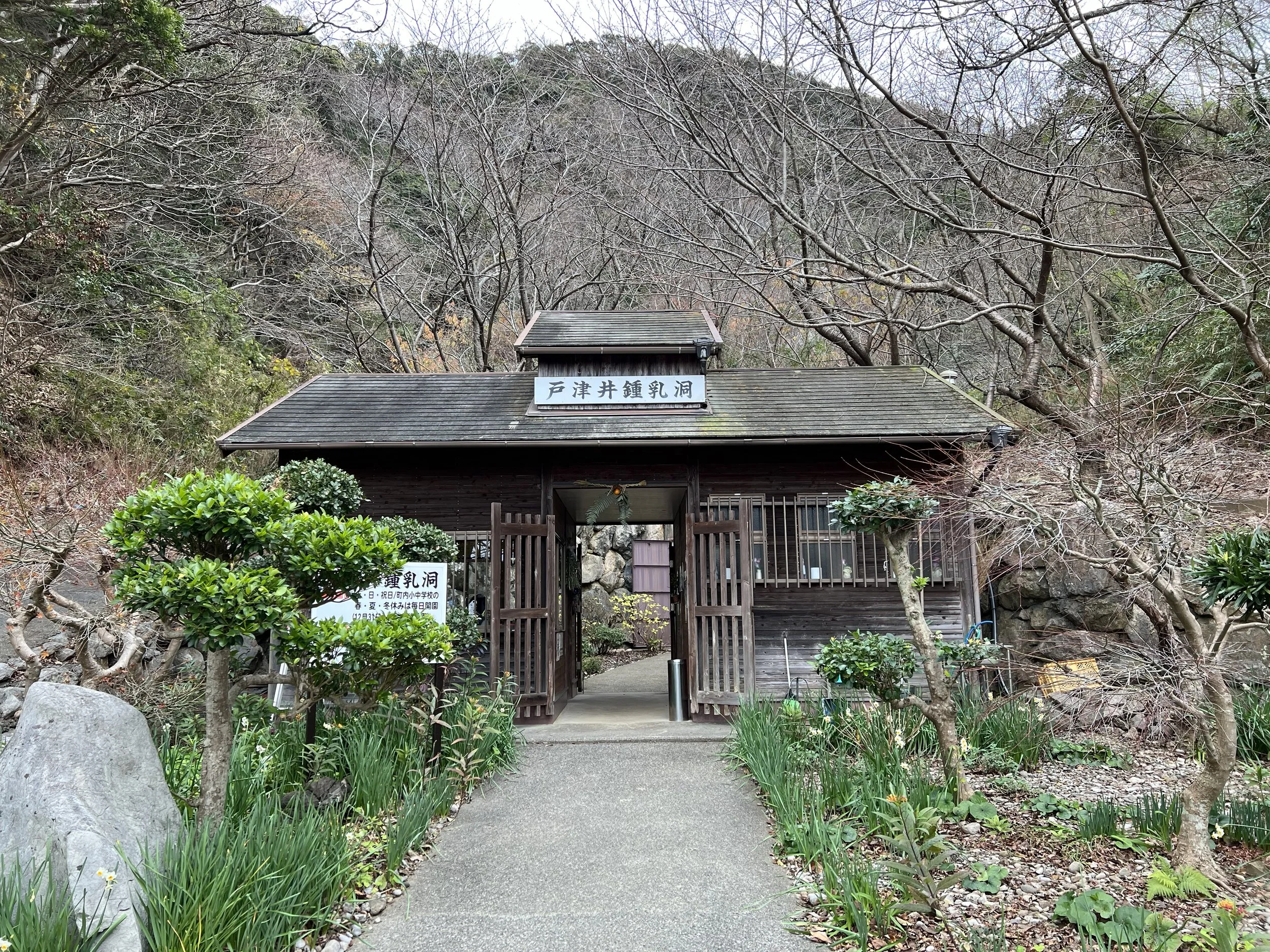
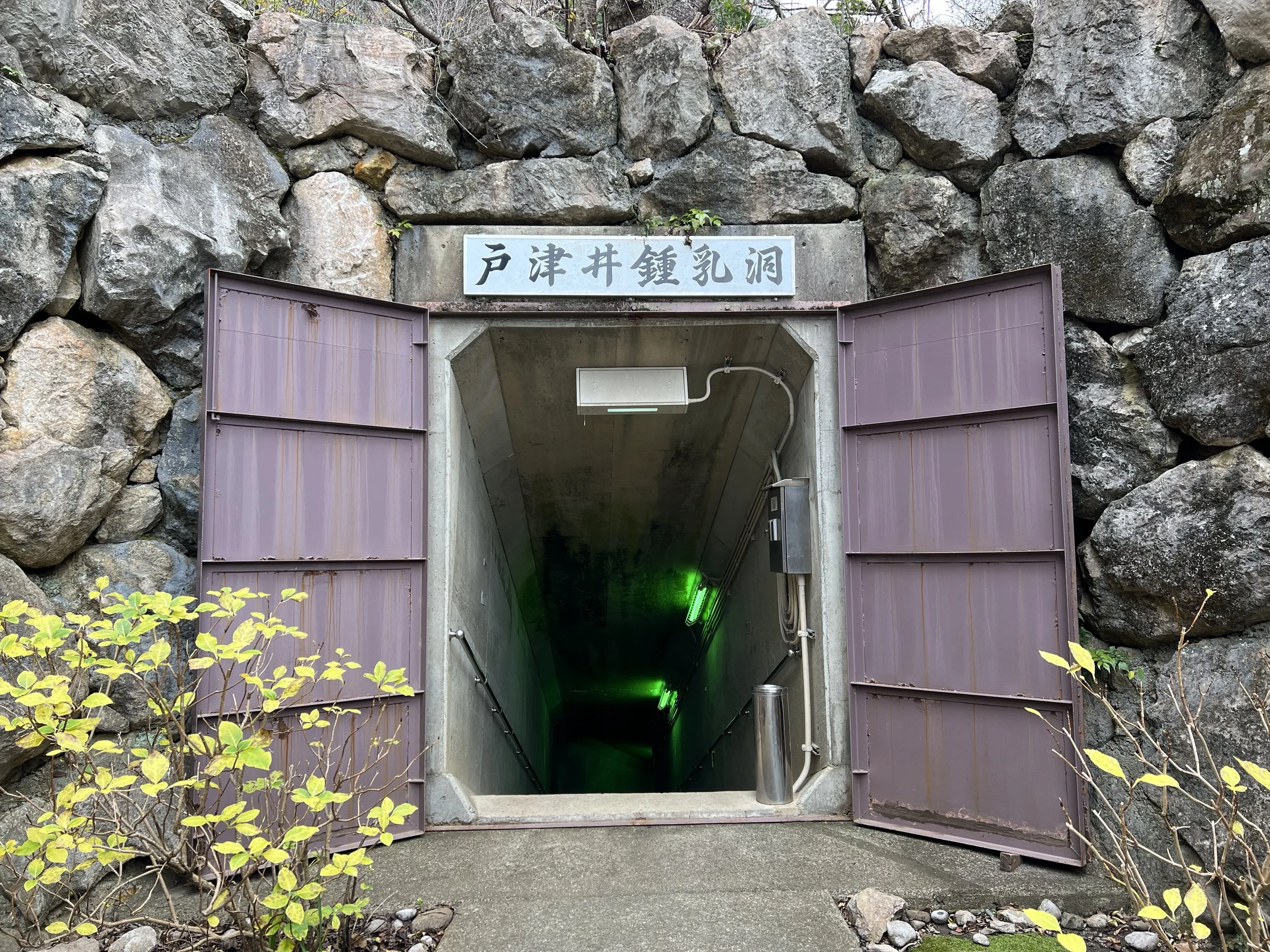
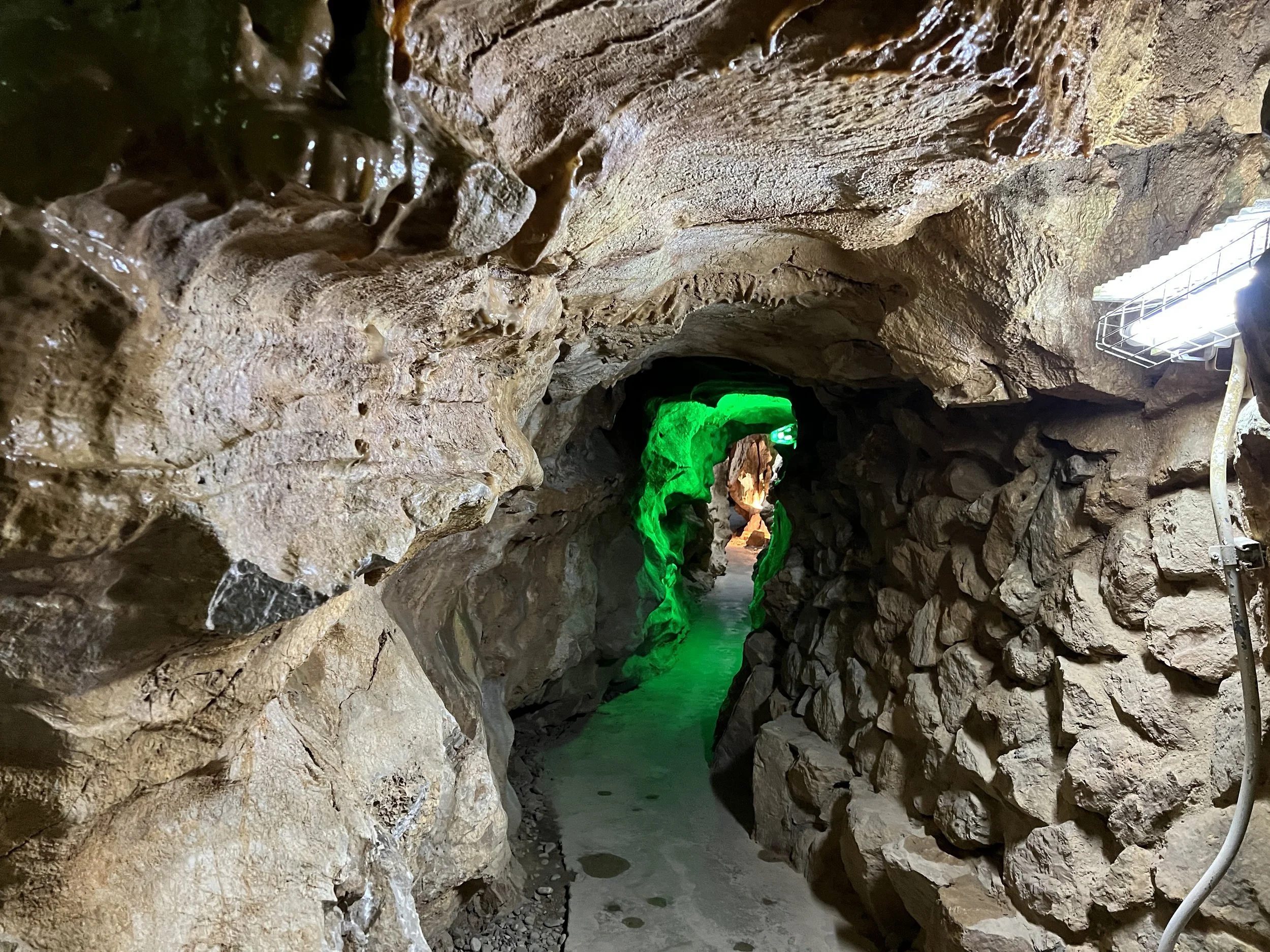
The entrance to the cave looked surprisingly dramatic. After purchasing my ticket, I passed through a stone-lined entryway and a metal gate that leads into a tunnel descending into the cave system. Compared to other limestone caves I had visited in Japan, this one felt noticeably more humid.
The cave itself formed more than 250 million years ago and stretches about 100 metres in total length. Some sections of the tunnel are quite narrow, so visitors move through it fairly quickly. It didn’t take long to reach the end and make the return trip, though I was moving a bit faster than usual as the cave environment was irritating my eyes more than expected.
When I finally stepped back outside, I used a bit of my drinking water to rinse my face in hopes of easing the irritation. Standing near the viewpoint overlooking Totsui Fishing Port below, I rinsed my eyes again before taking a few photos of the harbour.
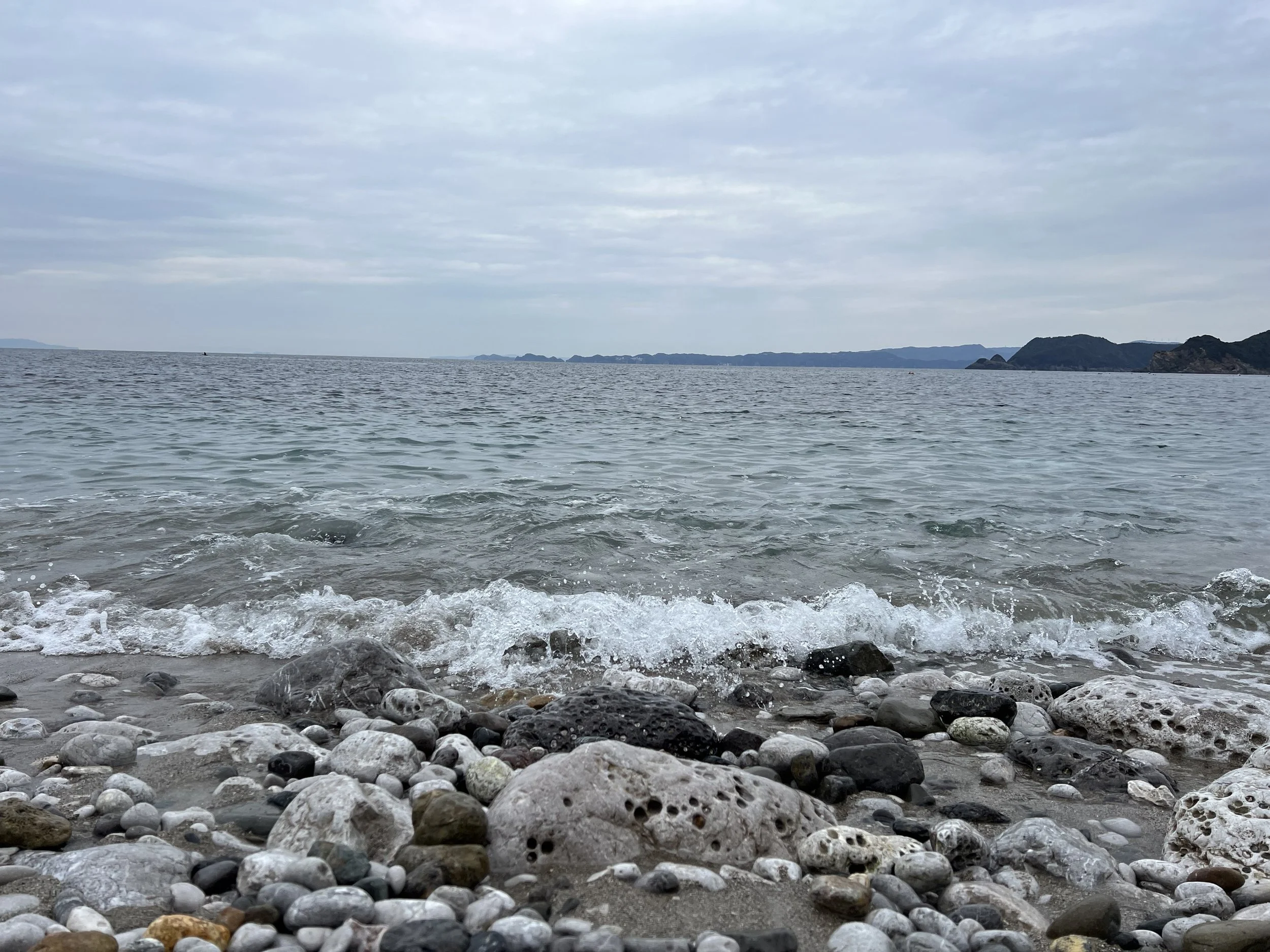
Once I felt better, I continued down the mountain road until it rejoined the main coastal road toward Shirasaki Marine Park. From the limestone cave, it’s about five kilometres on foot to the park, following the coastline the entire way. The views along this stretch were fantastic, though the road shoulder was quite narrow on one side, so I ended up walking with the direction of traffic rather than against it.
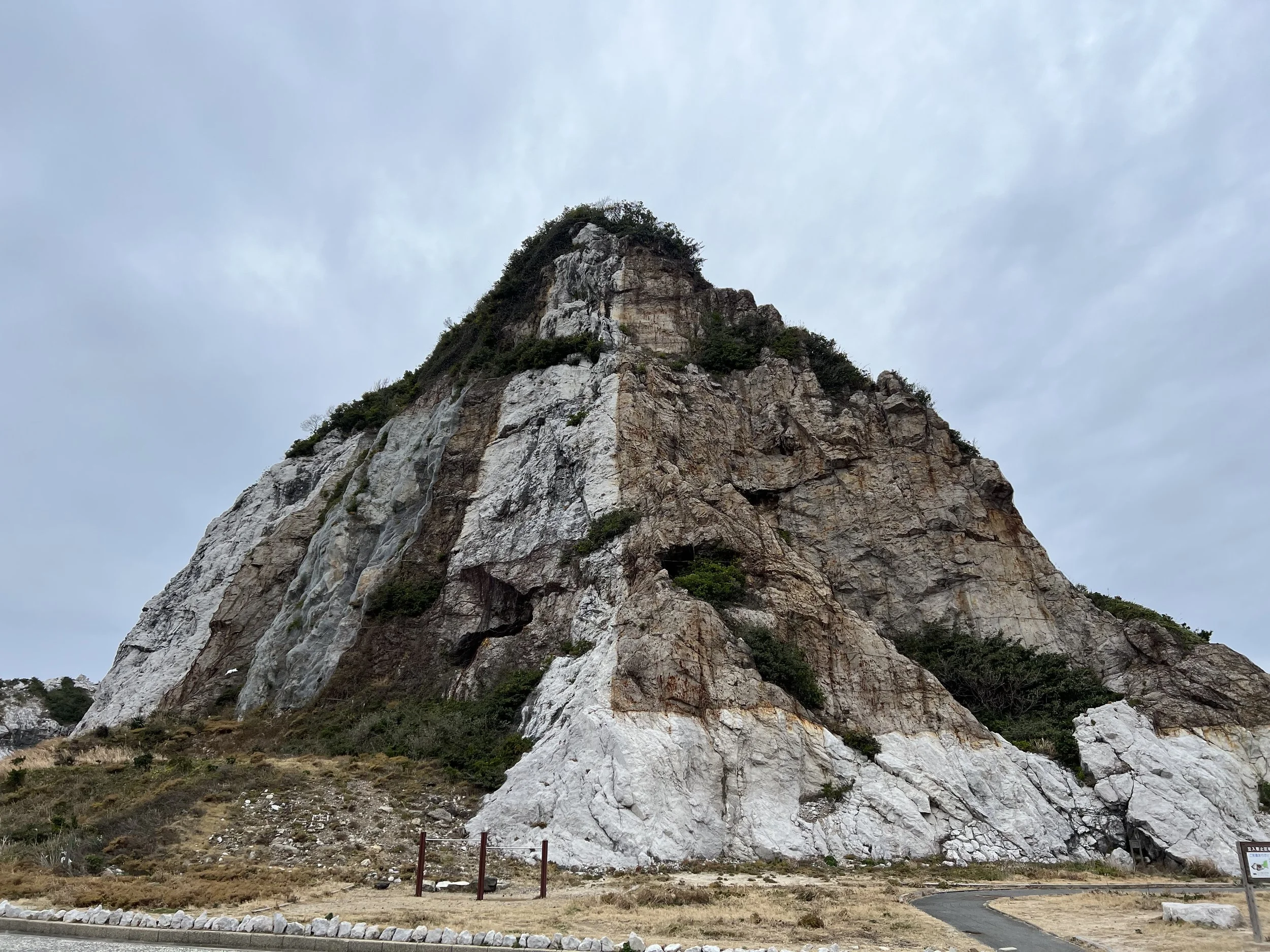
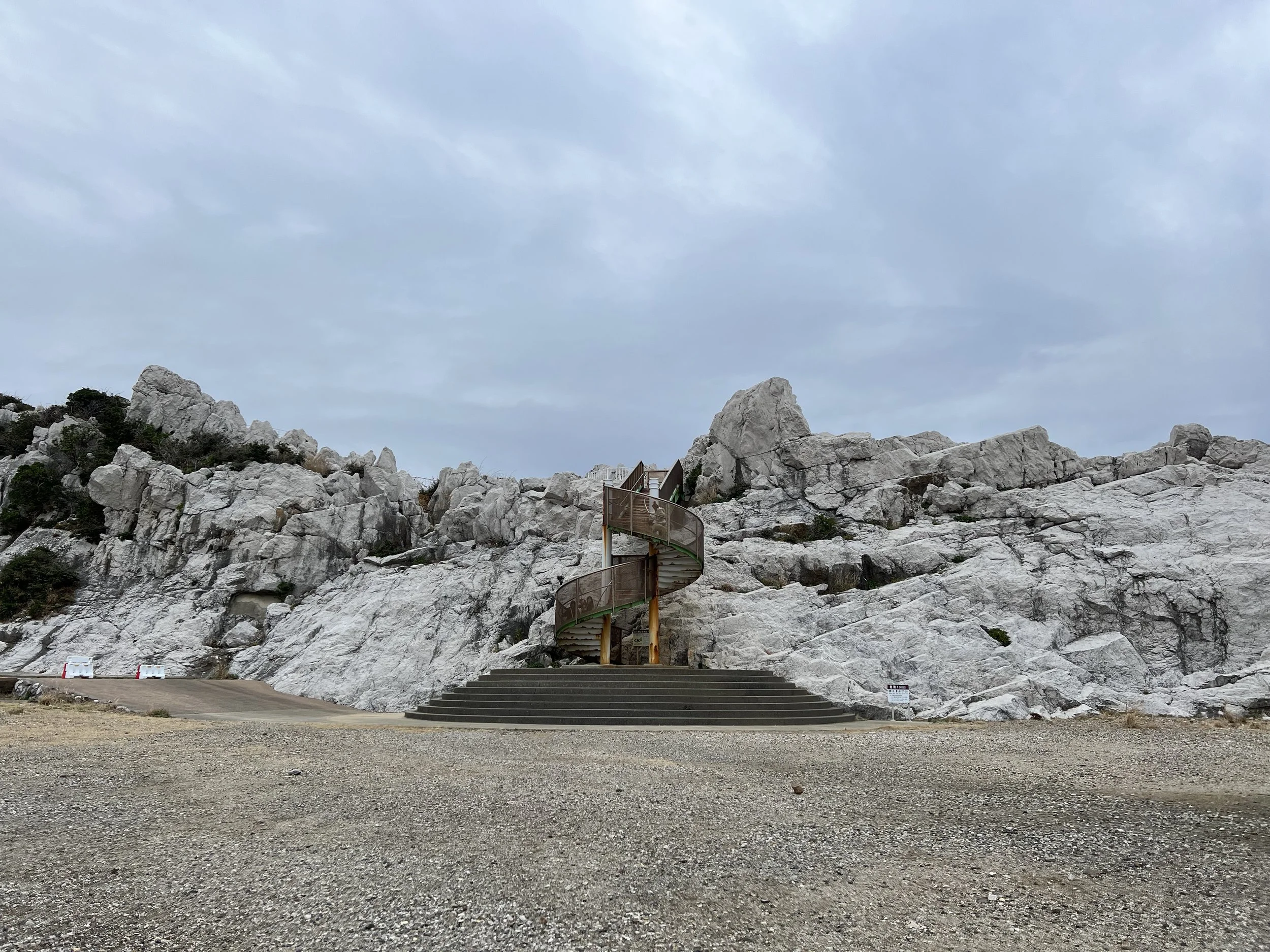
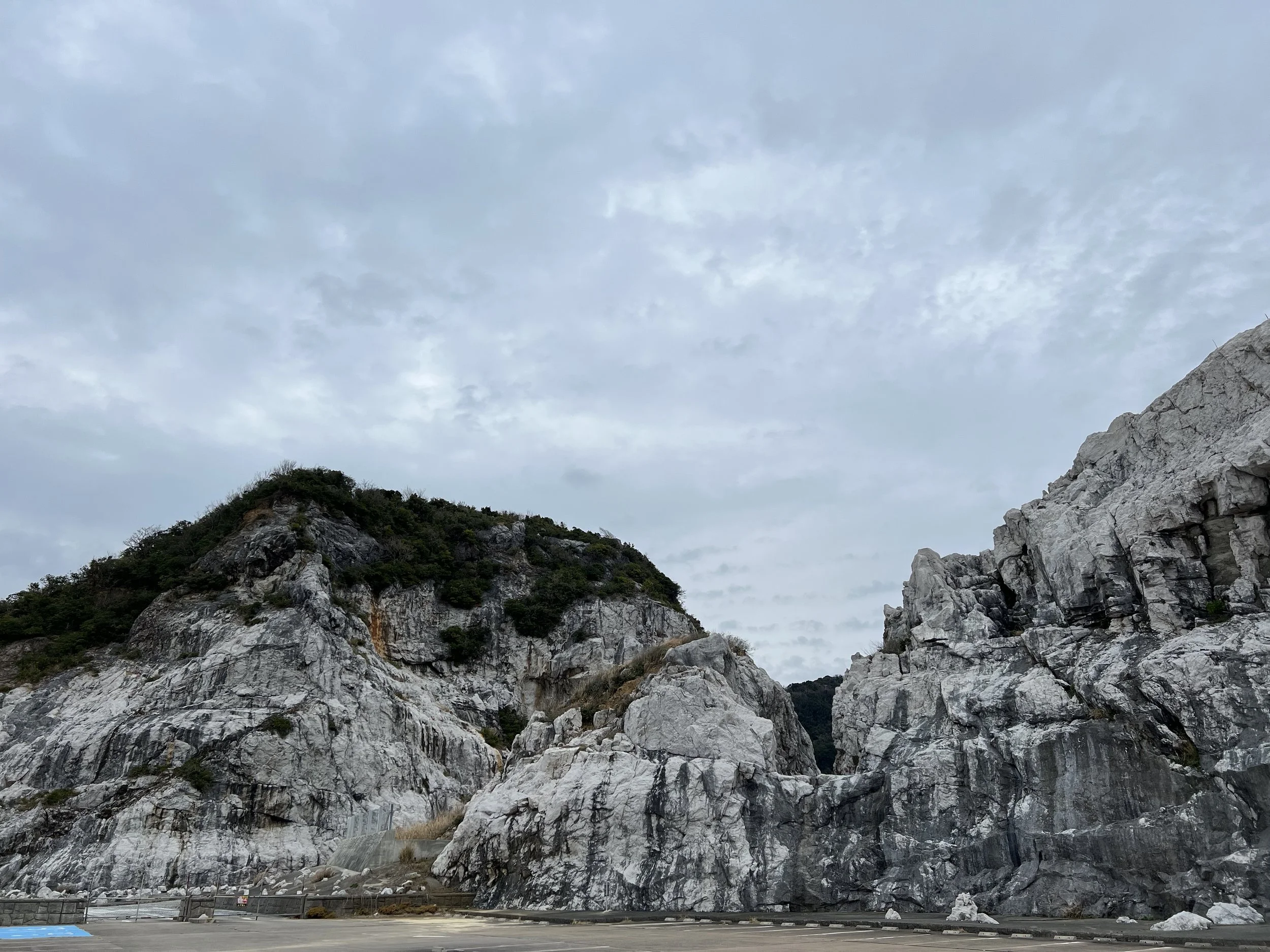
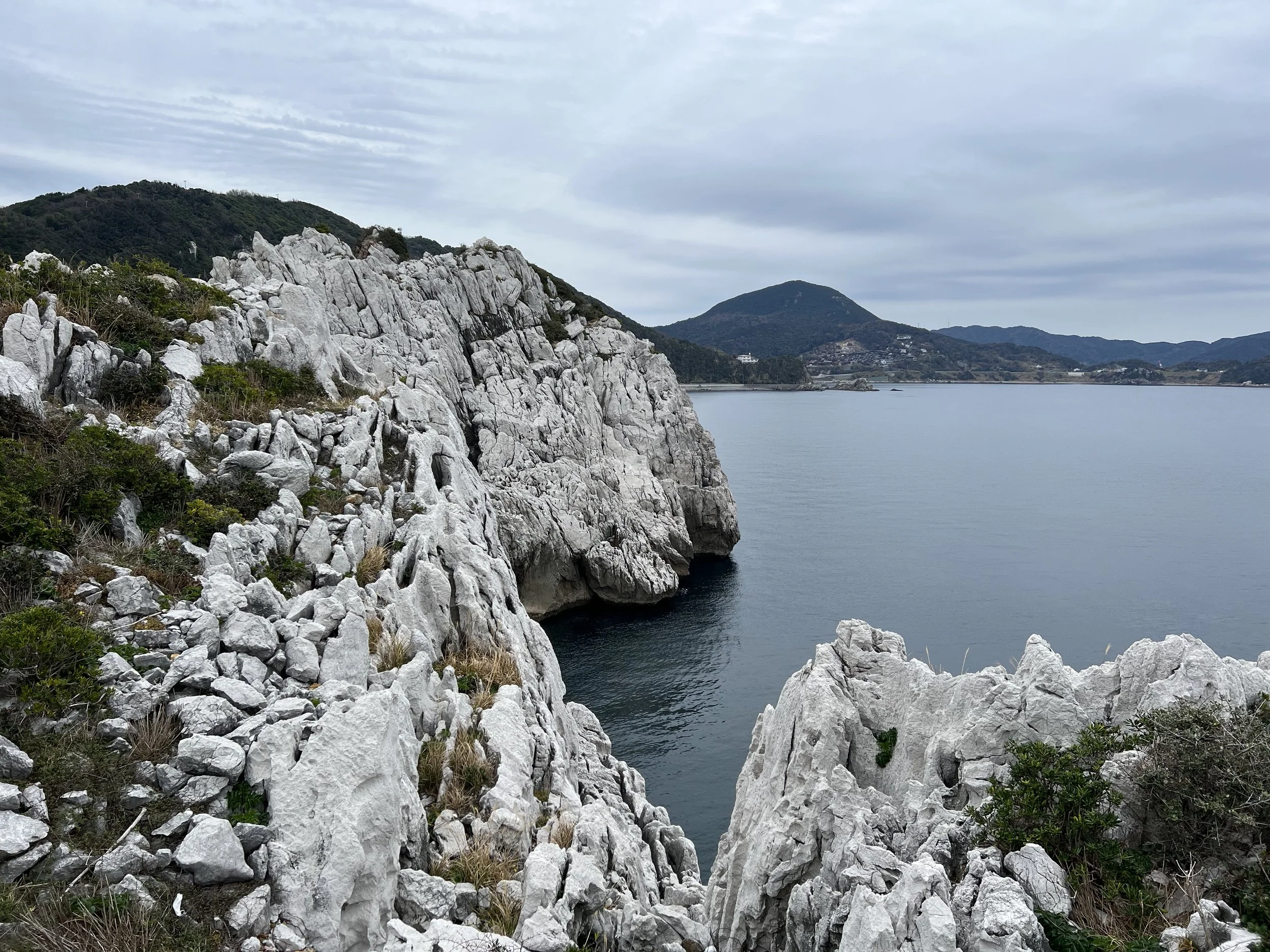
Shirasaki Marine Park sits between rugged mountains on one side and the Pacific Ocean on the other. The area is famous for its striking white limestone cliffs and is sometimes called “Japan’s Aegean Sea.” The pale rock formations stand out dramatically against the deep blue water, especially when the sunlight reflects off them.
These limestone formations are thought to have formed over 250 million years ago, created through geological changes and the uplift of ancient seabed deposits. When I arrived at the park, I was relieved to see a modern visitor facility with a café and, most importantly, clean washrooms. I had been walking for quite a while at that point and needed to refill my water supply—especially after using some earlier to rinse my eyes—and grab something more substantial to eat. The snacks I had packed were clearly not enough for the distance I had covered.
After taking a short break, I started walking the paths around the marine park. The park includes a large campground area, and I first stopped at the Shirasaki Coast viewing area where waves crashed against the limestone shoreline. A nearby sign mentioned that this is considered one of the best sunset viewing spots in the region. As tempting as it was to stay, I knew I still had a long walk back to the train station ahead of me.
Continuing along the path, I climbed up to one of the observation decks overlooking the cliffs. The stairs rise roughly two storeys before connecting to a walkway that brings you close to the limestone formations. Seeing the brilliant white rock up close was impressive. I spent quite a while there taking photos from different angles before eventually heading back down.
After completing a loop around the park’s paths, I returned to the main road and began the long walk back toward Kii-Yura Station. The return journey through the quiet mountain roads was mostly uneventful, giving me time to reflect on the day. Although things hadn’t gone according to my original plan, the unexpected change allowed me to explore more of the Yura coastline than I otherwise would have.
History & Background
Yura Coast (由良海岸) lies along the western shoreline of the Kii Peninsula, facing the Pacific Ocean. The area is known for its dramatic coastal scenery, fishing villages, and ancient geological formations.
One of the region’s cultural landmarks is Kokokuji Temple, founded in 1227 during the Kamakura period. The temple was established in honour of Minamoto no Sanetomo, the third shogun of the Kamakura shogunate, who was assassinated in 1219. Local legend holds that after the temple burned down, it was miraculously rebuilt overnight by a Tengu spirit, mythical beings associated with mountains and forests in Japanese folklore.
Another notable stop along the coast is Totsui Limestone Cave. The cave system is part of an ancient limestone formation estimated to be over 250 million years old. Though relatively small compared to some of Japan’s major cave systems, it provides insight into the region’s geological history.
Further along the coast lies Shirasaki Marine Park, famous for its striking white limestone cliffs that contrast sharply with the deep blue Pacific Ocean. Because of this resemblance, the area is sometimes nicknamed the “Aegean Sea of Japan.” The park has become a popular destination for scenic walks, camping, and coastal cycling routes.
Getting There
The closest railway access point for the Yura Coast area is Kii-Yura Station on the JR Kisei Main Line (also known as the Kinokuni Line). From Wakayama Station, travellers can take a local JR train southbound along the Kisei Line to reach Kii-Yura Station.
From Kii-Yura Station, local buses normally operate to coastal destinations including Shirasaki Marine Park and surrounding villages, though service may be limited during holidays or off-season periods. When buses are unavailable, visitors can reach the coast by taxi or by cycling from the station.
Travellers driving by car can access Shirasaki Marine Park in about 30 minutes from the Yuasa-Gobo Road via nearby coastal routes. Parking and visitor facilities are available within the marine park area.
Route Overview
Distance: 20.15 km out & back (Kii-Yura Station)
Total elevation gain: 537 m
Duration: 4 hr 06 min (with breaks 4 hr 17 min)
Difficulty: Intermediate
Cost Breakdown
Train: Wakayama Station → Kii-Yura Station — ¥860
Entrance Fee: Totsui Limestone Cave — ¥400
Food: ¥976