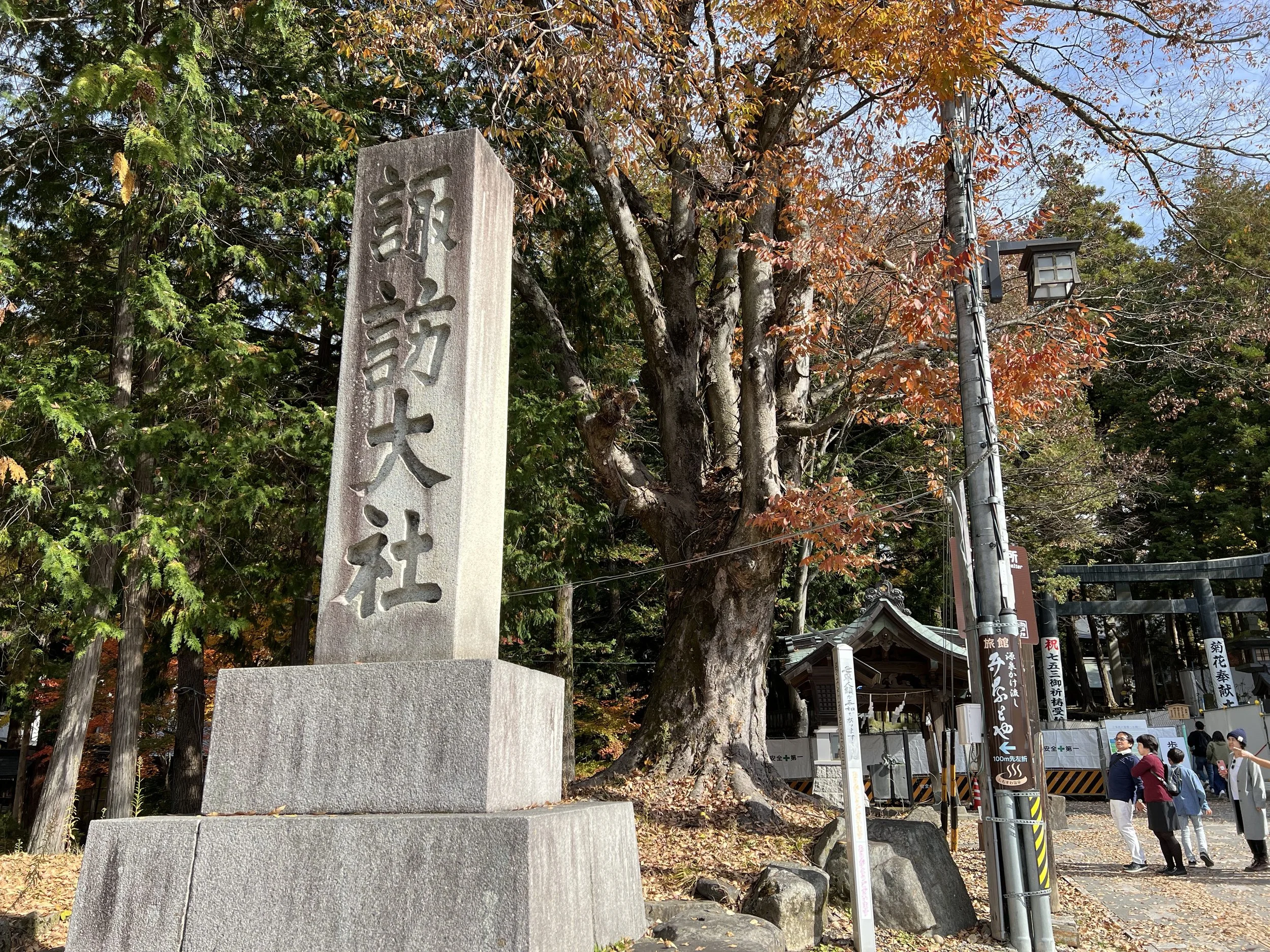
Suwa Taisha Shimosha - Nagano, Japan
When I first planned my visit to Suwa Taisha, I thought I’d be visiting one or two shrines in the town of Suwa. It turns out, it’s not that simple.
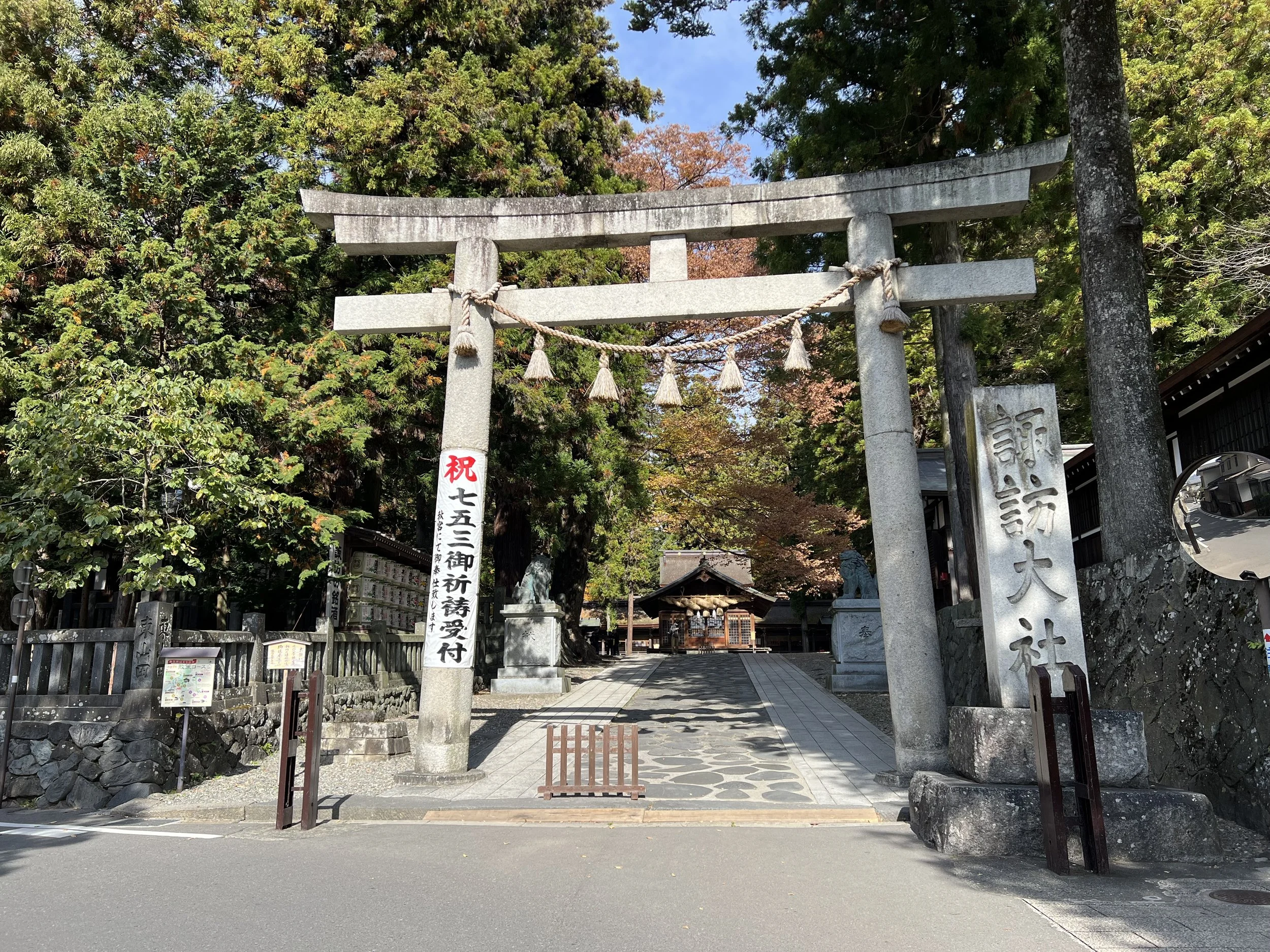
Suwa Taisha is actually made up of four separate shrine complexes—split across the north and south sides of Lake Suwa—and together, they form one of the oldest shrine systems in Japan, dating back over 1,200 years. Rather than rushing through all four in one day, I decided to slow things down and split the visit over two days. Today was dedicated to the two Shimosha (lower shrines): Shimosha Akimiya and Shimosha Harumiya.
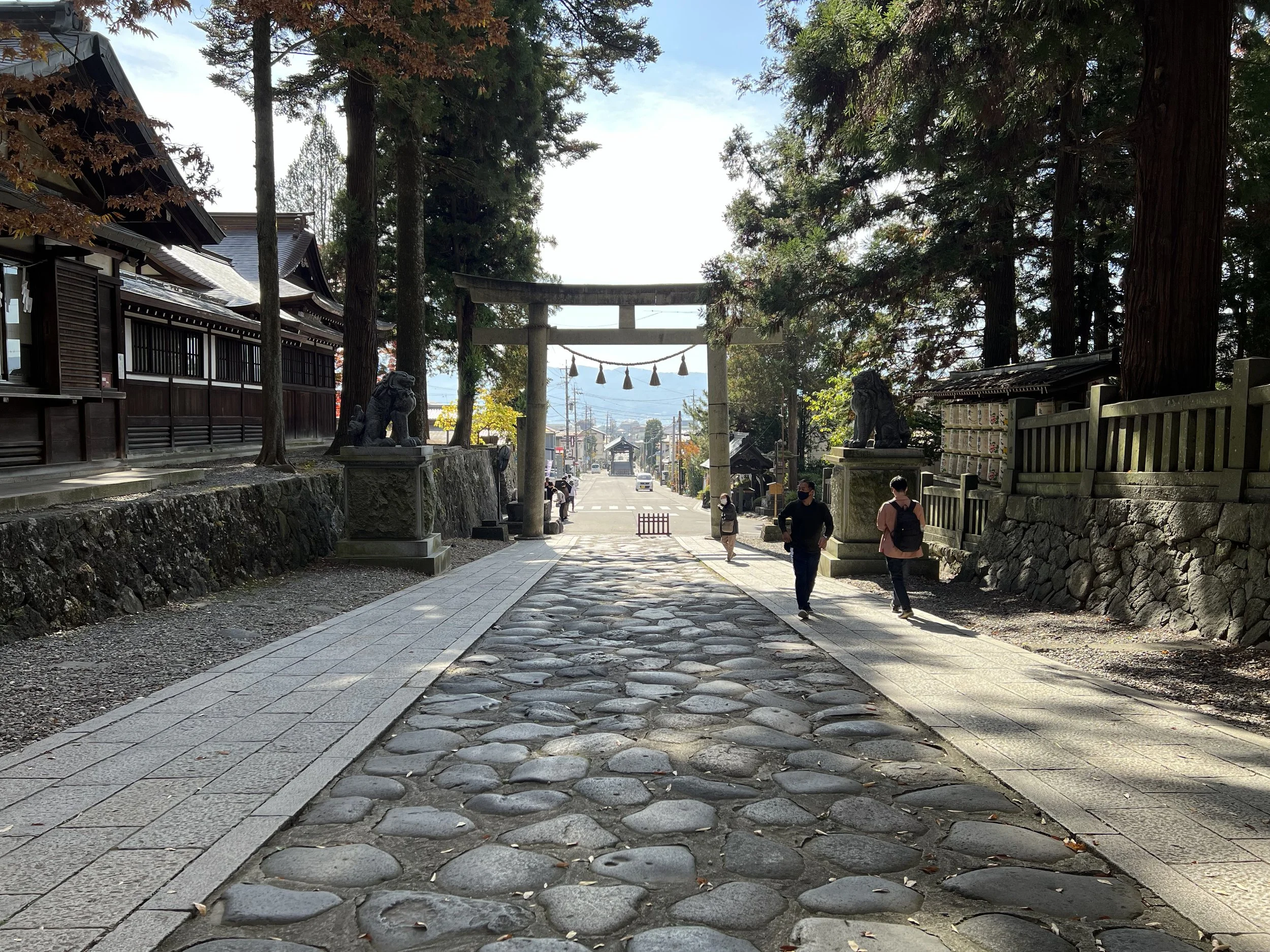
I took a short train ride from Kami-Suwa Station to Shimo-Suwa Station and started my walk from there. The first stop was Shimosha Akimiya, mainly because it’s the closest to the station. But it didn’t take long to realize that this shrine carries a quiet presence that makes you want to slow down anyway.
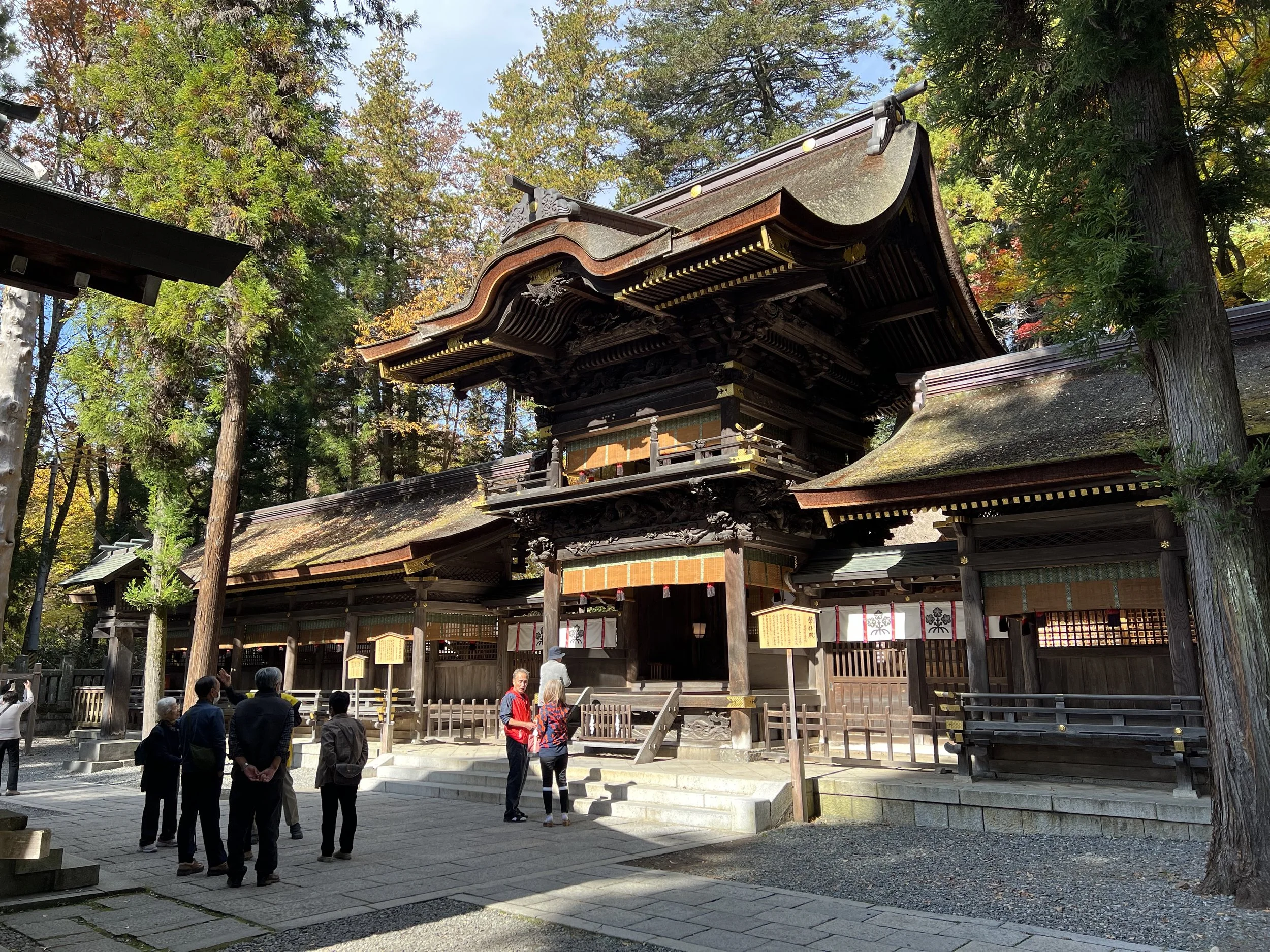
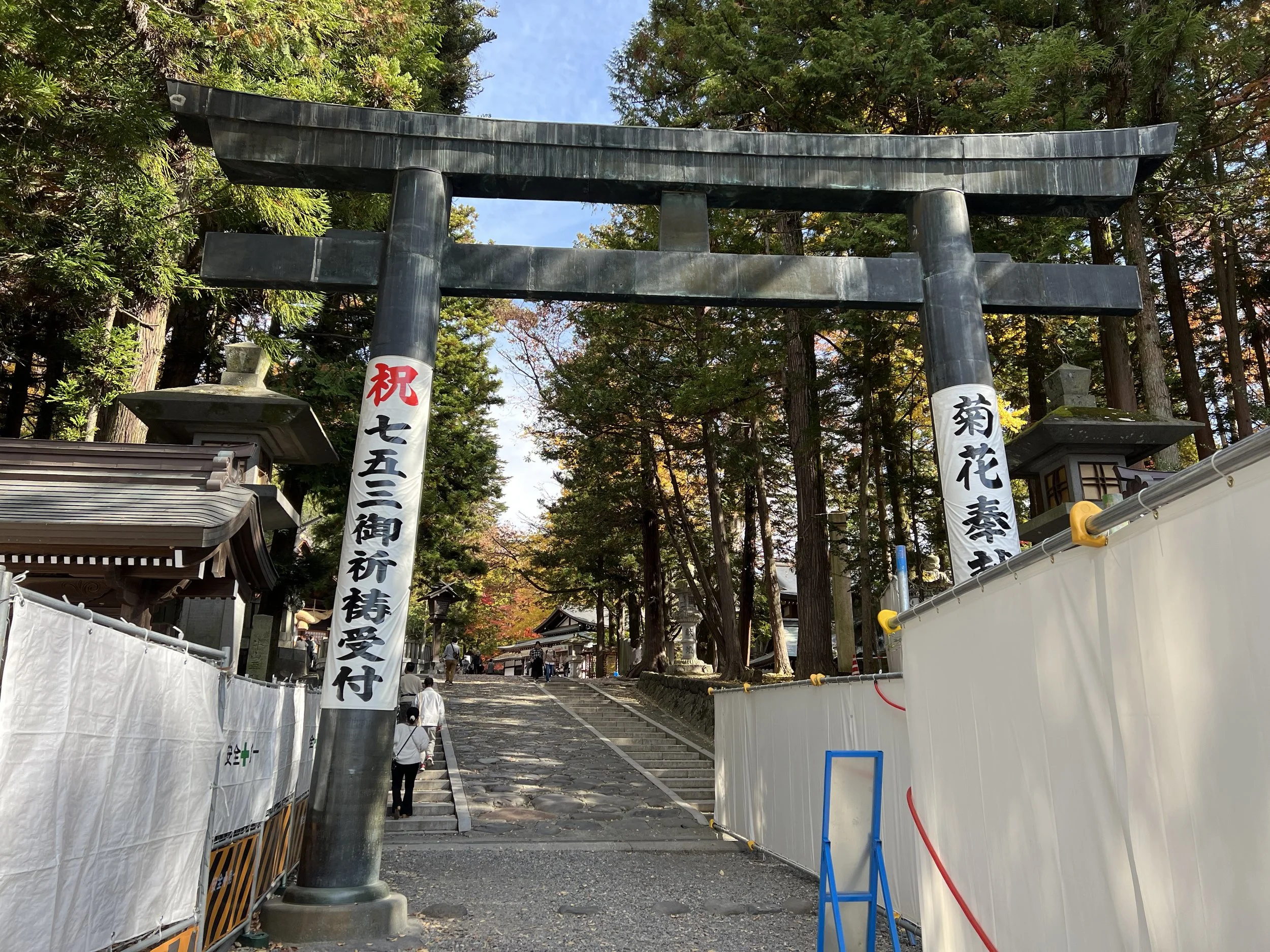
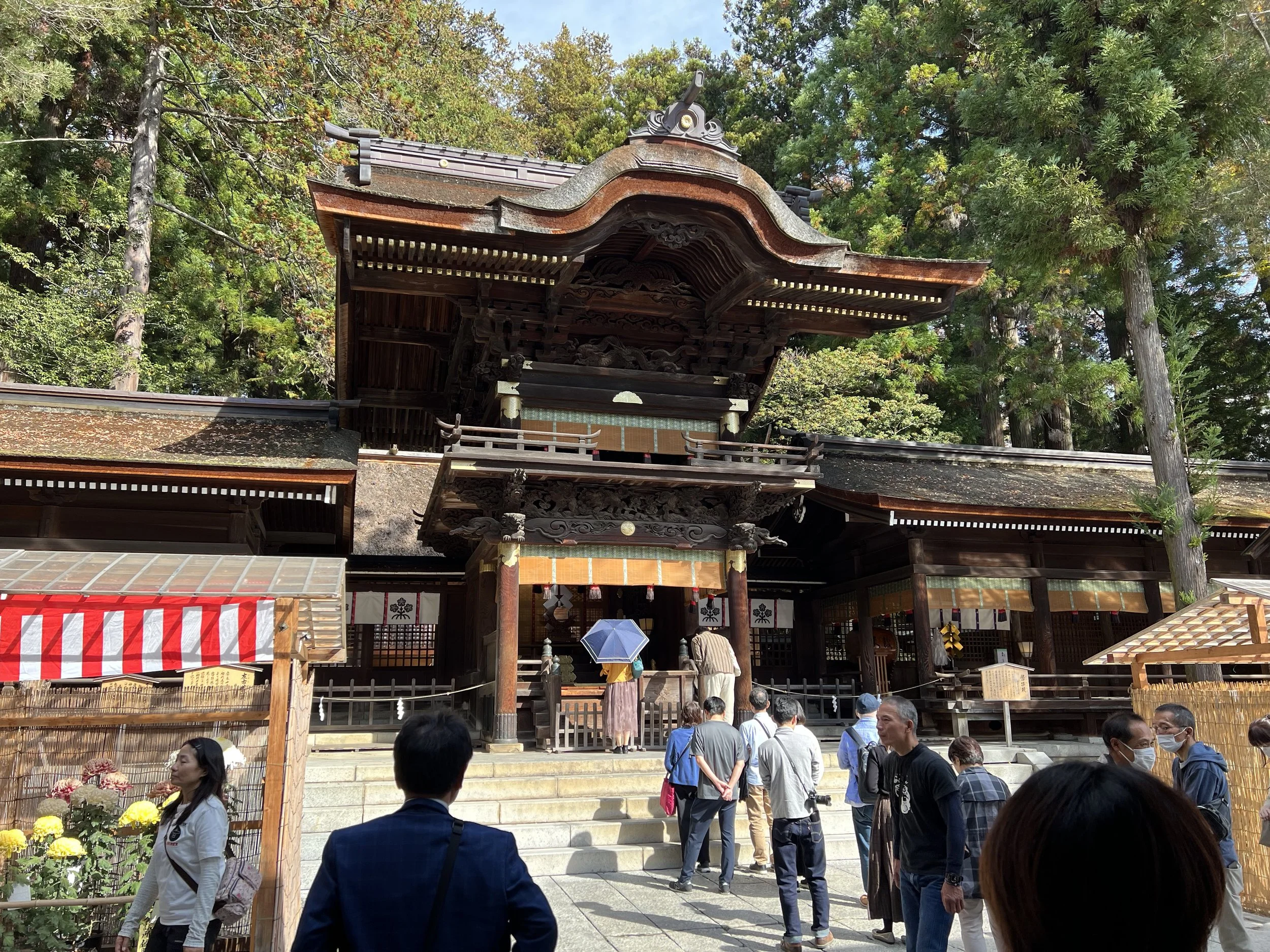
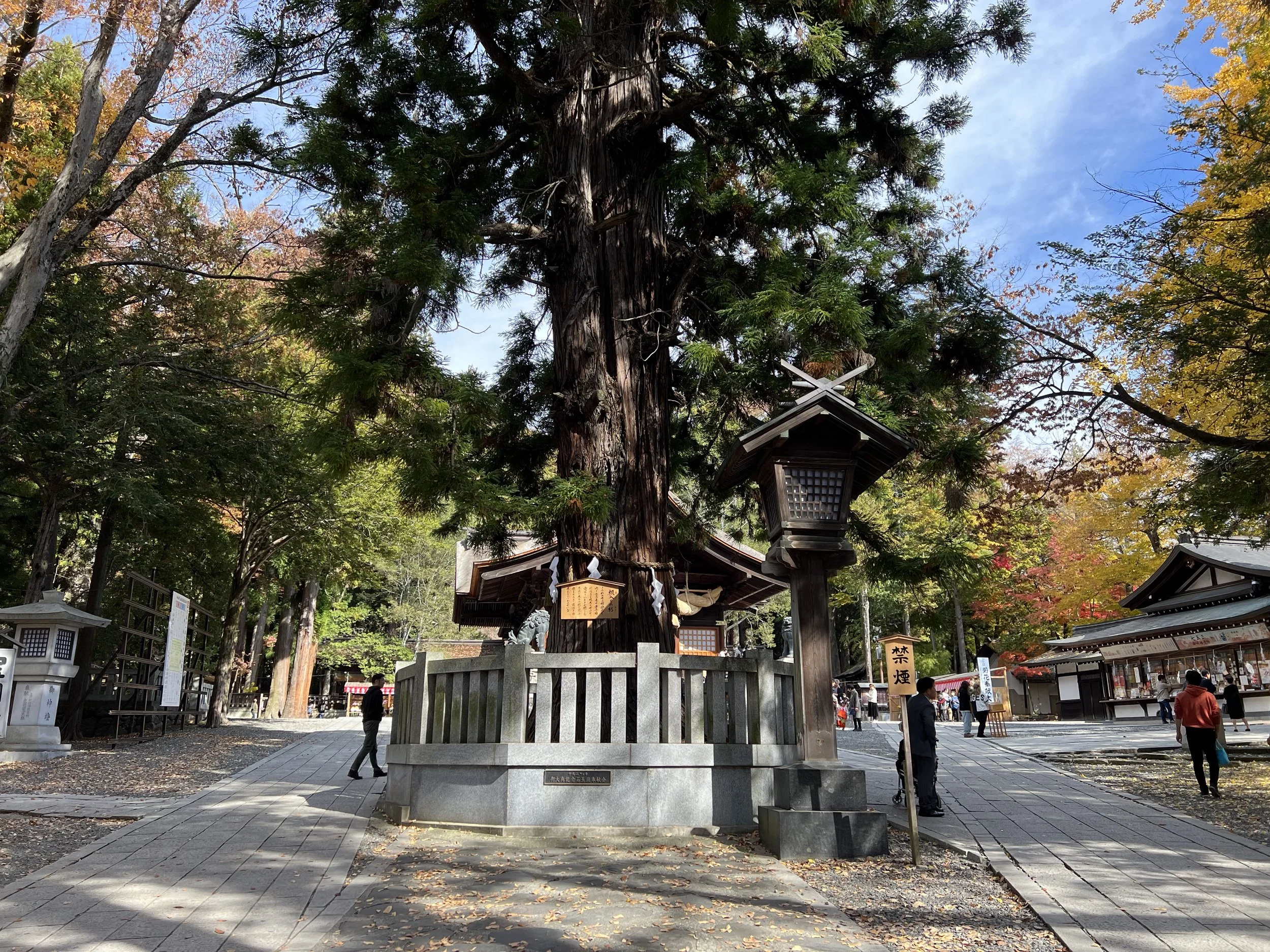
Shimosha Akimiya dates back to at least the late 7th century and is dedicated to the autumn deity Yasakatome-no-kami. One of the most unique things about this shrine is that it doesn’t have a traditional main hall. Instead, the object of worship is an ancient yew tree—serving as the shintai, or physical embodiment of the deity. The current shrine structures, completed in 1781 under the direction of Tatekawa Washiro, are beautifully detailed. Intricate carvings, aged wood, and the surrounding forest all come together to create a space that feels deeply rooted in time.
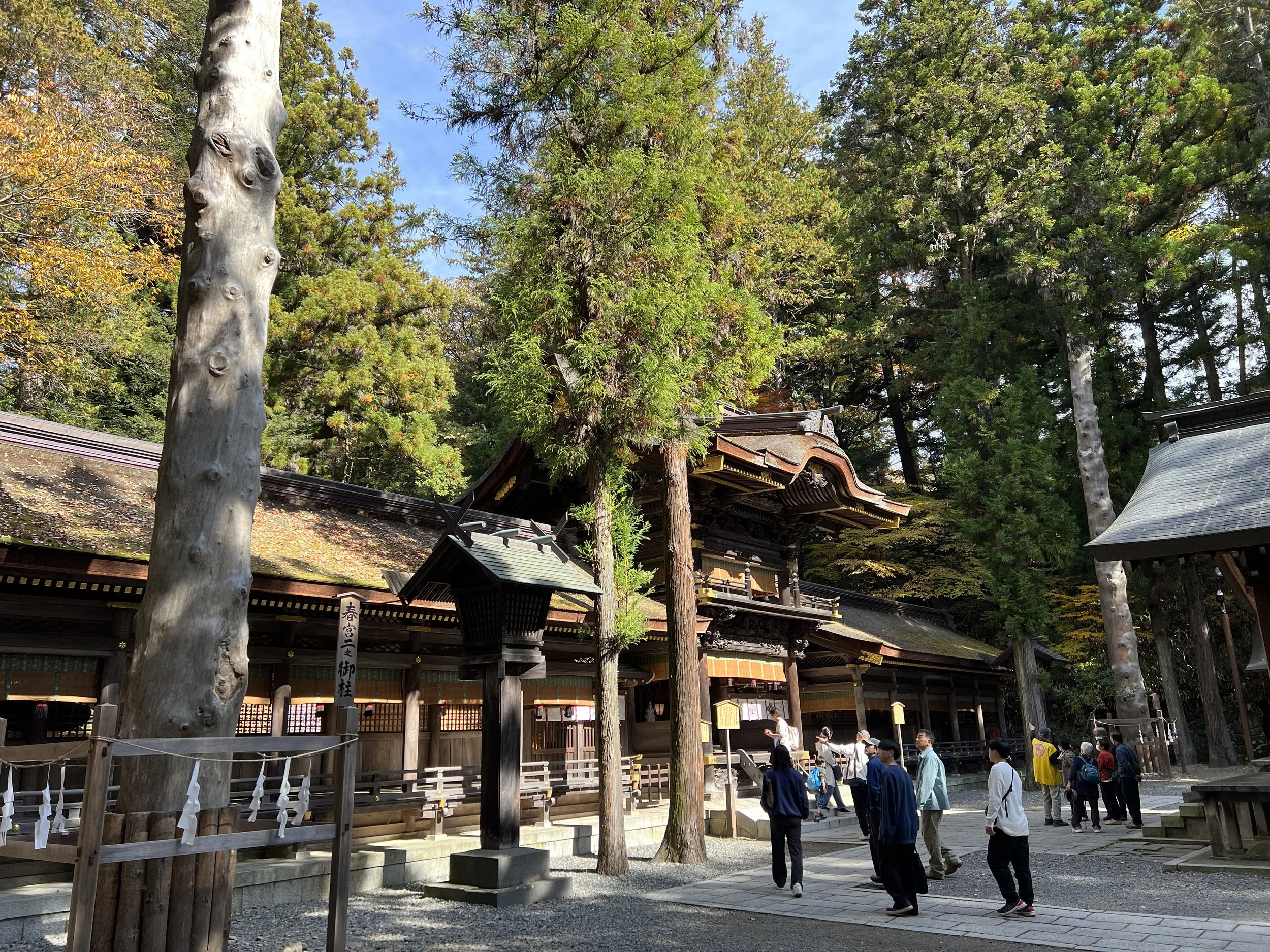
This shrine is also the most well-known of the four, largely because it houses the massive sacred logs used during the famous Onbashira Festival, held every six years. Seeing those towering logs up close gives you a sense of the scale of that tradition. I had also heard about a legend tied to an ancient tree here—one that supposedly “snores” when its branches lower. I can’t say I heard anything, but just standing among these trees, you can’t help but feel like there’s something there.
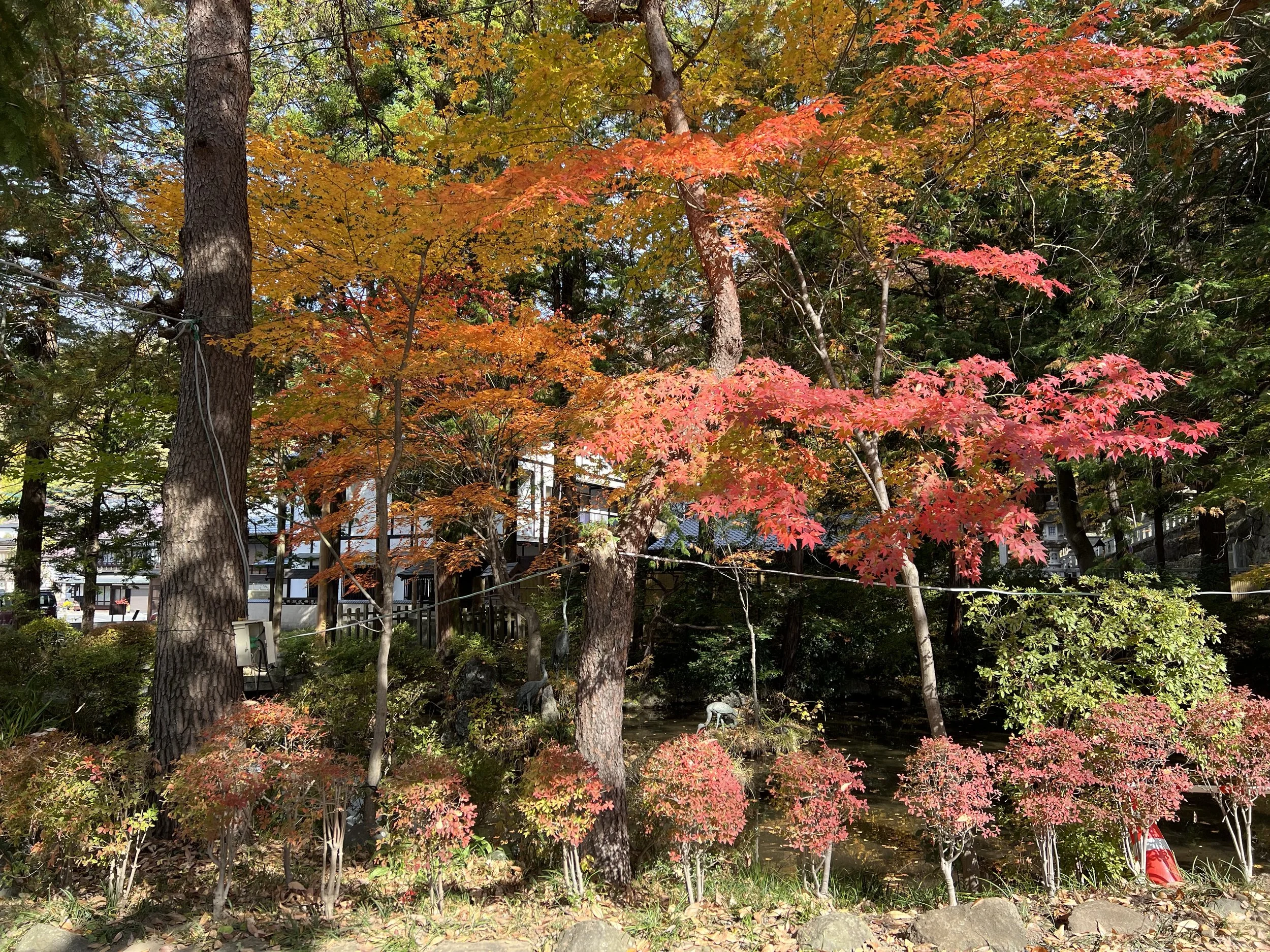
I spent some time wandering the grounds, taking in the architecture and the stillness of the forest surrounding it. The towering trees, the moss-covered elements, and the absence of a central hall all added to the sense that this was a place of nature first, structure second. What stood out to me most was learning how the concept of shintai differs between the shrines. Here at the Shimosha shrines, sacred trees are worshipped as the physical embodiment of the deity. Meanwhile, at the Kamisha shrines on the opposite side of the lake, the entire mountain is considered the shintai. It’s a subtle difference, but one that reflects how deeply nature is woven into Shinto belief.
After finishing my visit at Akimiya, I made my way toward Shimosha Harumiya. The walk between the two was relaxed and easy, giving me time to reflect a bit before arriving at the second shrine.
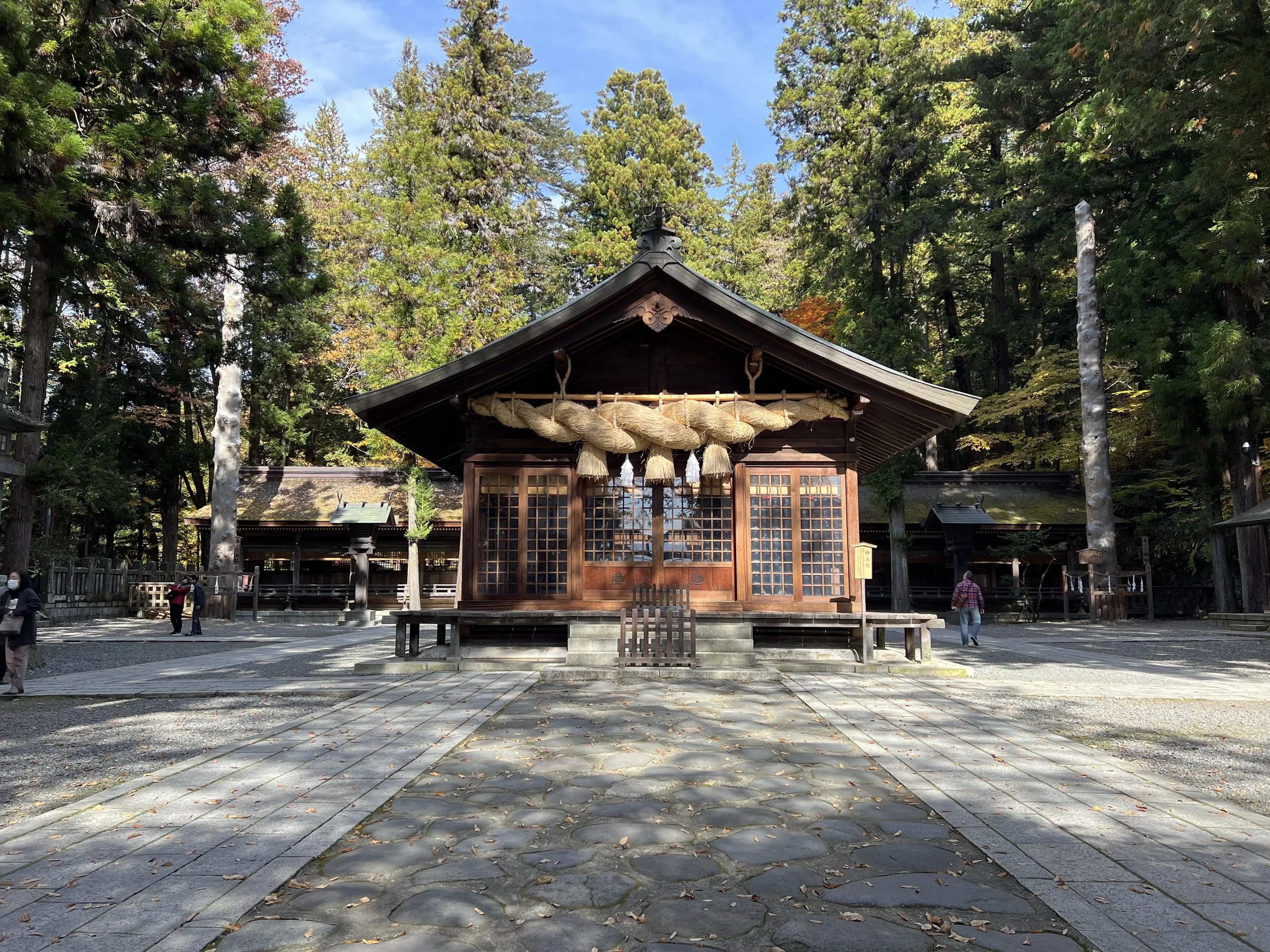
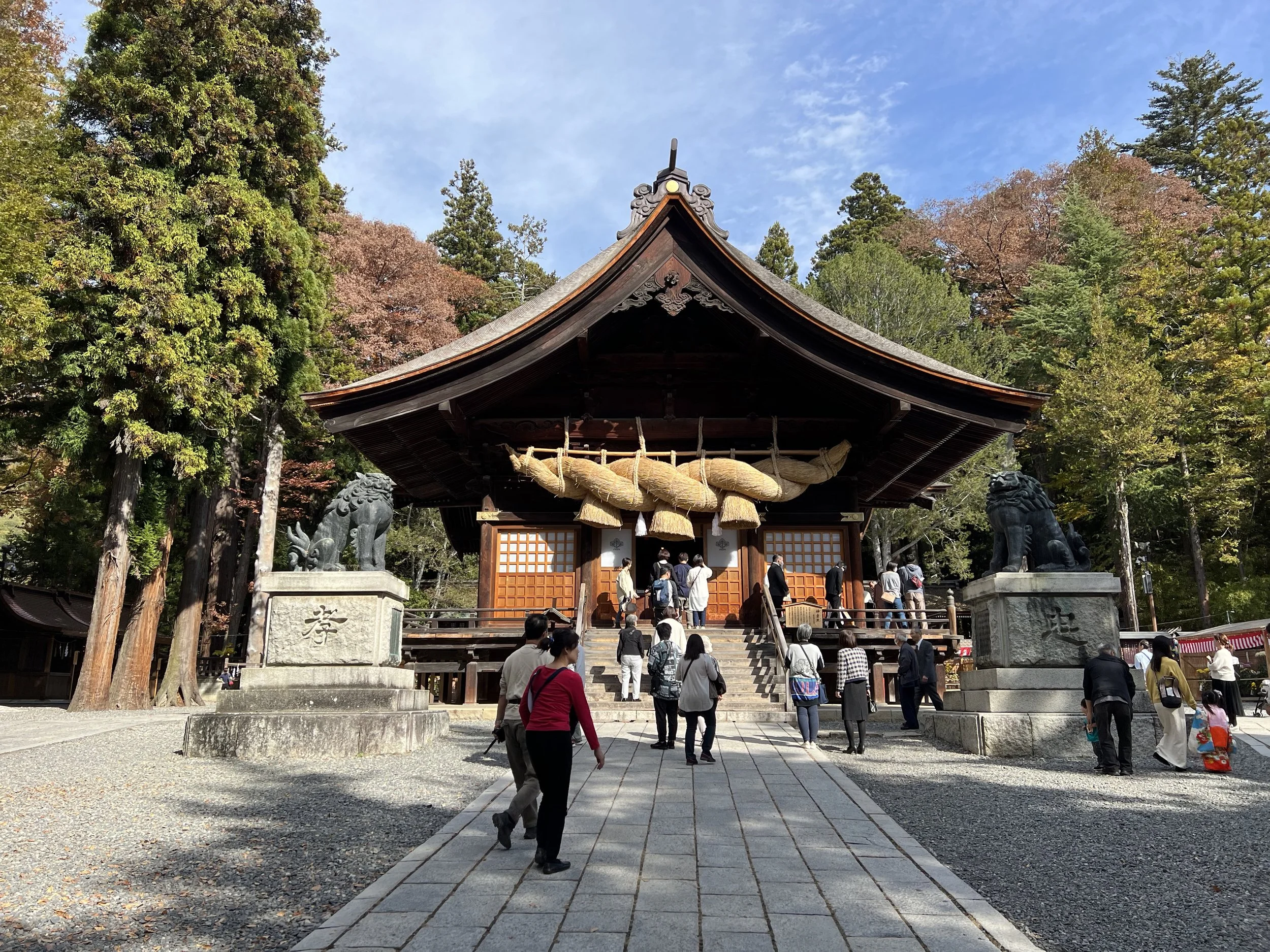
Shimosha Harumiya serves as the spring shrine, and traditionally, it’s believed that the deity Yasakatome-no-kami moves between the two Shimosha shrines—residing at Harumiya during the first half of the year, and at Akimiya during the second half. Compared to Akimiya, Harumiya felt more open and busier. The grounds seemed larger, and there were more visitors moving through the ground.
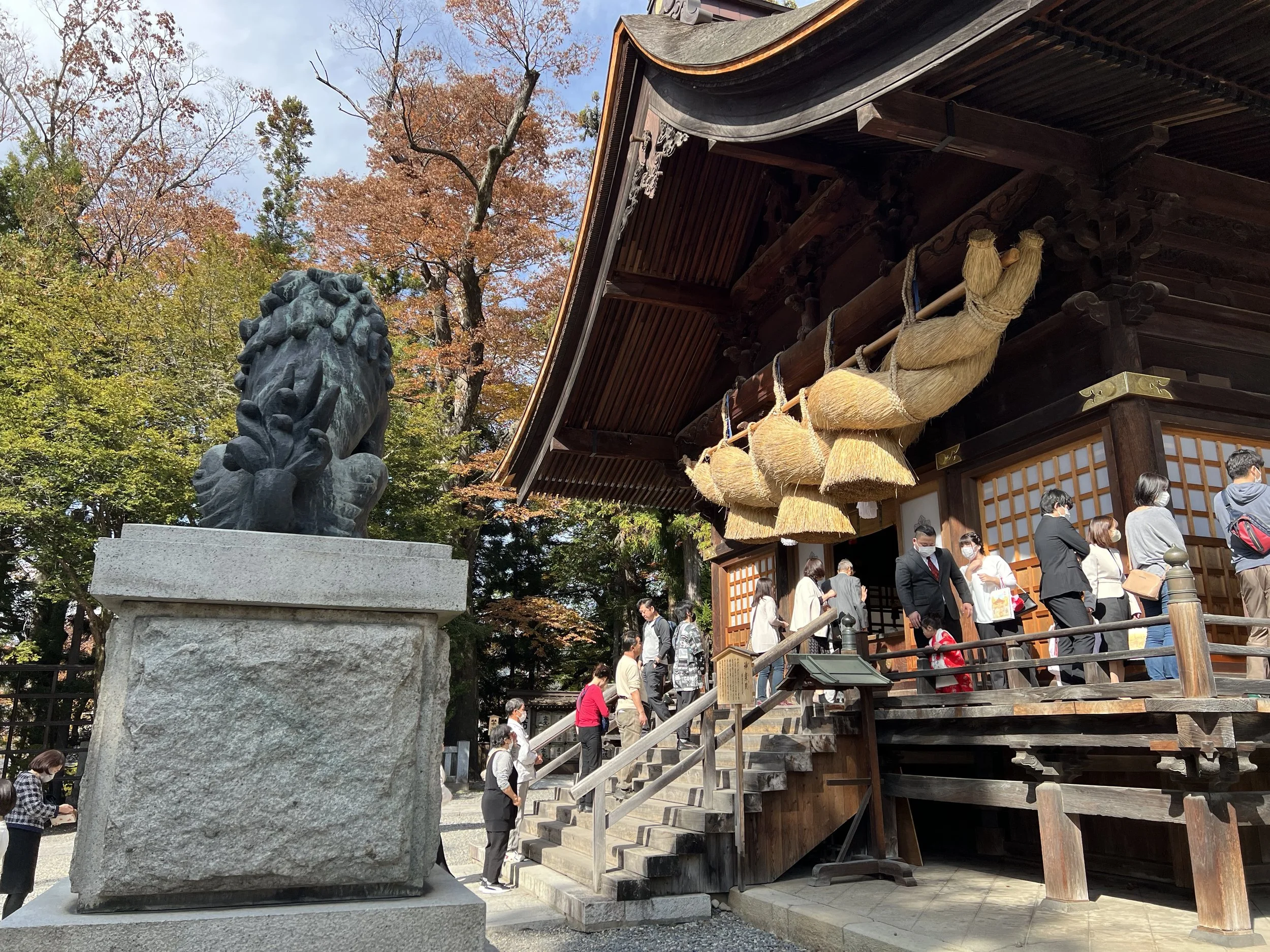
One of the first things that caught my attention was the kagura hall, with its massive sacred shimenawa rope draped across the front. While similar elements exist at Akimiya, something about the scale and placement here made it stand out much more.
The shrine buildings are surrounded by tall cedar trees, and tucked among them is a small stone Buddha with a local legend attached: if you walk around it three times while chanting your heart’s desire, it will come true. Do I believe it? Not really, but I still walk around it three times.
After spending some time soaking in the atmosphere, I slowly made my way back toward the station. It was one of those days that wasn’t rushed or overly packed—but still felt full in its own quiet way. And with two more shrines left to visit, I was already looking forward to seeing how the Kamisha side would compare.
History & Background
Suwa Taisha (諏訪大社) is considered one of Japan’s oldest shrine systems, with origins tracing back over 1,200 years. Rather than a single shrine, it consists of four distinct complexes: Kamisha Honmiya and Kamisha Maemiya on the southern side of Lake Suwa, and Shimosha Akimiya and Shimosha Harumiya on the northern side.
The shrines are dedicated primarily to Yasakatome-no-kami—the consort of Takeminakata-no-kami, the principal deity of the Kamisha—who is associated with wind, water, and agriculture. Together, these deities reflect the region’s long-standing traditions of mountain worship and deep-rooted, nature-centered spirituality.
One of the most famous traditions connected to Suwa Taisha is the Onbashira Festival, held every six years. During this event, massive logs are cut from nearby mountains and transported down steep slopes before being erected at each shrine. The ritual is both dangerous and symbolic, representing renewal and the sacred connection between nature and the shrine.
A defining feature of Suwa Taisha is its use of natural elements as sacred objects. At the Shimosha shrines, trees serve as the shintai, while at the Kamisha shrines, the surrounding mountains themselves are worshipped. This reflects one of the oldest forms of Shinto belief, where nature is not just symbolic but divine.
Getting There
To reach the Shimosha shrines, travellers can take a train to Shimo-Suwa Station on the JR Chuo Main Line. From Nagano, take a limited express or local train toward Kami-Suwa, then continue one stop to Shimo-Suwa. From Tokyo, take the JR Chuo Line limited express (Azusa) directly to Shimo-Suwa or transfer at Kami-Suwa Station. The journey typically takes around 2.5 to 3 hours.
Both Shimosha Akimiya and Shimosha Harumiya are accessible on foot from Shimo-Suwa Station, with Akimiya being the closest and Harumiya about a 15–20 minute walk further.
Driving is also an option, with parking available near both shrine grounds.
Route Overview
Distance: 3.85 km out & back (Shimo-Suwa Station)
Total elevation gain: 52 m
Duration: 1 hr (with breaks 1 hr 05 min)
Difficulty: Easy
Cost Breakdown
Train: Kami-Suwa Station → Shimo-Suwa Station — ¥200
Food: ¥634