Suwa Taisha Kamisha - Nagano, Japan
After starting the day with a hike through Yokoyakyo Gorge, I continued on to complete my visit to the remaining two shrines of Suwa Taisha—the Kamisha (upper shrines).
I took the bus from Yokoyakyo Gorge back toward Chino Station and began making my way from there. Unlike the Shimosha shrines, getting to the Kamisha shrines isn’t as straightforward. The bus options weren’t particularly convenient, and after checking the routes, it seemed like walking would take about the same amount of time anyway. So I decided to walk and honestly, it turned out to be a great decision.
The route took me through the quiet town of Chino, across small bridges and over two rivers, with mountain views quietly framing the background. It was one of those in-between travel moments that isn’t necessarily planned—but ends up being part of the experience.
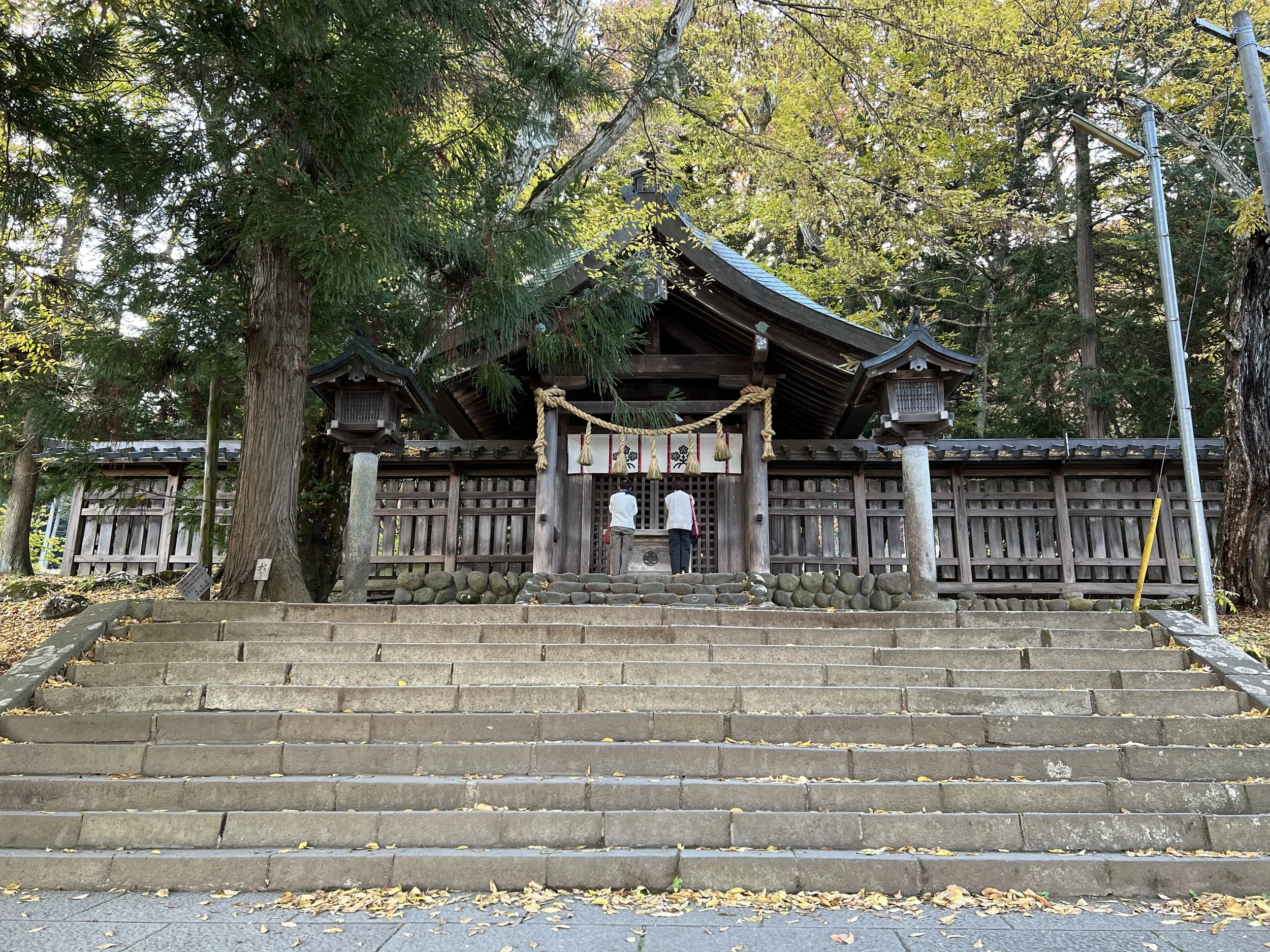
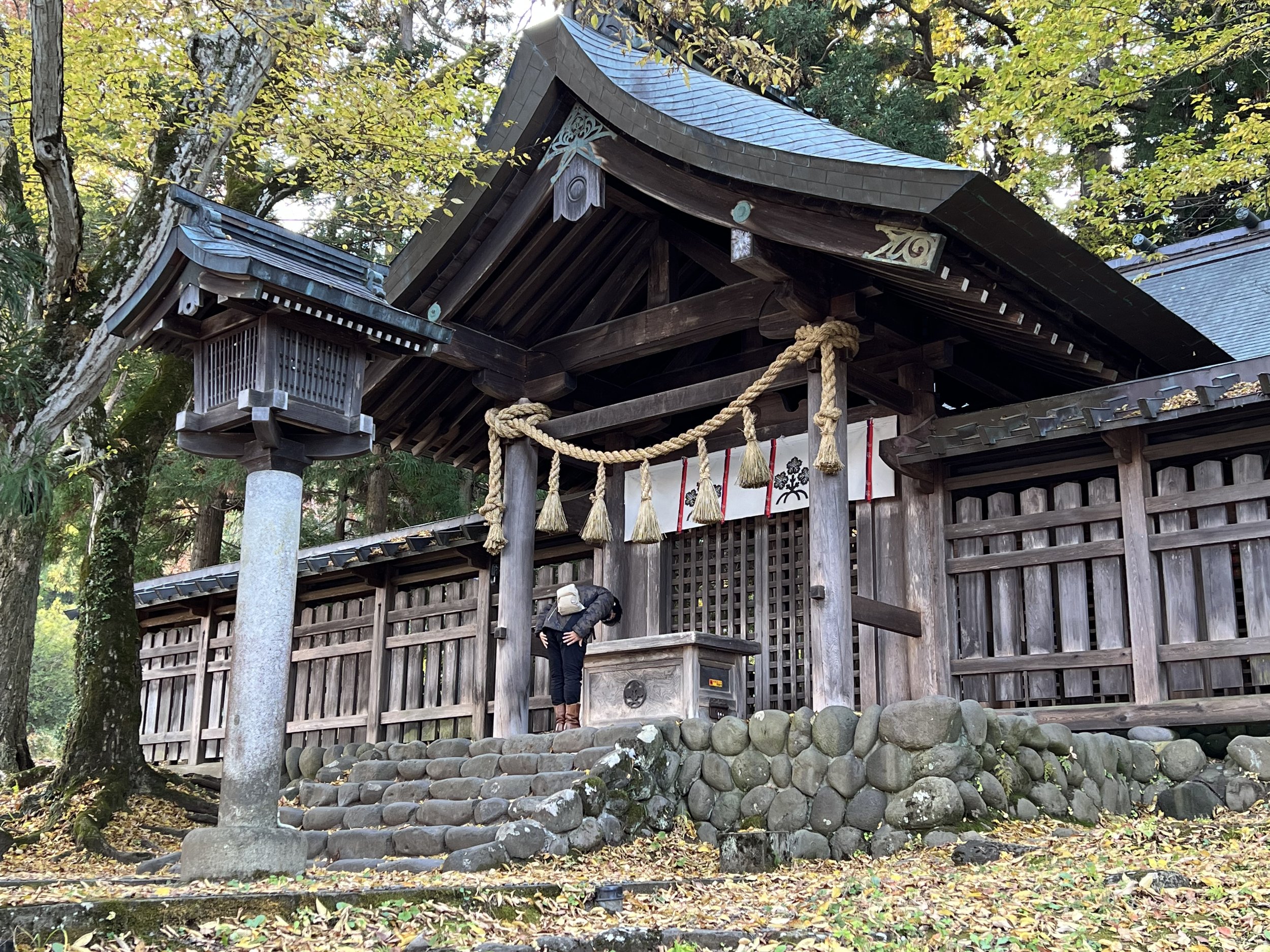
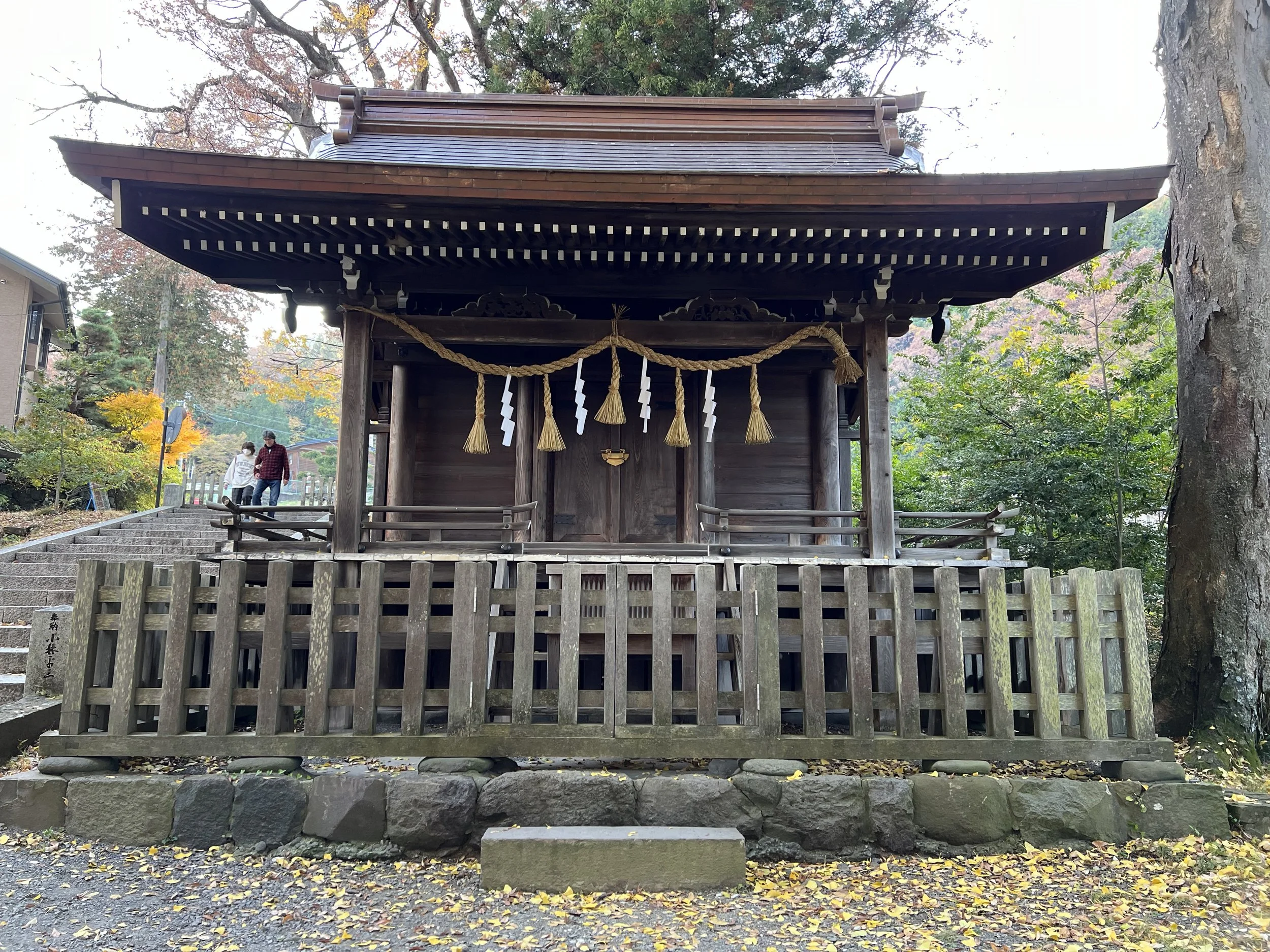
My first stop was Kamisha Maemiya. This shrine is believed to be the original site where the Suwa deity was first enshrined, and that sense of origin really comes through in its atmosphere. Compared to the other shrines, Maemiya felt the most grounded in nature. There weren’t many visitors when I arrived, which added to the stillness of the place. Interestingly, for a shrine that feels so quiet and understated, it has a fairly large parking lot—so I imagine it becomes much busier during peak seasons or festivals.
As I walked through the grounds, the layout felt more open and less structured than the others. It didn’t feel overly built-up, which made it feel closer to the natural environment around it. Eventually, I made my way toward the back of the shrine, where I had read there were ancient tombs hidden among the trees. One detail I found particularly interesting was that the current shrine building was constructed in 1932 using materials from Ise Grand Shrine in Mie Prefecture. Knowing that added another layer to the site—connecting it to one of the most important shrines in Japan.
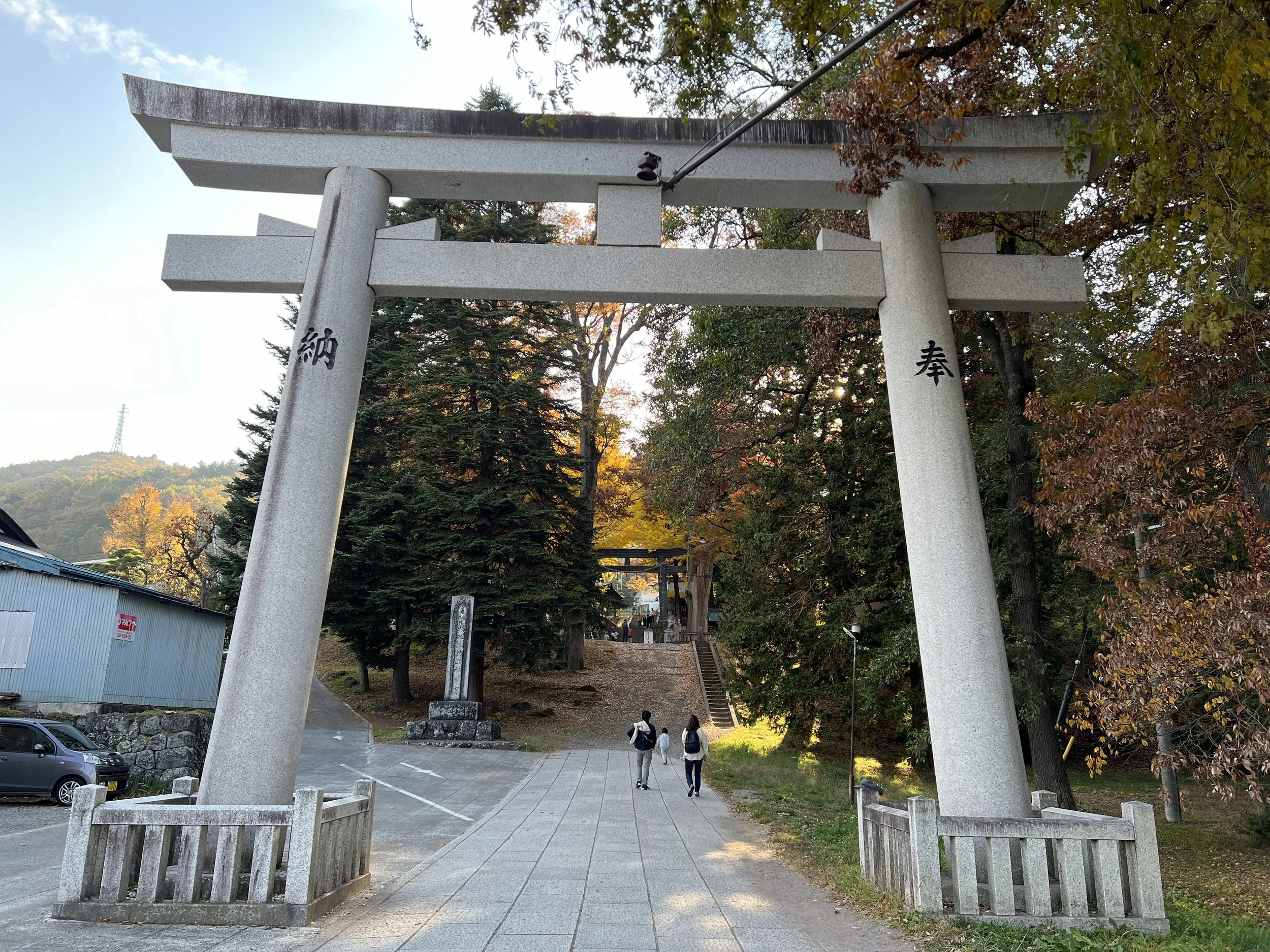
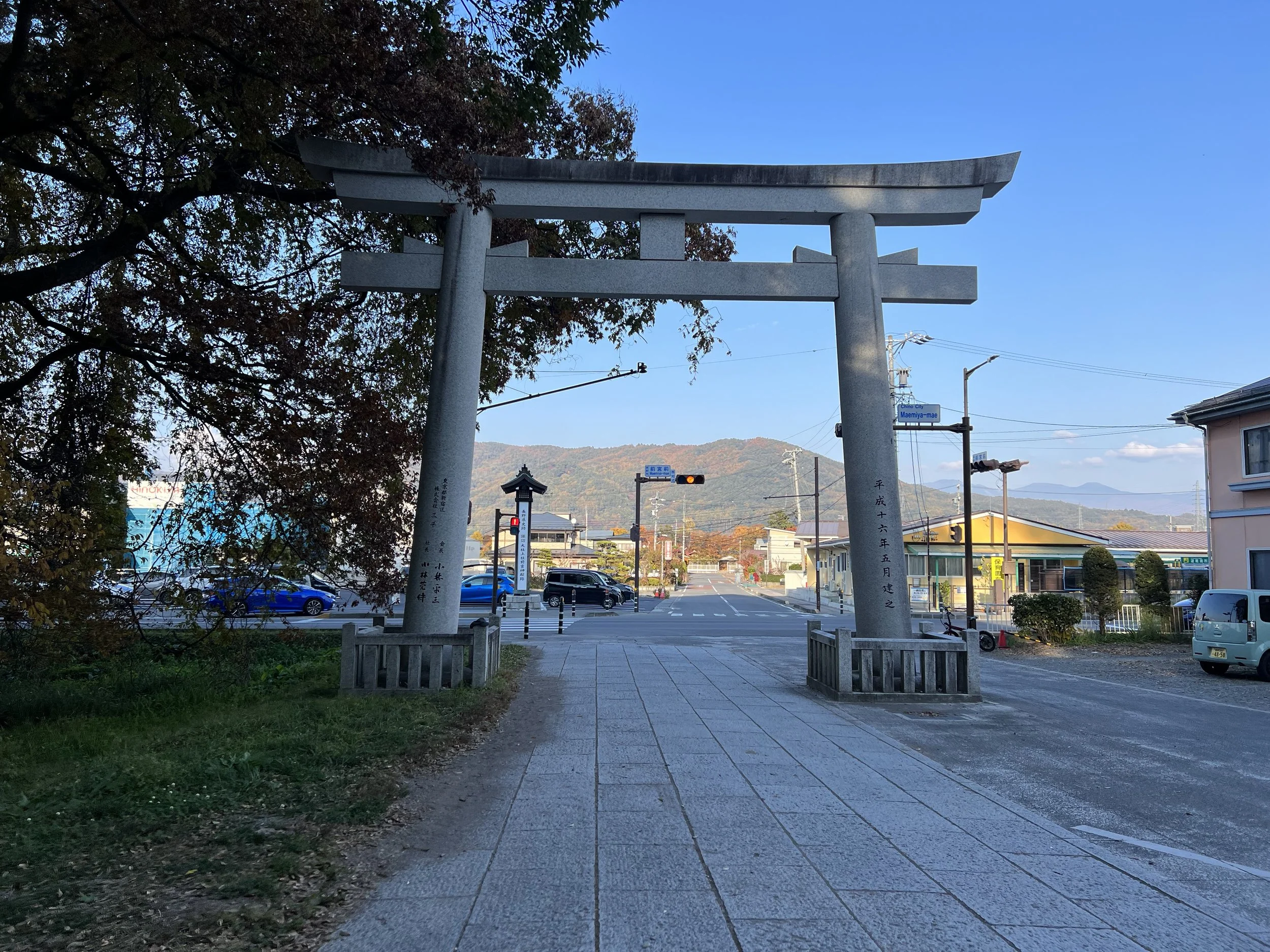
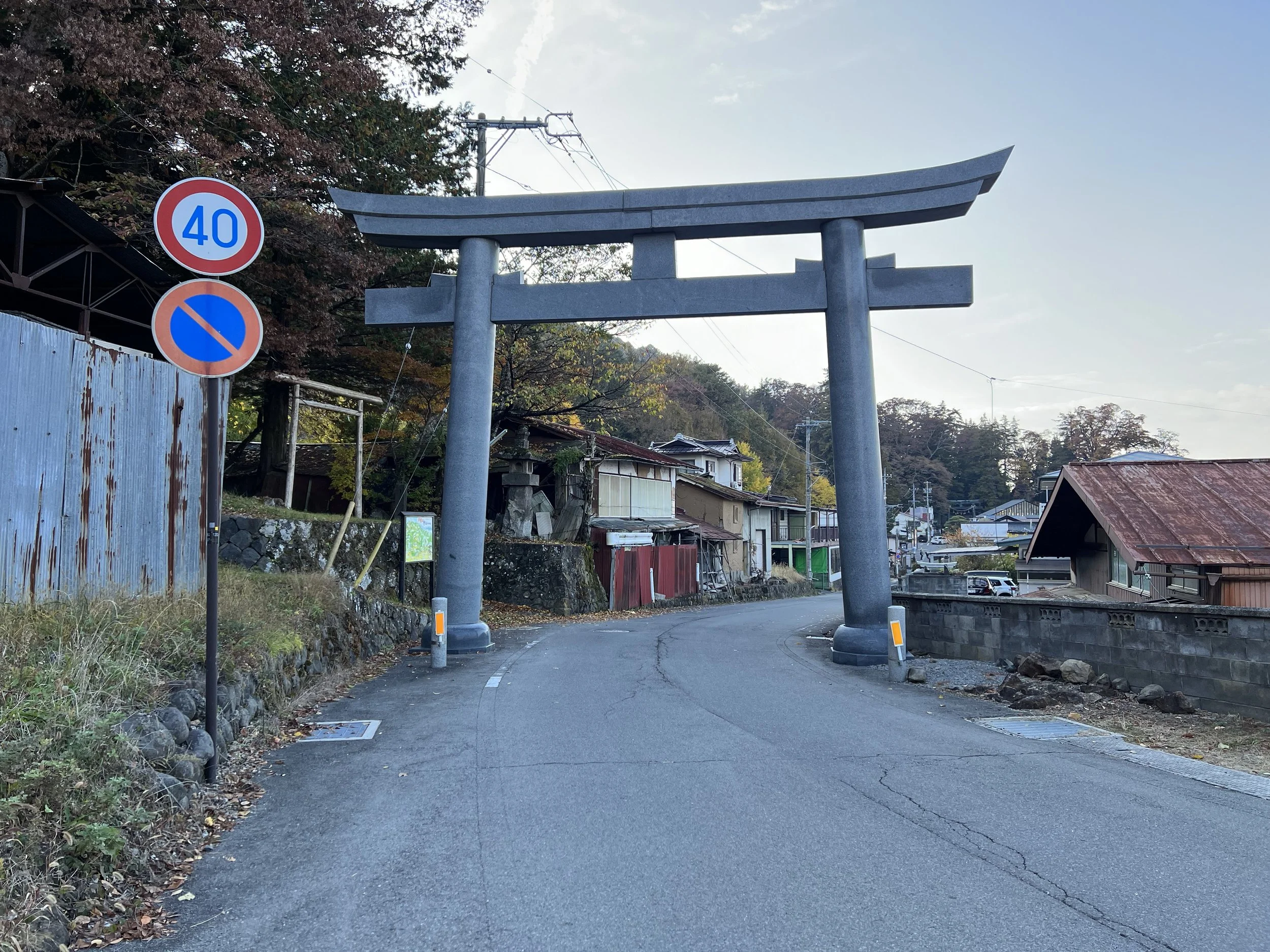
After finishing my visit at Maemiya, I started the walk toward my next stop: Kamisha Honmiya, about two kilometres away. The walk itself ended up being just as interesting as the destination. Along the way, I passed large torii gates spanning quiet streets, smaller hillside shrines tucked away behind steep staircases, and remnants of older structures that hinted at the long history of the area.
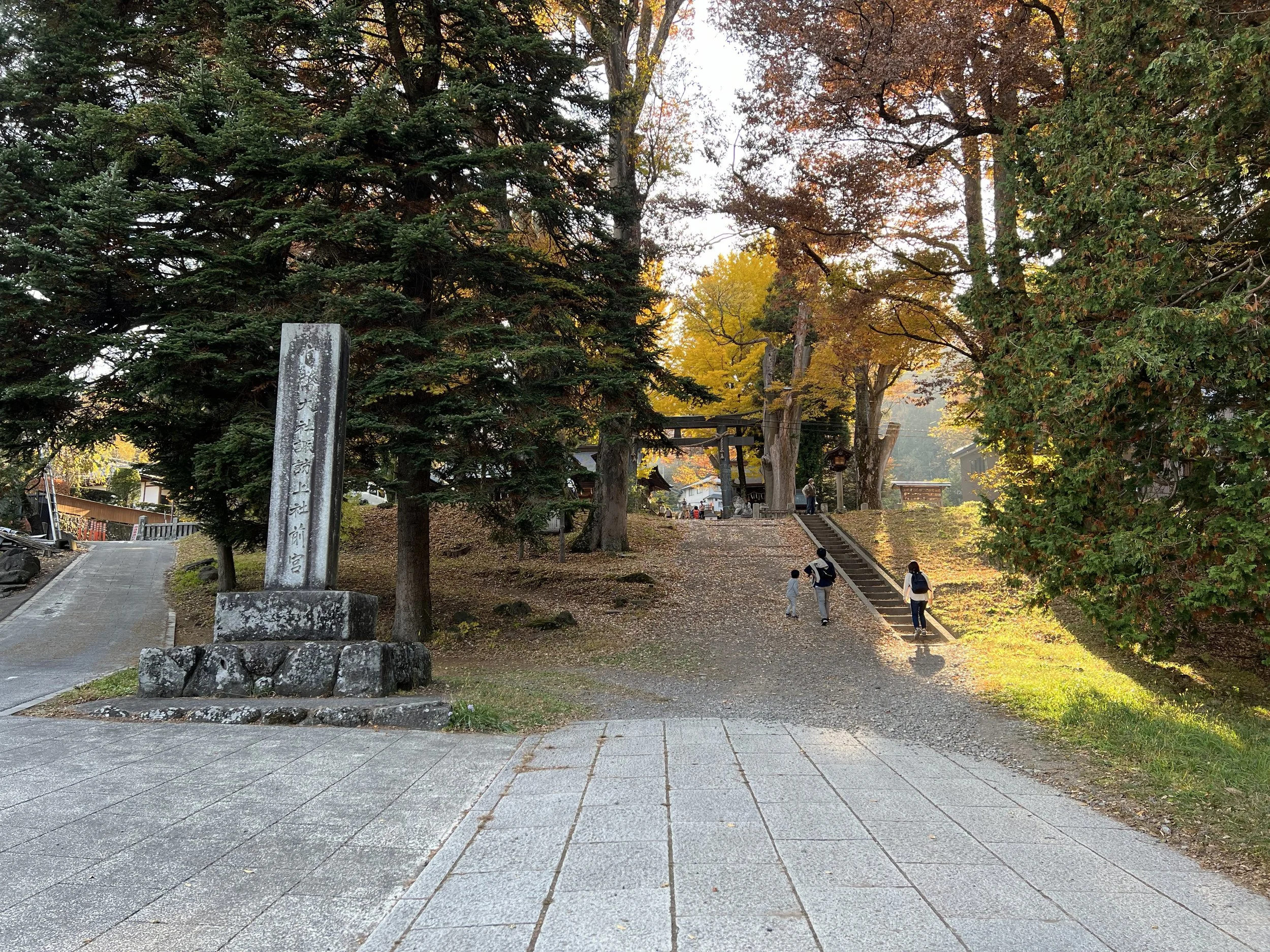
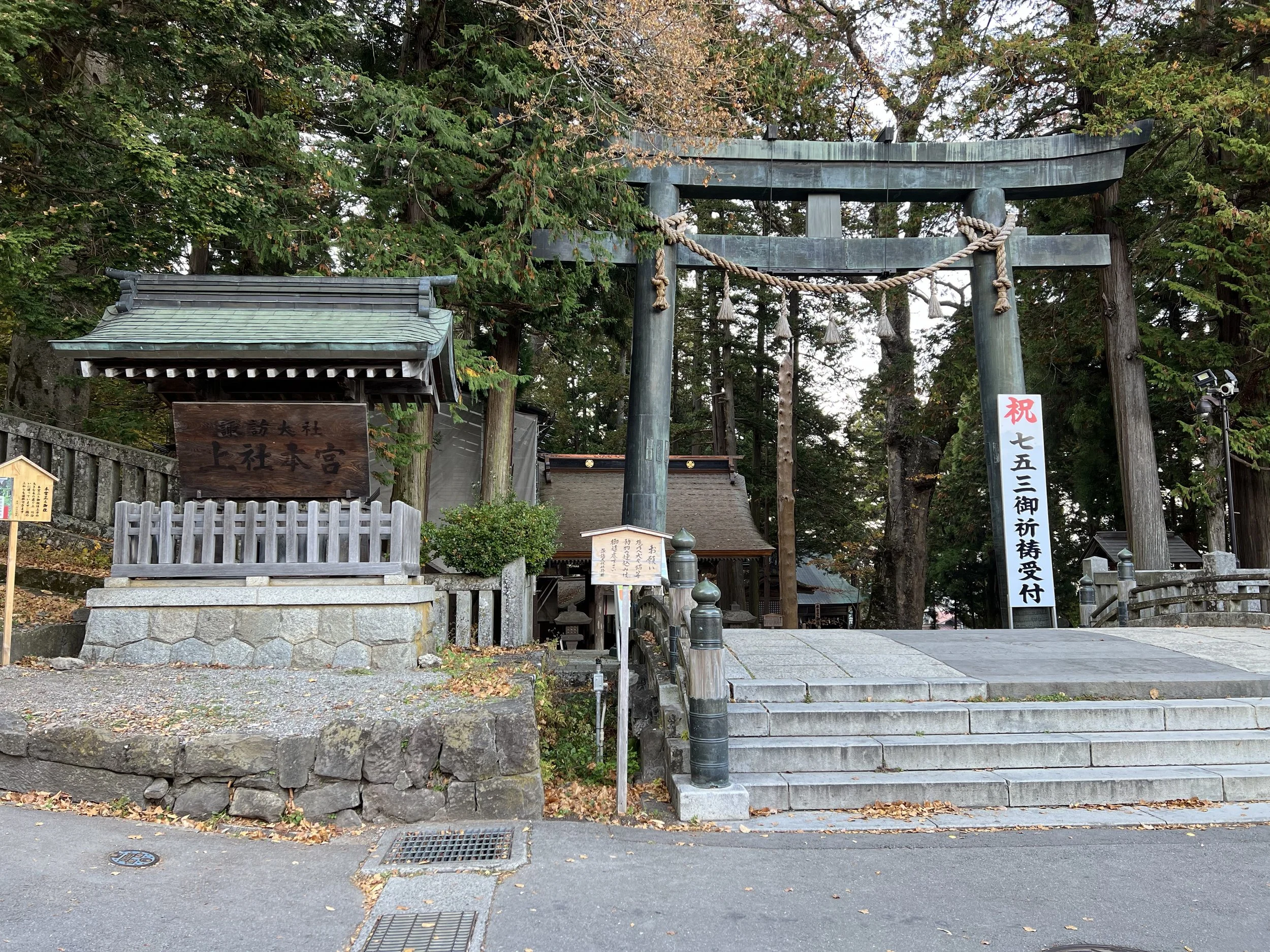
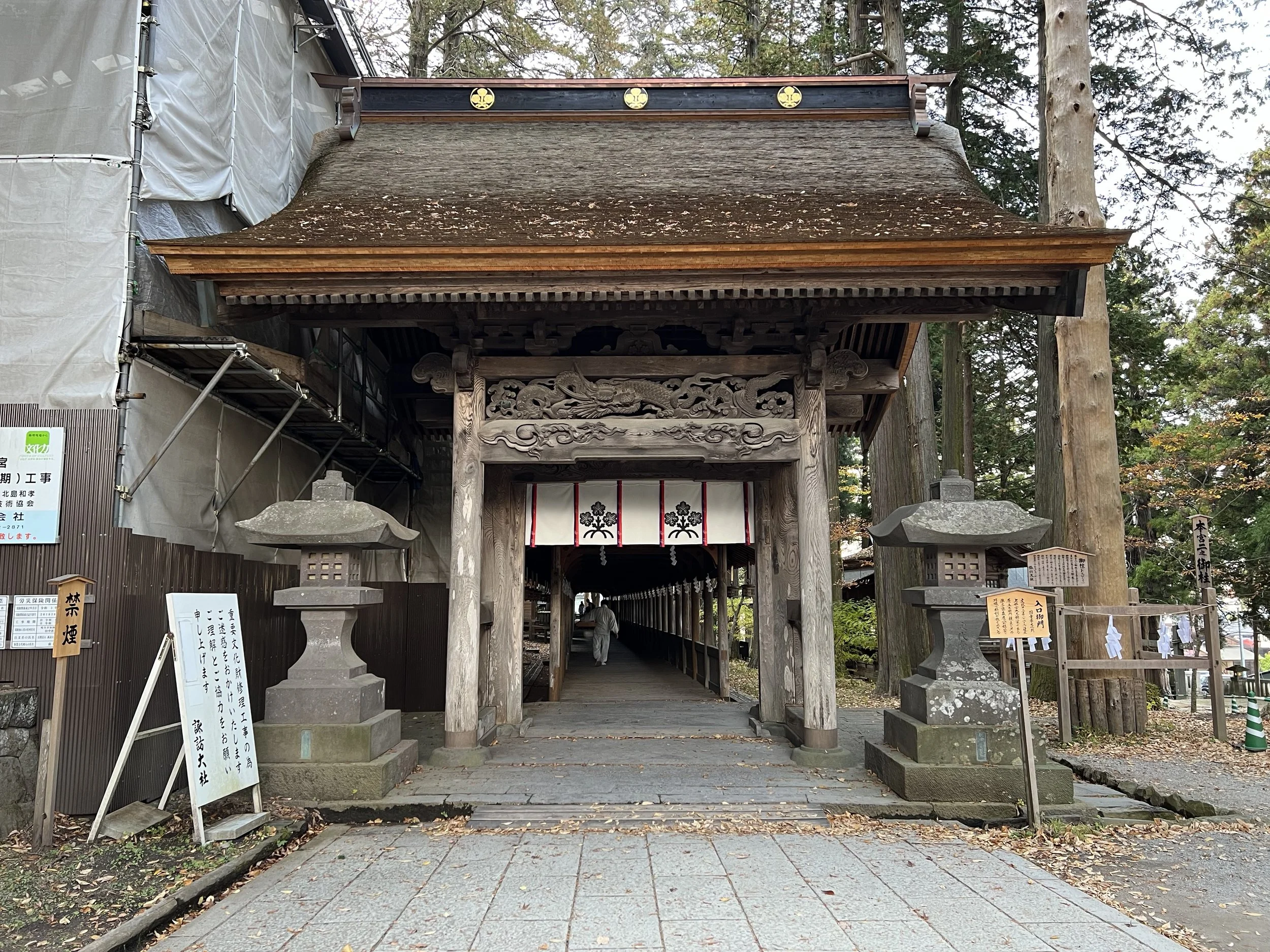
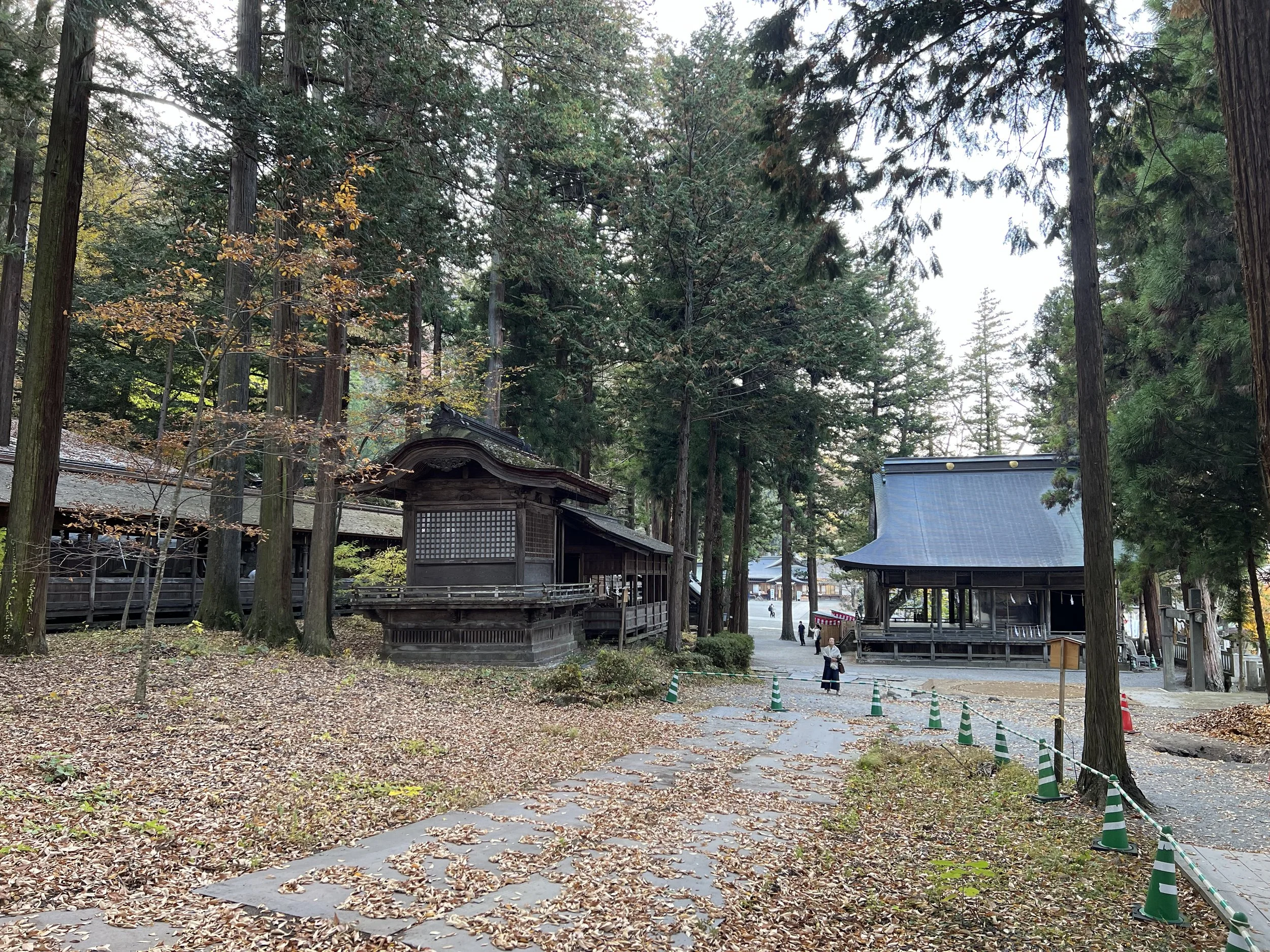
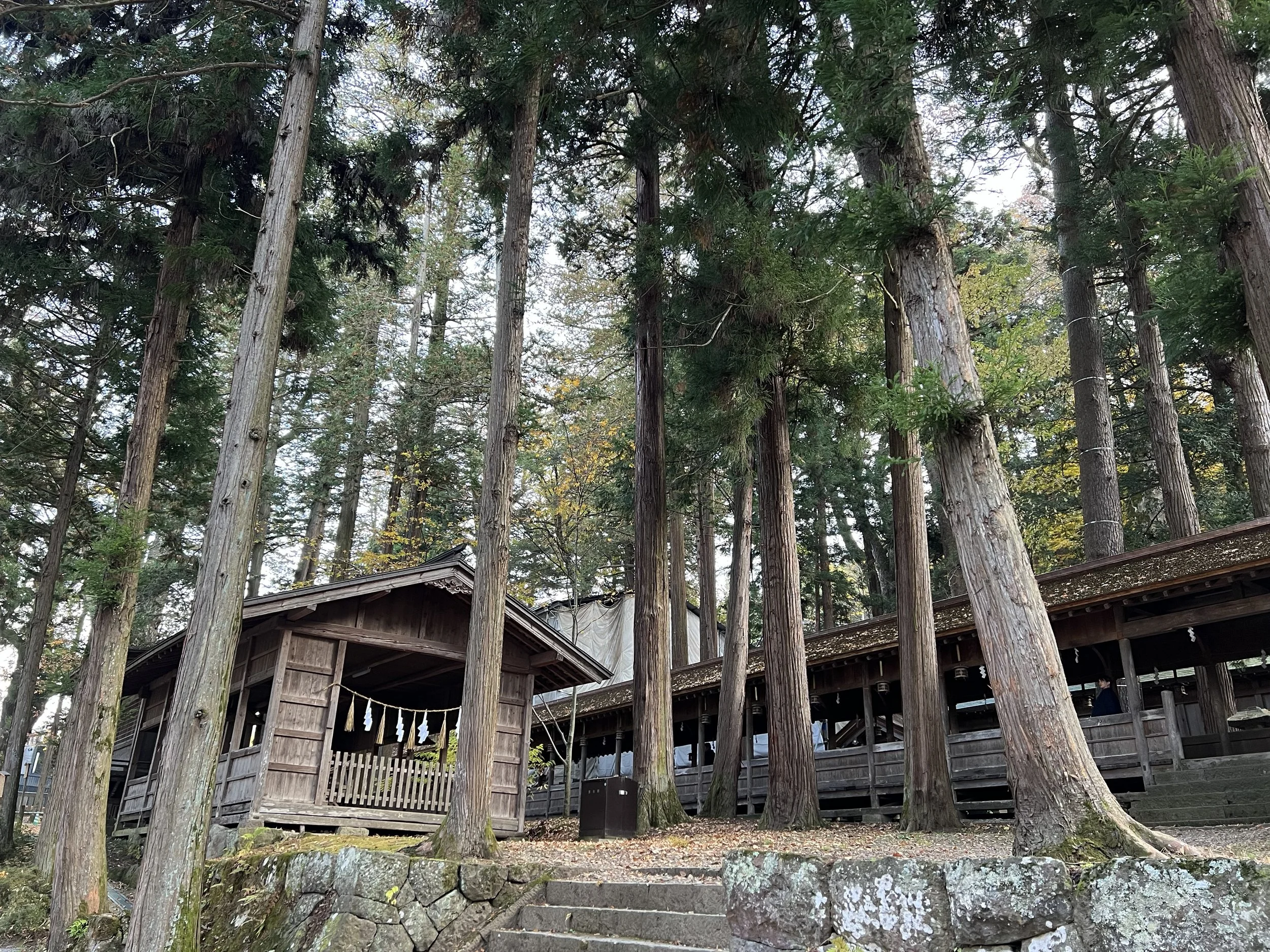
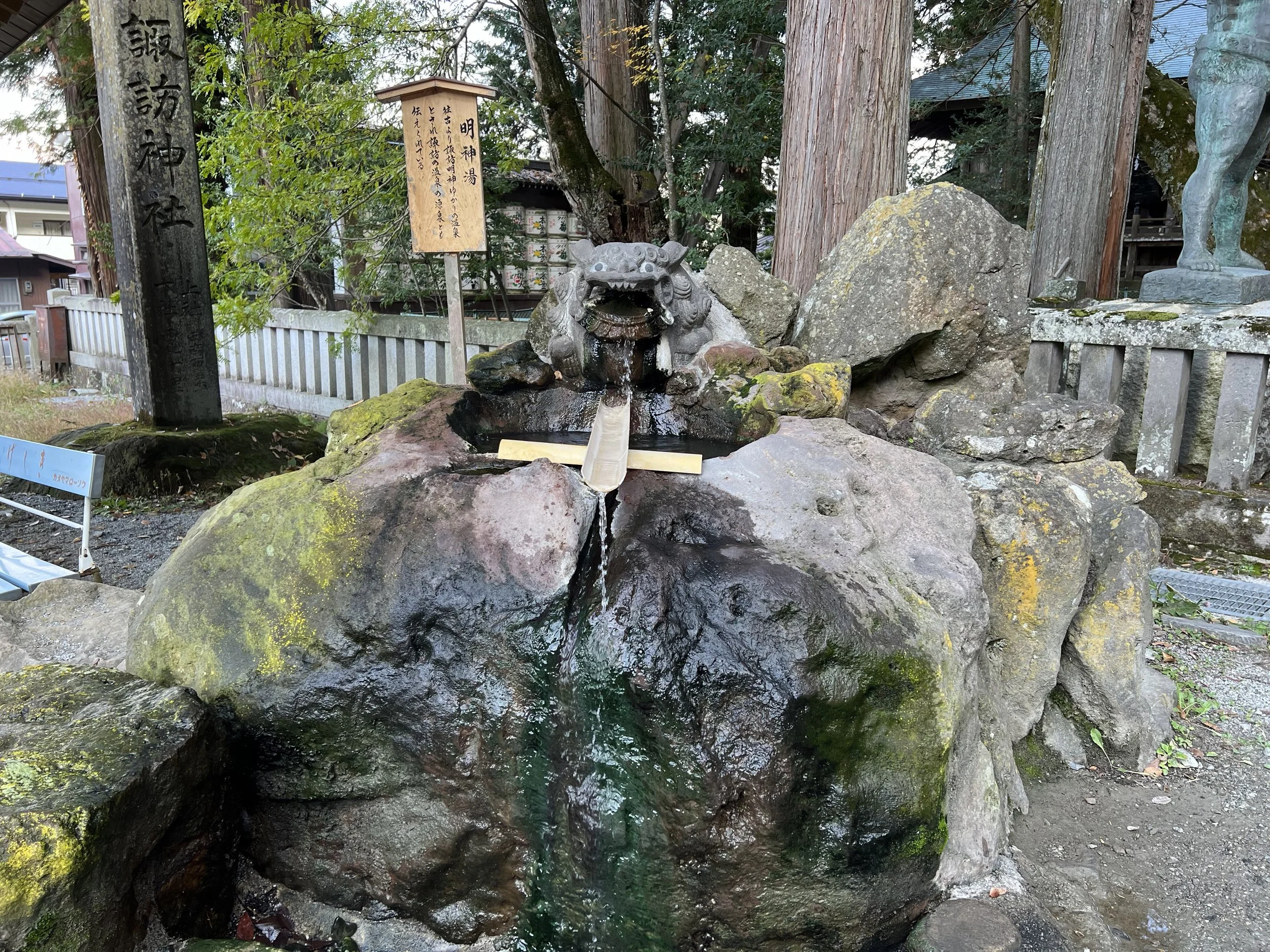
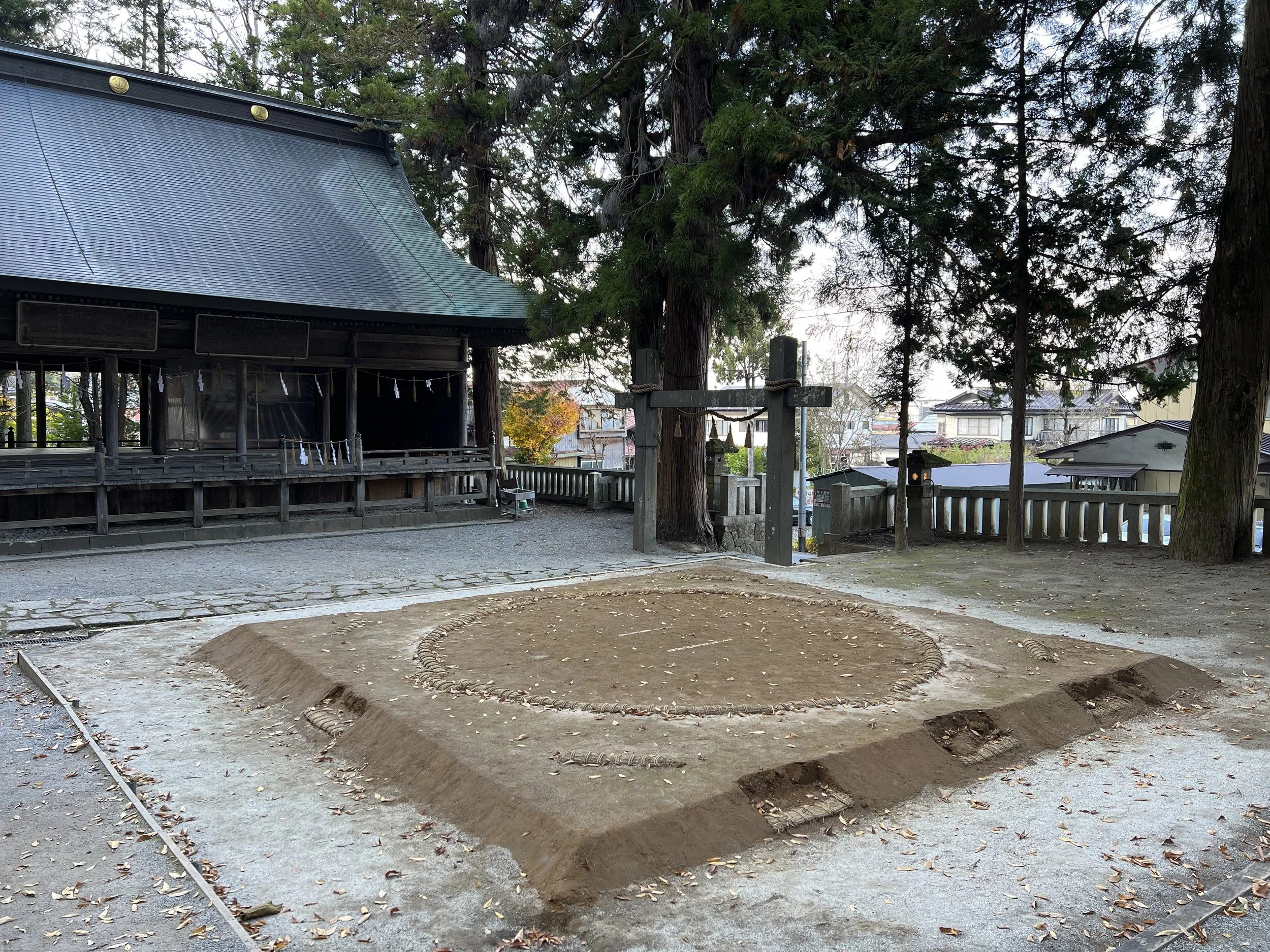
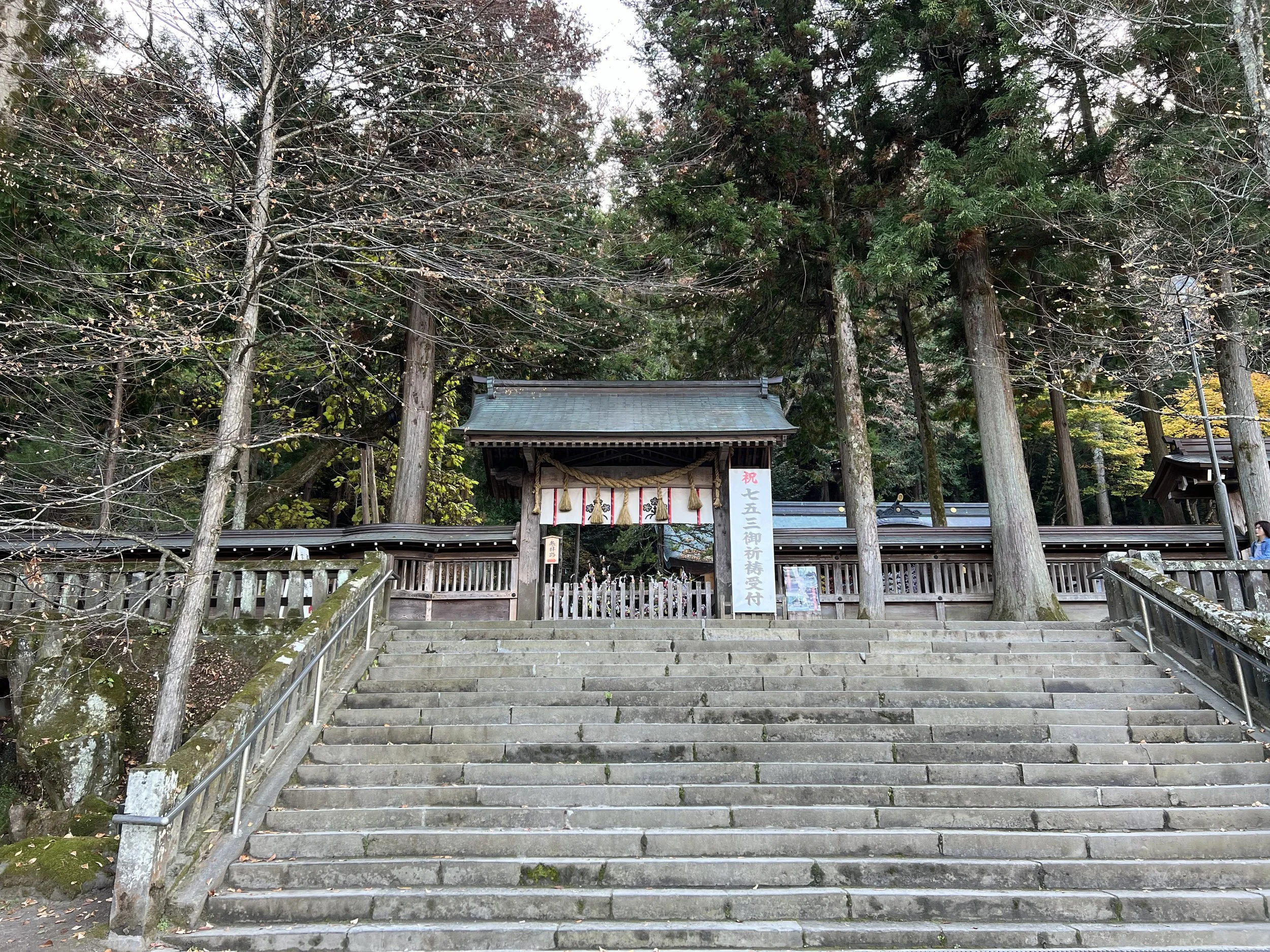
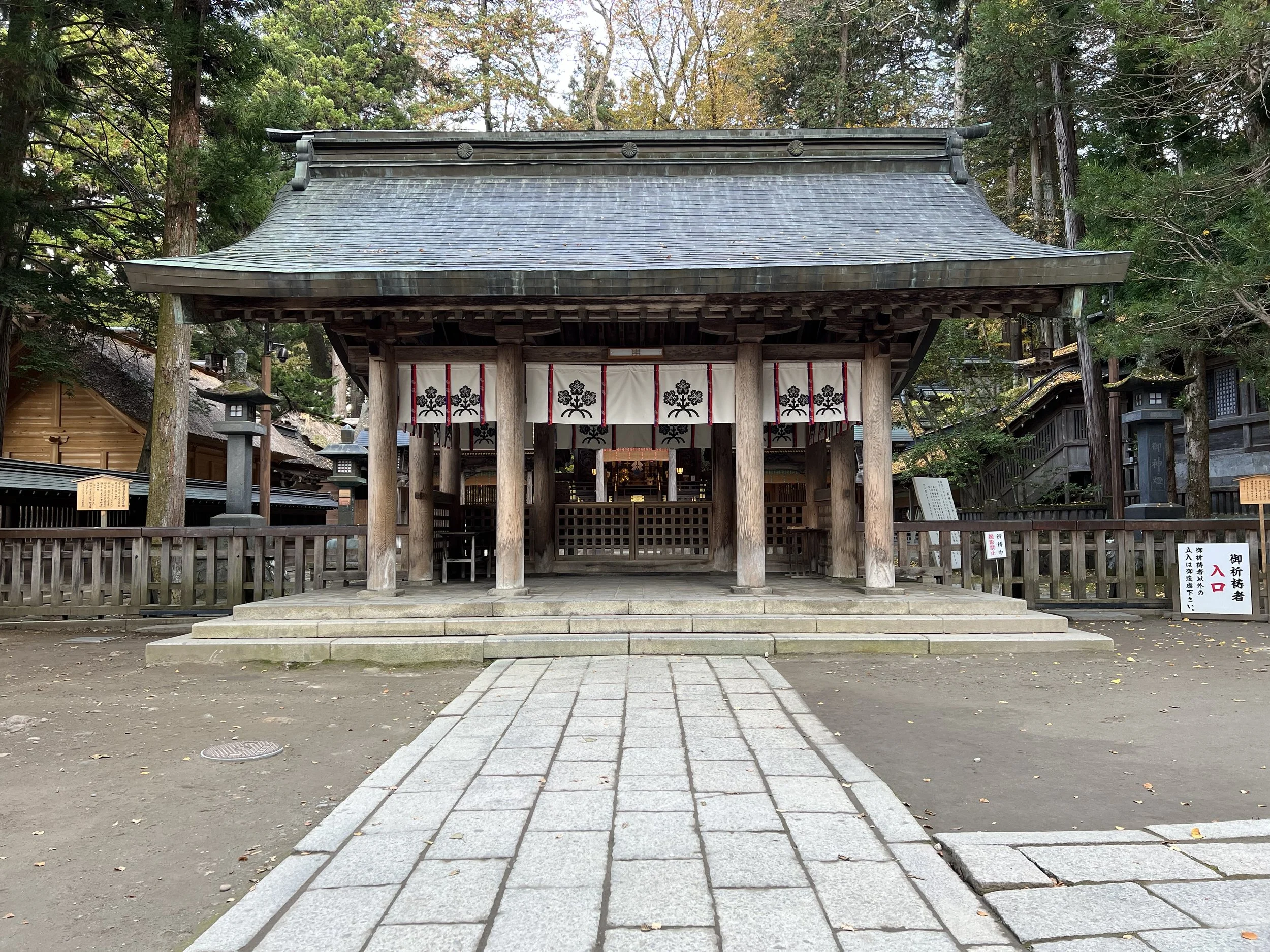
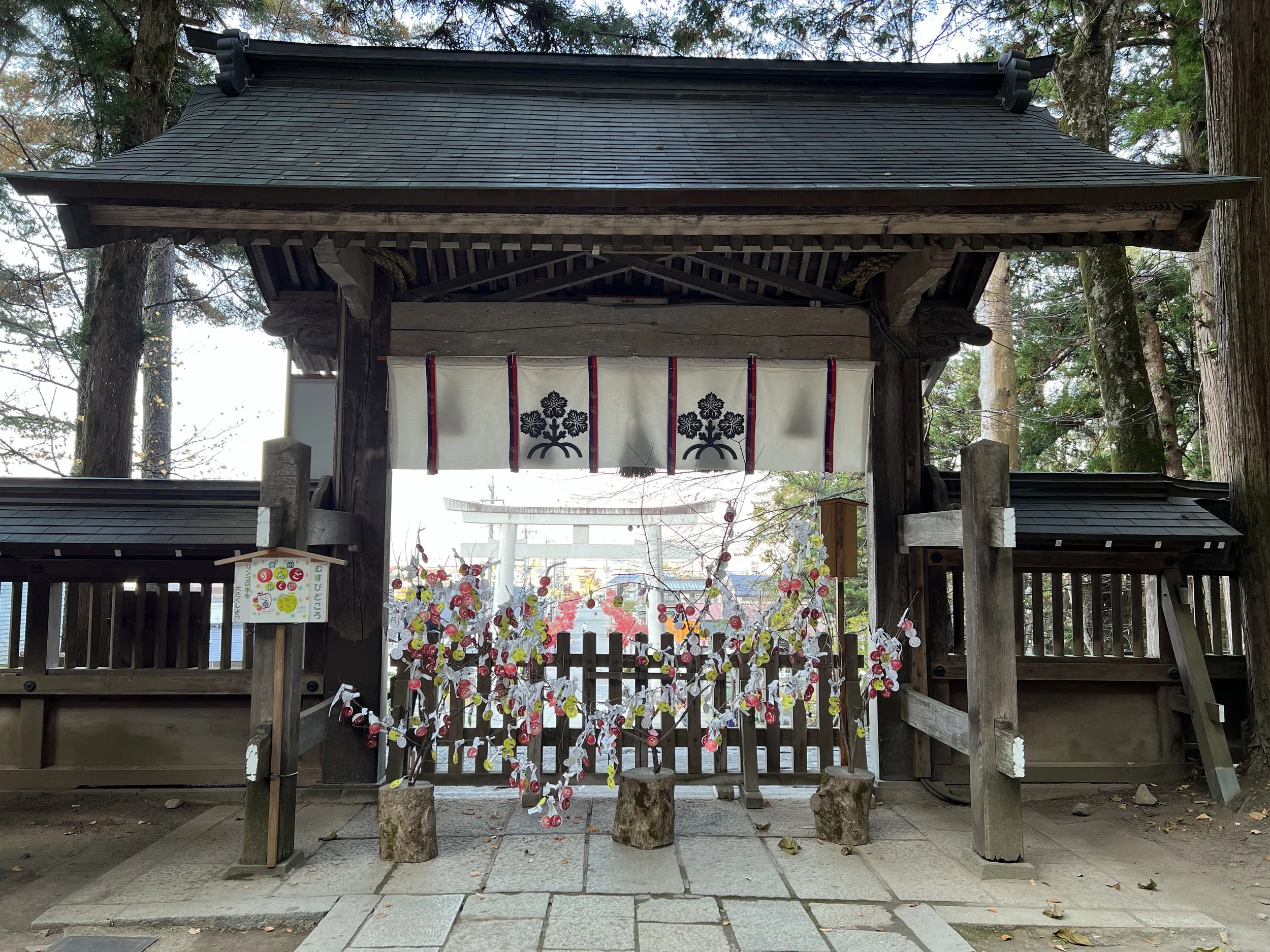
By the time I reached Kamisha Honmiya, it was clear that this was the largest and most developed of all four Suwa Taisha shrines. Set at the foothills of the mountain and surrounded by towering trees, the shrine grounds felt both expansive and peaceful. As I walked along the main approach, I came across something I wasn’t expecting—a sumo ring. At first, it felt slightly out of place. But the more I looked into it, the more it made sense.
Sumo actually has its roots in Shinto ritual, originally performed as a way to entertain and communicate with the gods. Here, that connection is still preserved through traditions like hono-zumo, ceremonial matches held as offerings, and even hitori-zumo—ritual “matches” where a wrestler symbolically wrestles an invisible spirit to pray for a good harvest. Standing there, it became clear that this wasn’t a sporting space but a sacred one.
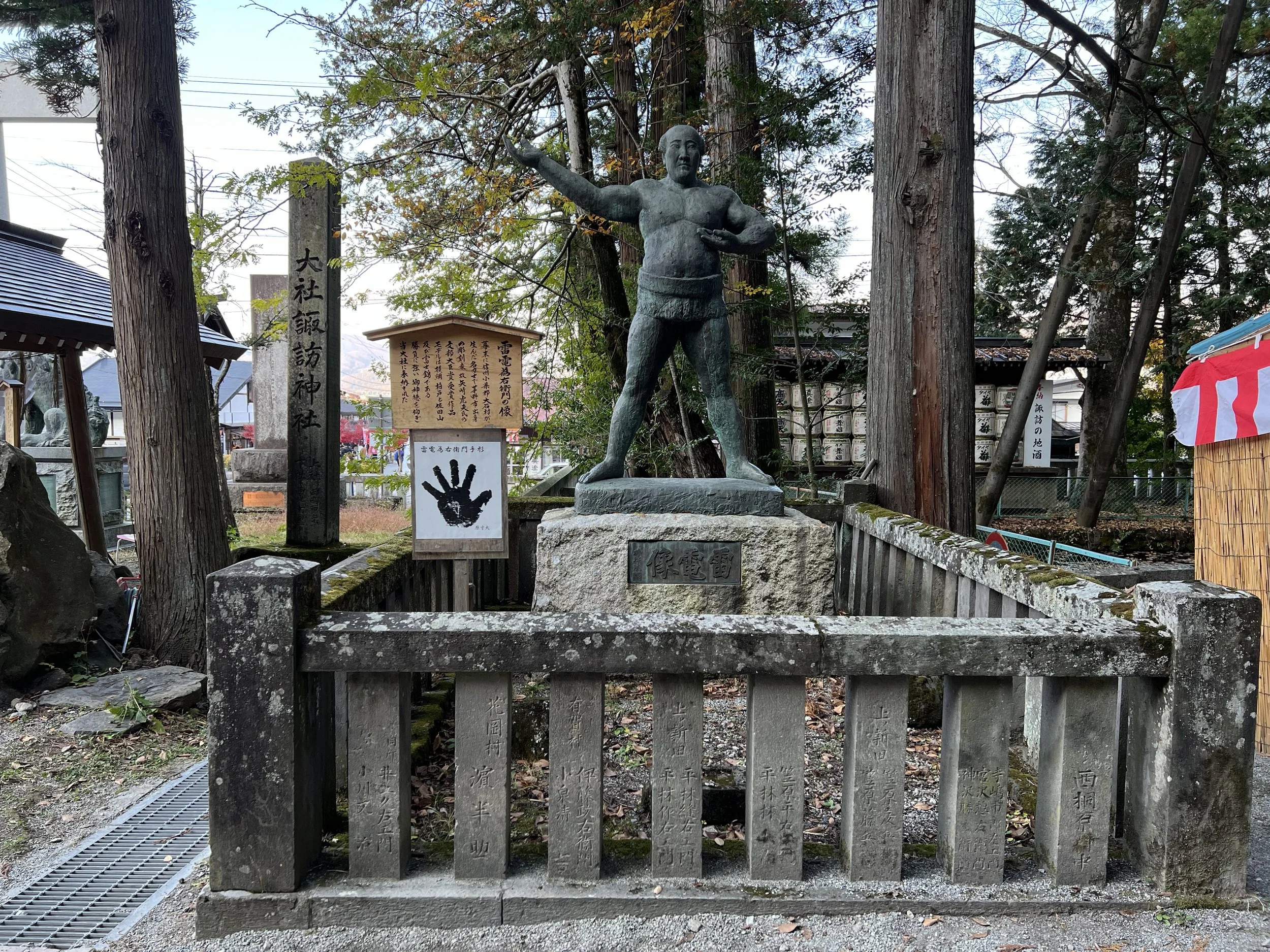
As I continued walking, I noticed displays featuring the handprints of famous sumo wrestlers. Naturally, I had to compare my own hand to them and honestly, it never stops being impressive how massive their hands are.
The more I explored, the more layers of history revealed themselves. Kamisha Honmiya was originally centred around the worship of Mount Moriya, honouring the deity Takeminakata-no-kami. Even today, the mountain itself is considered sacred, reinforcing the idea that nature and not just buildings that forms the core of Shinto belief. Although Honmiya serves as the main sanctuary and administrative centre of the Kamisha shrines, it’s actually considered younger than Maemiya but still older than the Shimosha shrines on the opposite side of the lake.
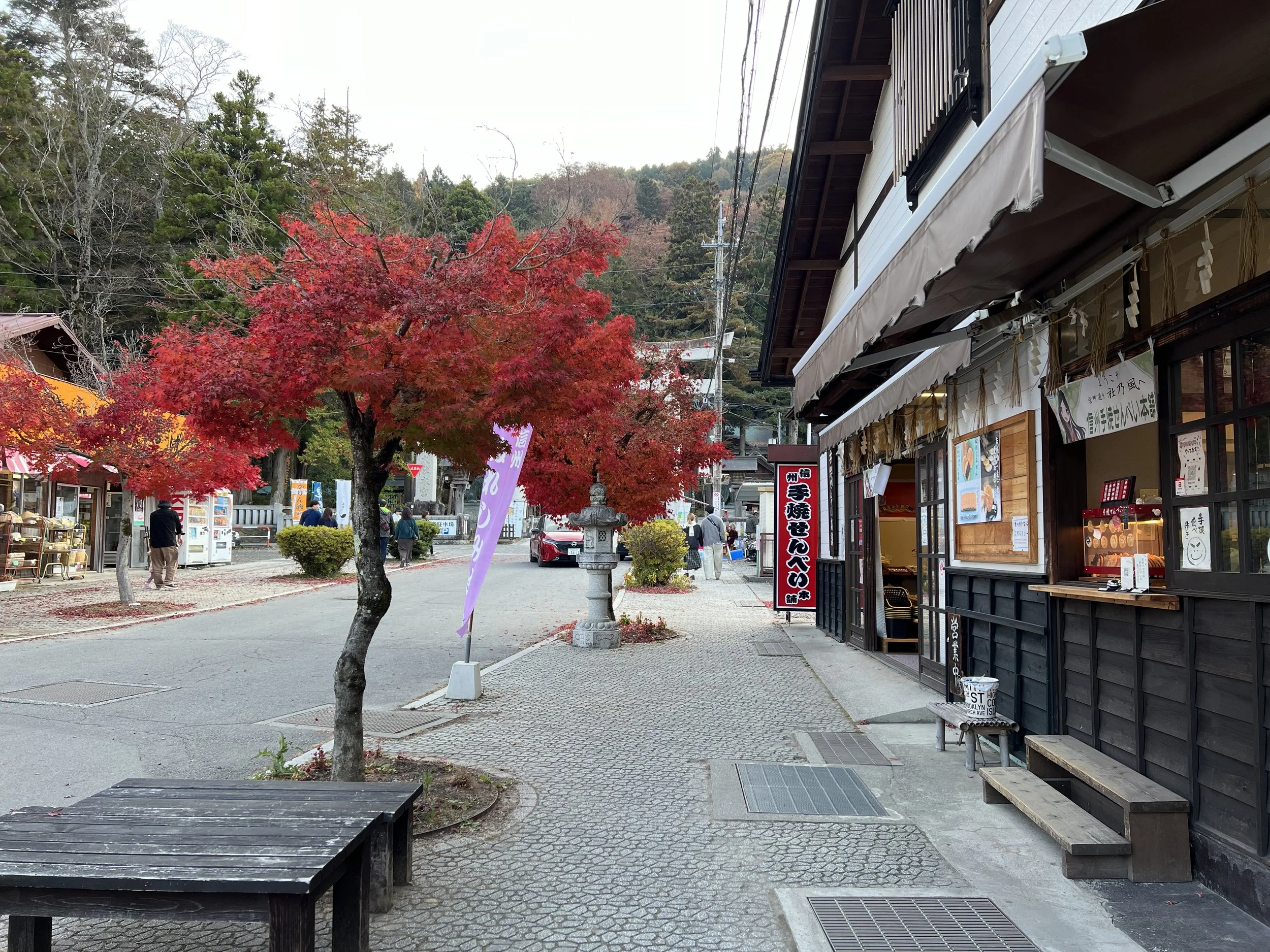
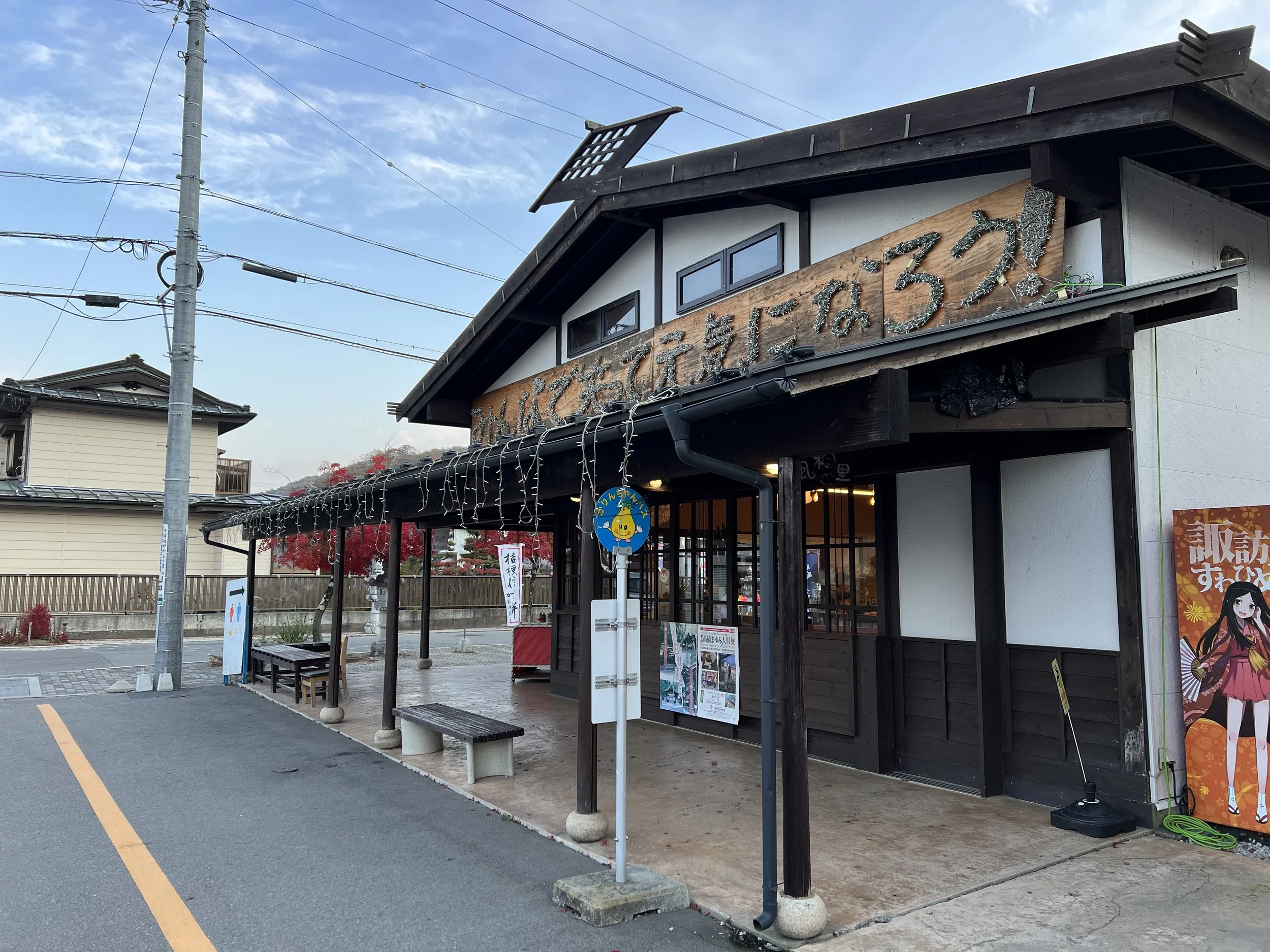
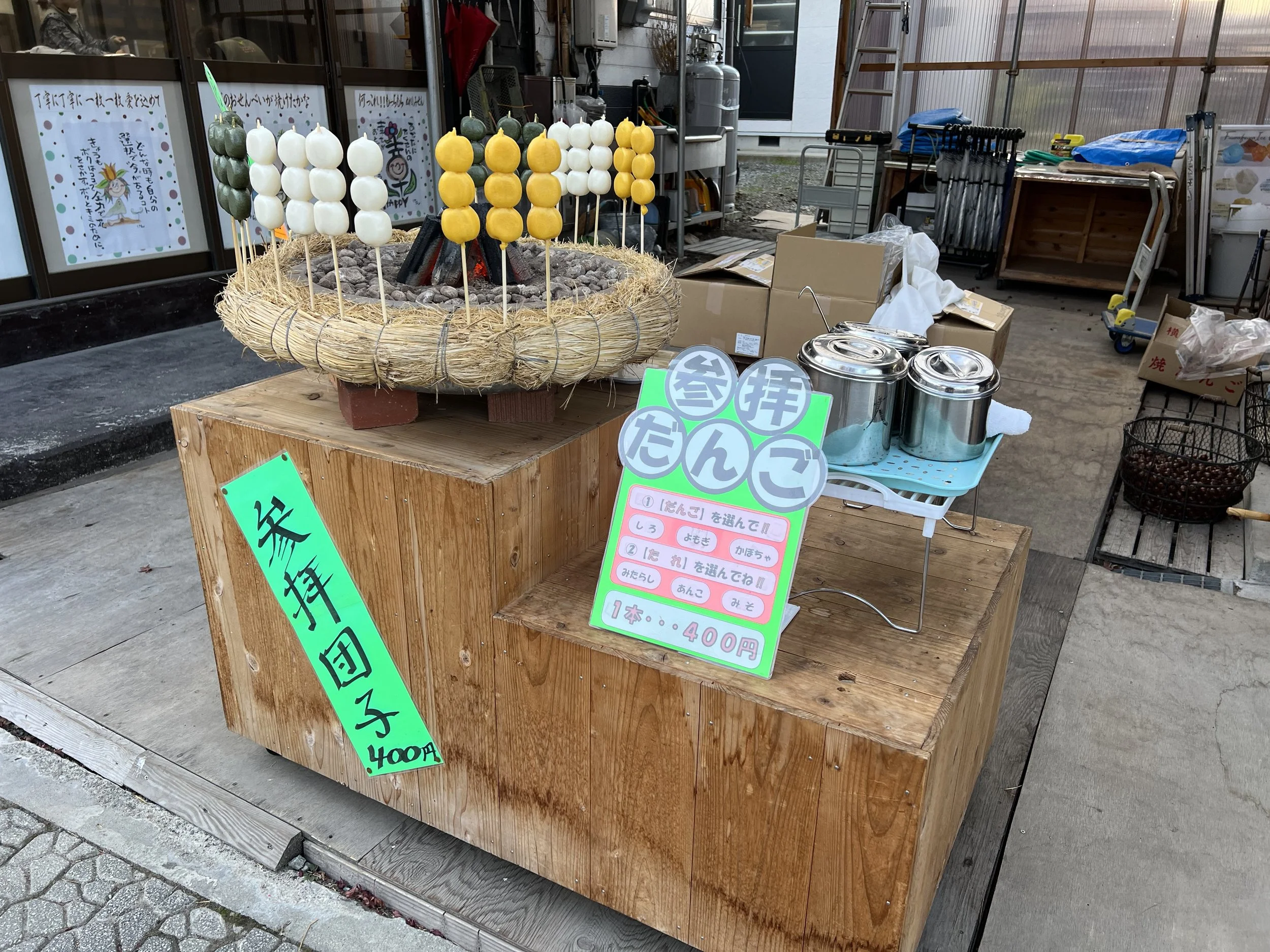
After finishing my walk through the grounds, I followed the main approach road leading away from the shrine. It eventually opened up into a small cluster of restaurants and shops. Most of them were already closing for the day, but I spent some time wandering through the quiet streets while waiting for the bus back toward Lake Suwa.
With that, I had completed all four shrines of Suwa Taisha. Each one felt different. Subtle shifts in atmosphere, history, and setting but together, they formed something much larger than I expected.
History & Background
Suwa Taisha (諏訪大社) consists of four shrines divided into two groups: the Kamisha (upper shrines) and Shimosha (lower shrines). The Kamisha shrines—Maemiya and Honmiya—are located on the southern side of Lake Suwa and are closely associated with mountain worship.
Kamisha Maemiya is believed to be the oldest of the four and the original site of worship for the Suwa deity. It retains a more primitive and nature-focused layout, reflecting early Shinto practices.
Kamisha Honmiya serves as the main shrine and administrative centre. It is dedicated to Takeminakata-no-kami, a deity associated with wind, water, and agriculture, and has historically been linked to the worship of Mount Moriya.
A unique aspect of the Kamisha shrines is that the mountain itself is considered the shintai (sacred body of the deity), rather than a physical object housed within a building. This reflects some of the oldest forms of Shinto belief, where natural elements are directly worshipped.
The shrines are also tied to the Onbashira Festival, held every six years, where massive logs are transported and erected at each shrine as part of a renewal ritual.
Getting There
To reach the Kamisha shrines, travellers can take a train to Chino Station on the JR Chuo Main Line. From Tokyo, direct limited express trains (Azusa) run to Chino in approximately 2–2.5 hours.
From Nagano, travellers can take a train to Shiojiri or Kami-Suwa and transfer to reach Chino.
From Chino Station, both Kamisha Maemiya and Kamisha Honmiya can be reached on foot, though the walk takes approximately 30–45 minutes. Local buses are available but may not significantly reduce travel time depending on schedules.
Driving is a convenient alternative, with parking available at both shrine locations.
Route Overview
Distance: 5.3 km (Chino Station → Kamisha Honmiya)
Total elevation gain: 66 m
Duration: 1 hr 10 min (with breaks 1 hr 24 min)
Difficulty: Easy
Cost Breakdown
Bus: Yokoyakyo Bus Stop → Chino Station — ¥1,000
Food: ¥140