Shikoku Henro - Konzoji Station to Mino Station - Kagawa, Japan
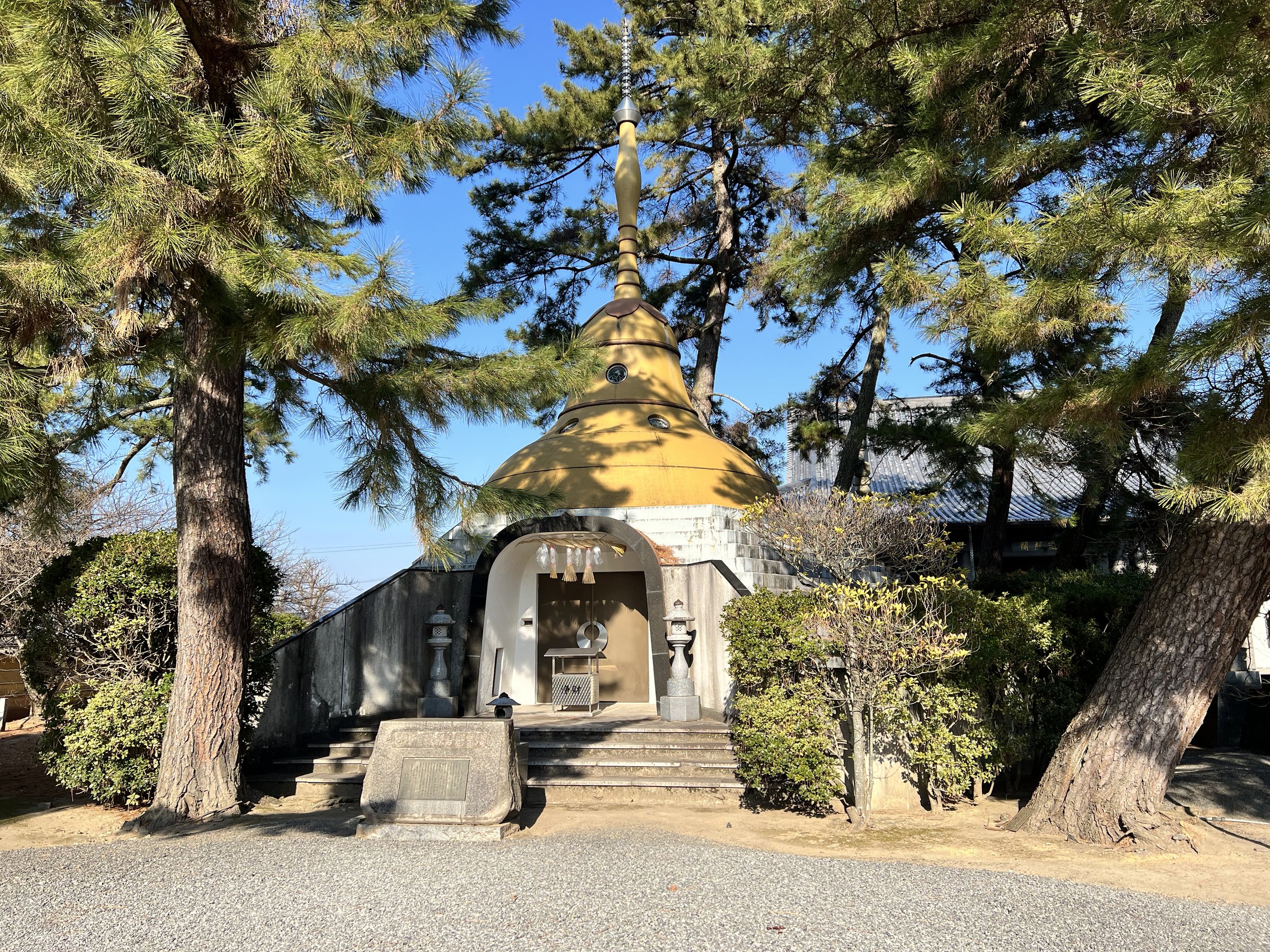
I had planned to start hiking at 8 AM but ended up sleeping in and didn’t reach Konzoji until 9:15. The temple is only a few minutes’ walk from the train station, yet surprisingly, there was no one else around. I wandered through the quiet grounds, paid my respects, and then headed to the second temple—Zentsuji.
Zentsuji was a sharp contrast to Konzoji. Tour buses lined the entrance, and visitors filled the spacious grounds. It’s a much more popular site, famous for its five-story pagoda, a symbol of the temple that has been destroyed by wind and fire multiple times throughout history but faithfully rebuilt each time. After exploring the grounds, I exited from the back gate and began the 20-minute walk toward Koyama Temple.
The walk passed through an industrial area, and I had to stay alert for trucks. Koyama Temple stood out immediately—stone rabbit statues dotted the grounds. I learned it’s affectionately nicknamed the “Rabbit Temple,” with the rabbit symbol linked to its principal deity. Dozens of rabbit sculptures were placed around the precincts, each charming in its own way.
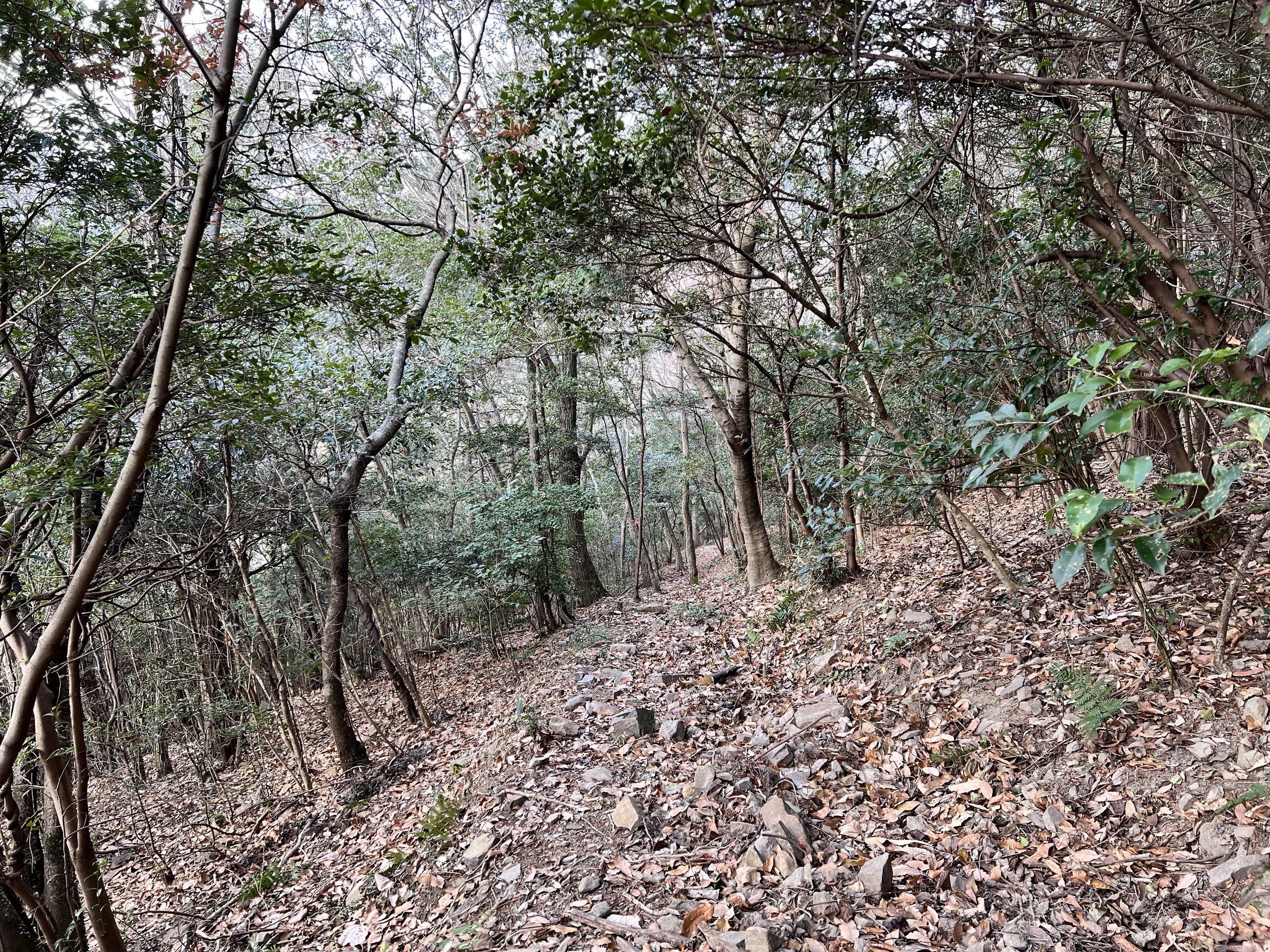
After Koyama, the real hike began—a mountain route crossing five peaks. The trailhead was tucked behind farmland and wasn’t immediately obvious. I followed the leaf-covered path uphill toward Mount Fudenoyama. Despite the slippery leaves, the incline was gentle and signage decent. Still, I’d recommend having an offline GPS map to confirm the route. From Fudenoyama, I continued toward Mount Gahaishi.
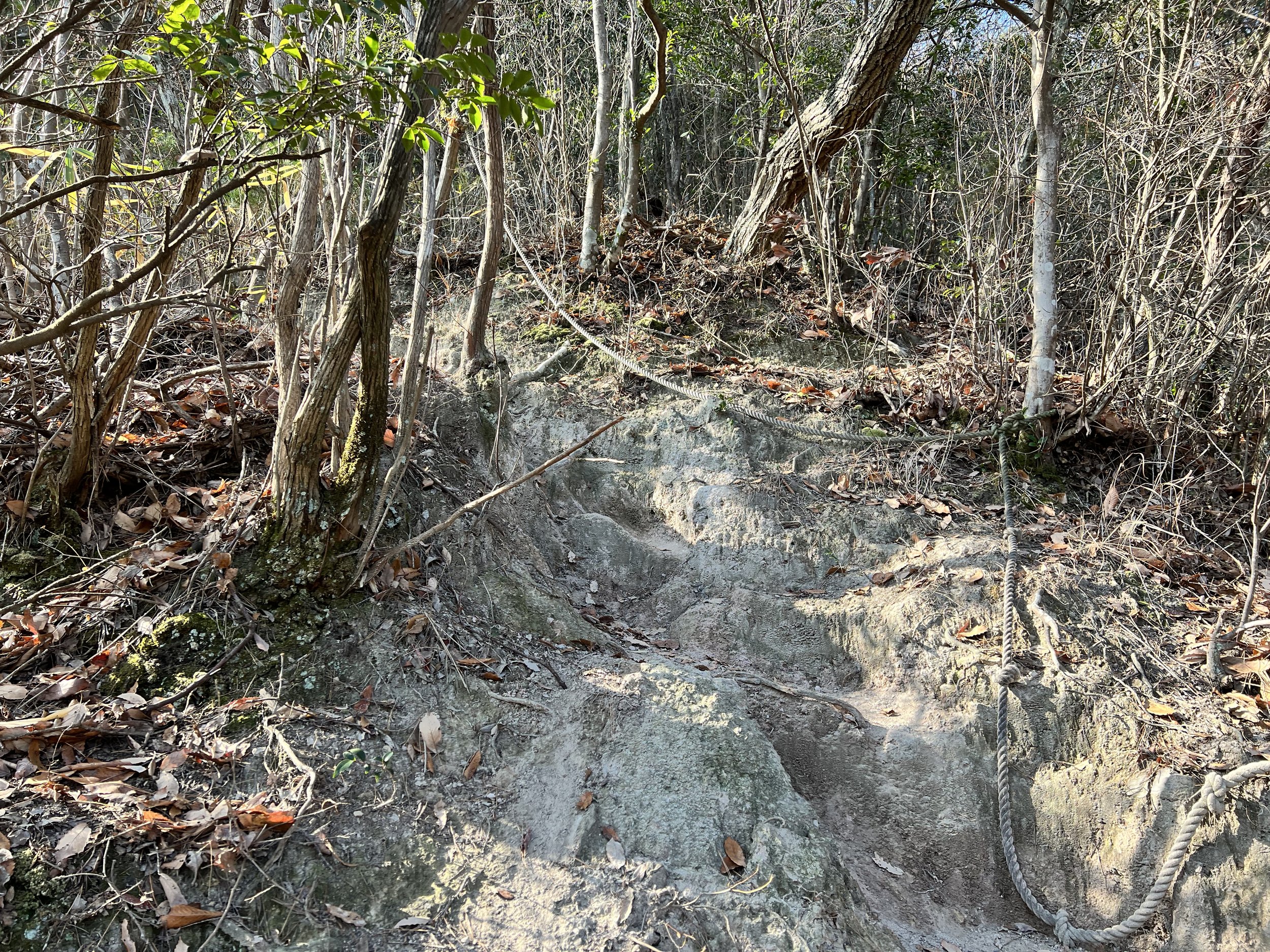
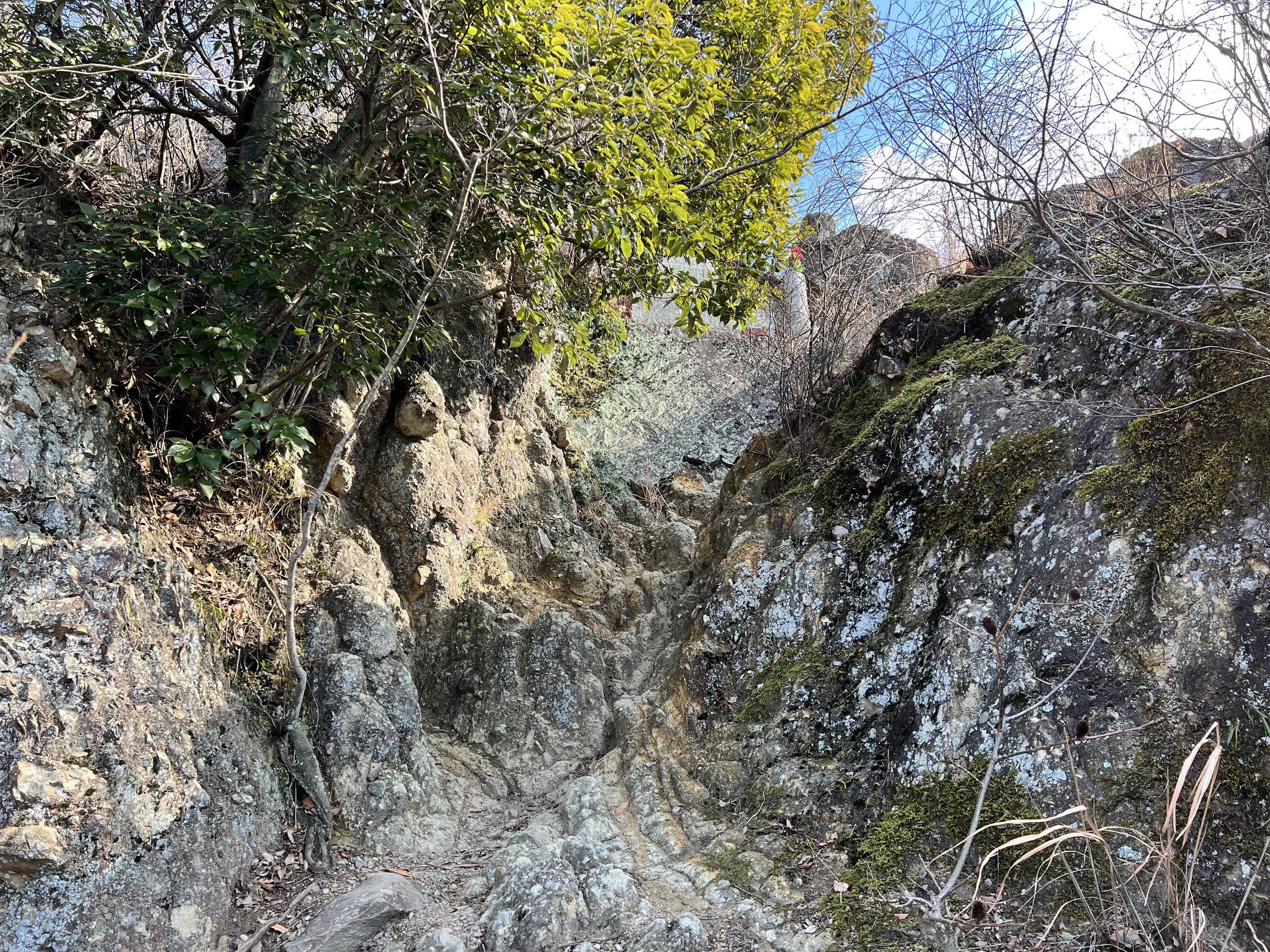
This was where things got tough. The slope turned steep—far steeper than I’d anticipated—and the trail narrowed with loose sand and a sharp drop on one side. I relied on nearby tree roots to steady myself, as one misstep could have sent me sliding down the ridge. The final stretch to the summit was so steep I had to climb on all fours. I met a local woman taking a break and shared a short chat before pushing on; I knew stopping too long would make it harder to restart.
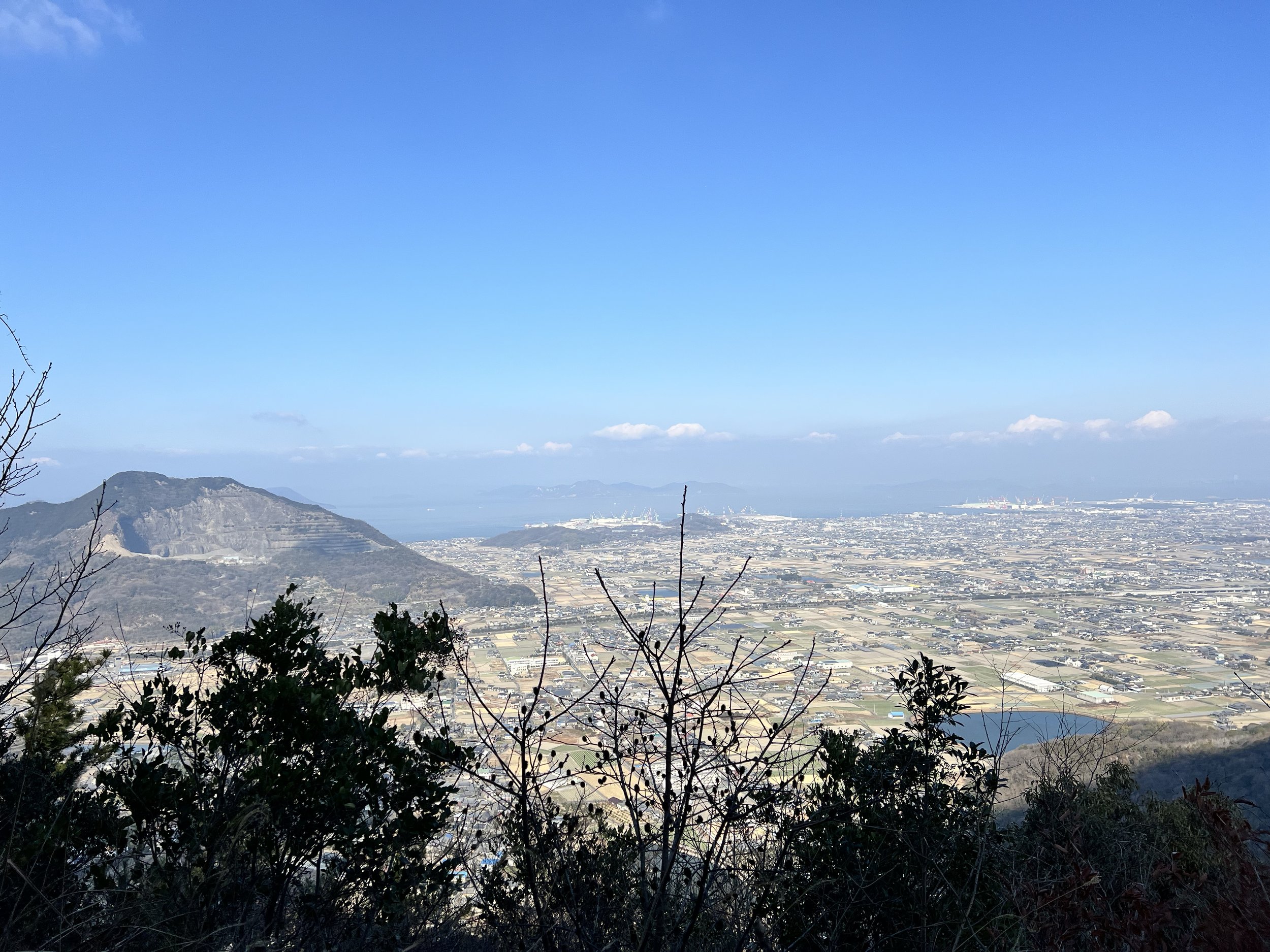
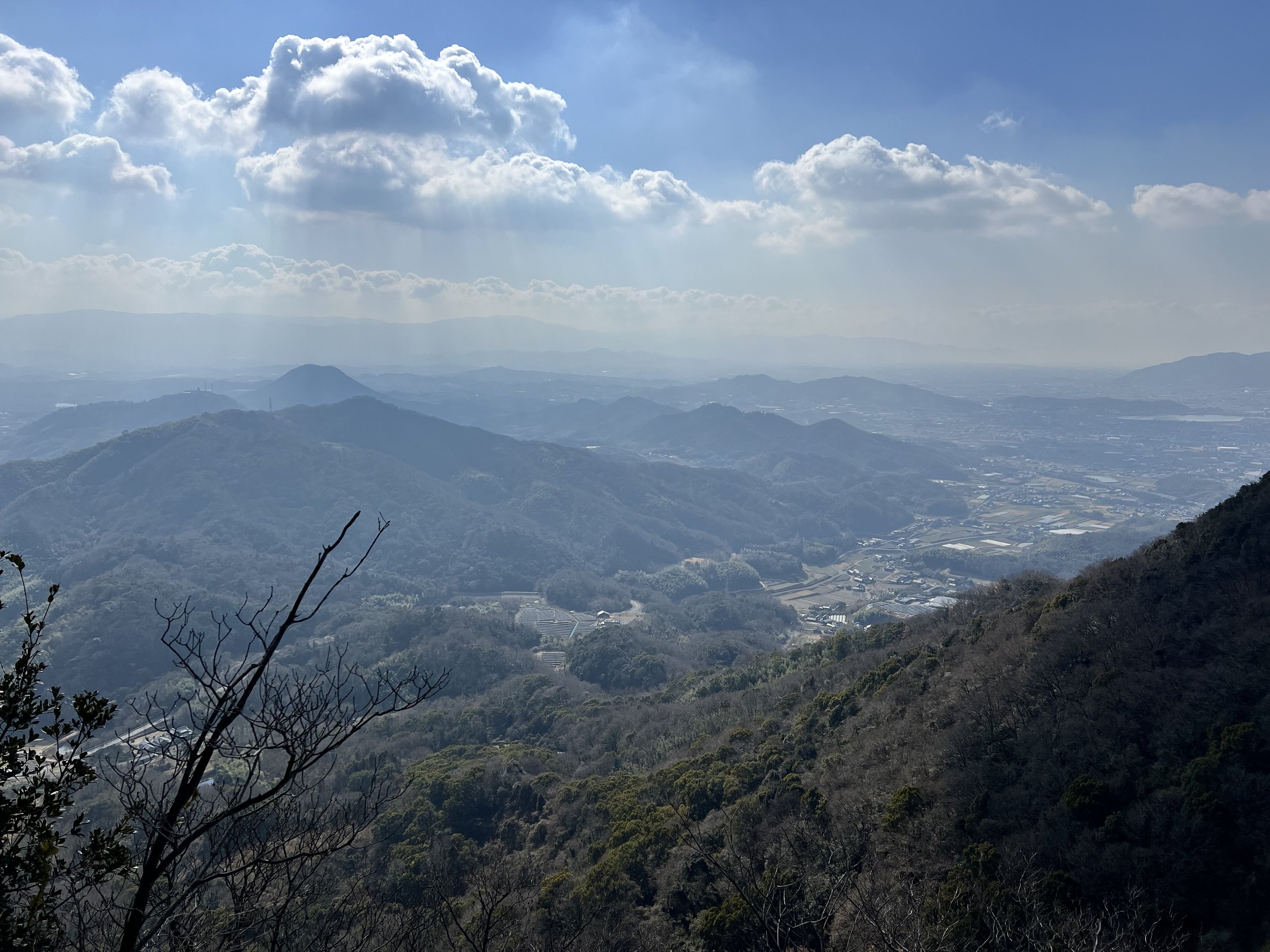
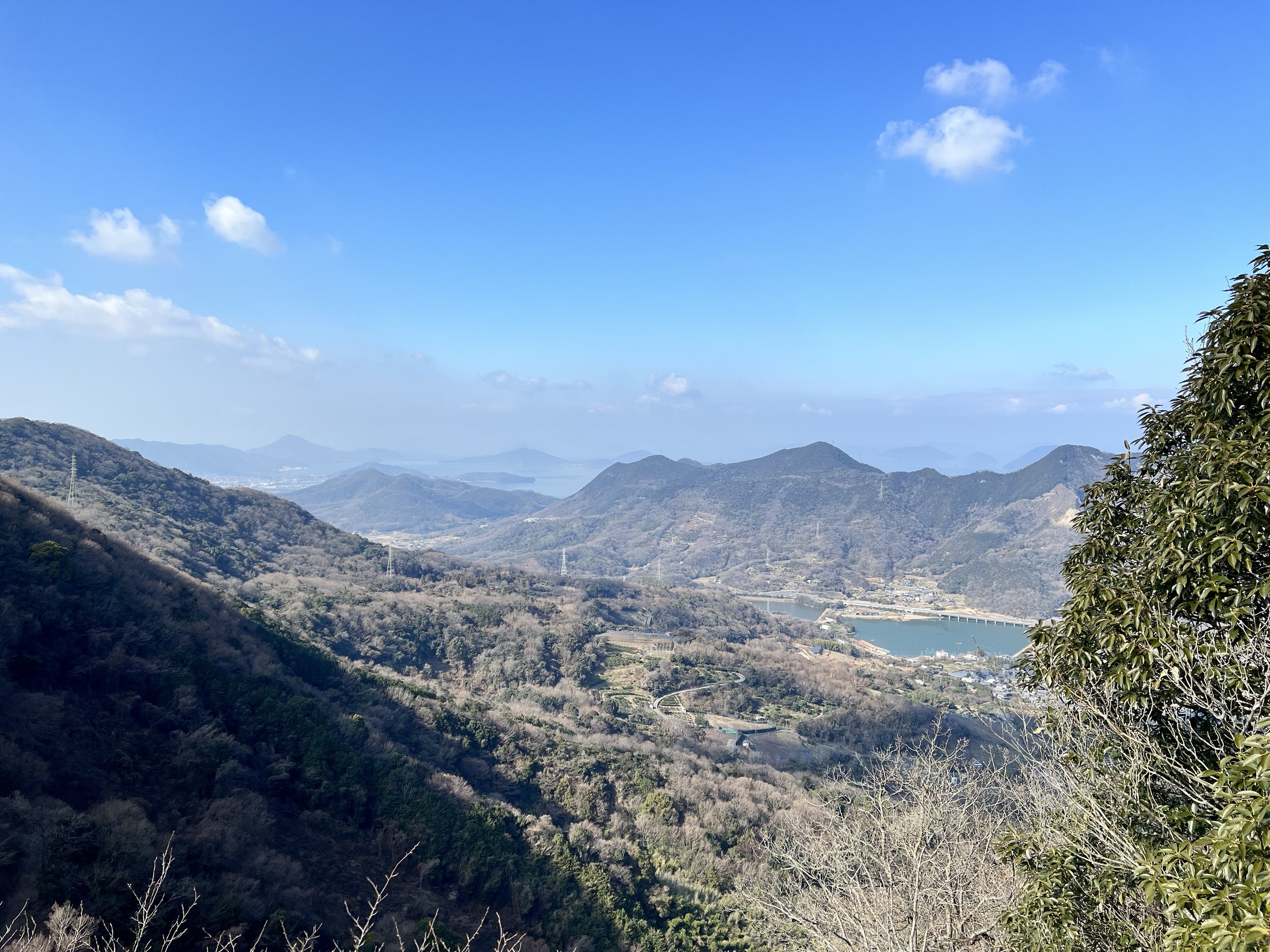
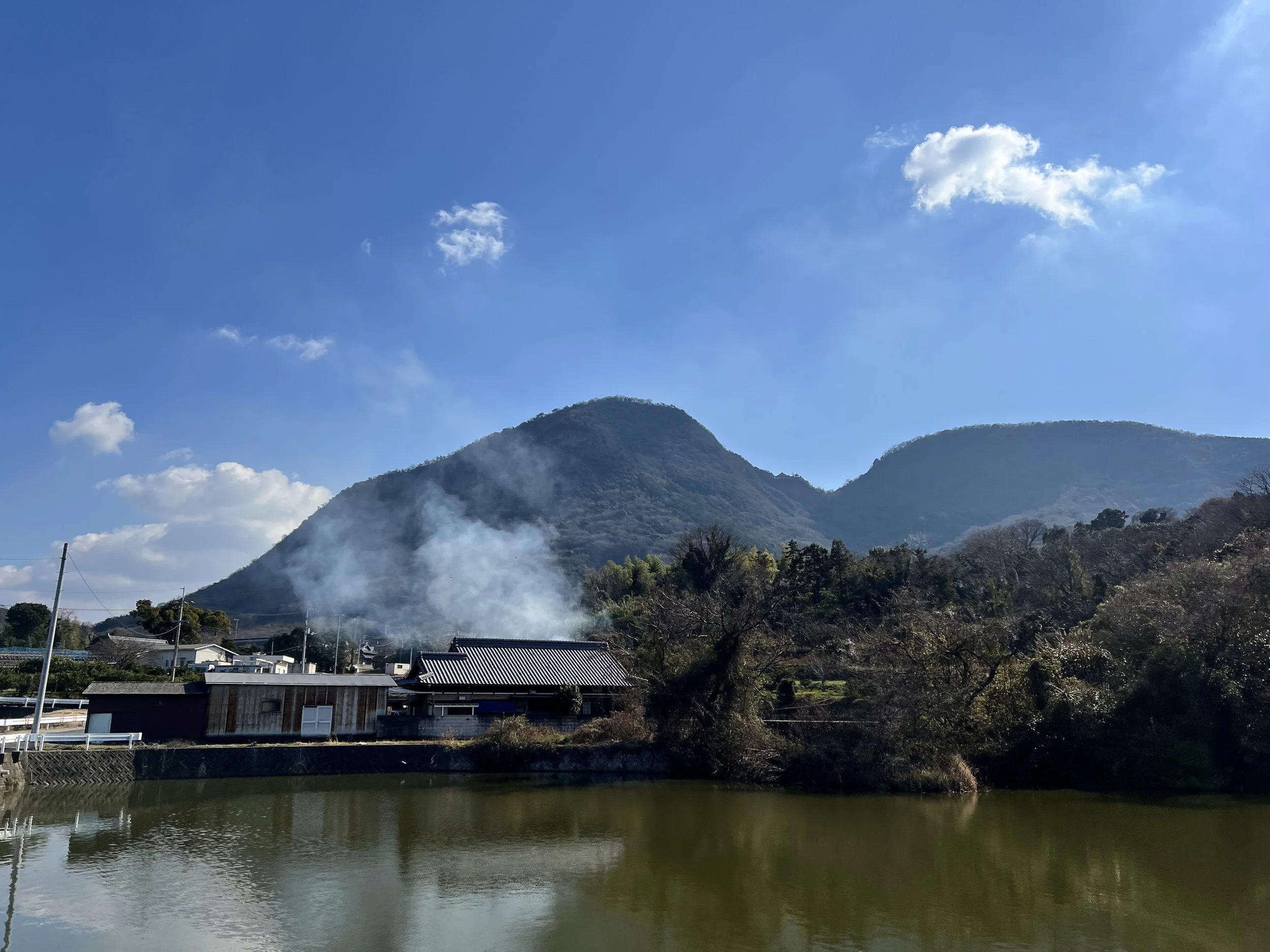
Reaching Mt. Gahaishi (481 m) felt like a huge relief. I paused for photos, thinking the worst was behind me—only to find the descent just as demanding. Chains bolted into the rock helped navigate the steepest sections. Before reaching the temple, I passed small Buddha statues and offering spots scattered along the cliffside, then emerged behind Shusshakaji Temple.
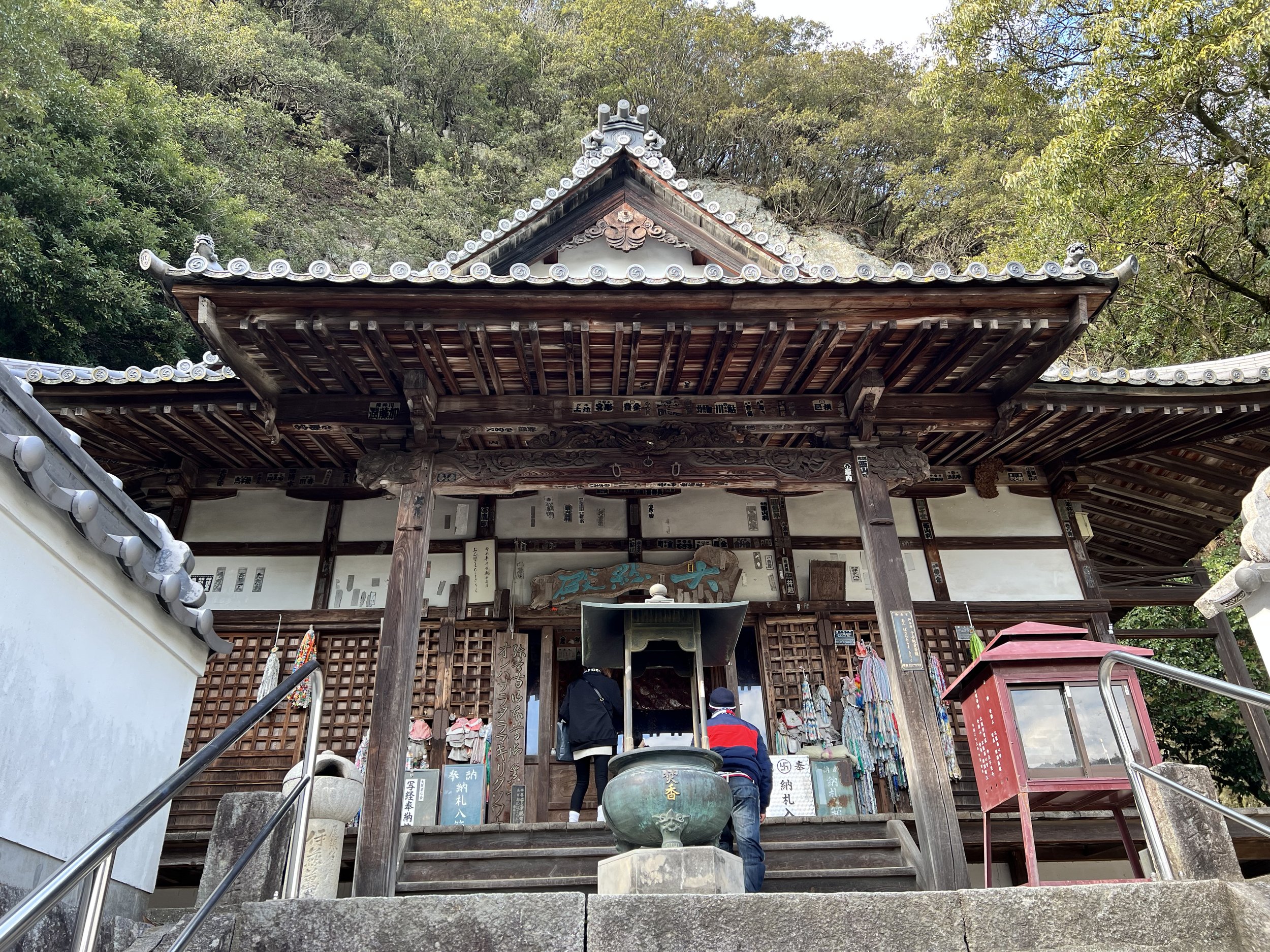
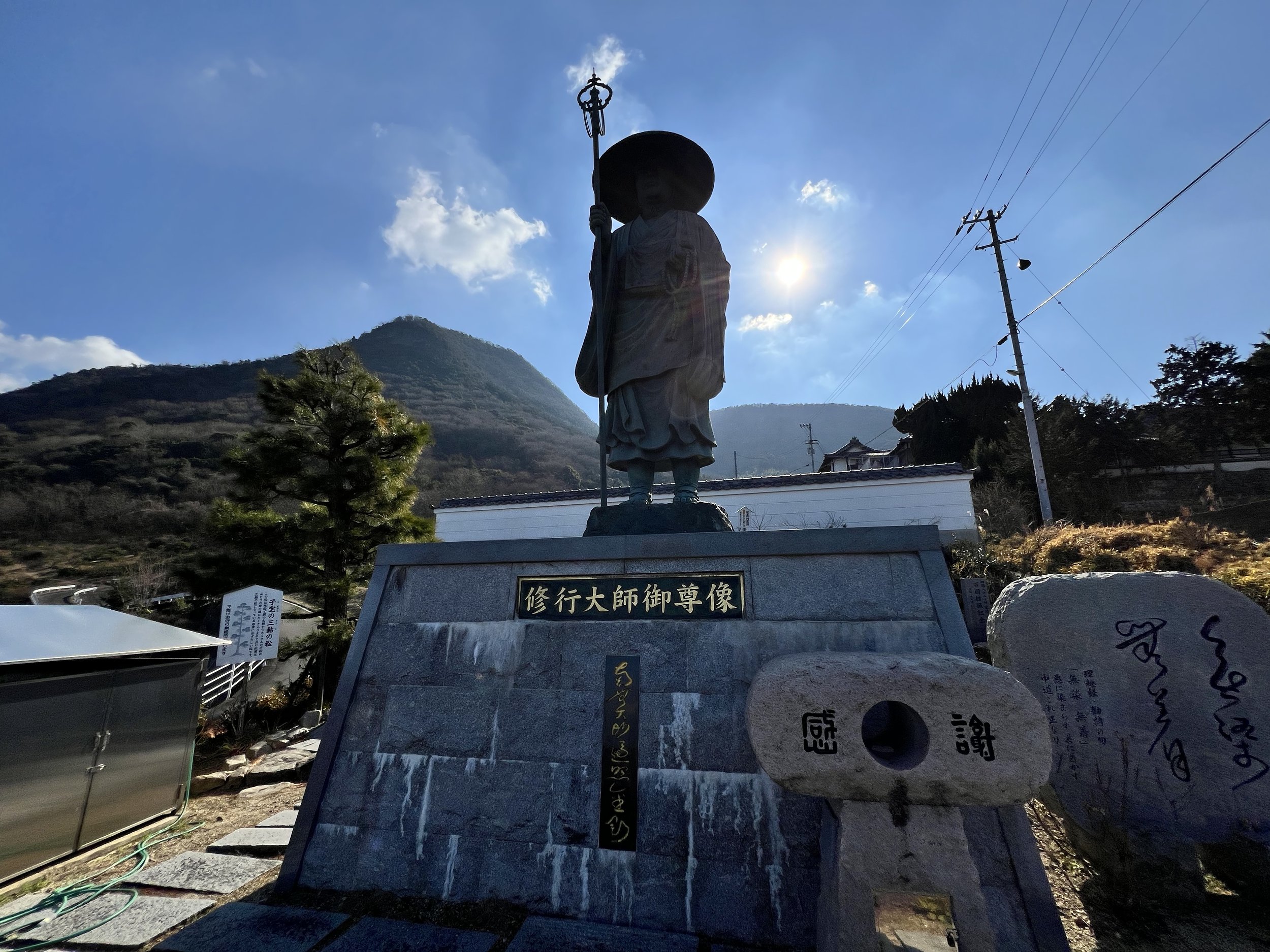
Built against the cliff, Shusshakaji is said to be where Kukai leapt off to prove his faith, only to be miraculously saved. While resting here, I met an elderly man who told me he’s been walking this trail for over 50 years but that this might be his last time. He handed me a piece of chocolate with a smile before heading off—simple but moving.
After that intense climb, the descent to Mandaraji Temple at the mountain’s base felt easy. Mandaraji houses a 158 cm statue of Sho Kannon Bosatsu, said to hear the sounds of the world. I didn’t linger long and soon began my final leg toward Iyadaniji.
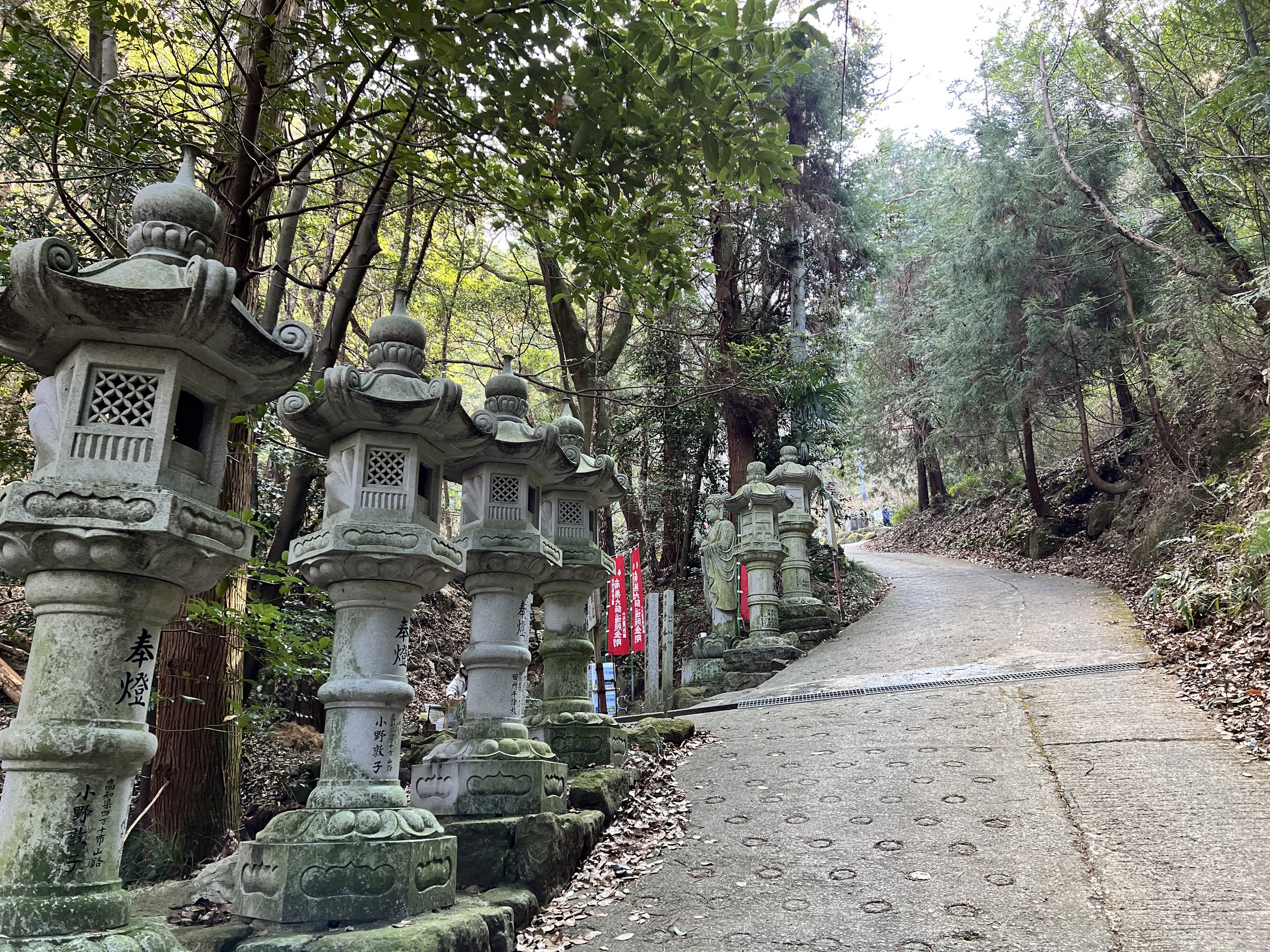
The road there followed a busy street just as local students were biking home. As they sped downhill while I walked uphill, I had to stay alert to avoid collisions. Eventually, I turned onto a bamboo-lined trail leading to Iyadaniji Temple—a surreal and tranquil approach.
A sign warned of 500 steps ahead, which gave me pause. I was exhausted, but skipping it meant I’ll mostly regret it later. Fortunately, the stairs weren’t as bad as I’d feared. I reached the top, explored the temple, offered prayers, and then descended toward Mino Station to end the day’s journey.
Today’s route was tougher than I expected, but deeply rewarding. Each temple, encounter, and climb carried a quiet sense of meaning—both physical and spiritual.
History & Background
This section of the Shikoku Henro Pilgrimage follows Temples #76 to #71 in Kagawa Prefecture—a spiritually rich stretch deeply tied to Kobo Daishi (Kukai), founder of Shingon Buddhism. The route moves from the peaceful Konzoji Temple to the mountaintop Iyadaniji, passing through sacred sites that reflect Kukai’s life, devotion, and teachings.
#76 Konzoji Temple 金倉寺 - Founded in 774 by Wake no Michitaka, an ancestor of Kobo Daishi, Konzoji is dedicated to Yakushi Nyorai, the Medicine Buddha. The temple’s calm atmosphere and family ties make it a place for prayers for health, safety, and ancestral connection.
#75 Zentsuji Temple 善通寺 - Established in 807 by Kukai on the grounds of his birthplace, Zentsuji is one of the most important sites of the pilgrimage and among the earliest temples of the Shingon sect. Its iconic five-story pagoda, repeatedly rebuilt after fires and storms, stands as a lasting symbol of resilience and faith.
#74 Koyama Temple 甲山寺 - Founded by Kukai in the early 9th century while building a reservoir for local farmers, this temple enshrines Bishamonten, the god of war and protection. Often called the “Rabbit Temple,” it’s known for its rabbit statues linked to Juichimen Kannon, symbolizing fertility, protection, and safe travels.
#73 Shusshakaji Temple 出釈迦寺 - Dramatically built against a cliff, Shusshakaji marks the spot where young Kukai is said to have leapt off to prove his devotion and was saved by divine intervention. The temple enshrines Shaka Nyorai and remains one of the pilgrimage’s most spiritually moving sites.
#72 Mandara Temple 曼荼羅寺 - Originally founded by the monk Gyoki and later restored by Kukai, Mandaraji draws its name from the mandala central to Shingon teachings. Dedicated to Sho Kannon Bosatsu, it represents enlightenment, compassion, and the unity of all existence.
#71 Iyadaniji Temple 弥谷寺 - Nestled high in the mountains and reached by 500 stone steps, Iyadaniji is said to be where Kukai once practiced ascetic training. Its rock-hewn meditation caves and panoramic views of the Seto Inland Sea make it one of the most atmospheric temples in Kagawa.
To see my progress on the full Shikoku Henro Pilgrimage, visit my Shikoku Henro - Temple List & Progress..
Getting There
I stayed in Marugame, so getting to Konzoji Station was quite easy. It’s about a 10-minute ride on a local train along the JR Yosan Line, making it a quick and convenient trip. You can also reach the station on foot, by taxi, or by car, depending on your preference and location.
If you’re coming from other major hubs in Shikoku—such as Takamatsu, Matsuyama, or Kochi—you’ll likely need to transfer trains along the way, but routes are straightforward. Most connections are well signposted and easy to navigate, especially if you’re traveling with a JR Pass or a local rail pass.
Route Overview
Distance: 21.48 km (Konzoji Station → Mino Station)
Total elevation gain: 796 m
Duration: 5 hr 21 min (with breaks 5 hr 55 min)
Difficulty: Challenging
Peaks: Mt Fudenoyama 筆ノ山 296m , Mt Gahaishi 我拝師山 481m
Cost Breakdown
Train: Marugame Station → Konzoji Station — ¥280