Onigajo Rocks - Mie, Japan
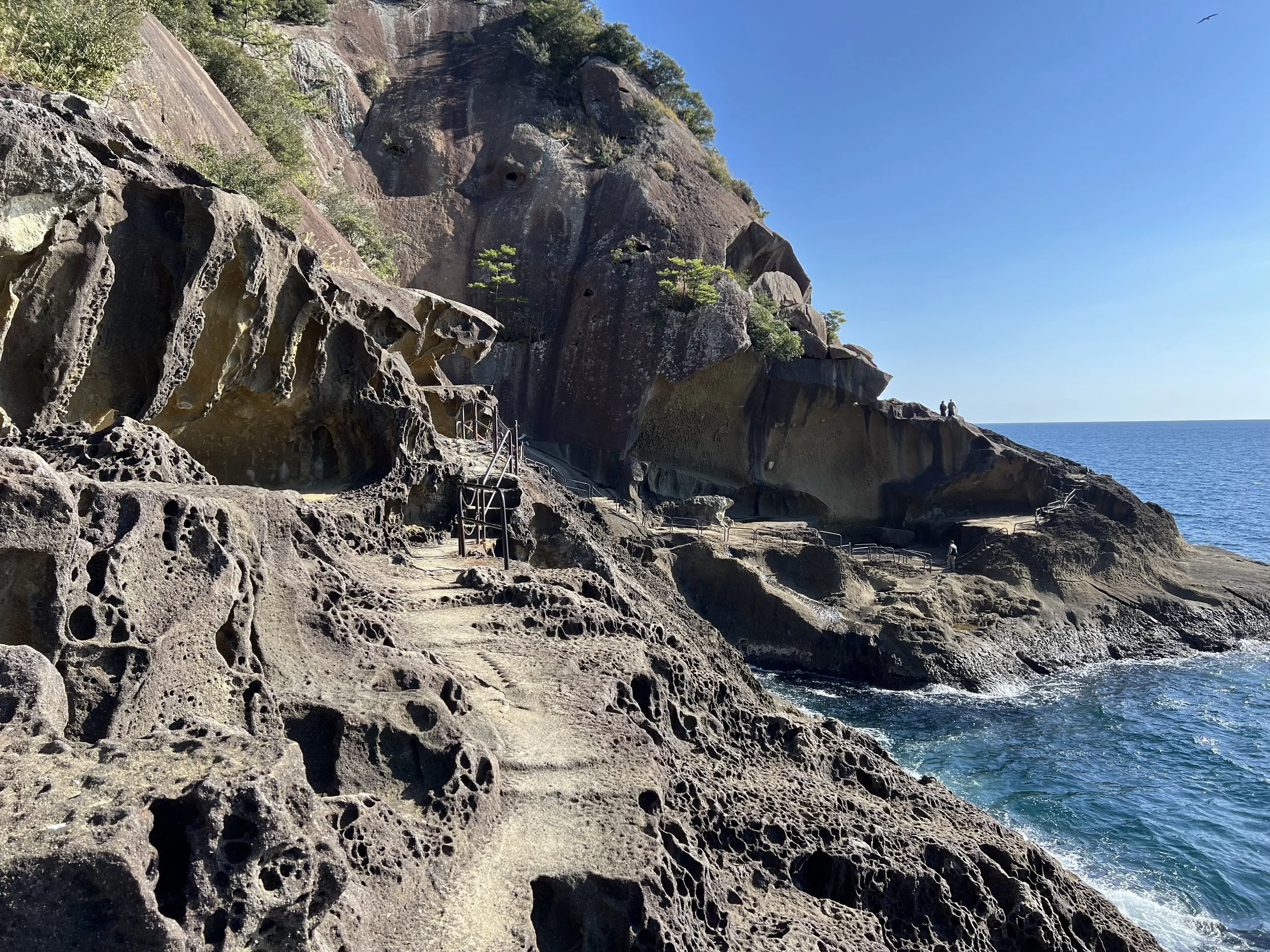
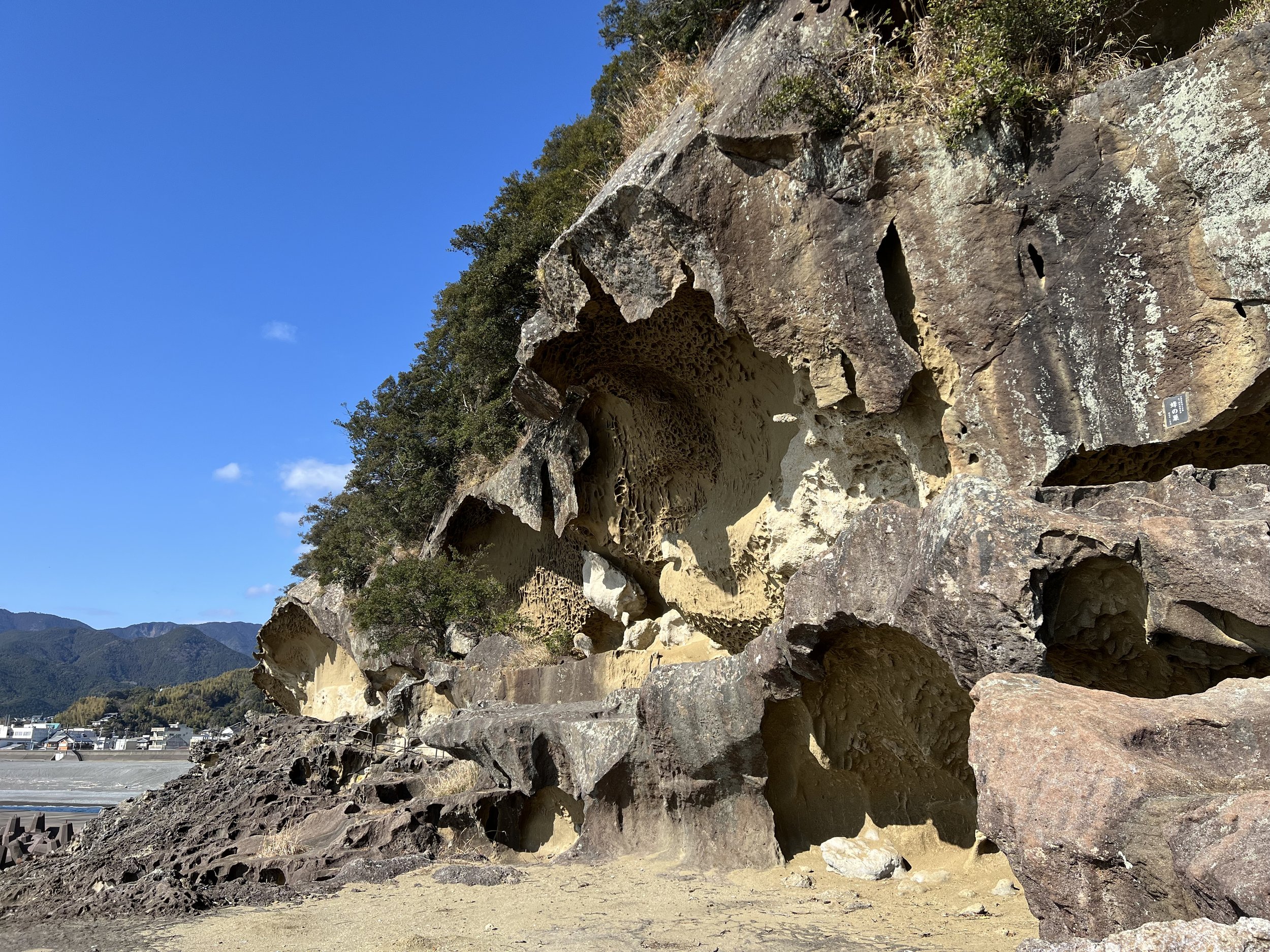
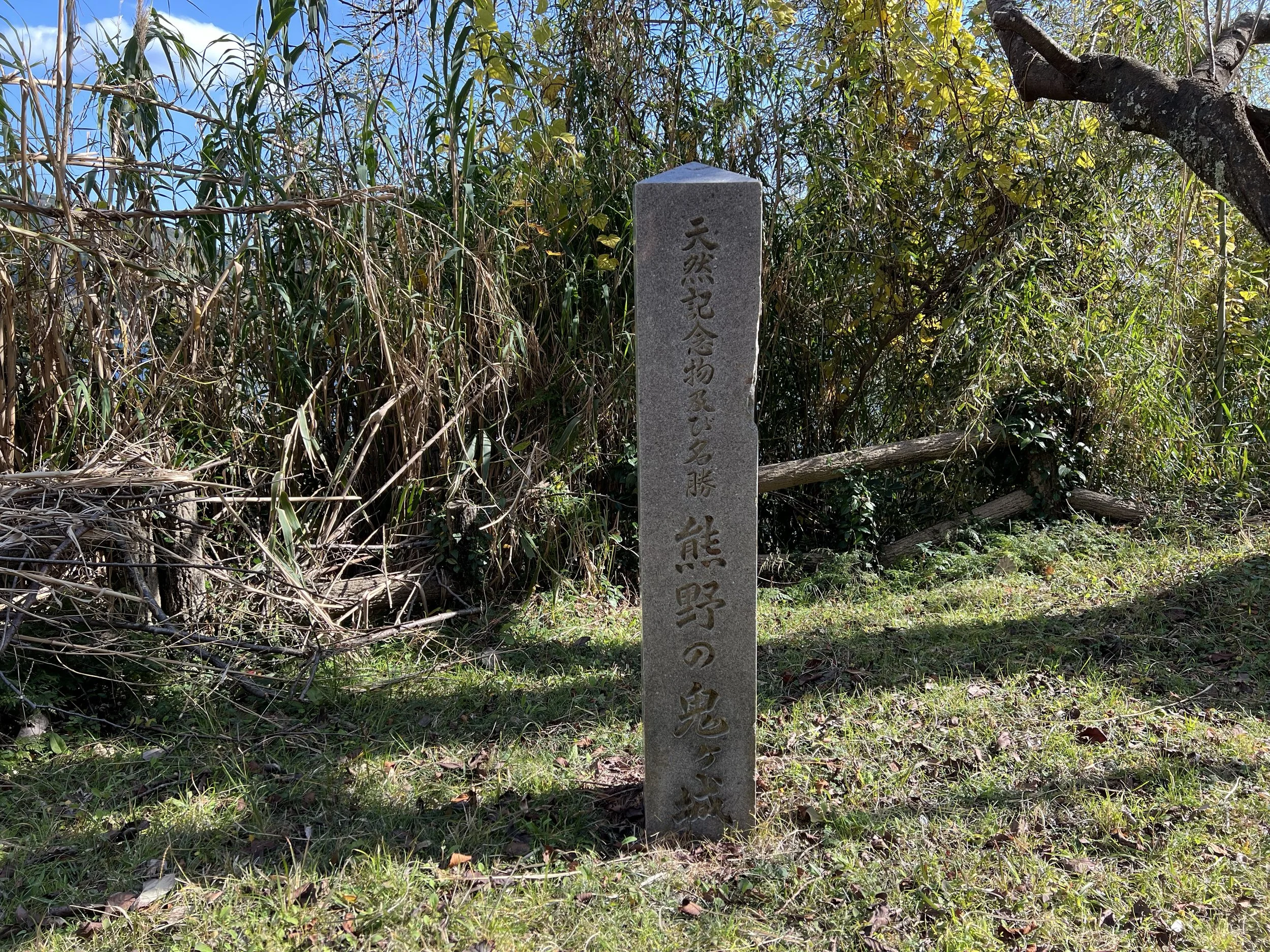
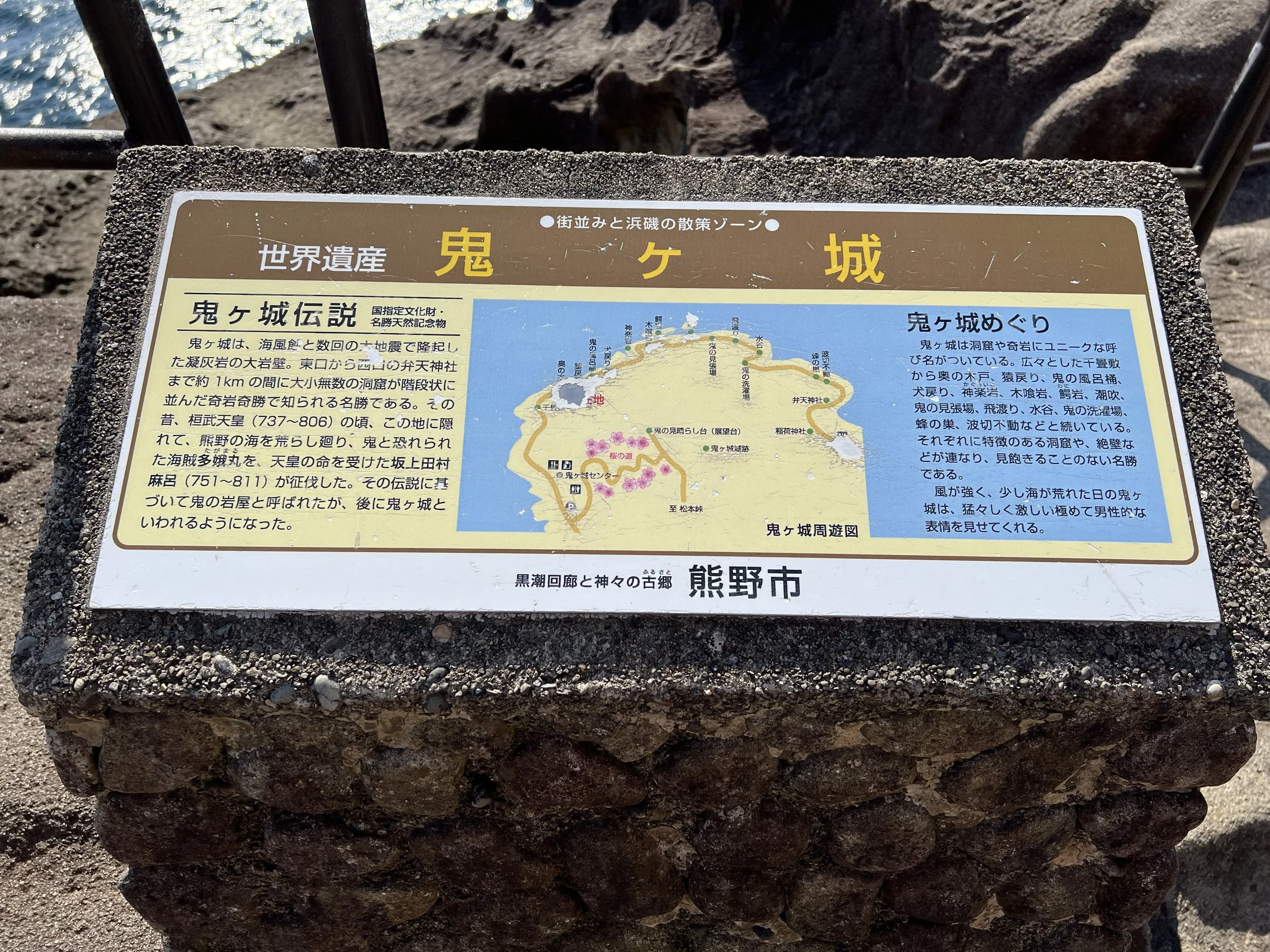
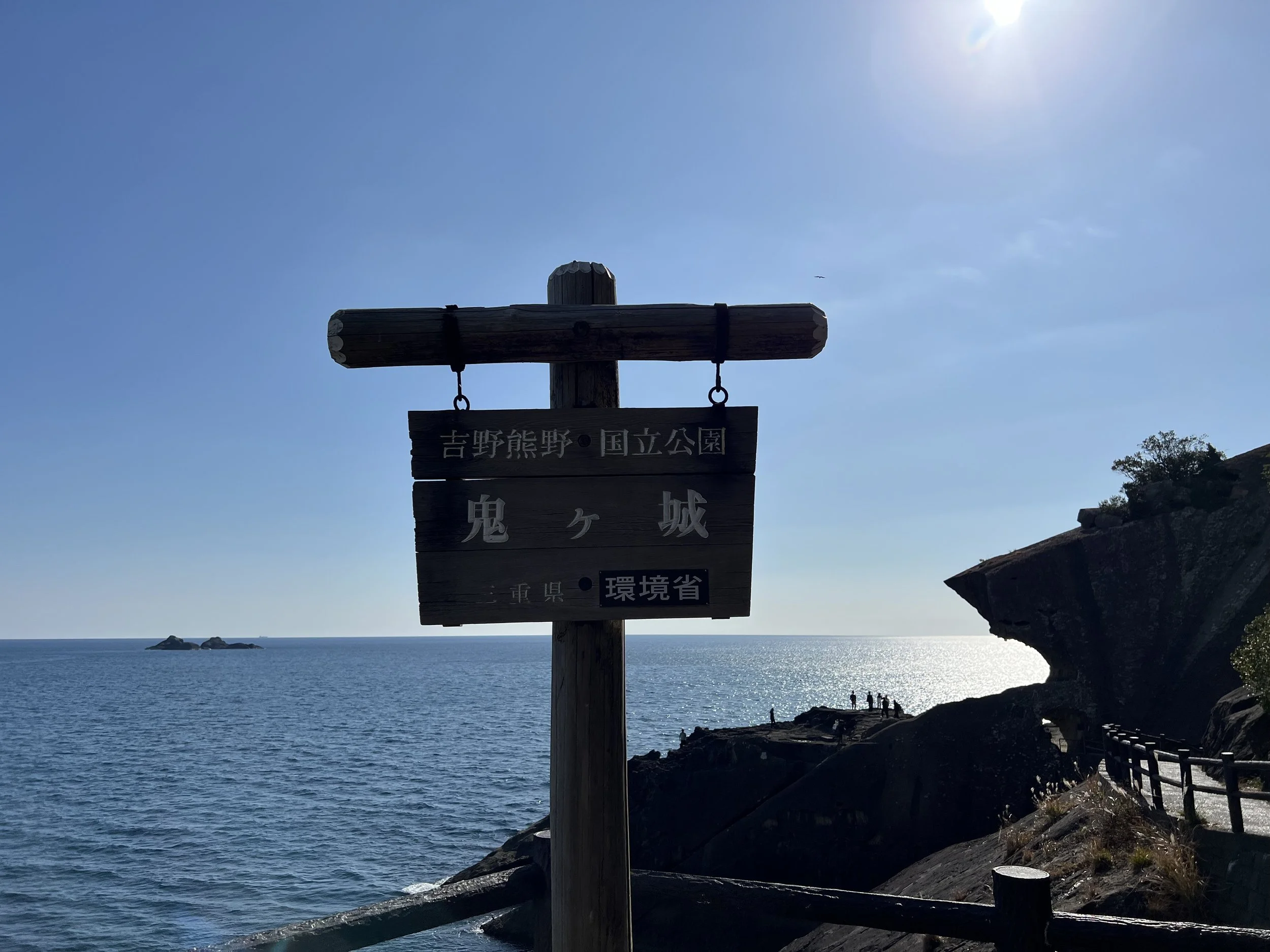
Onigajo Rocks (Onigajo) is located in the southern part of Mie Prefecture, in the coastal town of Kumano. Legend says that the dramatic rock walls here were once the domain of the oni (demons), their jagged shapes carved over centuries by relentless wind, pounding waves, and earthquakes. Stretching roughly 1.2 kilometres around a small cape, this rugged coastline is part of the UNESCO-listed Kumano Kodo pilgrimage routes.
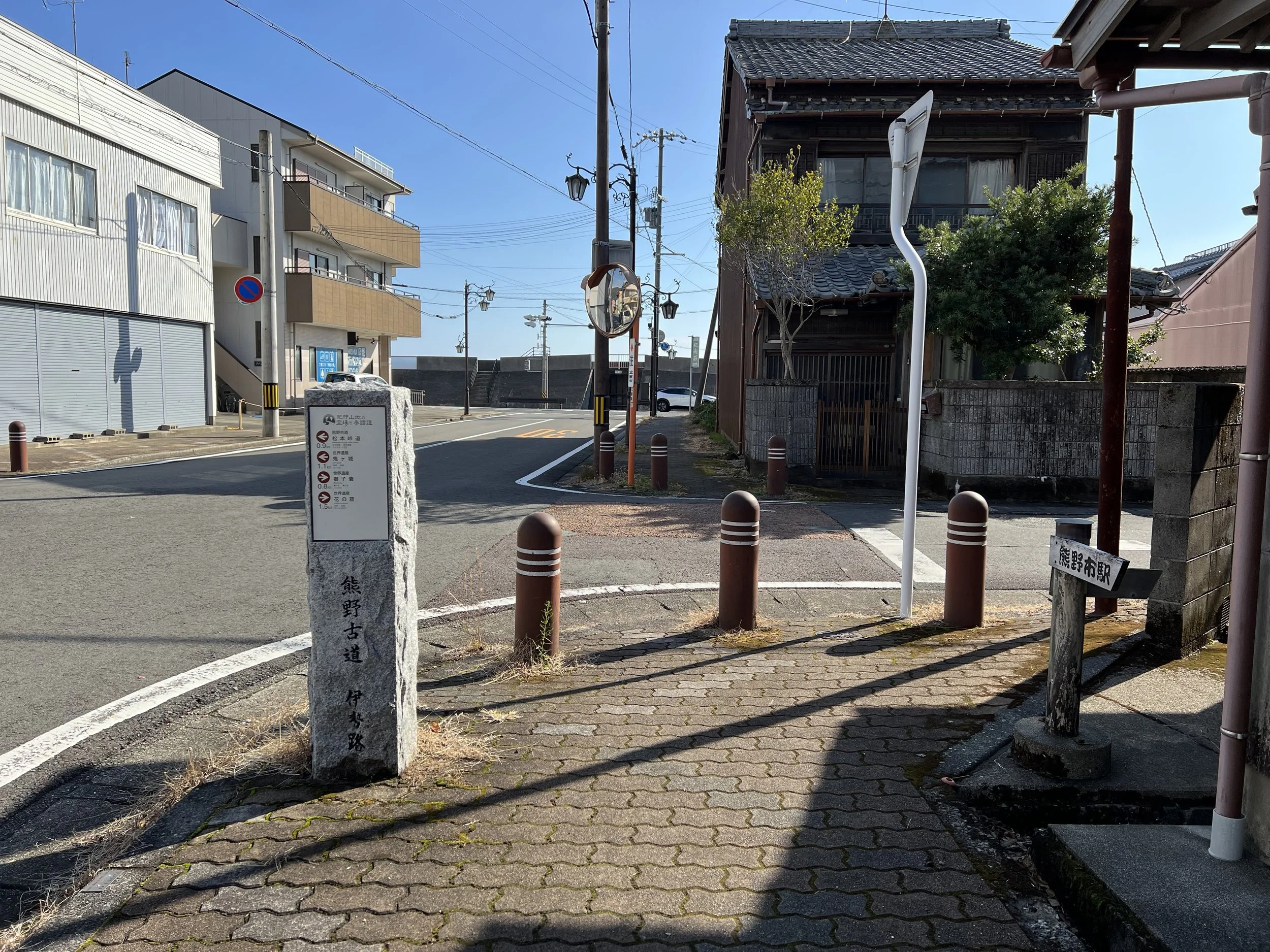
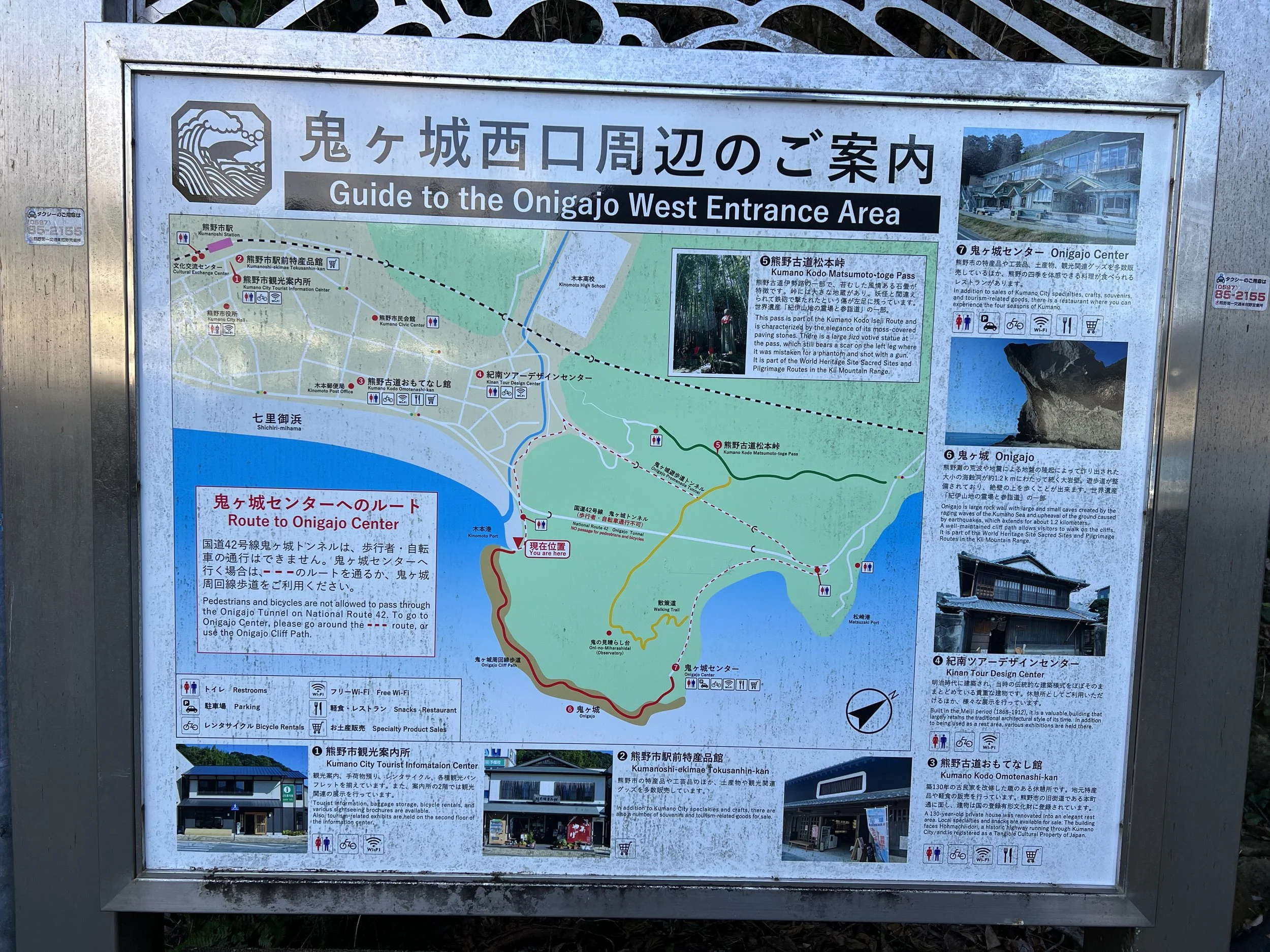
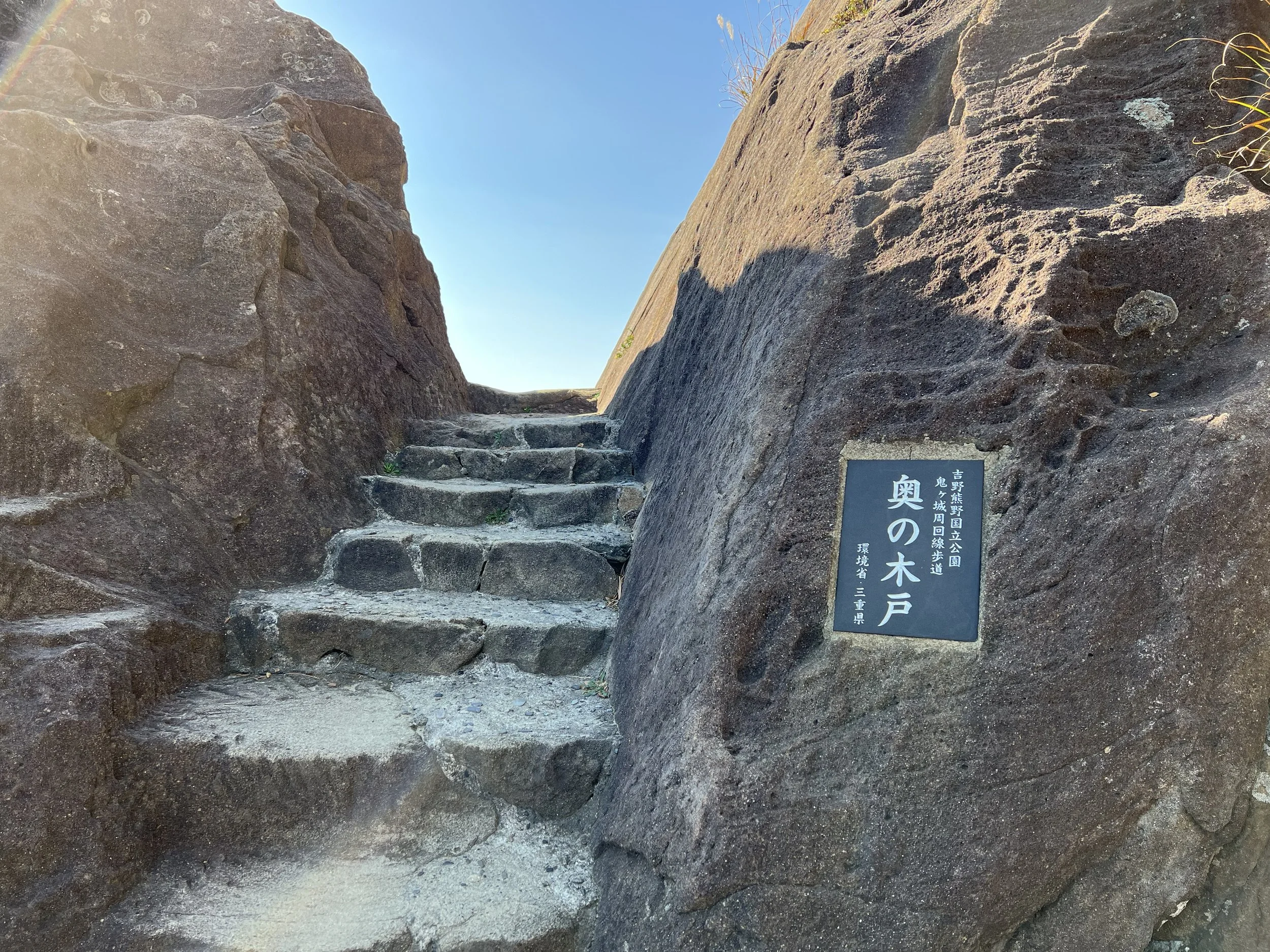
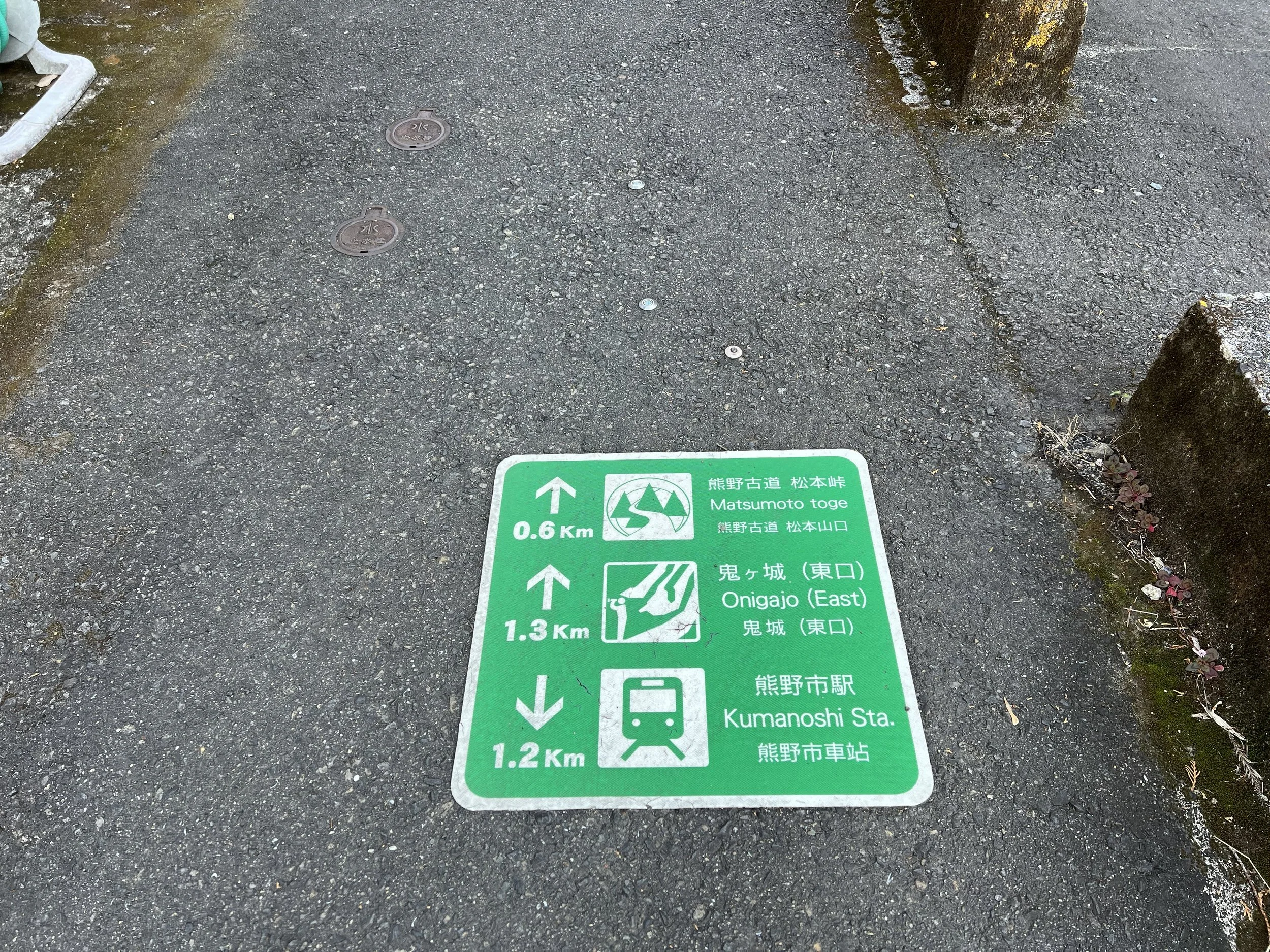
Many travellers walking the Kumano Kodo Iseji route reach Onigajo via Matsumoto-toge Pass, passing the ruins of a castle from Japan’s Age of Civil Wars along the way. As I hadn’t planned to continue further along the Iseji route on this trip, I began my journey from Kumanoshi Station instead. The path to the trailhead is clearly marked and straightforward, making it easy to reach without much effort.
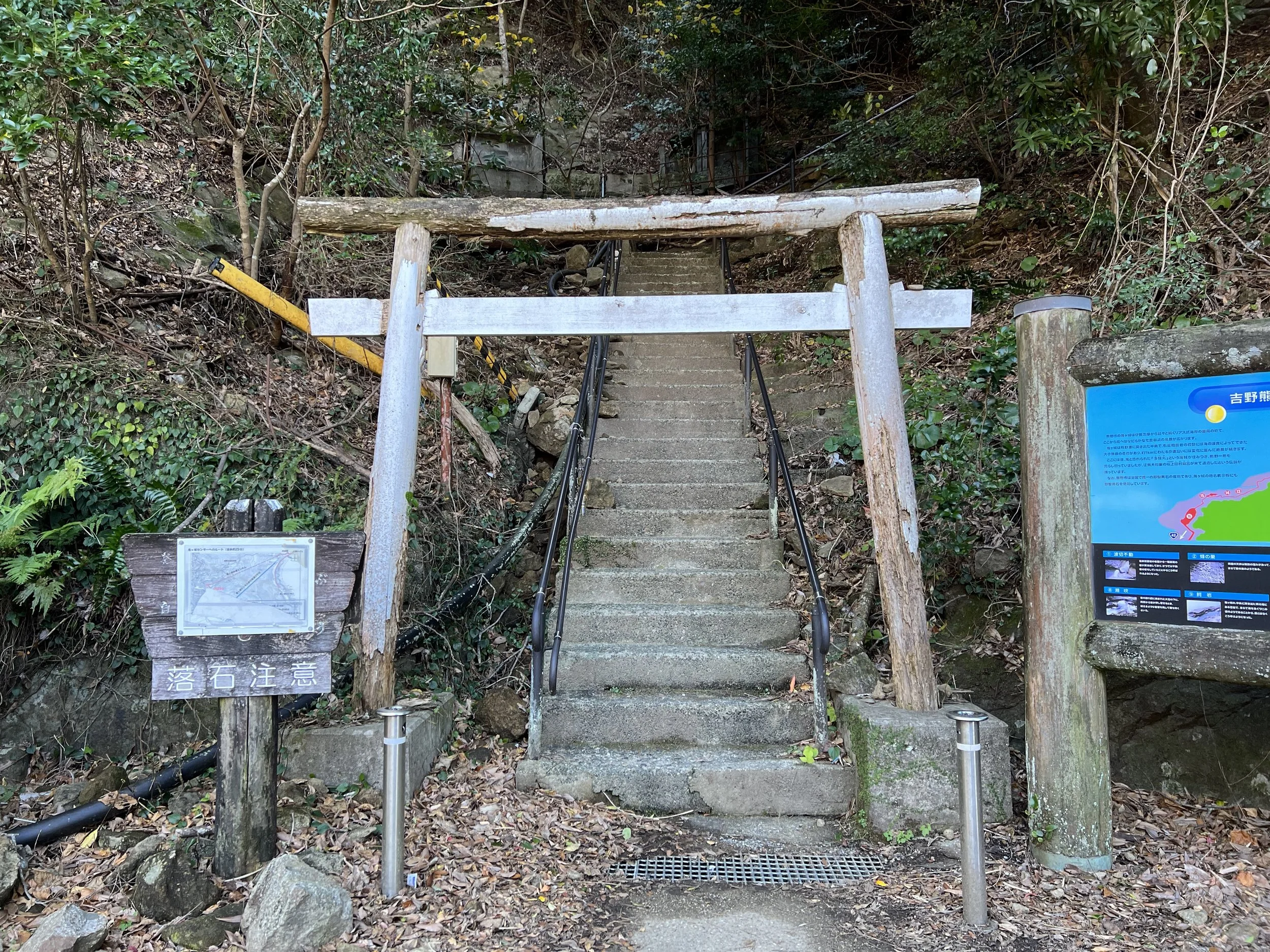
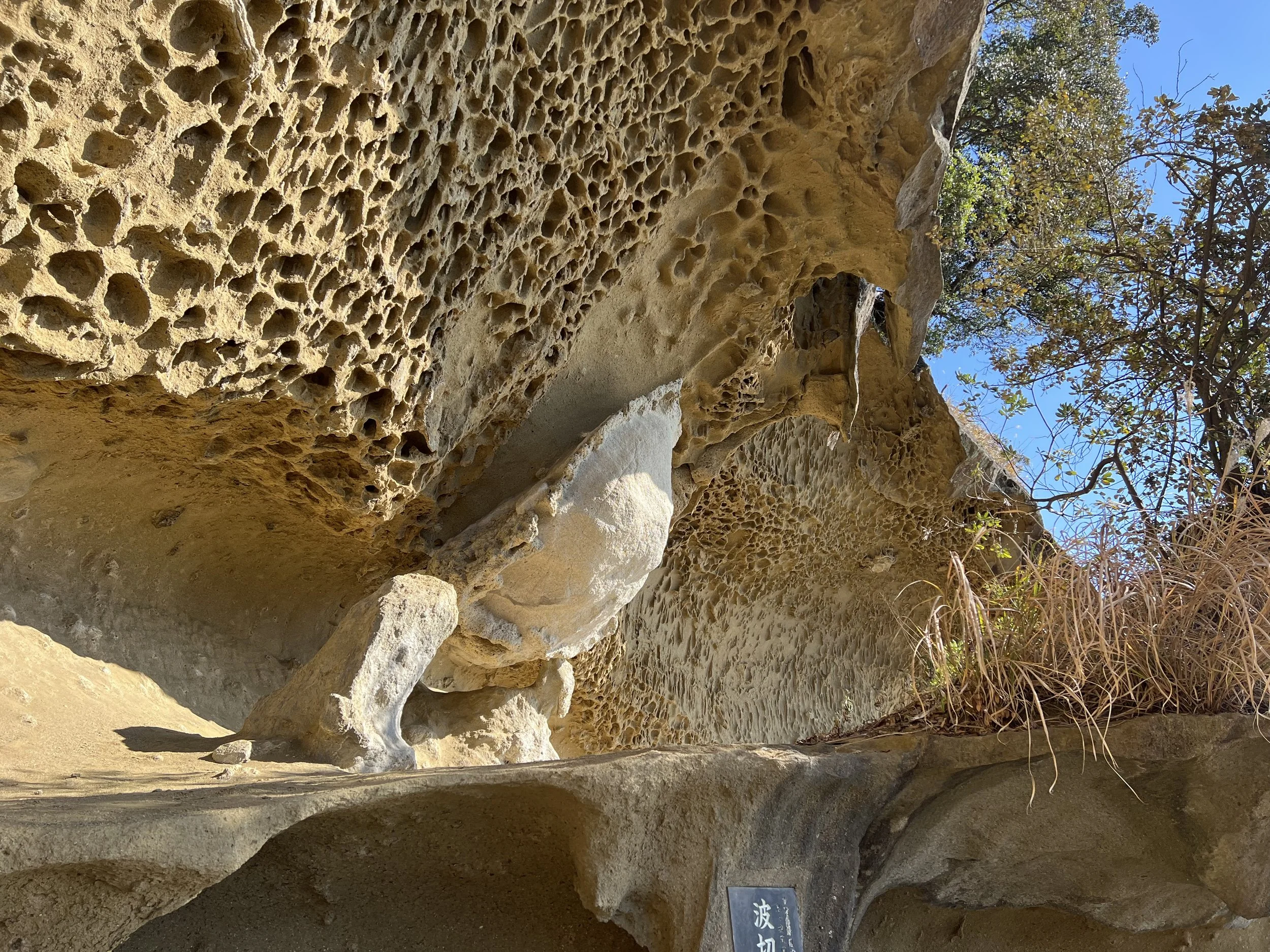
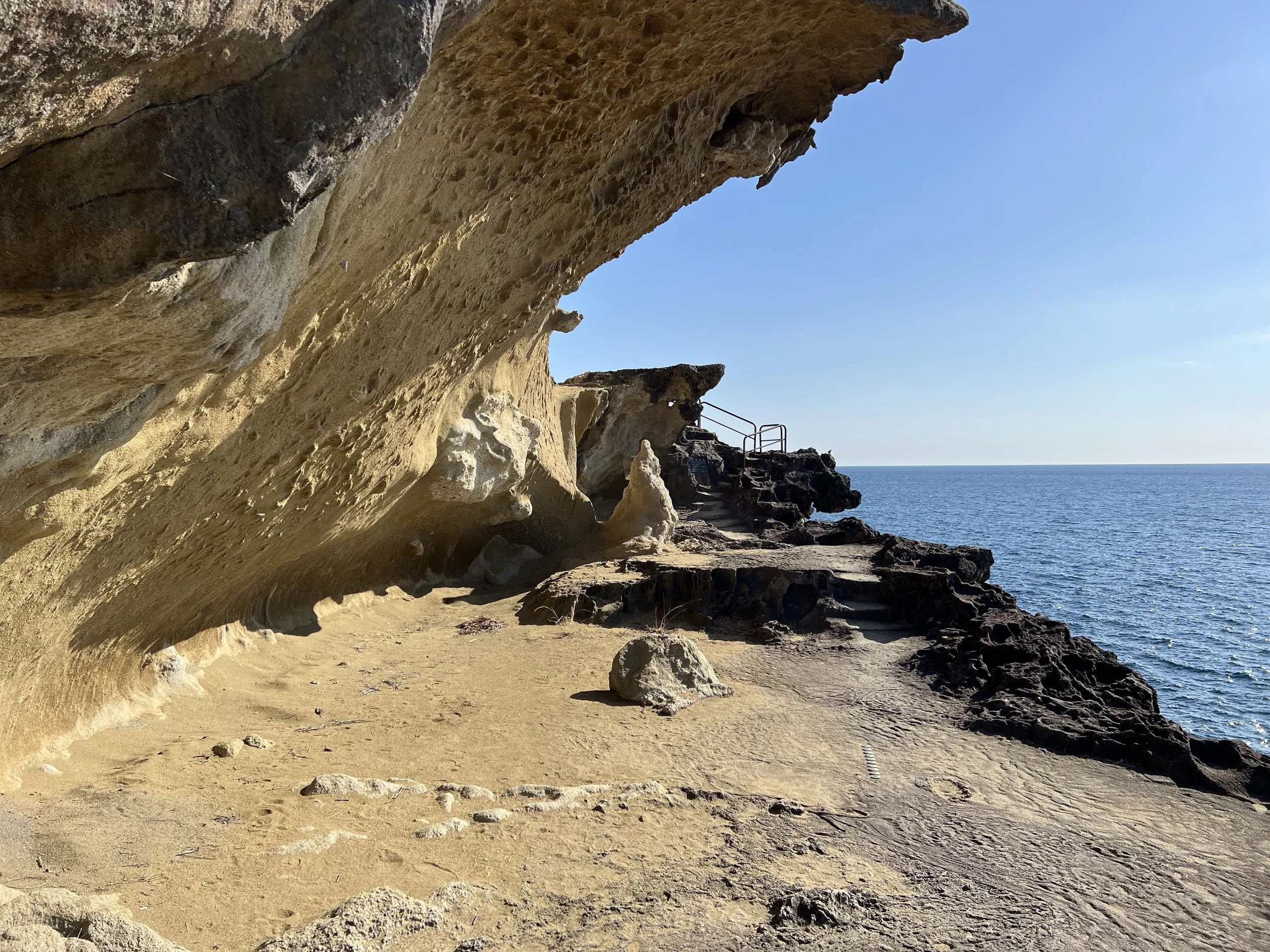
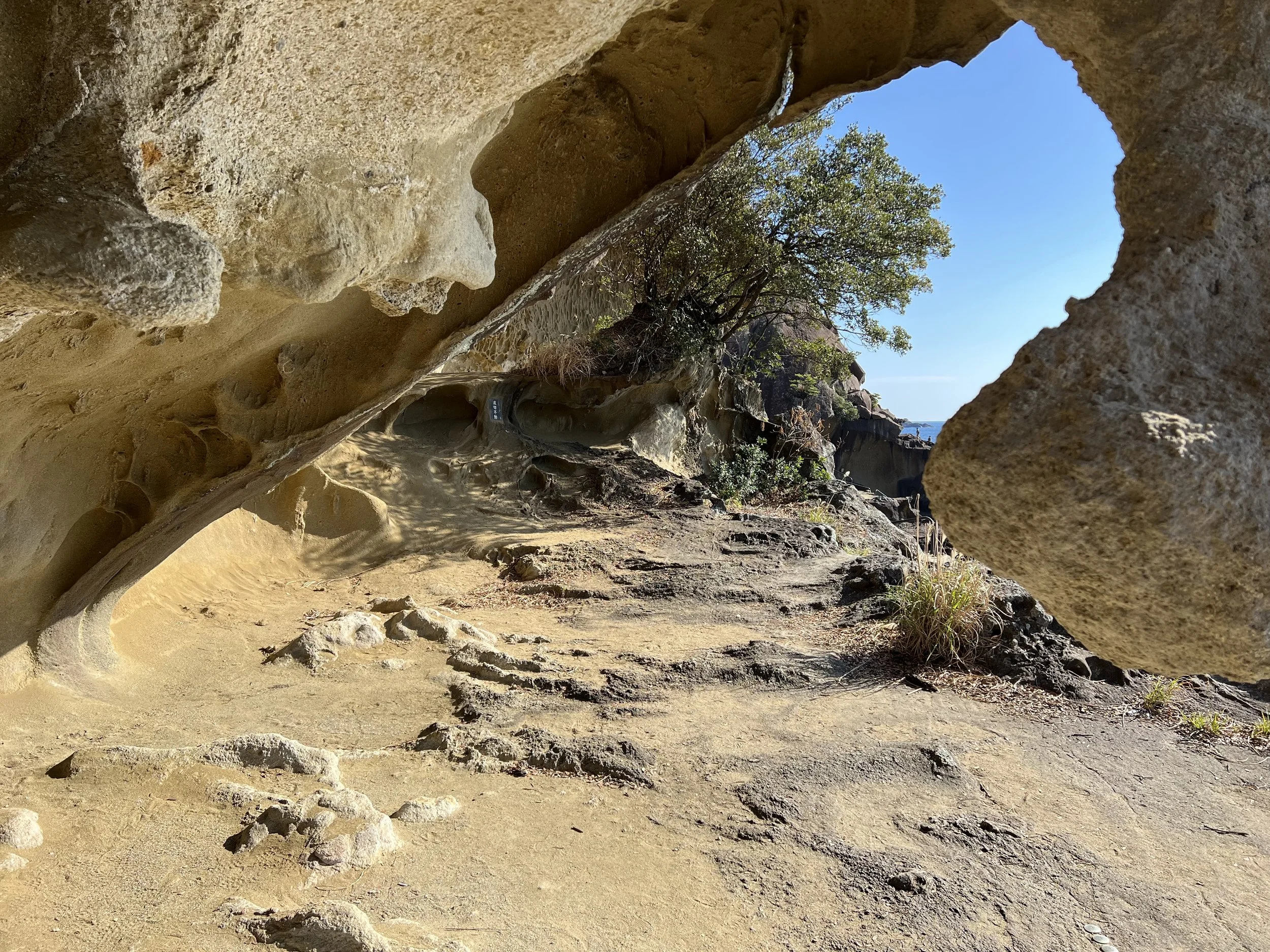
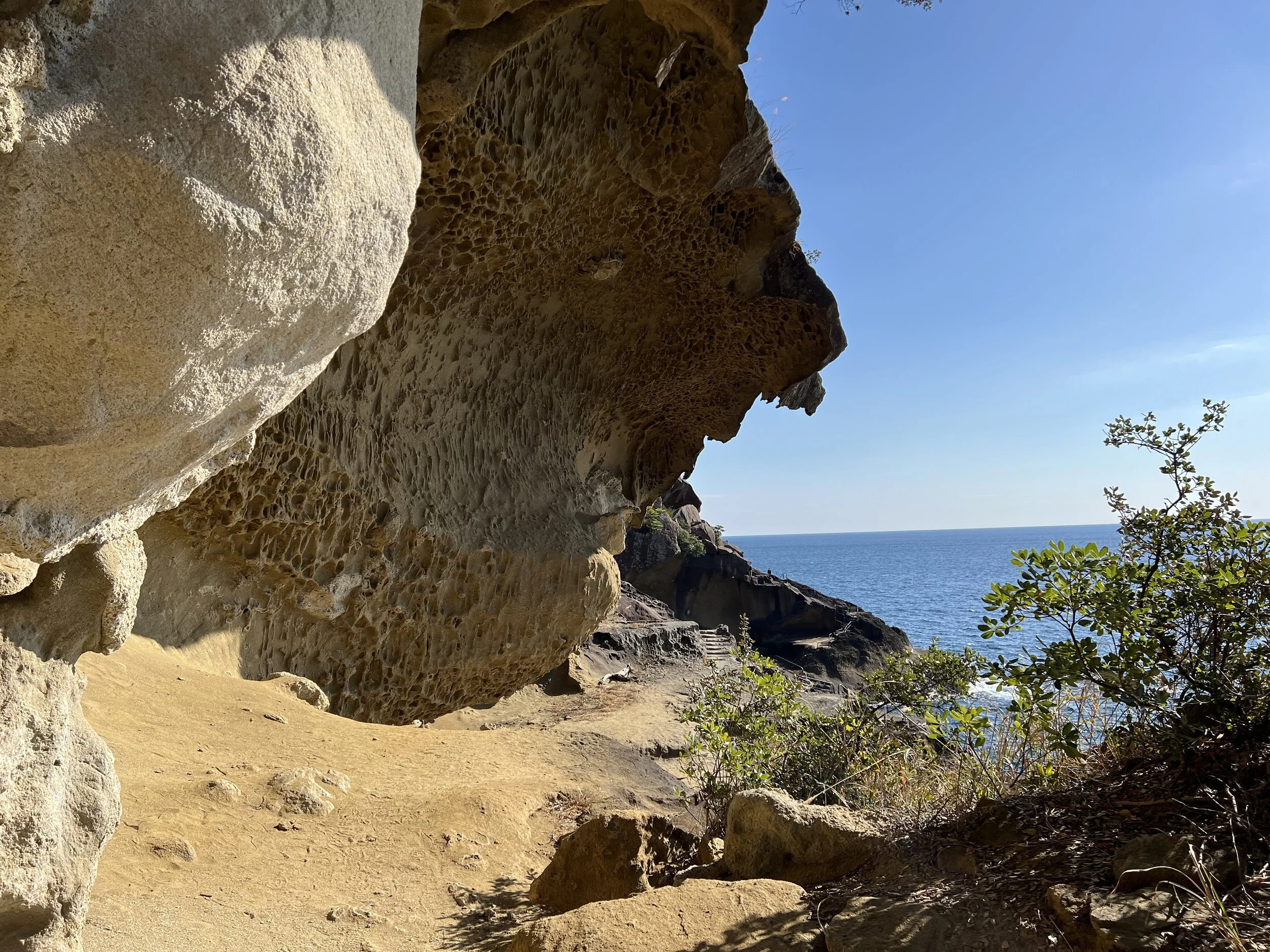
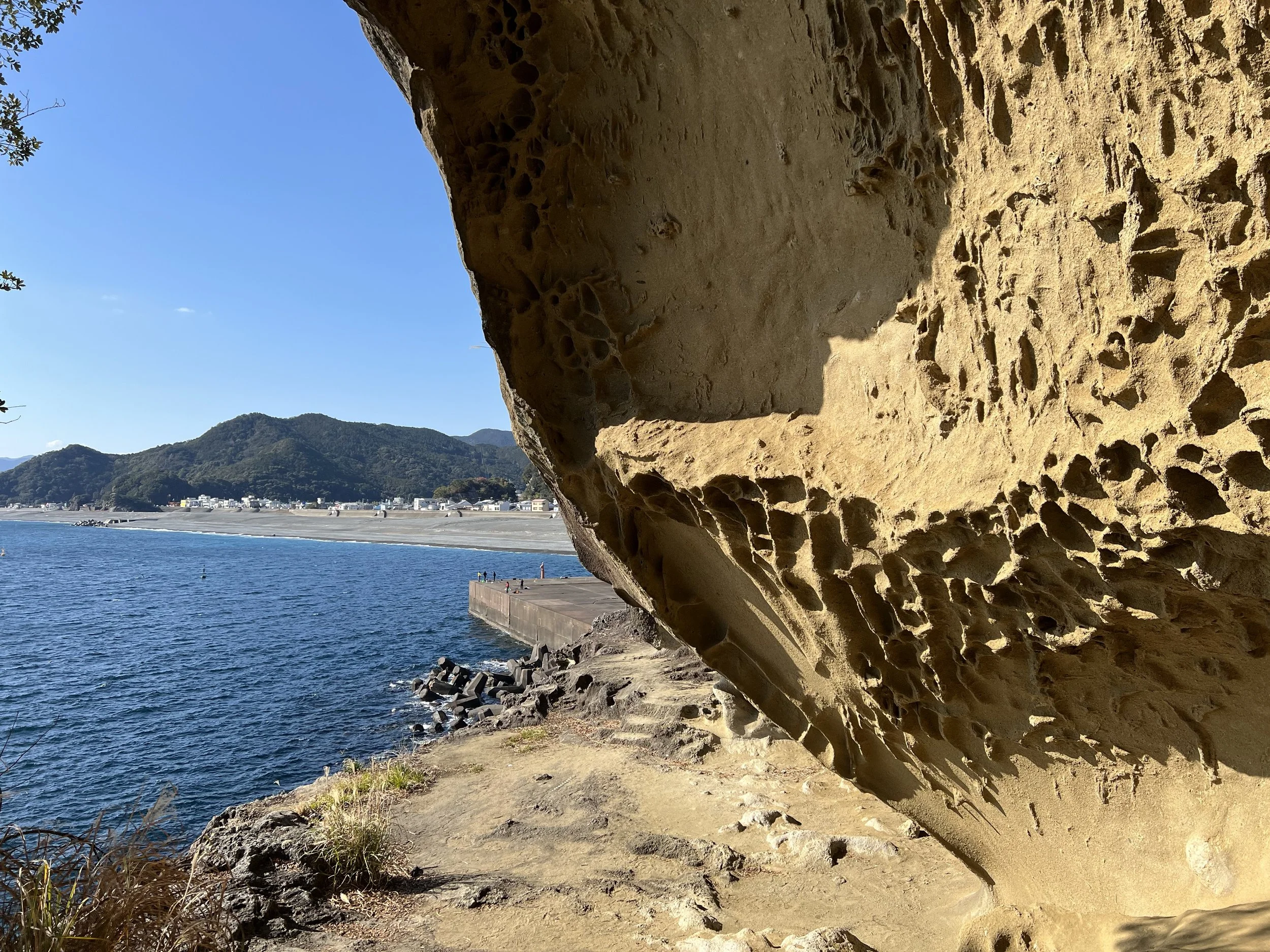
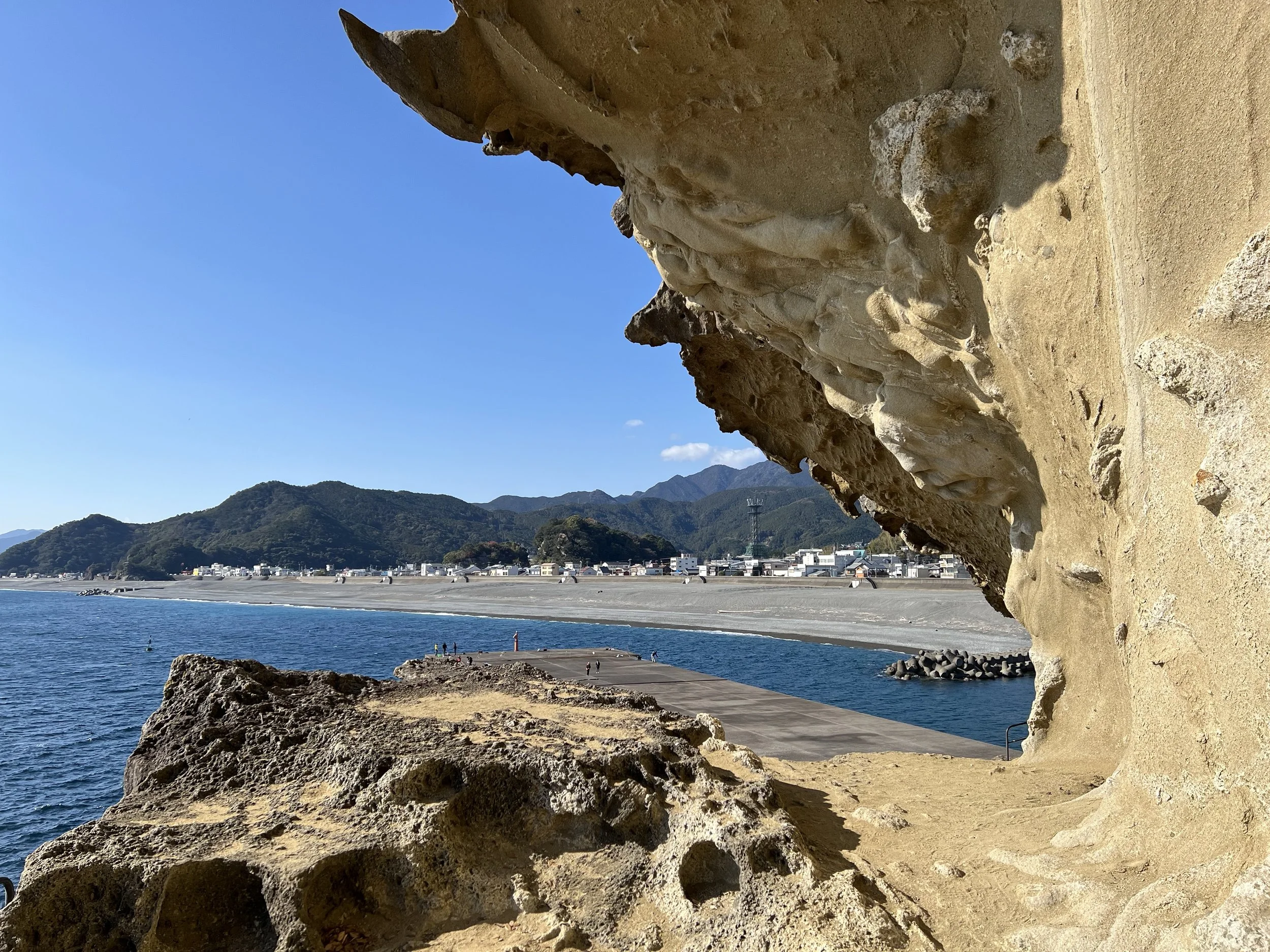
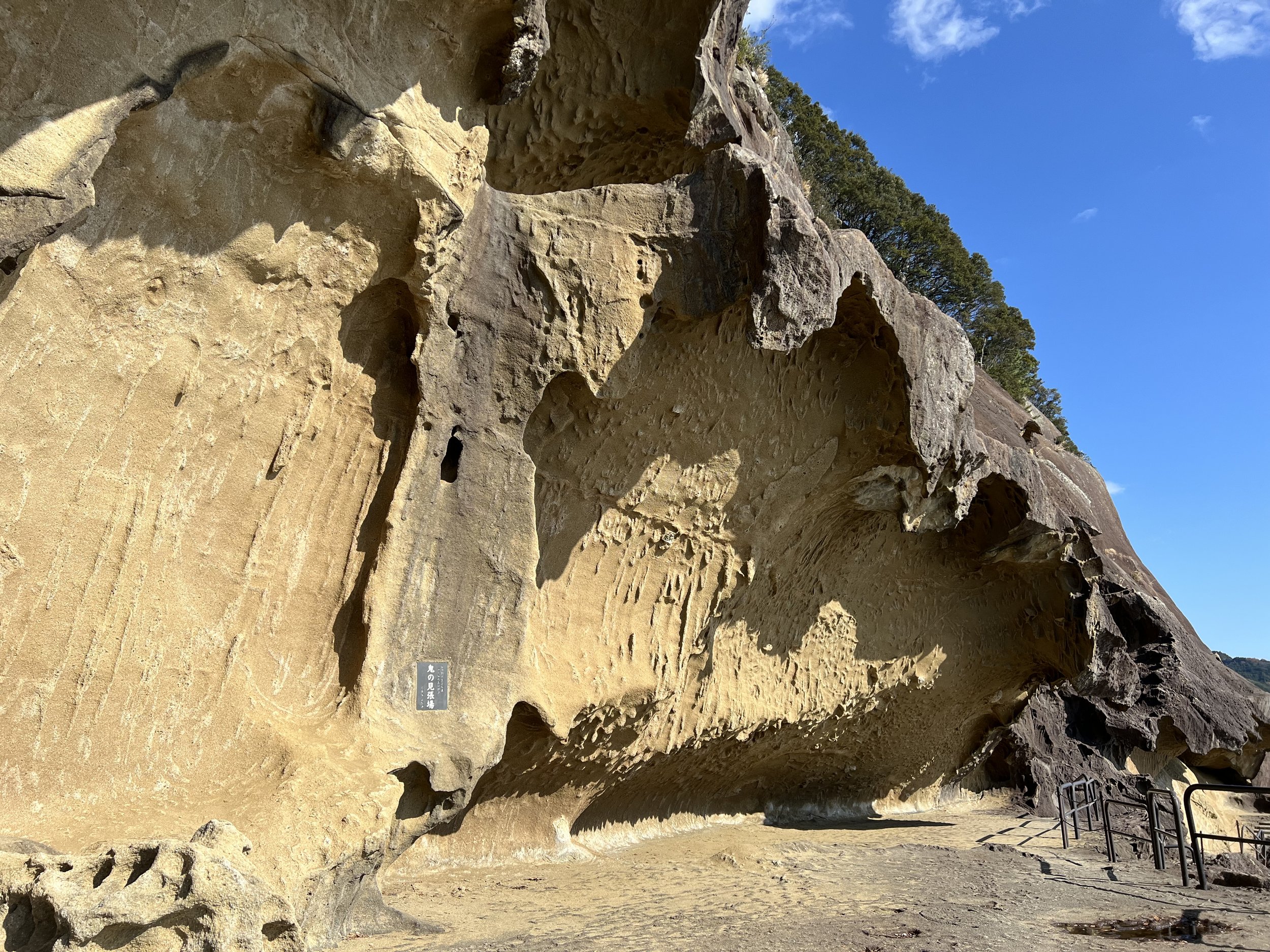
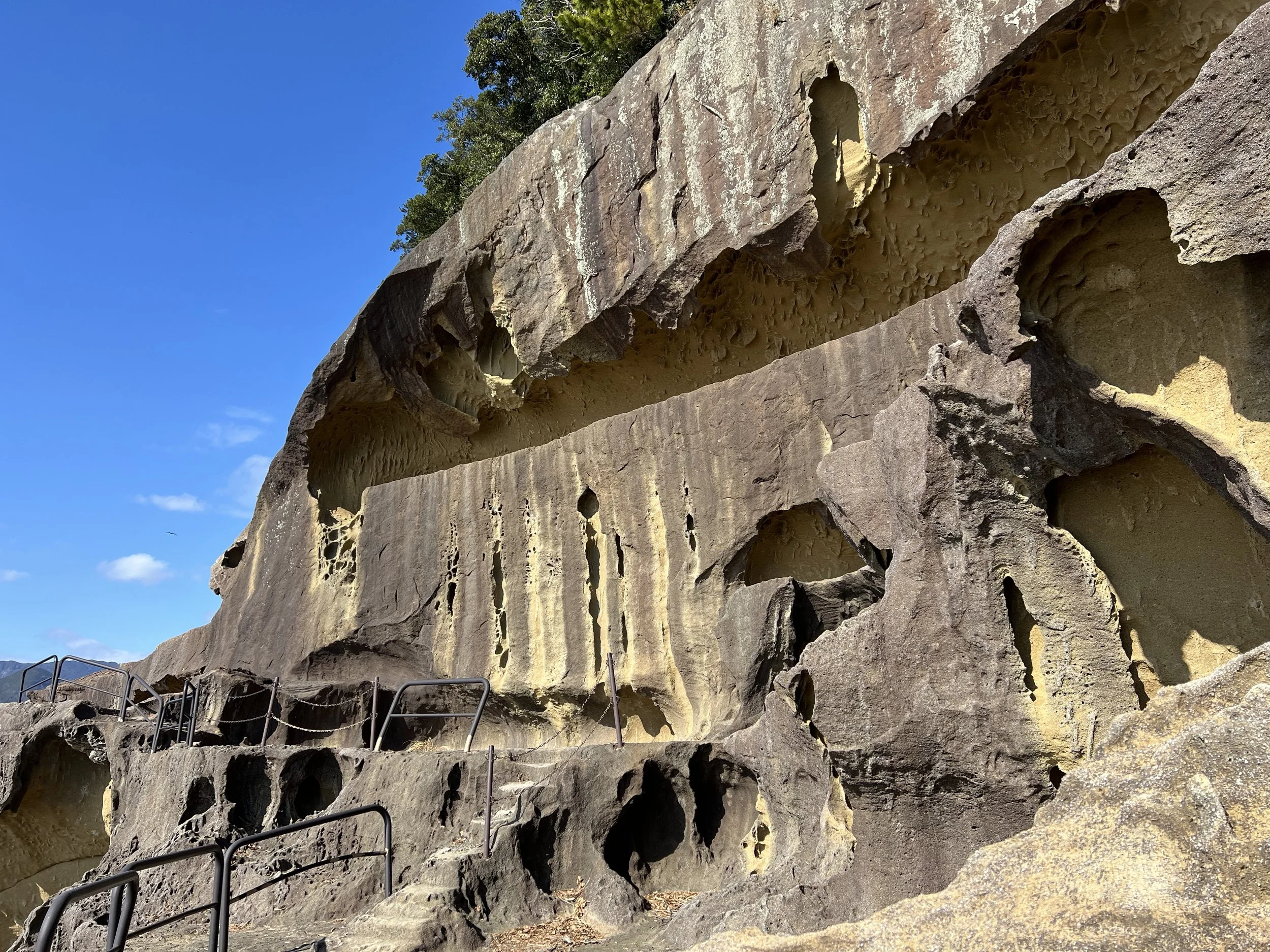
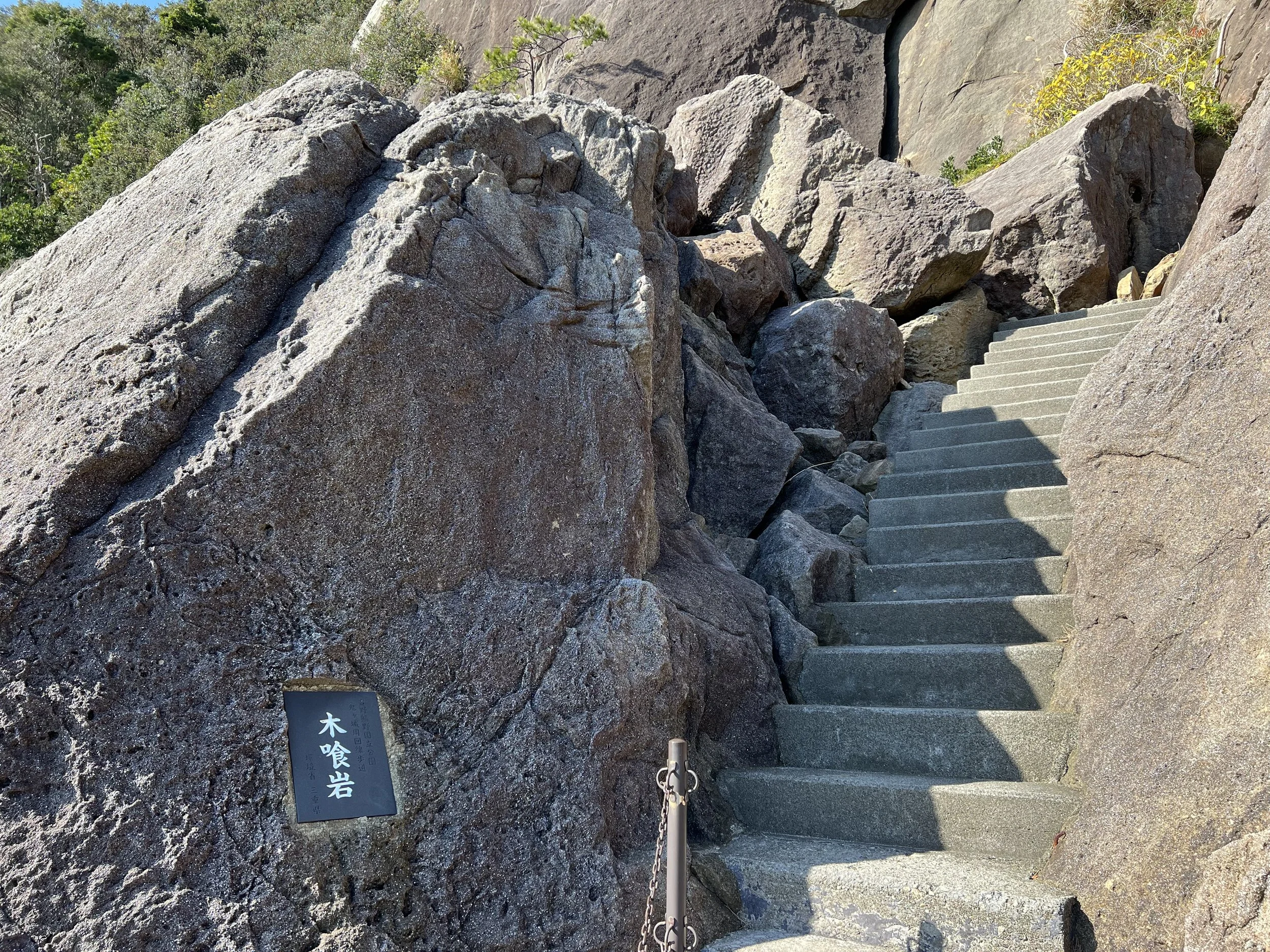
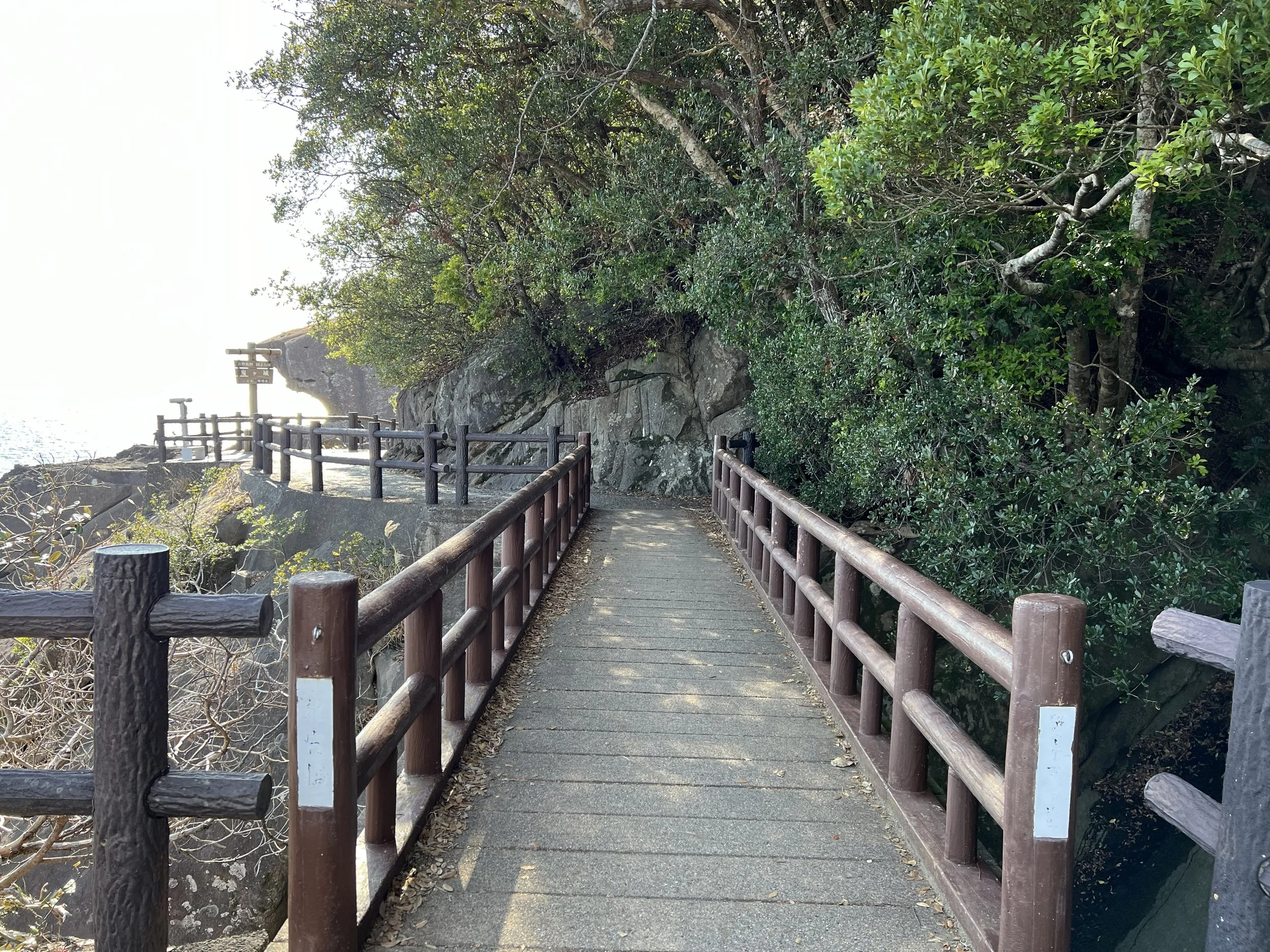
Most visitors start from the Onigajo Center, but for convenience, I began from the west-side trailhead. Almost immediately, the rock formations stood out — every turn revealed a different shape, texture, and contour. Formed over thousands of years by natural forces, the cliffs feel almost sculptural. Many of the formations are named after what they resemble, adding a playful layer to the experience. The trail itself is mostly single file, with occasional wider sections where hikers can pass one another.
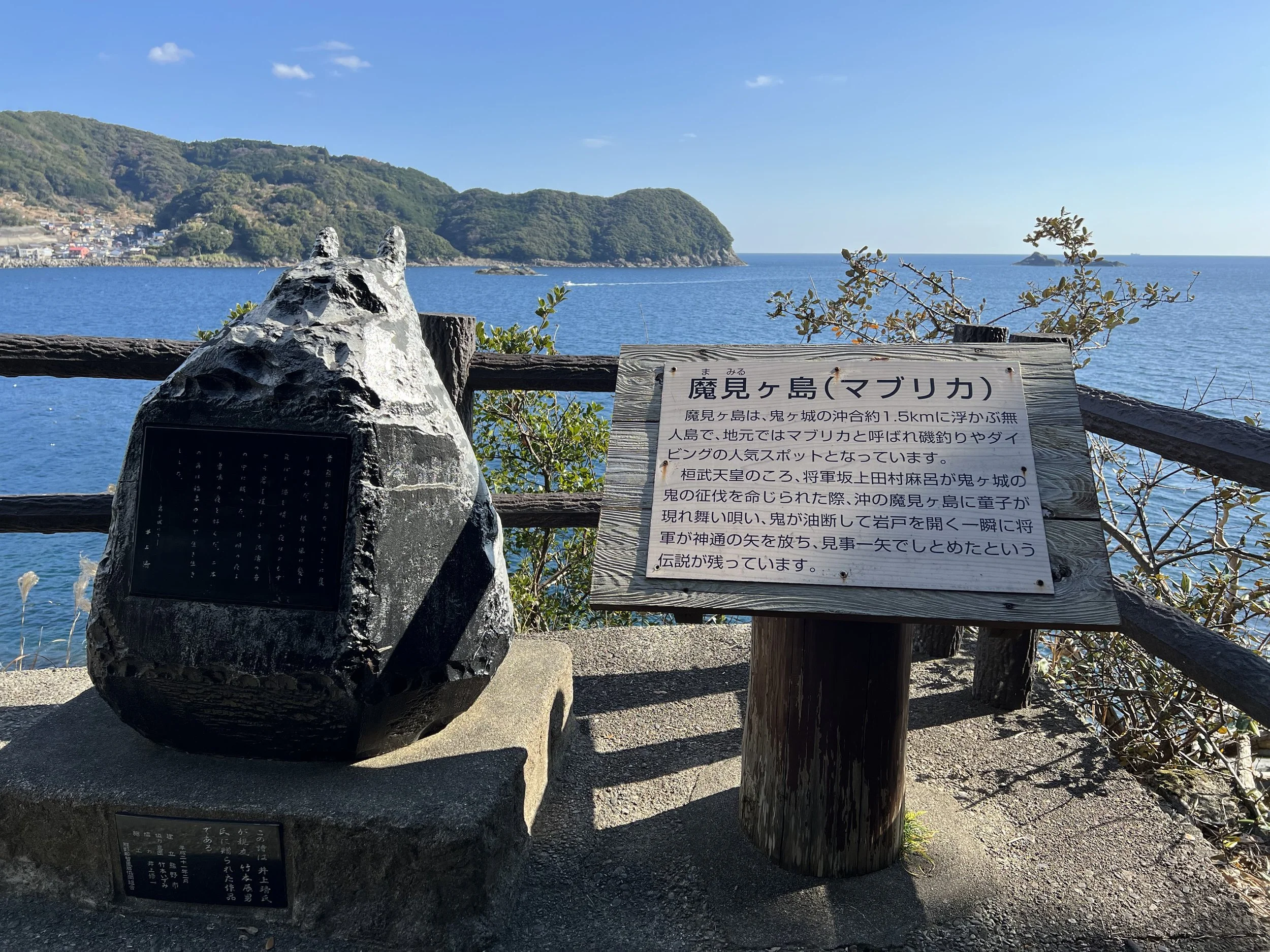
Because I started from what is typically considered the “end” of the route, I found myself walking against the usual flow of foot traffic. Fortunately, it wasn’t crowded, so it didn’t create any real bottlenecks. The path is relatively easy, though there are occasional chains to assist with short climbs and descents, and barriers have been installed in certain areas for safety. Throughout the walk, you’re treated to ever-changing rock formations on one side and sweeping ocean views on the other — a striking combination of geology and seascape.
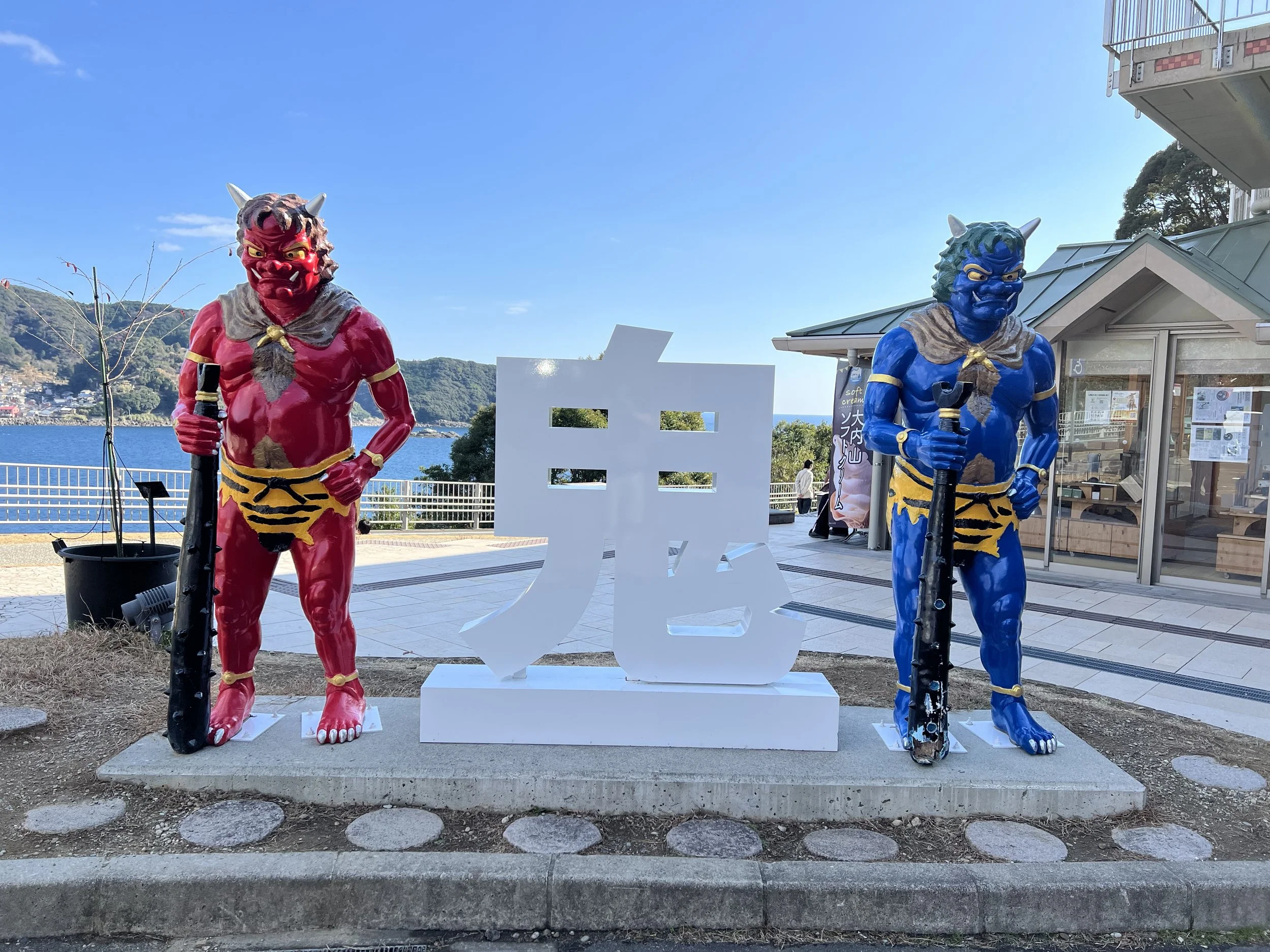
As I approached the Onigajo Center, the number of visitors gradually increased. I was glad I had started from the quieter end, as it allowed me to enjoy much of the trail in relative solitude. At the centre, two oni statues stand out front, perfect for photos, and there’s a small souvenir shop inside. After taking a few photos and browsing the shop, I continued along the path leading back toward Kumanoshi Station.
It’s the kind of place that doesn’t always make it onto typical Japan bucket lists, but absolutely should. The raw coastal beauty, layered with folklore and pilgrimage history, makes Onigajo unforgettable. I hope to return one day to walk the full Kumano Kodo Iseji route.
History & Background
Onigajo (鬼ヶ城) is a natural coastal rock formation shaped by centuries of erosion from waves, wind, and seismic activity. Its name translates to “Oni Castle,” inspired by local legends that demons once inhabited the caves and cliffs.
The site forms part of the Kumano Kodo, specifically along the Iseji route connecting Ise Grand Shrine to the Kumano Sanzan shrines. The surrounding area also features historic paths such as Matsumoto-tōge Pass, which played a role during Japan’s feudal conflicts.
Recognized for its cultural landscape and natural beauty, Onigajo is both a geological wonder and a spiritual waypoint within the broader pilgrimage network.
Getting There
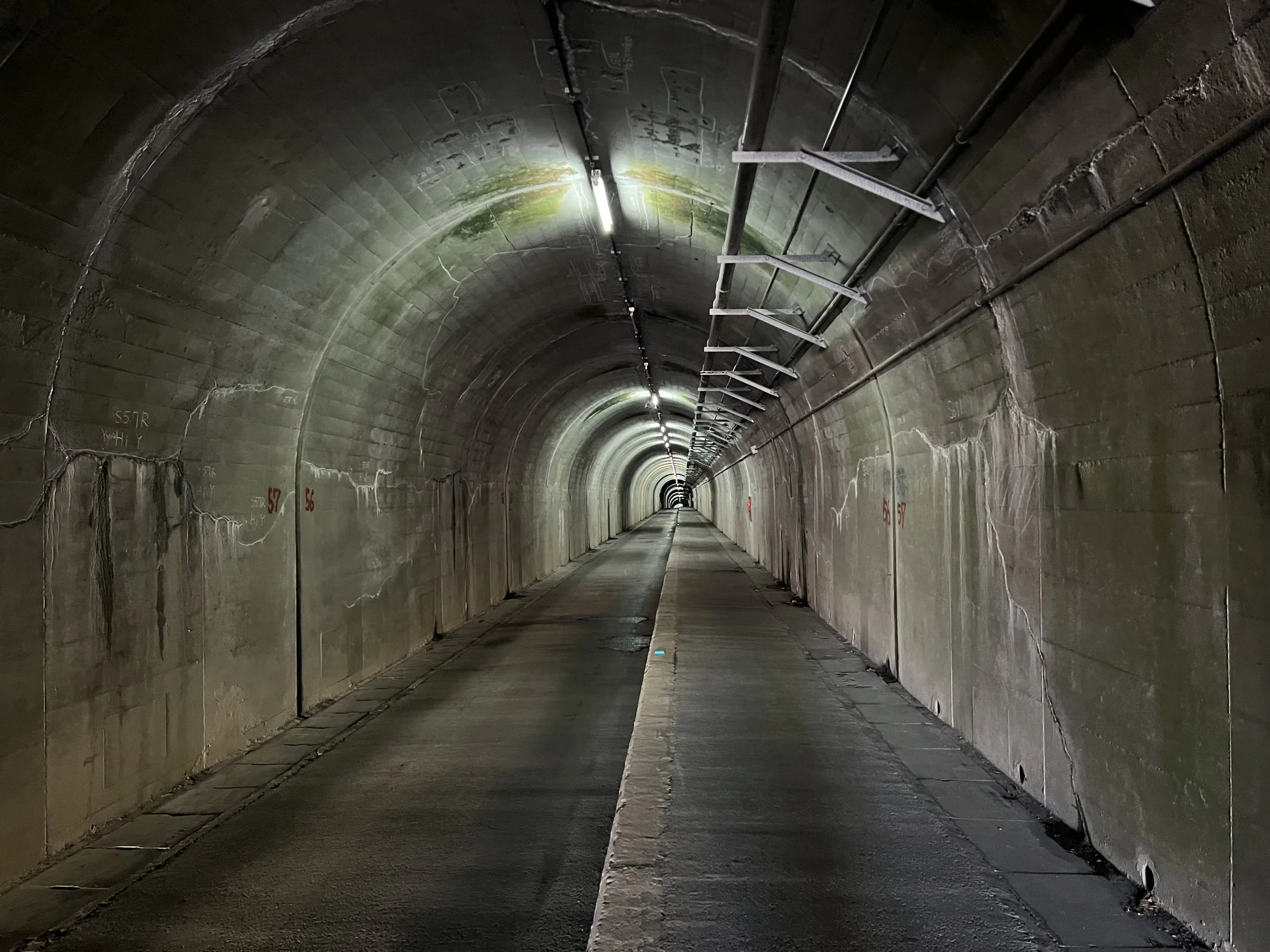
Onigajo is approximately a 15–20 minute walk from Kumanoshi Station on the JR Kisei Main Line. The route from the station to the west-side trailhead is clearly signposted and follows local roads before reaching the coastal path.
Visitors can also begin from the Onigajo Center, which has parking available for those arriving by car. From larger hubs, Kumanoshi Station is accessible by train from Shingu Station or from Nagoya via limited express services along the Kisei Main Line.
Route Overview
Distance: 5.35 km out & back (Kumanoshi Station)
Total elevation gain: 92 m
Duration: 1 hr 10 min (with breaks 1 hr 15 min)
Difficulty: Easy
Cost Breakdown
Train: Shingu Station → Kumanoshi Station — ¥420
Food: ¥200