Nijo Castle - Kyoto, Japan
Nijo Castle was built in 1603 as the Kyoto residence of Tokugawa Ieyasu, the first shogun of the Edo period. Over the next two decades, the palace complex expanded significantly, eventually including a five-storey castle keep. Before being opened to the public as a historic site, the castle later served as an imperial residence. Even today, Nijo Castle stands out as one of the best-preserved examples of feudal palace architecture in Japan, offering a rare and intimate look into the world of the shogunate.
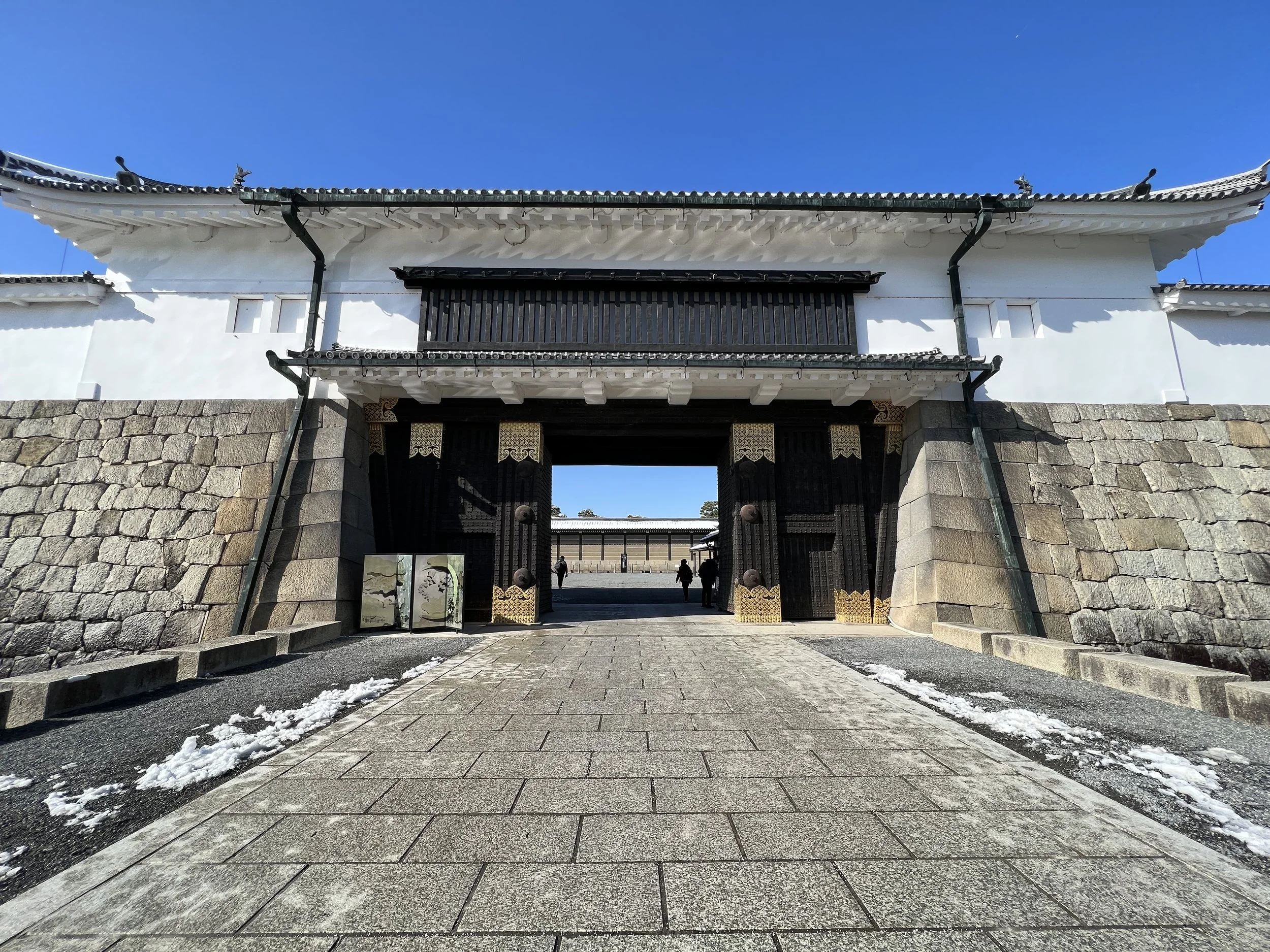
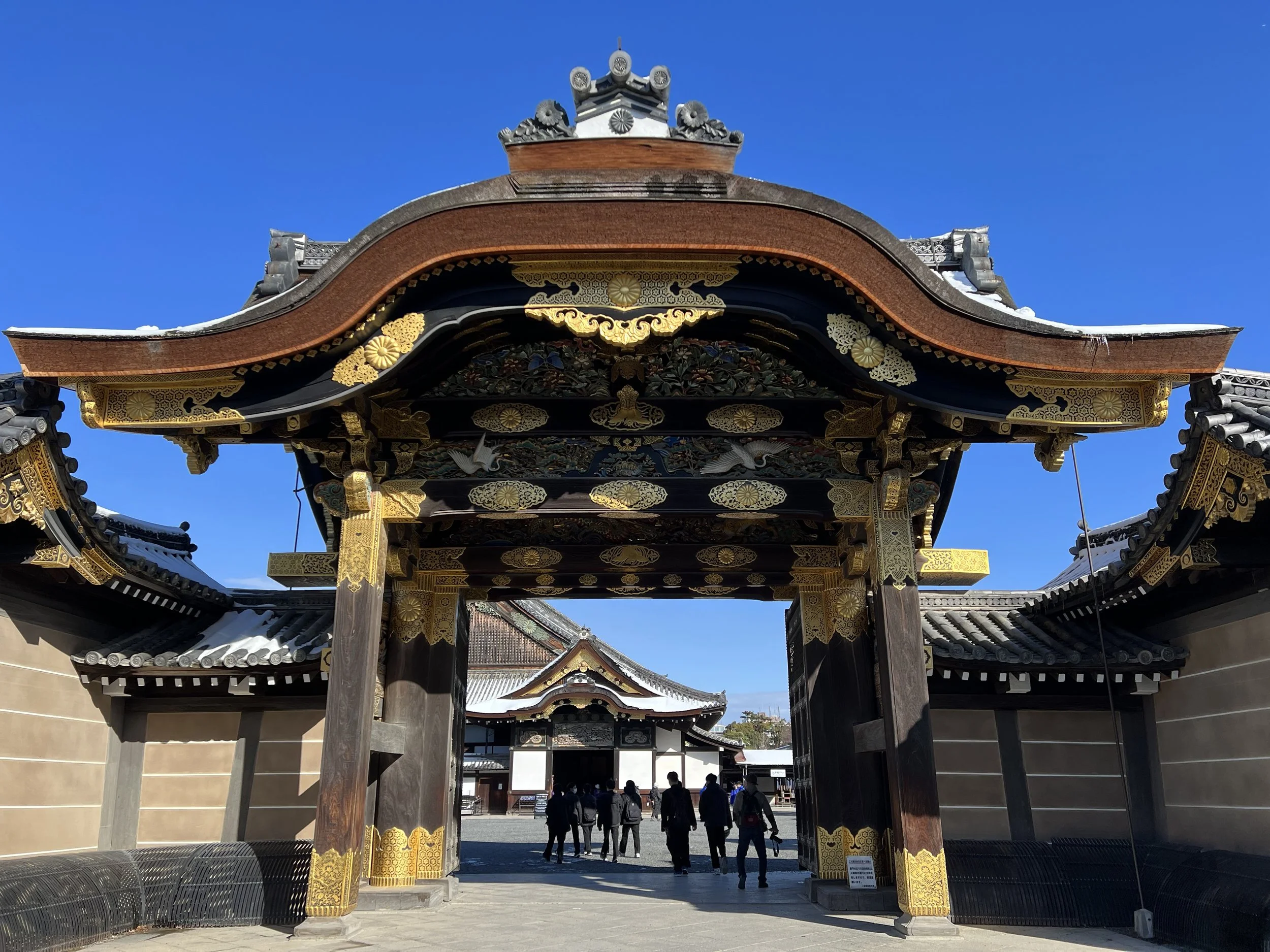
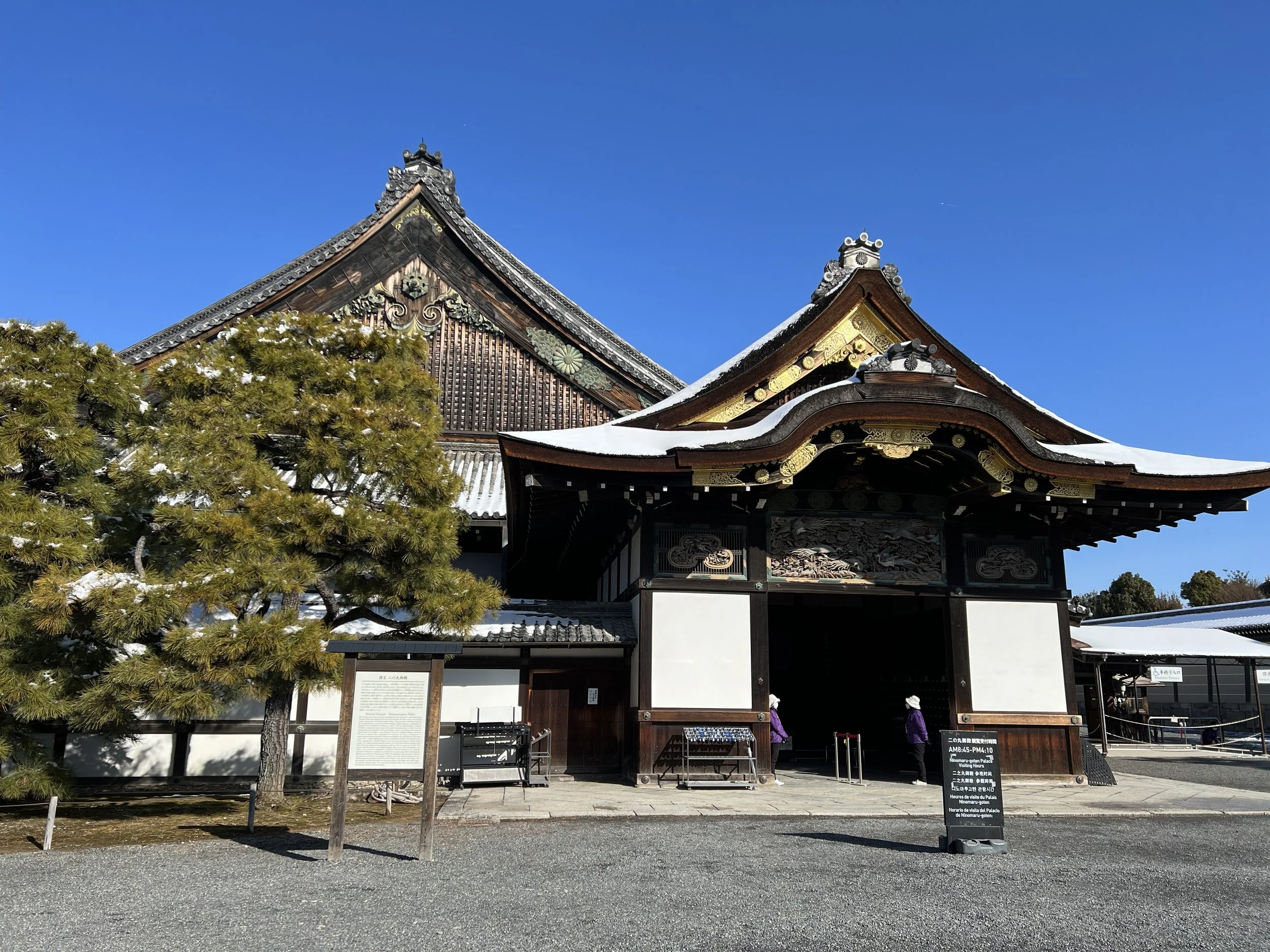
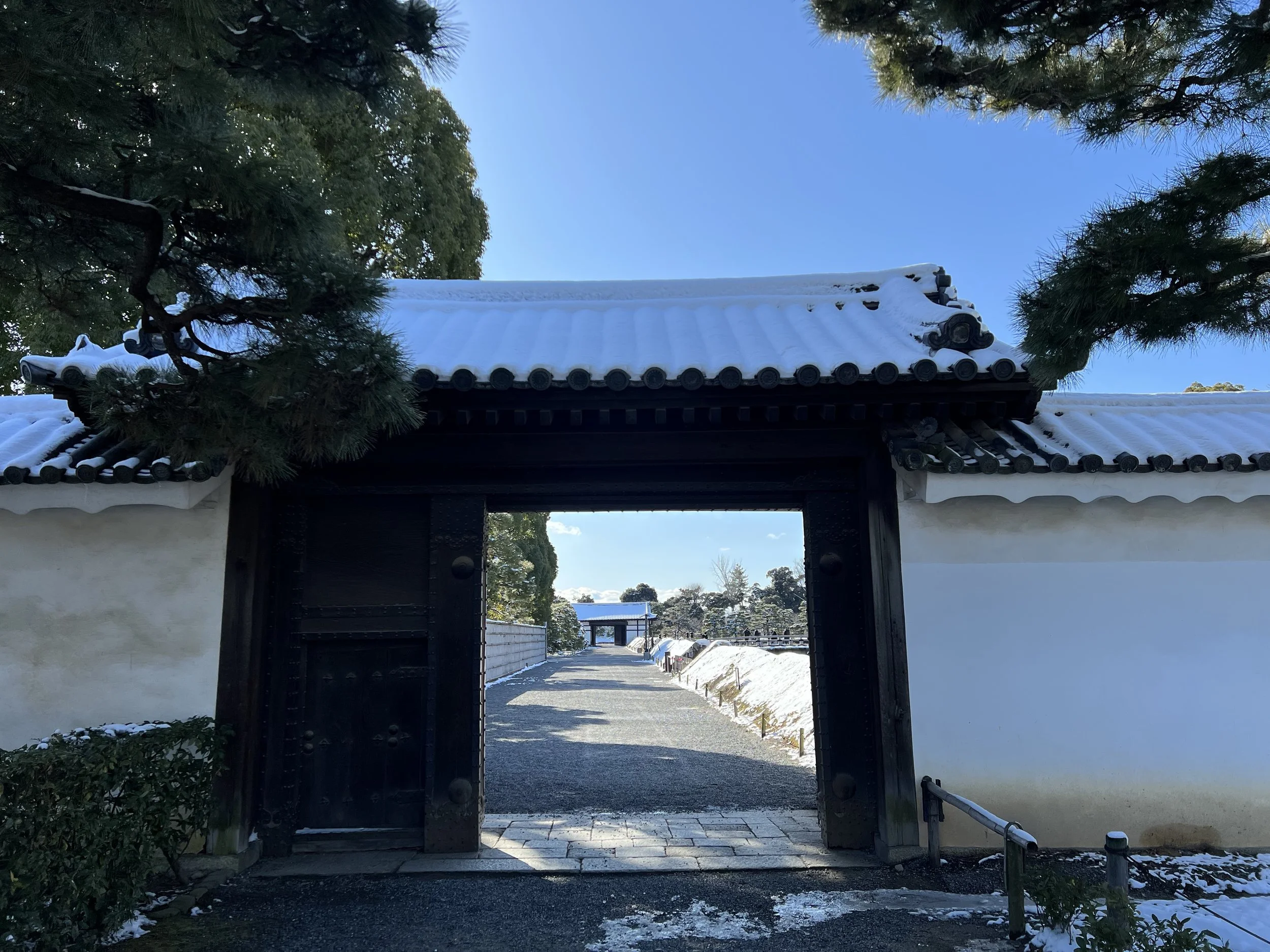
I arrived at Nijo Castle the day after a snowfall, which made the experience even more memorable. The palace entrance alone was breathtaking — the massive gate, built from hinoki cypress, is adorned with elaborate carvings of dragons, tigers, and floral motifs, accented with gold leaf symbolizing power and authority. Against the lingering snow and winter sunlight, it shimmered beautifully and instantly set the tone for the visit. It is, without question, one of the most impressive castle entrances I’ve seen in Japan.
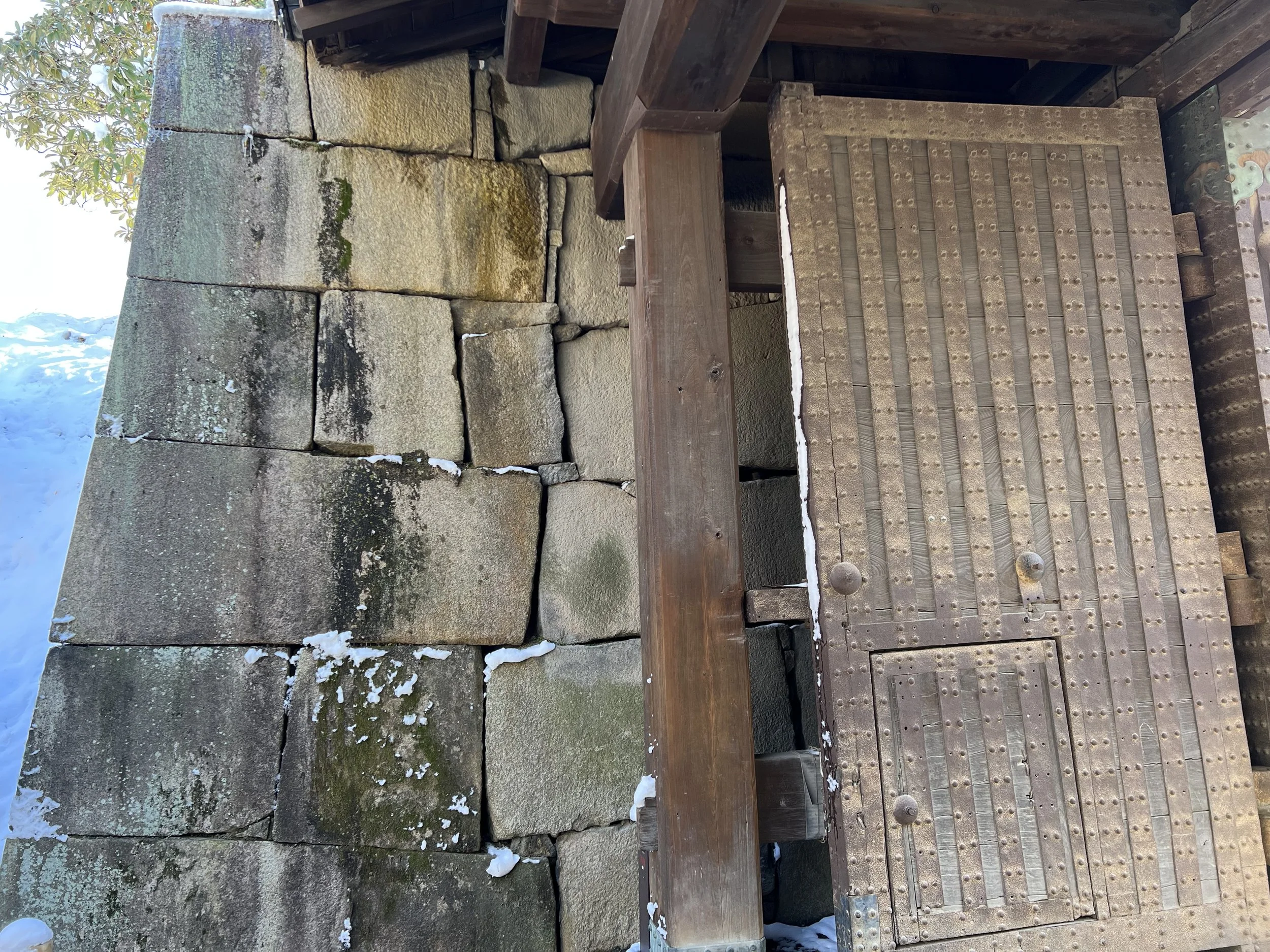
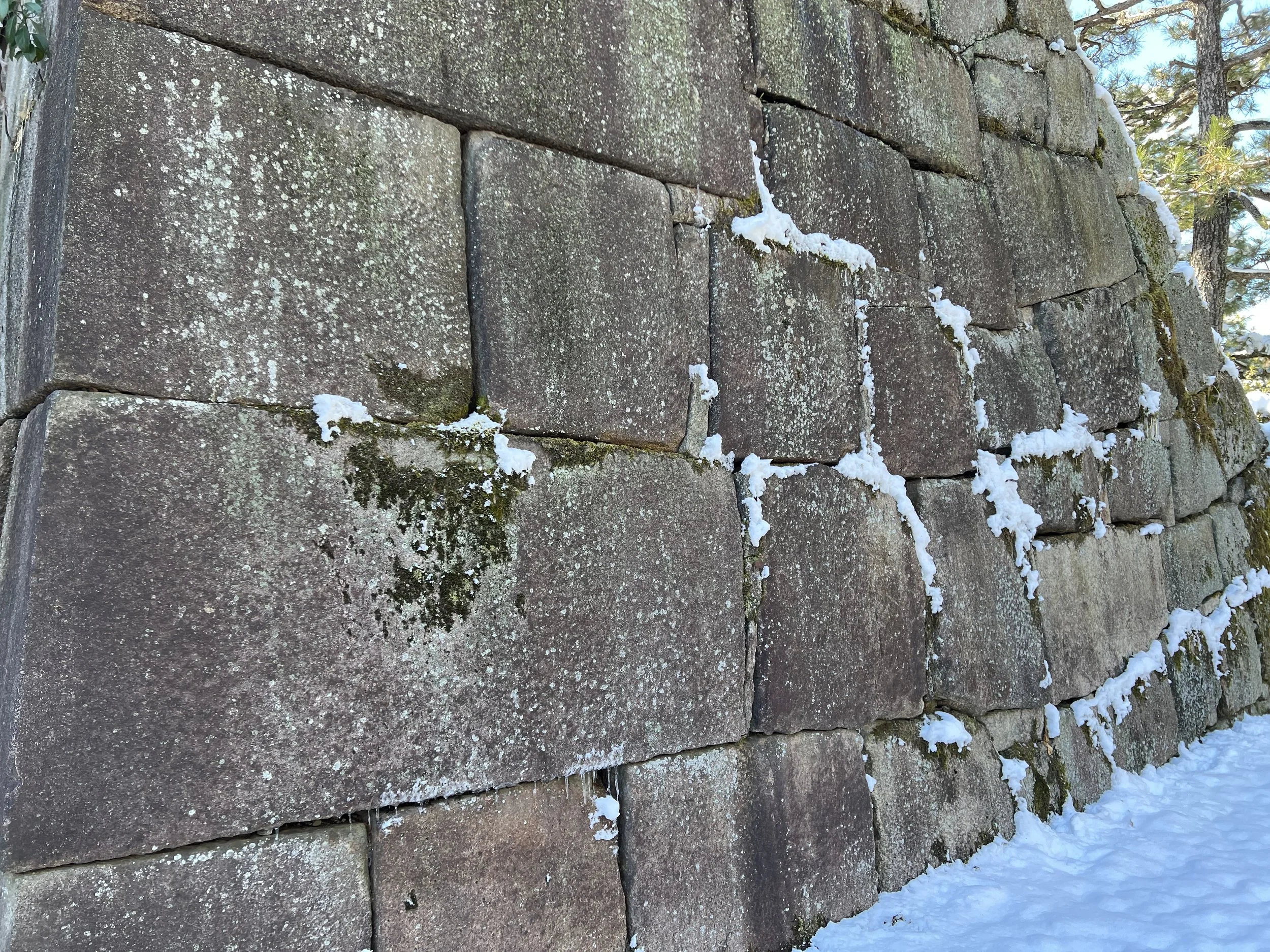
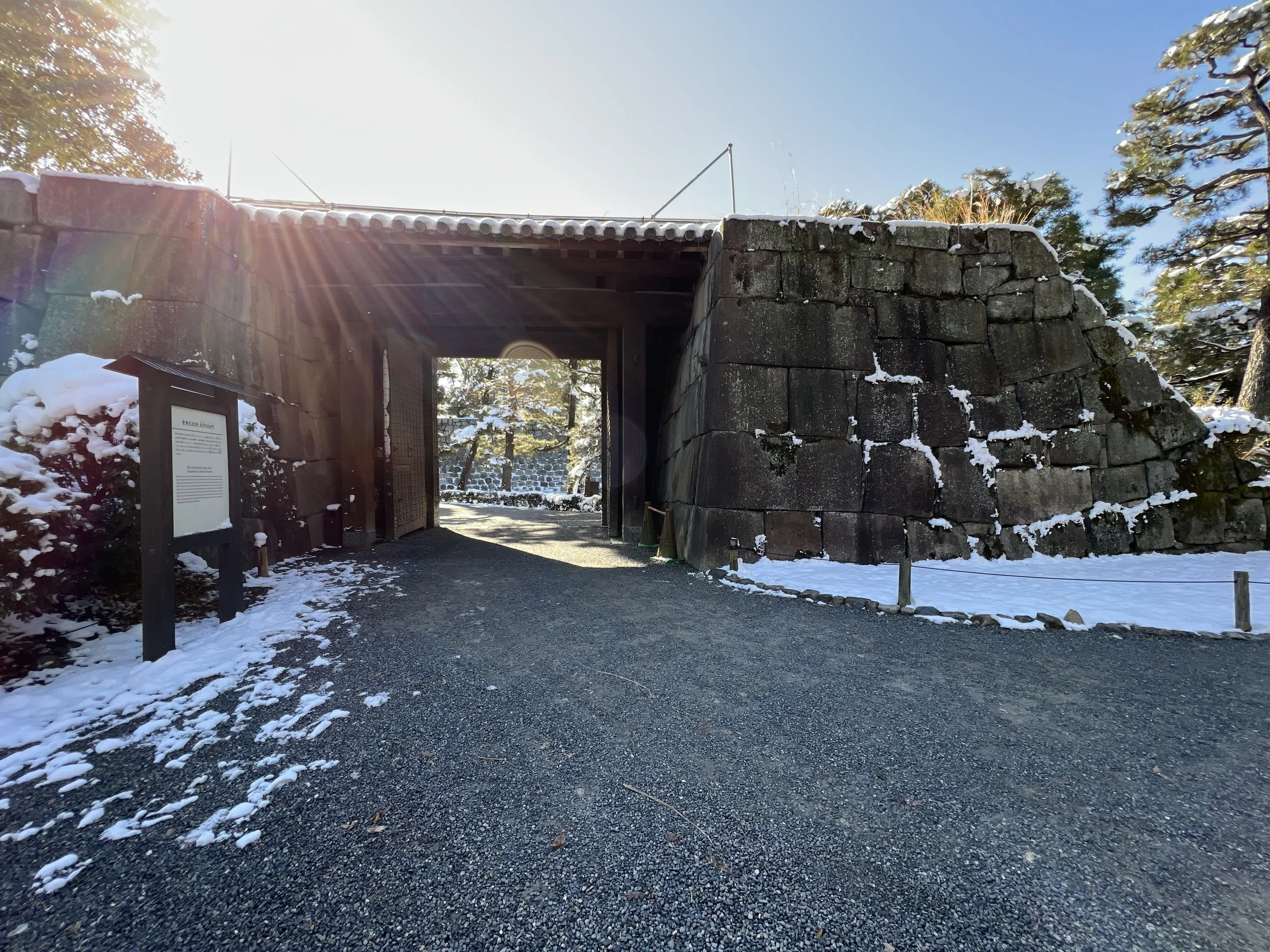
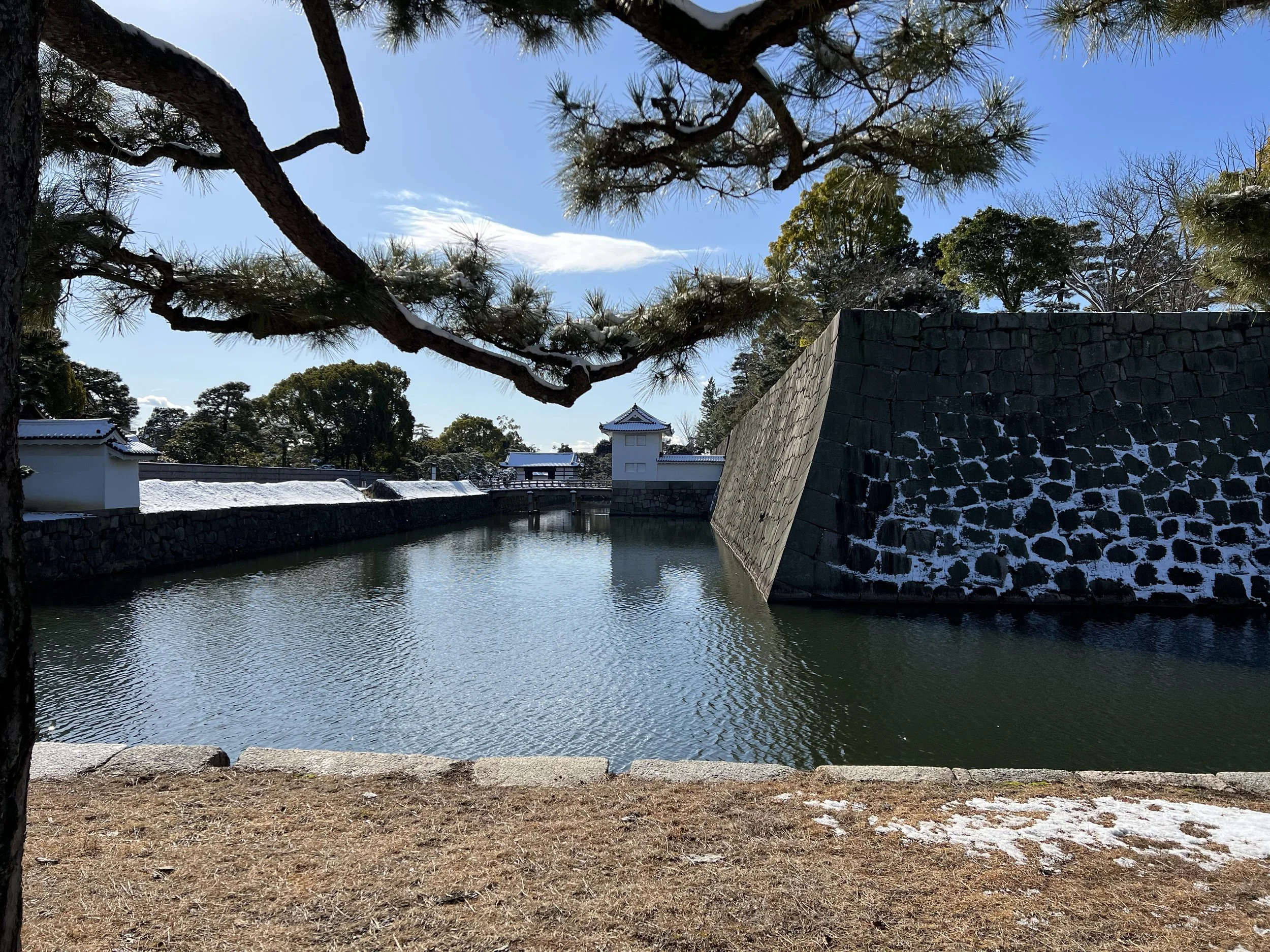
The castle is protected by two moats: an outer moat designed primarily for defence, and an inner moat guarding the shogun’s residence itself. Although Nijō Castle was rarely attacked, the layered layout clearly emphasizes security and control. Walking through the grounds, it was easy to imagine how carefully movement would have been monitored in the past.
One of the highlights of the visit was the Ninomaru Palace, located within the outer enclosure. This palace served as both the residence and administrative office of the shogun during his stays in Kyoto, and remarkably, it remains largely in its original form. As I walked through the corridors, I could hear the famous “nightingale floors” squeaking beneath my feet — a clever security feature designed to alert guards to the presence of intruders. The visitor route leads through a sequence of waiting rooms and audience chambers, each reflecting strict social hierarchy. Only the highest-ranking visitors were permitted into the main audience hall, while lower-ranking guests were kept in adjacent rooms without a direct view of the shogun.
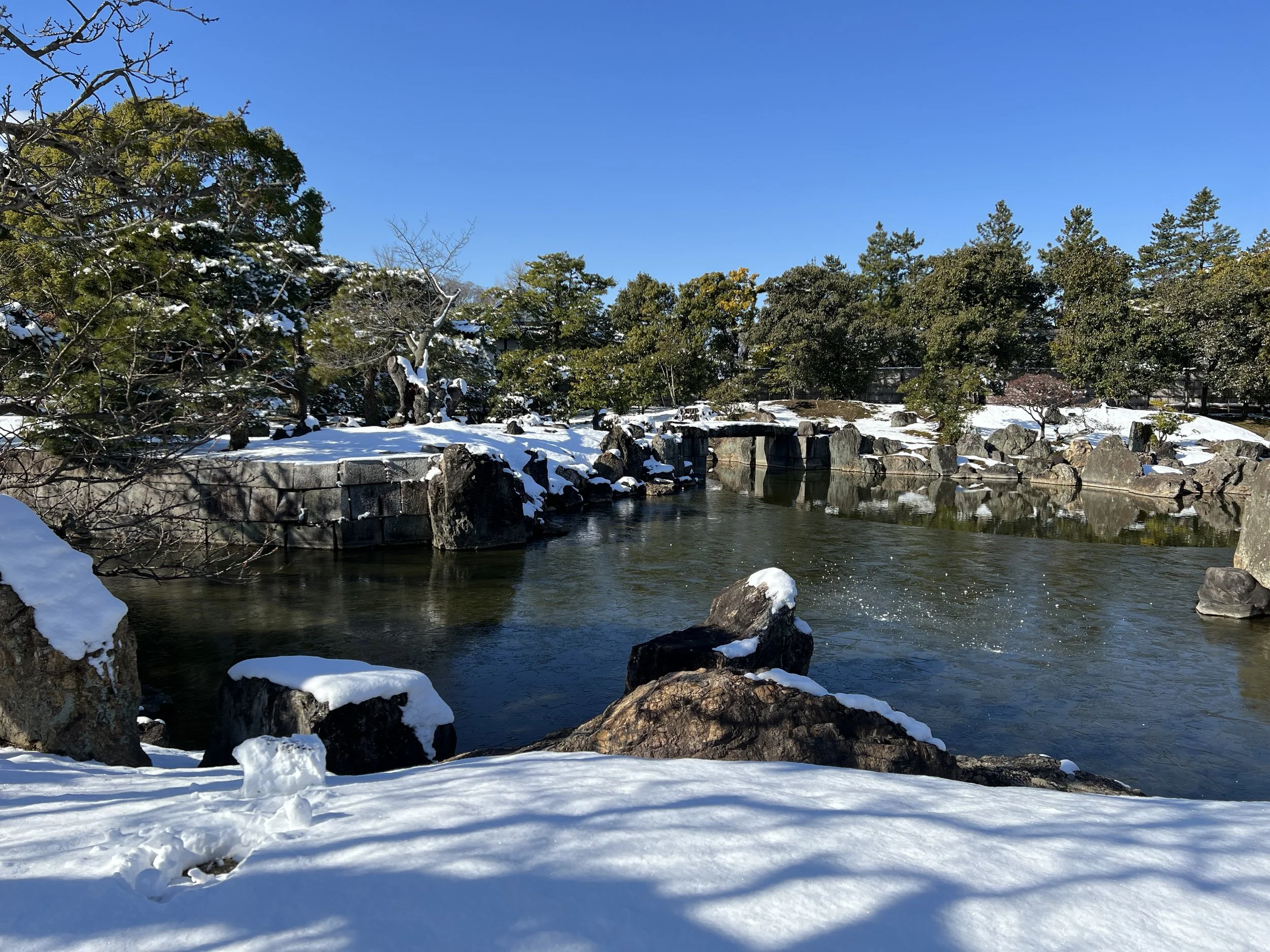
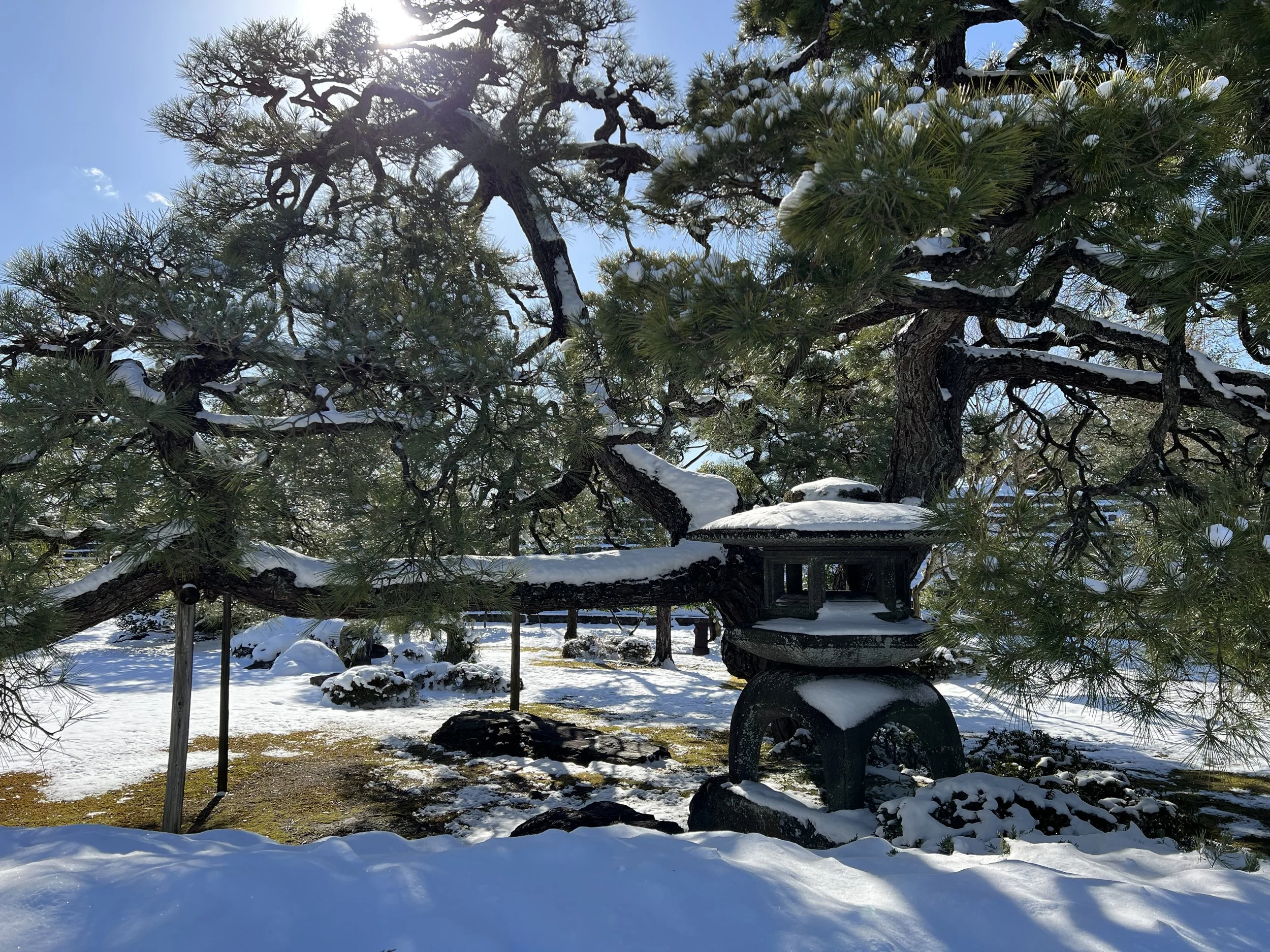
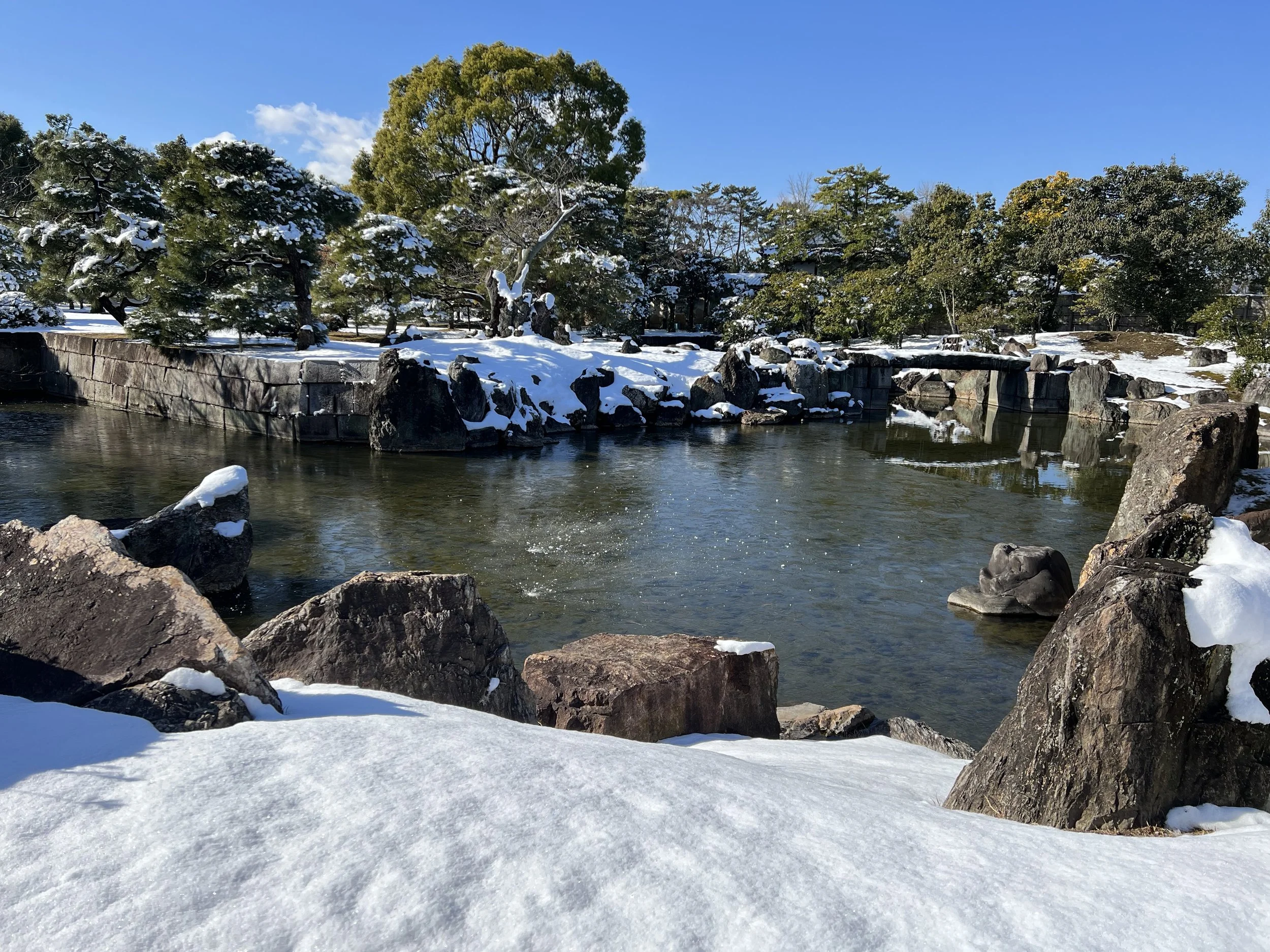
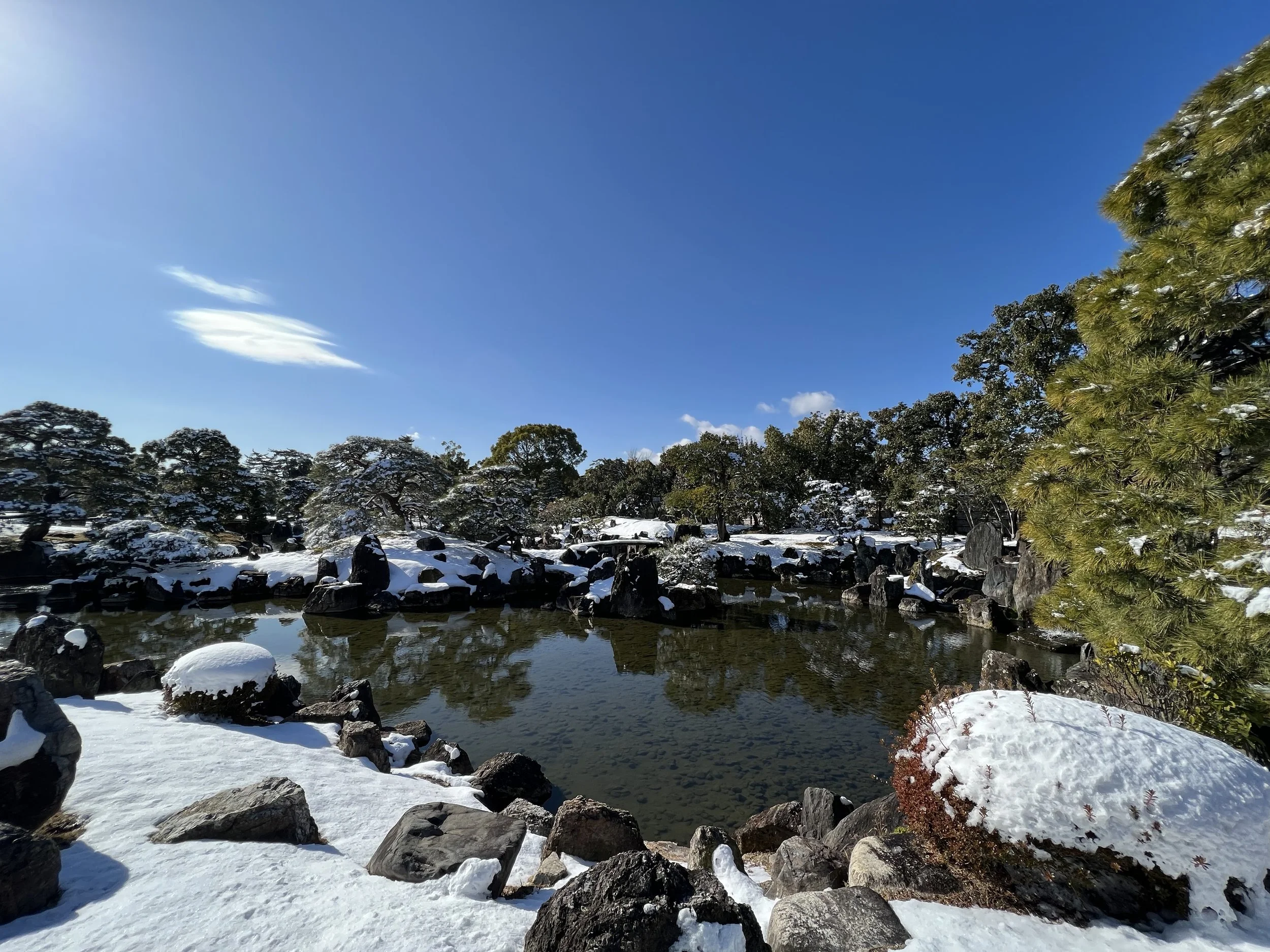
After exploring the palace interiors, I wandered through the surrounding grounds to take in the remaining buildings and gardens. The grounds are immaculately maintained, with carefully placed pine trees, cherry trees, and even a plum orchard. I also made my way toward the Honmaru area within the inner moat. Although it wasn’t open to the public, viewing it from the outside was still worthwhile. Much of the garden was blanketed in snow, and I watched workers carefully tying straw supports around the pine trees — a traditional winter practice used to protect the branches from snow damage and pests.
I have to say, this is one castle that didn’t feel like a castle—not only because of its design, but also because of how carefully manicured the grounds are.
History & Background
Nijo Castle (二条城) was constructed to symbolize the power of the Tokugawa shogunate in Kyoto, the imperial capital. Unlike many castles built primarily for military defence, Nijo functioned as a political residence and stage for diplomacy. Its palaces reflect the refined aesthetics of the Momoyama and early Edo periods, with lavish painted screens, carved transoms, and gold-leaf details.
The Ninomaru Palace is particularly significant as the site where Tokugawa Yoshinobu, the last shogun, formally returned governing authority to the emperor in 1867 — an event that marked the end of the Edo period. Today, Nijo Castle is designated a UNESCO World Heritage Site and remains one of Kyoto’s most important historical landmarks.
Getting There
Nijo Castle is easily accessible by public transit within Kyoto. The most convenient option is to take a city bus to Nijojo-mae Bus Stop, which is located just outside the castle grounds. From there, it’s a short walk to the main entrance. Nijo Station is also nearby, making it easy to continue onward after your visit.
Route Overview
Distance: 1.07 km (Nijo Castle Mae Bus Stop → Nijo Station)
Total elevation gain: 15 m
Duration: 1 hr 07 min (with breaks 1 hr 19 min)
Difficulty: Easy
Cost Breakdown
Bus: Shijo Karasuma Bus Stop → Nijo Castle Mae Bus Stop— ¥230
Entrance Fee: Nijo Castle — ¥1,300
Food: ¥1980