Kinkaku-ji - Kyoto, Japan
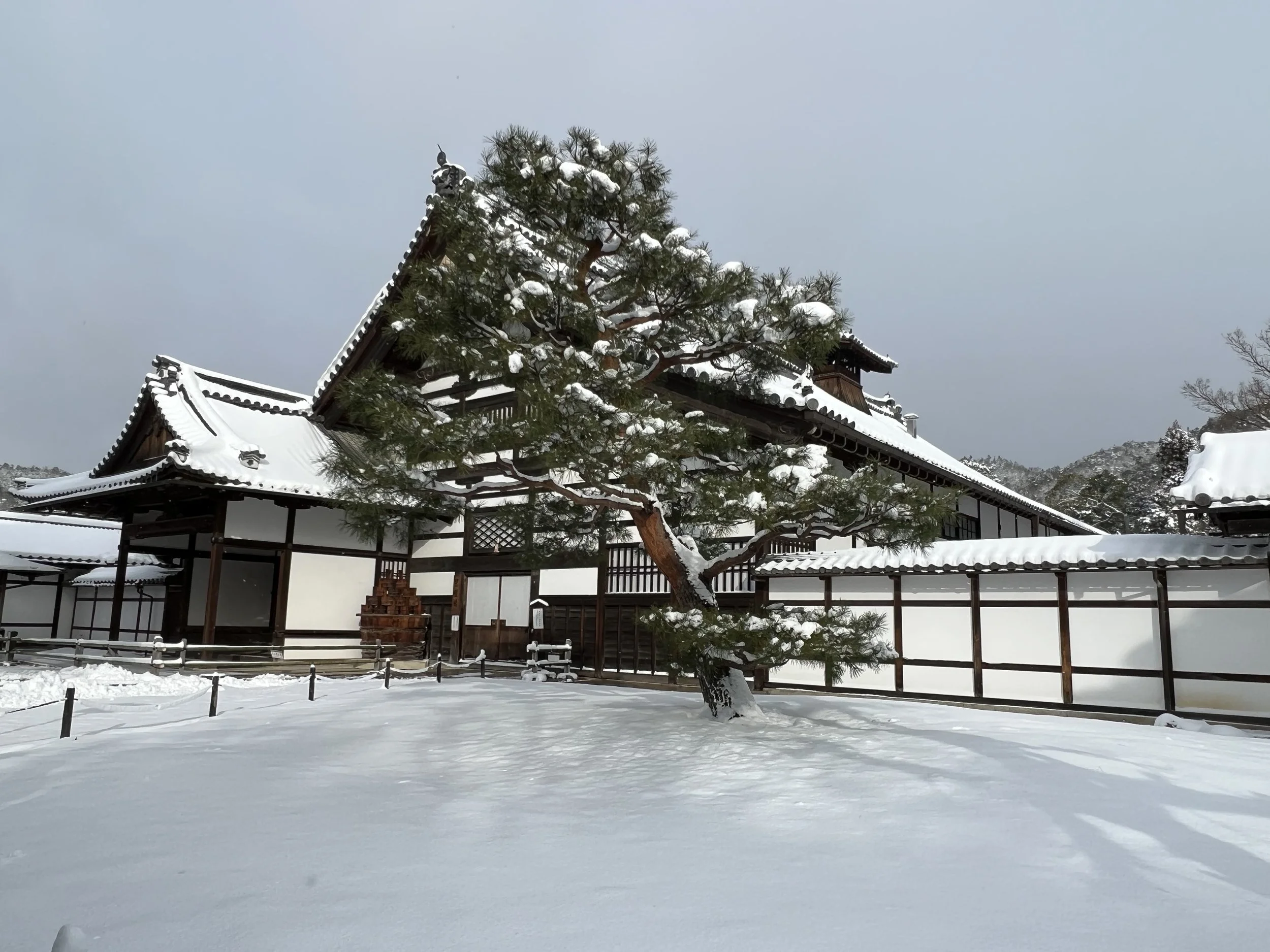
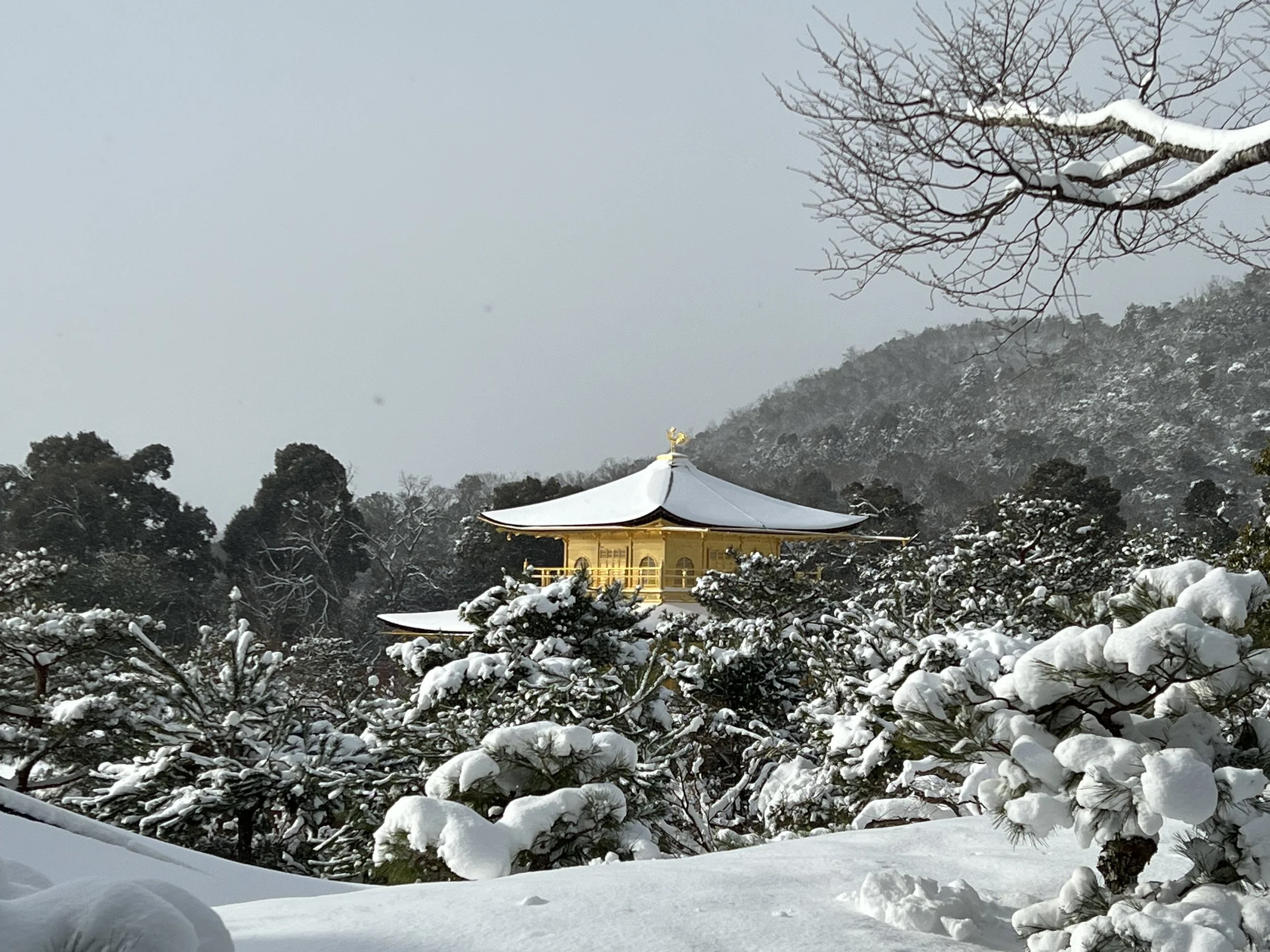
Snow was in the forecast the night before, and I went to bed hoping it would actually arrive. When I woke up to Kyoto blanketed in white, I knew immediately that I wanted to revisit some familiar sights—this time through a winter lens. One place at the top of my list was Kinkaku-ji. The contrast of snow against the Golden Pavilion felt like something I couldn’t pass up.
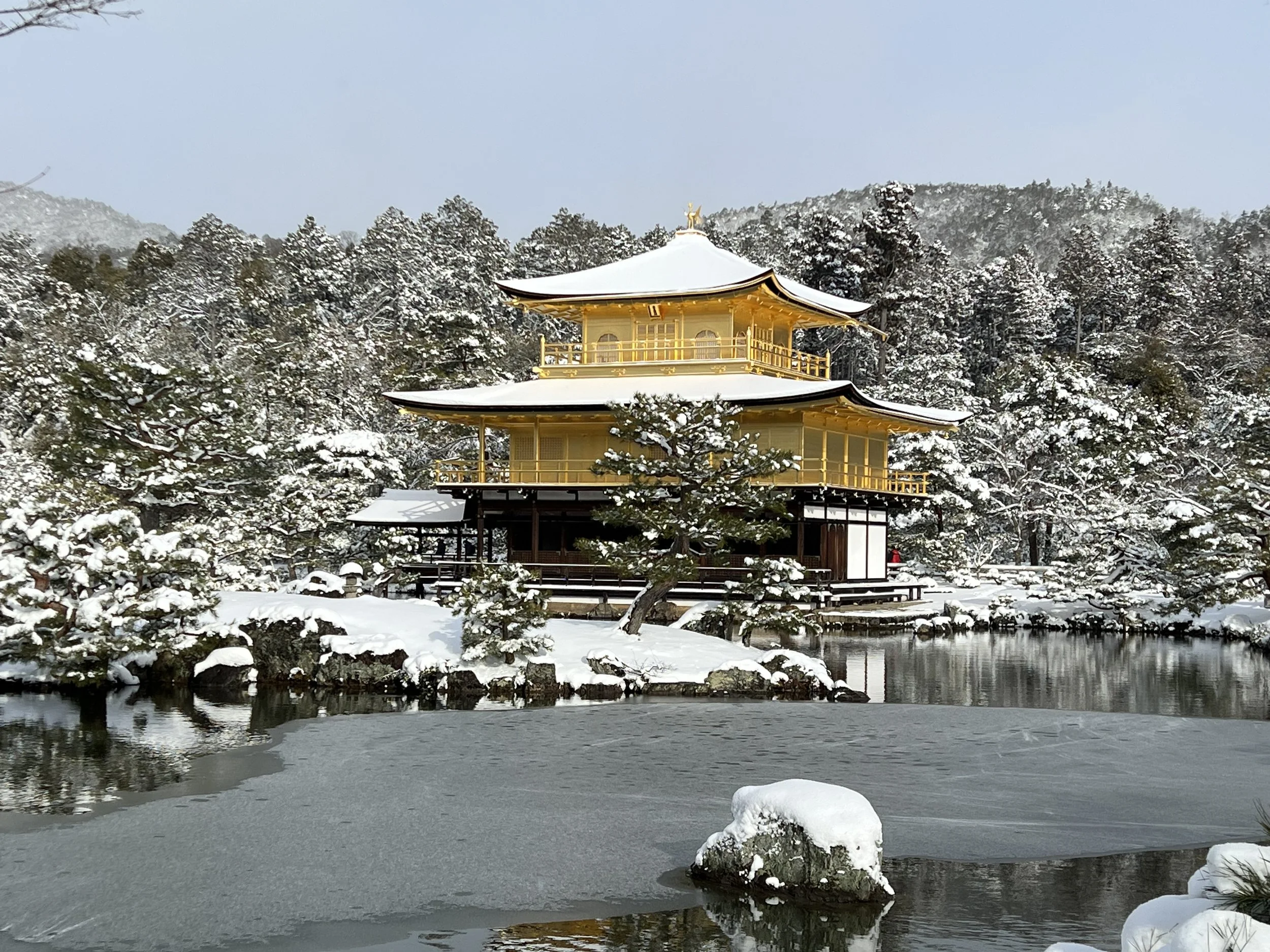
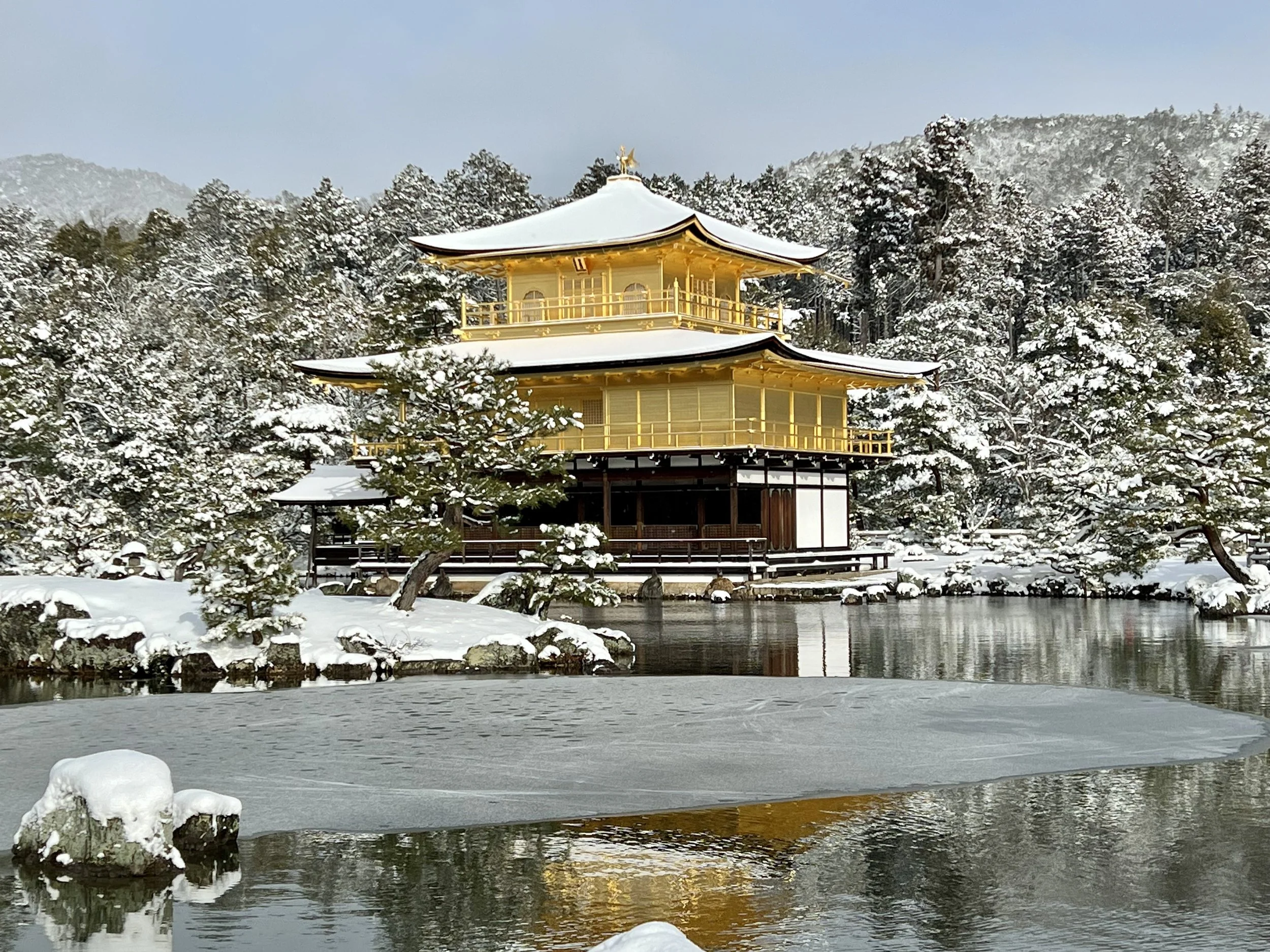
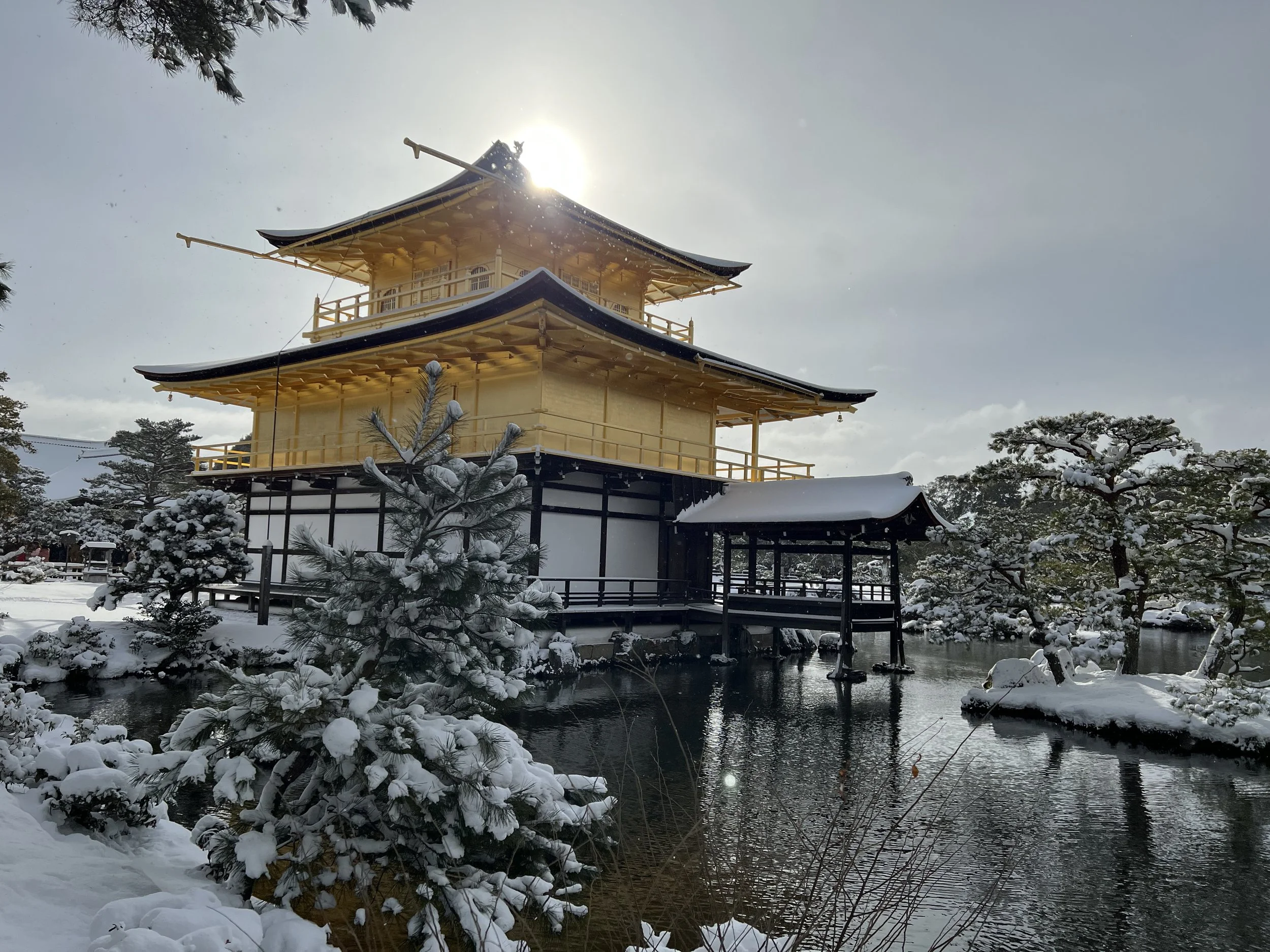
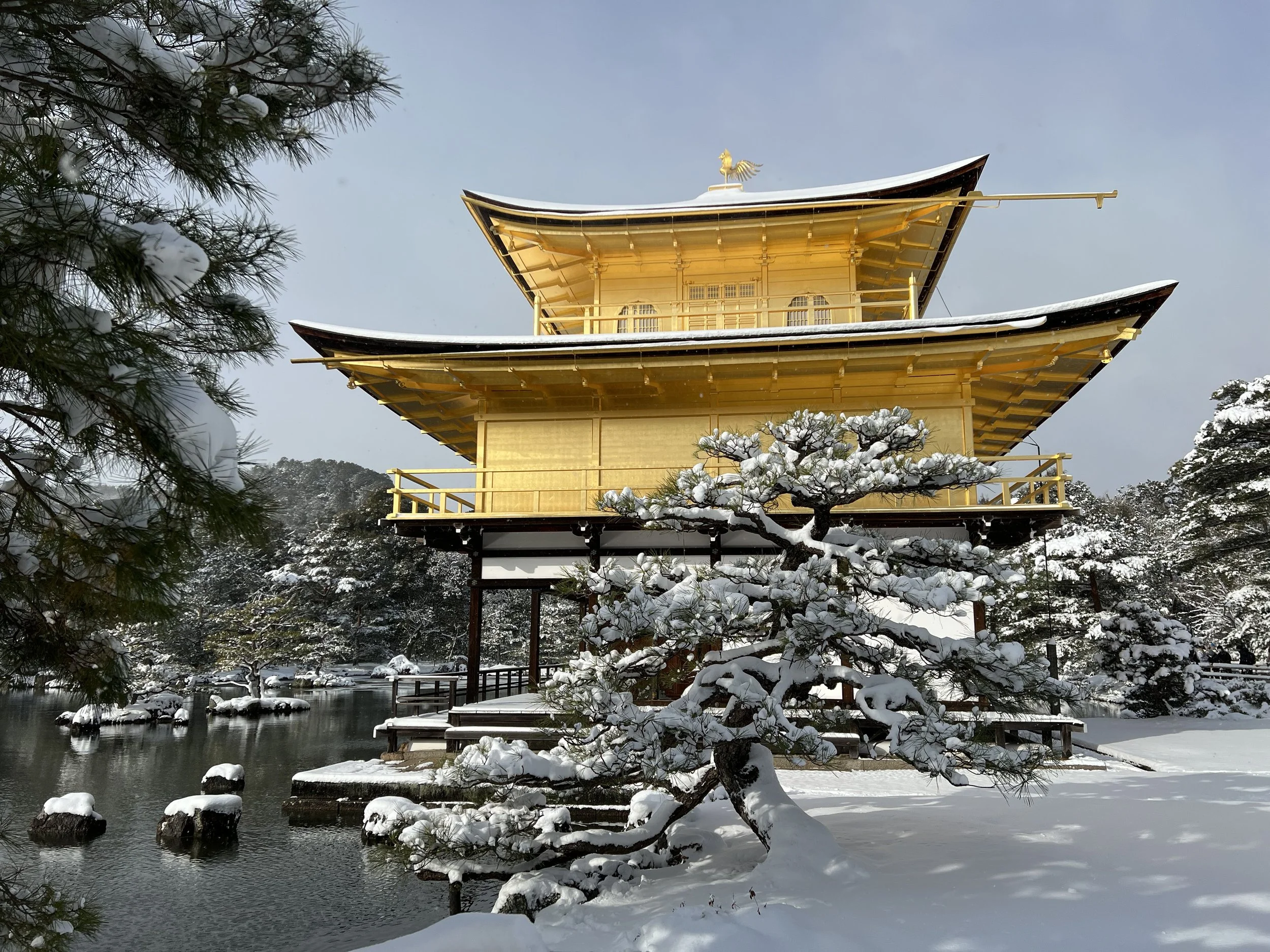
Kinkaku-ji, formally known as Rokuon-ji, is famous for its top two floors completely covered in gold leaf. The gold represents purity and enlightenment, reflecting the sun’s life-giving power, while the phoenix perched on the roof symbolizes renewal and rebirth. Set beside Kyoko-chi Pond, the pavilion already has a serene presence, and the fresh snow only amplified that atmosphere.
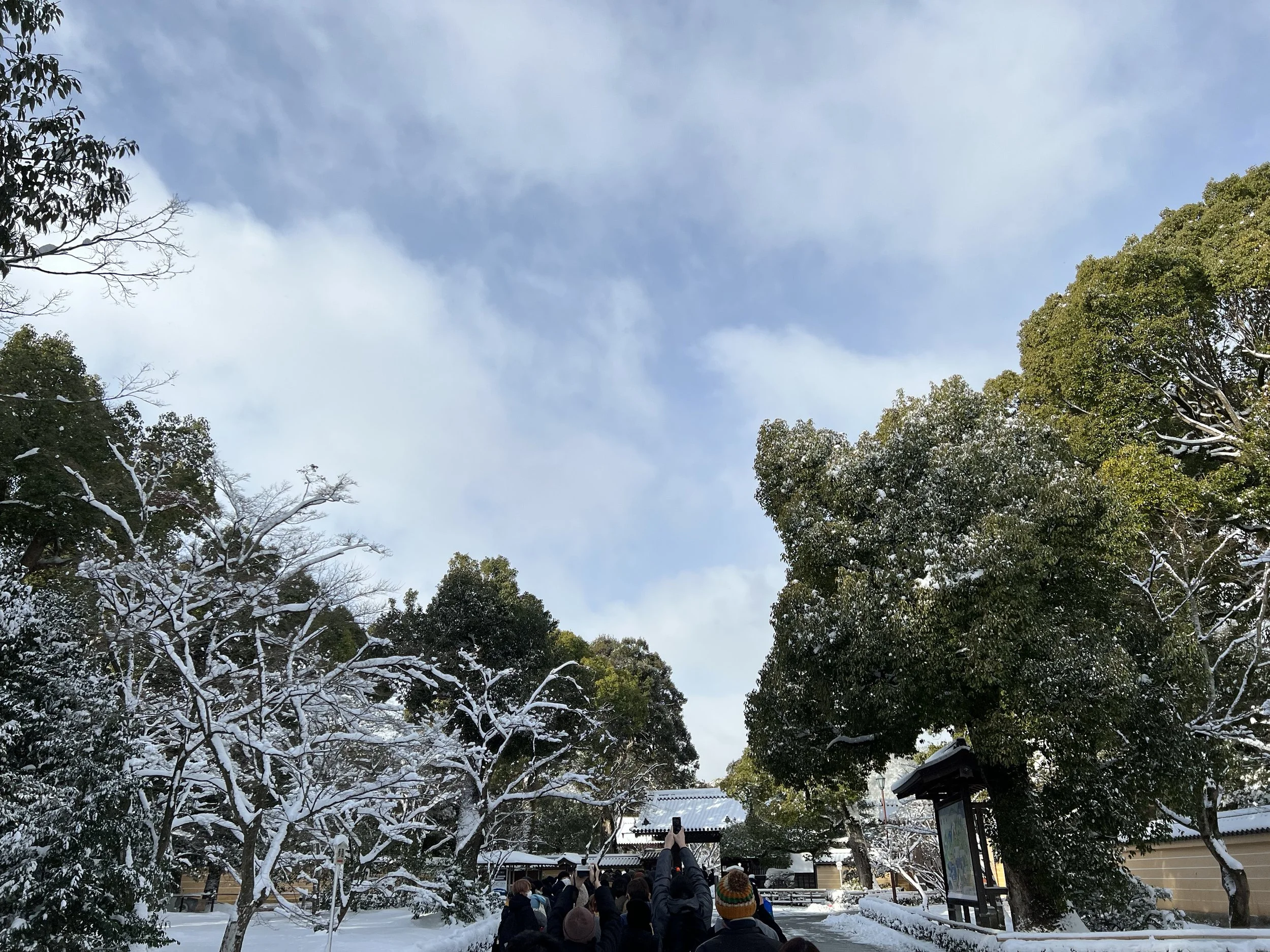
I arrived by bus and quickly realized I wasn’t the only one with this idea. A steady crowd had gathered at the entrance, all eager to see the pavilion framed by snow. The line to the ticket booth was long but moved efficiently, thanks to both automatic ticket machines and staffed counters. Once inside, the pathway guided visitors around the pond, revealing carefully framed views of Kinkaku-ji from different angles. I took my time here, stopping often to take photos and simply admire how the gold shimmered softly against the muted whites and greys of winter. The excitement of the crowd was palpable, but it never felt overwhelming—just shared appreciation.
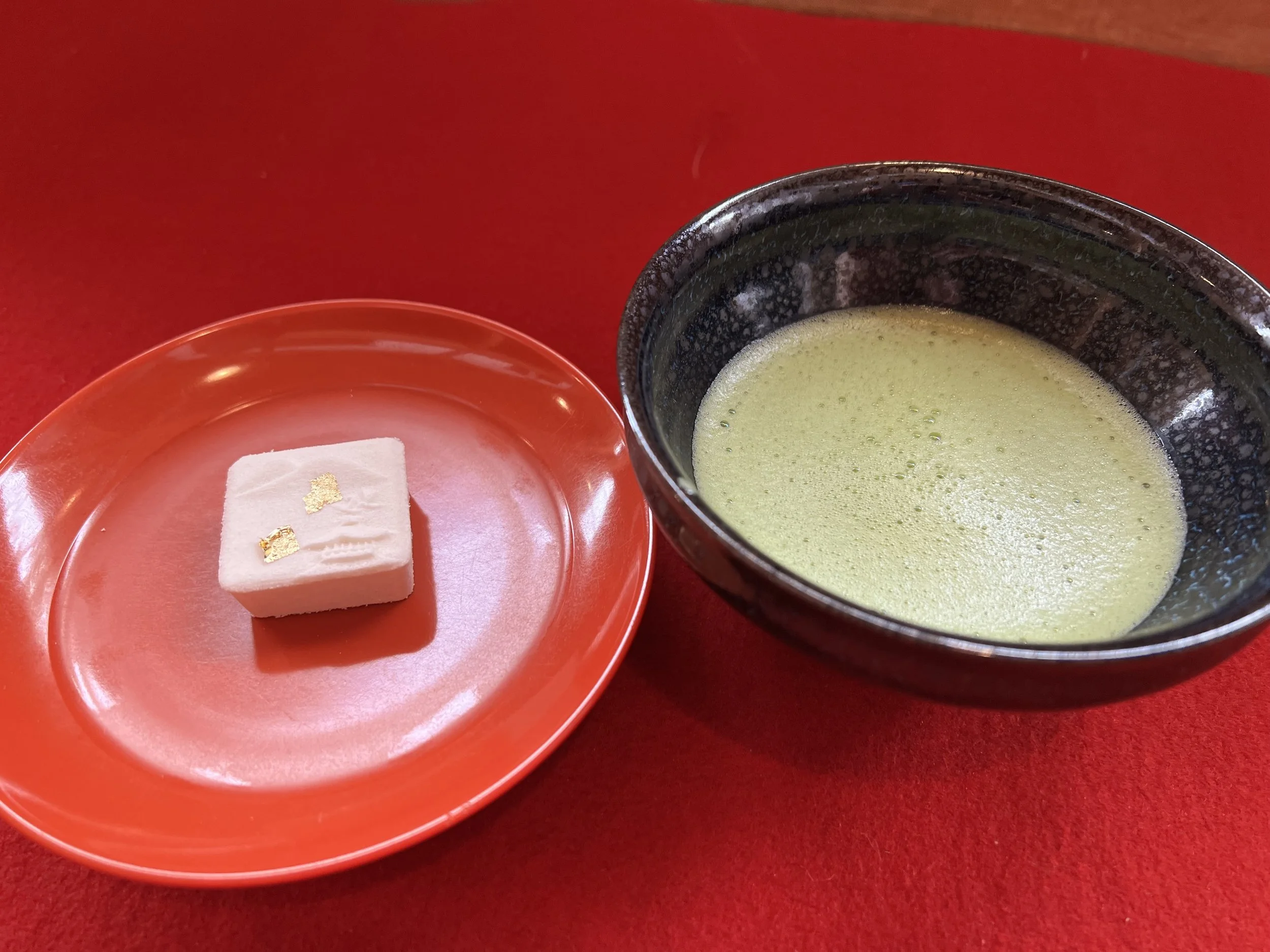
After completing the loop around the pavilion, I made my way to the teahouse near the exit. This turned out to be slightly more involved than expected, as shoes had to be removed at the entrance. Unlacing winter boots in a busy space took a bit of patience, but once inside, the effort felt worthwhile. I was shown to a tatami room overlooking a garden dusted in snow. Even mostly white, the garden felt calm and intentional. I was served a bowl of matcha along with a traditional sweet—decorated, fittingly, with flecks of gold leaf. Sitting there, warming my hands around the tea, felt like a quiet moment of pause amid the busy morning.
By the time I exited the temple grounds, the line at the entrance had grown significantly longer. I was glad I had made Kinkaku-ji my first stop of the day. Locals mentioned that while snowfall isn’t unheard of in Kyoto, this amount was unusual for January. Being able to experience such an iconic site under these conditions felt genuinely special, offering a familiar place in an entirely different light.
History & Background
Kinkaku-ji was originally built in 1397 as a retirement villa for shogun Ashikaga Yoshimitsu and was later converted into a Zen Buddhist temple following his death. The structure reflects the Kitayama architectural style, with each floor representing a different architectural influence. The top two floors are covered in gold leaf, a feature meant to symbolize spiritual purity and ward off negative thoughts. Although the current structure dates to 1955 after the original was destroyed by fire, Kinkaku-ji remains one of Kyoto’s most recognizable landmarks and a UNESCO World Heritage Site.
Getting There
Kinkaku-ji is most easily accessed by bus from central Kyoto. Numerous city bus routes stop at Kinkakuji-michi, from where it’s a short walk to the temple entrance. While the area isn’t directly served by trains, buses are frequent and straightforward, making it an easy addition to any Kyoto itinerary.
Route Overview
Distance: 1.08 km out & back (Kinkakuji-michi Bus Stop)
Total elevation gain: 12 m
Duration: 30 min (with breaks 45 min)
Difficulty: Easy
Cost Breakdown
Bus: Horikawa Oike Bus Stop → Kinkakuji-michi Bus Stop — ¥230
Entrance Fee: Kinkaku-ji Temple — ¥400
Food: ¥500