Imabari Castle - Ehime, Japan
It was pouring rain, and after spending most of the day exploring outdoors, I debated whether I still wanted to visit Imabari Castle. The weather was relentless, and the idea of walking around another open site wasn’t exactly appealing. Still, Imabari Castle is one of Japan’s three great sea castles, and knowing that, I couldn’t bring myself to skip it. Imabari itself is best known for its exceptionally soft and durable Imabari towels and as the gateway to the famous Shimanami Kaido cycling route, but the castle remains one of the city’s defining landmarks.
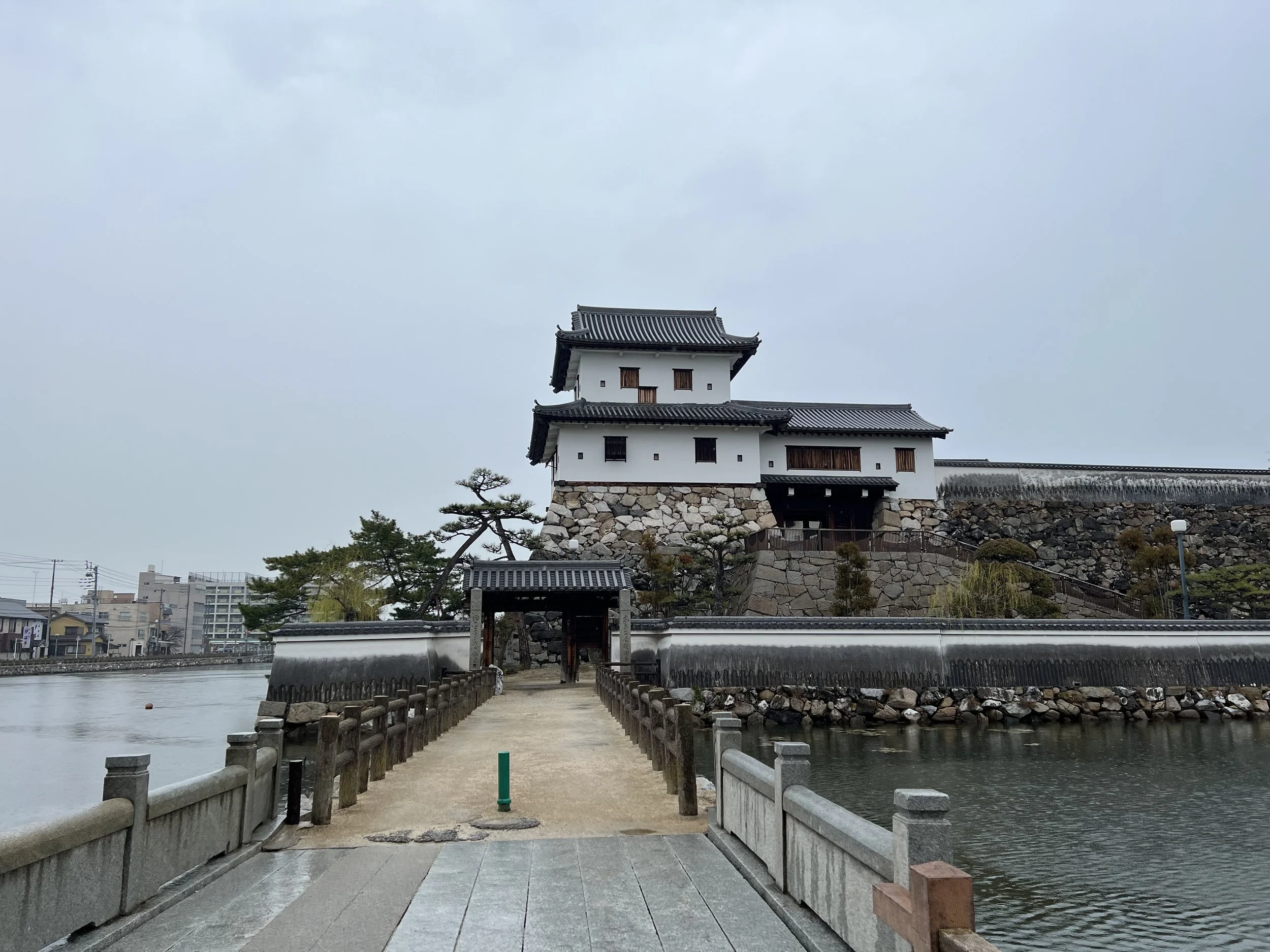
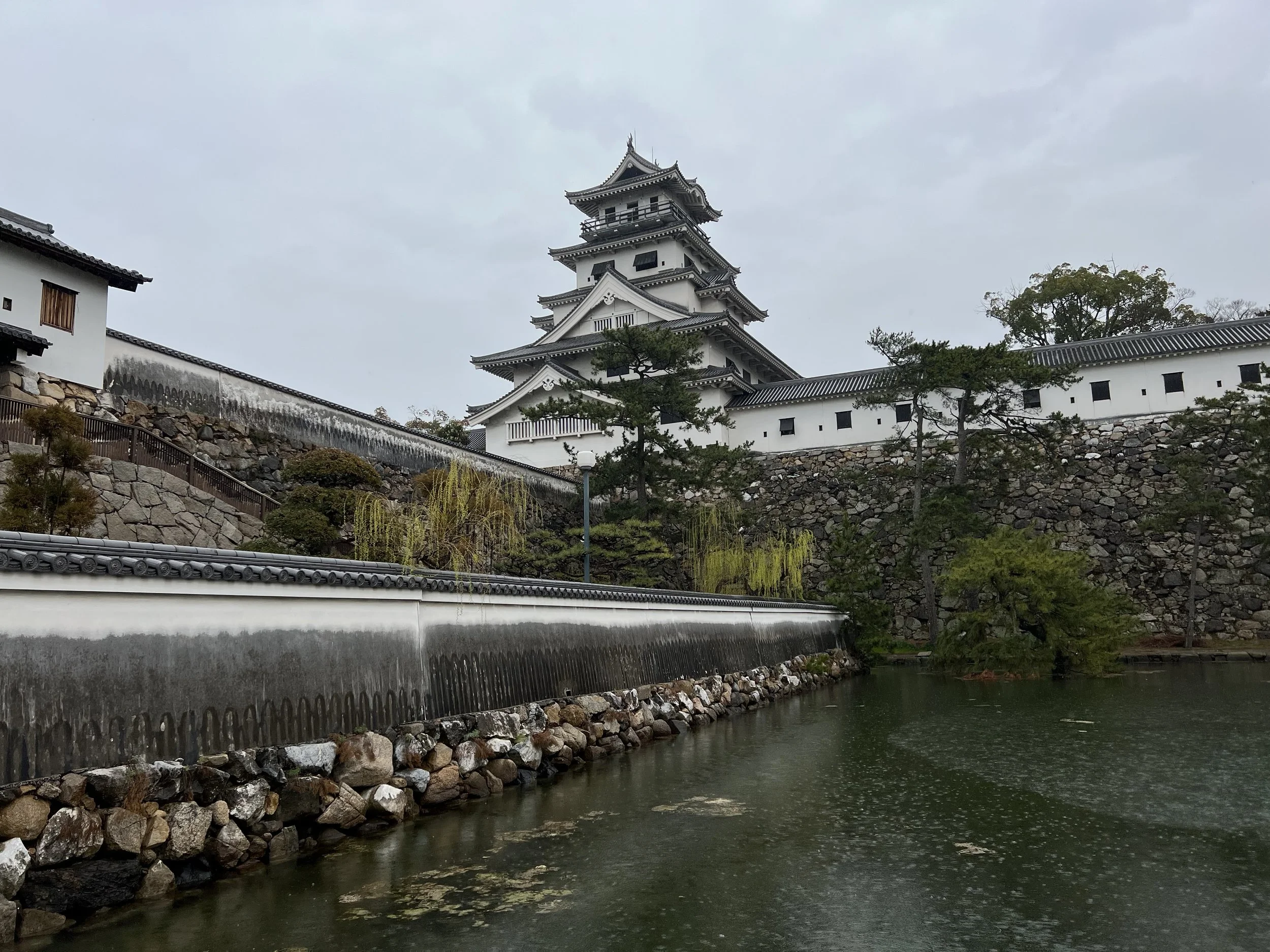
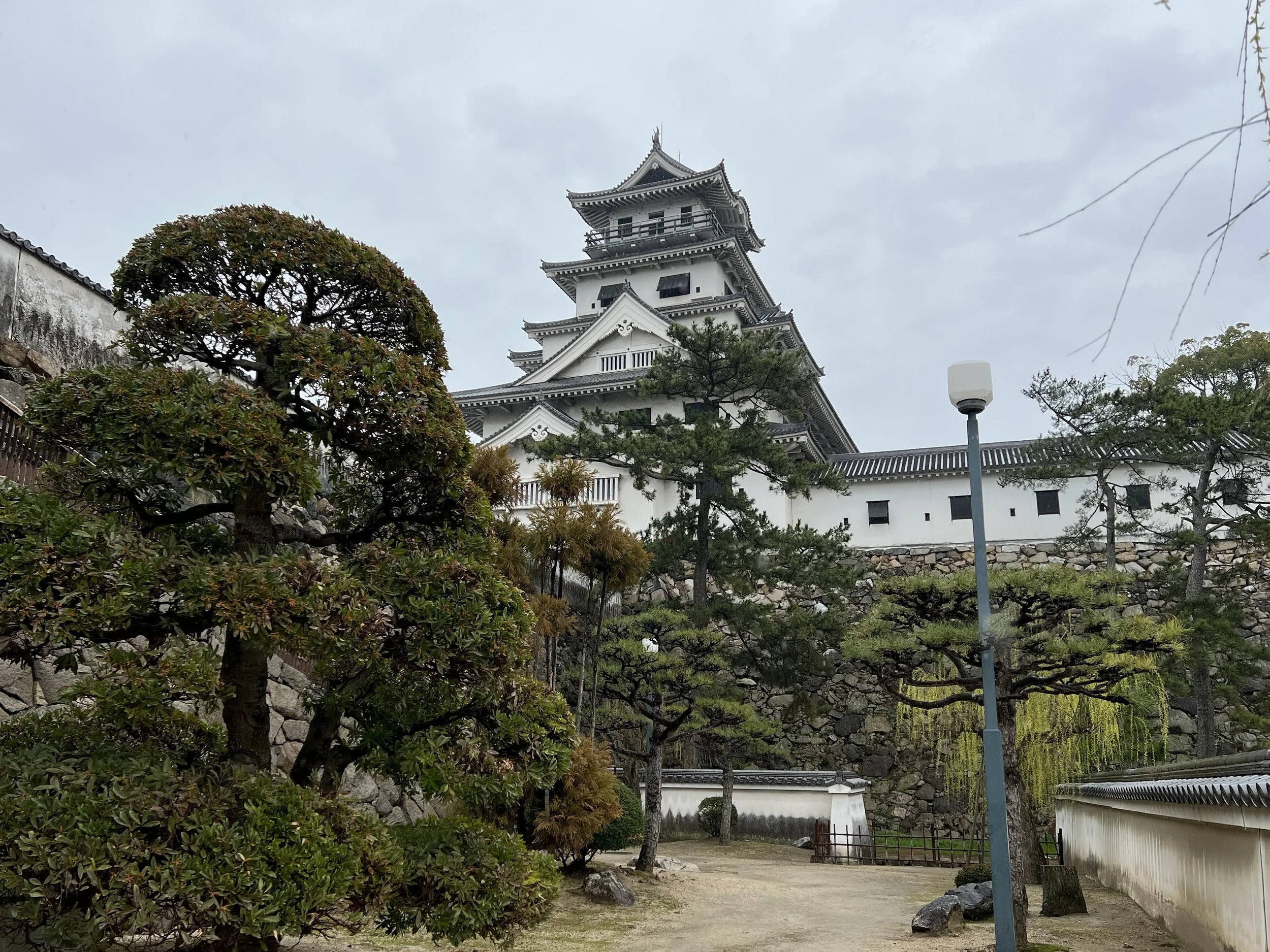
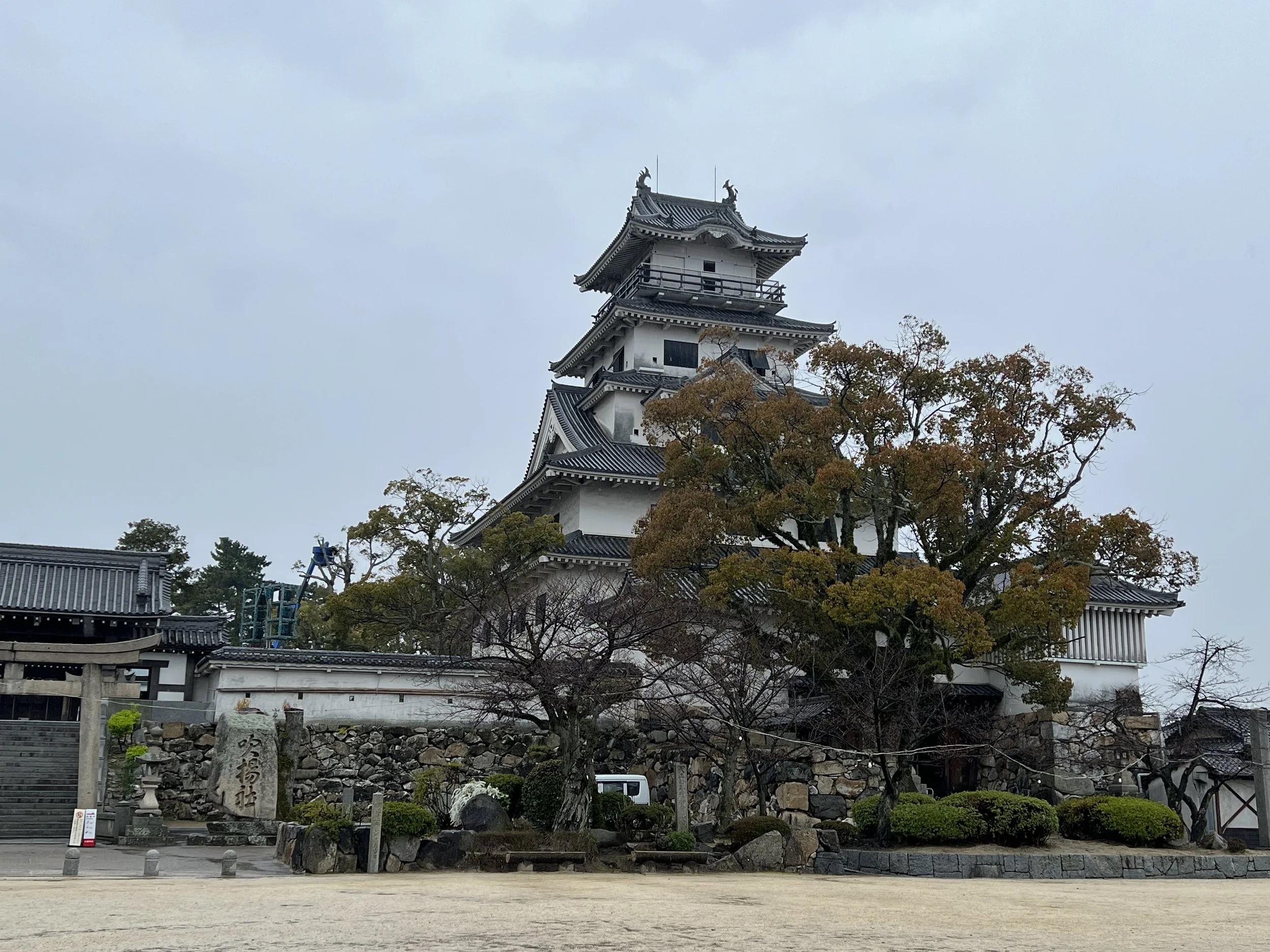
I took the train from Matsuyama to Imabari after returning from the Ozu area. The castle sits right in the city centre, not far from the coast, and as I approached, the rain-soaked stone walls and wide moat immediately set the tone. Built in 1602, Imabari Castle faces the Seto Inland Sea and is completely encircled by a seawater moat, once allowing ships to sail directly into the castle grounds. Even in poor weather, the scale of the fortifications was impressive, and it wasn’t hard to imagine how formidable this place would have been in its prime.
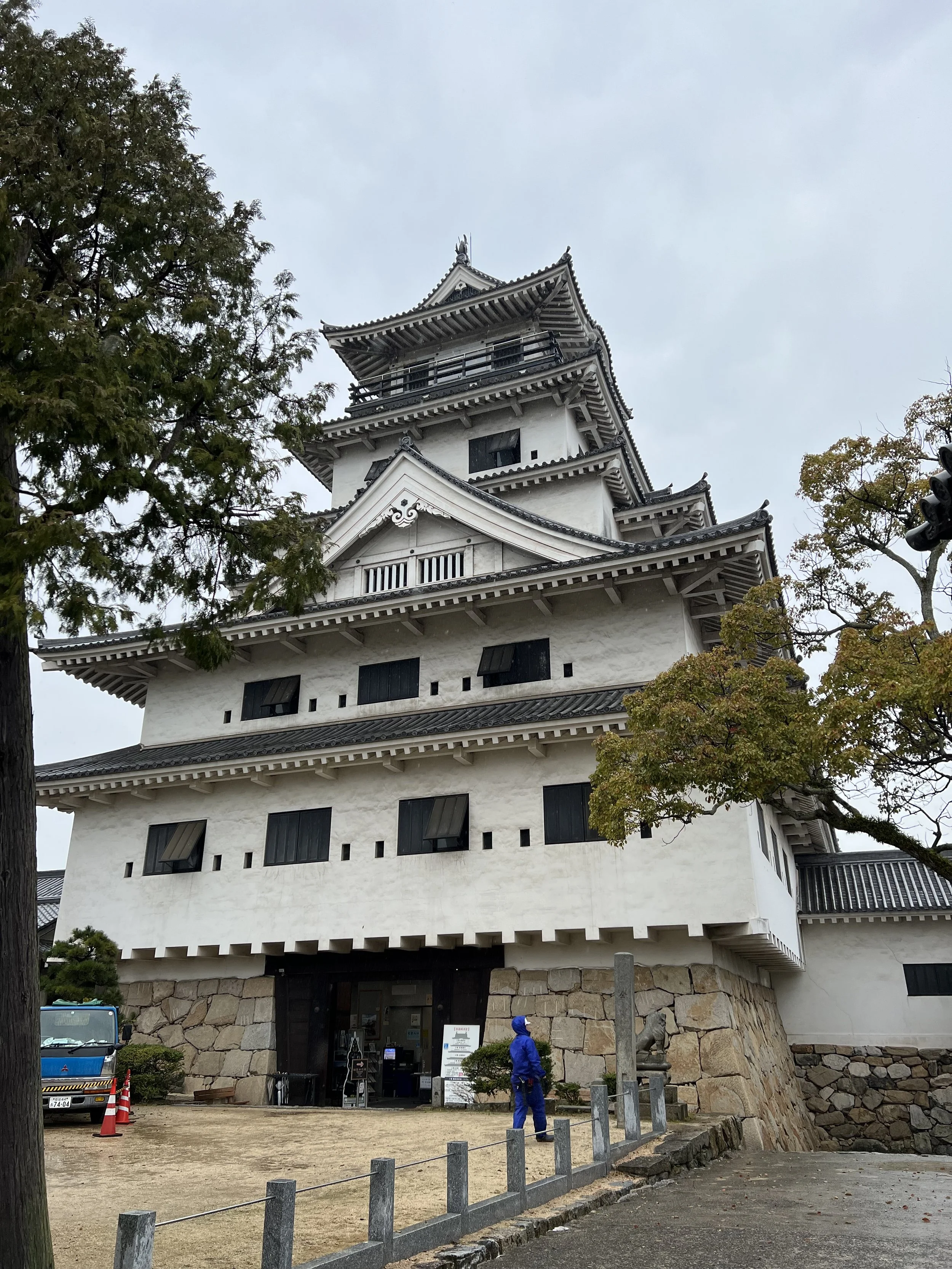
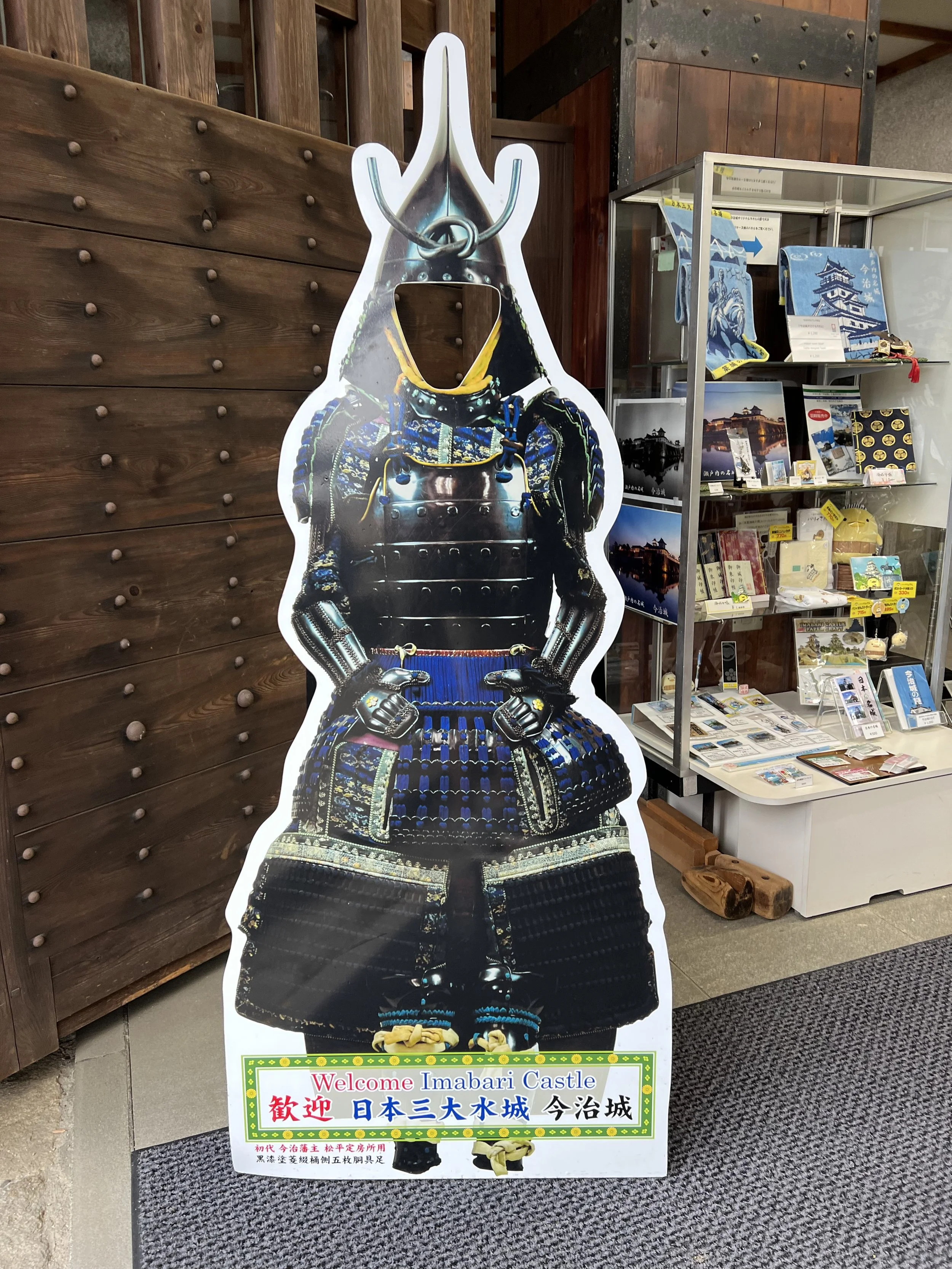
The castle is accessed by two bridges at different points around the moat, and crossing one of them in the rain really emphasized how exposed attackers would have been. With the weather keeping most visitors away, the grounds were nearly empty. I took a moment to shake the rain from my jacket before heading inside, determined not to trail water everywhere. Inside the keep, the exhibits were fairly minimal, with displays of samurai armour and historical information panels. What stood out most to me, however, was the observatory deck at the top.
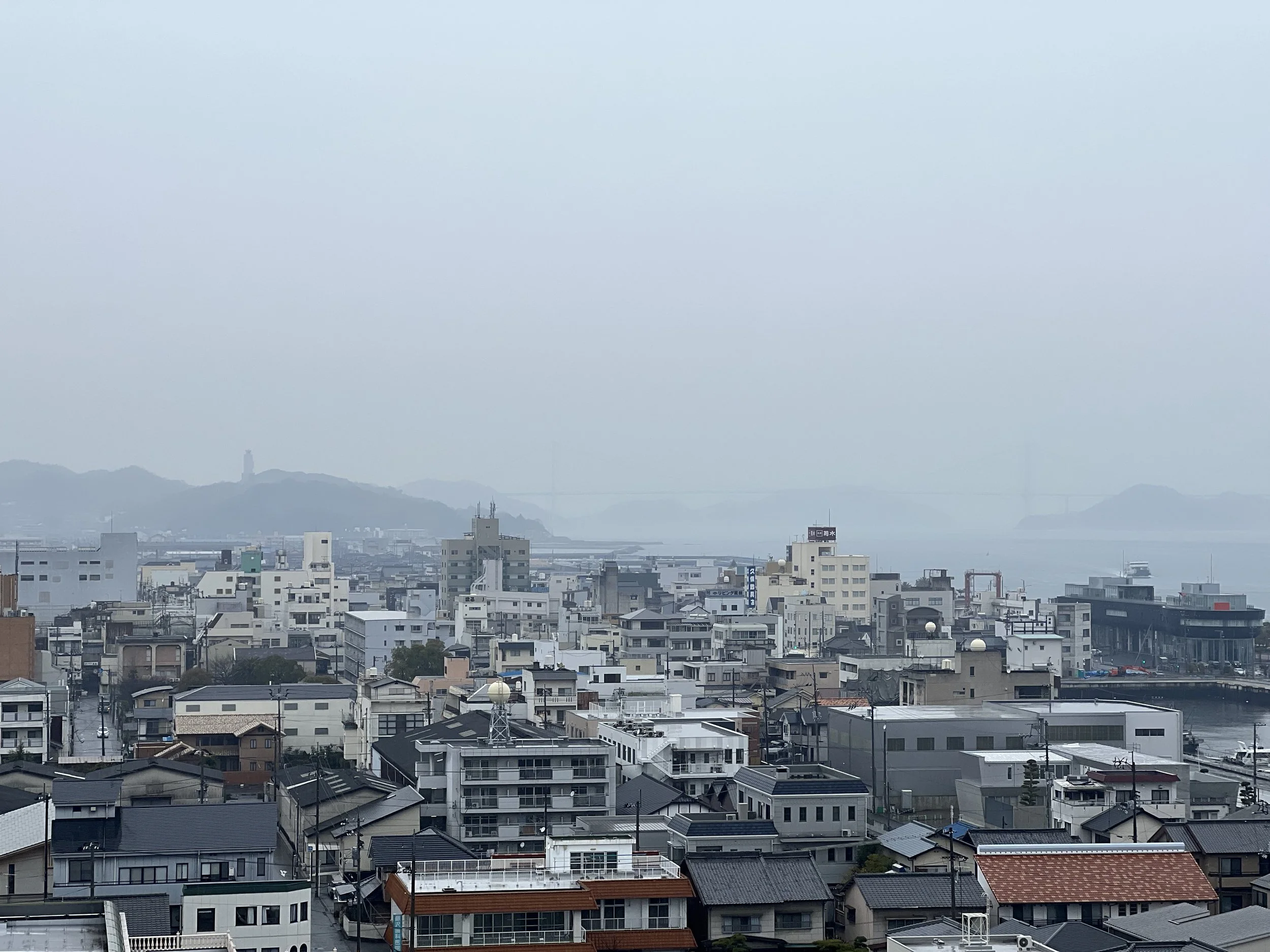
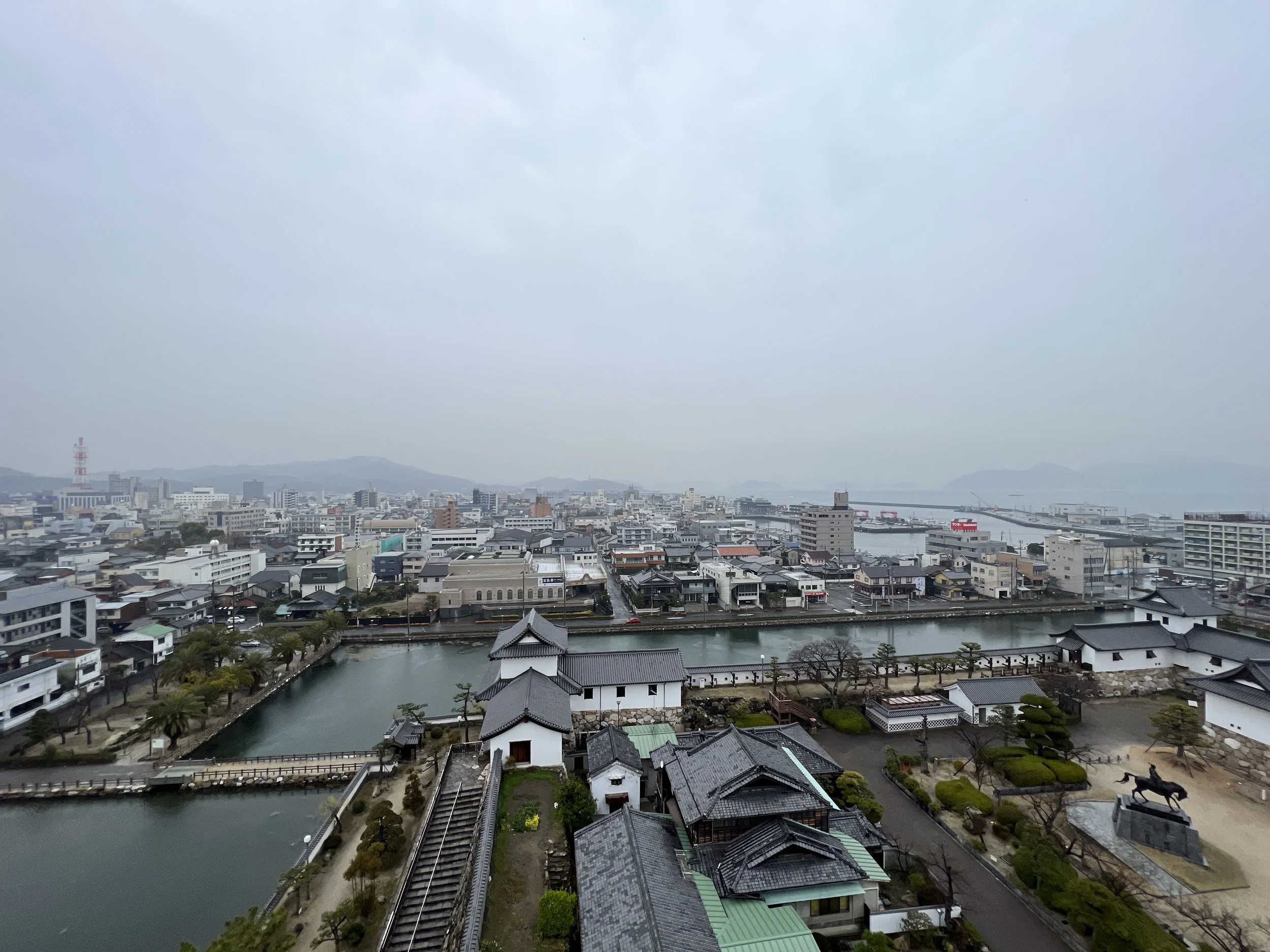
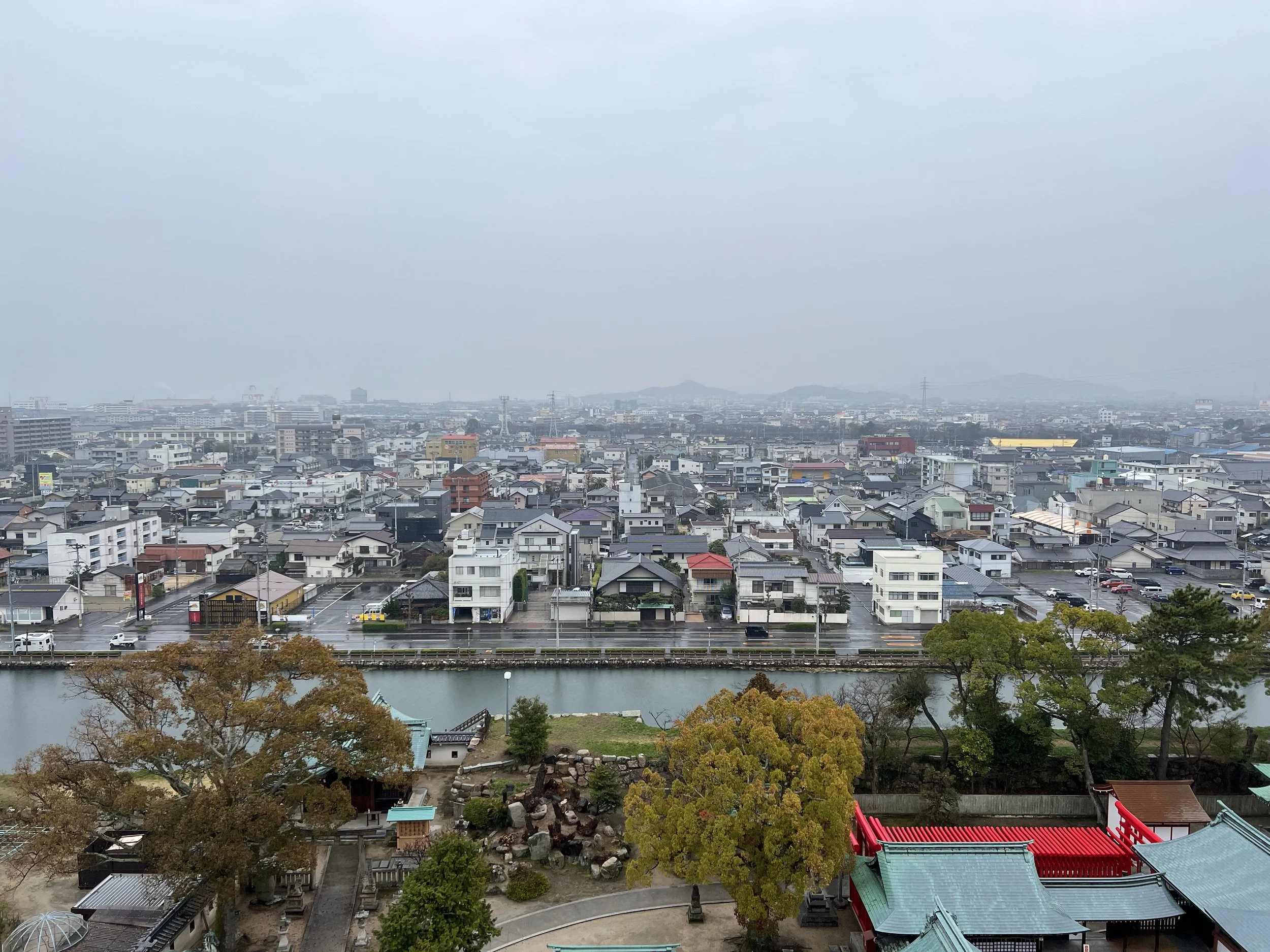
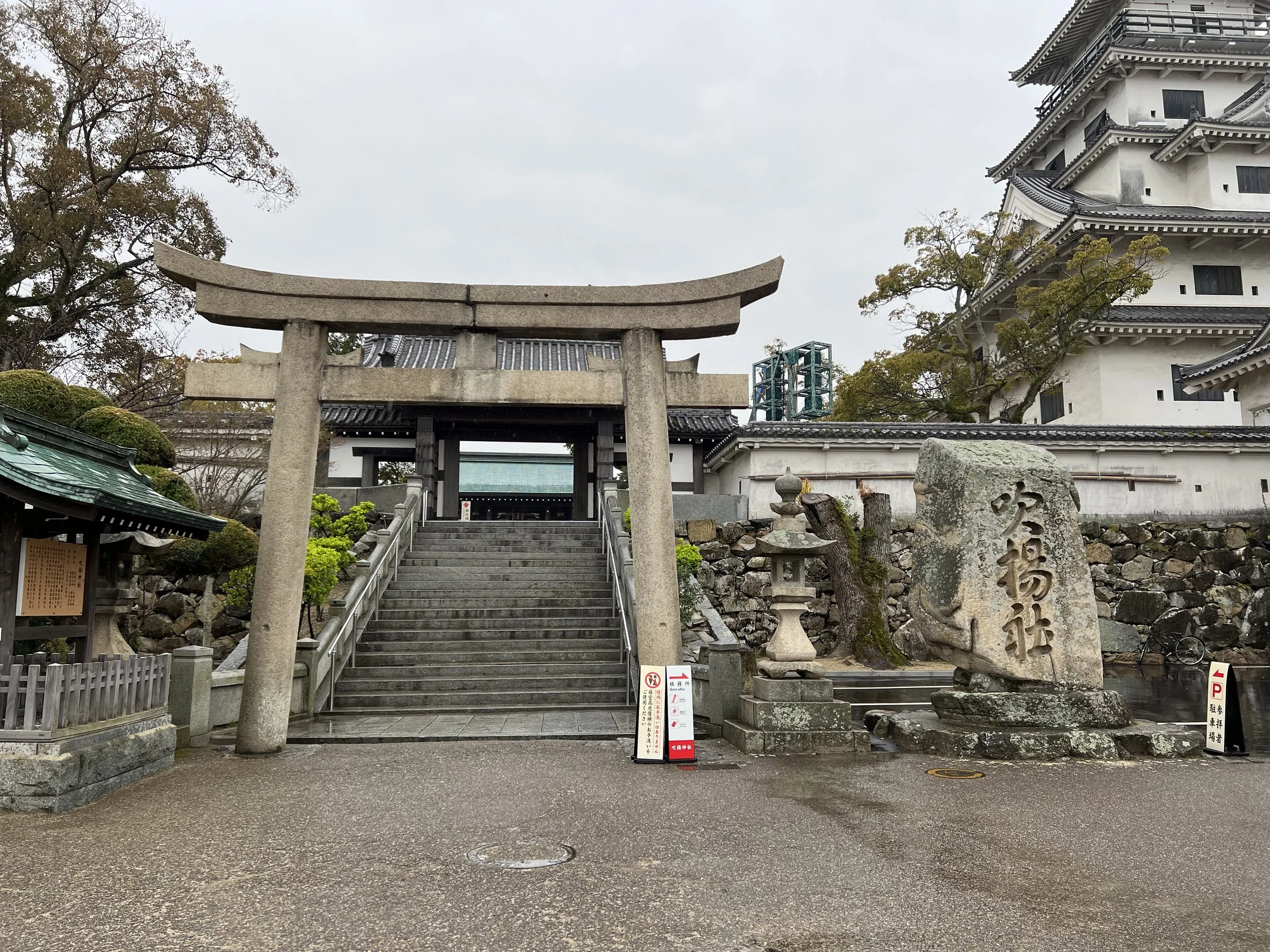
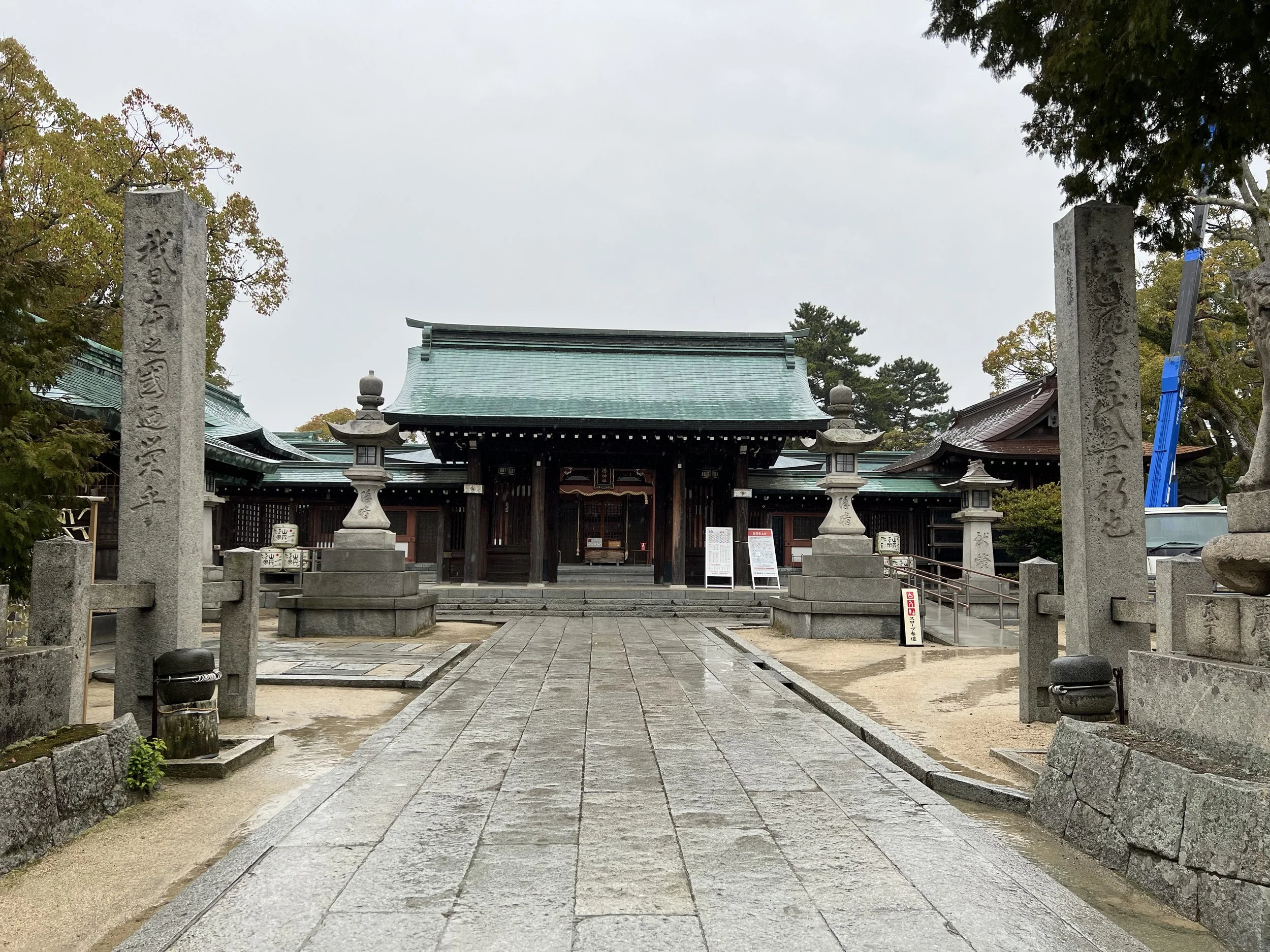
From the upper floor, I had a clear view down into the moat and outward toward the sea. The connection between the castle and maritime activity became obvious from this vantage point, reinforcing why Imabari was such a strategically important location. After leaving the main keep, I wandered over to the small shrine beside the castle and then toward a small museum tucked into one corner near the stone walls. Because it required shoe removal and everything I had was soaked, I chose not to enter. The staff kindly allowed me to stand at the entrance and look around using my camera’s zoom, which I appreciated given the circumstances.
After one final walk around the castle grounds, I exited via the opposite bridge and headed back toward Imabari Station. While I was glad I made the effort to visit, the rain definitely limited how much time I spent exploring. It felt like a place worth revisiting on a clearer day, when the relationship between castle, sea, and city could be fully appreciated.
History & Background
Imabari Castle (今治城) was constructed in 1602 by Todo Takatora, a master castle builder of the early Edo period. It is one of Japan’s three great sea castles, alongside Takamatsu Castle and Nakatsu Castle, distinguished by its seawater moat directly connected to the Seto Inland Sea. This design allowed ships to pass into the castle and reinforced its role as a naval and logistical hub. Many of the original structures were dismantled during the Meiji period, but the inner moat and stone walls survived. The current main keep and several turrets were reconstructed in the 1980s, restoring the castle as a central historical symbol of Imabari.
Getting There
Imabari Castle is easily reached on foot from Imabari Station, taking approximately 15 minutes through flat city streets. Trains from Matsuyama Station run frequently, making Imabari a convenient stop when travelling through Ehime Prefecture.
Route Overview
Distance: 3.48 km out & back (Imabari Station)
Total elevation gain: 10 m
Duration: 42 min (with breaks 1 hr 04 min)
Difficulty: Easy
Cost Breakdown
Train: Matsuyama Station → Imabari Station — ¥1,050
Entrance Fee: Imabari Castle — ¥520