Hakone Shrine - Kanagawa, Japan
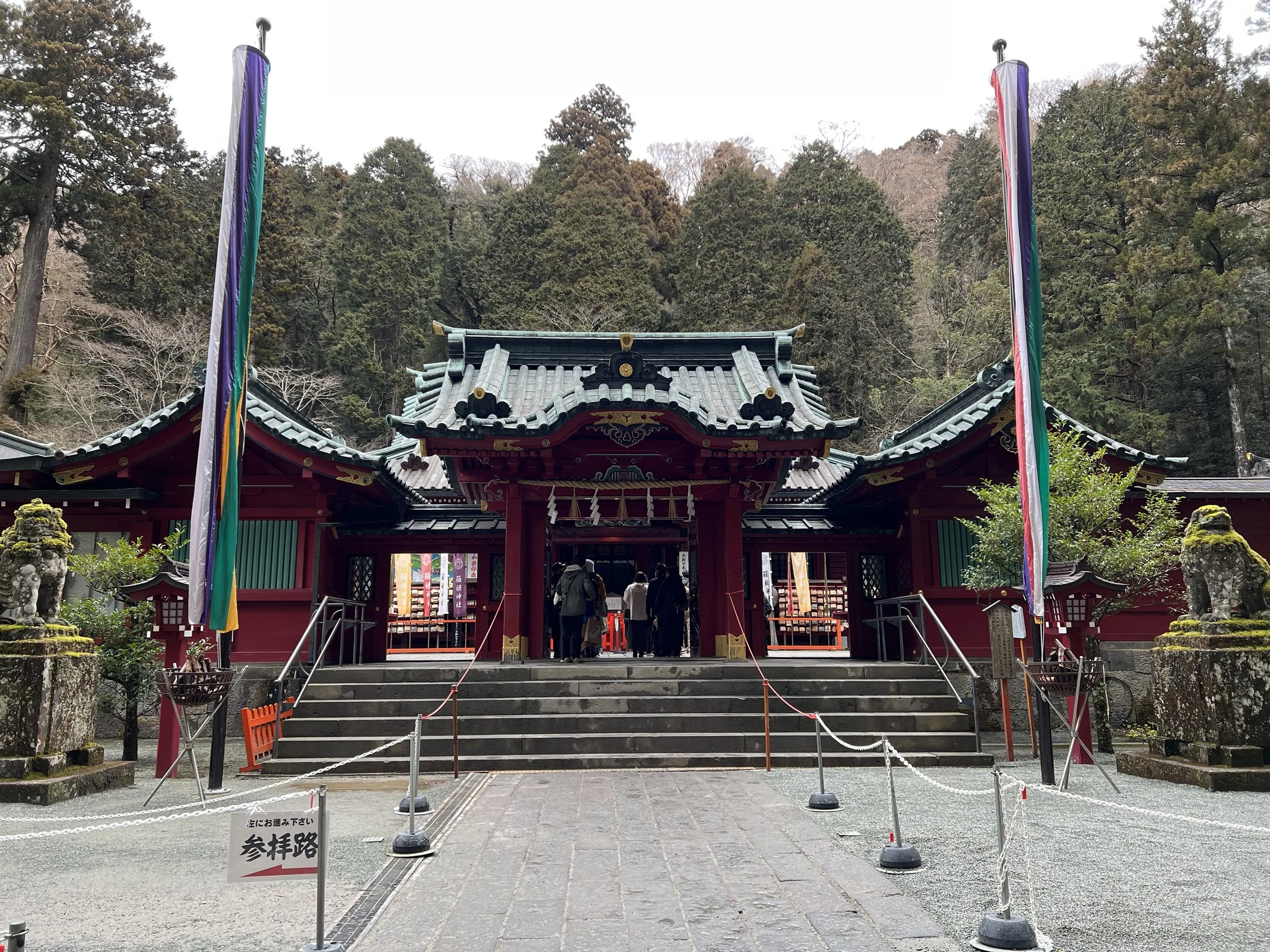
Hakone Shrine sits quietly at the base of Mount Hakone along the calm shores of Lake Ashi, and it’s one of those places that immediately lives up to its reputation. The vermillion torii gate rising from the water is the image most people associate with Hakone—and seeing it in person, it’s easy to understand why. But beyond that iconic view, the shrine itself is tucked further up the hillside, surrounded by a dense cedar forest that creates a strong sense of stillness and age.
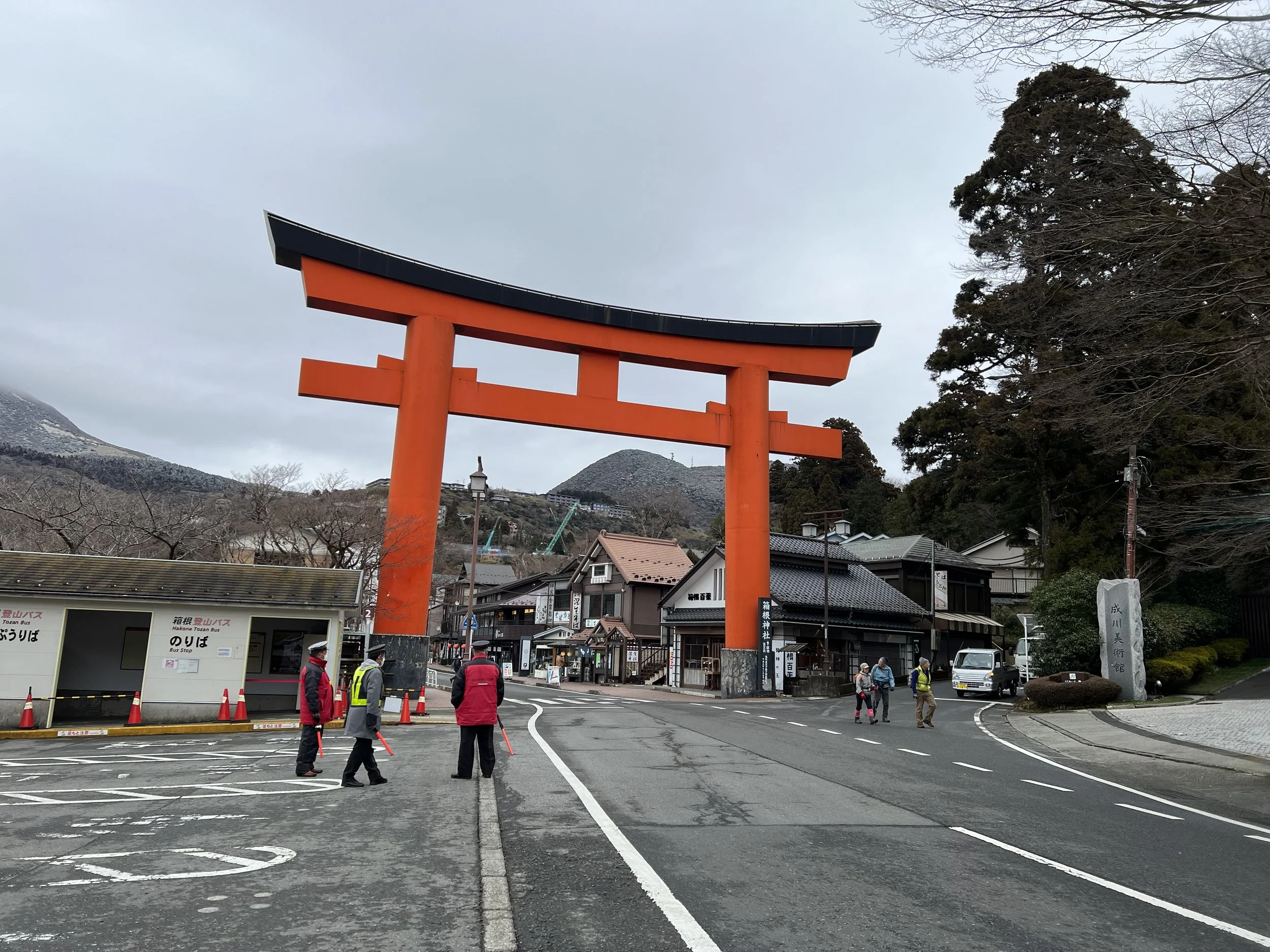
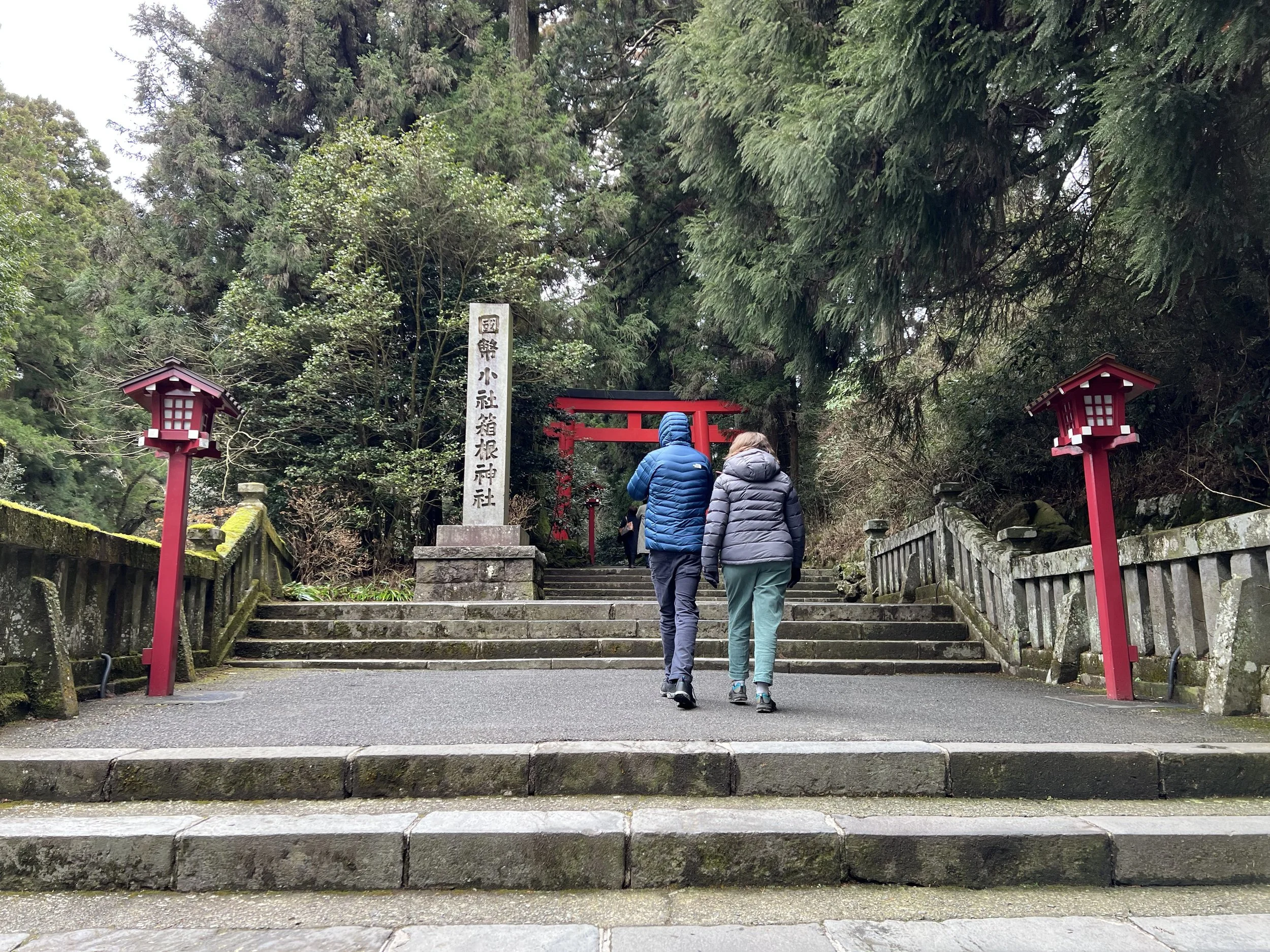
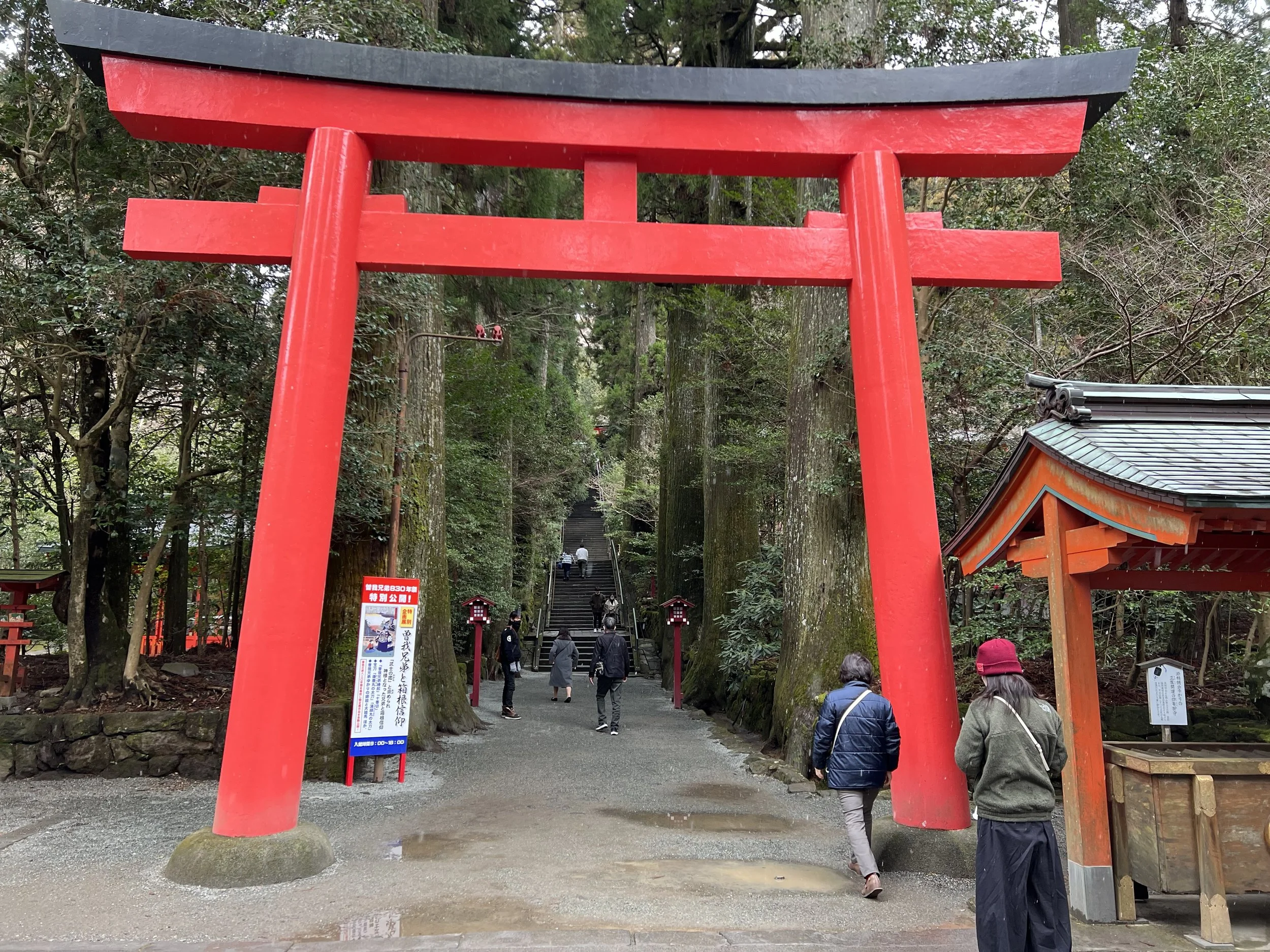
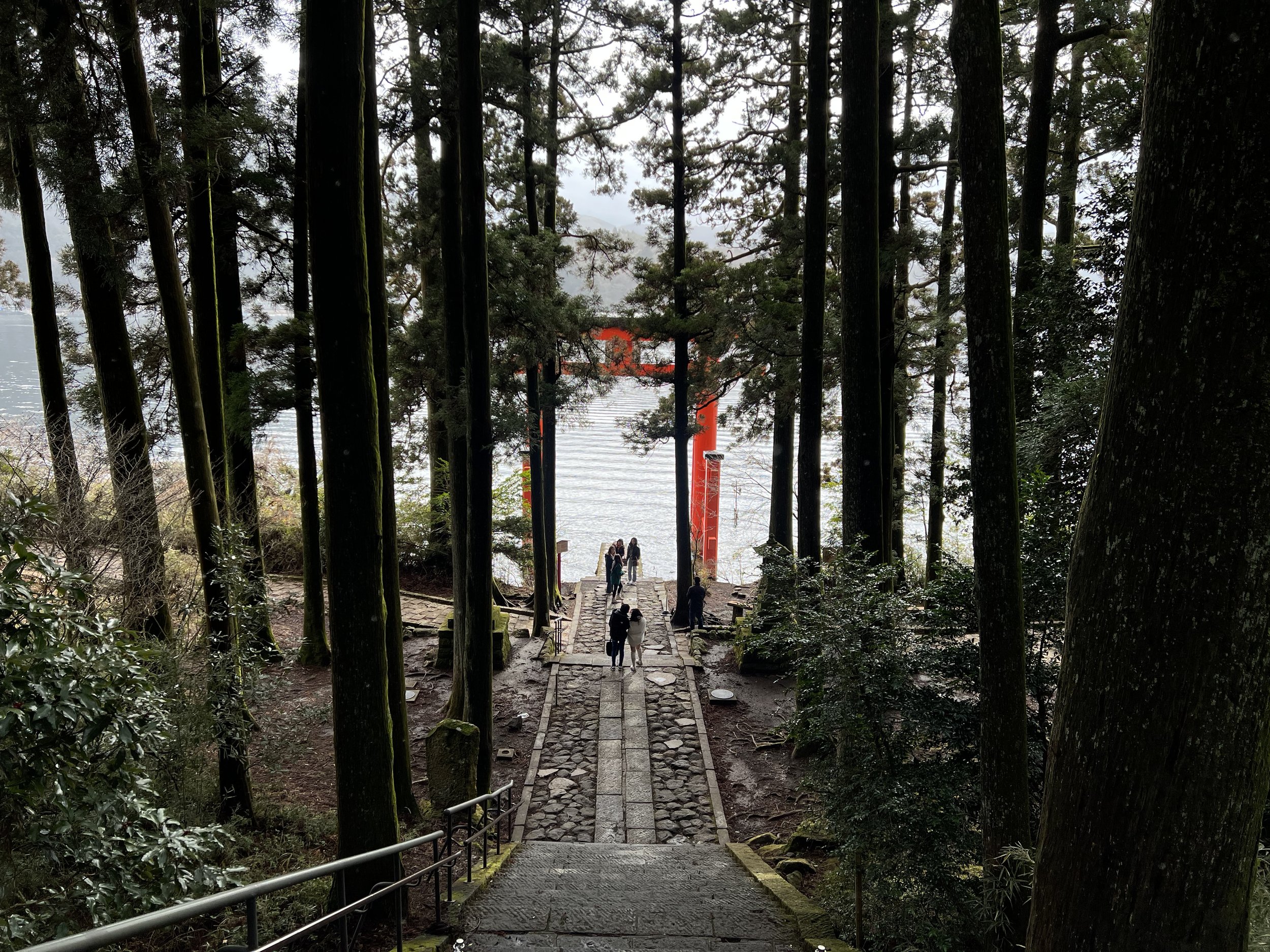
I arrived on foot after completing the Old Tokaido Cedar Avenue, following the trail down toward the lakeside. The entrance to the shrine is marked by a large vermillion torii gate, and stepping through it felt like crossing into a different space. The towering cedar trees closed in around the path, and the atmosphere shifted to quieter, cooler, and more grounded.
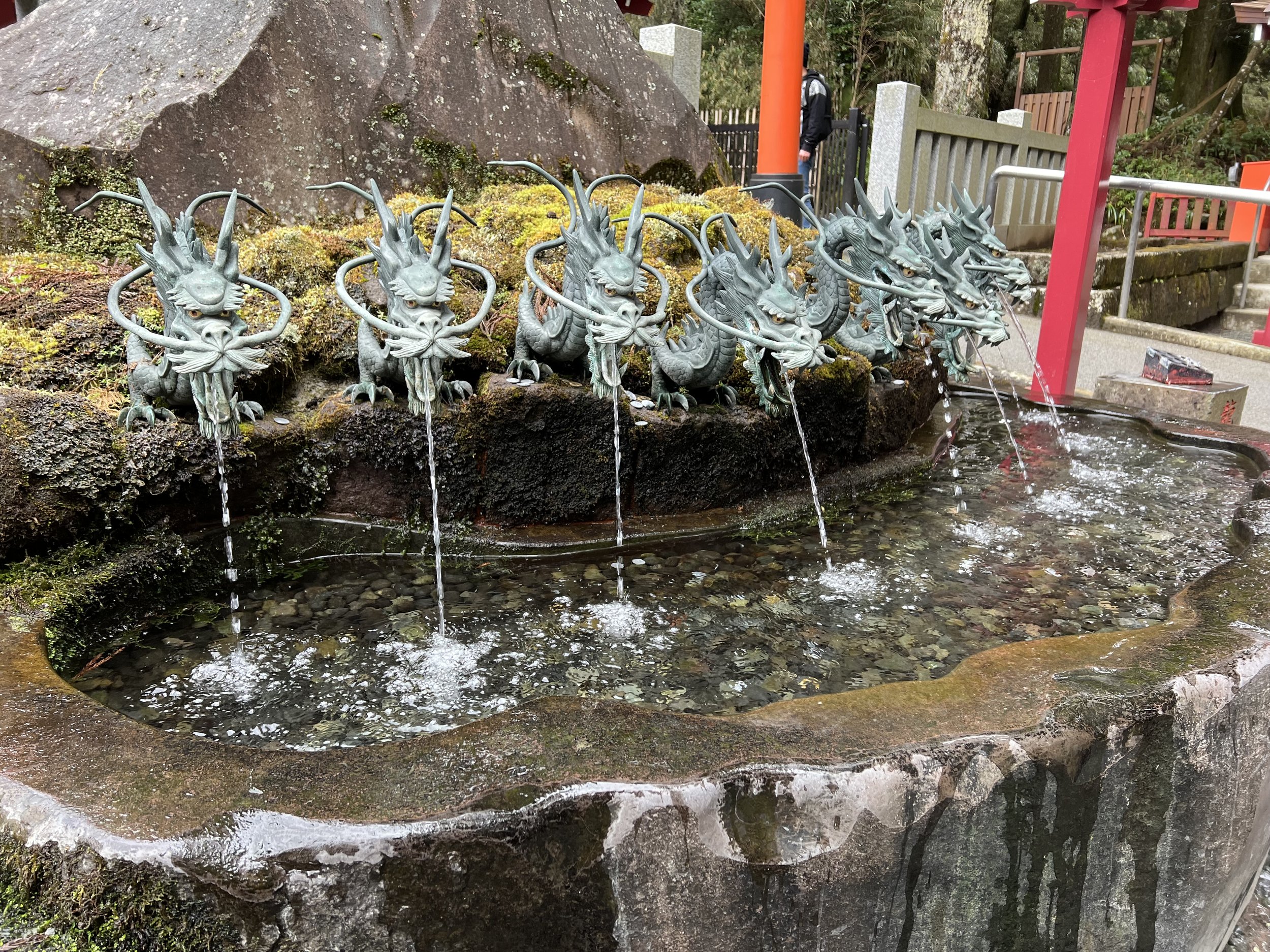
One story I came across during the visit stayed with me the entire time. The monk Mangan, who established the shrine, is said to have subdued a nine-headed dragon that once lived in Lake Ashi. According to the legend, he chained it to the lakebed, transforming it from a destructive force into a protective guardian of the area. It’s a vivid image, and it made more sense when I reached the purification area near the shrine—the basin was decorated with detailed dragon carvings. It’s the kind of detail that’s easy to overlook, but knowing the story behind it changes how you see it.
The shrine grounds themselves are relatively compact, and it doesn’t take long to walk through them. Still, the atmosphere encourages you to slow down. The combination of towering cedar trees, moss-covered paths, and the subtle sounds of the forest makes it feel like a place meant for lingering rather than rushing through.
There’s also a smaller shrine located at the summit of Mount Komagatake, considered the original sacred site where Mangan first established his practice. It’s accessible via the Hakone Komagatake Ropeway, which is something I’d consider for a future visit.
After exploring the main grounds, I made my way down toward the lakeside torii gate, hoping to capture that classic view. When I got there, the staircase leading directly to the gate was blocked off for maintenance. A few people chose to step past the barriers, but it didn’t feel right to follow.
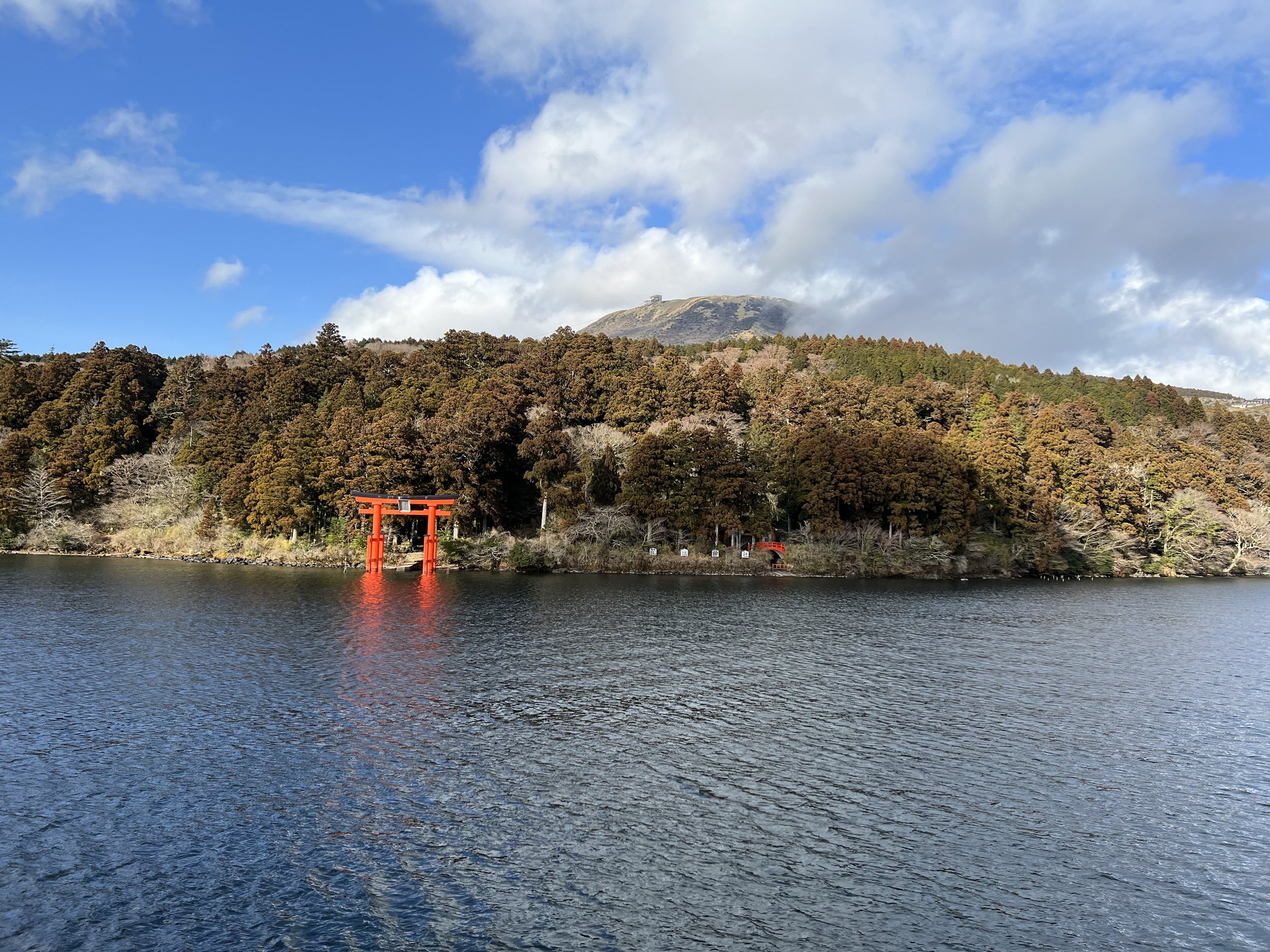
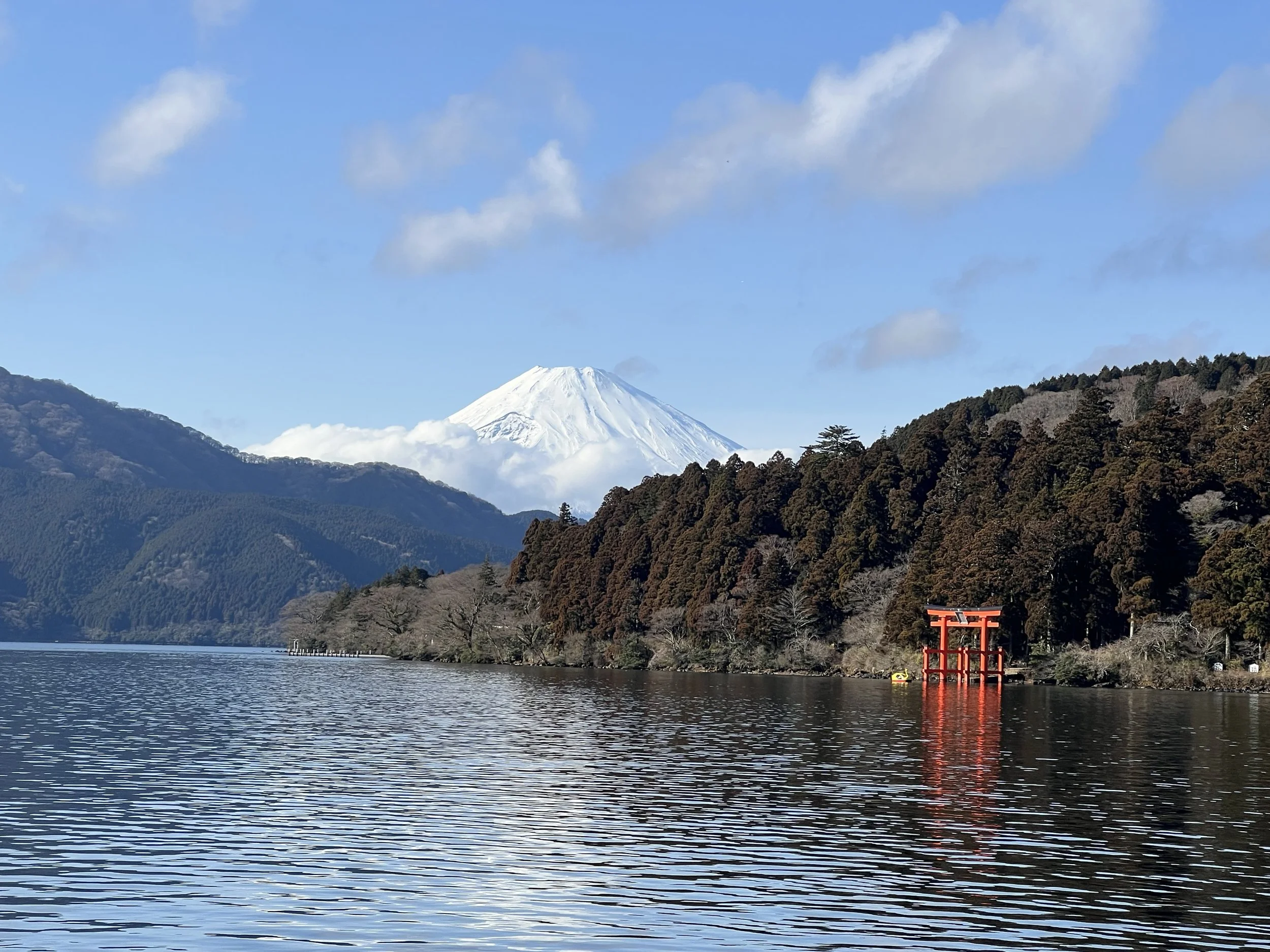
Instead, I walked back toward Motohakone Port, where the view opened up in a different way. From there, I could see the torii gate standing in the lake, framed by the surrounding landscape and on a clear day, even Mount Fuji appears in the distance. It wasn’t the exact shot I wanted in the first place, but it ended up being one of my favourite. If anything, it gave me a reason to come back.
History & Background
Hakone Shrine (箱根神社) was founded in 757 by the monk Mangan and has long been considered a place of spiritual significance. It was historically patronized by samurai and travellers along the Tokaido route, who would stop to pray for safe journeys.
The shrine is dedicated to several Shinto deities and is closely associated with the legend of the nine-headed dragon of Lake Ashi, which is said to now serve as a guardian spirit. The iconic “Peace Torii” standing in the lake was later added and has since become one of Hakone’s most recognizable landmarks.
Getting There
Hakone Shrine is located in the Motohakone area along the shores of Lake Ashi. From major access points, visitors can reach the area via bus from Odawara Station or Hakone-Yumoto Station. From Mishima Station, buses also run directly to the area.
Motohakone Port is another nearby access point, reachable by sightseeing boats across Lake Ashi. From there, it’s about a 10-minute walk to the shrine entrance. The area is well connected by Hakone’s transportation network, making it easy to combine with other nearby attractions.
Route Overview
Distance: 4.09 km (Onshi-koen-mae Bus Stop → Motohakone Port)
Total elevation gain: 79 m
Duration: 45 min (with breaks 50 min)
Difficulty: Easy
Cost Breakdown
Bus: Mishima Station → Onshi-koen-mae Bus Stop — ¥1,270