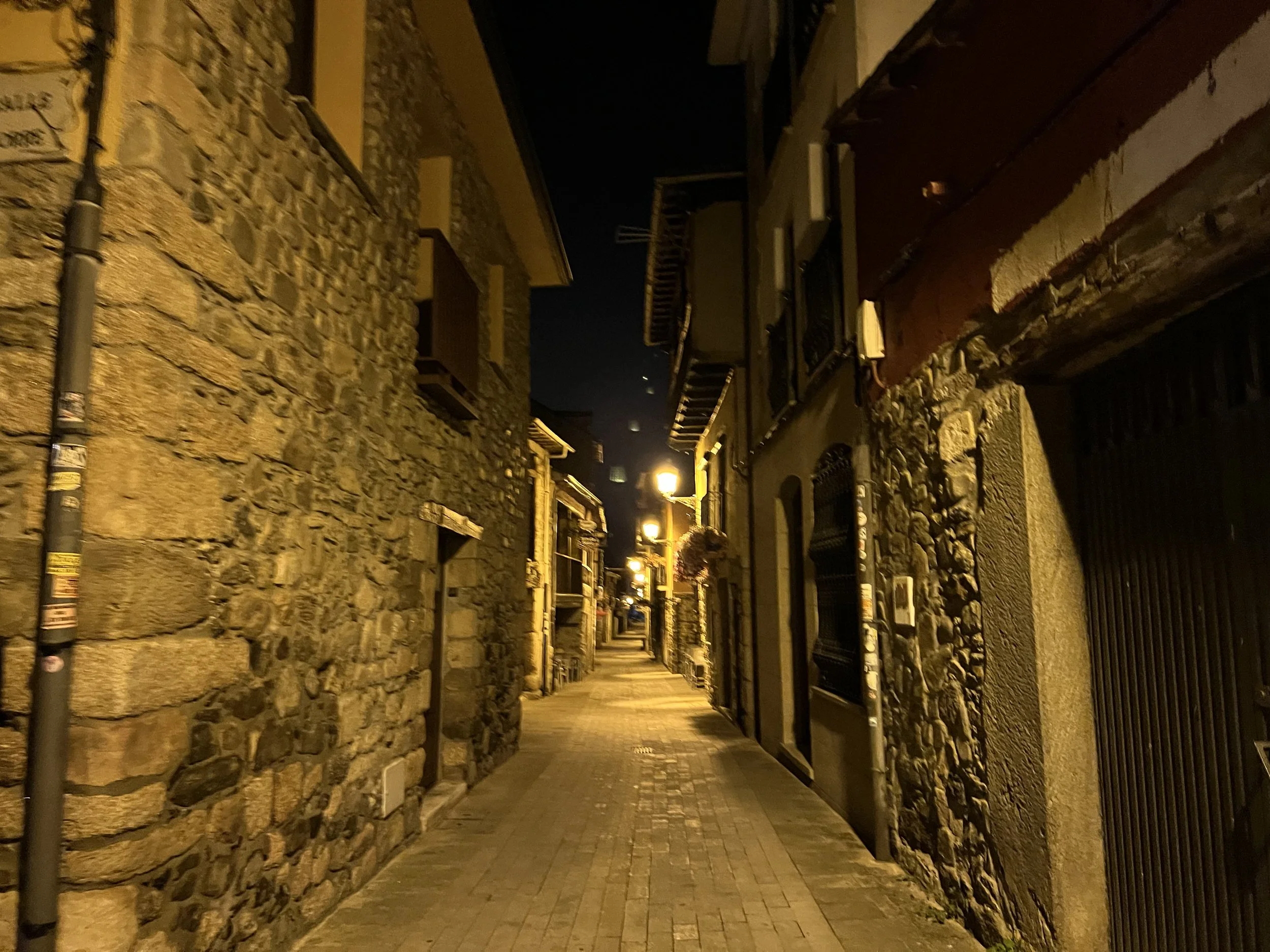
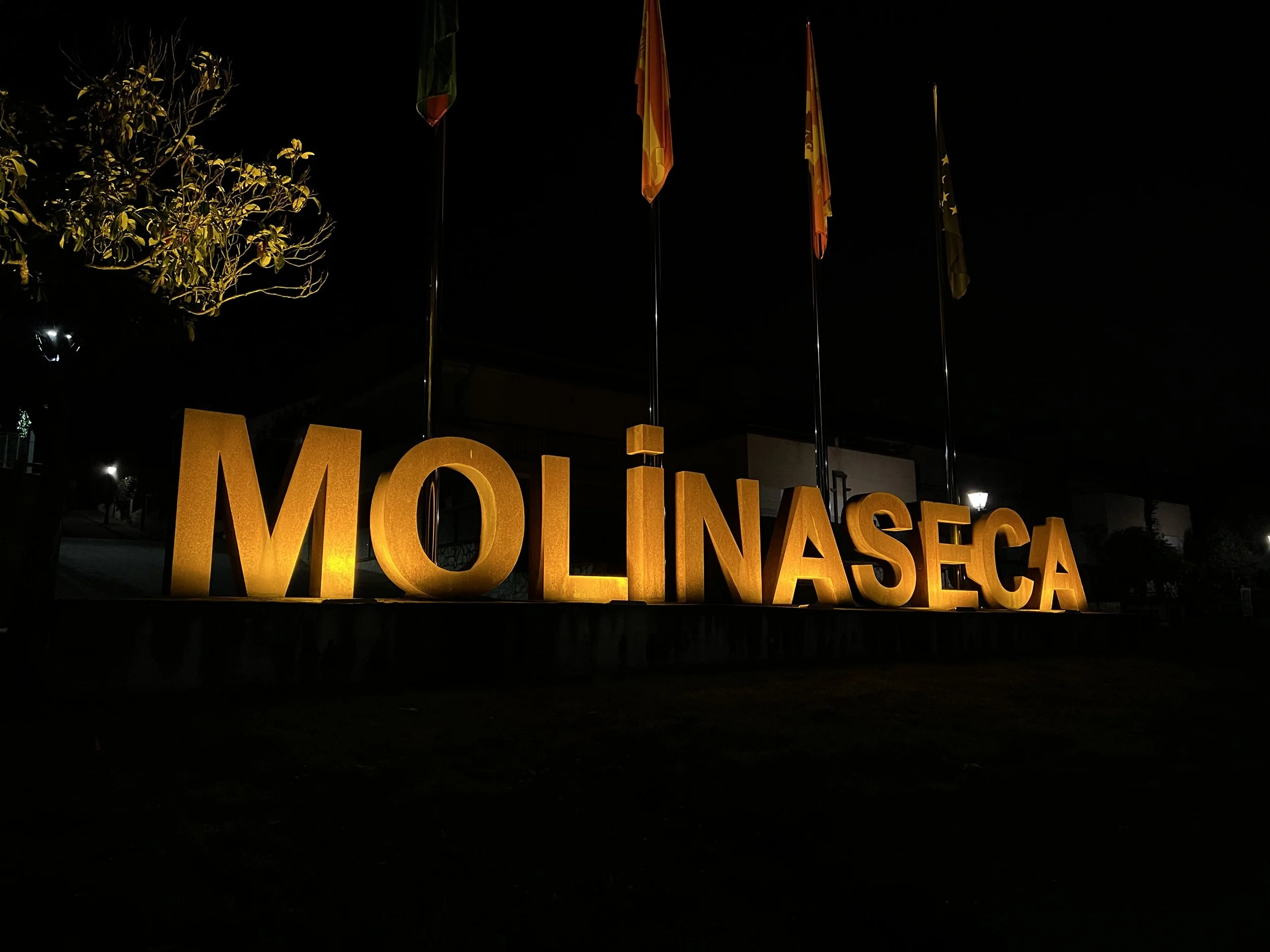
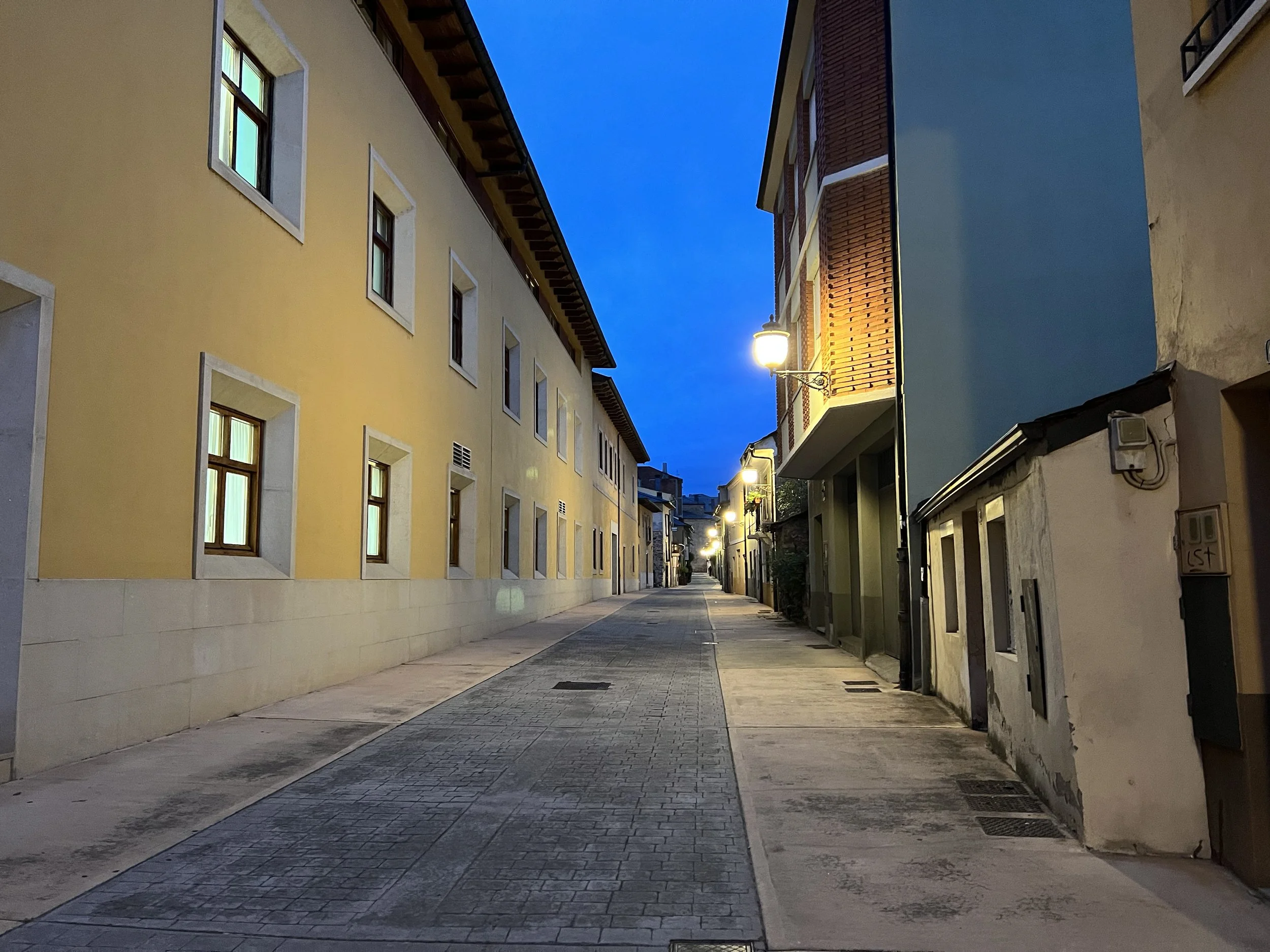
Camino Francés - Day 26: Molinaseca to Villafranca del Bierzo
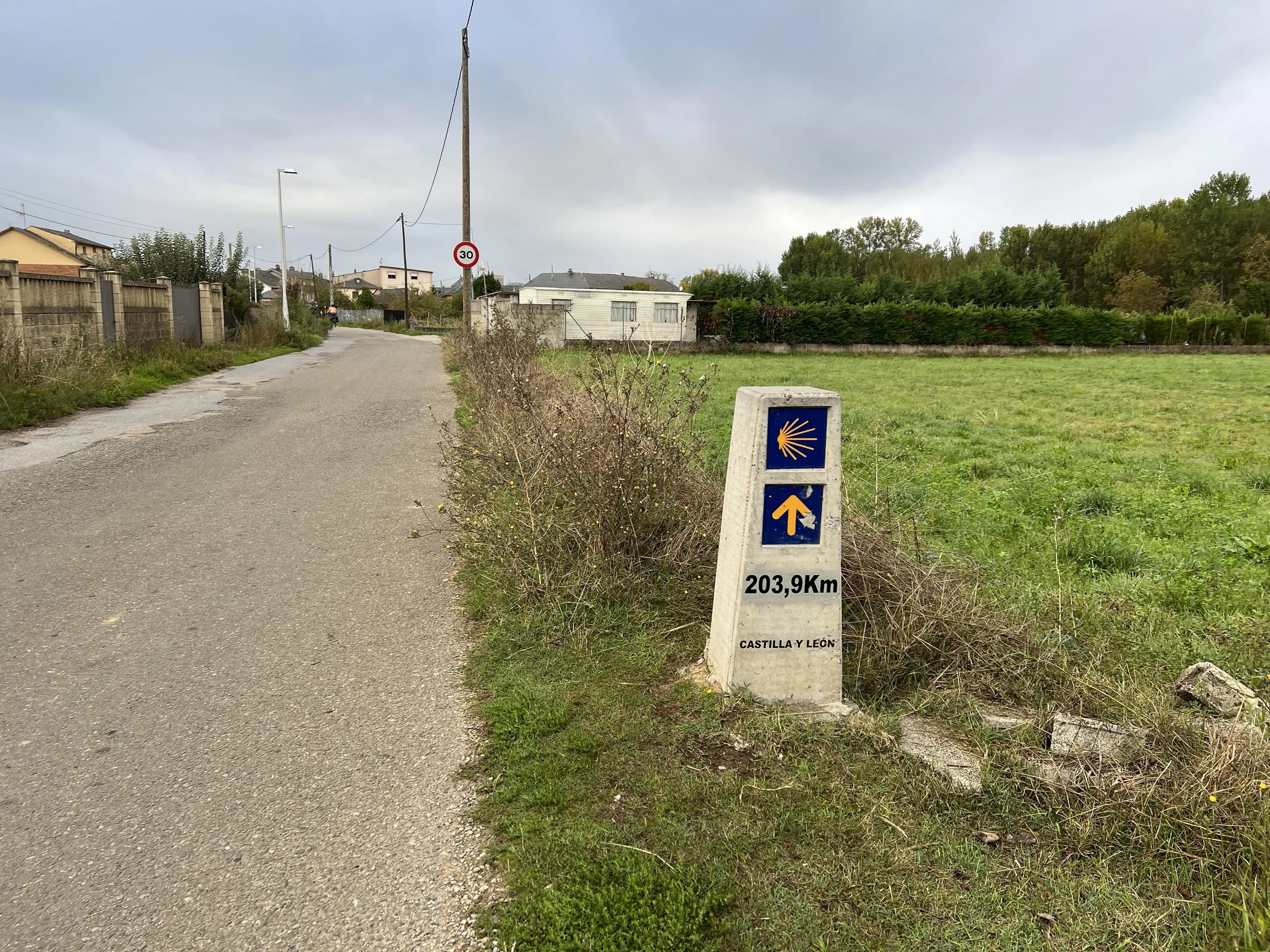
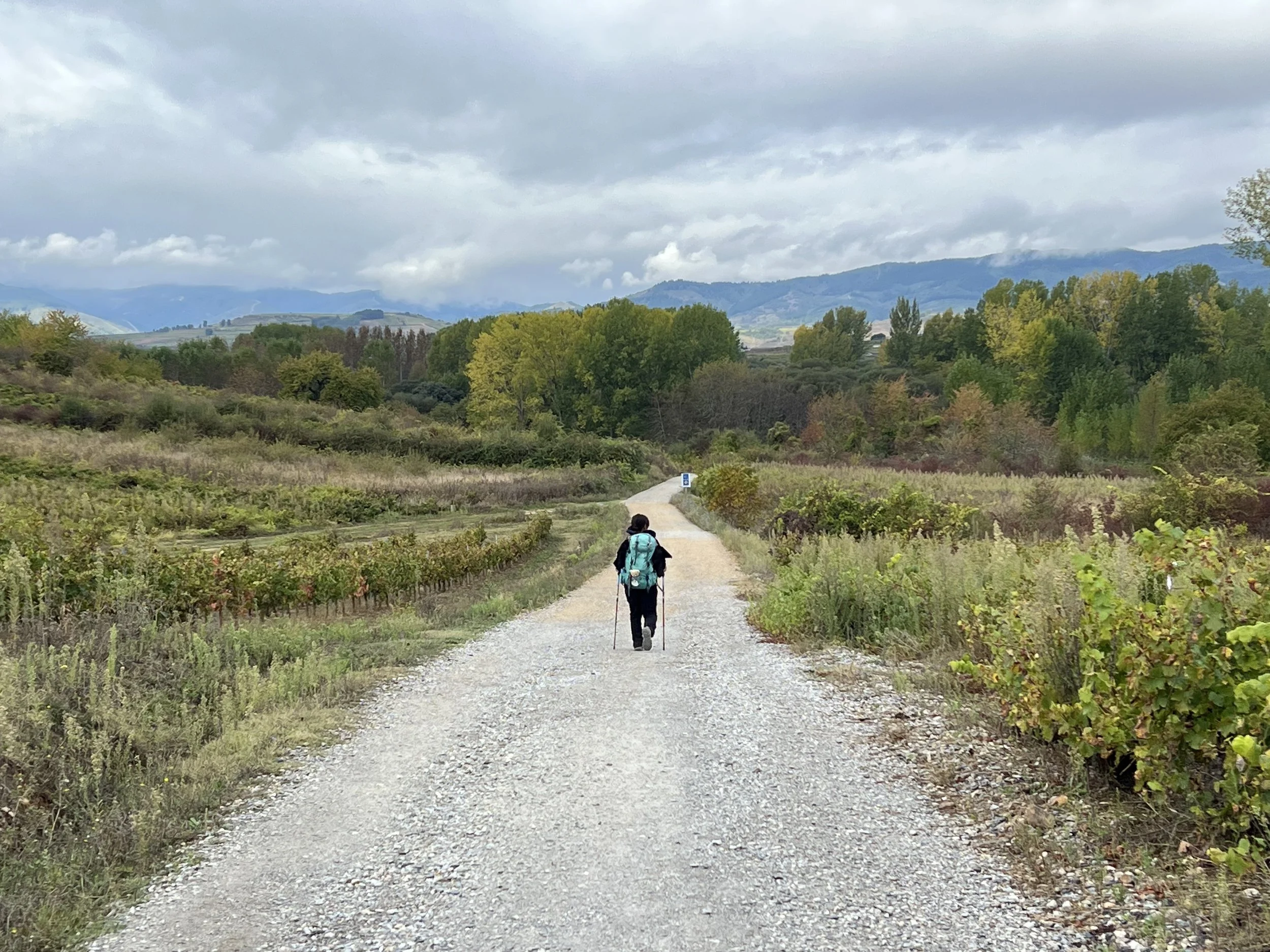
The forecast called for rain all day, so I set out early in hopes of staying ahead of it. Unfortunately, the drizzle began not long after I left Molinaseca. Despite the grey skies, the morning felt calm, and I found a steady rhythm as the Camino wound its way through the outskirts of Ponferrada.
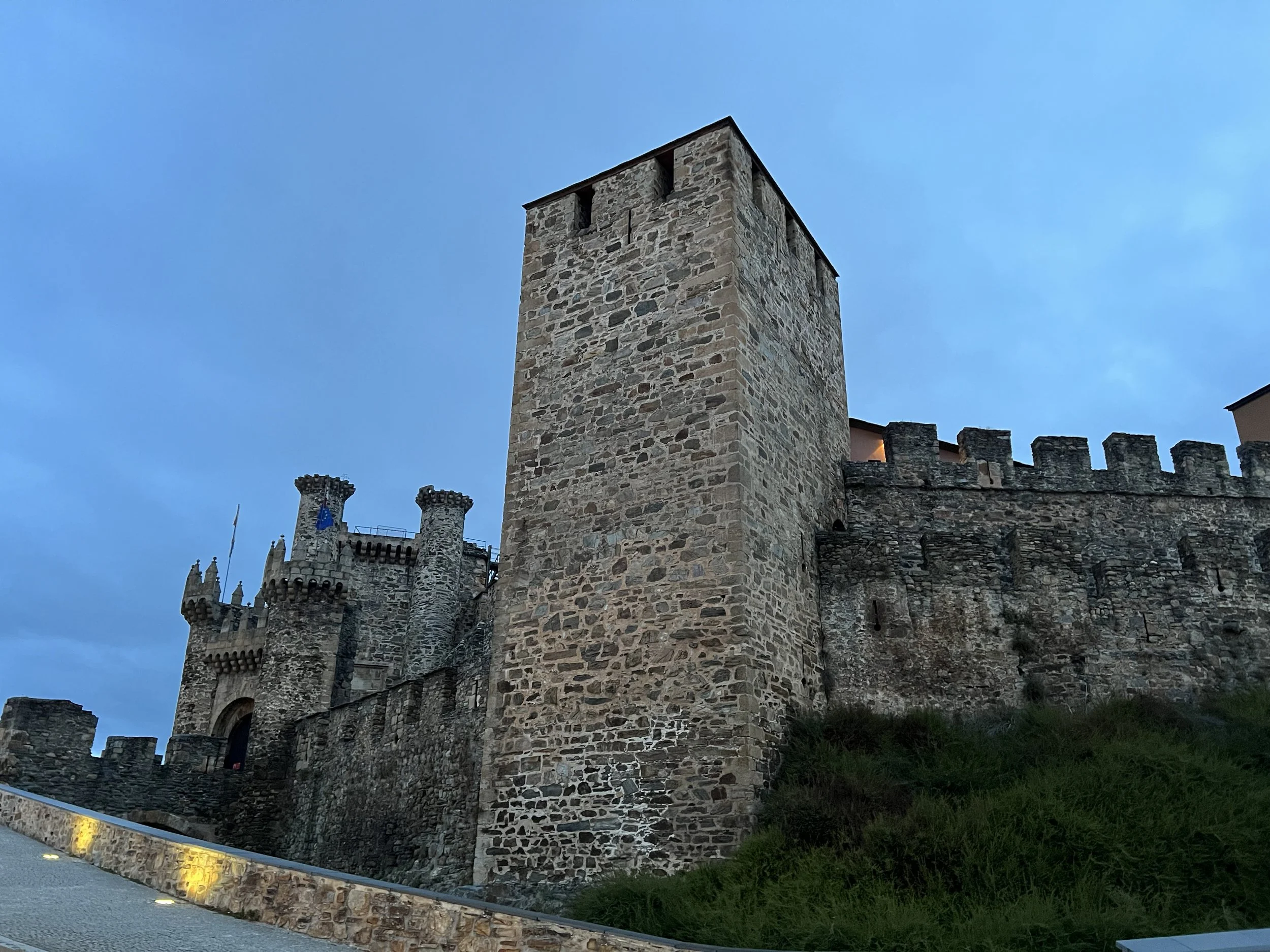
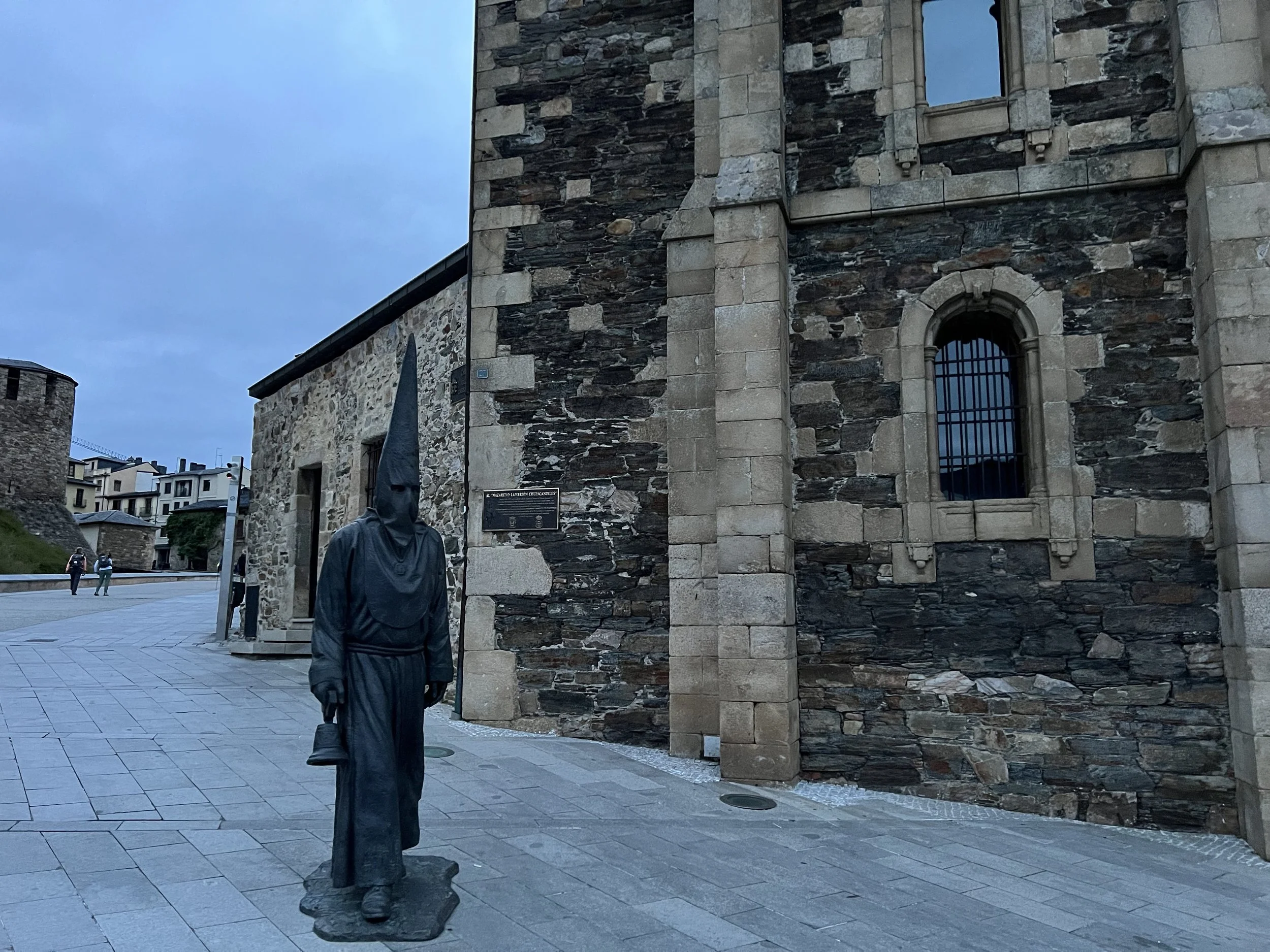
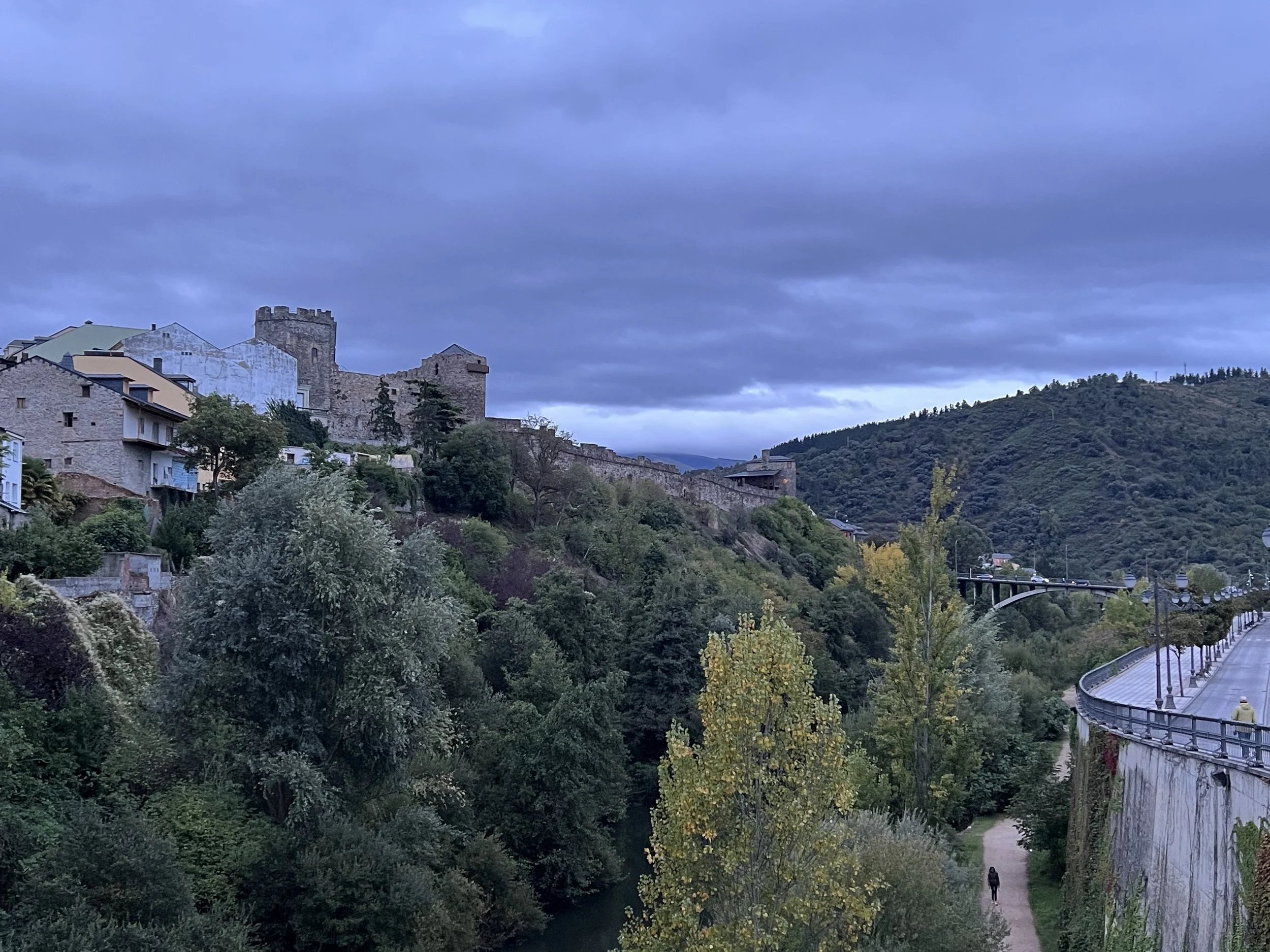
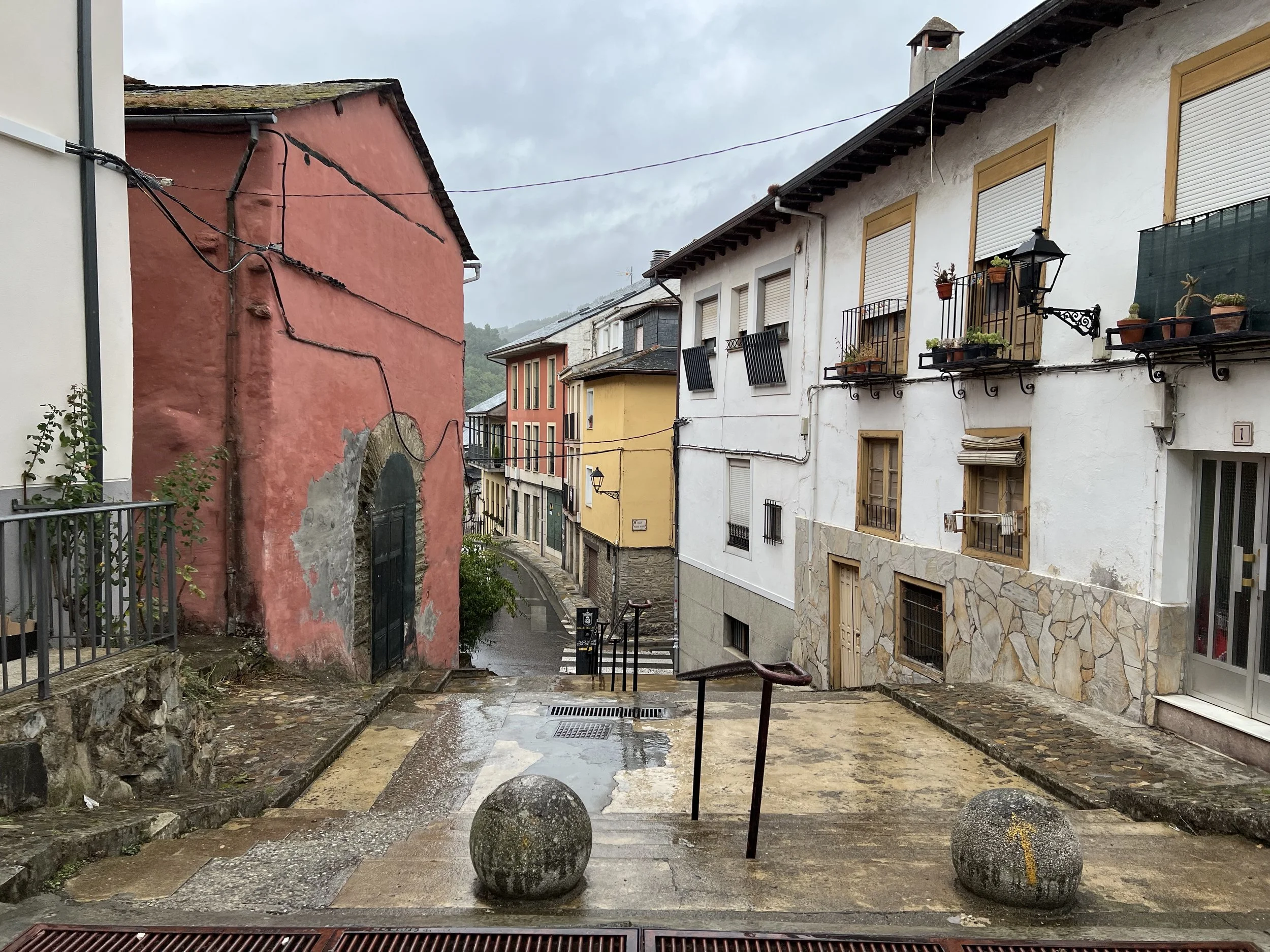
Today’s route was almost entirely on paved roads, passing through towns and suburban stretches rather than open countryside. My feet felt every hard step, a sharp contrast to the softer trails of the previous days. As I approached Ponferrada, the massive Templar Castle came into view — an impressive fortress dating back to the 12th century. I paused long enough to admire its stone towers from the outside before continuing; with so many kilometres still ahead and rain falling steadily, I decided not to linger.
After leaving the city, the Camino followed a series of smaller towns and quiet neighbourhoods. I stopped in Camponaraya for lunch, where I unexpectedly ran into a pilgrim I’d met the day before. It’s funny how paths cross again on the Camino — a reminder of the shared rhythm among those walking the same road. We walked together for a few kilometres before parting ways near Villafranca del Bierzo.
By the time I reached my albergue on the outskirts of town, I was damp but relieved that only my shoes had been soaked through. The welcome sight of a lit fireplace greeted me inside, filling the room with warmth and the comforting smell of wood smoke. After changing into dry clothes and setting my boots by the fire, I felt a deep sense of contentment — the kind that comes after a long, wet day on the road, ending somewhere safe and warm.
History & Background
This stage of the Camino Francés passes through Ponferrada, the capital of the Bierzo region, and a city steeped in medieval history. Its name, meaning “iron bridge”, dates back to the 11th century when a bridge was built to help pilgrims cross the Sil River. The city’s most striking landmark is the Templar Castle, constructed by the Knights Templar in the late 12th century to protect pilgrims travelling to Santiago. Within its walls, the castle houses exhibitions and panoramic views of the surrounding valley.
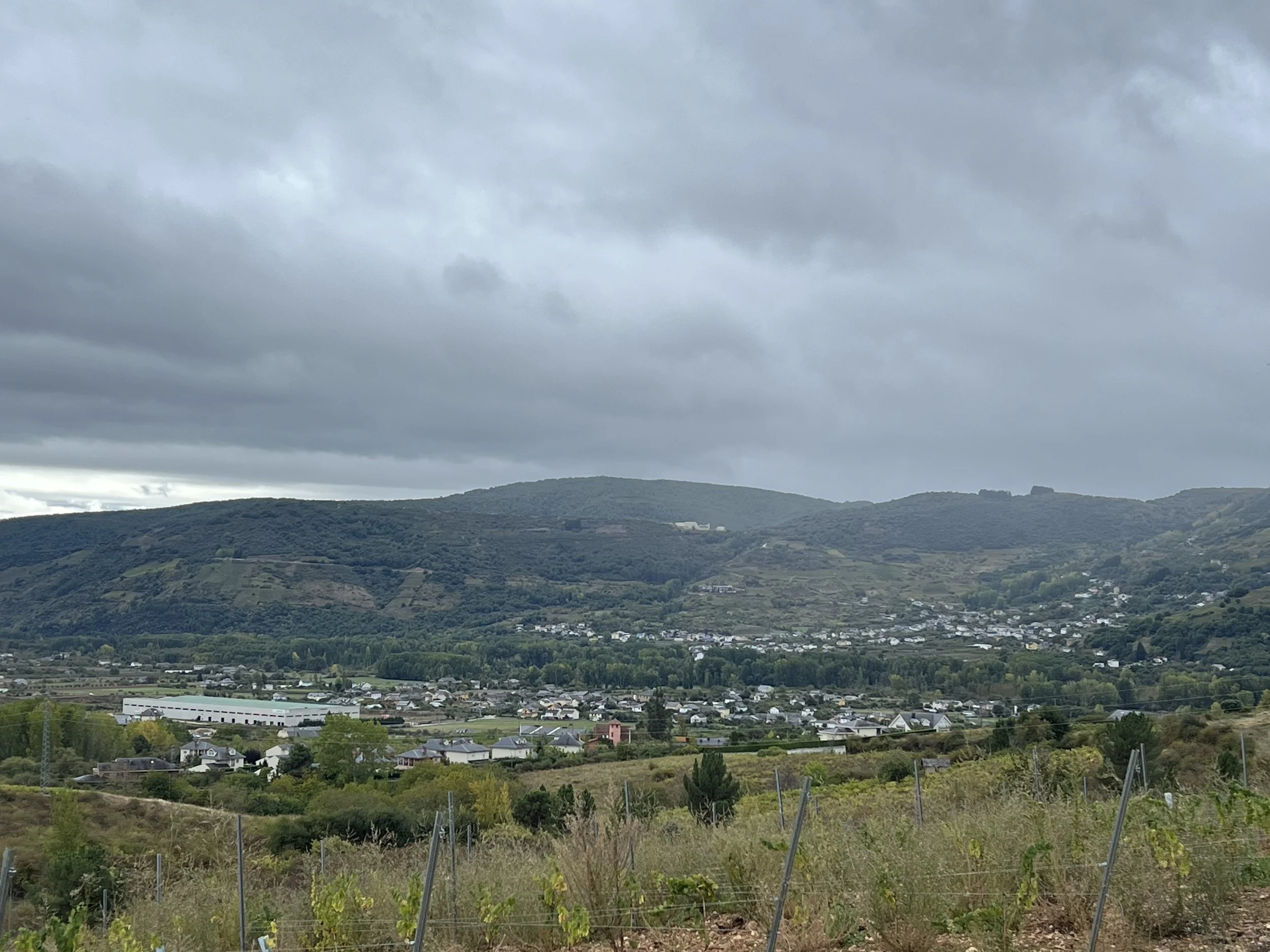
Beyond Ponferrada, the route transitions into fertile farmland and vineyards, as the Bierzo region is known for its wine production — particularly the red wines made from the Mencía grape. The path continues through small agricultural towns before arriving in Villafranca del Bierzo, often called “Little Santiago.” Historically, pilgrims who were unable to continue due to illness or injury could receive the same indulgence here as if they had reached Santiago de Compostela.
Getting There
The route from Molinaseca to Villafranca del Bierzo follows a mostly urban and paved section of the Camino Francés, linking two well-connected areas within the Bierzo valley. Pilgrims typically reach Molinaseca on foot from the mountain descent past Cruz de Ferro, and continue west toward Villafranca. For those arriving independently, Ponferrada serves as the main transport hub, with regular train and bus connections to León, Astorga, and Santiago de Compostela. From Ponferrada, local buses or taxis can take travellers to Molinaseca or Villafranca del Bierzo. The stretch is ideal for those looking to experience the cultural and historical heart of the Bierzo region without venturing far from major amenities.
Route Overview
Distance: 31.22 km (Casa Rural La Torre de Babel → Albergue Leo)
Total elevation gain: 374 m
Duration: 6 hr 20 min (with breaks 7 hr 27 min)
Difficulty: Hard
For the full day-by-day route breakdown, including distances and duration, see my complete Camino Francés route guide.
Cost Breakdown
Accommodation: Albergue Leo (Reserved via WhatsApp) — €14
Food: €24.81