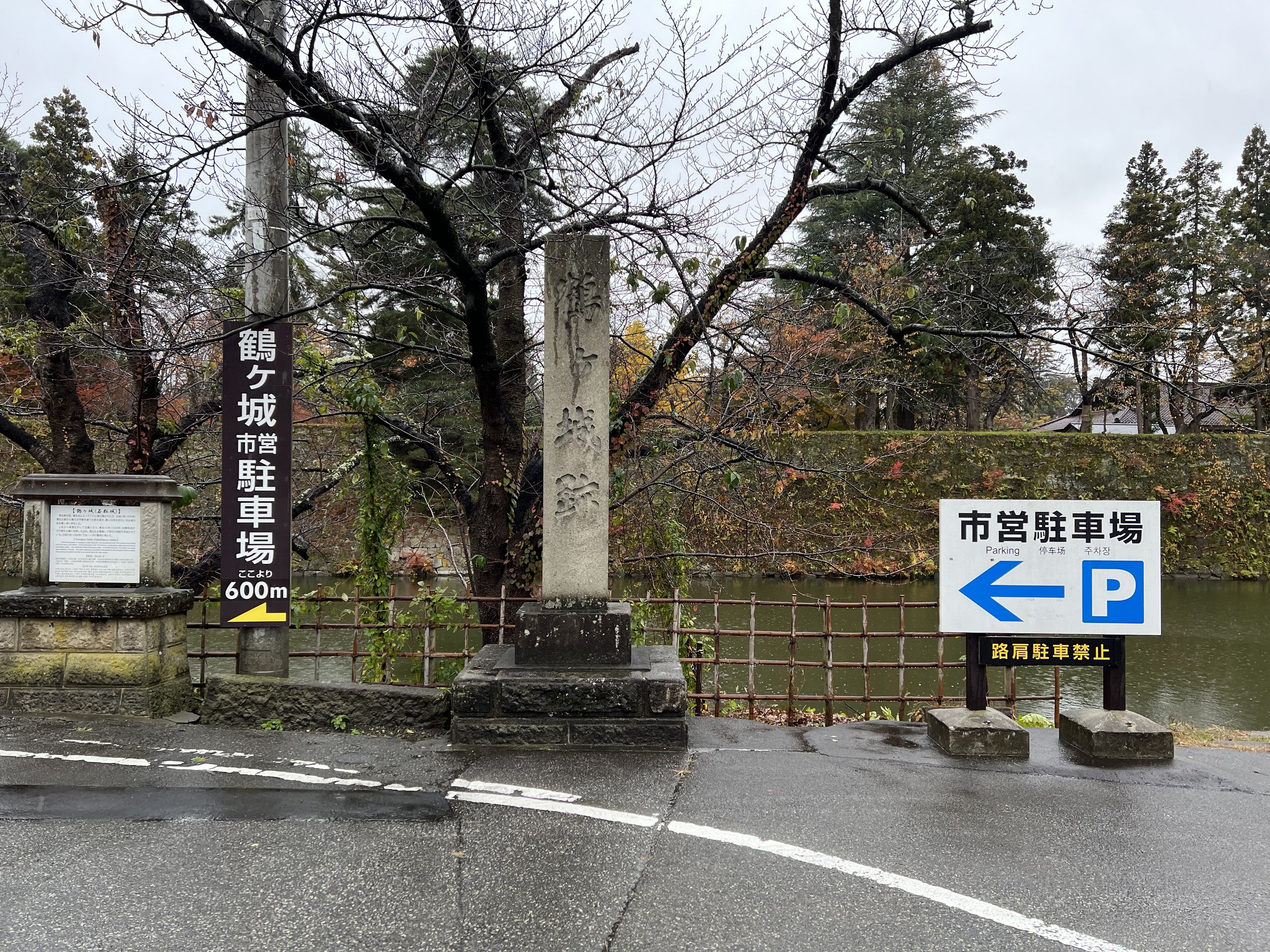
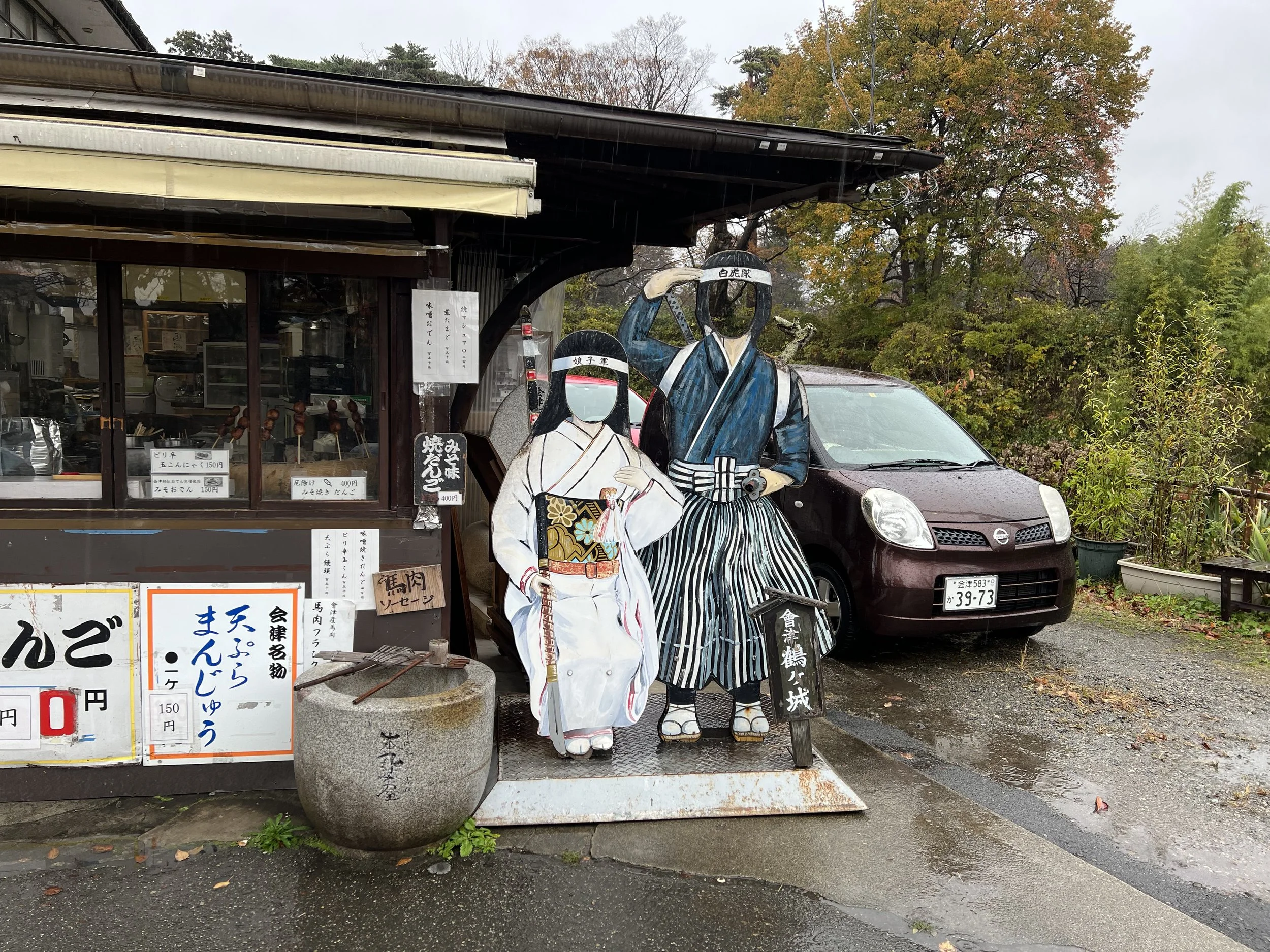
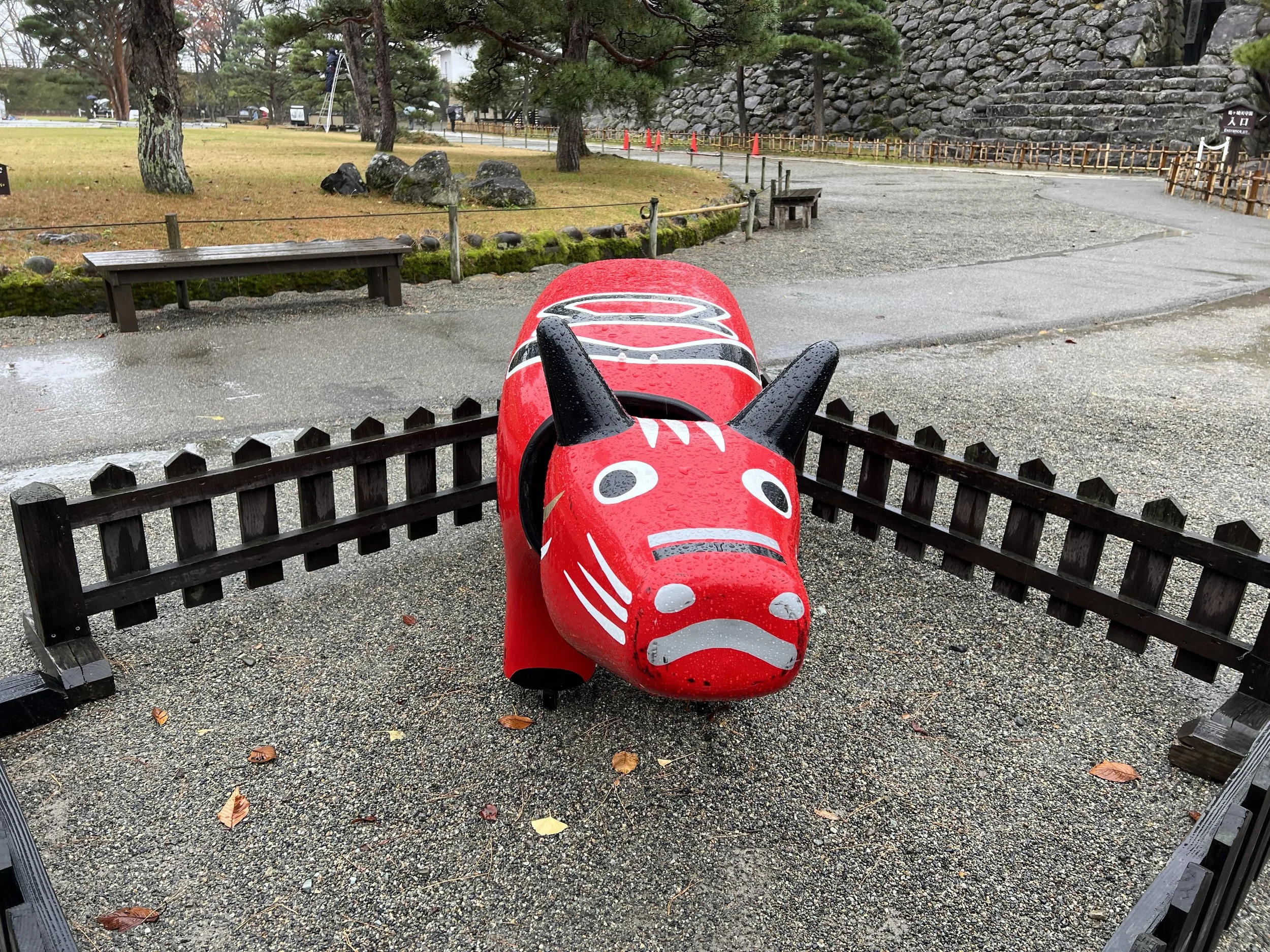
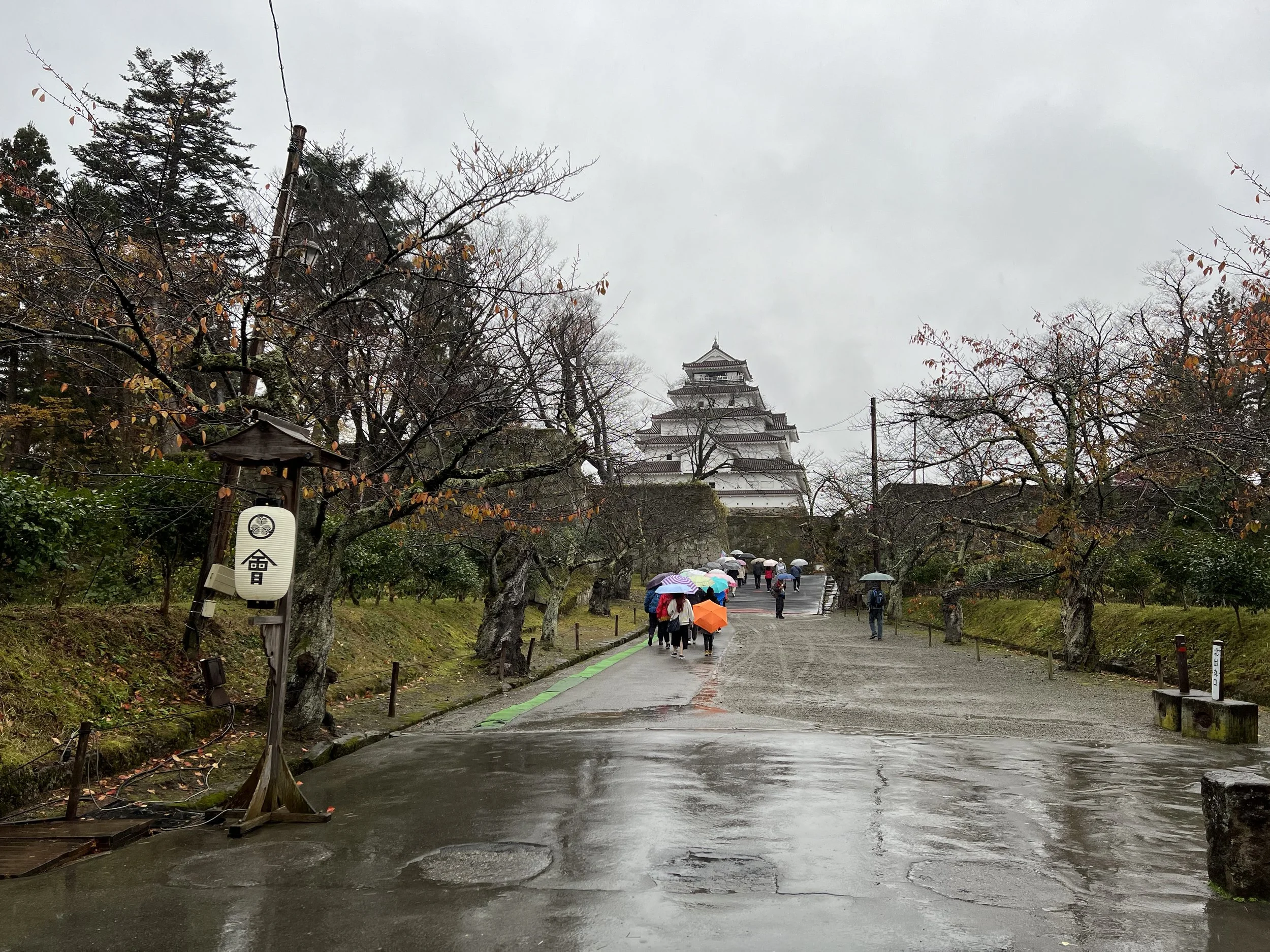
Tsuruga Castle - Fukushima, Japan
Tsuruga Castle, also known as Aizu-Wakamatsu Castle, has been rebuilt multiple times since its original construction in 1384. The castle met its greatest destruction during the Boshin War of 1868, when it fell during a rebellion against the newly established Meiji government. It was one of the final strongholds of samurai loyal to the Tokugawa shogunate, and its resistance became symbolic of the end of the samurai era.
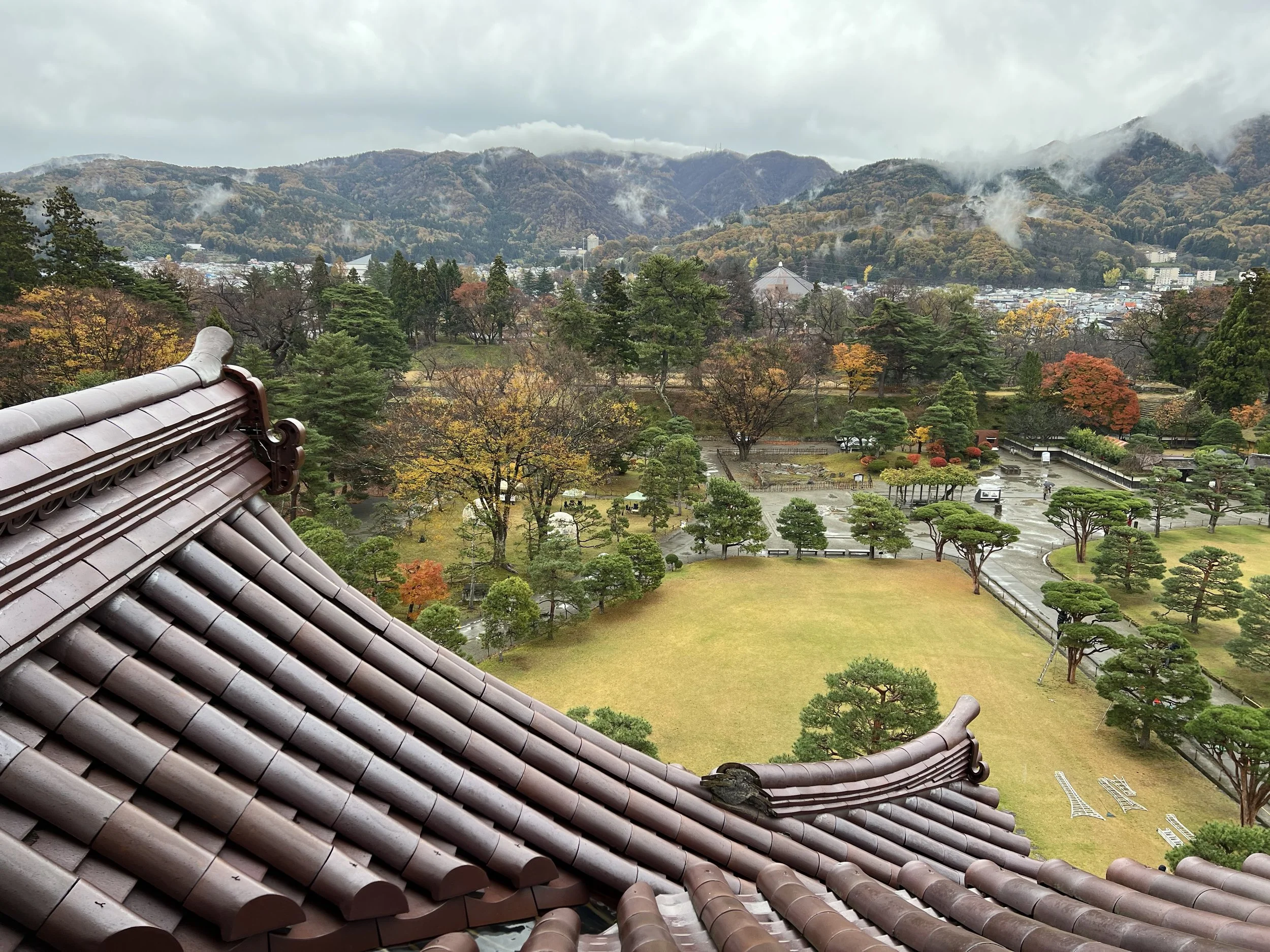
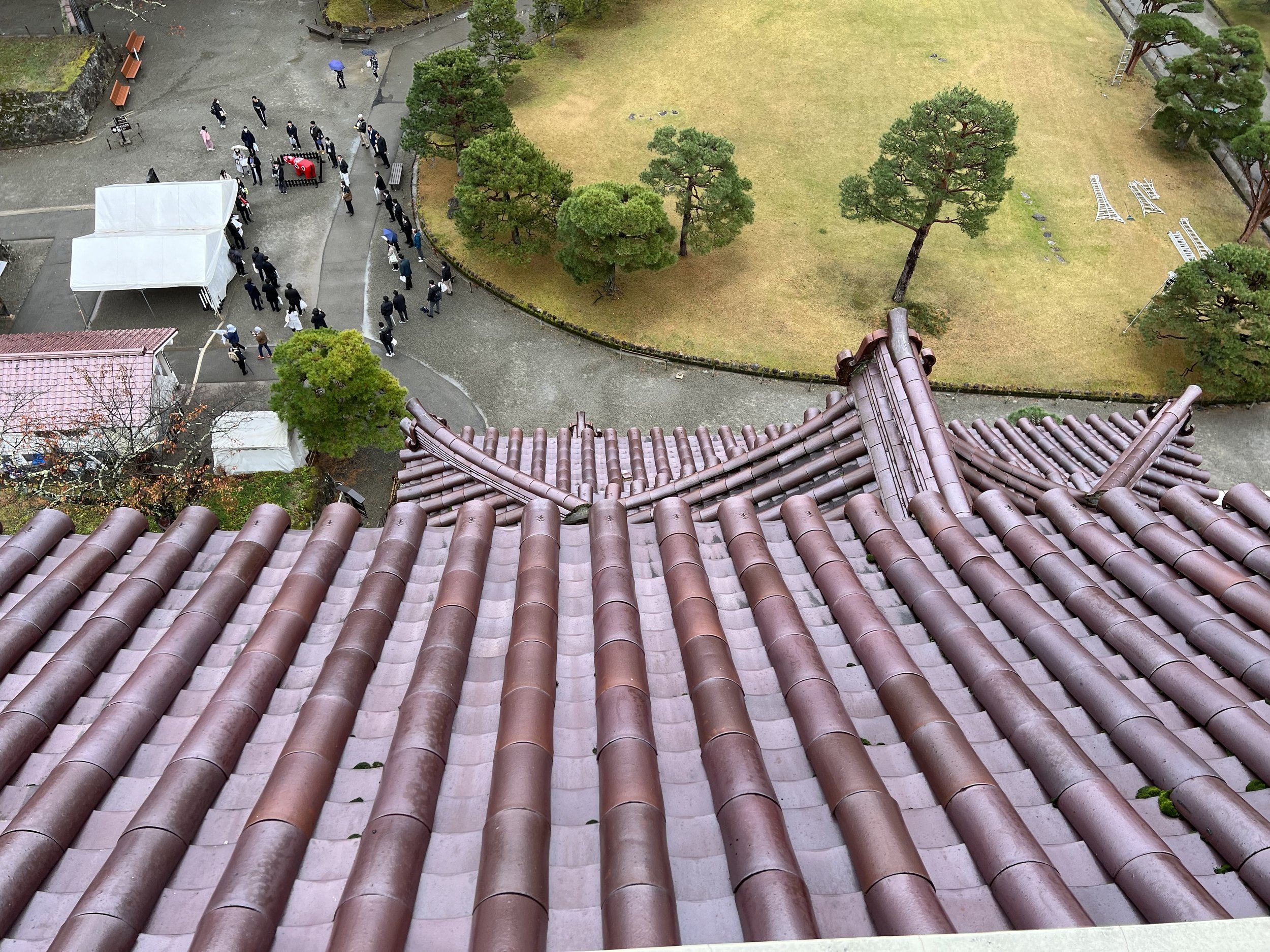
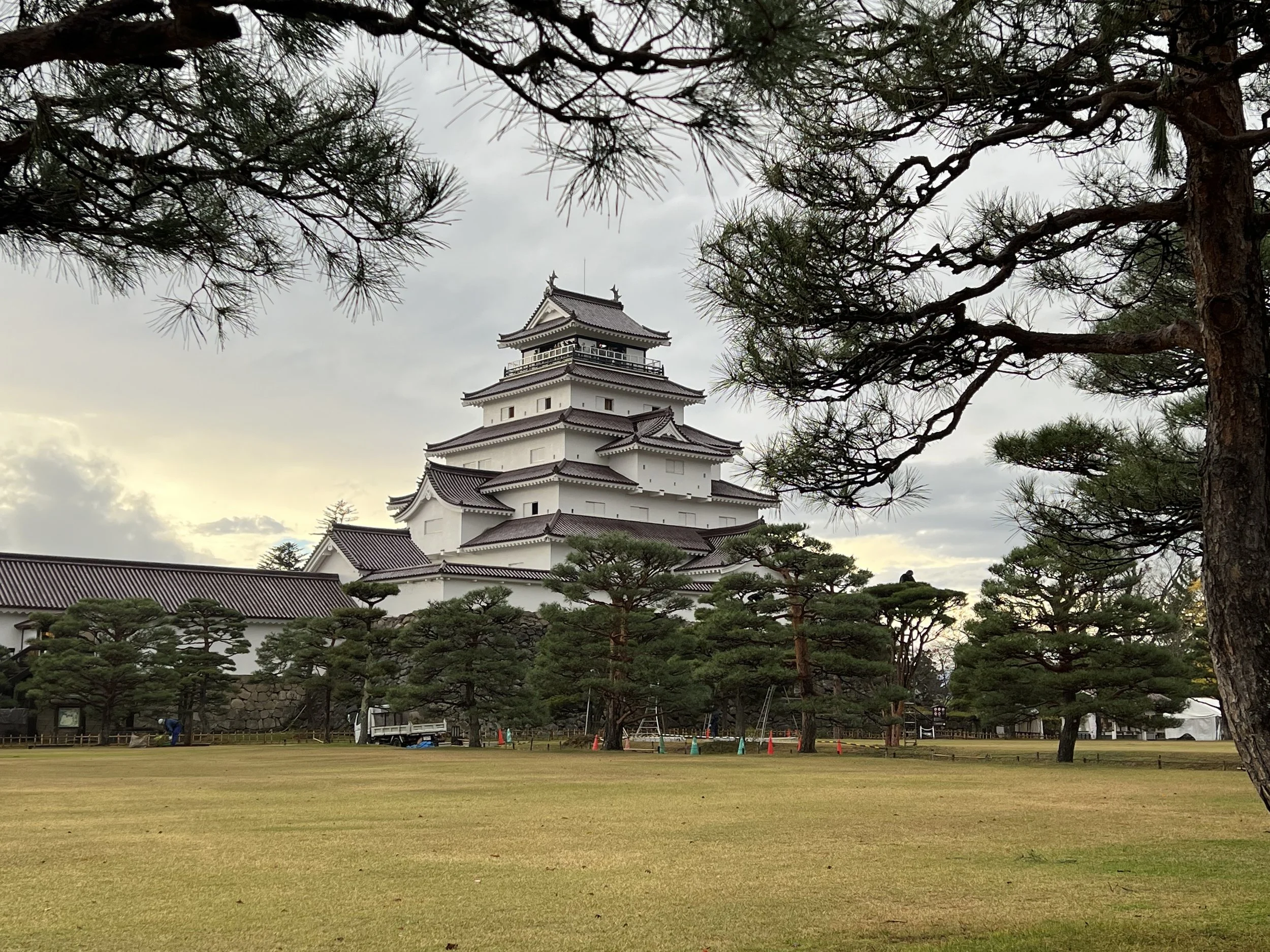
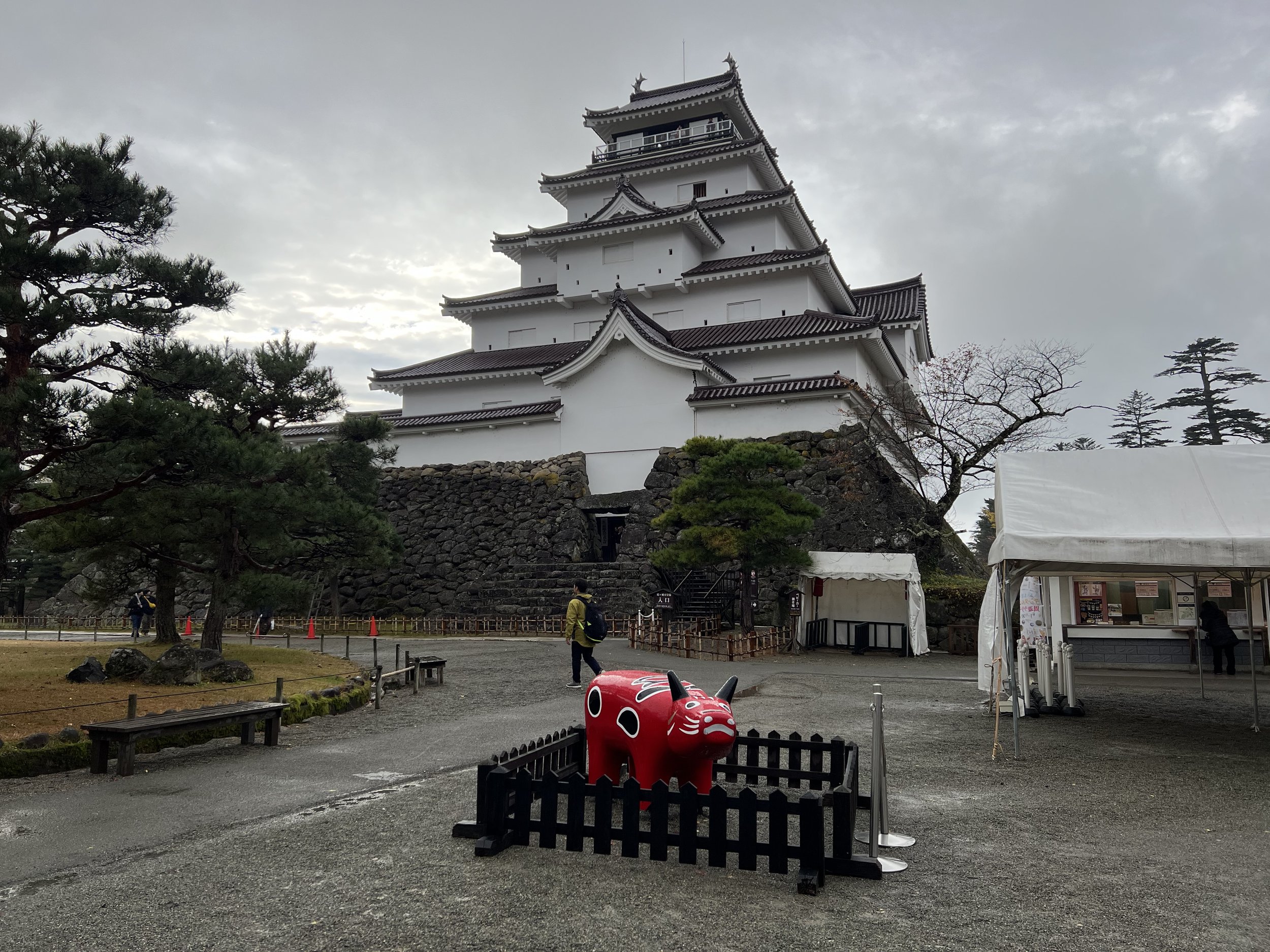
The castle was reconstructed in the 1960s and underwent a major restoration completed in 2011. During this restoration, the roof tiles were returned to their original red colour, a rare feature among Japanese castles. The contrast between the white walls and deep red tiles gives Tsuruga Castle a striking and distinctive appearance that immediately sets it apart from other reconstructed keeps across Japan.
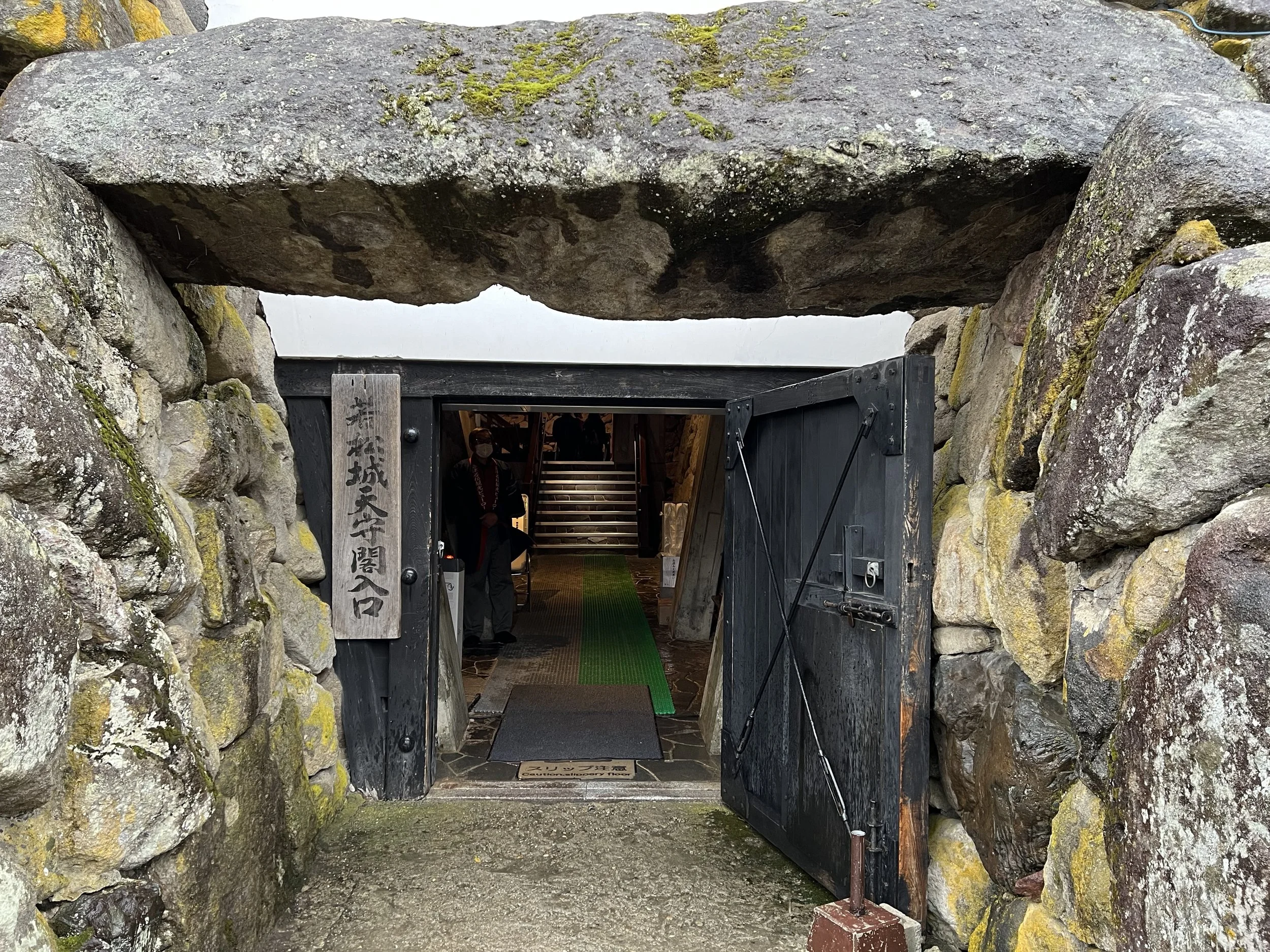
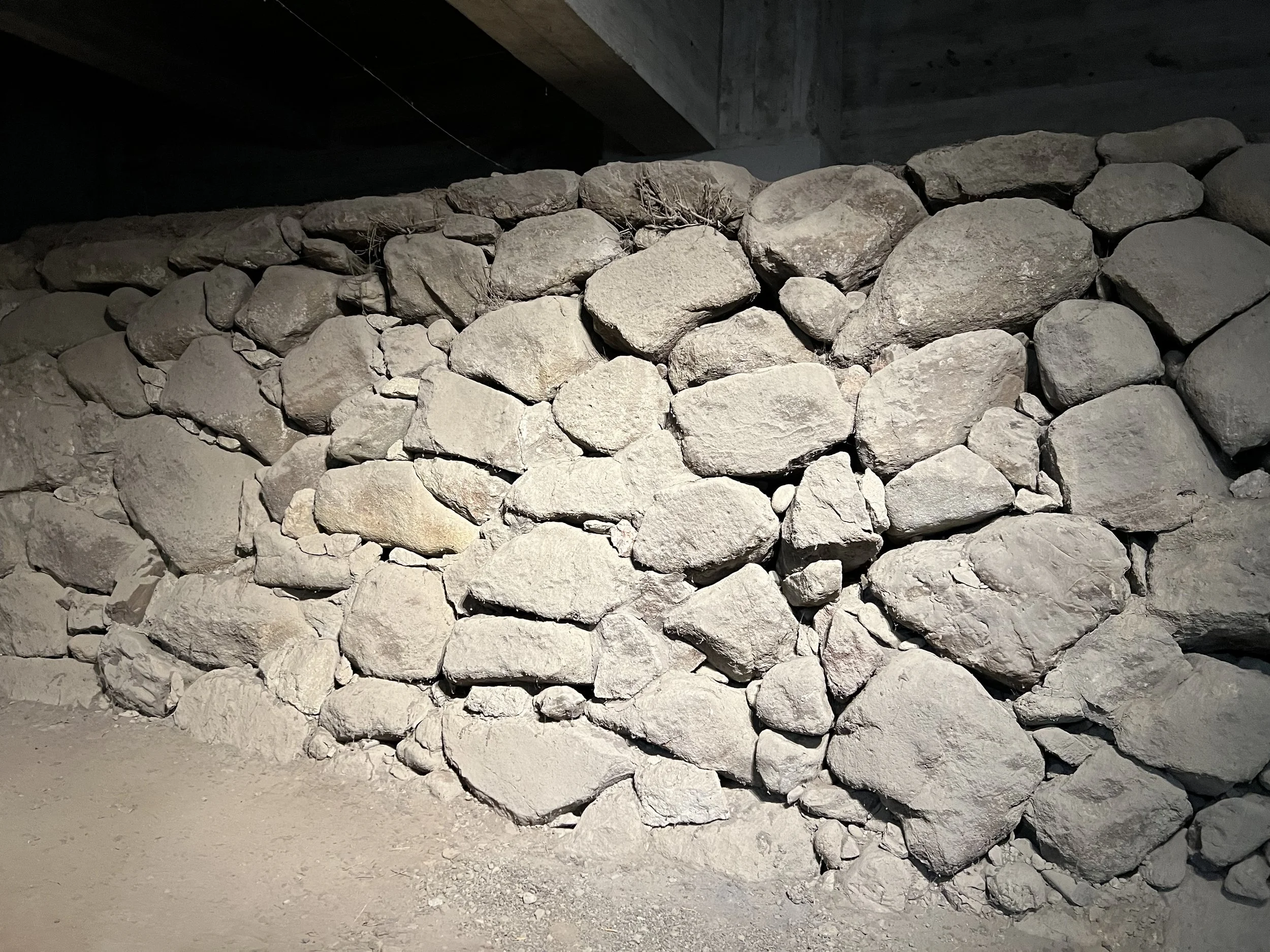
As I was staying near Aizu-Wakamatsu Station, I chose to walk to the castle despite the heavy rain. The weather kept visitor numbers low, and the grounds felt quiet and subdued, which suited the atmosphere of the site. The entrance to the castle was particularly memorable, leading through what felt like an underground passage that offered glimpses of the stone foundations and the defensive layout beneath the surface.
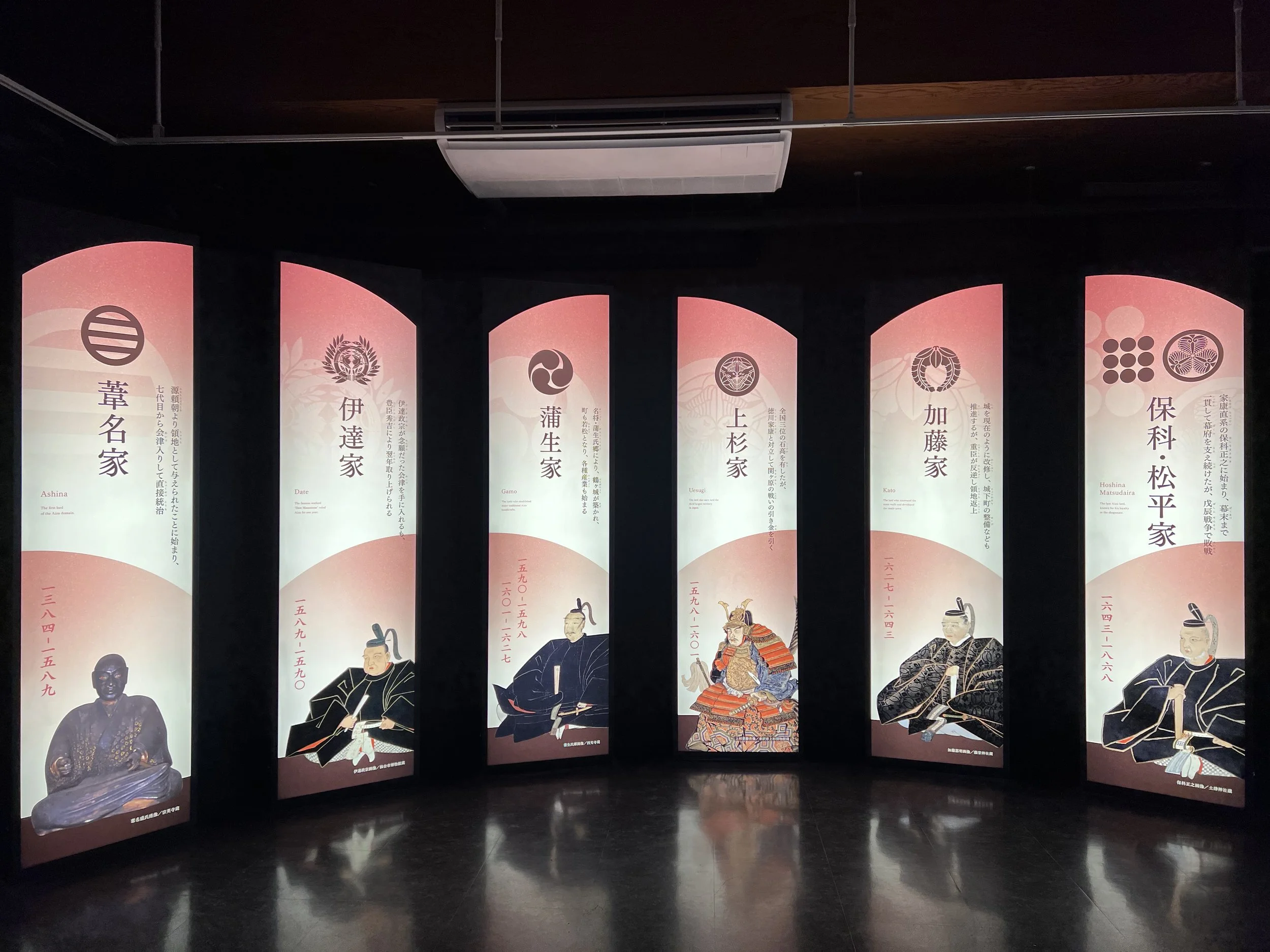
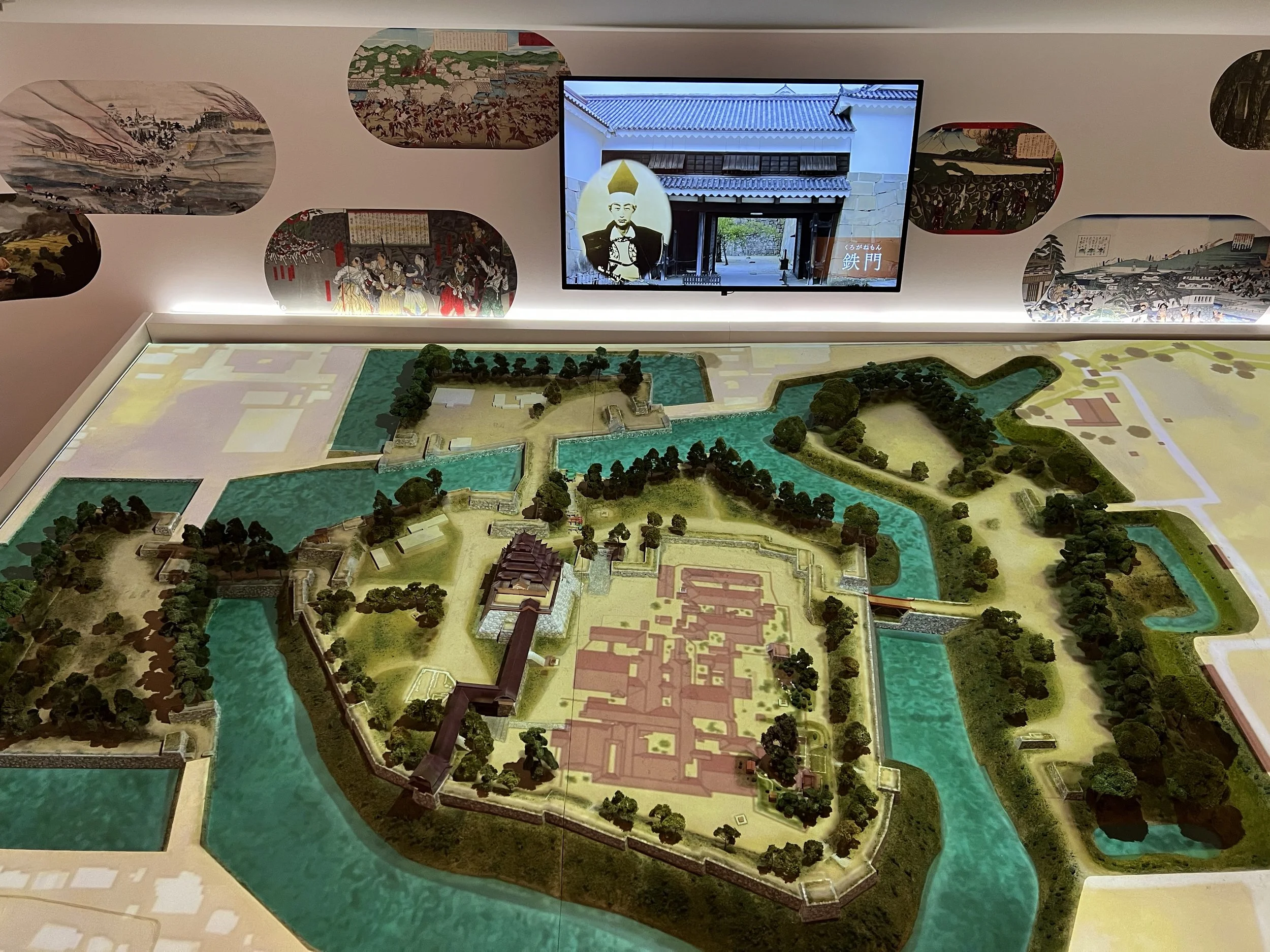
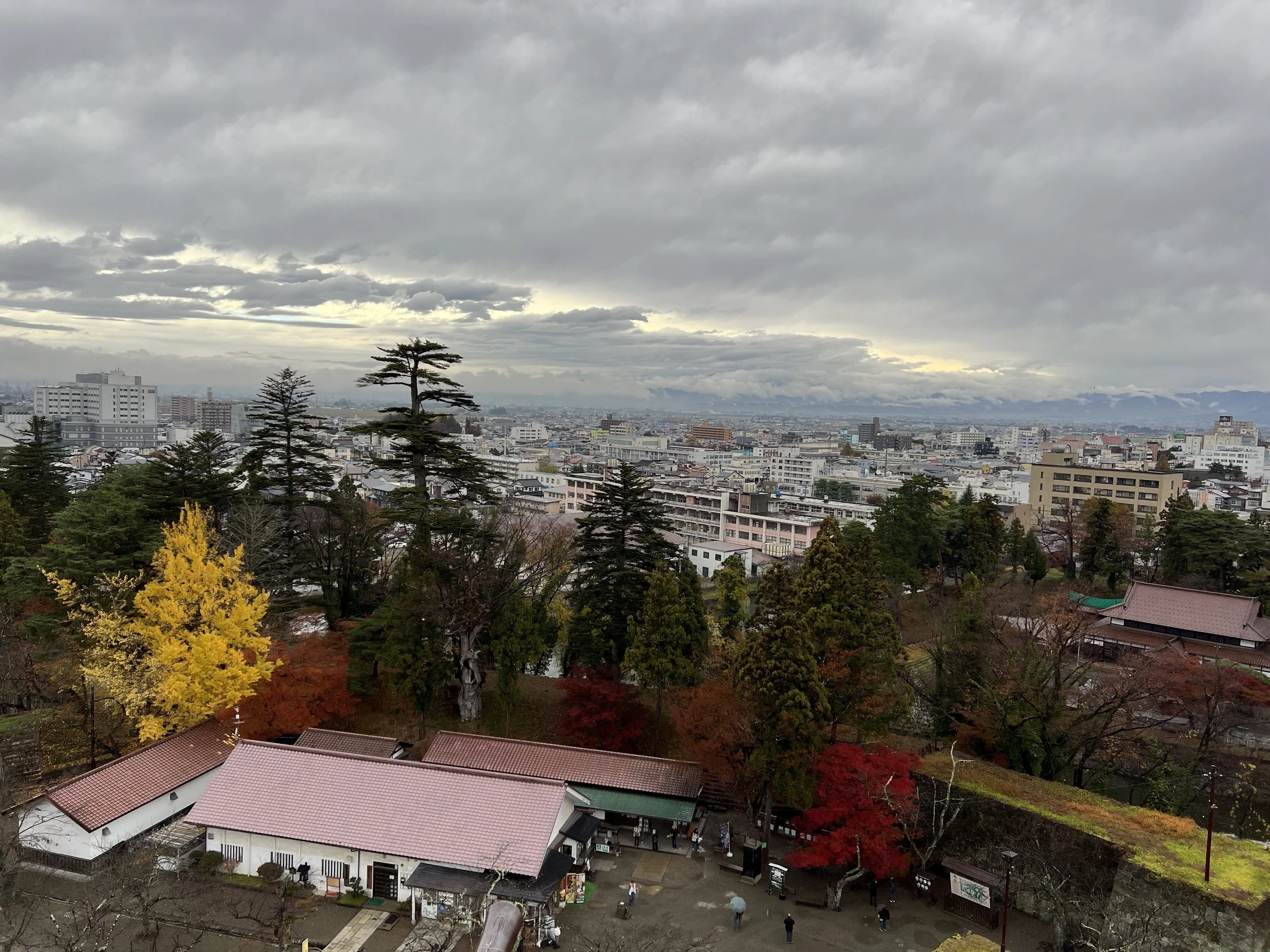
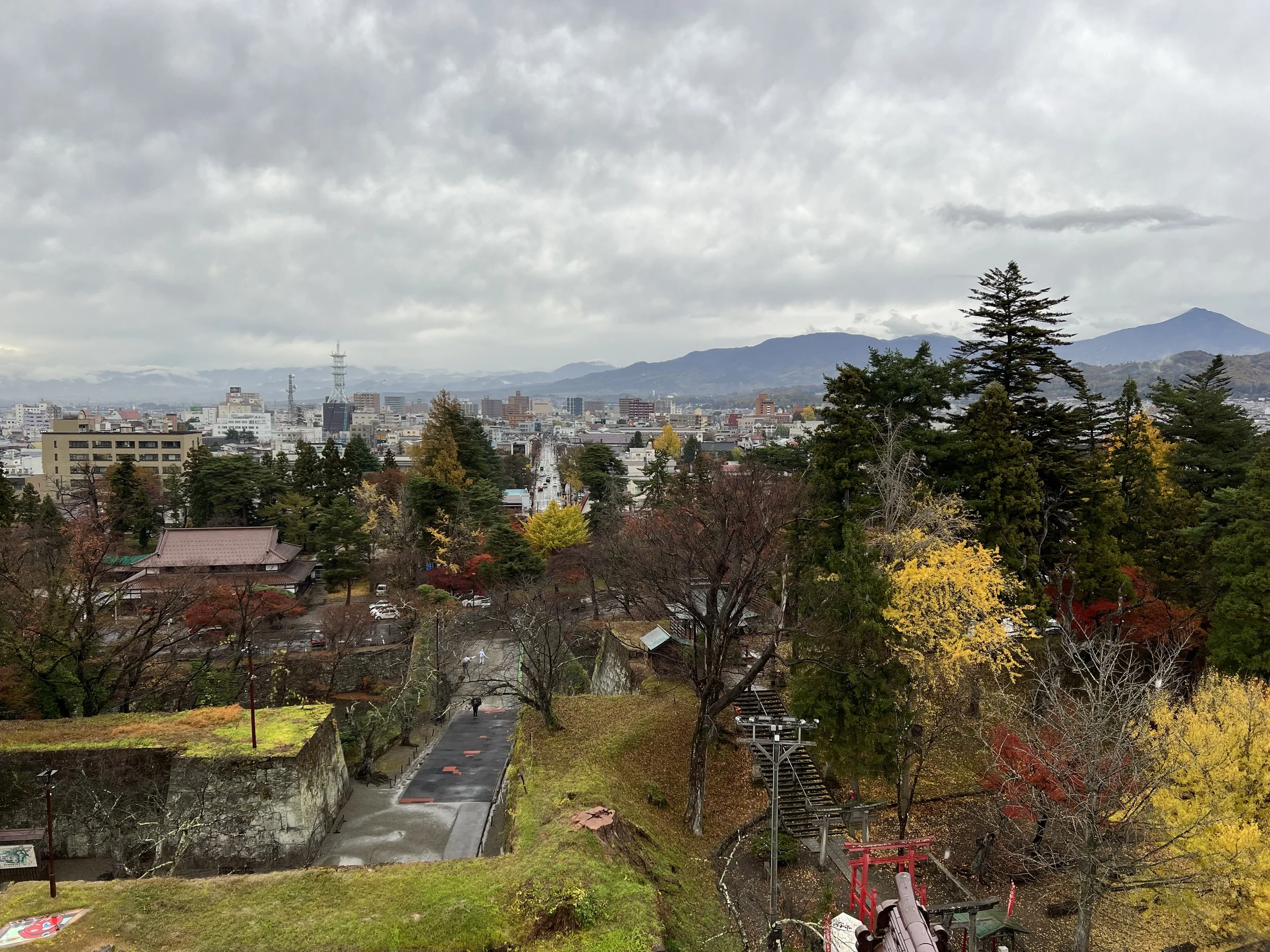
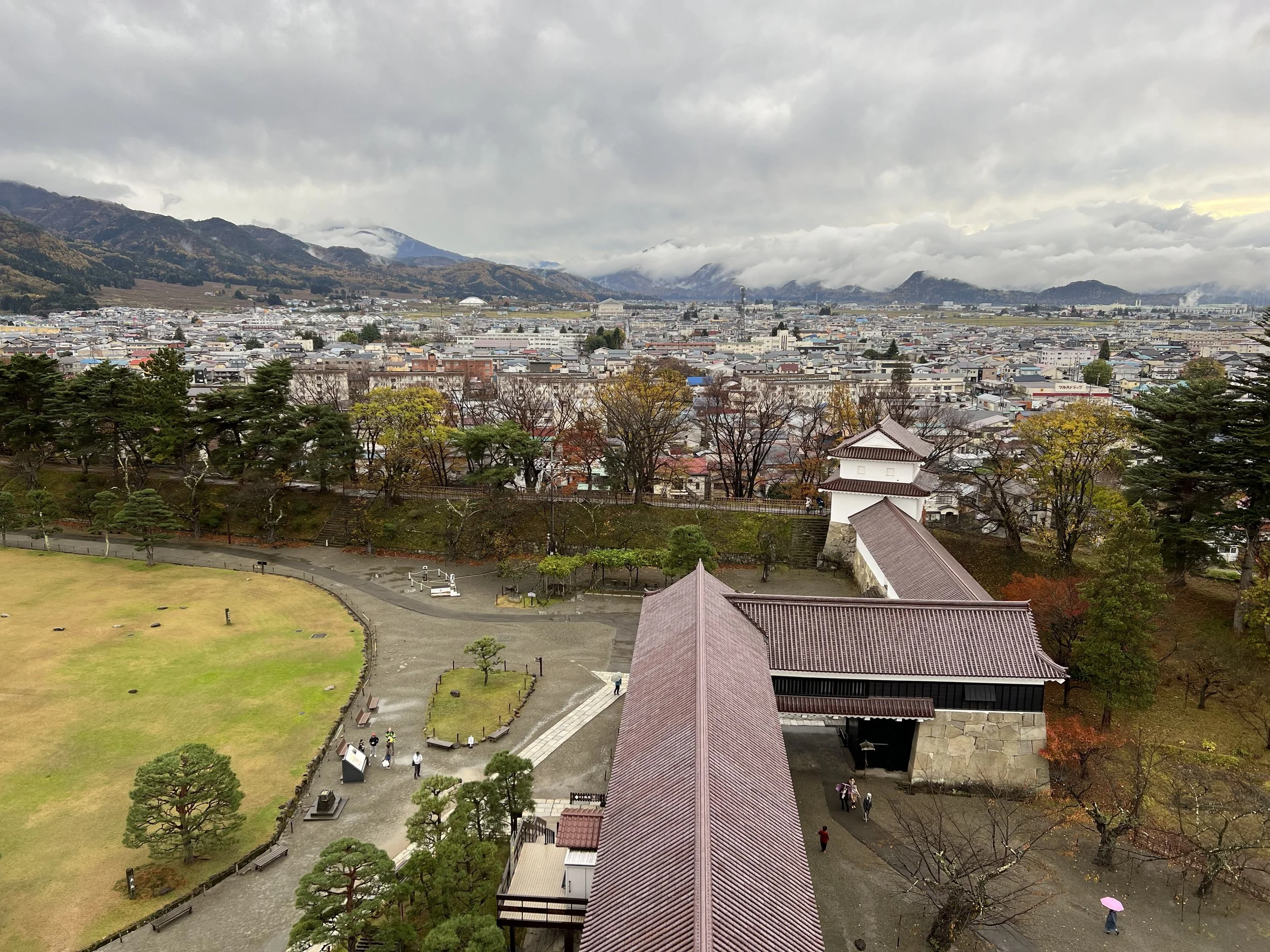
Inside, the castle interior is largely modernized and functions as a museum. Exhibits introduce the feudal lords who once occupied the castle, alongside scale models, historical panels, and displays of swords and armour. Reaching the top floor, the red roof tiles became especially noticeable from up close, and the view over Aizu-Wakamatsu City opened up despite the grey skies.
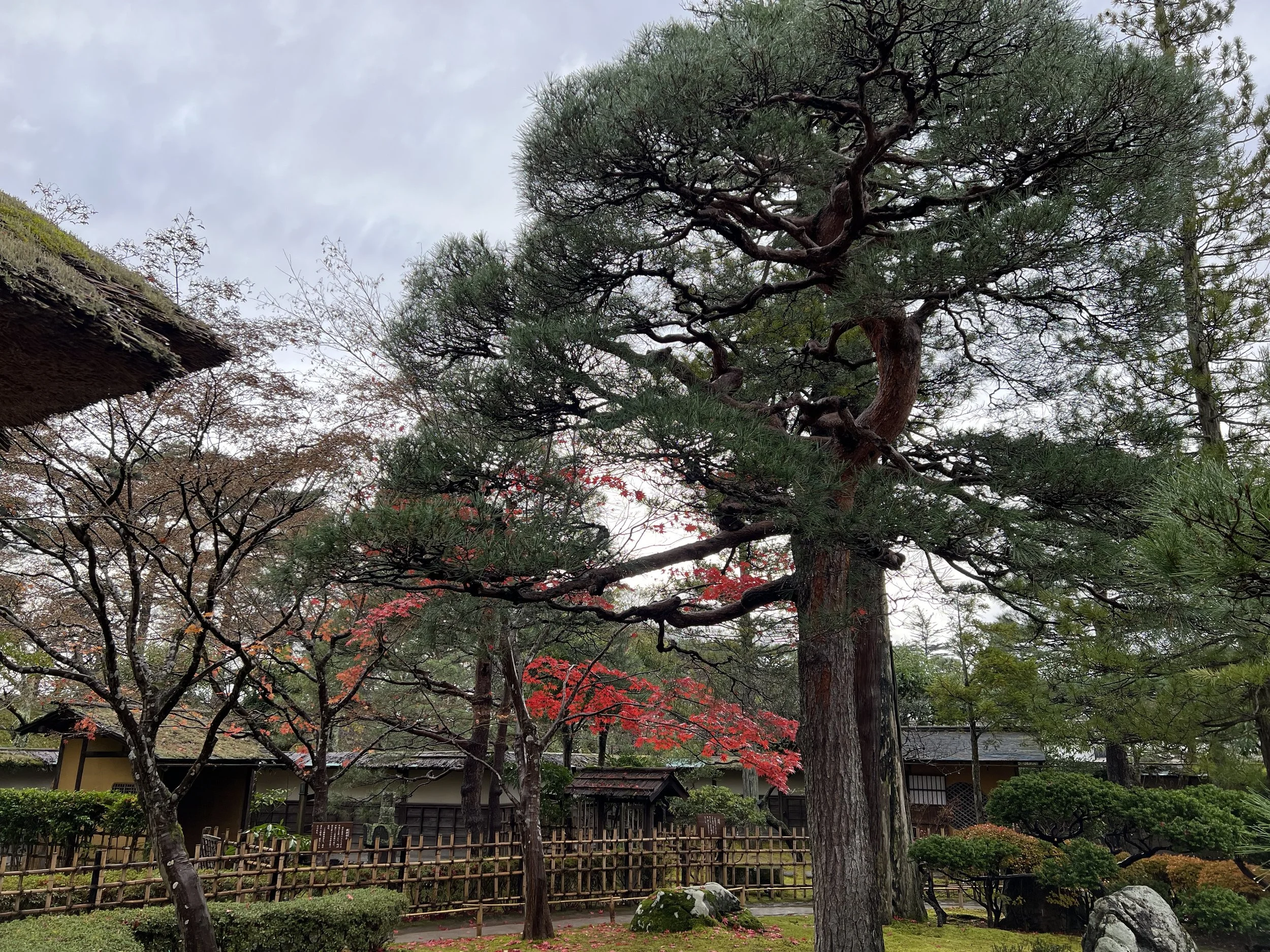
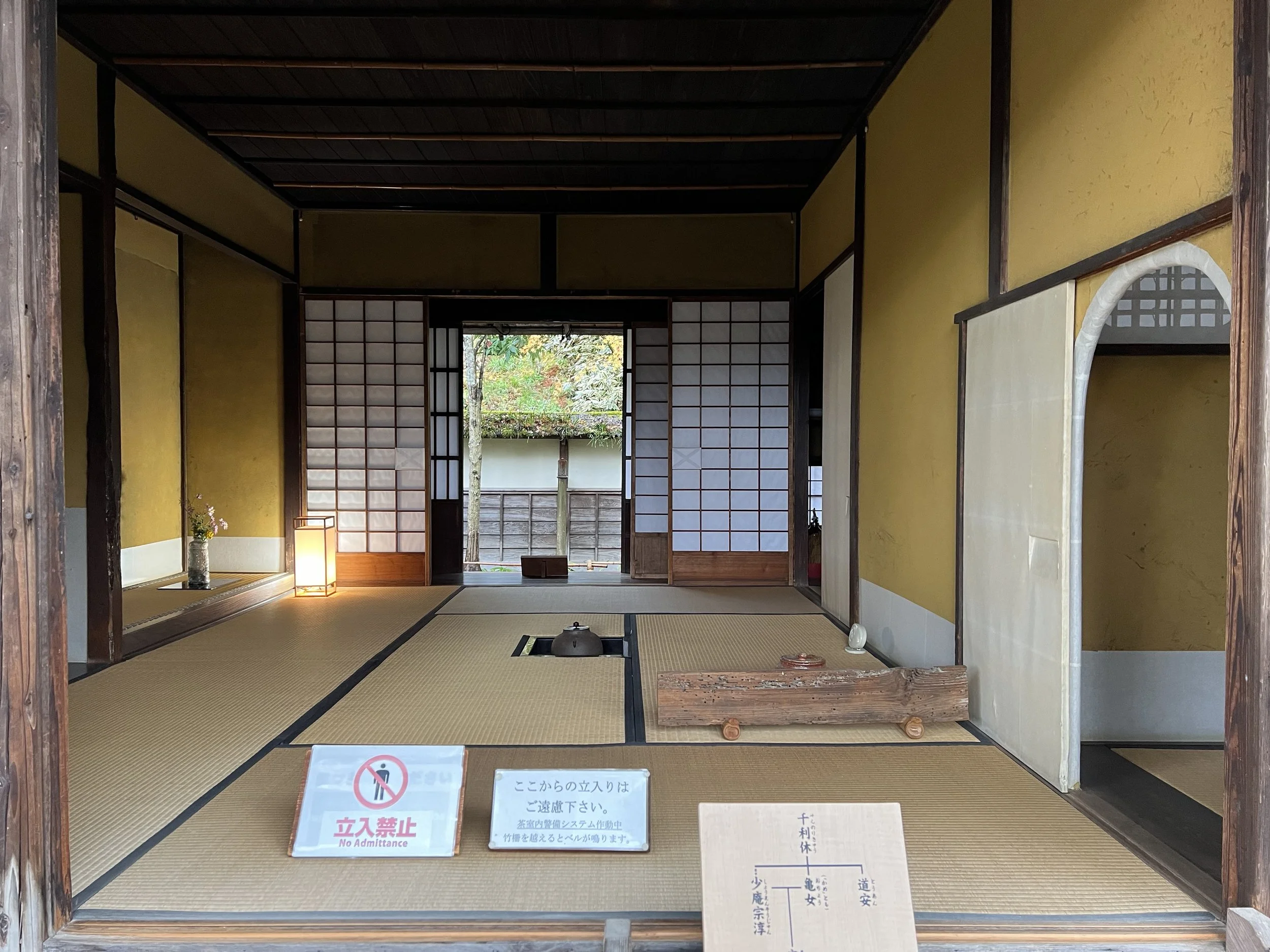
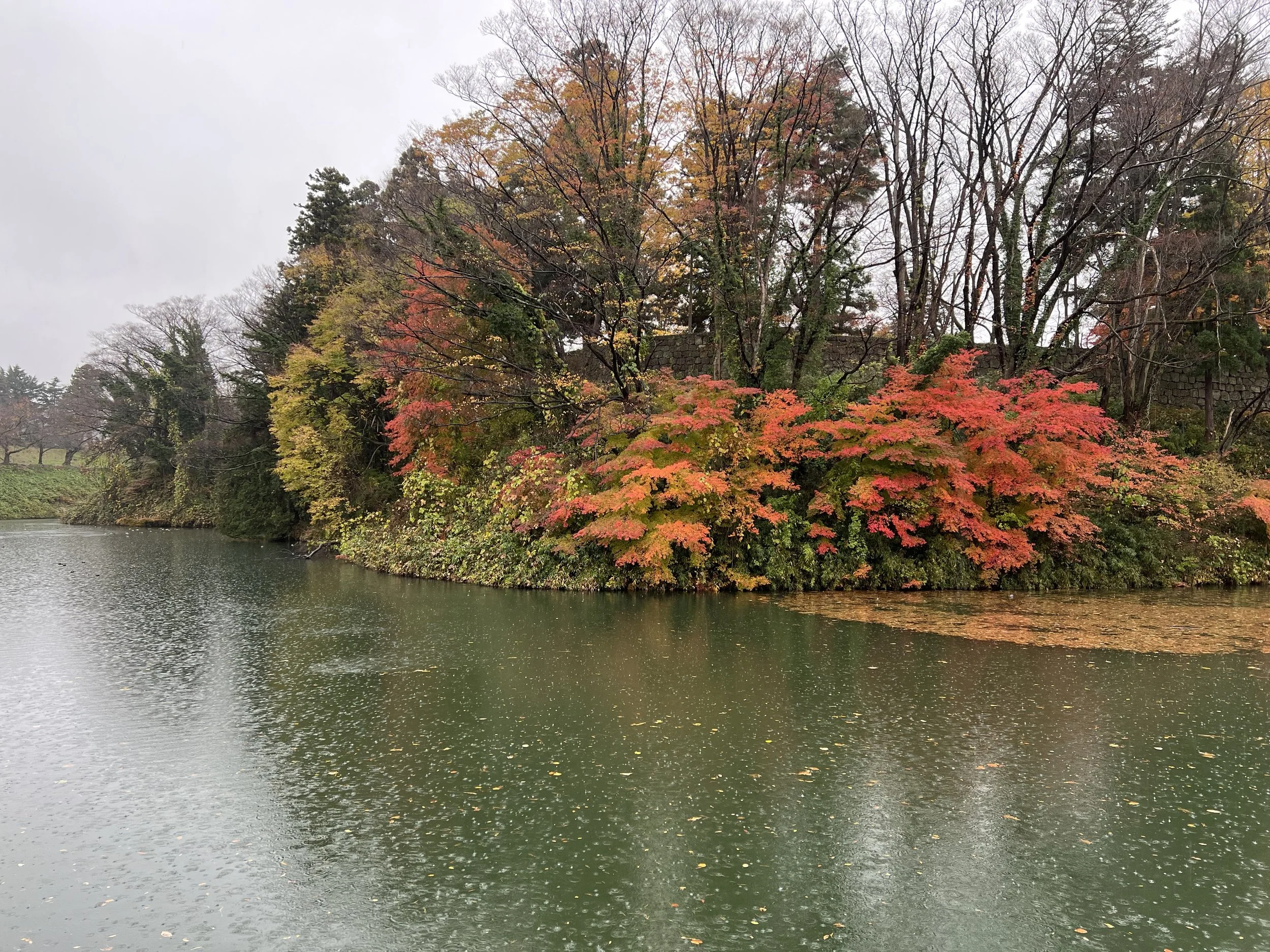
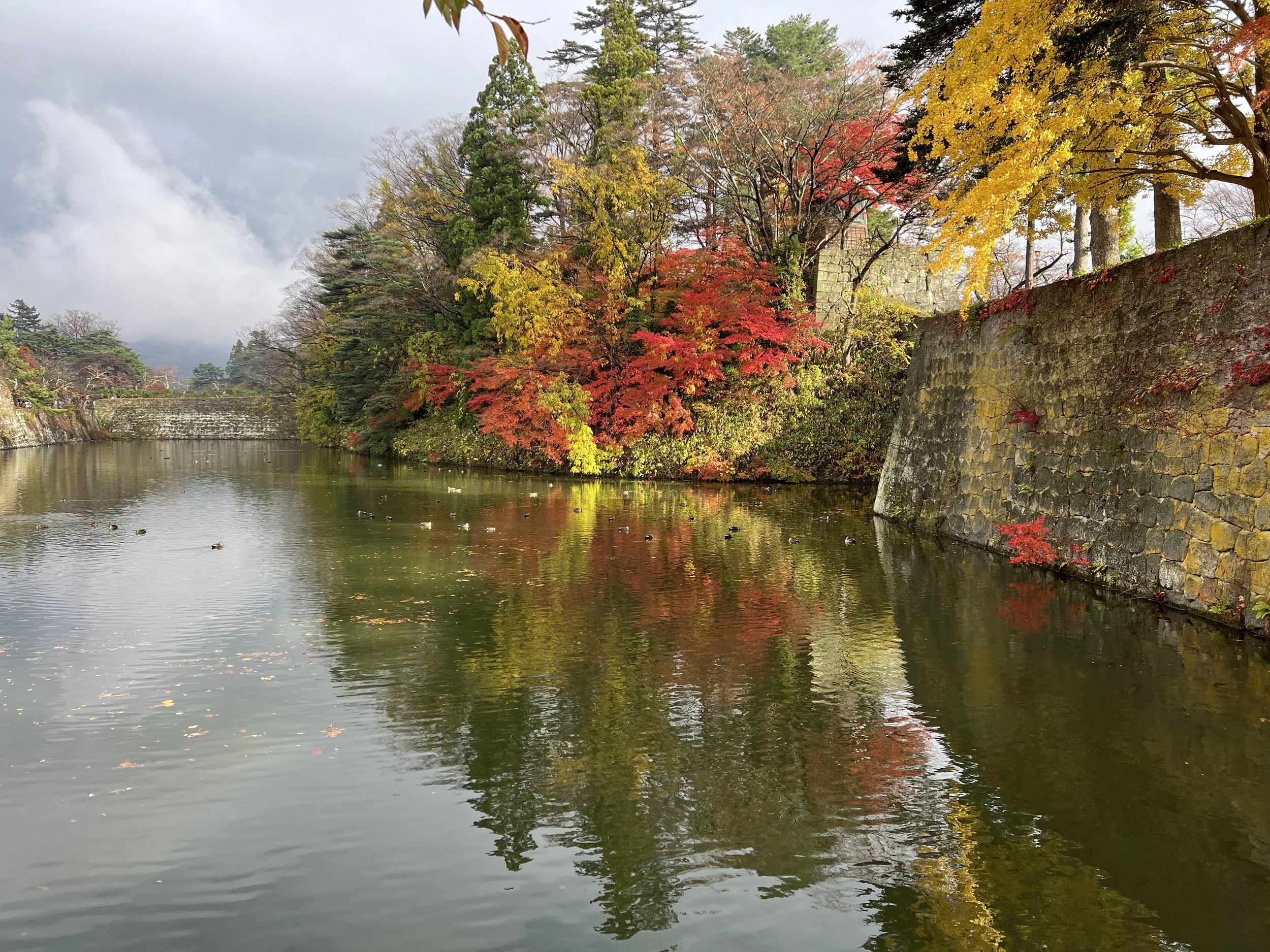
After exploring the keep, I spent time walking the castle grounds. A traditional teahouse sits within the park and was once used by feudal lords for tea ceremonies, offering visitors a chance to experience a quieter side of castle life. The grounds are home to more than 1,000 cherry trees, and it’s easy to imagine how vibrant this area must be in spring when the blossoms are in full bloom. Even in the rain, Tsuruga Castle left a strong impression as a site deeply tied to the closing chapter of Japan’s samurai history.
History & Background
Originally constructed in 1384, Tsuruga Castle (鶴ヶ城) served as the political and military centre of the Aizu region. The castle became especially significant during the Boshin War of 1868, when it stood as one of the last bastions of samurai loyal to the Tokugawa shogunate. After its destruction, the castle was reconstructed in the 1960s, with a major restoration completed in 2011 that restored the distinctive red roof tiles used during the Edo period. Today, the castle operates as a museum and cultural site within a large public park.
Getting There
Tsuruga Castle is located approximately 2.5 kilometres from Aizu-Wakamatsu Station, which is served by the JR Ban’etsu West Line and JR Tadami Line. The castle can be reached on foot in about 30 minutes via a mostly flat route through the city. Local buses also run from the station toward Tsuruga Castle Park, and taxis are readily available for a short ride.
Route Overview
Distance: 6.77 km out & back (Aizu-Wakamatsu Station)
Total elevation gain: 89 m
Duration: 1 hr 29 min (with breaks 1 hr 51 min)
Difficulty: Easy
Cost Breakdown
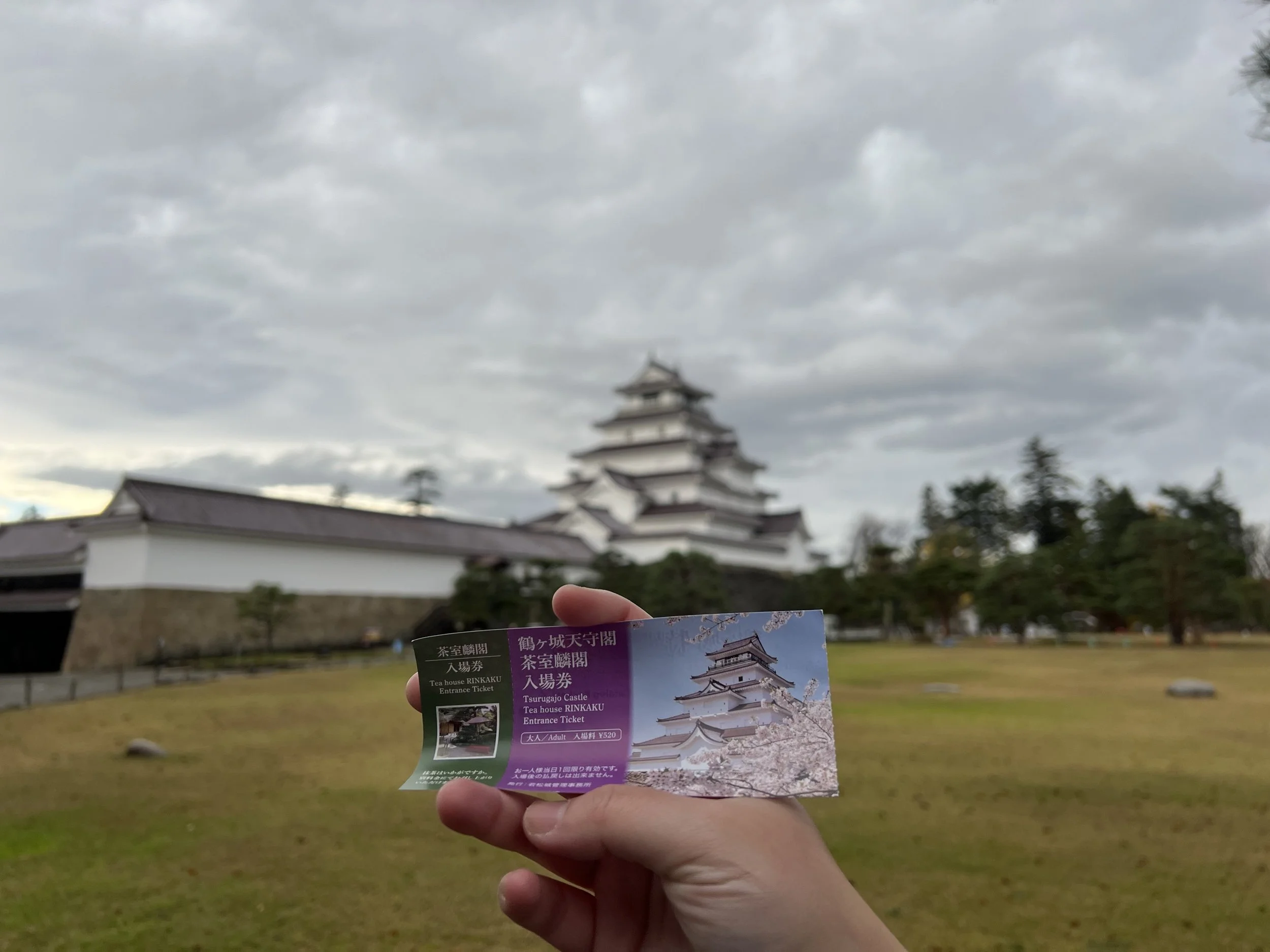
Entrance Fee: Tsuruga Castle — ¥520
Souvenir: ¥990
Food: ¥350