Tsunoshima Bridge - Yamaguchi, Japan
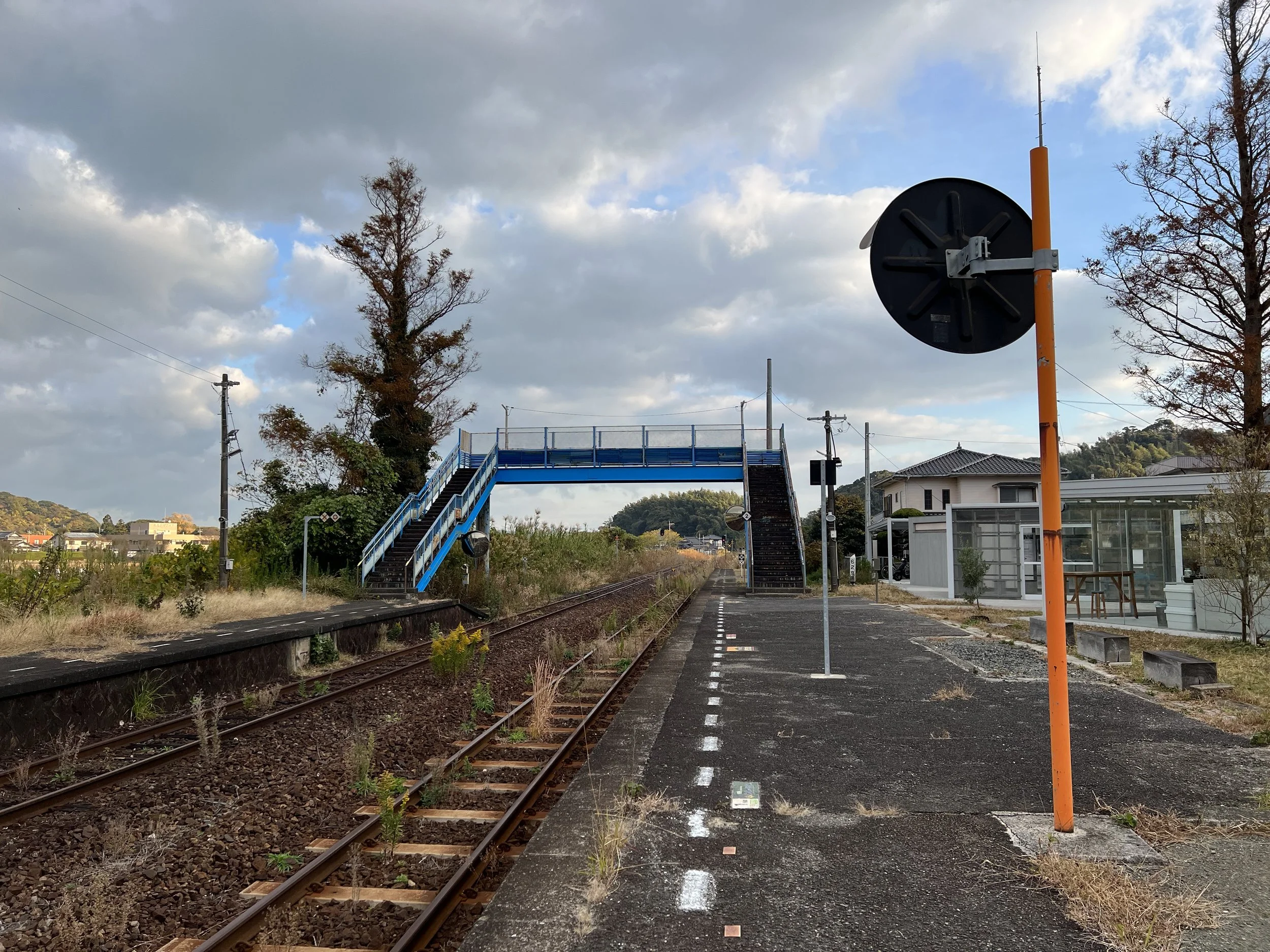
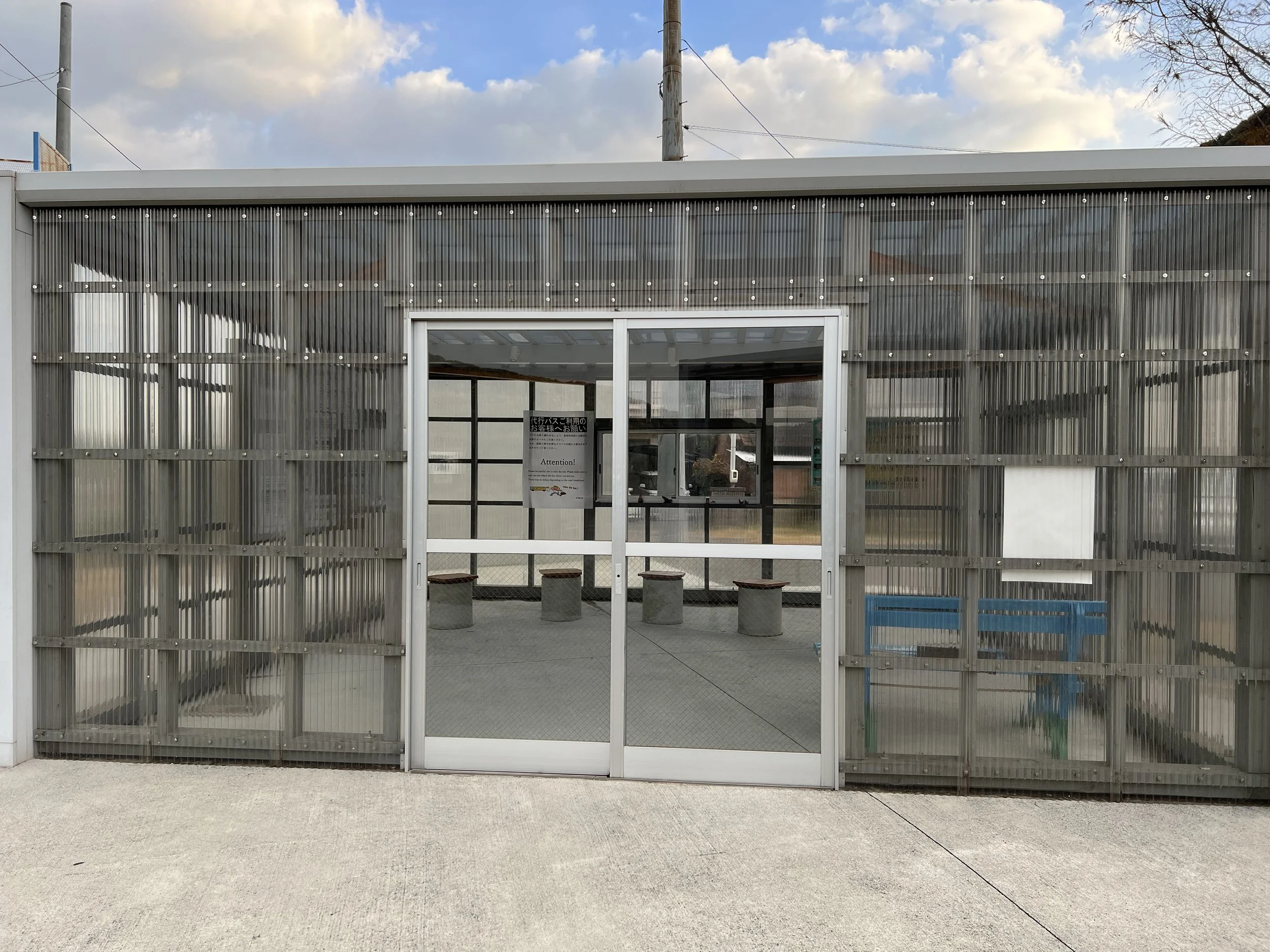
Is it a little crazy to go out of your way just to see a bridge? That was the question running through my mind as I made my way toward Tsunoshima. When I arrived in the Nagato area, I had originally planned to visit several spots, but recent heavy rainfall had damaged parts of the local train line. In its place, buses were running between stations, which immediately complicated my itinerary. With limited car rental options in the area, I had to scale back my plans and focus on places that were realistically reachable by public transportation plus some walking.
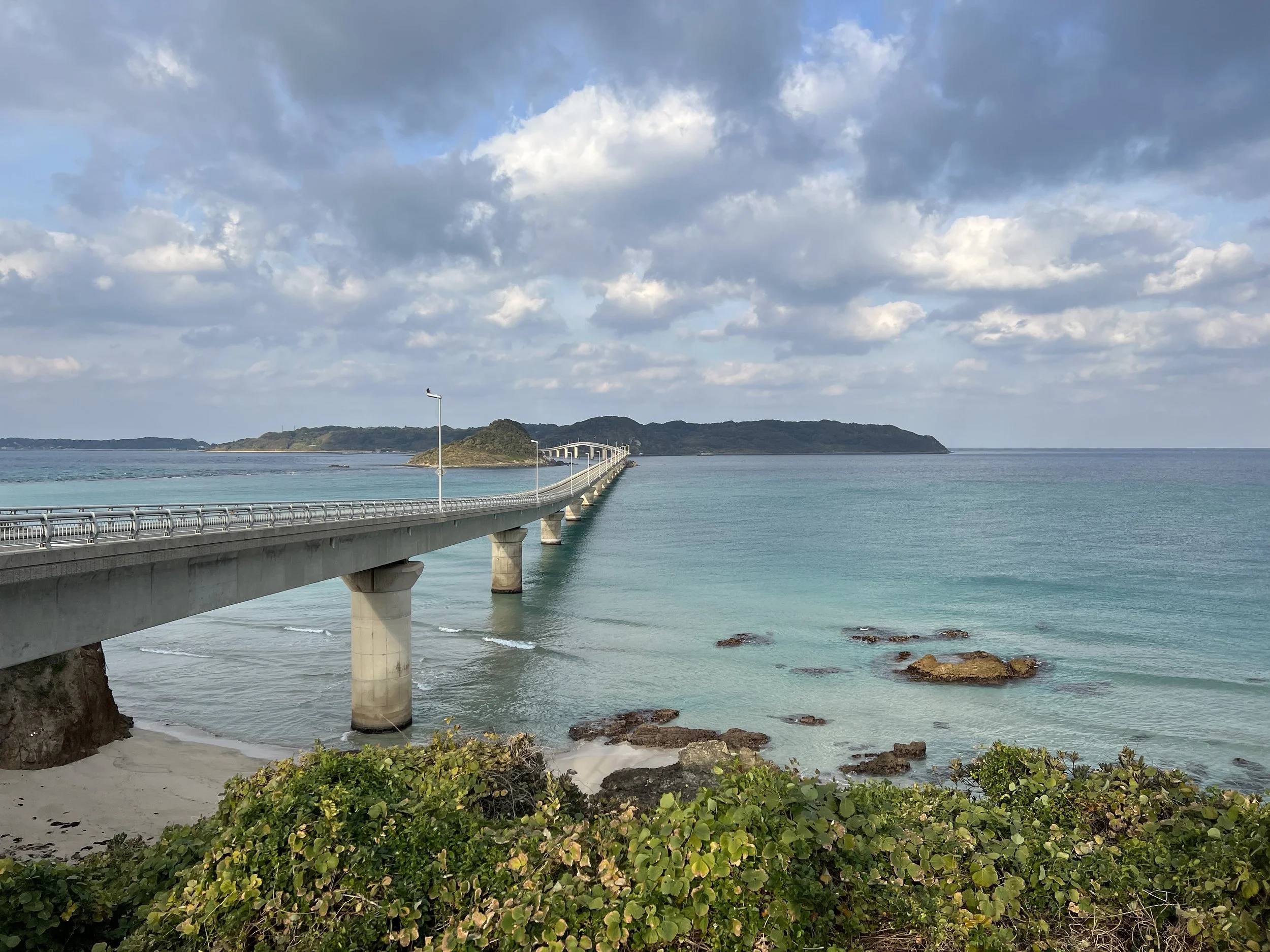
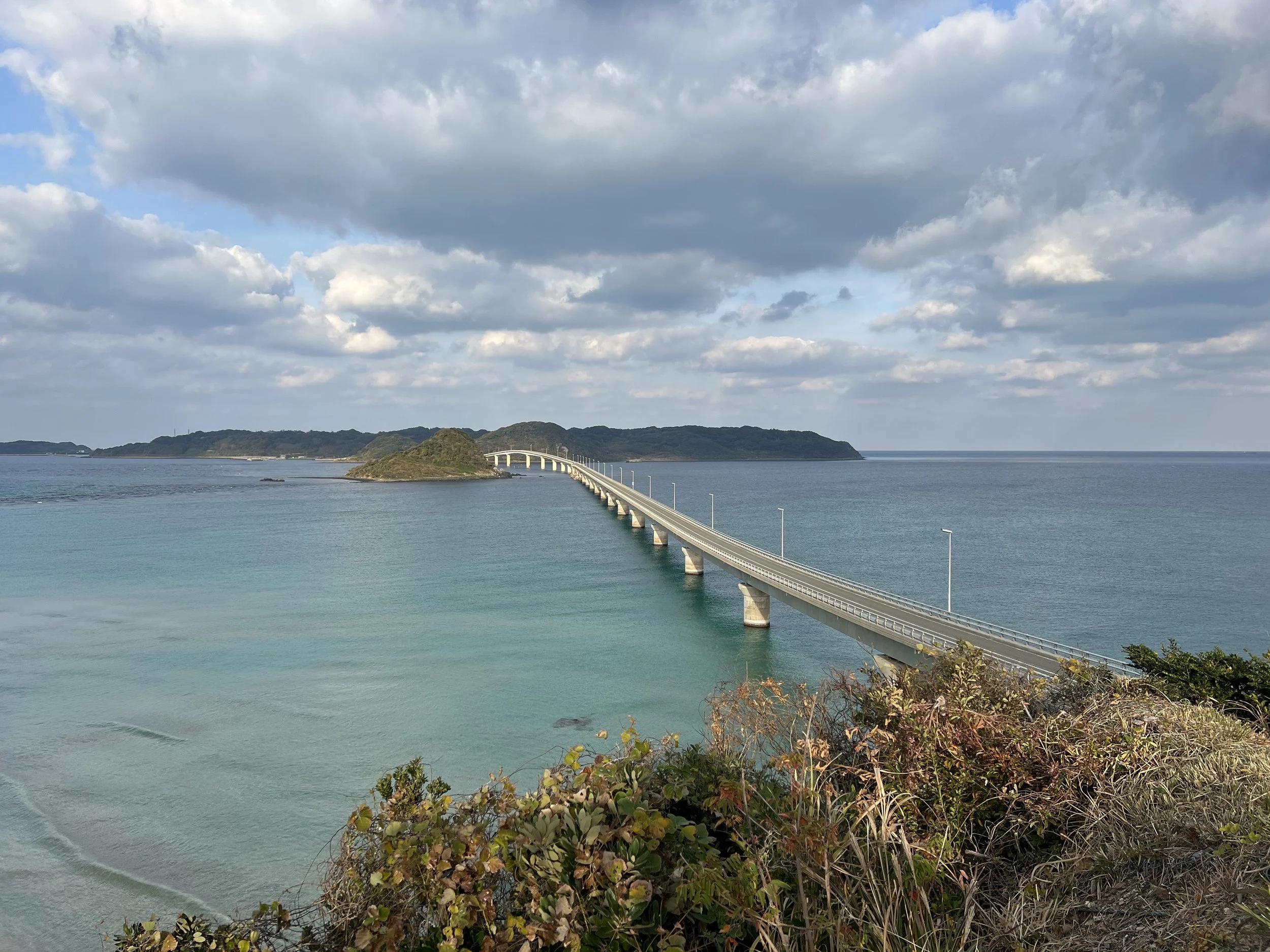
I left early in the morning to catch one of the first available buses toward Agawa Station. Bus connections in this area are infrequent, and I didn’t want to risk spending the entire day waiting between transfers. Tsunoshima Bridge is famous for its long, straight span connecting the mainland to Tsunoshima Island, stretching across strikingly blue waters. At 1,780 metres long, it is one of the longest toll-free bridges in Japan. What draws so many visitors, though, is the vivid gradation of the sea below—from emerald green near the shore to deep cobalt blue further out.
The closest bus stop is only about a five-minute walk from the observation area. From here, an observatory deck provides a sweeping view of the bridge, with the ocean stretching out on one side and a small park and visitor centre on the other. When I first arrived, I had the entire viewpoint to myself, but within ten minutes, tour buses began to arrive. The bridge has appeared in numerous commercials over the years, and it’s easy to see why—it looks almost unreal under the right light.
I briefly considered taking the bus across to explore Tsunoshima Island itself, but after checking the return schedule, it became clear that the journey back would be awkward and time-consuming. With limited services and long gaps between buses, I decided against it. Instead, I spent some time near the observation deck, watching the changing light on the water before catching the bus onward toward Hitomaru Station.
Tsunoshima Bridge is undeniably more convenient to visit with a rental car, but even by public transportation, it’s still possible with careful planning. If you’re relying on buses, checking schedules in advance and being prepared to walk will make the experience far less stressful.
Background
Completed in 2000, Tsunoshima Bridge (角島大橋) was constructed to improve access between the mainland and Tsunoshima Island. Unlike many large bridges in Japan, it was built as a toll-free crossing, making it accessible to both locals and visitors.
Over time, the bridge gained widespread popularity thanks to its dramatic coastal setting and frequent appearances in television commercials and promotional materials. Today, it is considered one of the most scenic bridges in Japan and a major attraction in Yamaguchi Prefecture.
Getting There
Tsunoshima Bridge is accessed via Kottoi Station on the JR San’in Main Line, with connections from Nagatoshi Station. From Kottoi Station, local buses operate toward the Hotel Nishinagato Resort area, stopping at Hotel Nishinagato Resort Entrance Bus Stop. The observation deck near Tsunoshima Bridge is approximately a five-minute walk from the bus stop.
Route Overview
Distance: 1.4 km out & back (Hotel Nishinagato Resort Entrance Bus Stop)
Total elevation gain: 14 m
Duration: 15 min (with breaks 20 min)
Difficulty: Easy
Cost Breakdown
Train: Nagatoshi Station → Agawa Station — ¥510
Bus: Agawa Station → Hotel Nishinagato Resort Entrance Bus Stop — ¥260