Tsubosaka-dera Temple - Nara, Japan
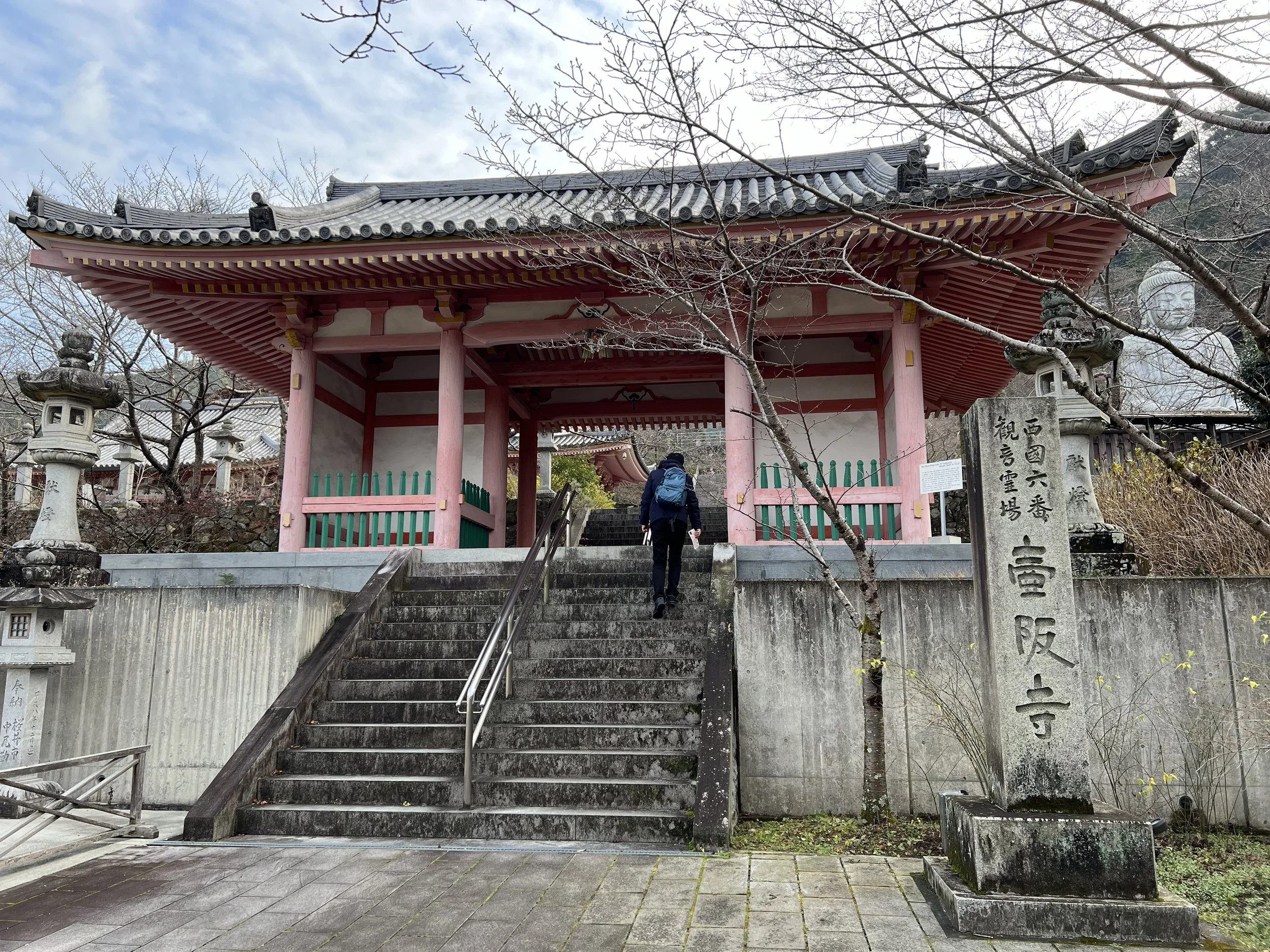
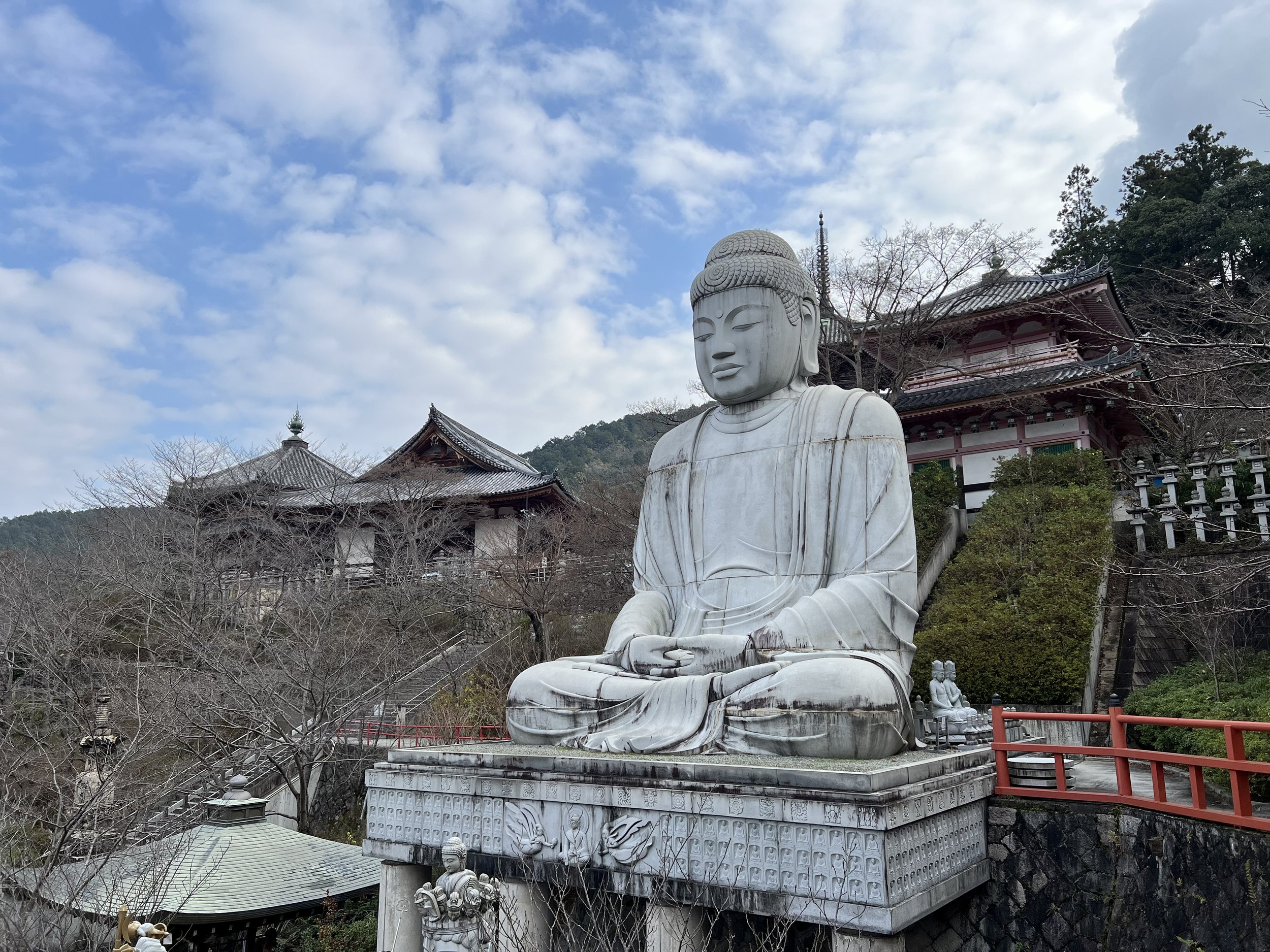
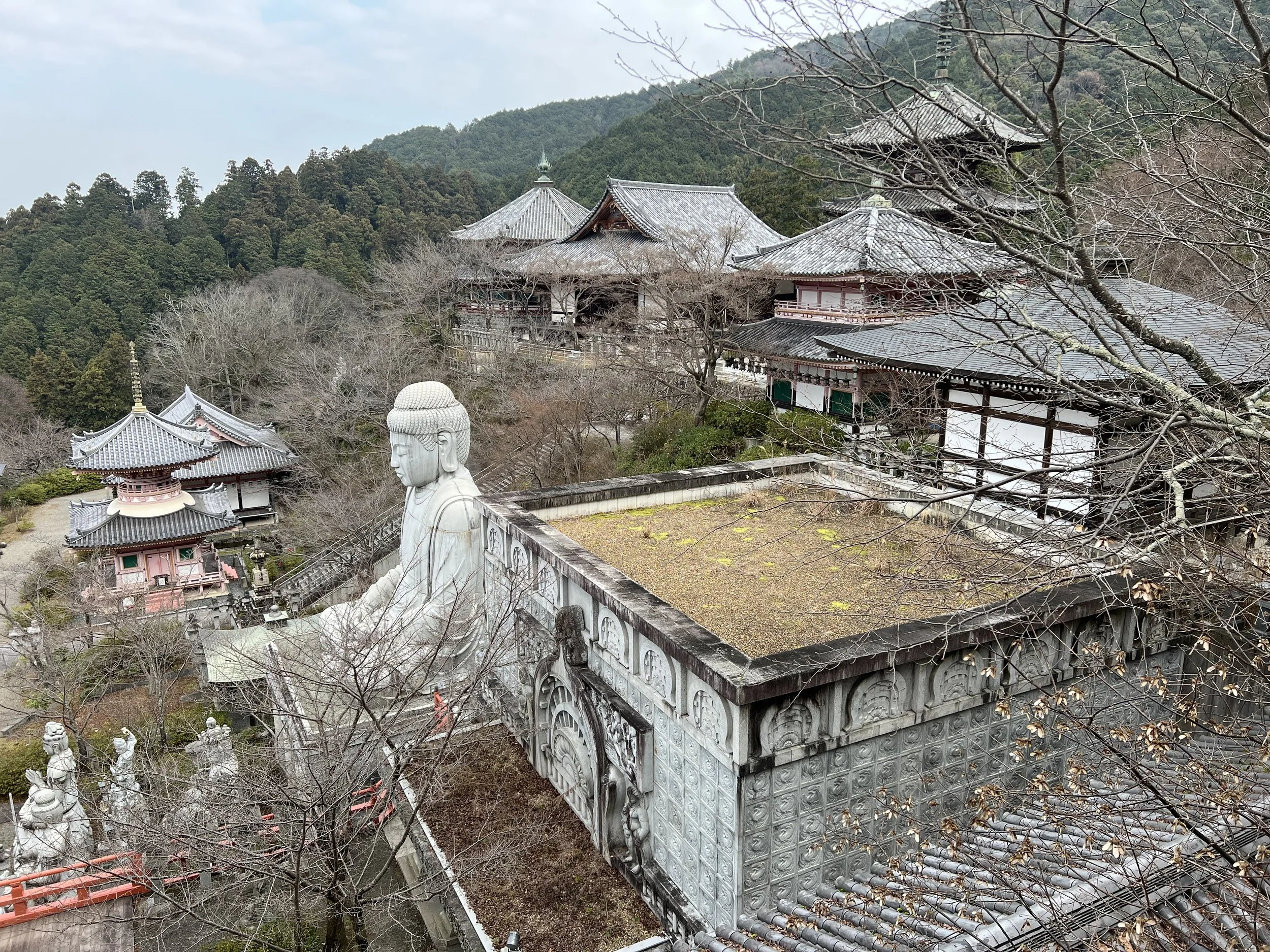
Tsubosaka-dera Temple, often referred to as the “Temple of Healing,” is easily one of the most scenic temples I’ve visited. Founded in 717 AD, the temple blends traditional Japanese architecture with striking Indian influences, particularly in its large-scale Buddha statues scattered across the expansive grounds.
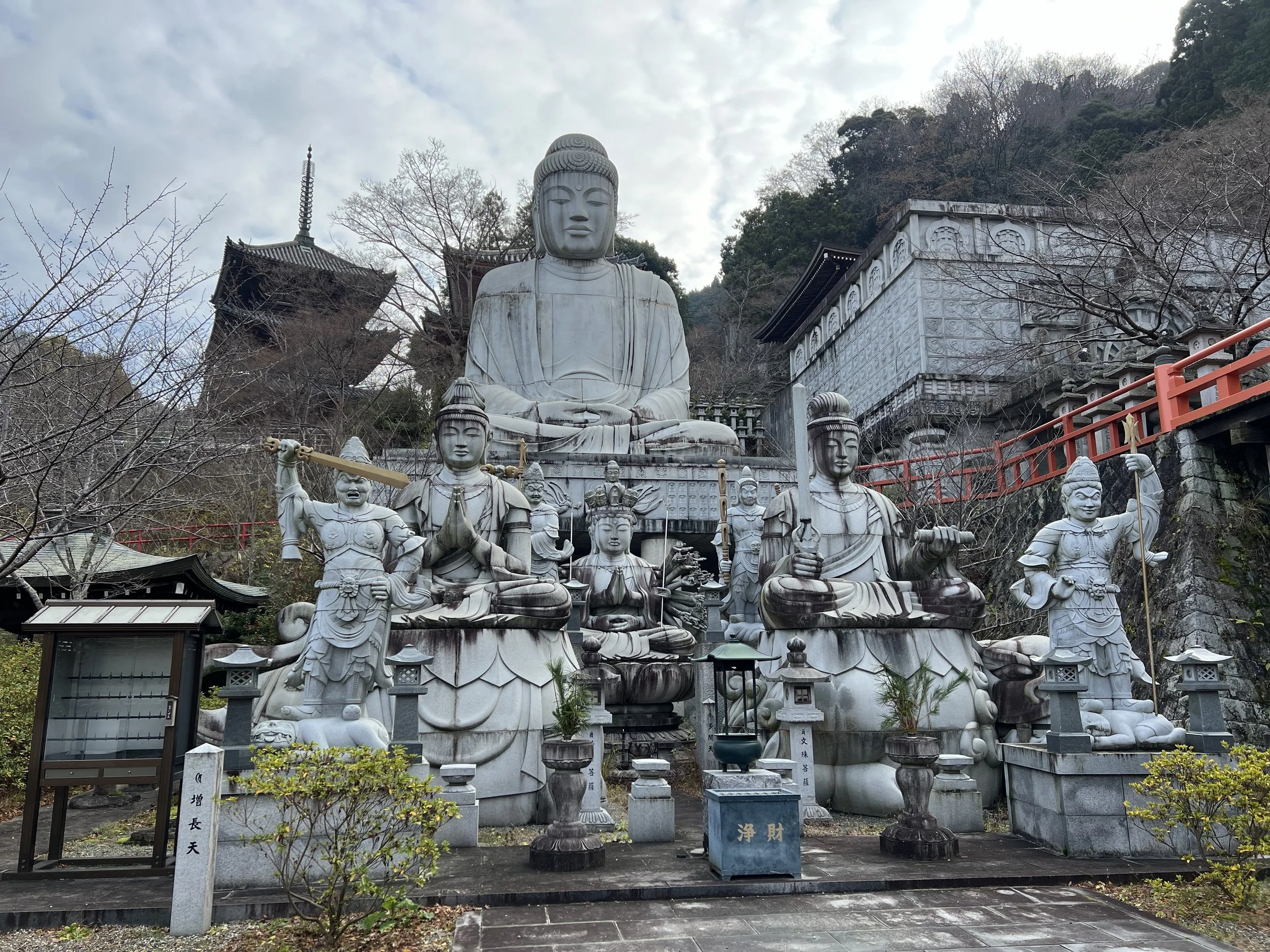
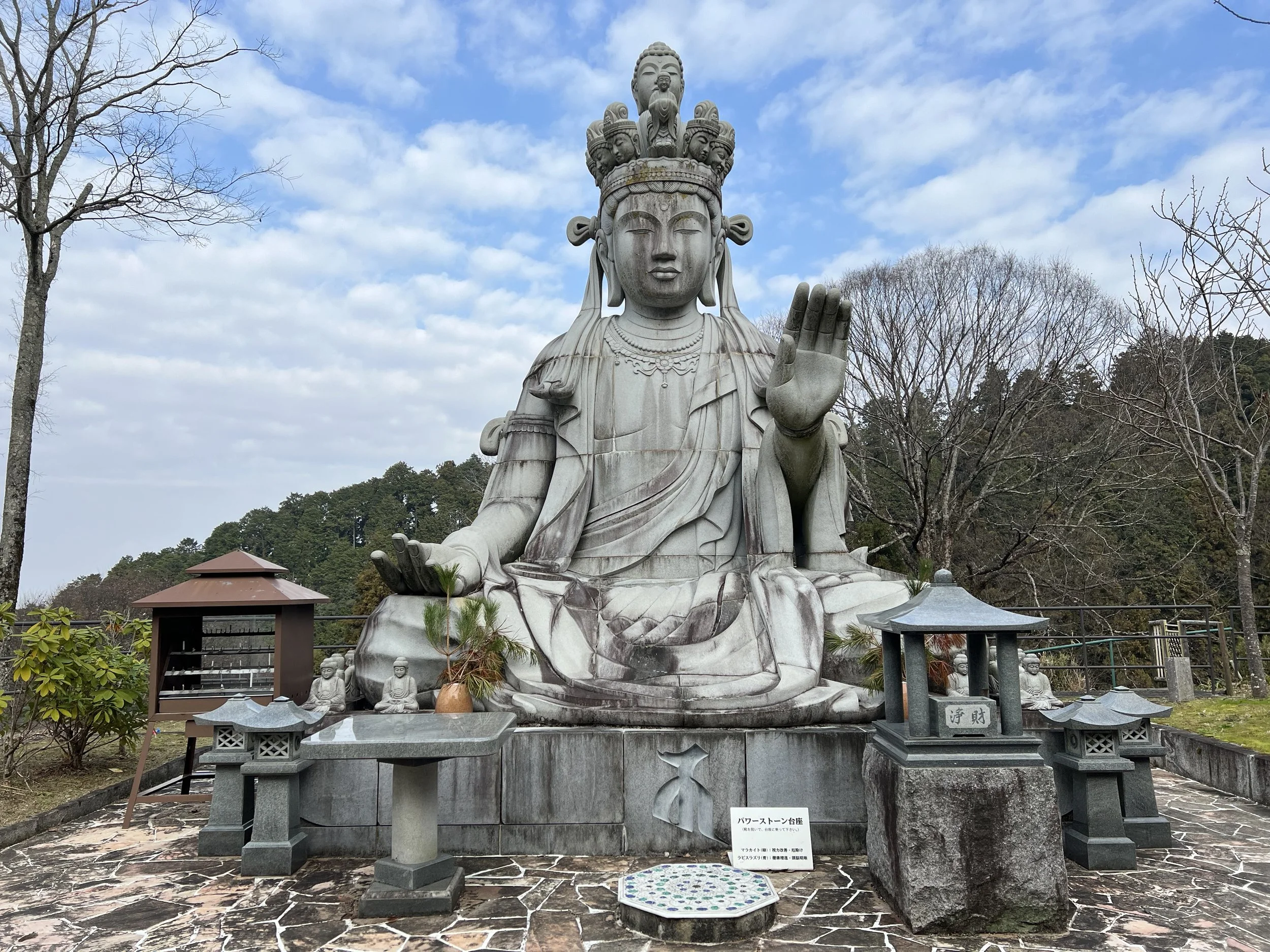
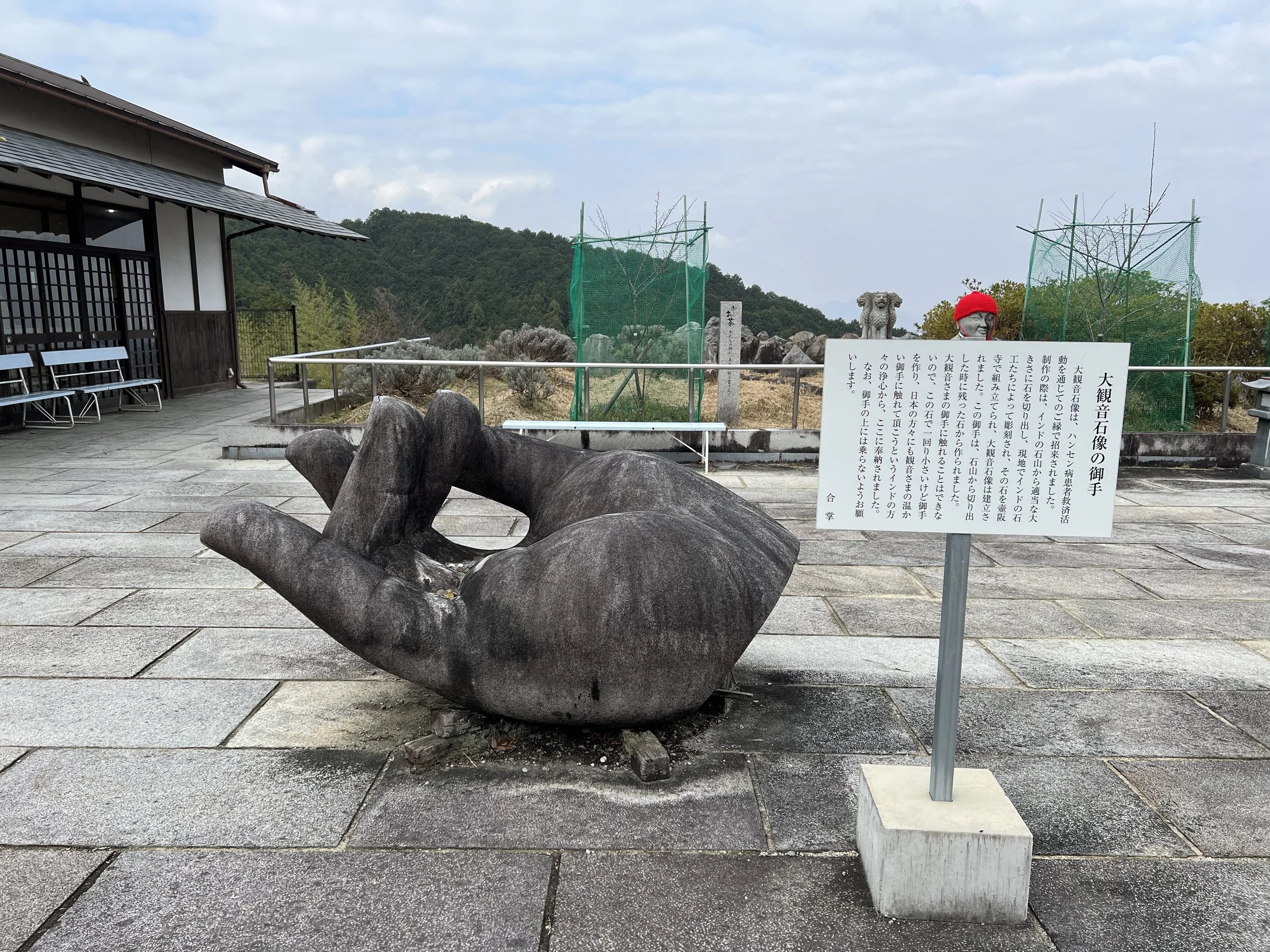
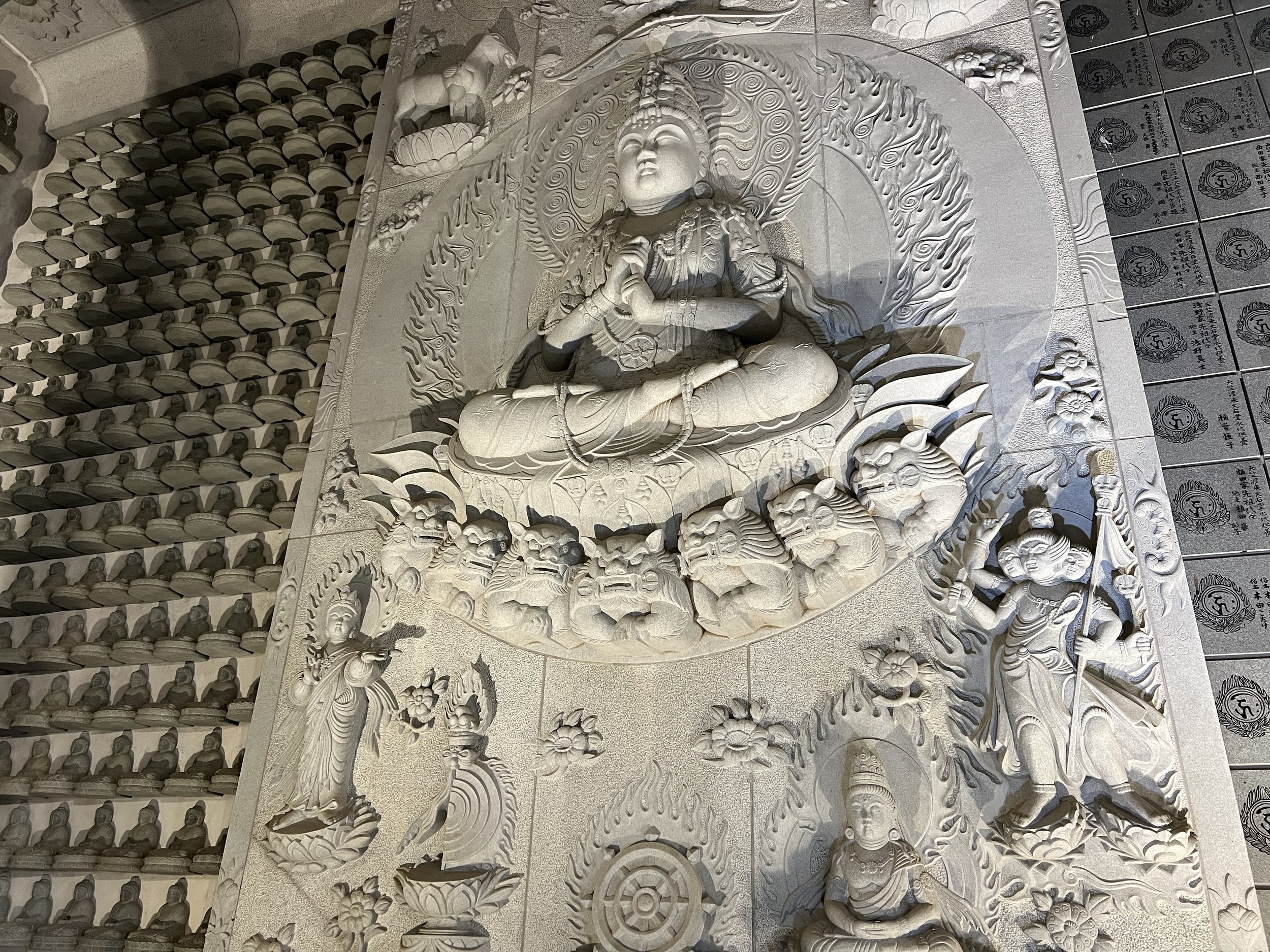
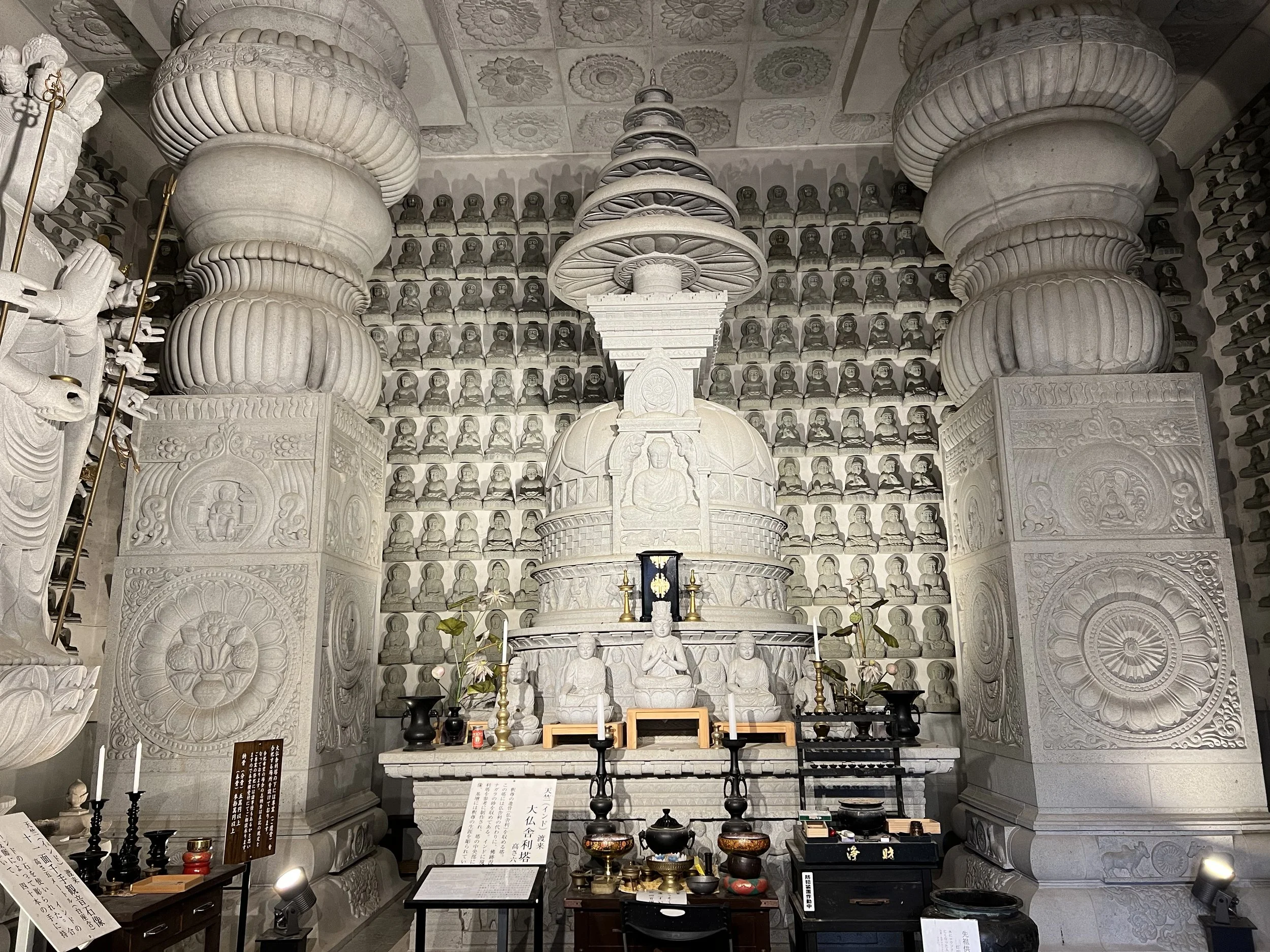
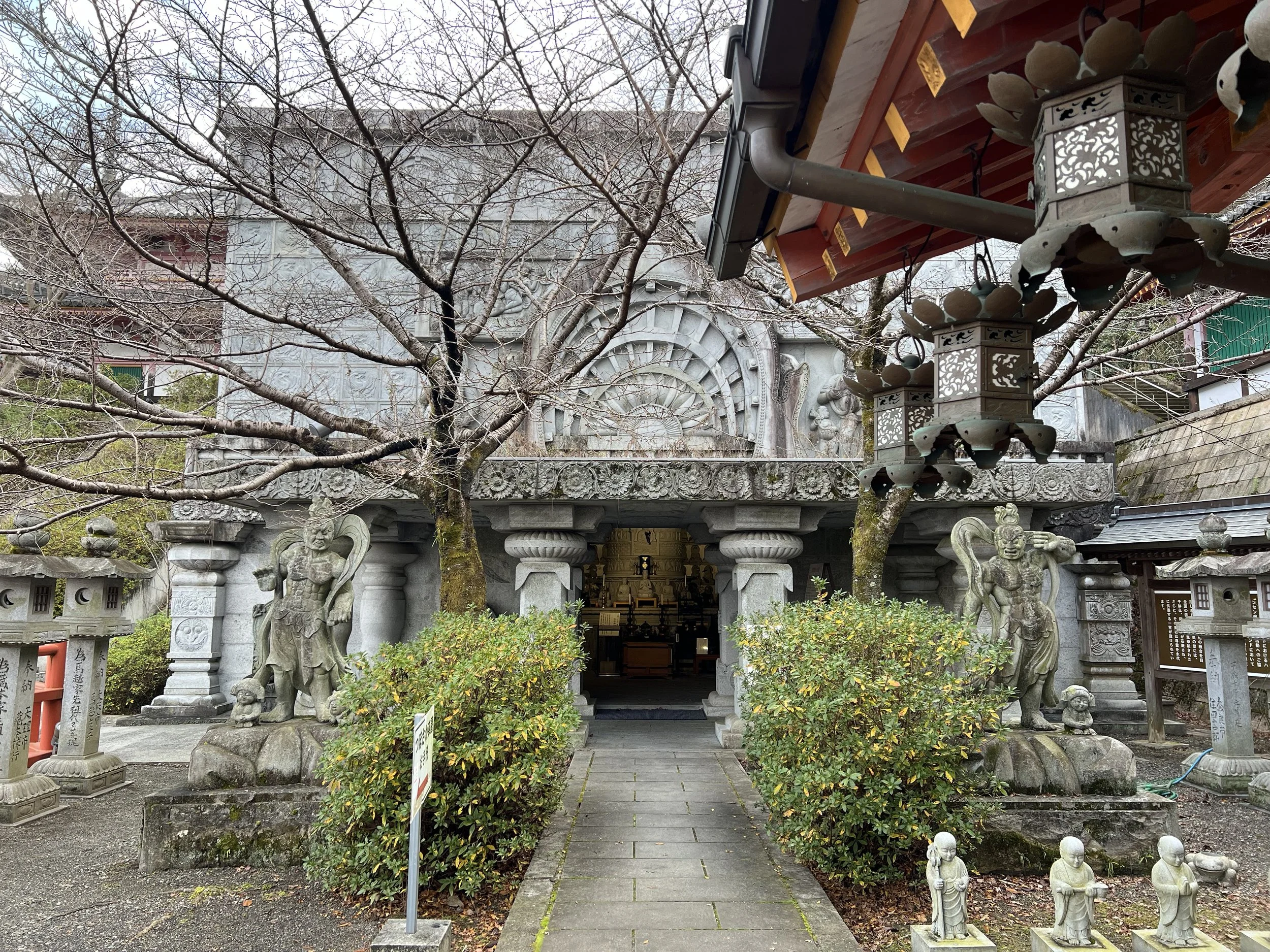
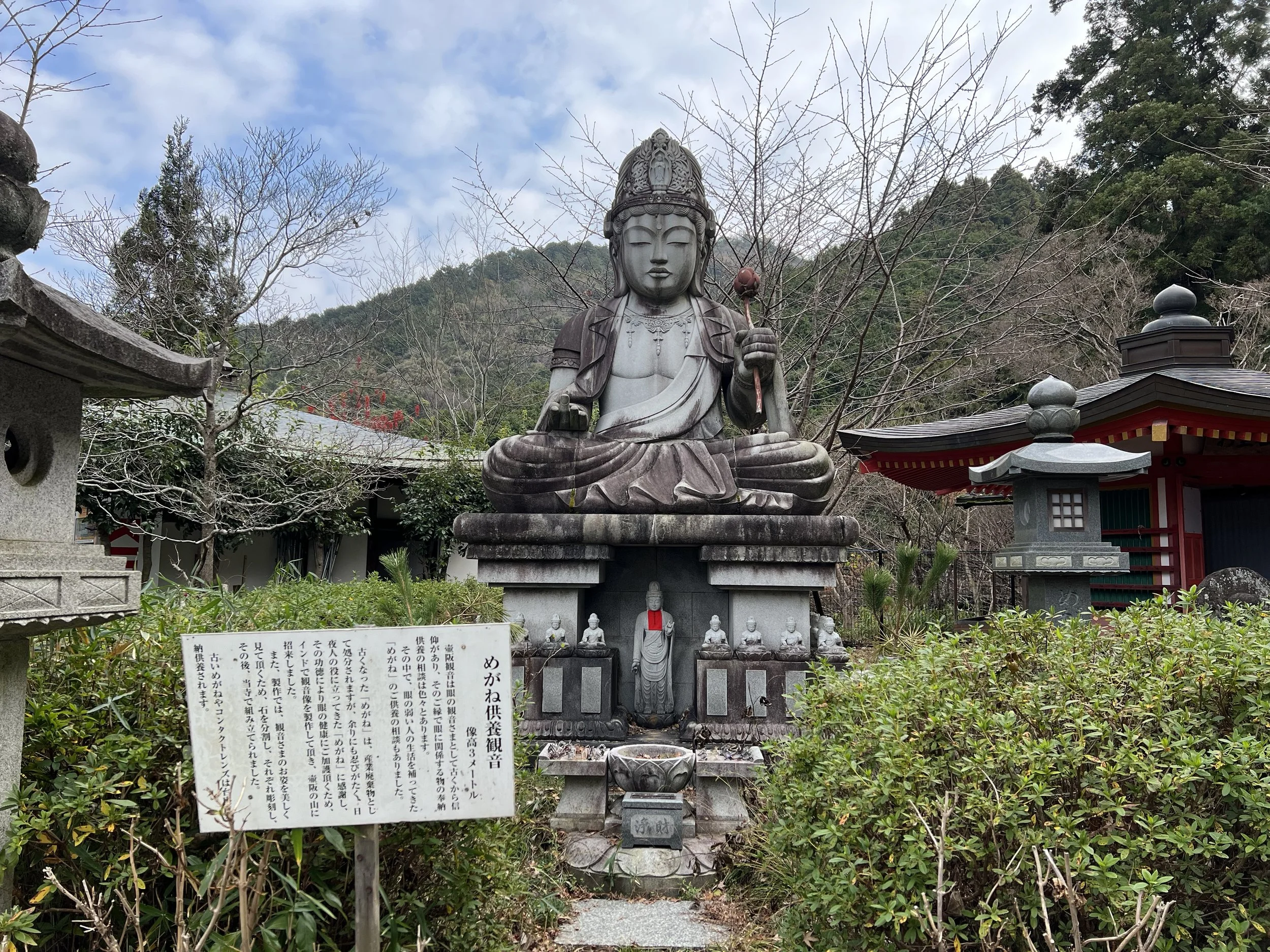
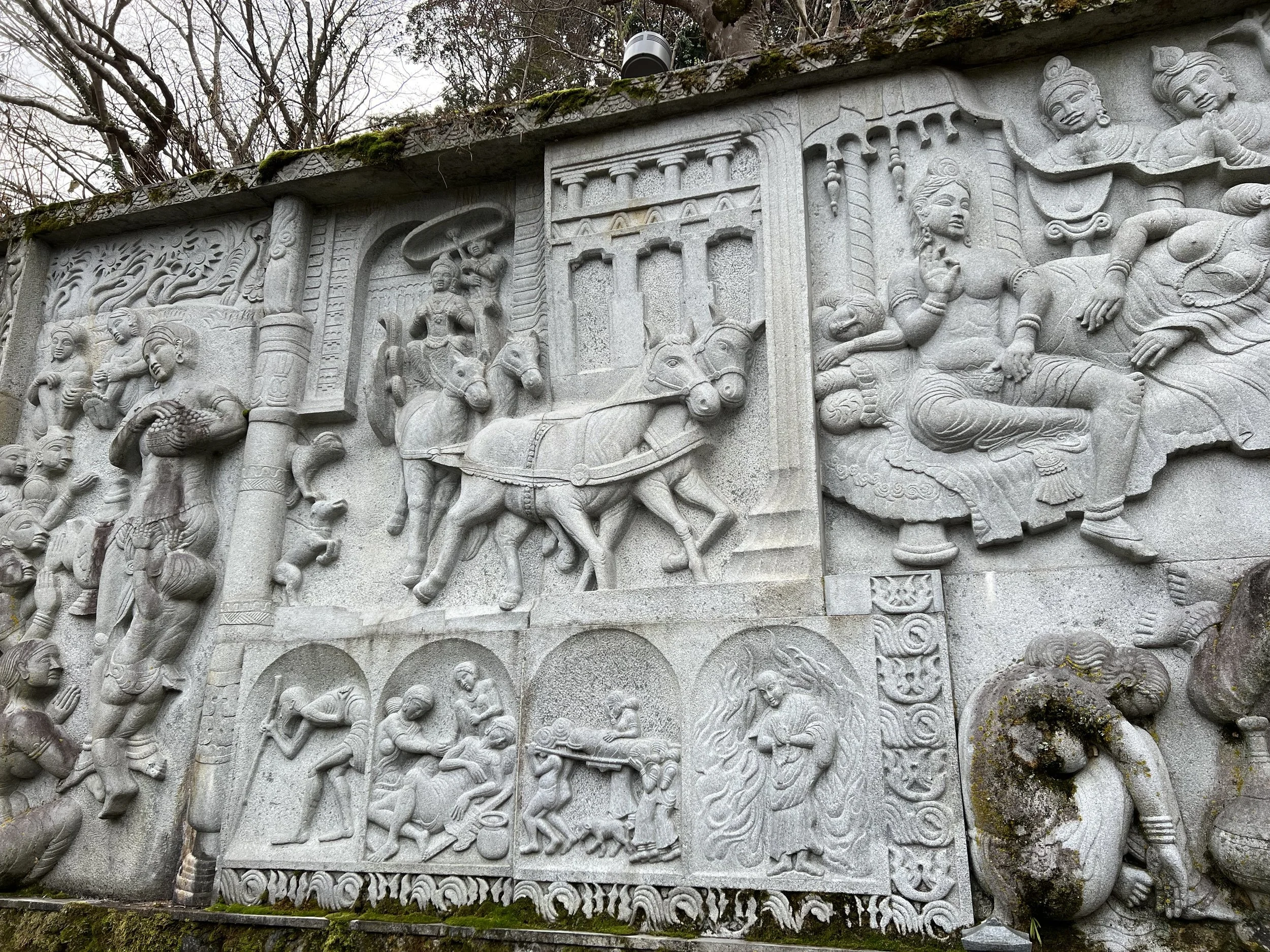
The Indian-style Buddhas, carved in white stone, stand out immediately. One area resembles a Taj Mahal-inspired sanctuary, complete with intricate bas-relief carvings. These statues were gifted by India in recognition of the temple’s humanitarian work supporting people affected by leprosy. The result is a unique cultural fusion that feels both unexpected and harmonious within the Japanese landscape.
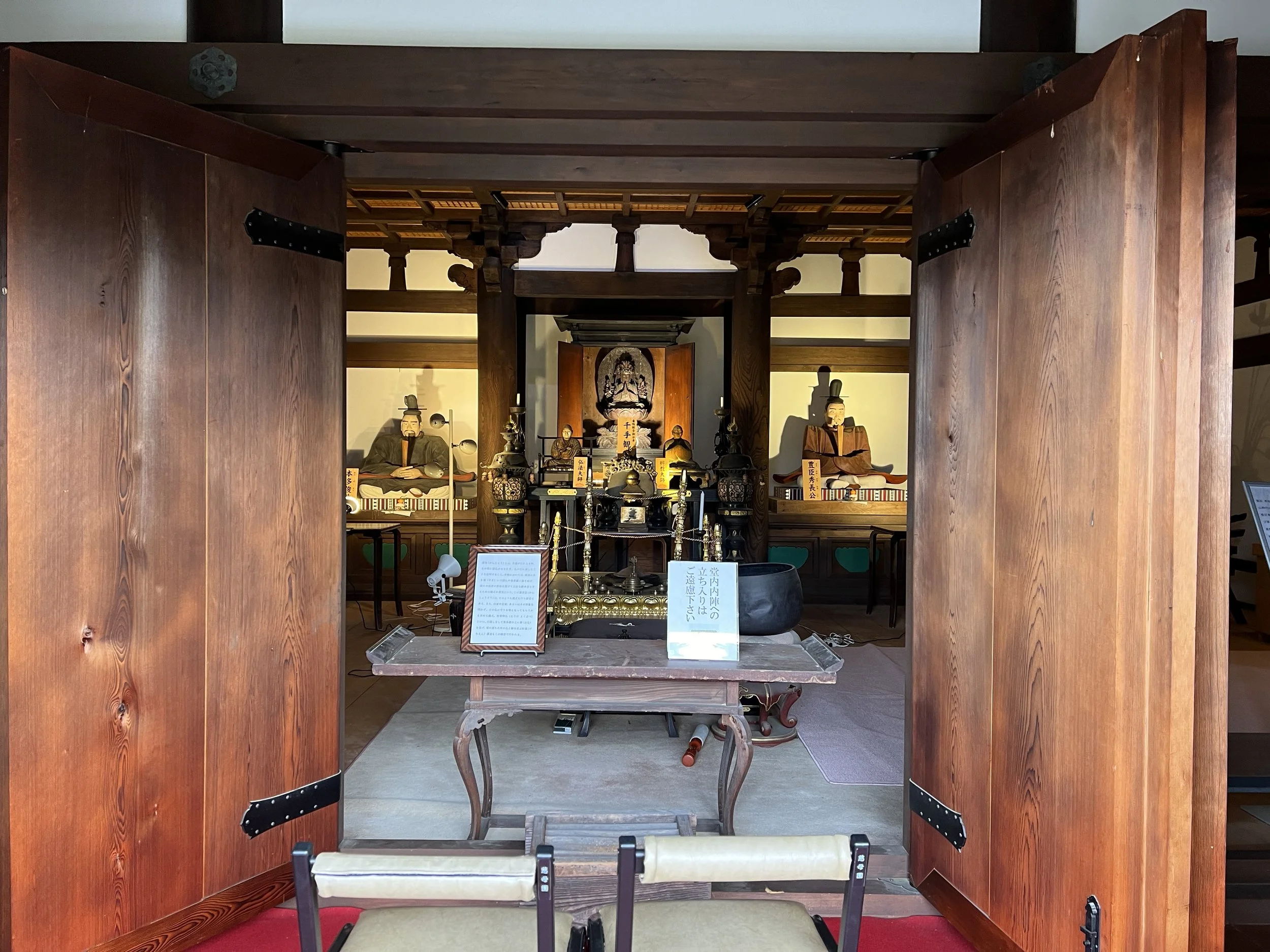
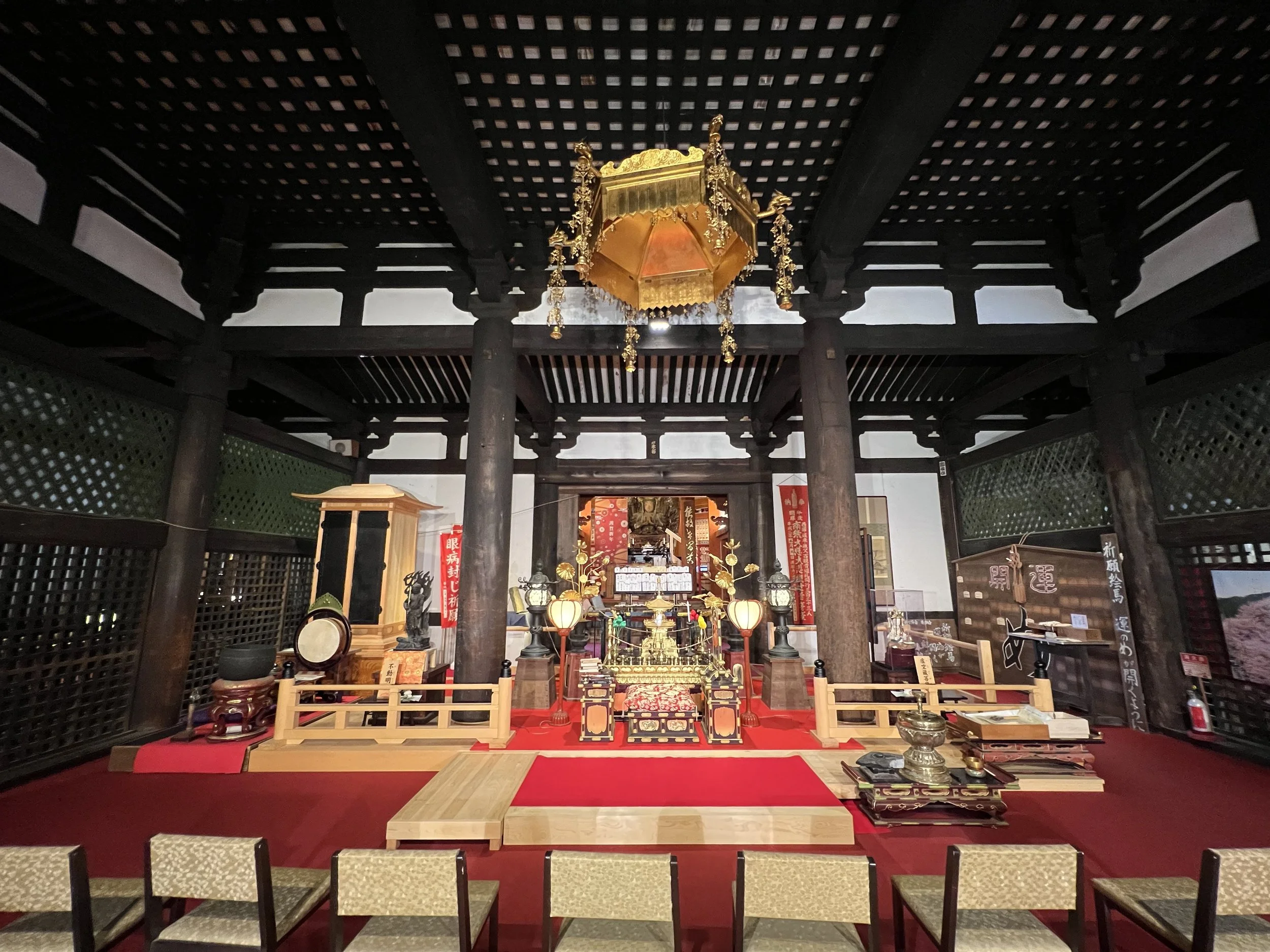
According to legend, a local shaman discovered a buried Thousand-Armed Kannon (Senju Kannon) here, granting him healing powers. With those powers, he cured an empress of an eye disease, and the temple was built in gratitude. That legacy of healing still defines the identity of Tsubosaka today.
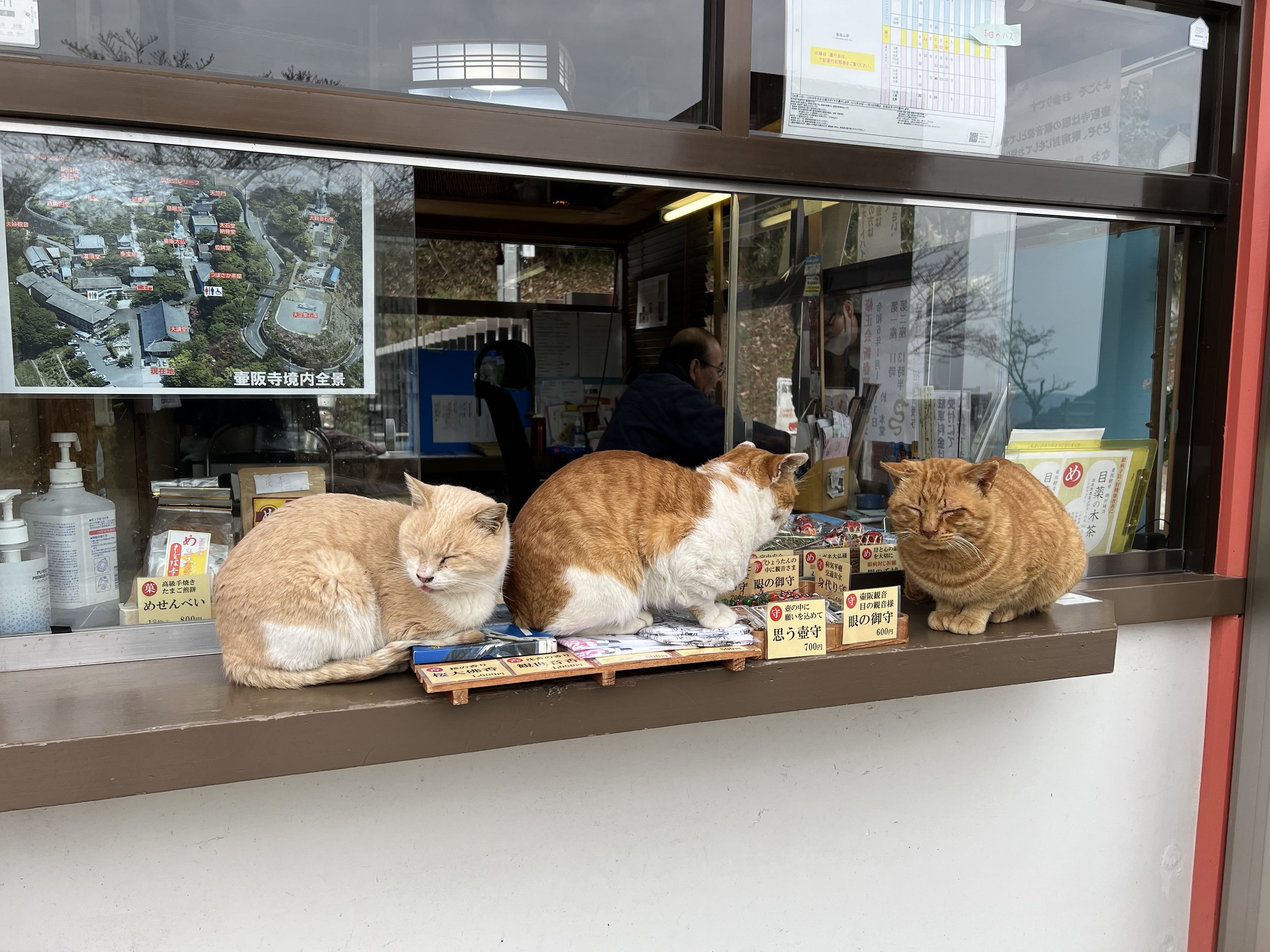
I travelled here from Sakurai Station, where I was staying. The bus gradually wound its way up a narrow mountain road before dropping me off directly in front of the temple entrance. When I purchased my ticket, the staff member asked if it was my first visit. After I said yes, he kindly gave me a brief overview of the recommended walking route, explaining that the grounds are fairly large and involve a number of stairs. I appreciated the guidance before heading in.
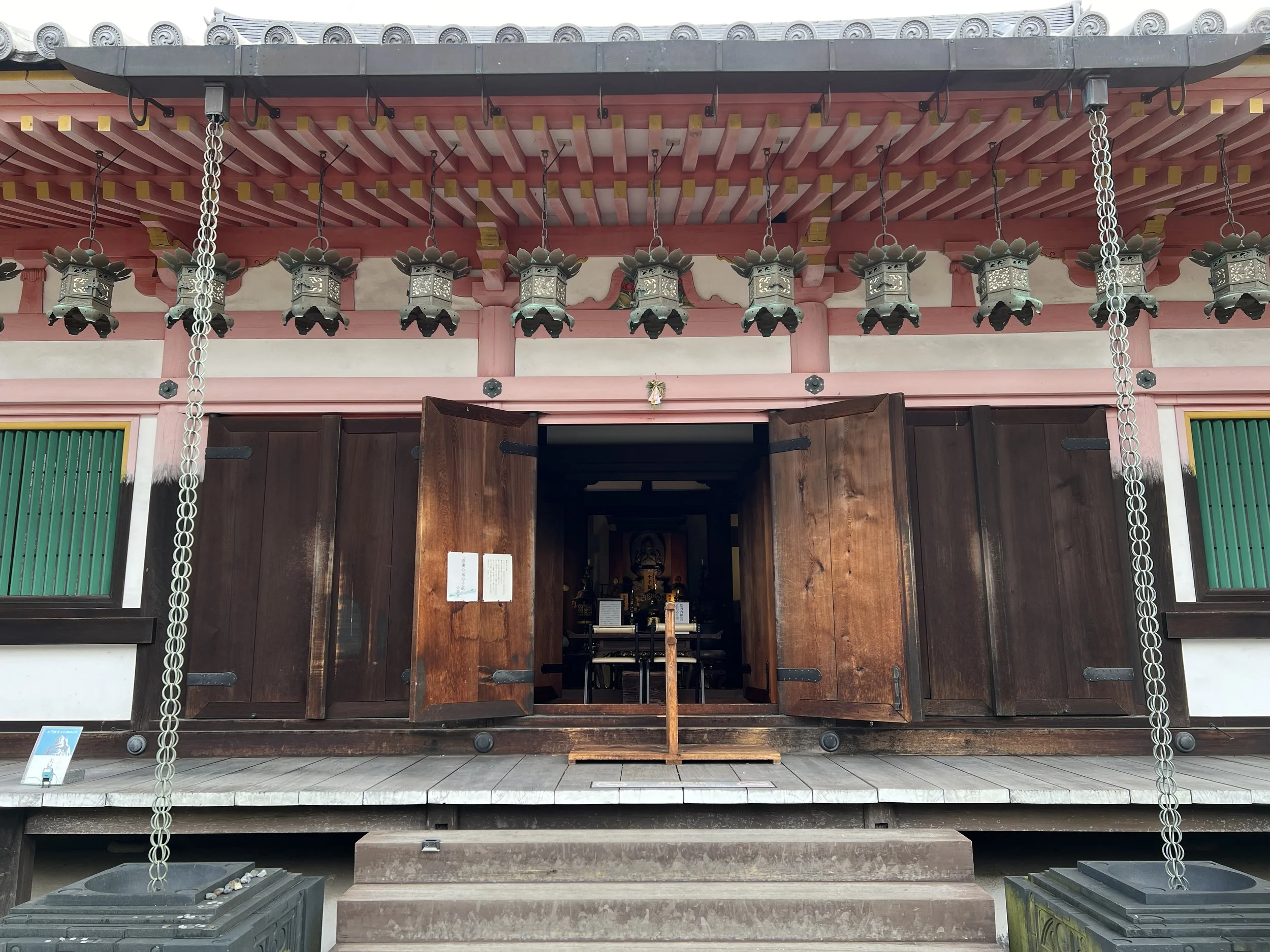
Inside, the scale of the temple grounds quickly became apparent. Giant Buddha statues, multiple halls, and detailed carvings are spread across different levels. Several designated vantage points offer ideal photo angles, allowing you to see just how massive the statues are in relation to the surrounding buildings.
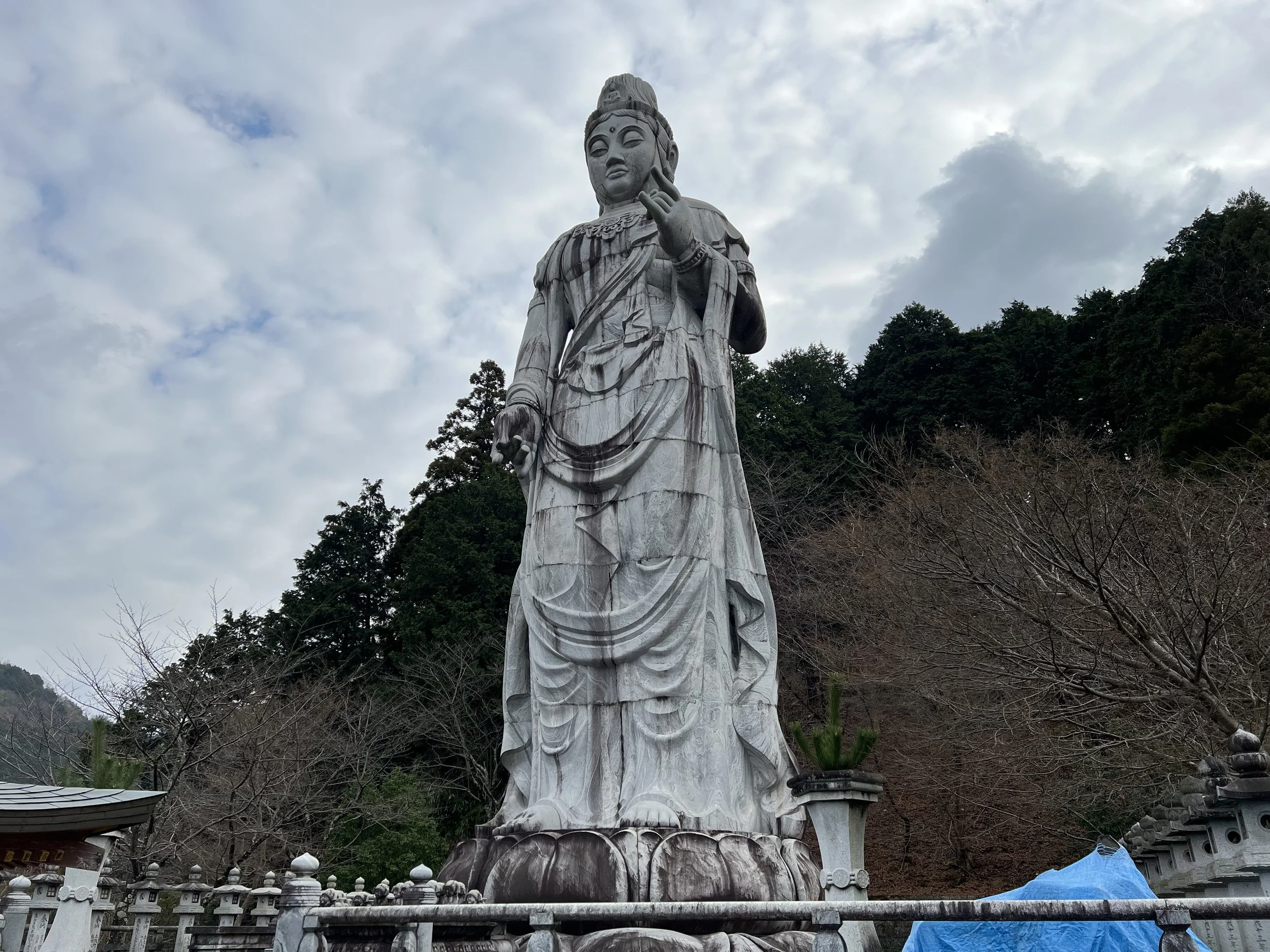
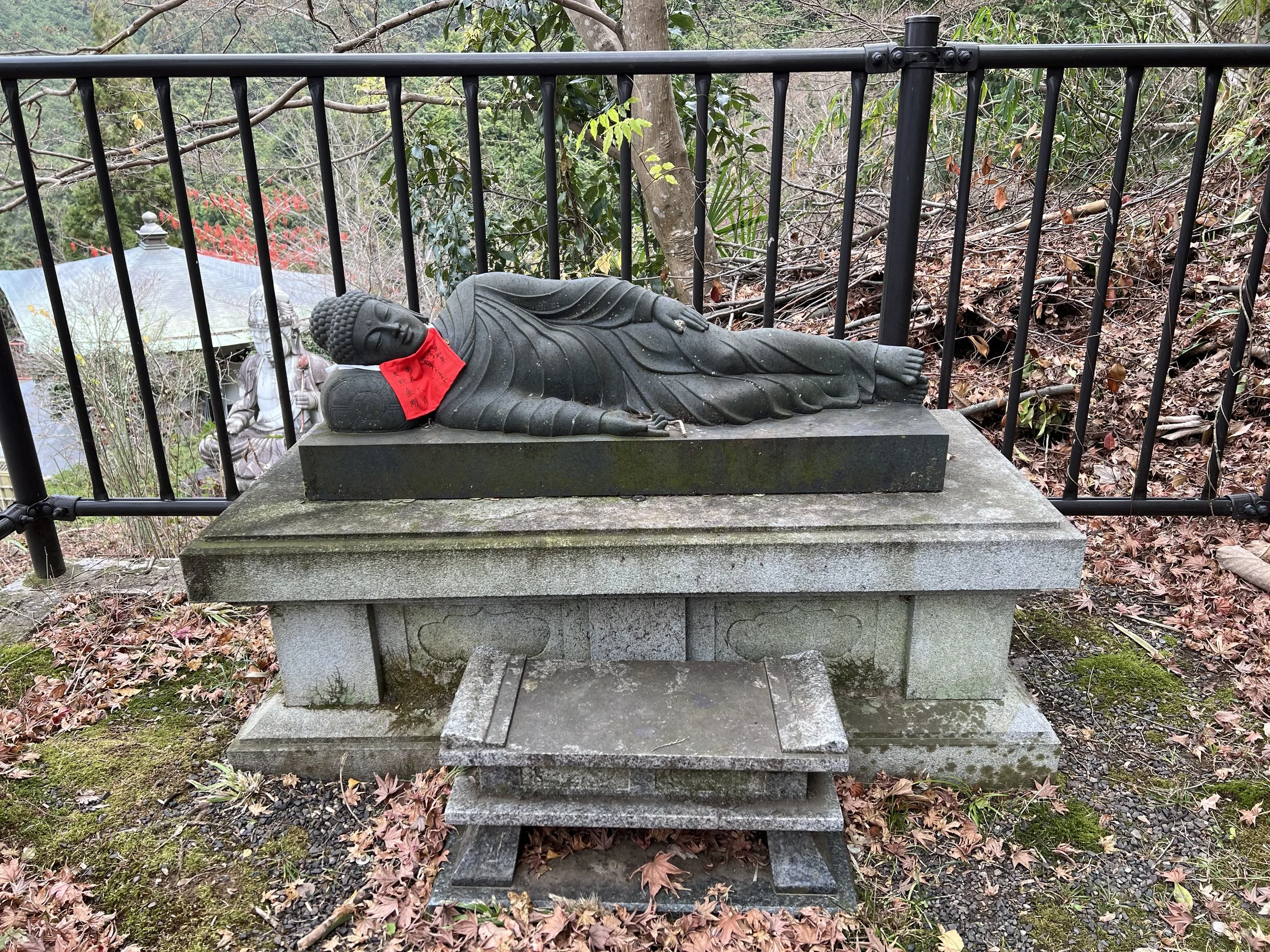
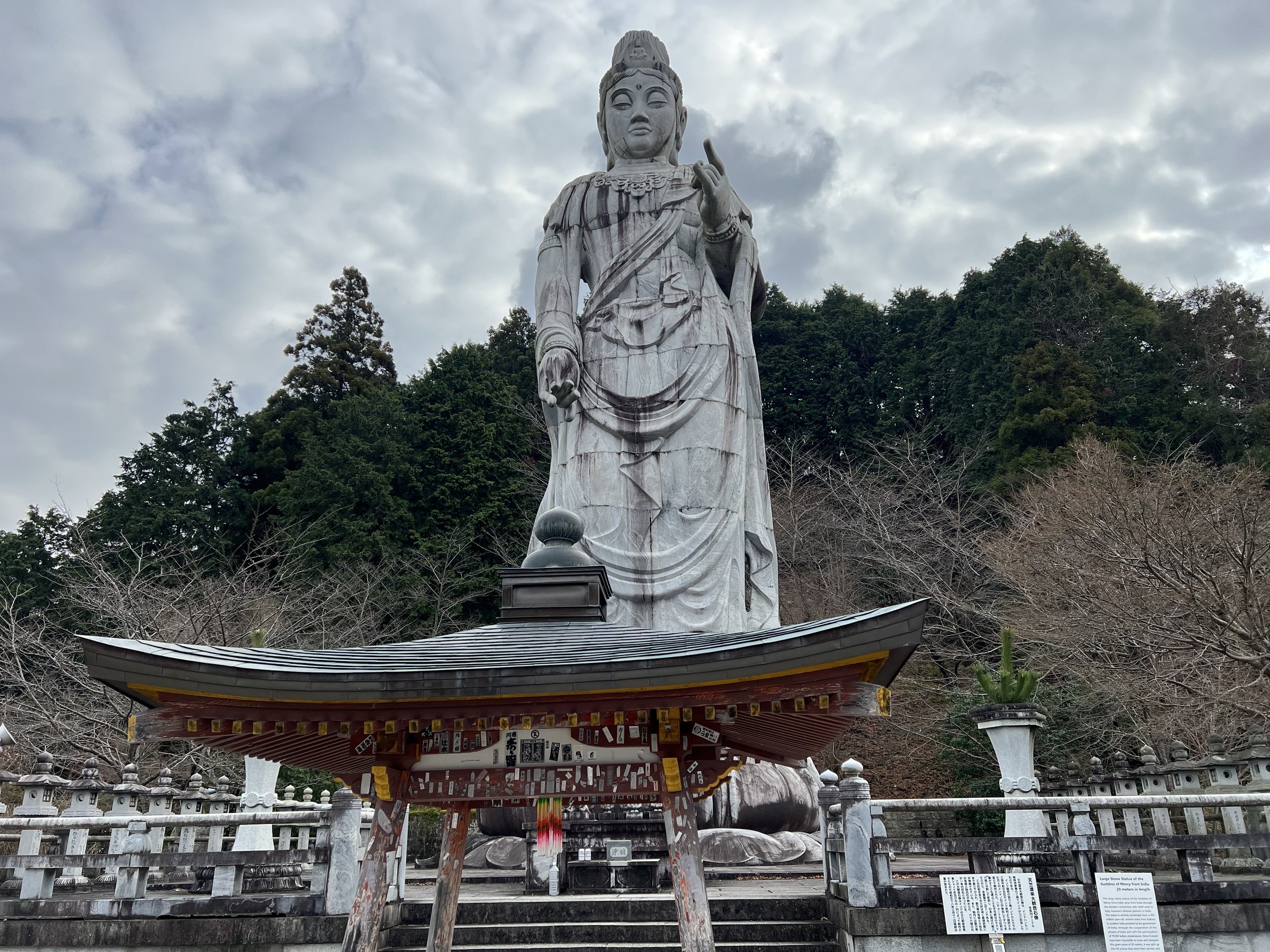
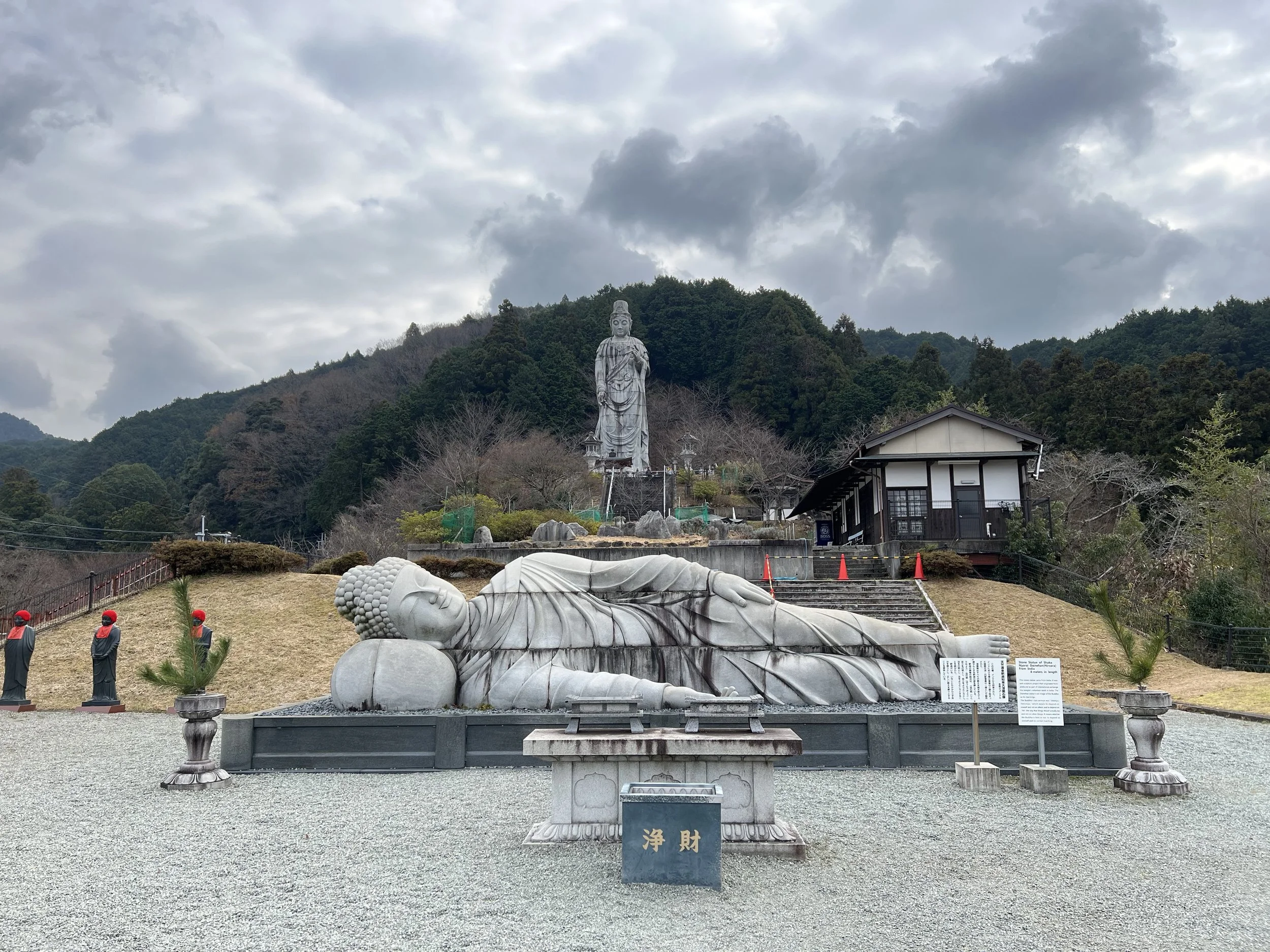
After exploring the first section, I followed signage through an underpass to another area of the complex. Here stand two monumental stone statues brought from India: the Statue of Avalokiteshvara and the Statue of Nirvana.
The Avalokiteshvara statue rises approximately 20 metres tall and weighs around 1,200 tons. Standing at its base, it’s difficult to fully grasp its scale — you almost need distance to understand its magnitude. I walked around it from several angles before heading to the nearby reclining Nirvana Buddha.
The Statue of Nirvana, measuring about 15 metres in length, depicts the Buddha lying down. Because of its horizontal form, it’s easier to appreciate the detailed facial expression and intricate carving up close. Both statues are immensely impressive and add a powerful international dimension to the temple experience.
After taking my time with photos and soaking in the atmosphere, I made my way back toward the entrance and continued on to the nearby trailhead leading to Takatori Castle Ruins.
History & Background
Tsubosaka-dera Temple (壷阪寺) was established in 717 AD during the Nara period. It is associated with the Saigoku Kannon Pilgrimage and is dedicated to Senju Kannon, the Thousand-Armed Bodhisattva of Compassion.
The temple is particularly known for its history of supporting individuals suffering from eye diseases and leprosy, which connects to its reputation as a “Temple of Healing.” In recognition of its humanitarian work, large stone Buddha statues were donated by India, symbolizing international Buddhist ties and cultural exchange.
The fusion of Japanese temple structures with monumental Indian-style stone carvings makes Tsubosaka-dera Temple architecturally and spiritually distinctive within the Kansai region.
Getting There
Tsubosaka-dera Temple is accessible by public transportation from Yamato-Yagi Station in Nara Prefecture. From Yamato-Yagi Station, local buses bound for Tsubosakaderazen Bus Stop take approximately 30 minutes and stop directly in front of the temple entrance.
Route Overview
Distance: 850 m out & back (Tsubosakaderazen Bus Stop)
Total elevation gain: 37 m
Duration: 20 min (with breaks 40 min)
Difficulty: Easy
Cost Breakdown
Train: Sakurai Station → Yamato-Yagi Station — ¥240
Bus: Yamato-Yagi Station → Tsubosakaderazen Bus Stop — ¥620
Entrance Fee: Tsubisaka Temple — ¥600
Food: ¥179