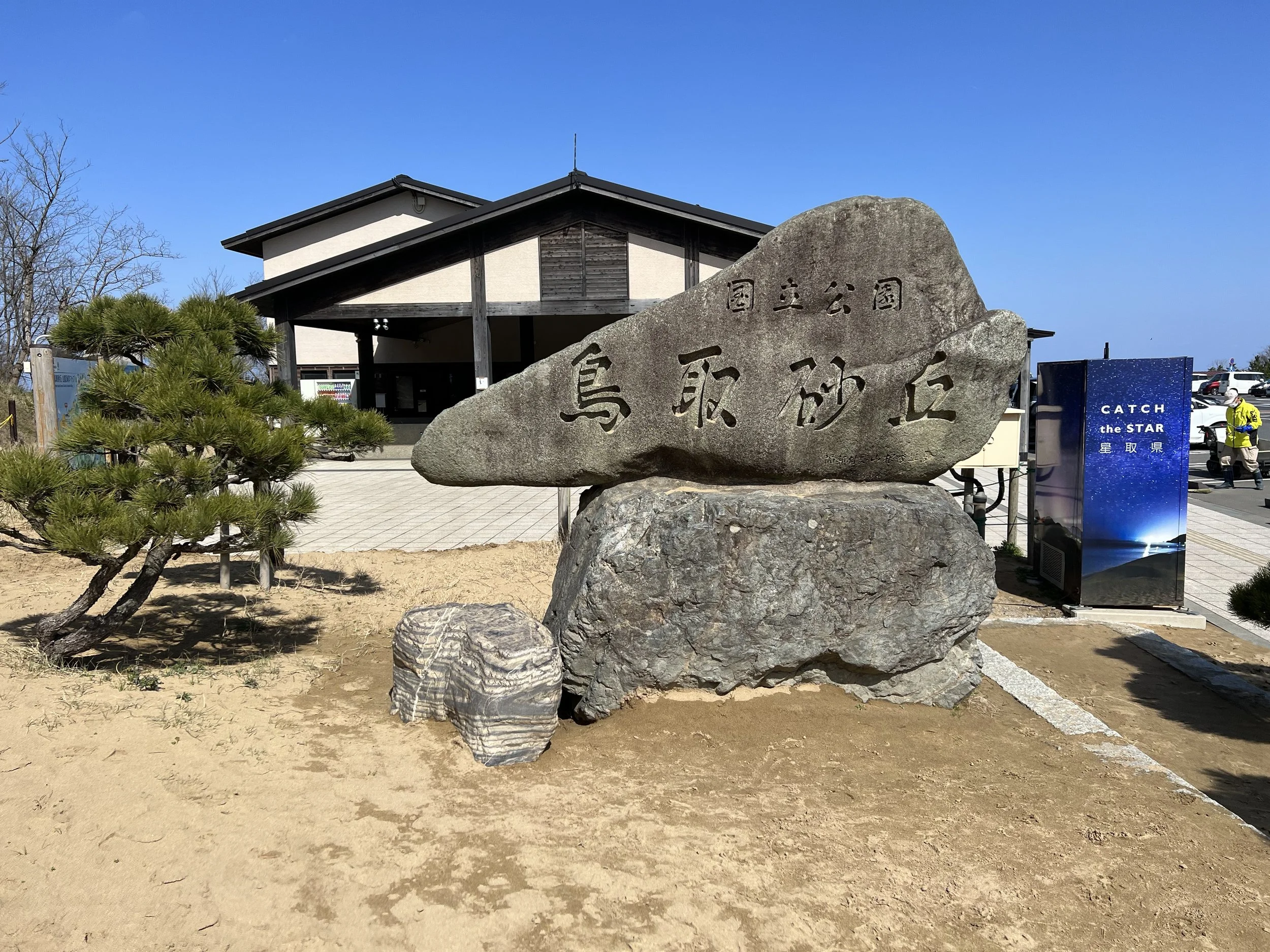
Tottori Sand Dunes - Tottori, Japan
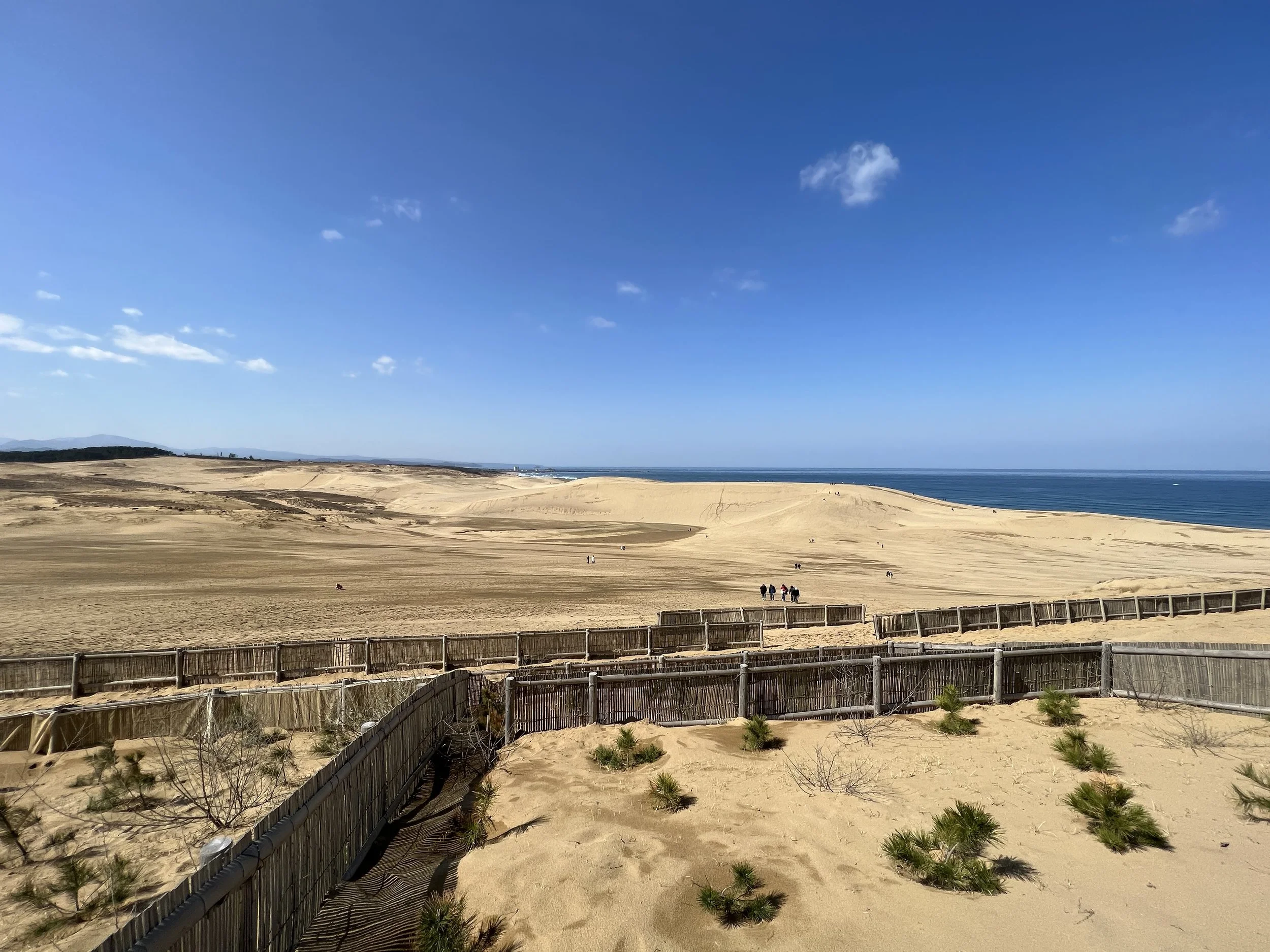
After finishing my visit at the Sand Museum nearby, I headed towards the main attraction that brought me to Tottori in the first place: the Tottori Sand Dunes. Japan isn’t exactly known for deserts, so I was genuinely surprised when I first learned about this place. What stood out to me even more was the presence of camels—certainly not native, but undeniably adding to the desert-like atmosphere.
From the Sand Museum, I walked over to the Sand Dunes Tourist Chairlift and purchased a one-way ticket down towards the dunes. The area around the chairlift has several souvenir shops and restaurants, but since it wasn’t peak season, many of them were quiet or closed. I was grateful that the weather was calm that day; strong winds can sometimes result in restricted access to the dunes. Before heading out onto the sand, I stopped by the Tottori Sand Dunes Visitor Centre to look through the information displays and learn more about the area.
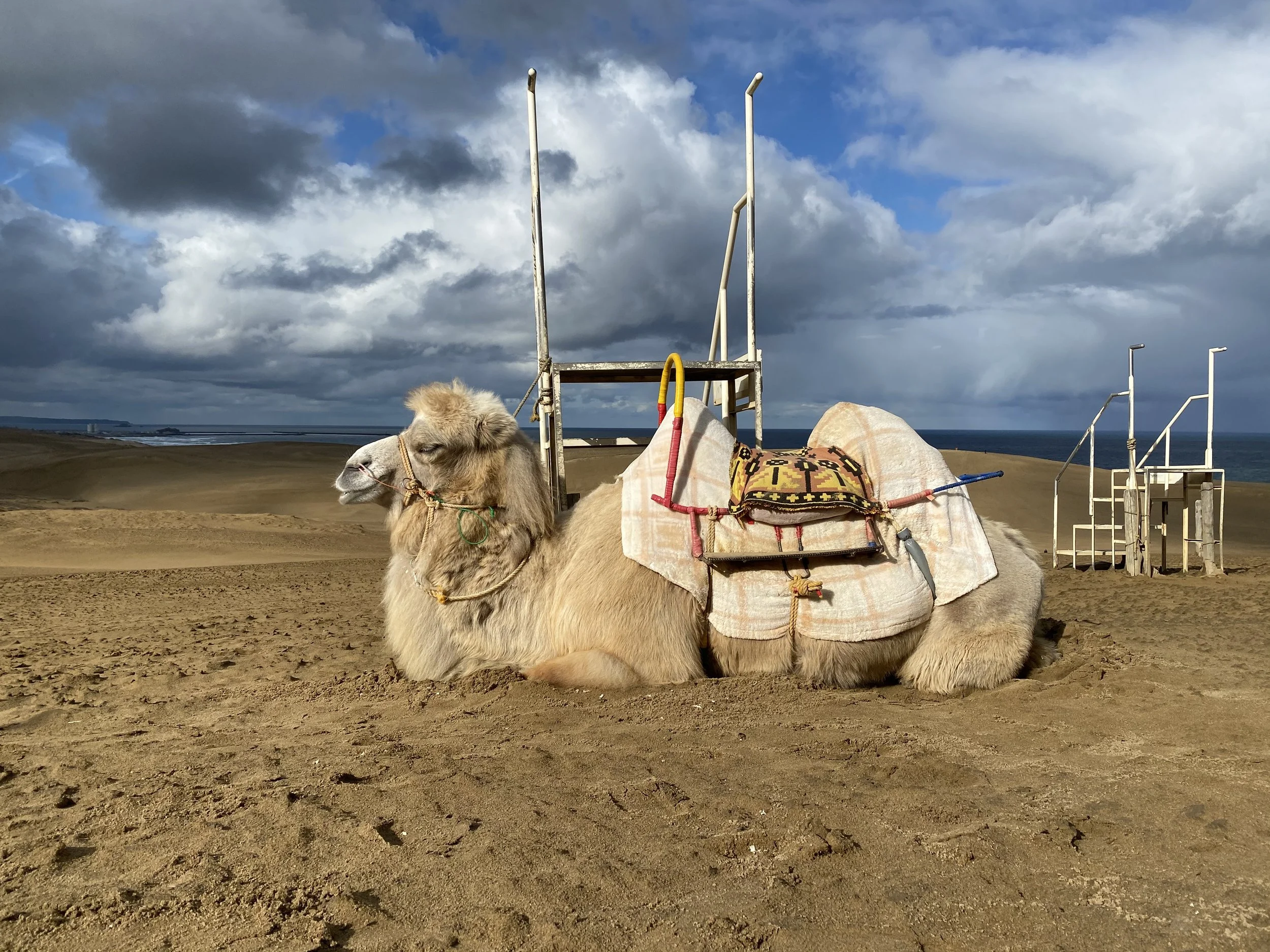
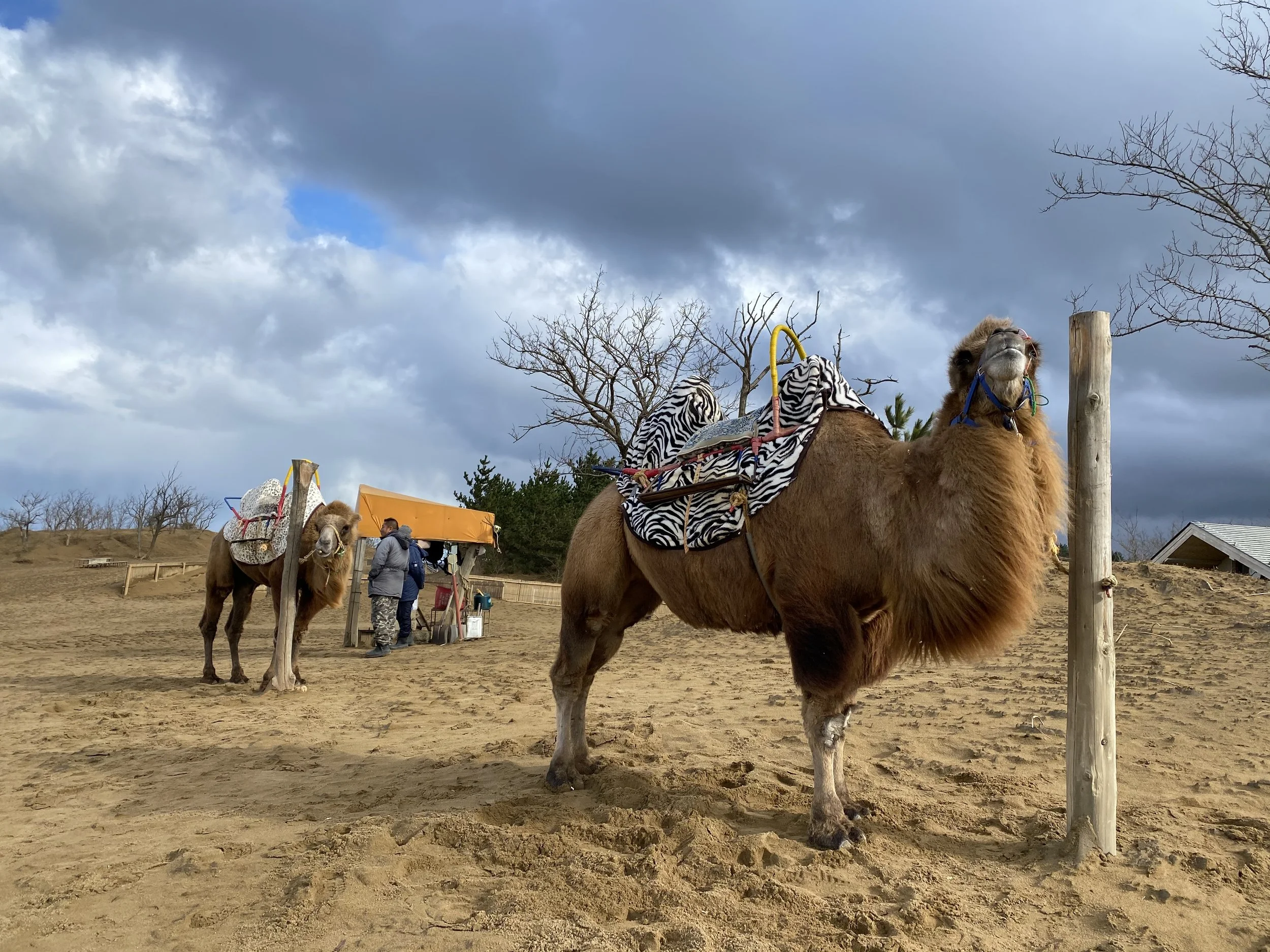
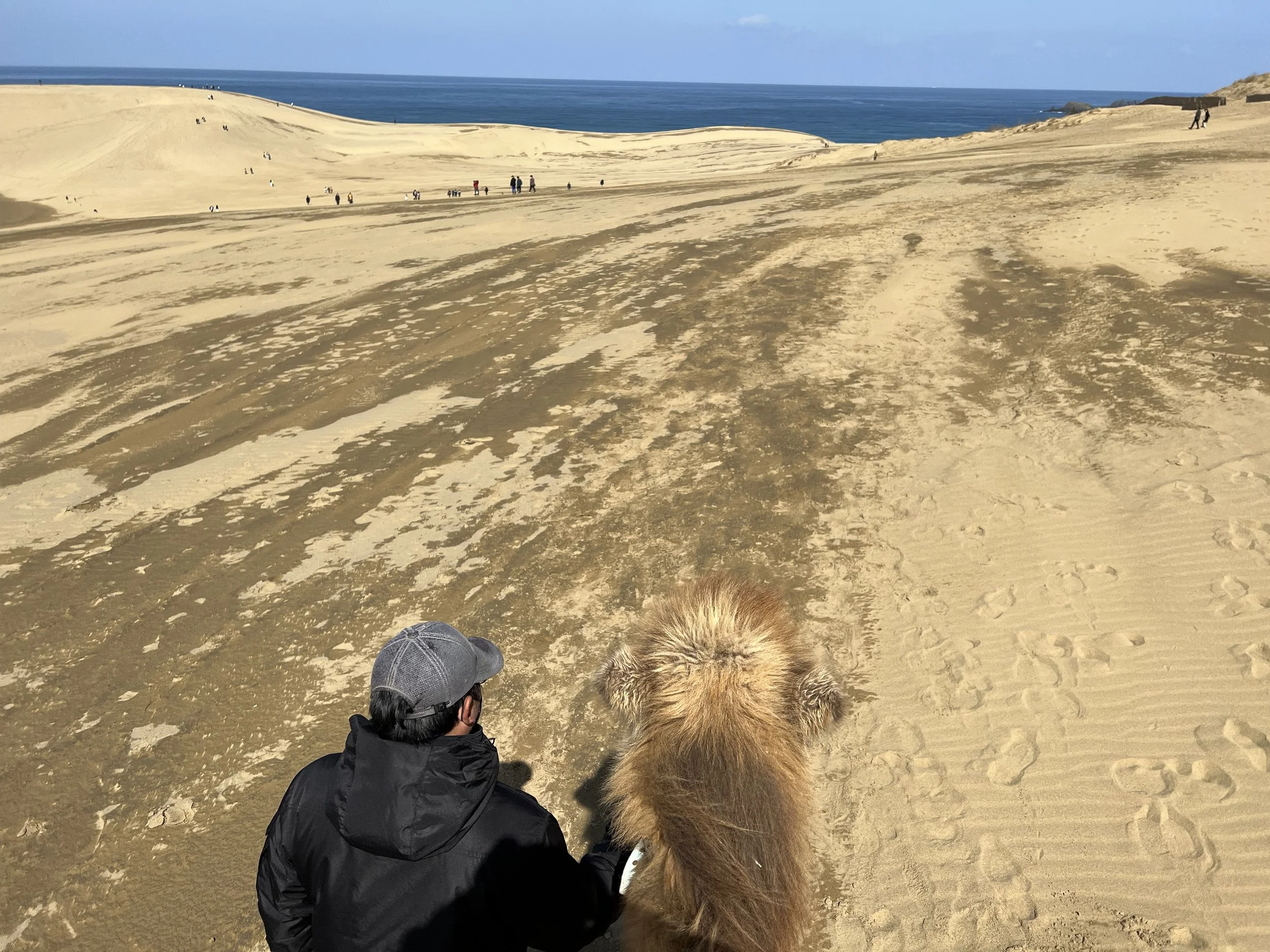
After that, I made my way over to where the camels were stationed. Visitors can pay for a short camel ride and have their photos taken, and from what I learned, the camels are well cared for. They don’t operate in poor weather, rides are limited each day, and they aren’t available daily, so it’s important to check in advance. I decided to go for a short ride and photos. Riding a camel in a desert-like landscape in Japan felt surreal. The handler led the camel around a small loop while helping take photos, and once we returned to the platform, I was allowed to take additional pictures of the camels resting. I kept a respectful distance and spent a few moments photographing the two camels before moving on.
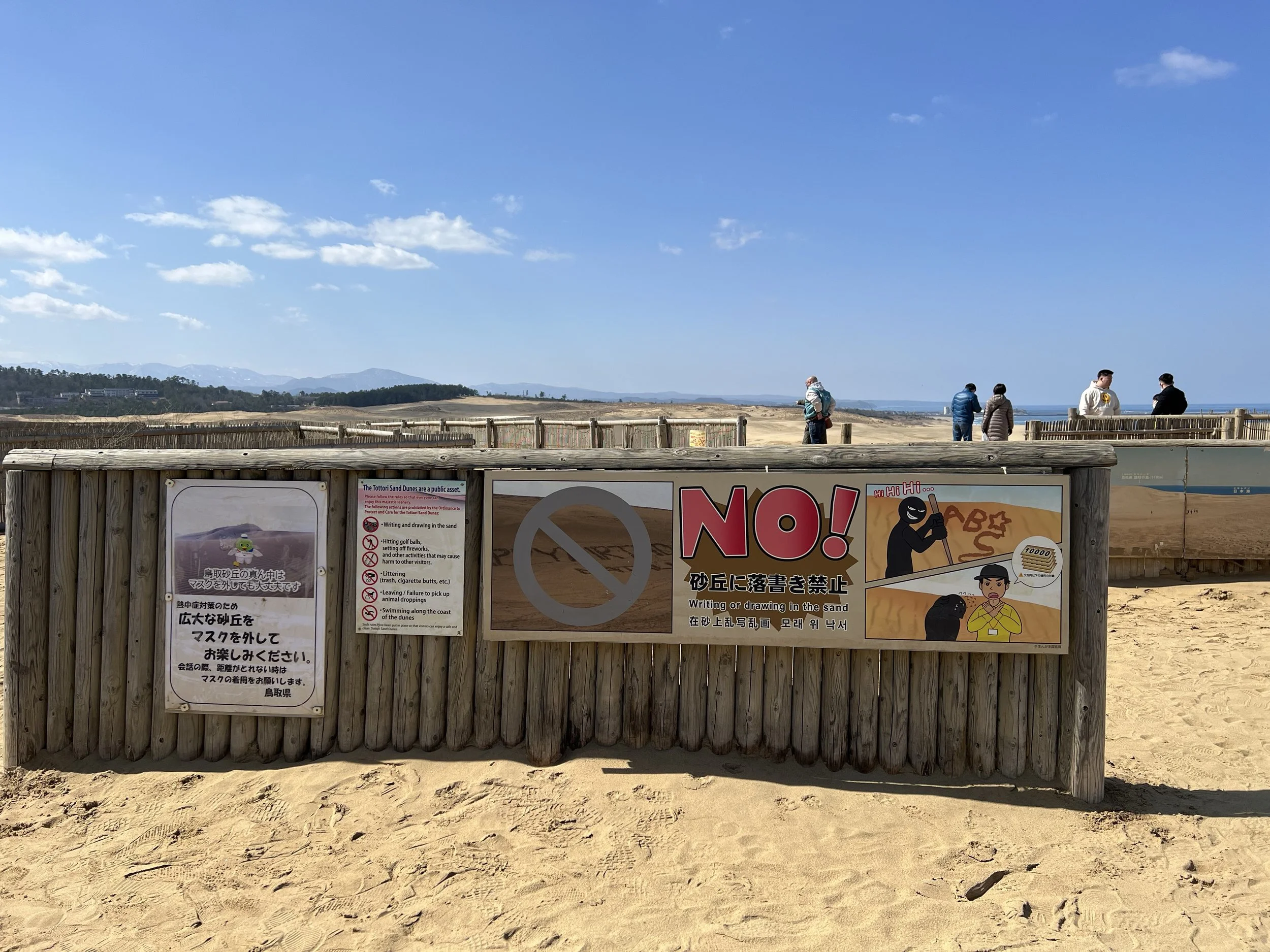
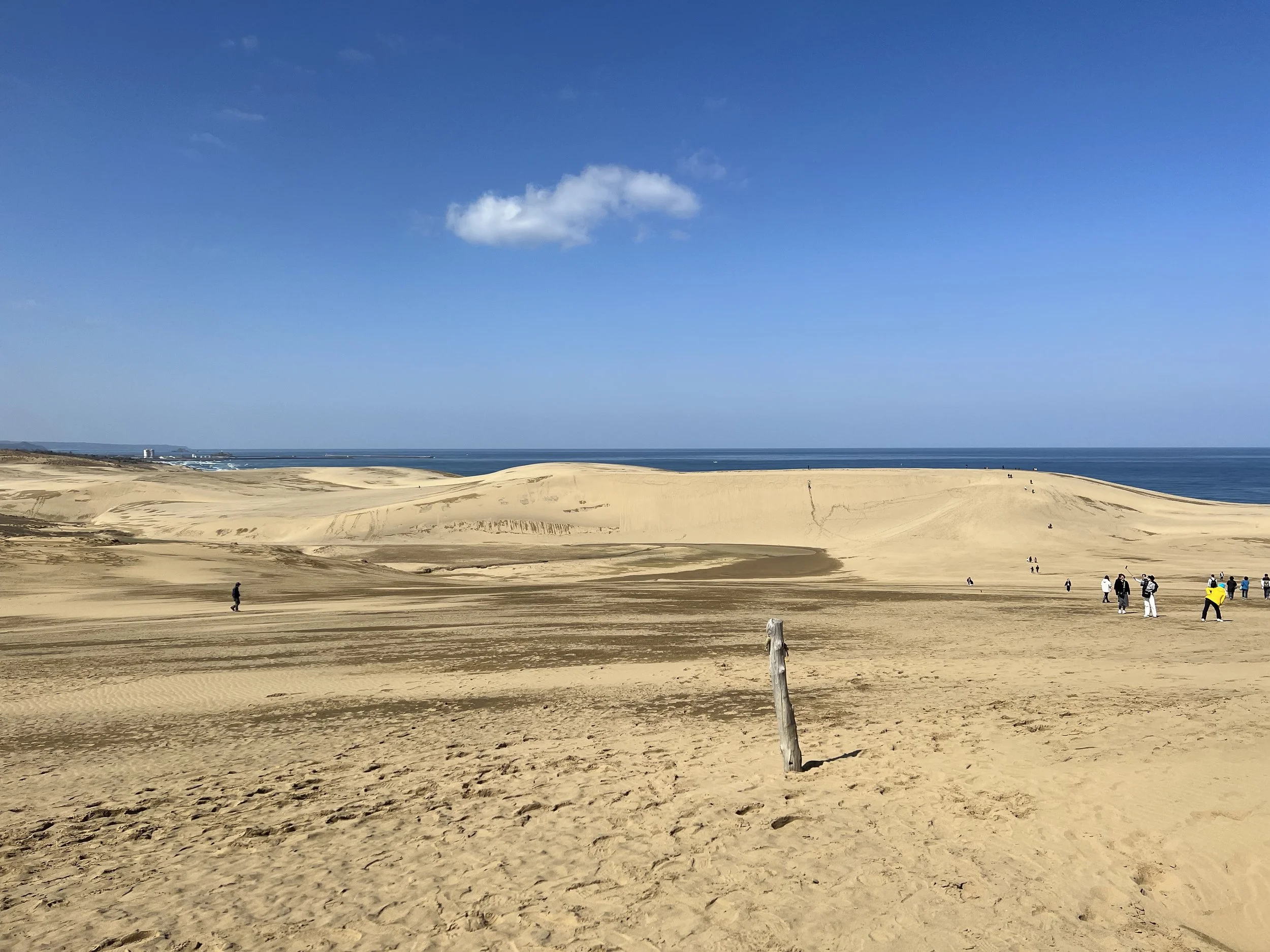
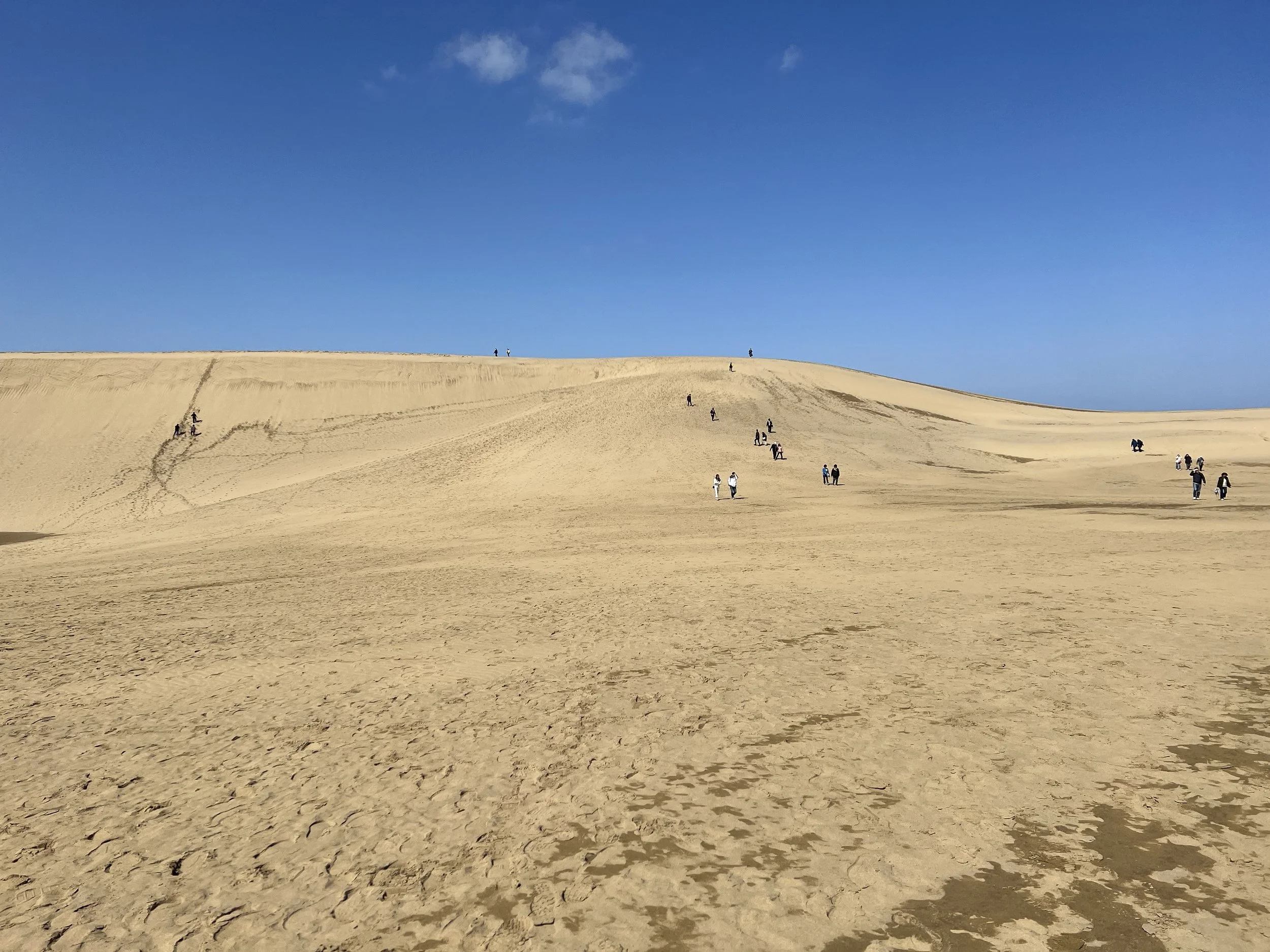
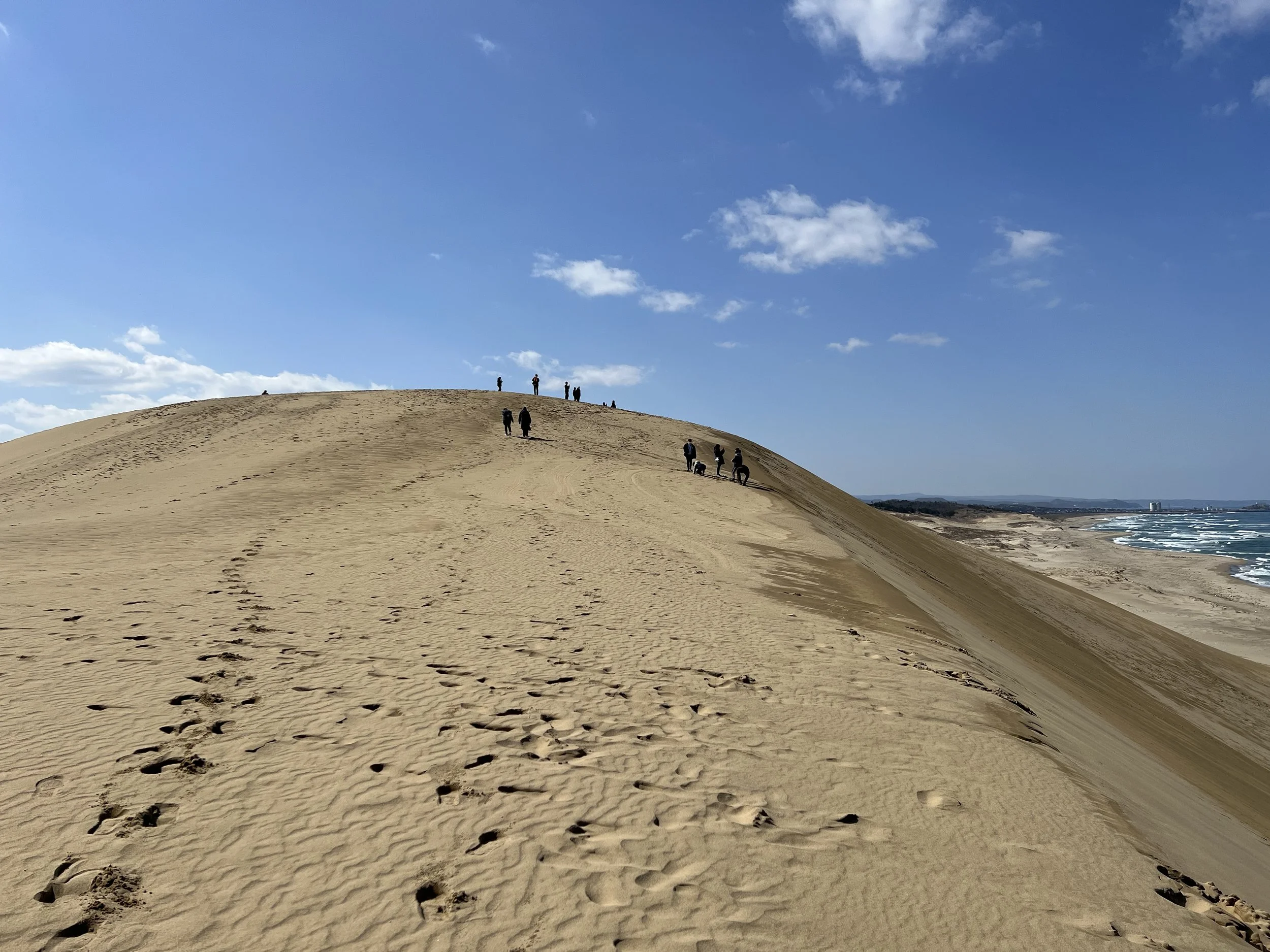
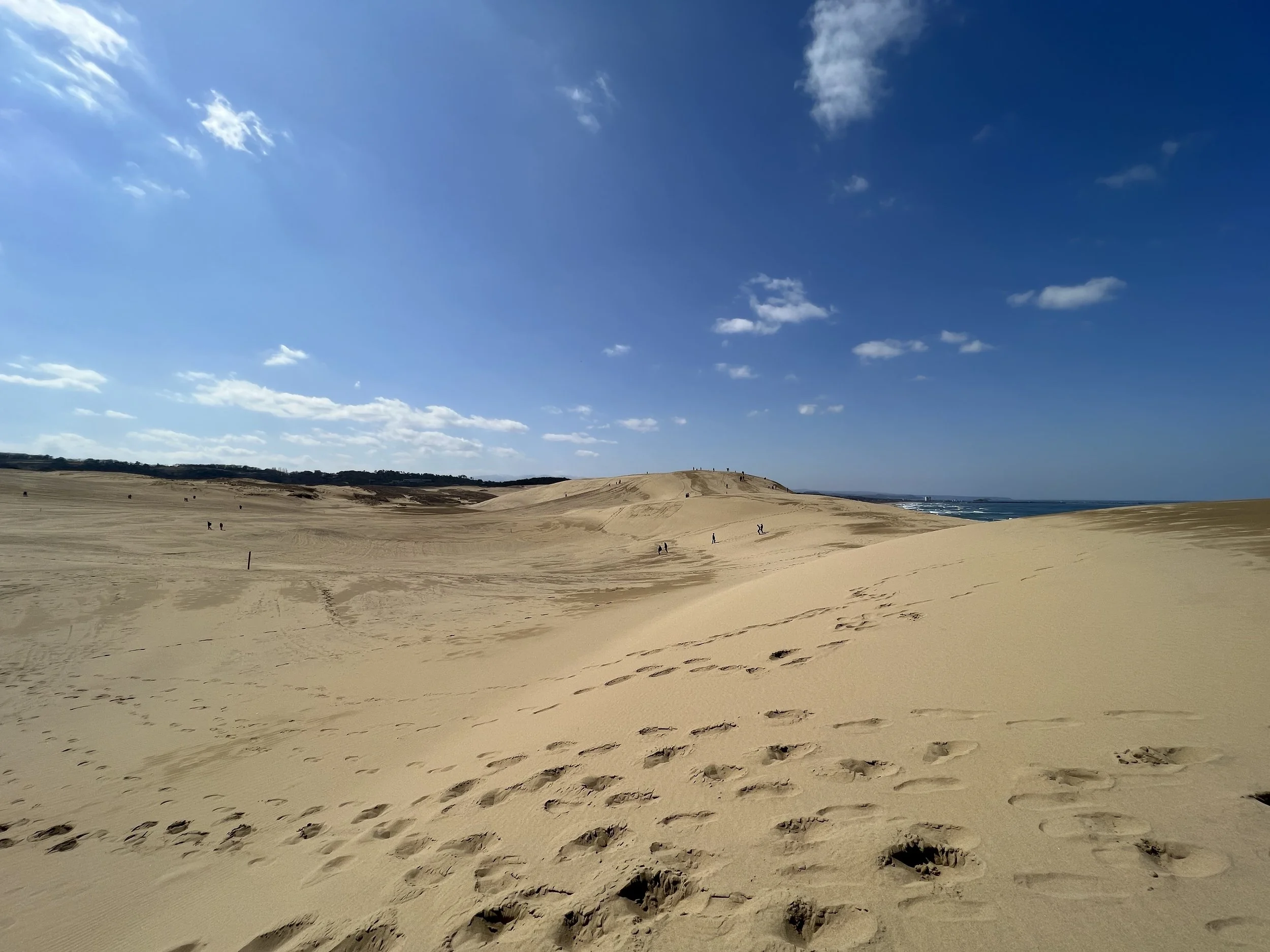
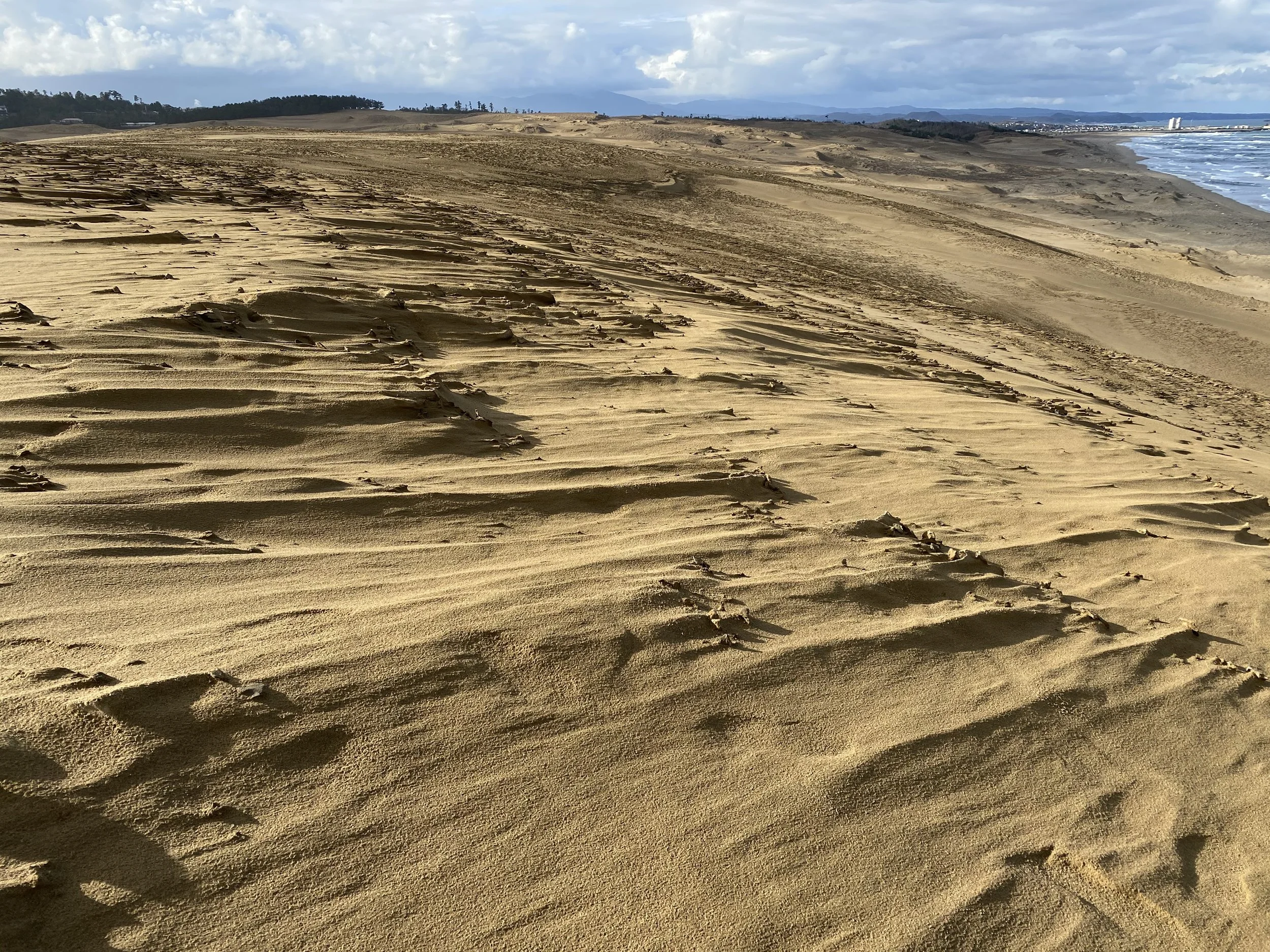
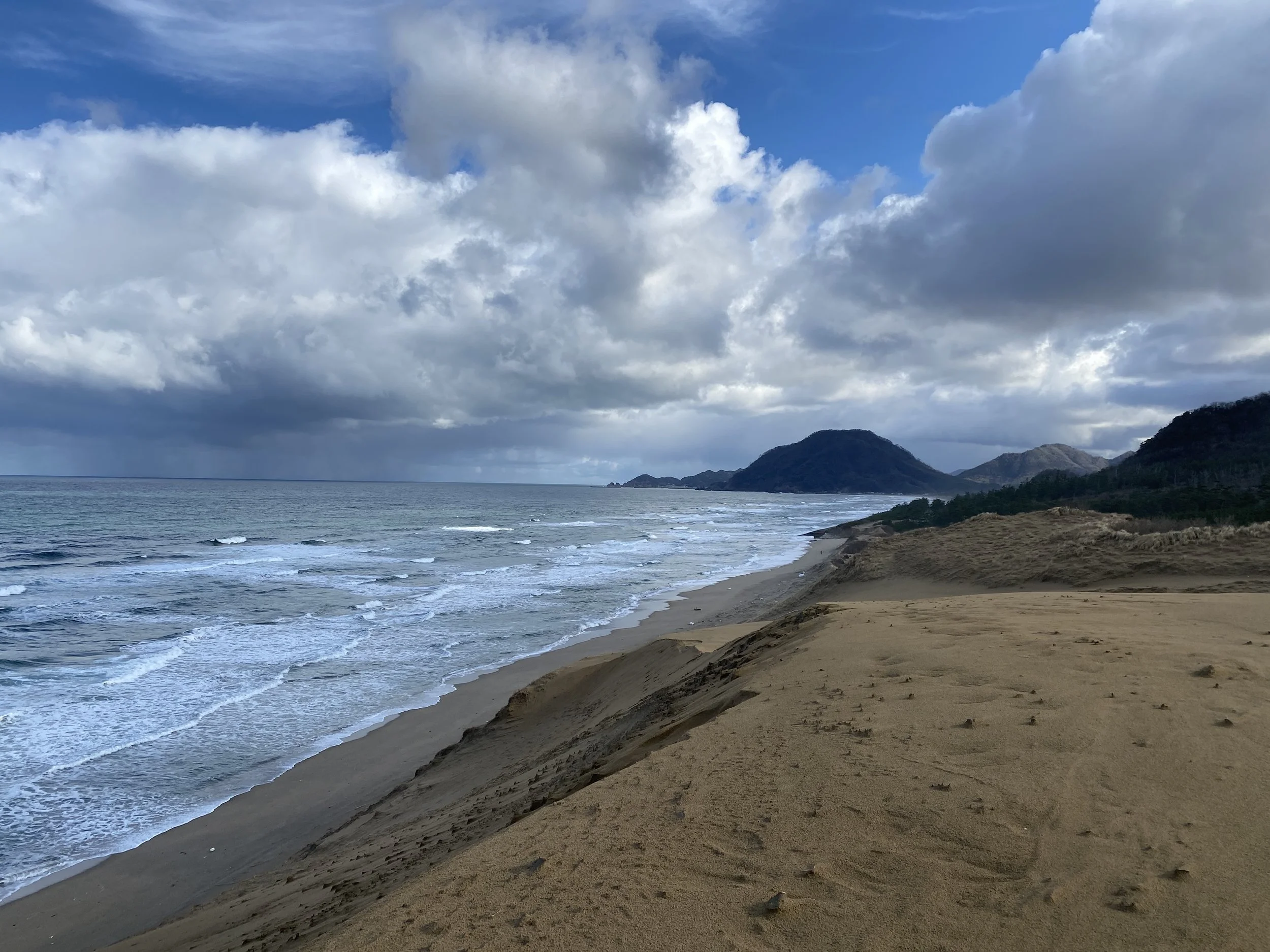
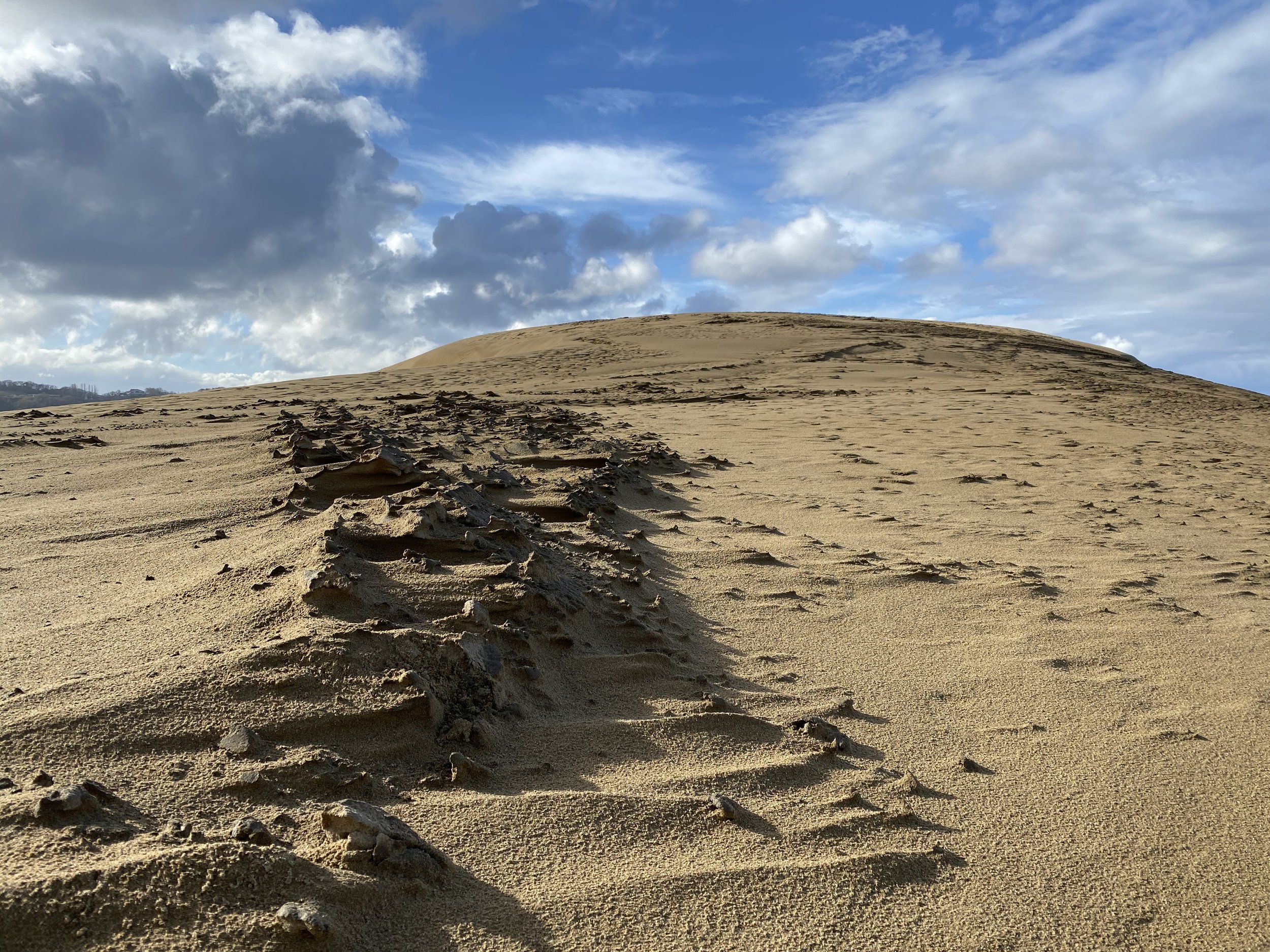
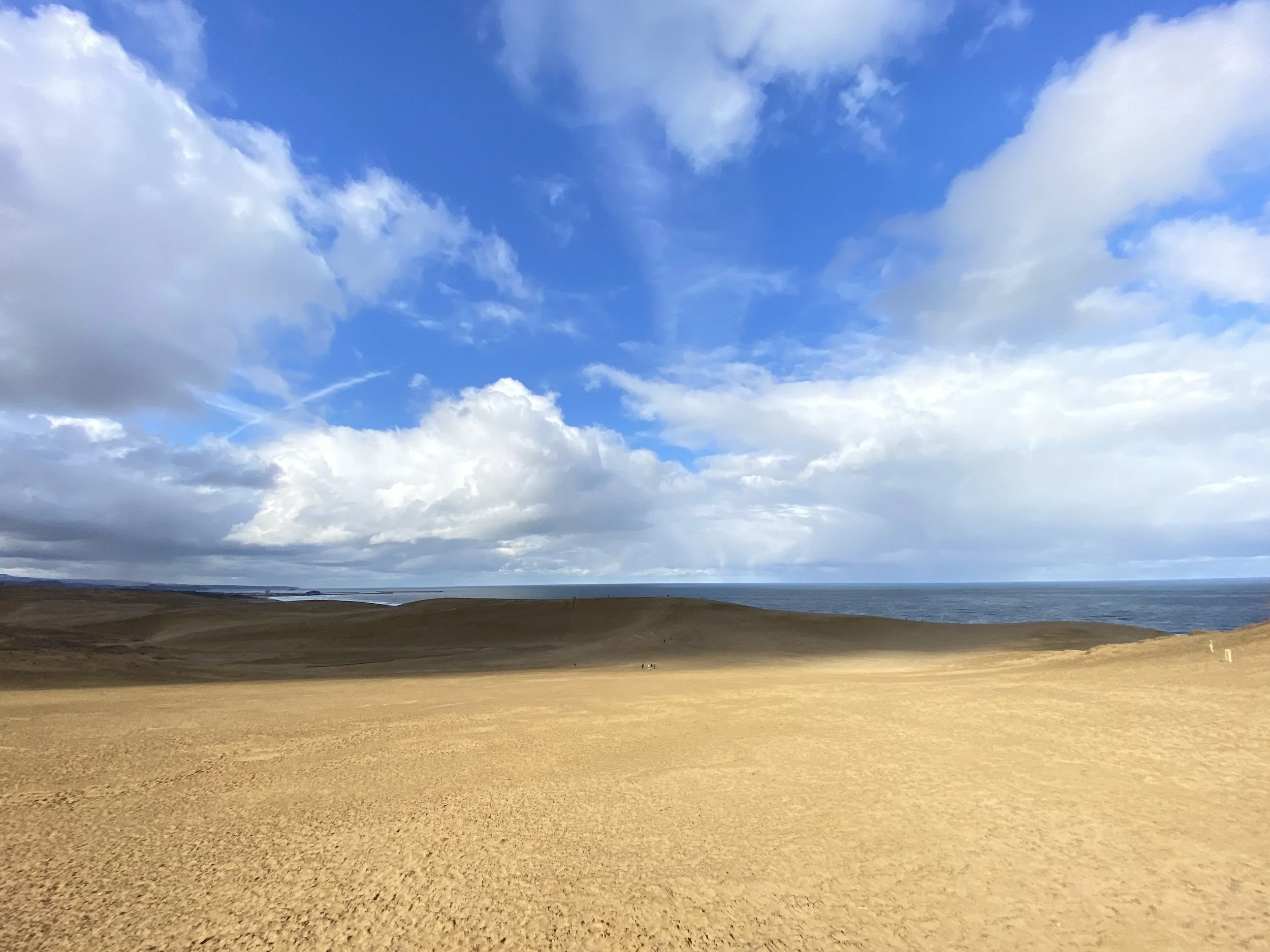
I then began walking across the sand dunes themselves. Walking uphill on soft sand was far more physically demanding than I expected, but I was determined to reach a higher vantage point to see the coastline. I didn’t venture all the way down to the water, knowing the climb back up would be challenging. One of the most iconic formations here is Horse Back Dune, named for its resemblance to a horse’s back when viewed from afar. It’s widely considered the most picturesque spot in the area, and it’s easy to see why.
After wandering around and taking more photos, I made my way back toward the visitor centre. I stopped at the foot-washing station nearby, shaking out my shoes and socks to get rid of as much sand as possible—though some inevitably stayed behind. Once I cleaned up, I walked back toward the bus stop on the main road. Experiencing sand dunes and camel rides in Japan was something I never expected, and it made this visit feel especially memorable.
Background
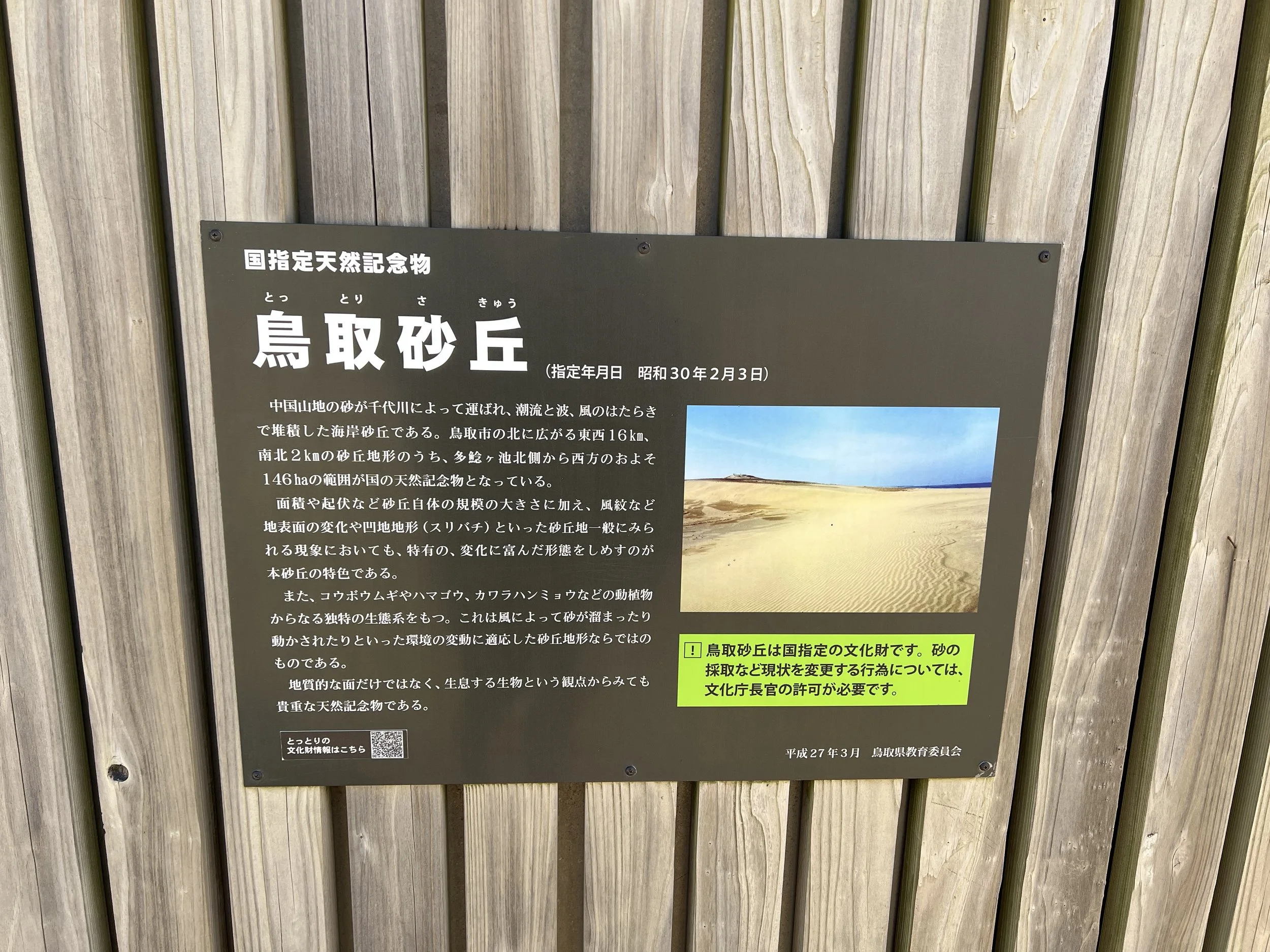
The Tottori Sand Dunes (鳥取砂丘) are Japan’s largest sand dune system, stretching approximately 16 kilometres along the coast of the Sea of Japan. Formed over thousands of years by sand carried from the Sendai River and shaped by coastal winds and tides, the dunes are a rare natural landscape in the country. They are part of San’in Kaigan National Park and have been designated a protected natural monument. Today, the dunes are a popular attraction for visitors seeking outdoor activities such as walking, sandboarding, and scenic photography.
Getting There
The Tottori Sand Dunes are easily accessible from Tottori Station by local bus. Several bus routes serve the Sand Dunes and Sand Museum area, with stops just a short walk from the main entrance. From the Sand Museum, the dunes can also be reached on foot or chairlift, making it convenient to visit both attractions in the same outing. Clear signage and well-maintained paths make navigation straightforward, even for first-time visitors.
Route Overview
Distance: 2.27 km out & back (Sand Museum → Sakyu East Bus Stop)
Total elevation gain: 76 m
Duration: 33 min (with breaks 47 min)
Difficulty: Intermediate
Info: Learn more about the camels at the Tottori Sand Dunes here.
Cost Breakdown
Chairlift: Sand Dunes Tourist Chairlift Ticket One Way — ¥300
Camel Ride: ¥1,500