Shingu Castle Ruins - Wakayama, Japan
Shingu Castle Ruins, also known as Tankaku Castle, sits just a 15-minute walk from Shingu Station, adjacent to the Kumano River. Built in the early 1600s, the castle was briefly abandoned in 1615 following the Tokugawa shogunate’s “one castle per province” rule, only to be rebuilt shortly afterward. Its strategic purpose was to monitor coastal shipping routes and safeguard the region on behalf of the Tokugawa authorities.
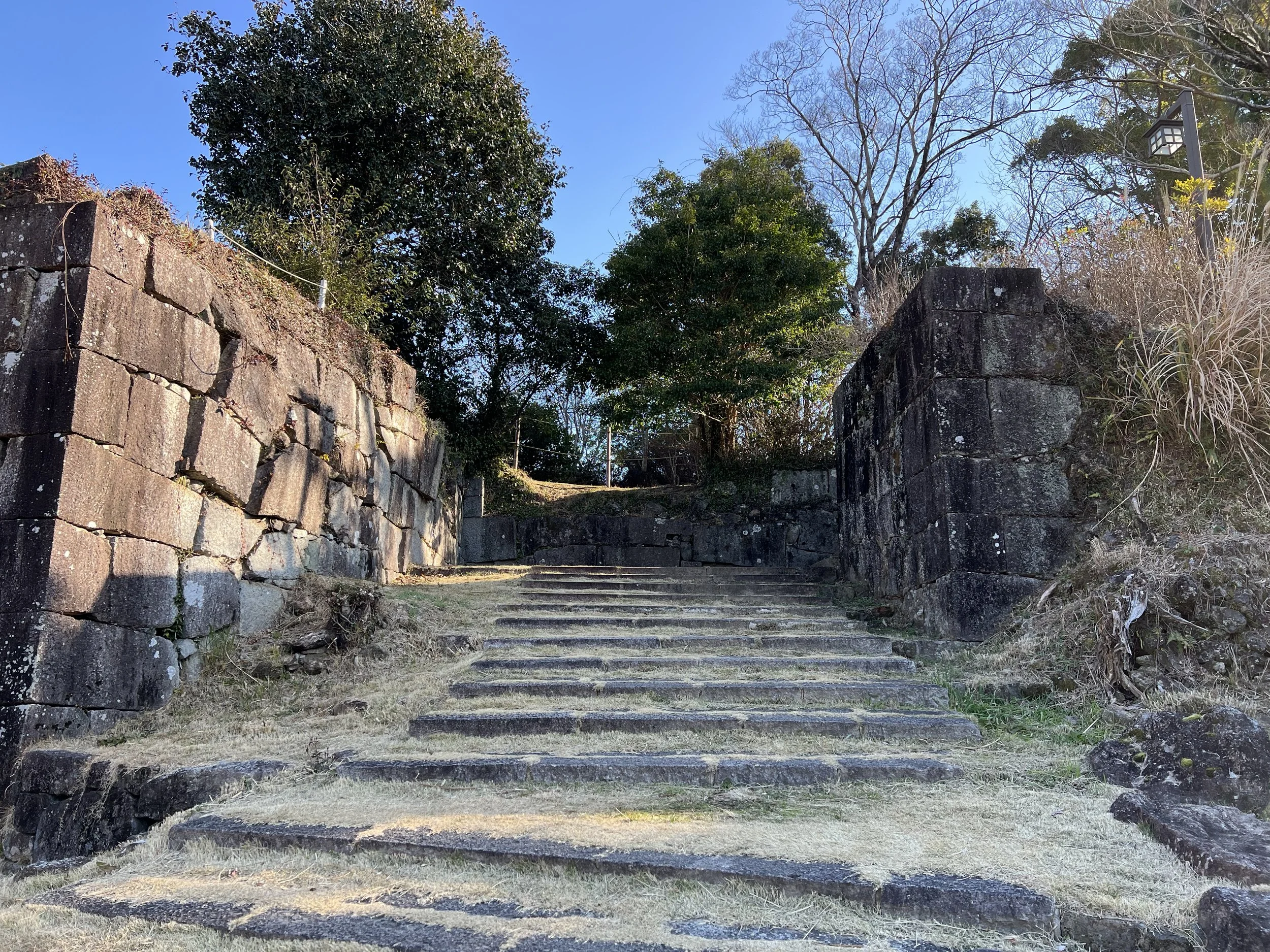
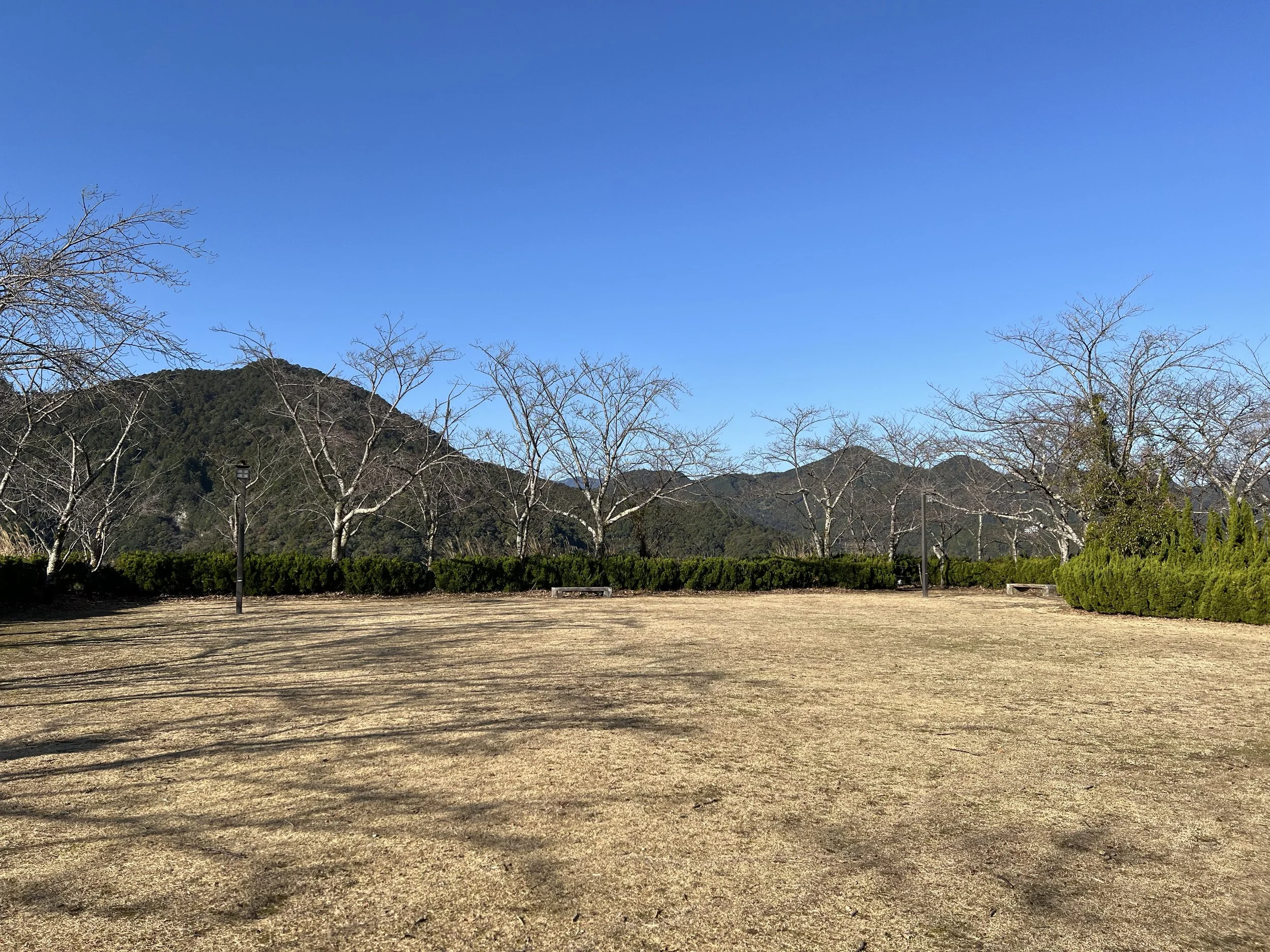
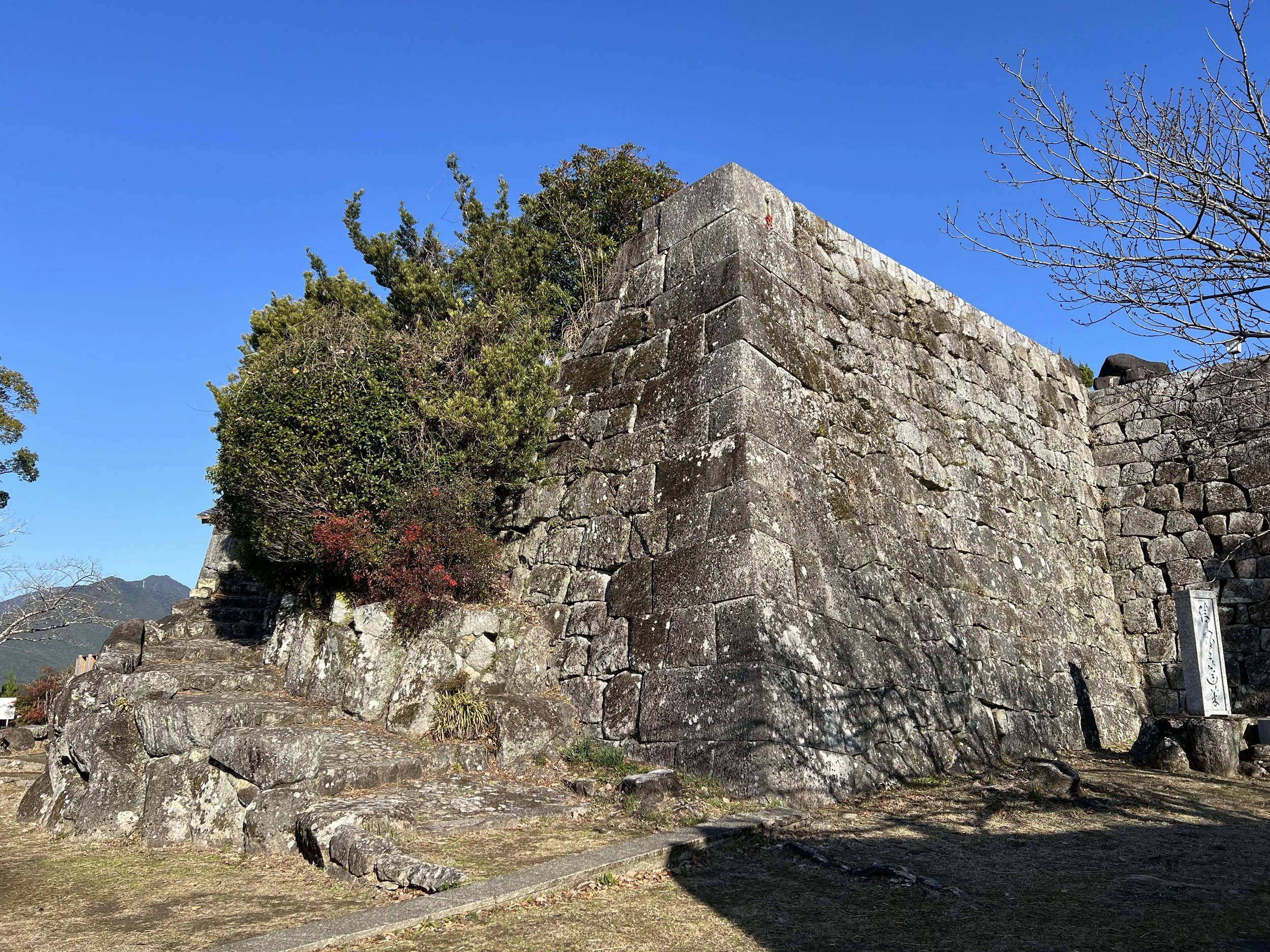
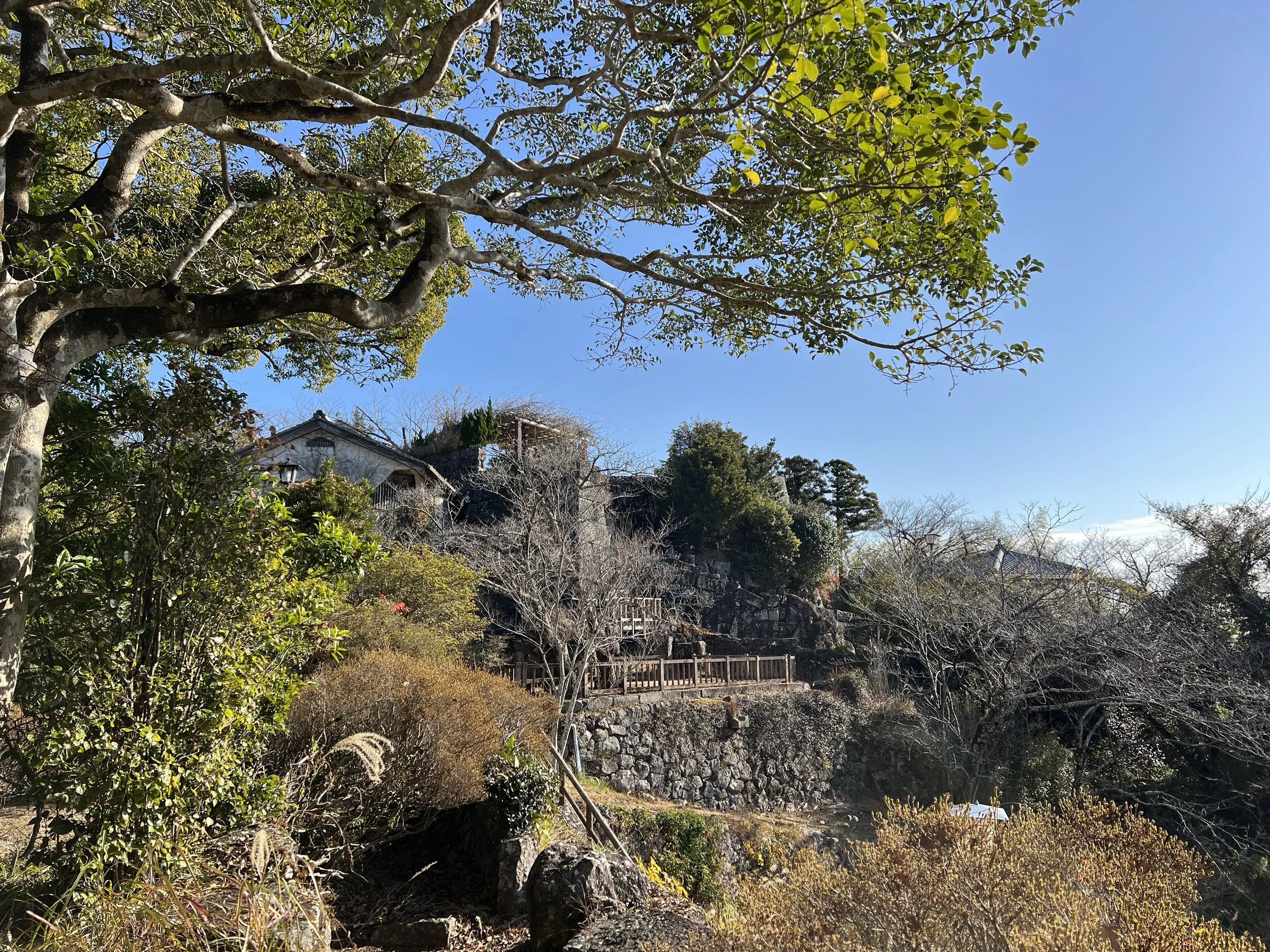
Today, little remains of the original castle apart from portions of the stone walls, which clearly mark the layout of the former fortress. The site has since been converted into Tankaku Castle Park, a popular public space and a well-known spot for cherry blossom viewing in spring.
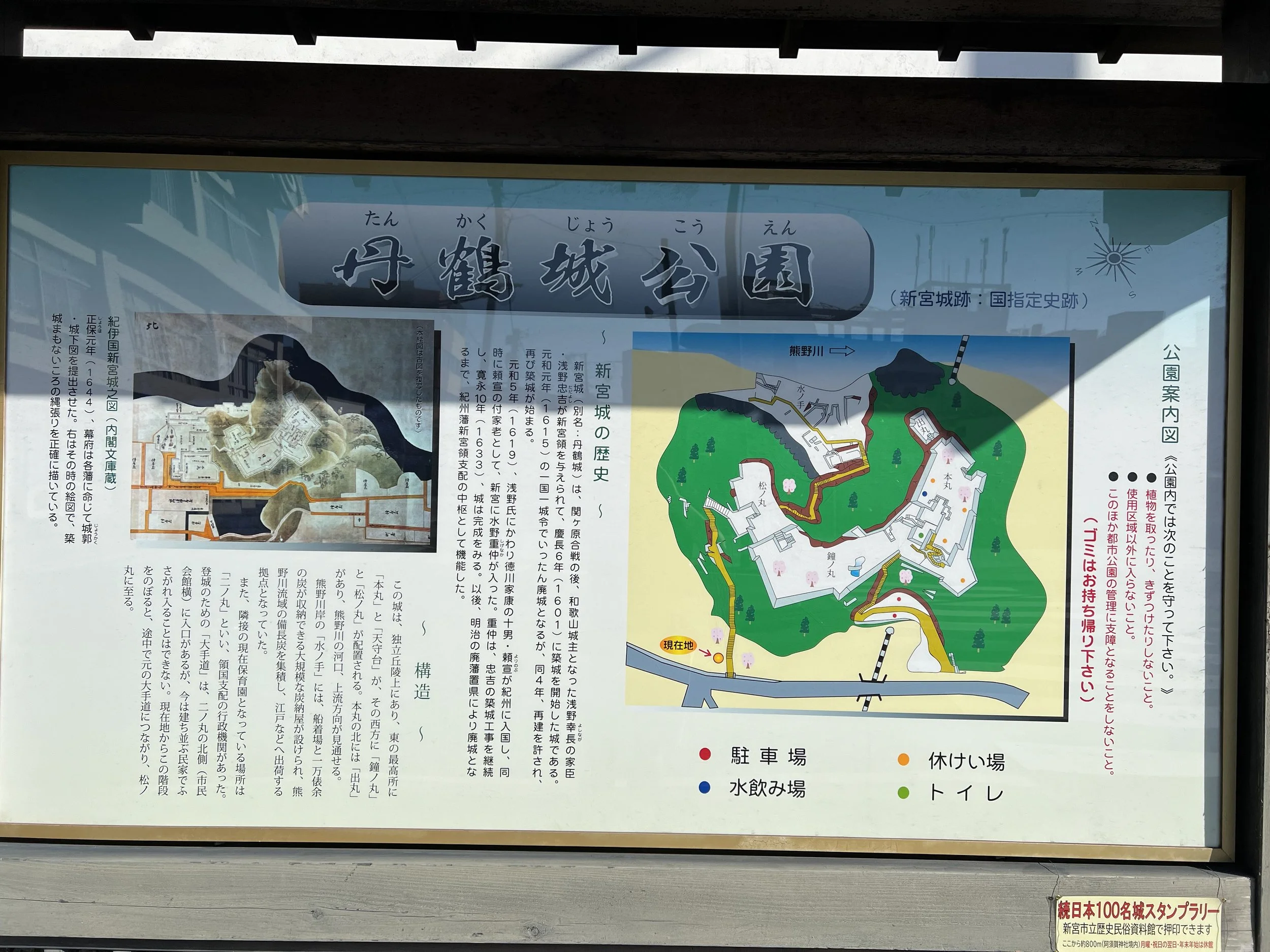
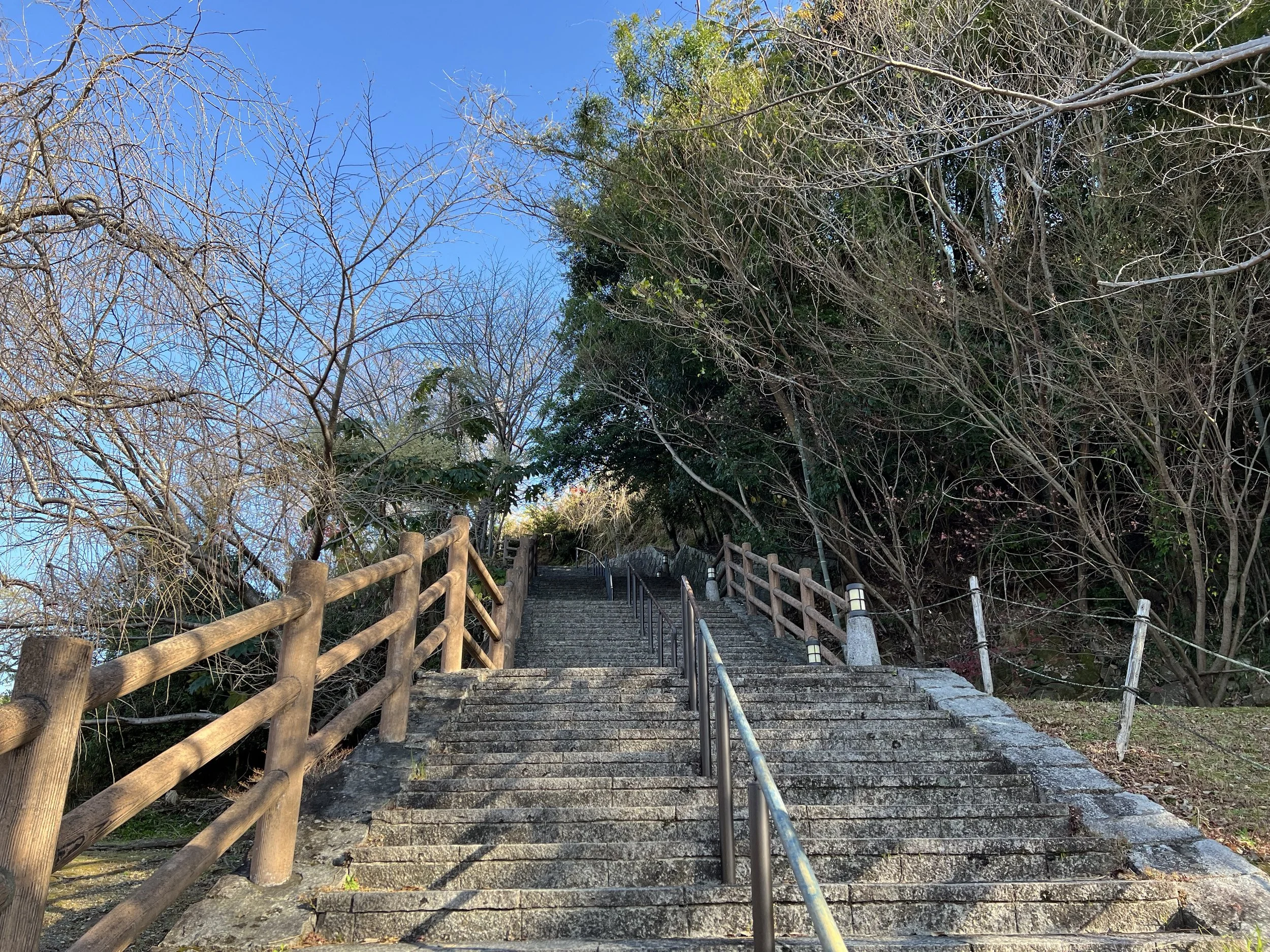
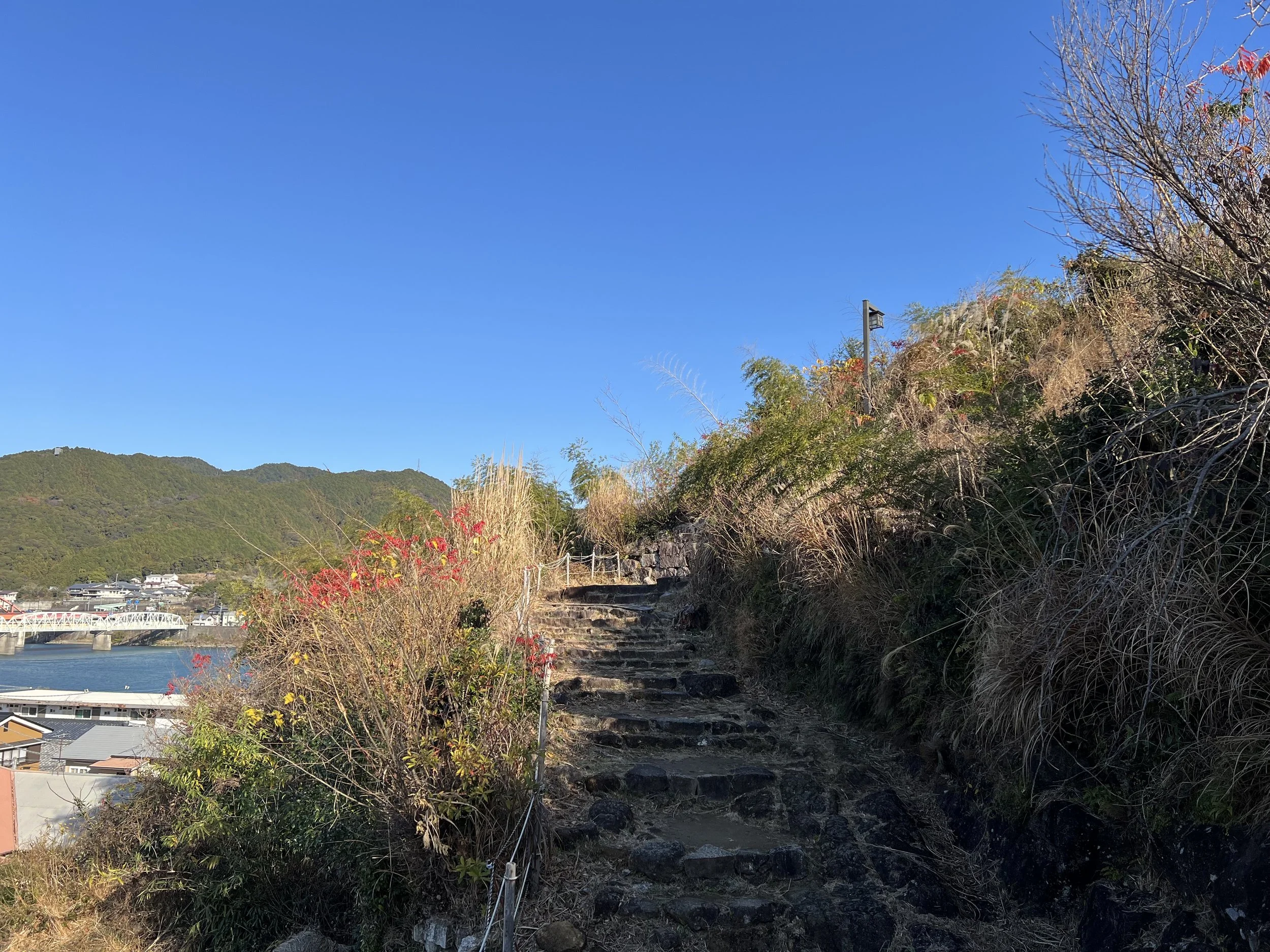
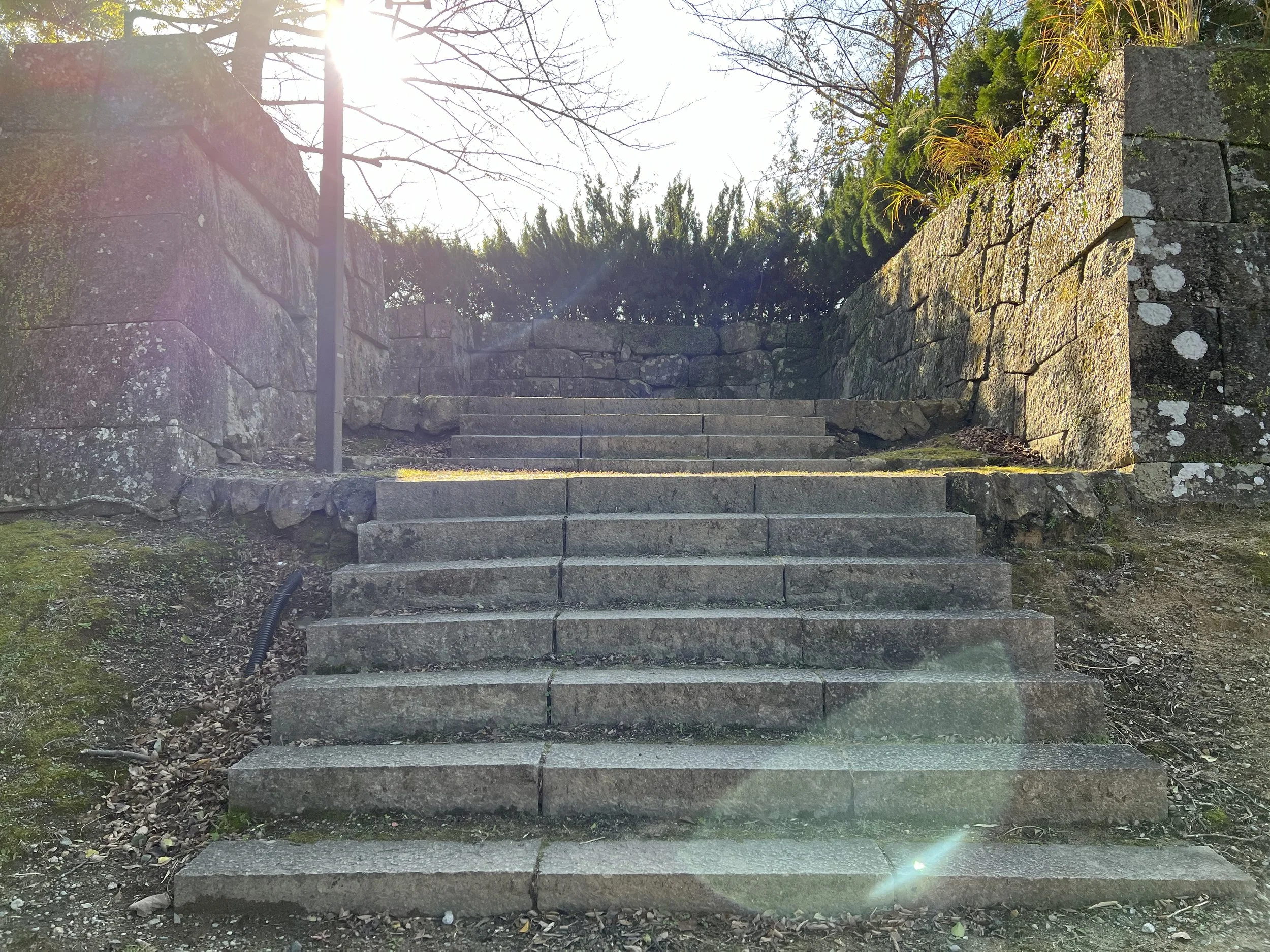
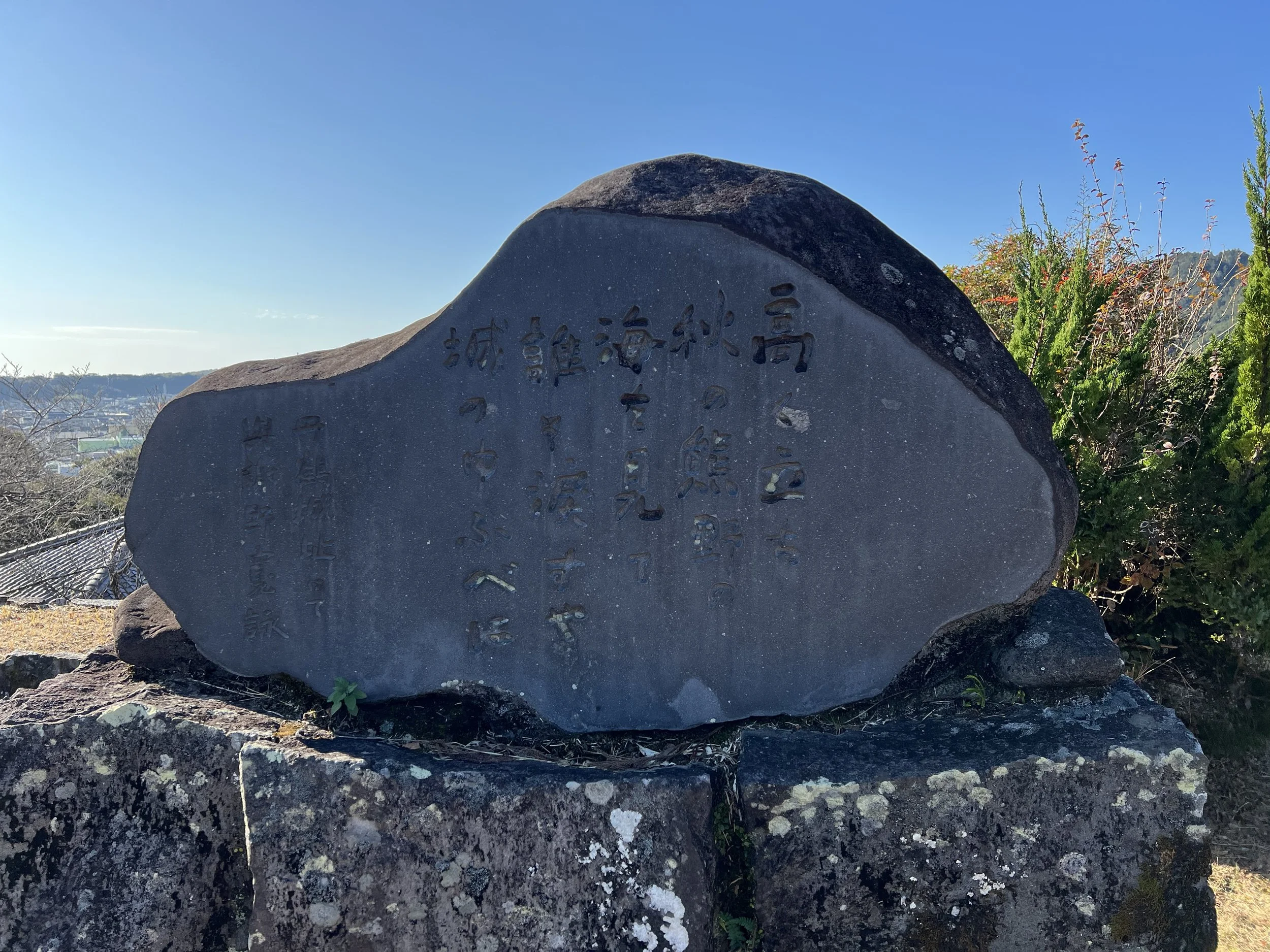
I arrived here after finishing my Kumano Kodo Nakahechi pilgrimage at Kumano Hayatama Taisha. At the entrance, an information board provided details about the castle, though there was no English translation, so I spent a few minutes reading through what I could. I then began ascending the stone steps to the top of the hill. Some steps are original from the castle period, while others have been rebuilt for visitor access, and the contrast between the old and new stones is clearly visible.
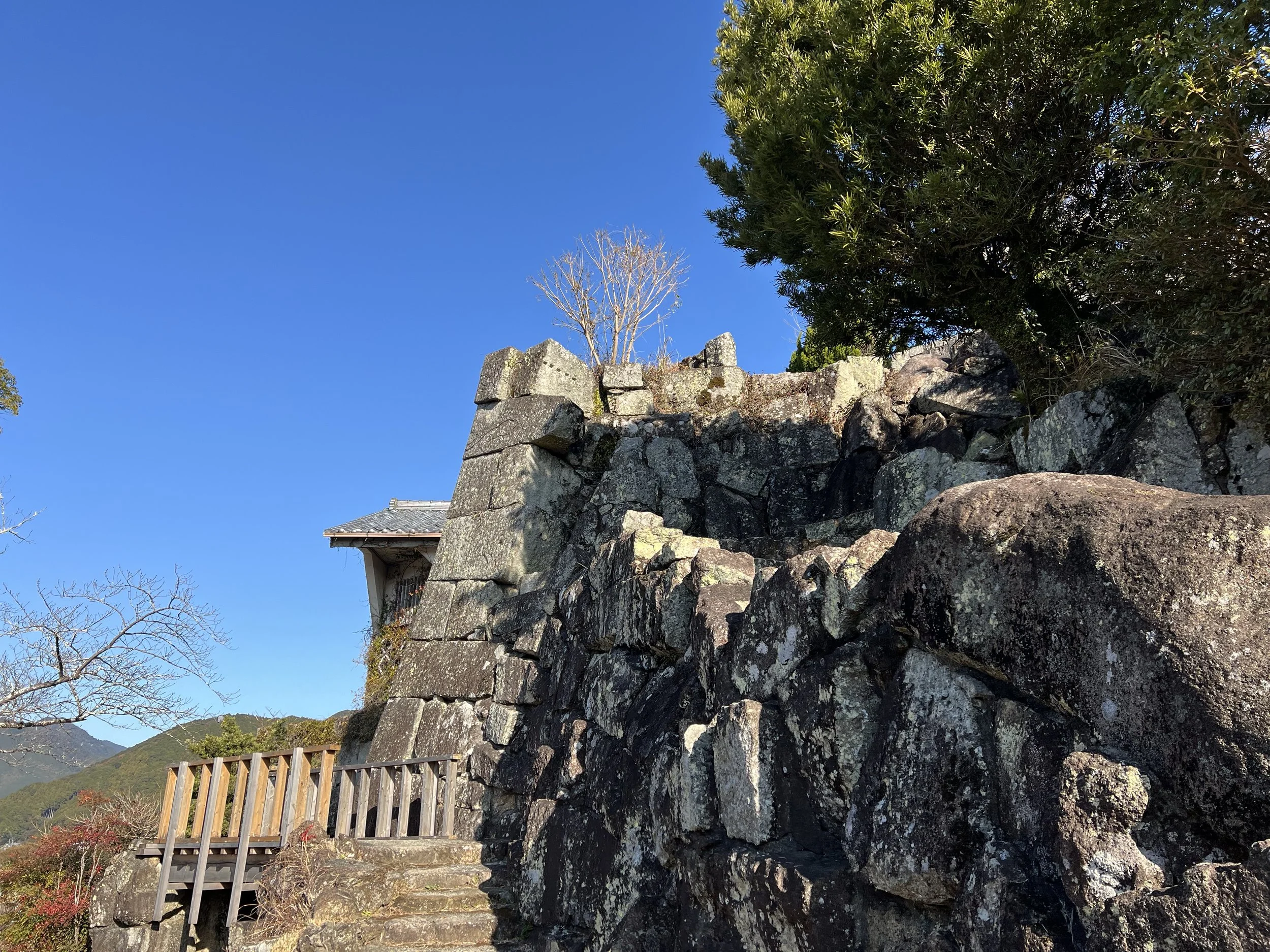
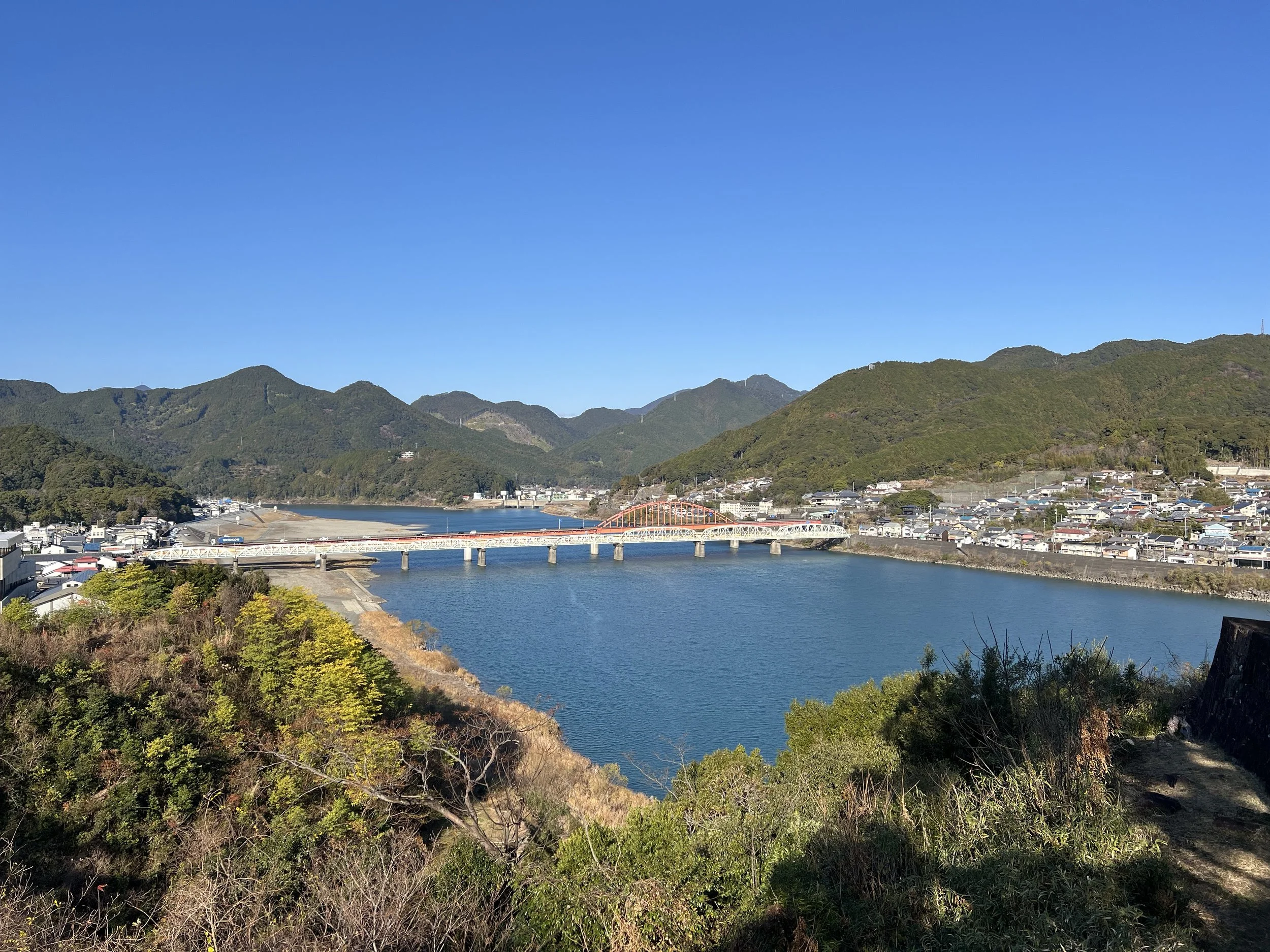
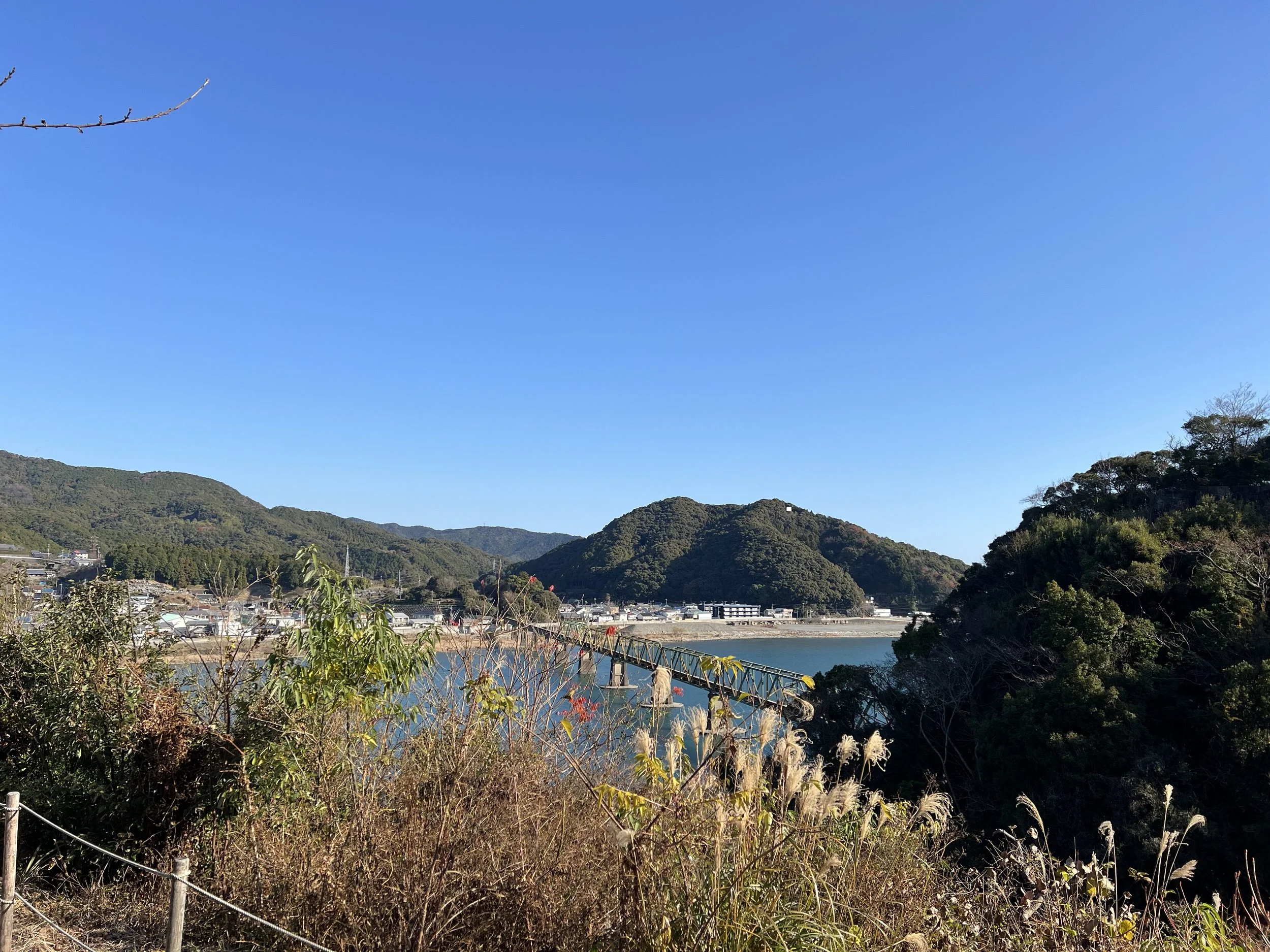
As I reached the top, I encountered the remaining stone walls. The craftsmanship was impressive — giant stones carefully stacked to form durable fortifications. From this vantage point, the panoramic views of Shingū town and the Kumano River below were spectacular. It was easy to see why the castle was positioned here, with a clear line of sight to the river for monitoring maritime activity.
There wasn’t much else at the summit, so I spent time walking around, taking in the views from different angles before descending back toward the train station. The simplicity of the site makes it a tranquil spot, yet its historical significance is unmistakable.
History & Background
Shingu Castle Ruins was originally constructed in the early 17th century to oversee the strategic coastal and river routes in Shingu, under the Tokugawa shogunate. It was briefly abandoned in 1615 due to the “one castle per province” edict but was later rebuilt to continue its military and administrative functions.
Although much of the original structure has disappeared, the remaining stone walls demonstrate the careful engineering typical of Japanese castles of the Edo period. The site has been transformed into Tankaku Castle Park, preserving the ruins while offering scenic views and a popular location for hanami (cherry blossom viewing).
Getting There
Reaching Shingu in Wakayama Prefecture is easy from Japan’s major train hubs. If you’re coming from Osaka, the most convenient option is the JR Kuroshio Limited Express from Shin‑Osaka Station, which winds along the scenic Kii Peninsula coast and arrives at ShingU Station in about four and a quarter hours. From Nagoya, the JR Wide View Nanki Limited Express provides a direct route to Shingu in roughly three and a half hours. Once you arrive at Shingu Station, the town center and local attractions, including the Shingu Castle Ruins, are just a short walk away, with clear signage guiding visitors through charming streets along the Kumano River. This makes Shingu an accessible and rewarding destination for travelers exploring the Wakayama coast.
Route Overview
Distance: 2.12 km (Kumano Hayatama Taisha → Shingu Station)
Total elevation gain: 45 m
Duration: 17 min (with breaks 20 min)
Difficulty: Easy
Cost Breakdown
Food: ¥740