Okoshiki Coast - Kumamoto, Japan
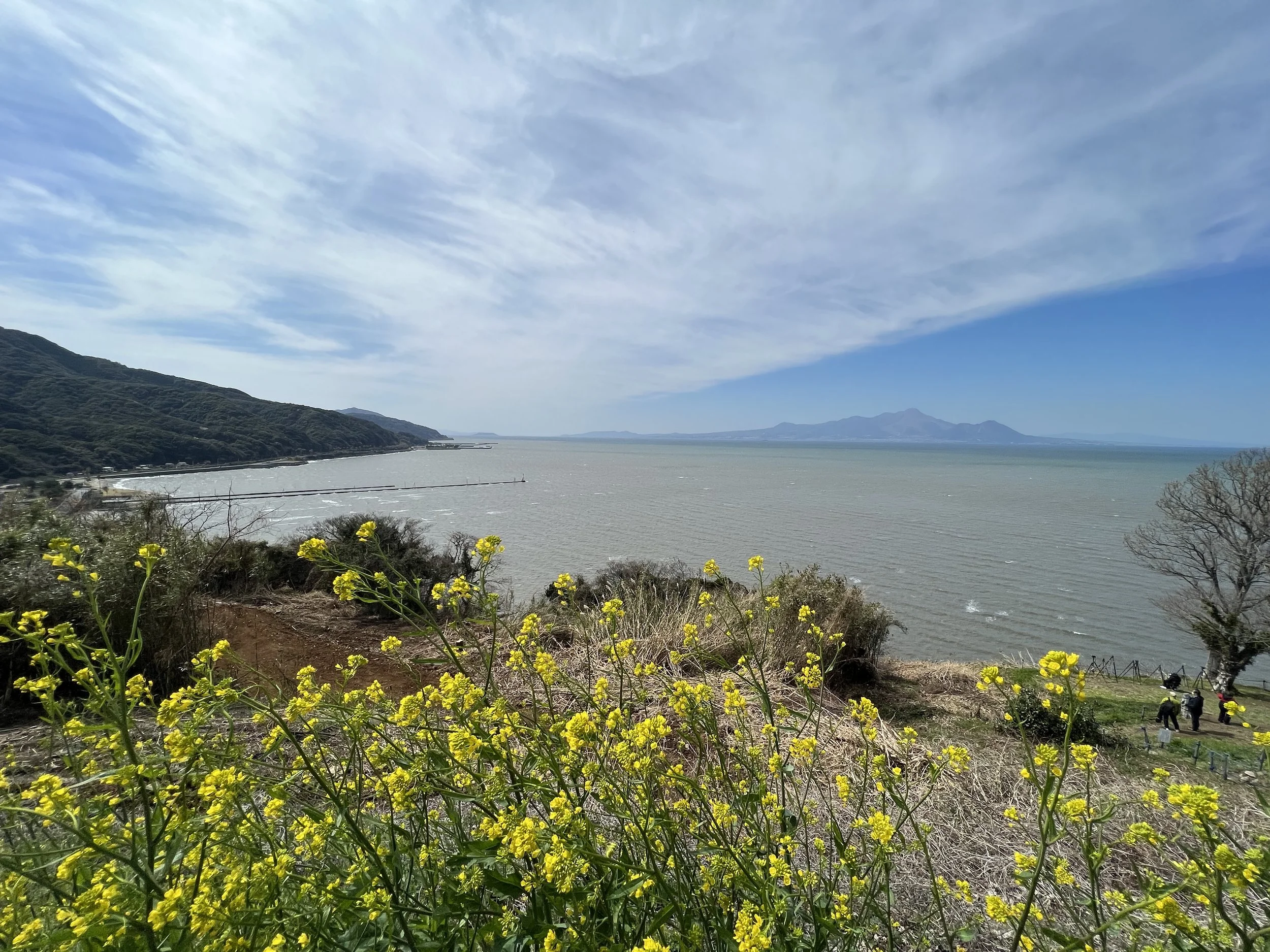
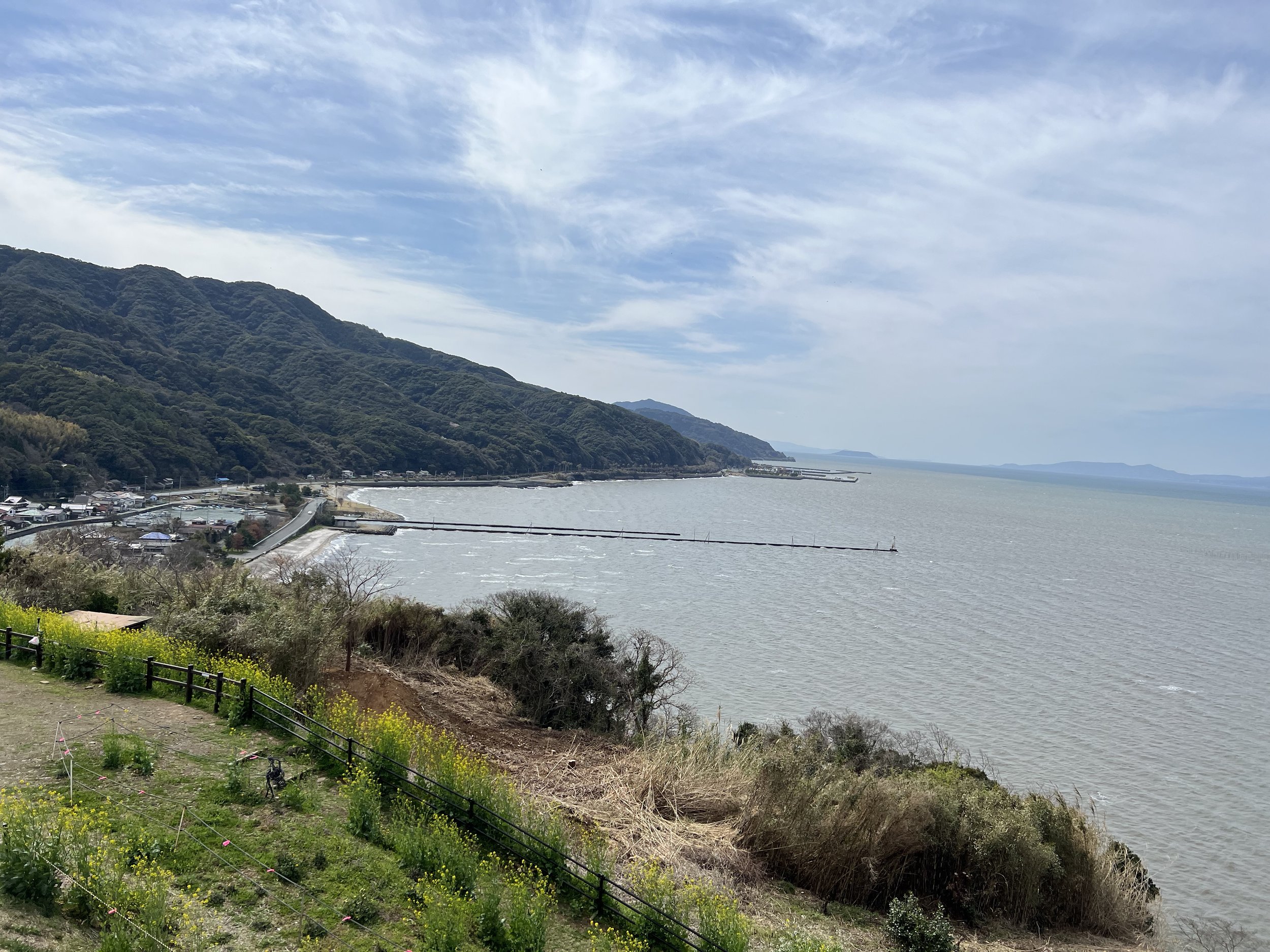
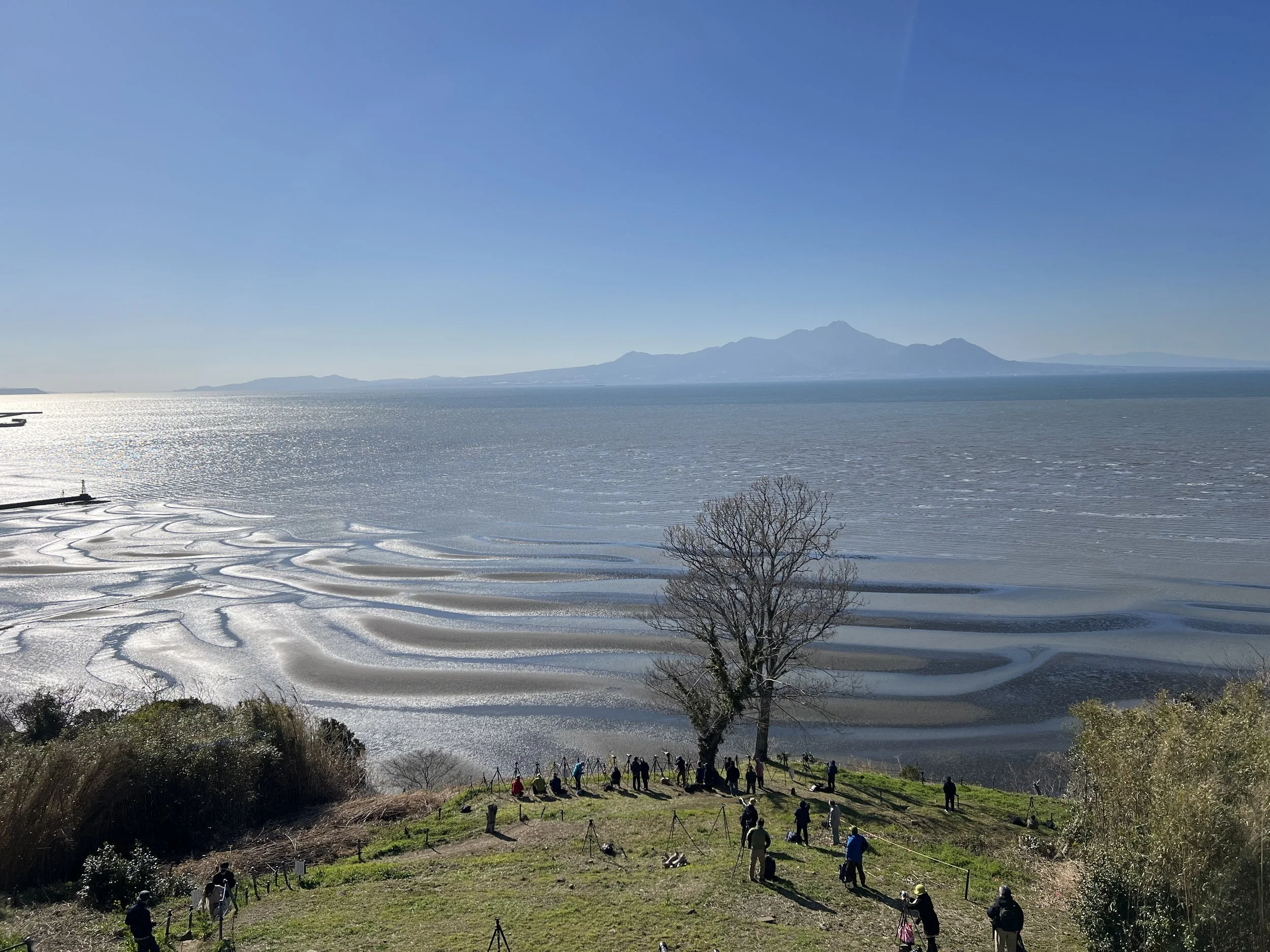
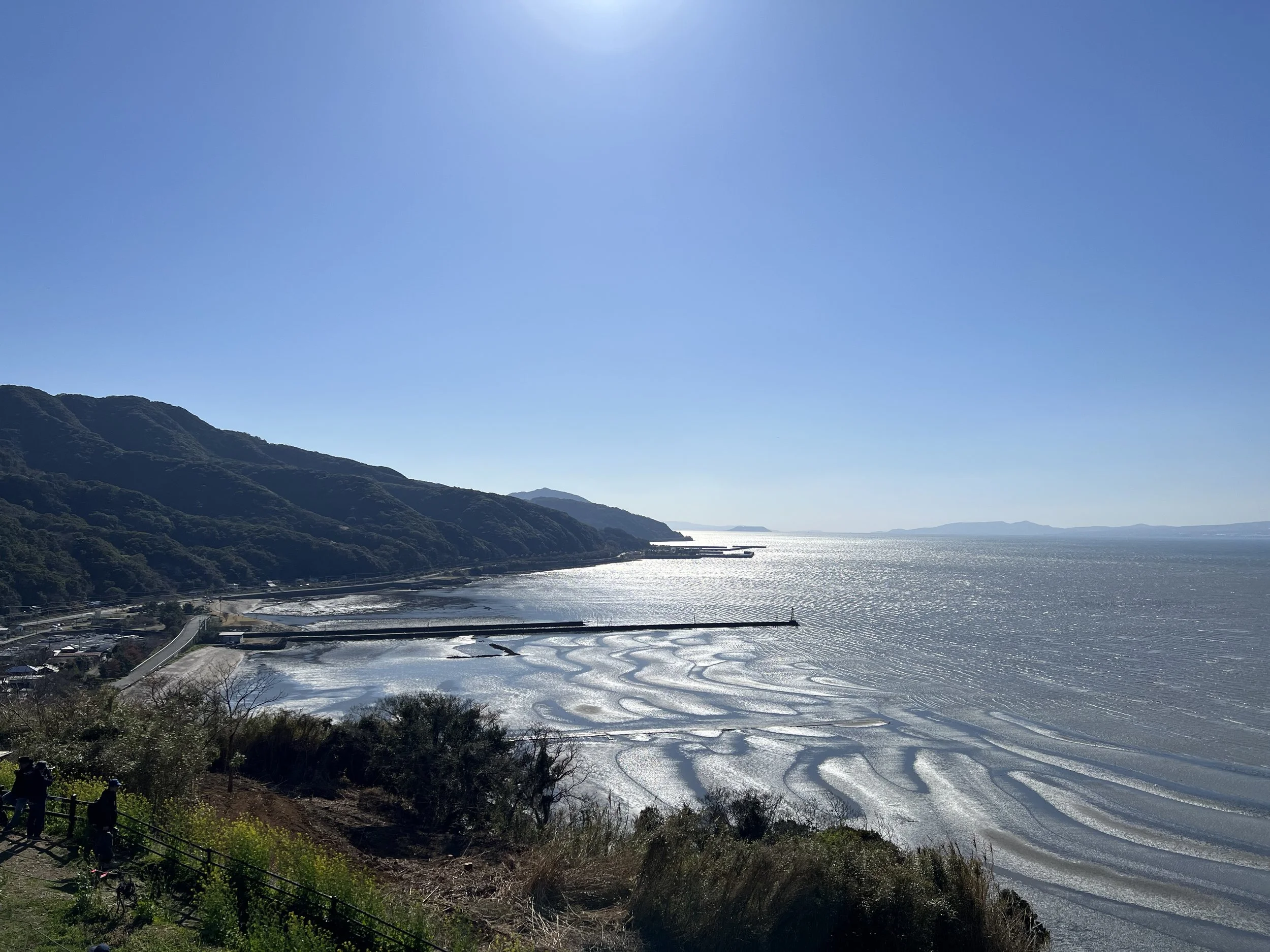
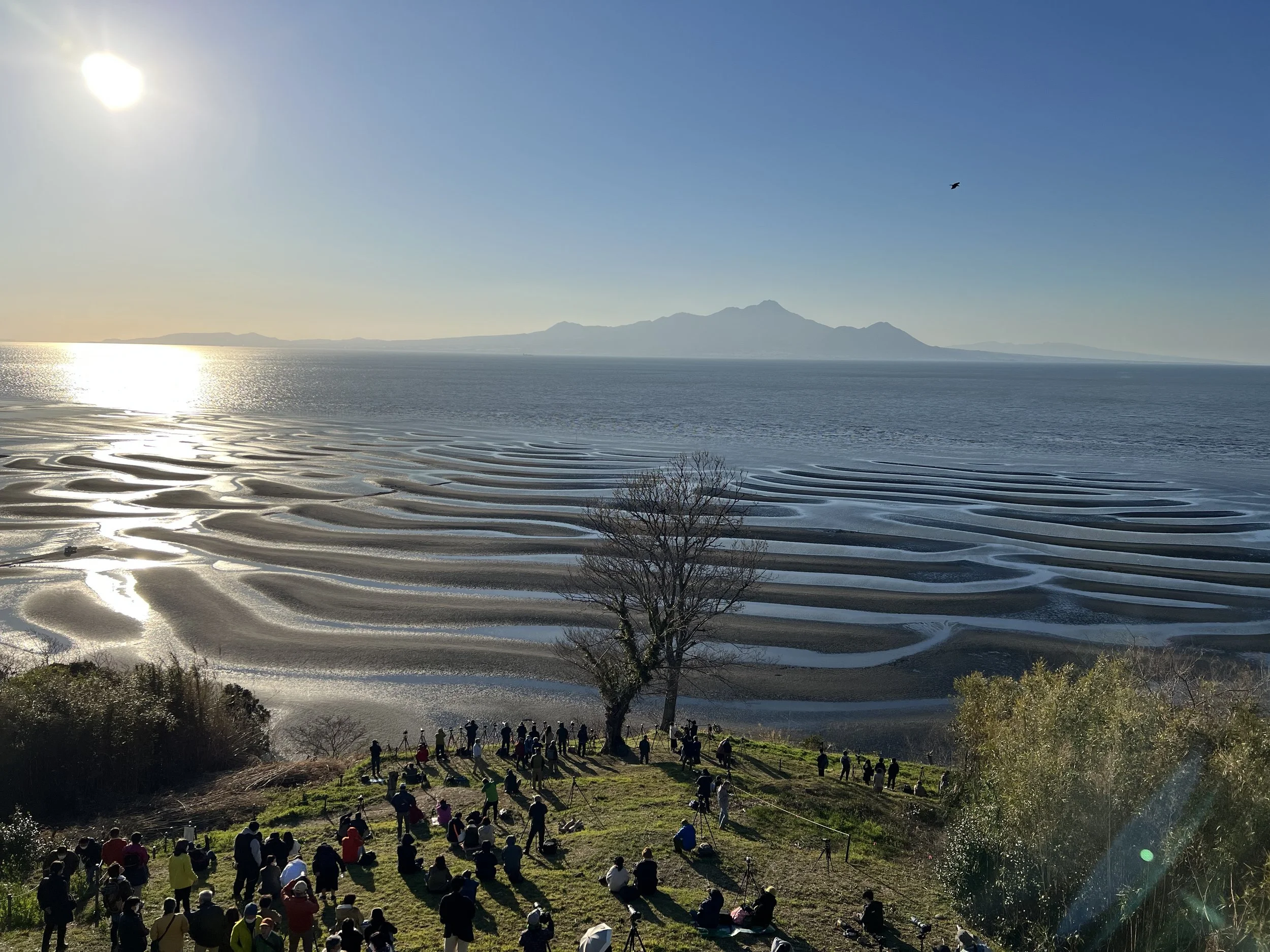
Okoshiki Coast is ranked among Japan’s top 100 beaches and is well known as a sunset spot. I don’t remember where I first saw a photo of it—one showing the dramatic mudflats at low tide during sunset—but I knew immediately that I wanted to see it for myself. Reading more about the area, I learned that the Ariake Sea is famous for having one of the largest tidal ranges in Japan, and Okoshiki Coast is located along its shore in Uto, Kumamoto.
Another place that caught my eye as a potential sunset spot was Nagabeta Seabed Road, also along the Ariake Sea and about 7 km from Okoshiki Coast.
With Okoshiki Coast as my main goal and Nagabeta Seabed Road as a short side track, I planned out my entire day. I decided to add a visit to the town of Misumi, located further west. Public transportation in this area is infrequent, and wanting to give myself plenty of time, I started my day around 7 a.m. I took the train from Kumamoto Station to Misumi Station first, as the Misumi area is best explored on foot.
After visiting the main spots I had marked in Misumi, I made my way back toward Sumiyoshi Station. From there, Nagabeta Seabed Road is about a 1.7 km walk away.
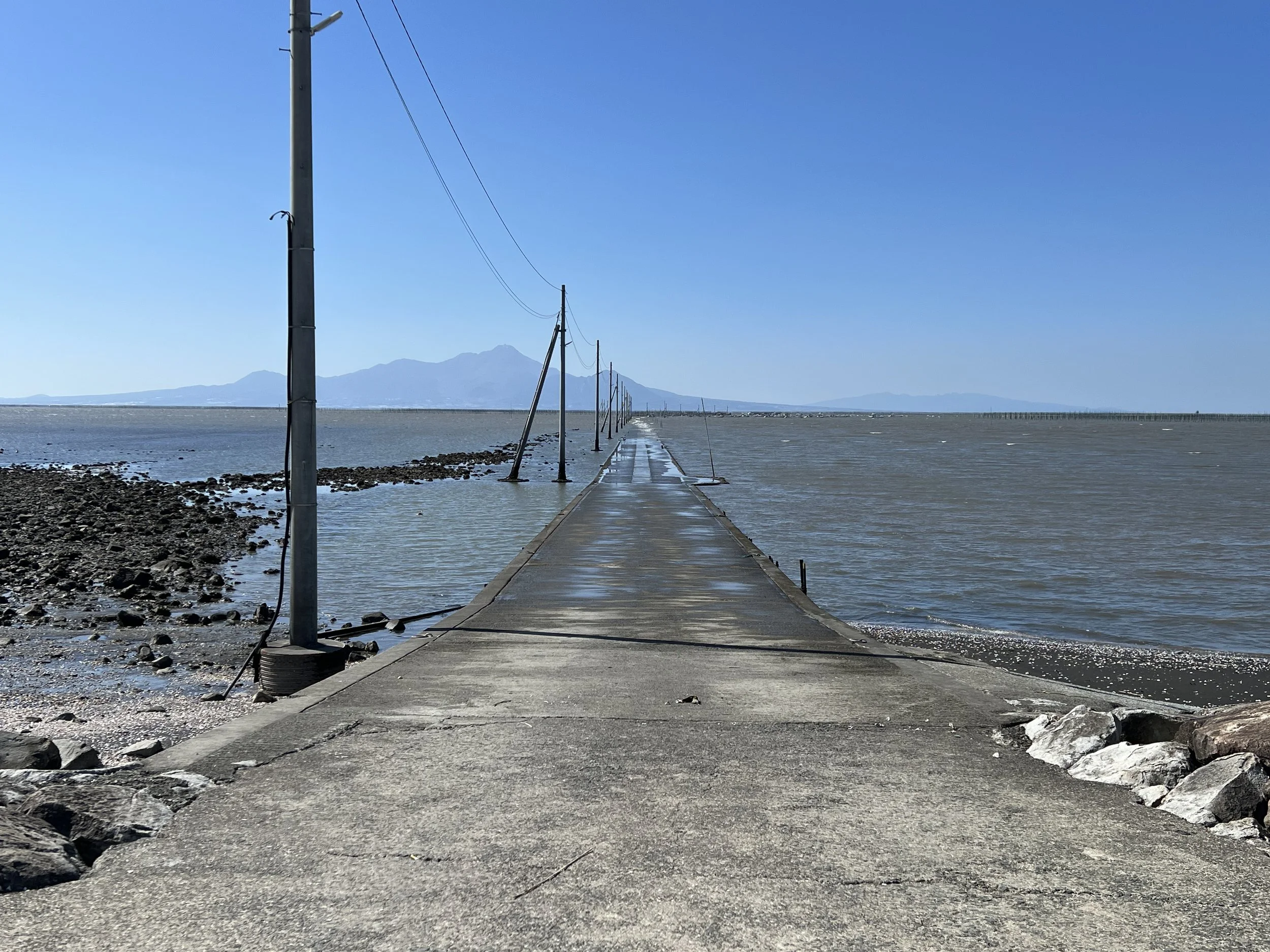
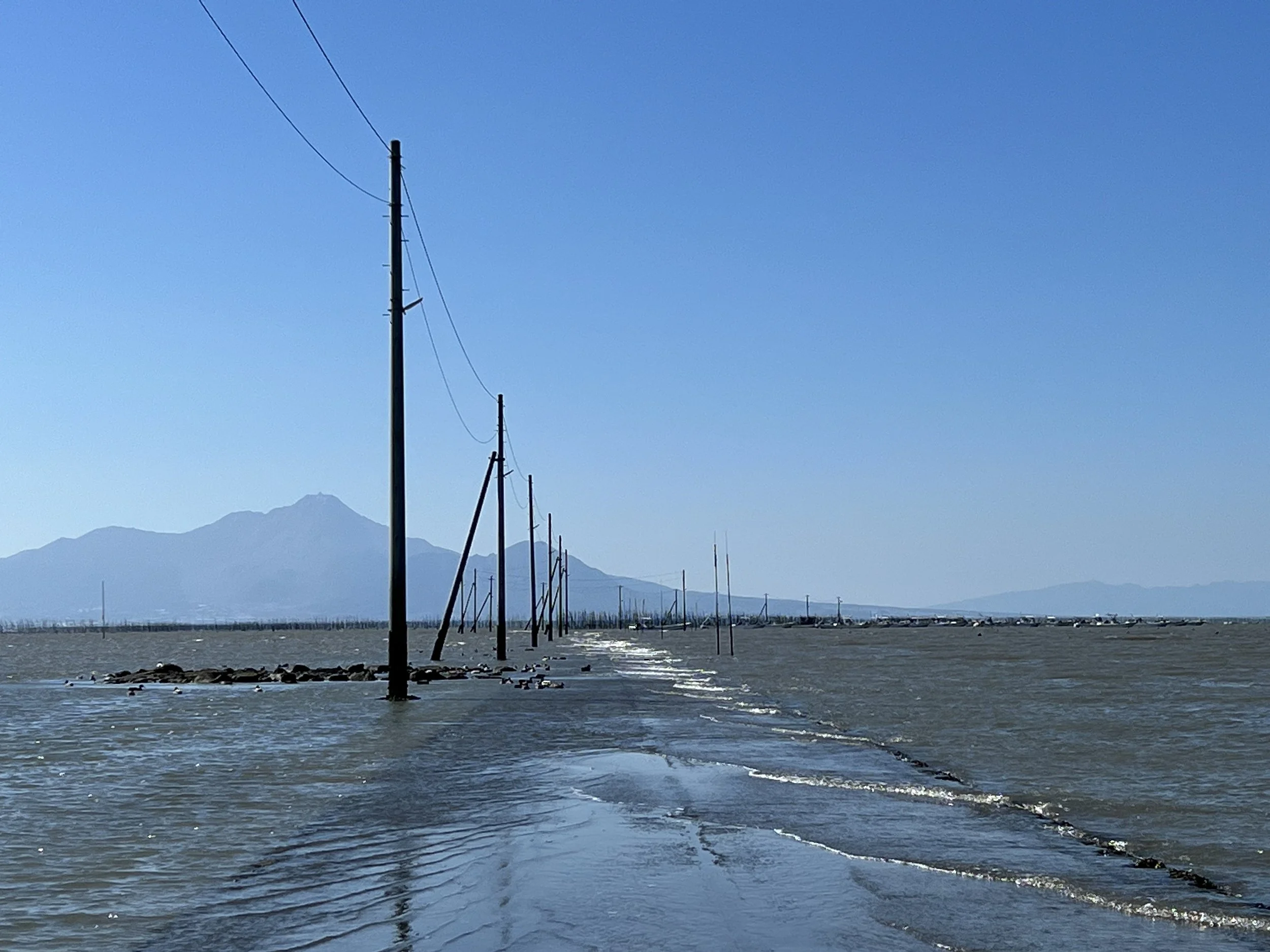
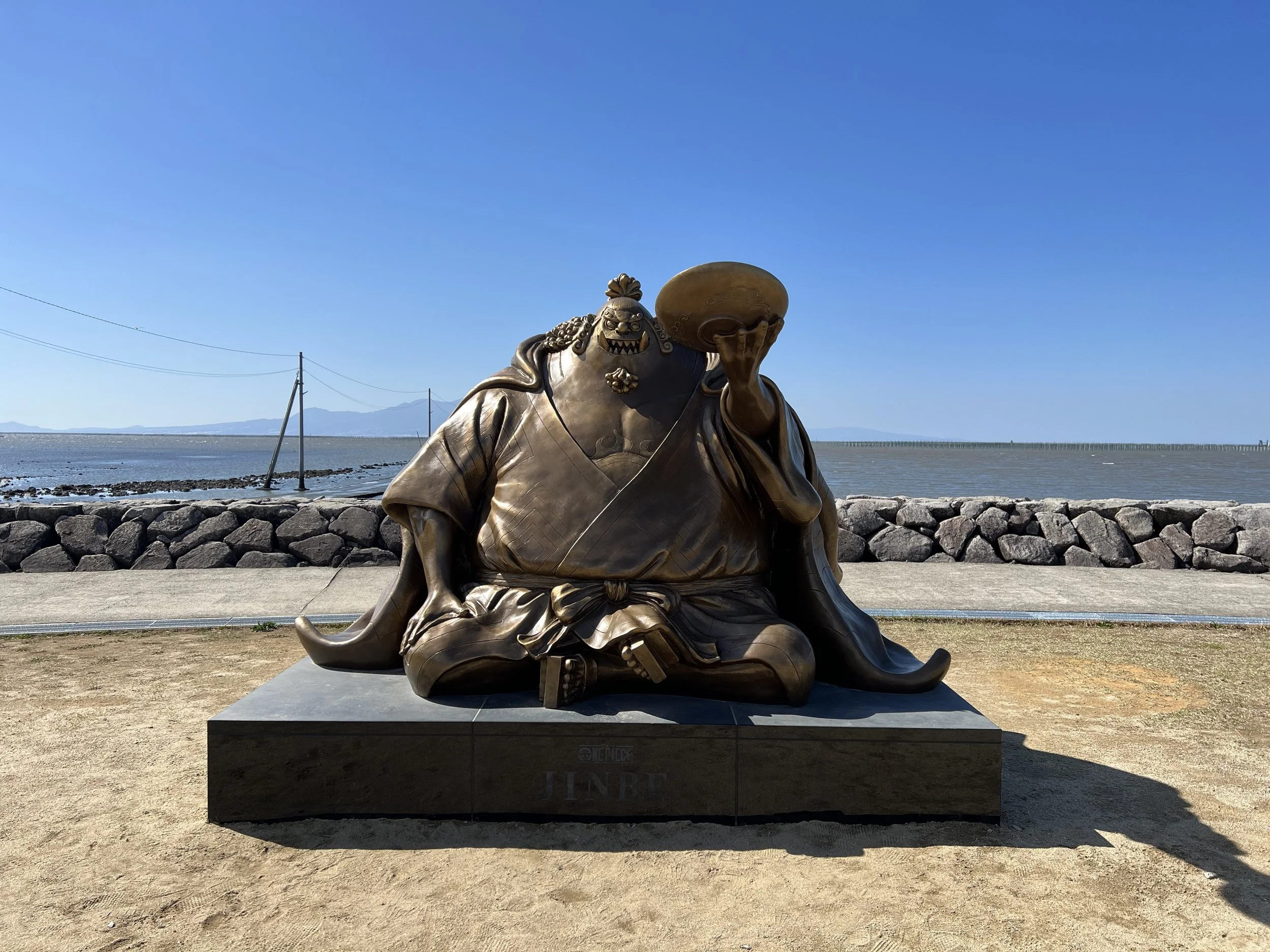
When I arrived at Nagabeta Seabed Road, the tide was still fairly high, but I could see it gradually receding as time passed. The road is only visible during low tide, allowing people to walk far out into the sea. It is primarily used for seaweed farming, and during low tide, lines of trucks can be seen parked along the road, stretching into the water—an incredible sight. By coincidence, I also discovered that a Jinbe statue from One Piece stands near the entrance to the road. The creator of One Piece is from Kumamoto, and statues of its characters have been placed throughout the prefecture as part of the region’s recovery efforts following the devastating 2016 earthquake.
Nagabeta Seabed Road is also a popular sunset spot, and I briefly considered staying. In the end, though, I knew this was only a side stop. I had come for the mudflats and the sunset at Okoshiki Coast.
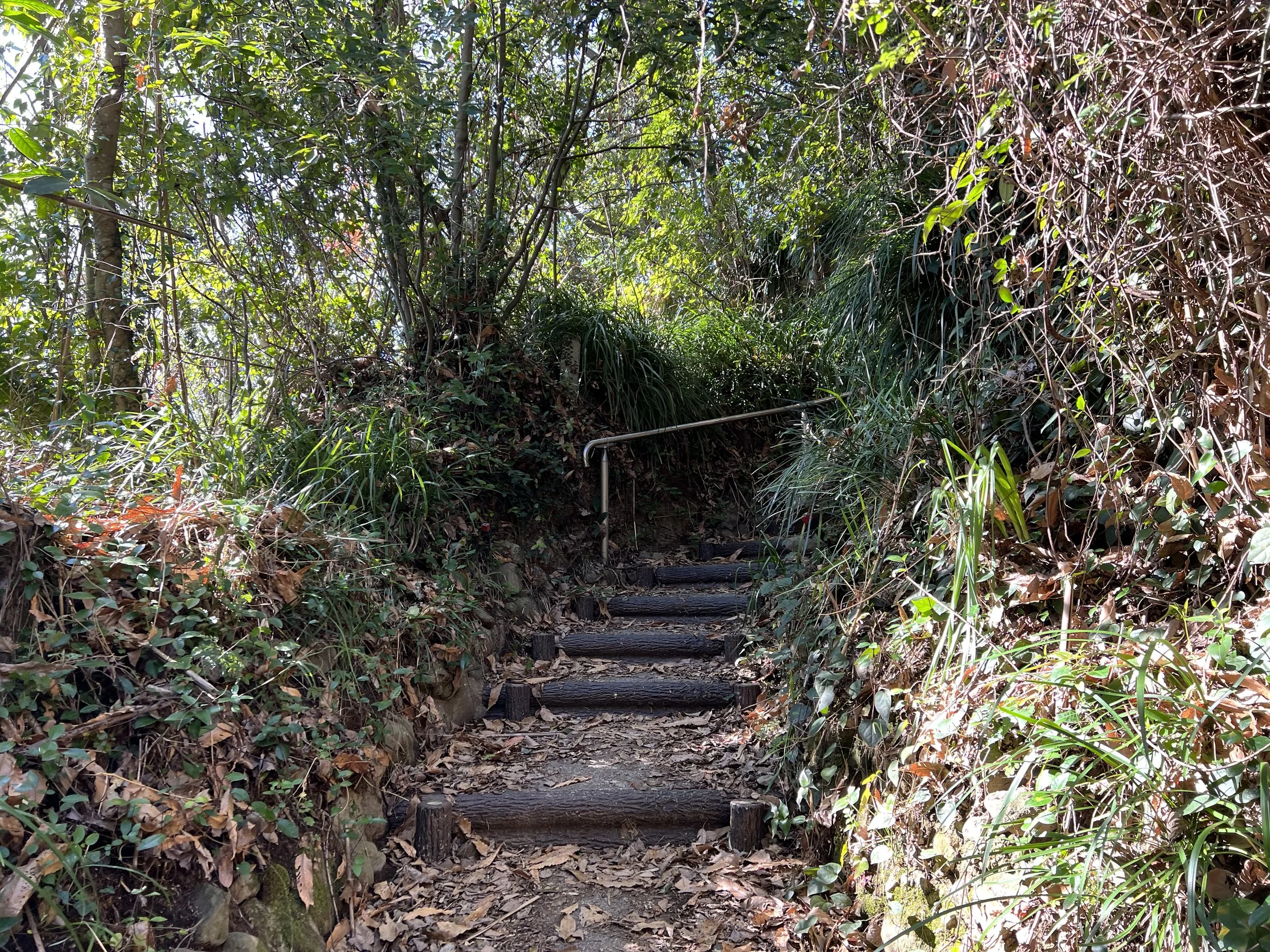
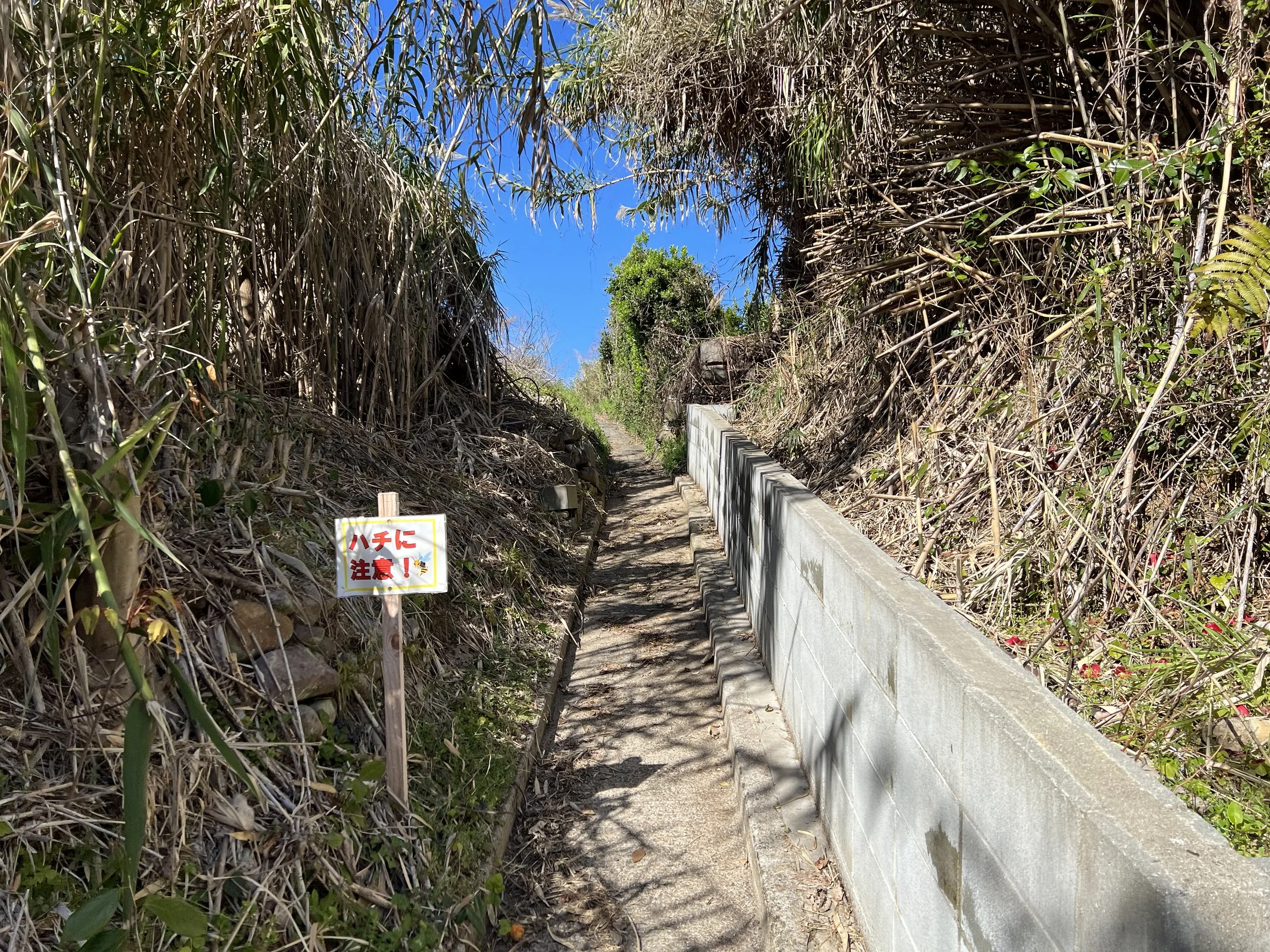
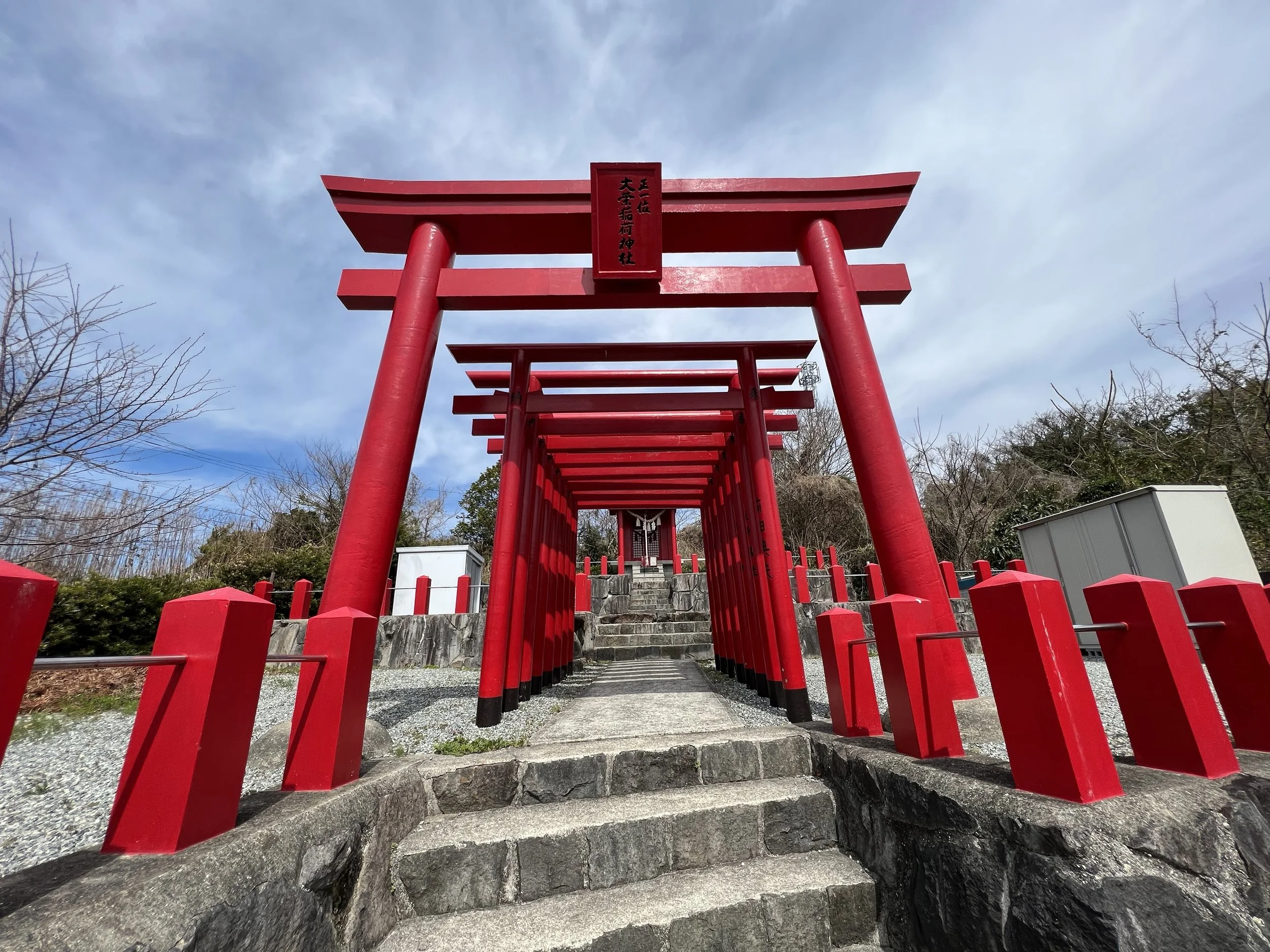
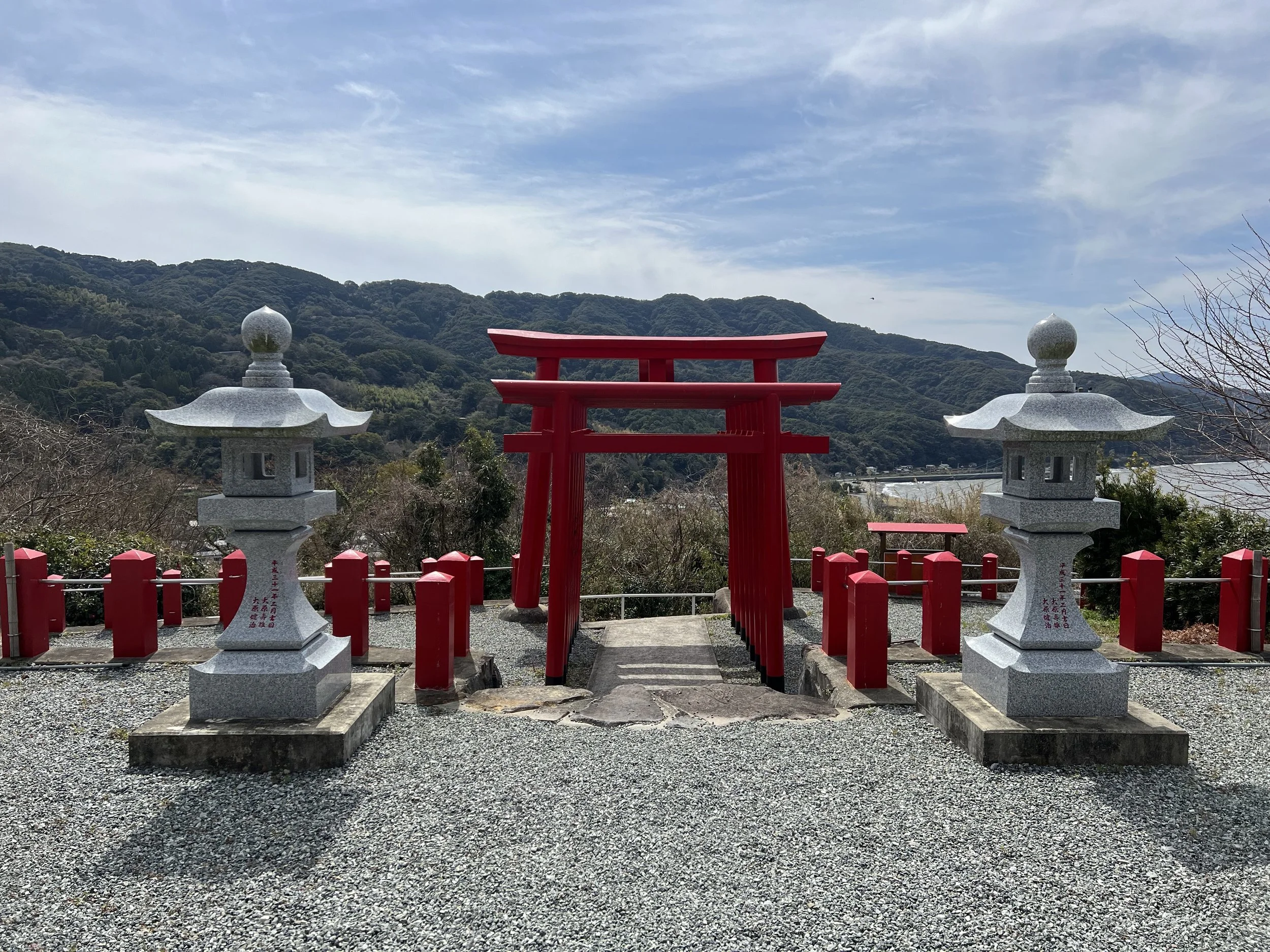
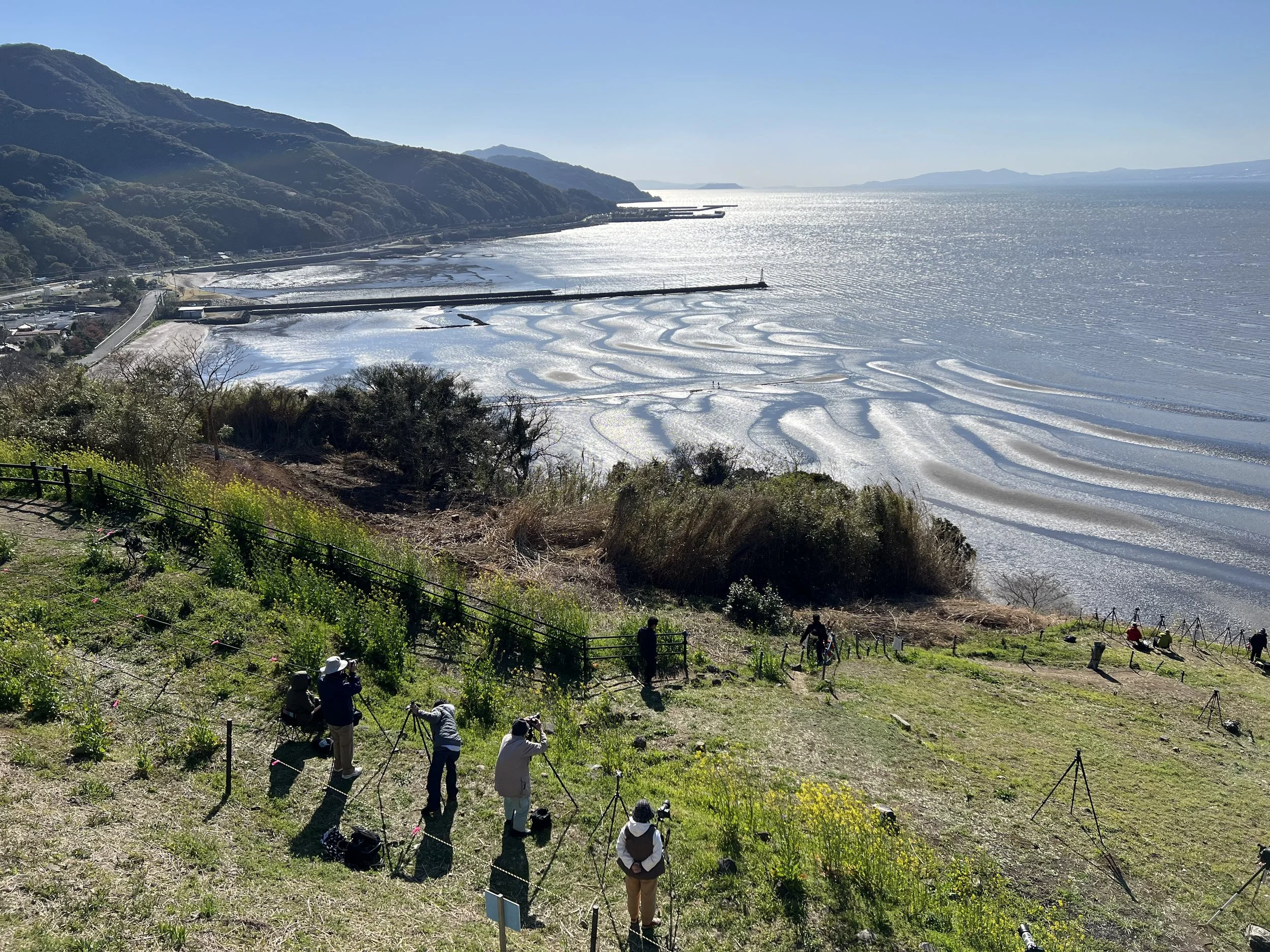
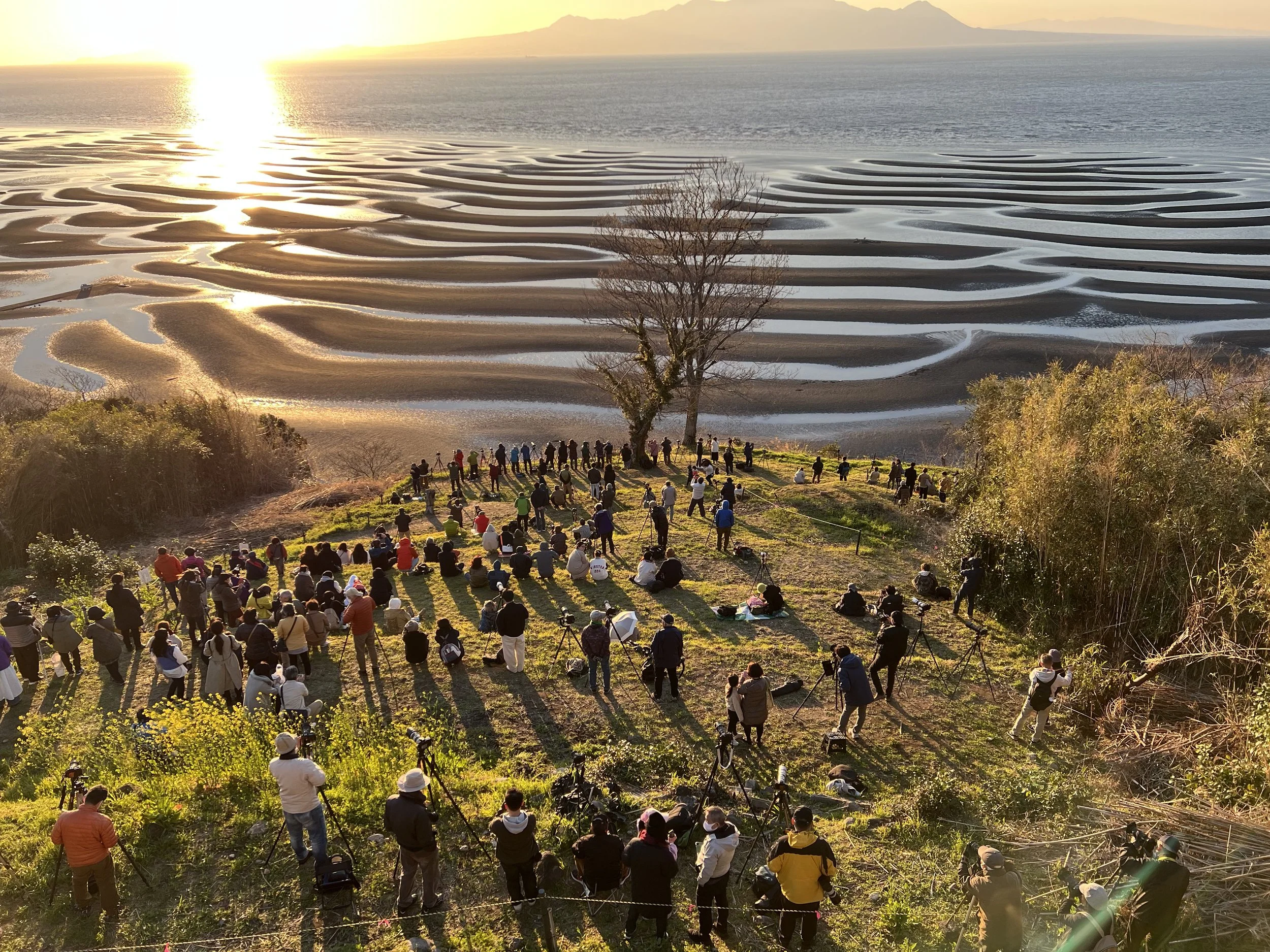
I took a short bus ride from the Nagabeta area toward Oda Station. From there, I headed to Okoshiki Beach Observatory, a short hike uphill from the road. When I arrived, I noticed tripods lined up along the edge of the open field—people using them to claim their spots in advance. Nearby, I visited a small shrine called Daiei Inari Shrine before climbing a nearby tower and finding a place near the edge.
As more people arrived, locals set up a small booth selling hot coffee and simple snacks. With the temperature dropping, a warm drink was incredibly tempting. I struck up a conversation with the people standing next to me in my not-so-fluent Japanese. They were surprised to learn that I was Canadian, especially since this spot isn’t well known among foreign tourists. One person treated me to a cup of hot coffee, while another showed me photos of the area from previous years.
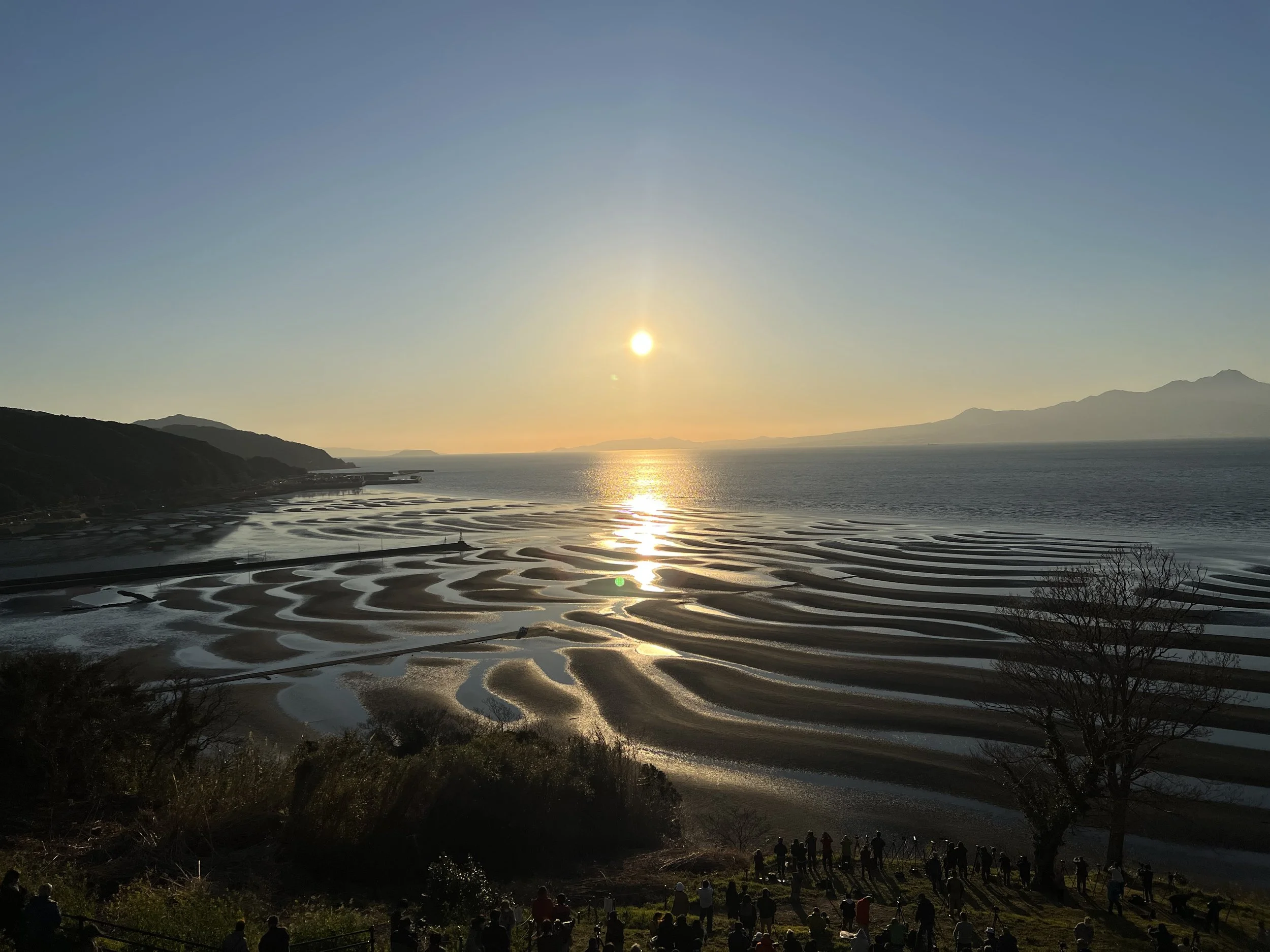
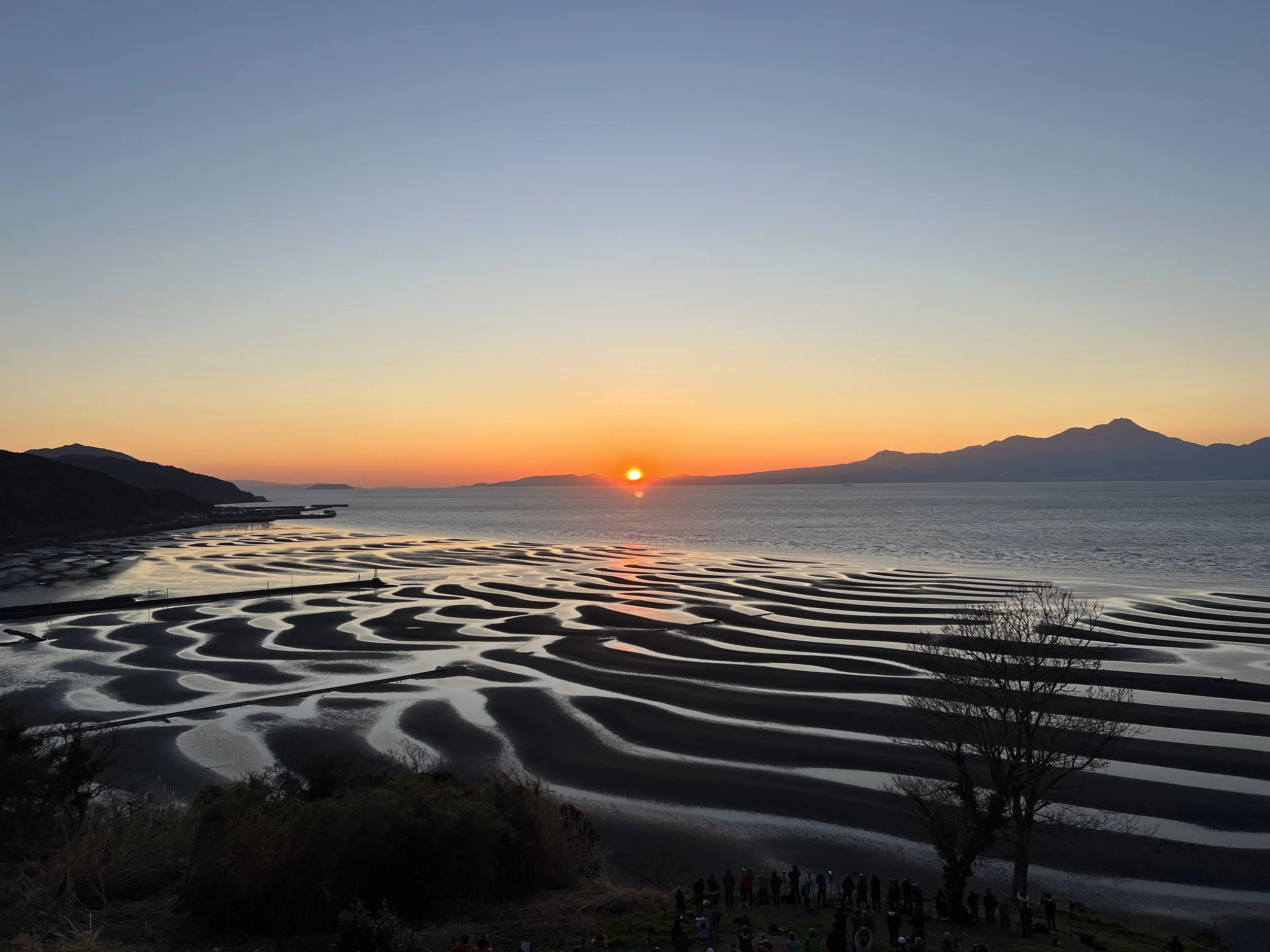
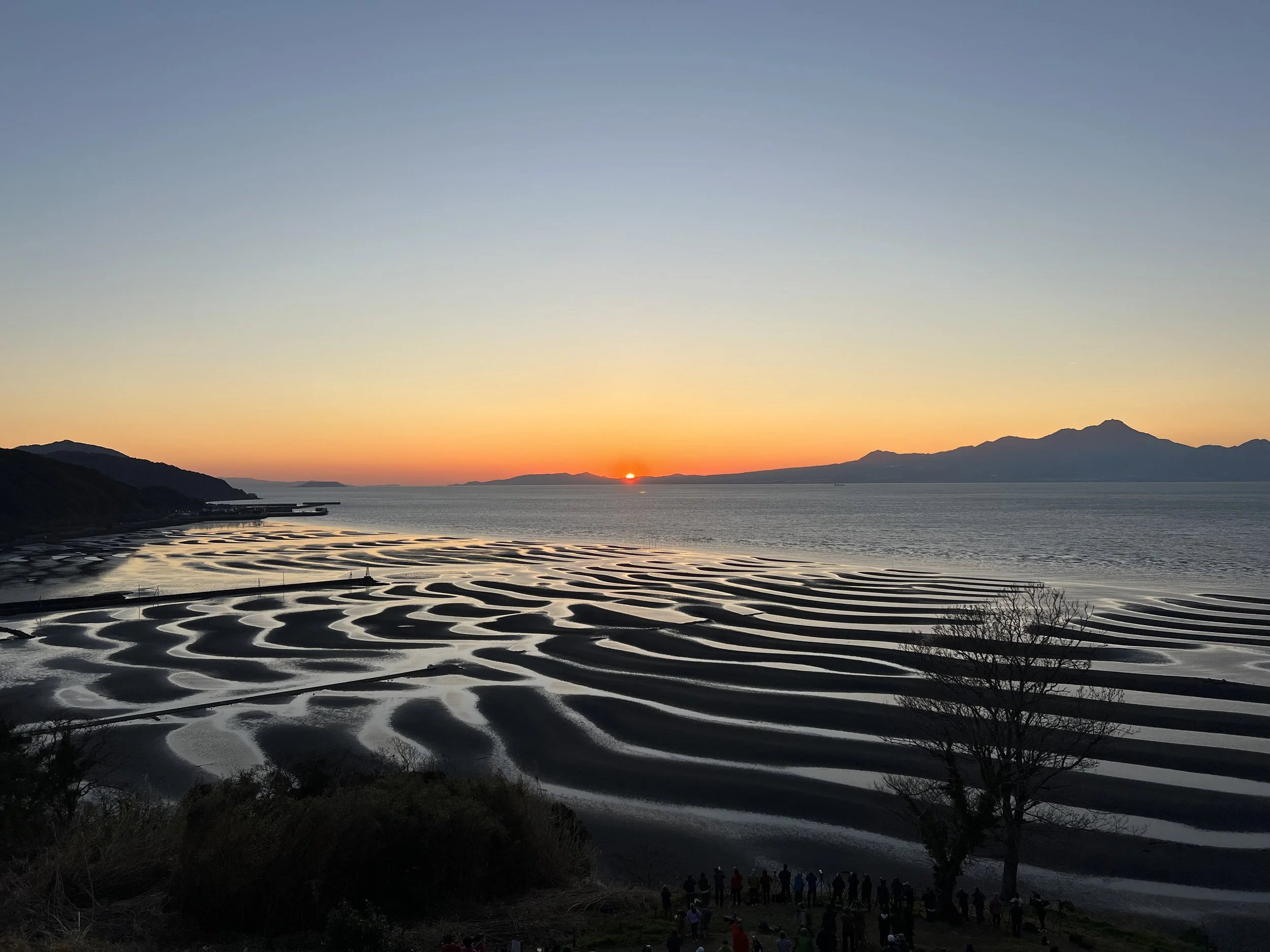
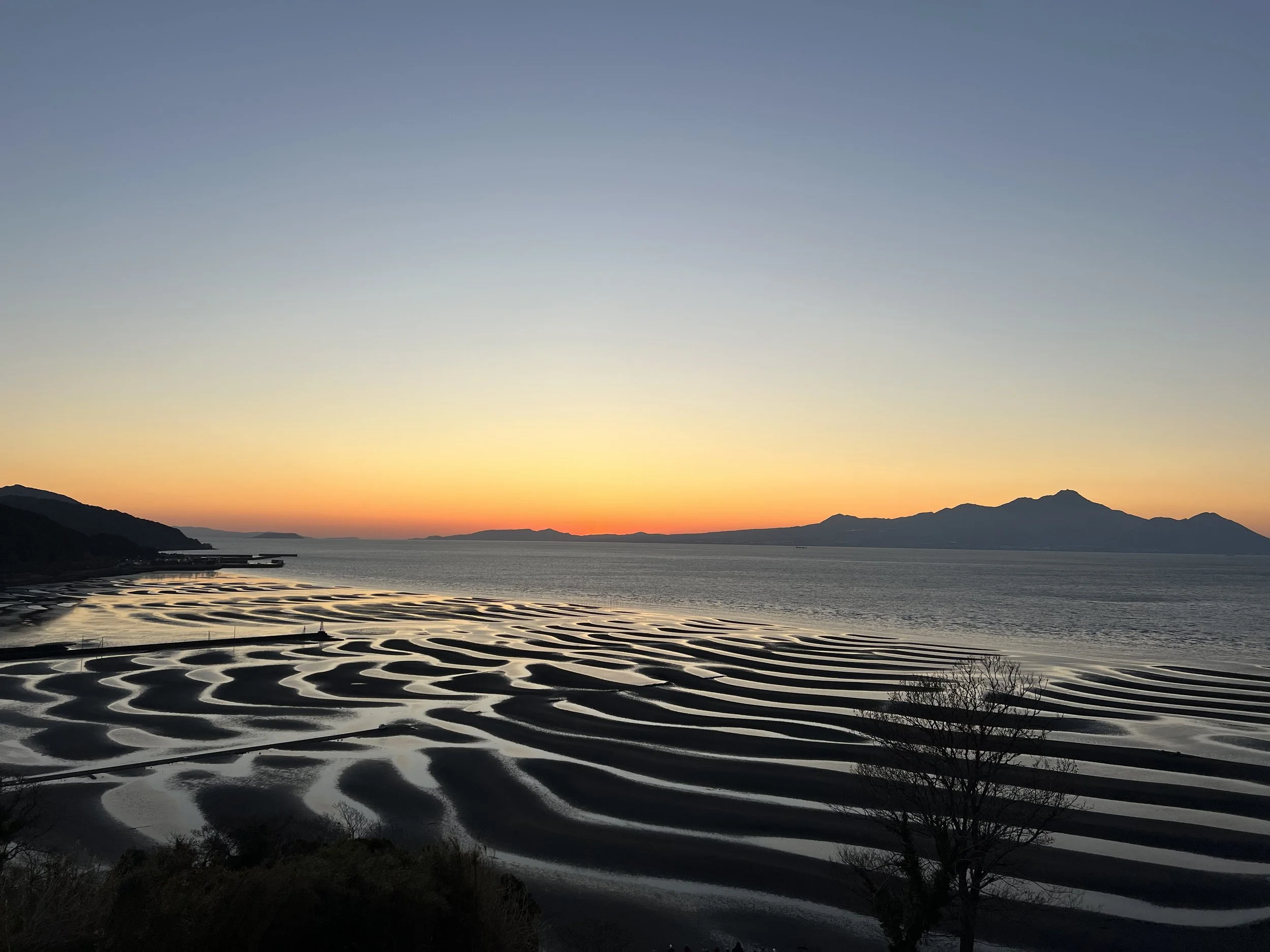
As the sun began to set, the tide receded further, revealing the mudflats in full. Watching the sun sink below the horizon with the vast, rippling mudflats below was truly mesmerizing. The intricate sand patterns and the warm orange glow filling the sky made it easy to understand why Okoshiki Coast is considered one of the most sought-after sunset spots in the region.
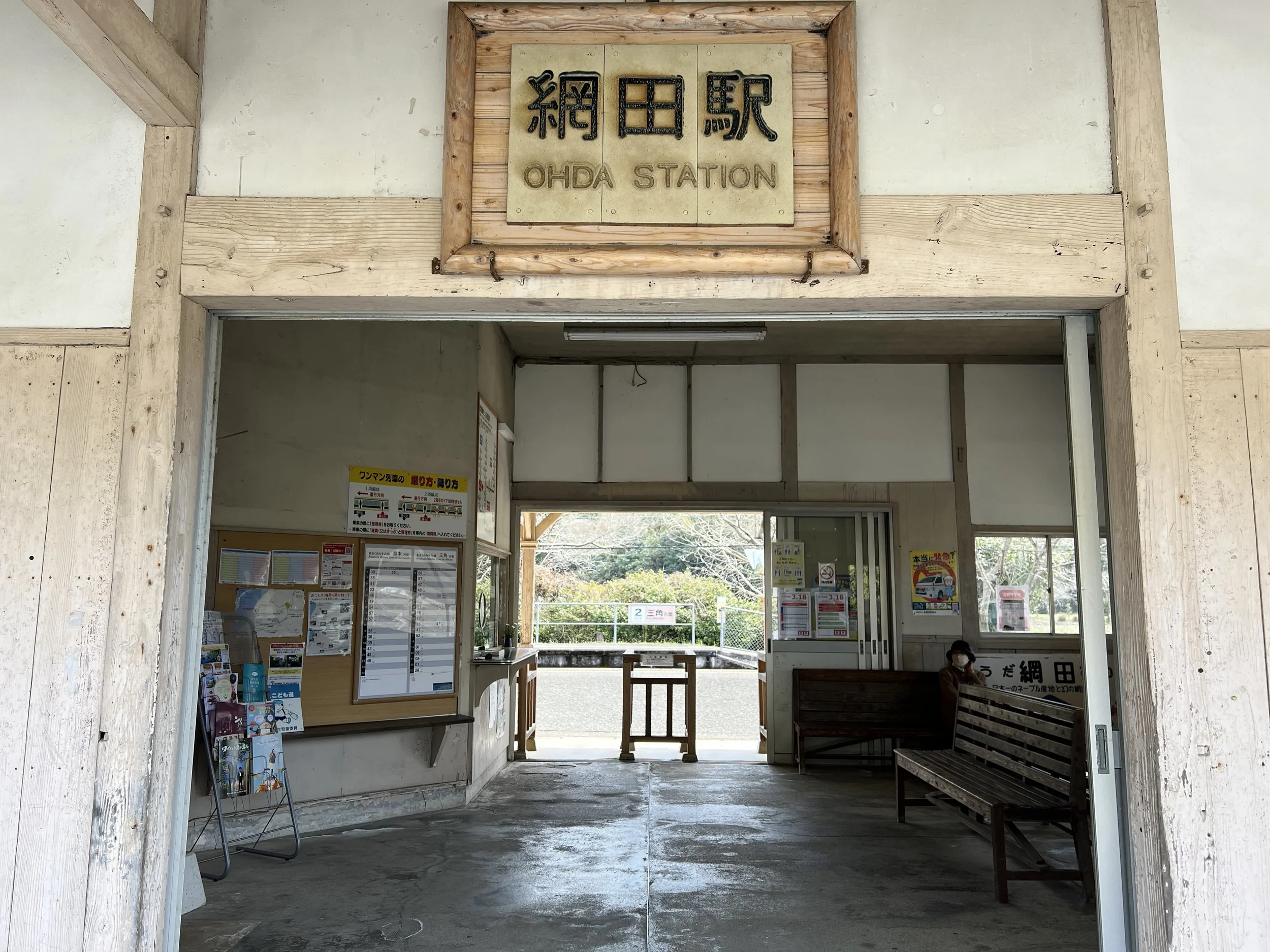
Once the sun disappeared, I had to rush down the pitch-black trail with only my phone’s flashlight to guide me. I had exactly 15 minutes to catch my return train to Kumamoto—otherwise, I would be waiting another two hours. The walk normally takes about 17 minutes, so I ended up running most of the way and made it to the station just in time.
Although the day felt long, the scenery and the unexpected encounters with locals made every minute worthwhile.
Background
Okoshiki Coast (御輿来海岸) lies along the Ariake Sea, an inland sea famous for having Japan’s largest tidal range. This extreme difference between high and low tide creates expansive mudflats that dramatically reshape the coastline throughout the day. The area has long been associated with fishing and seaweed farming, particularly visible at nearby Nagabeta Seabed Road. Due to its striking tidal scenery and unobstructed western views, Okoshiki Coast has been designated as one of Japan’s top scenic sunset locations. For sunset and low tide to line up, January to April is the best season for this.
Getting There
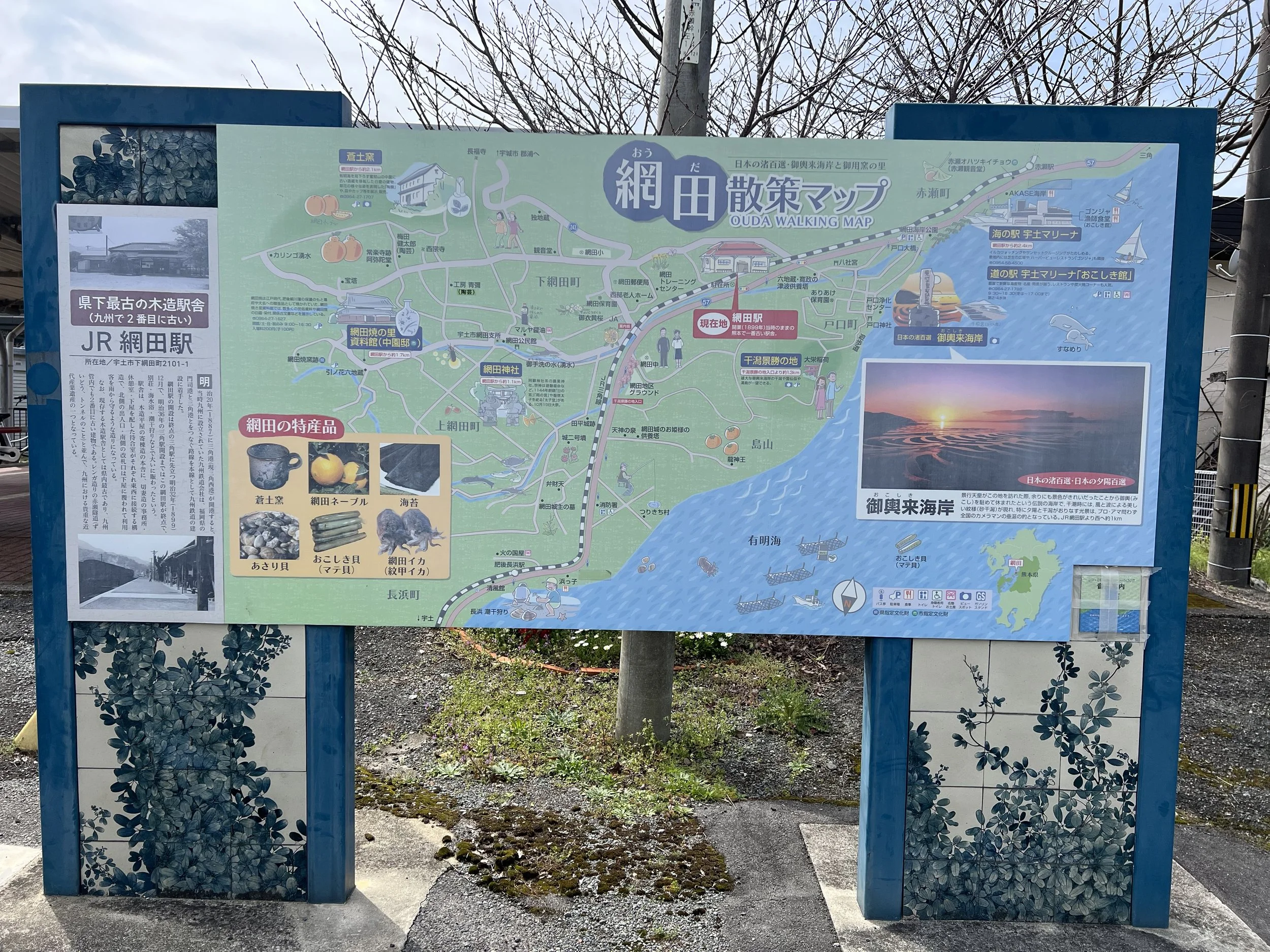
Okoshiki Coast is located in Uto City, Kumamoto Prefecture, along the Ariake Sea. The nearest rail access is Oda Station on the JR Misumi Line. From the station, the Okoshiki Beach Observatory is accessible on foot via local roads and a short uphill walk. Public transportation in the area is limited, and bus schedules are infrequent, so careful planning around train and bus times is recommended.
Route Overview
Distance: 15.88 km
Total elevation gain: 309 m
Duration: 3 hr 20 min (with breaks 4 hr 40s min)
Difficulty: Intermediate
Cost Breakdown
Train: Kumamoto Station → Misumi Station — ¥870
Bus: Nishisango Bus Stop → Sumiyoshi Station — ¥830
Bus: Nagabeta Bus Stop → Oda Station — ¥410
Food: ¥2070