Okayama Castle - Okayama, Japan
I’ve always used Okayama as a transit city when travelling through Japan, but this time I decided to stay overnight and explore a bit more. One of my top priorities was visiting Okayama Castle. Located about 1.8 kilometres from Okayama Station, I chose to walk rather than take public transportation, since a short walk is required anyway from the nearest bus or tram stop. The route was flat, with wide sidewalks, giving me a pleasant opportunity to observe the city centre as I made my way to the castle. Since it was late afternoon, with roughly an hour before closing—I figured I had enough time to explore this 6 floor castle.
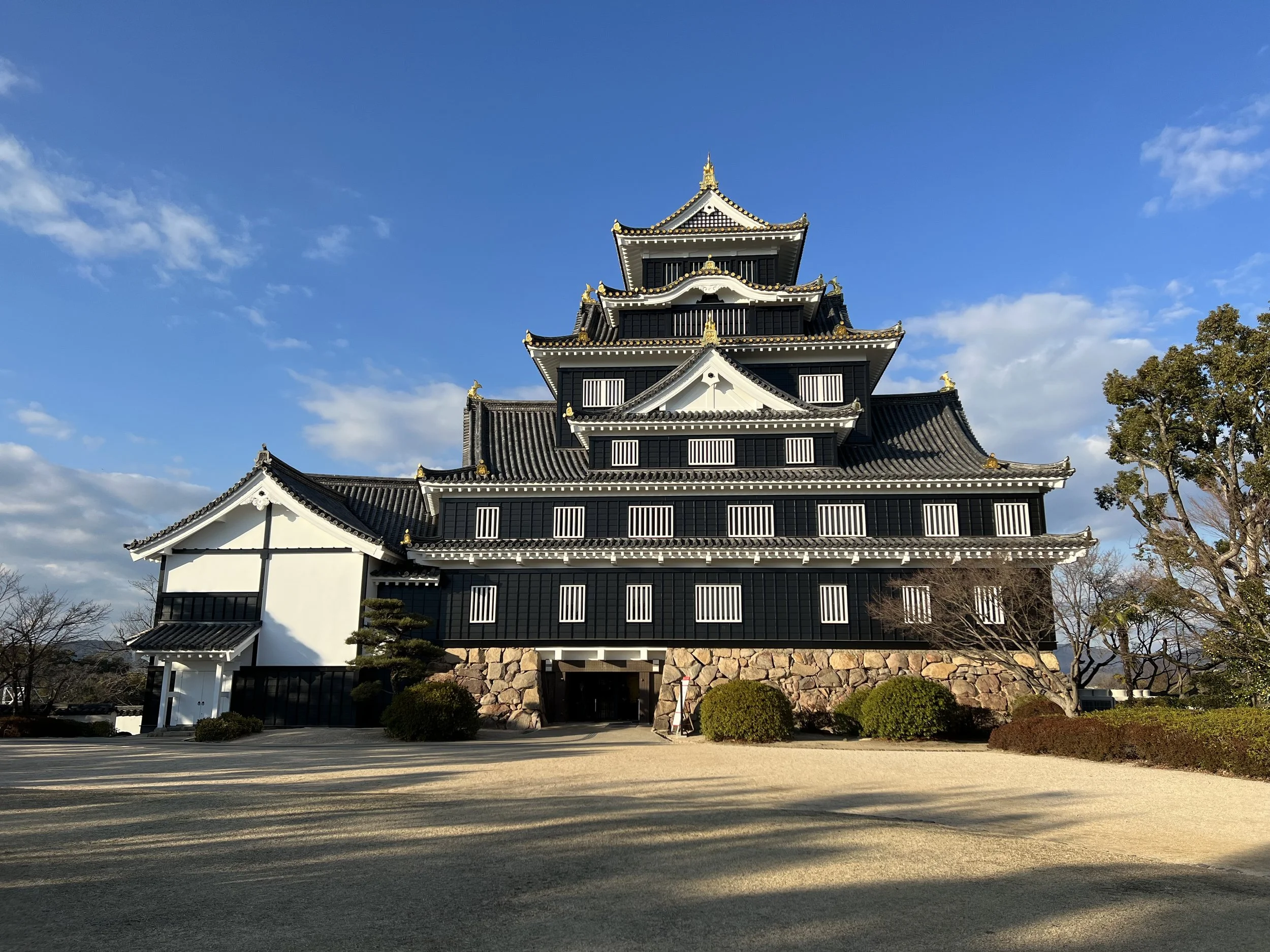
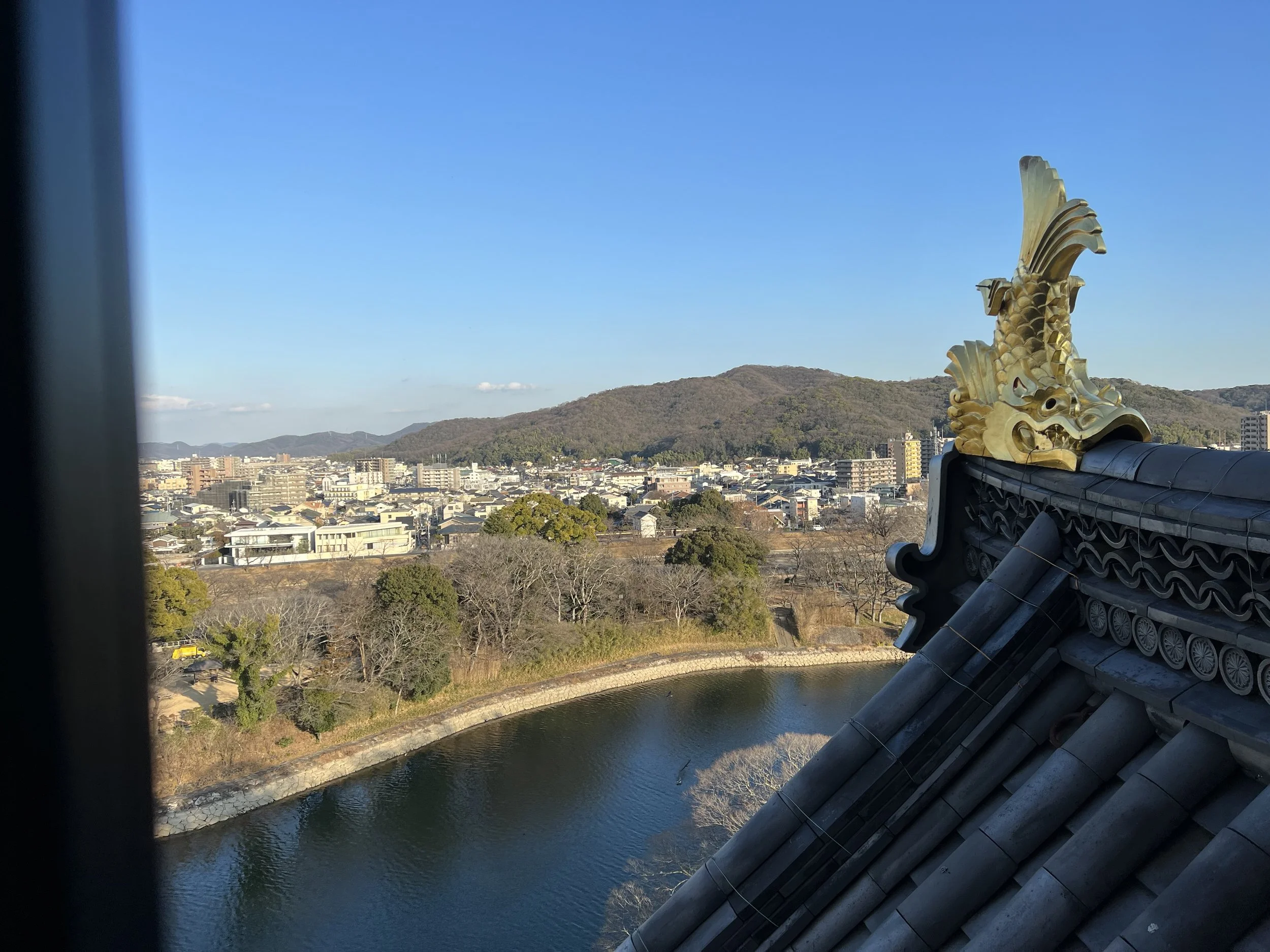
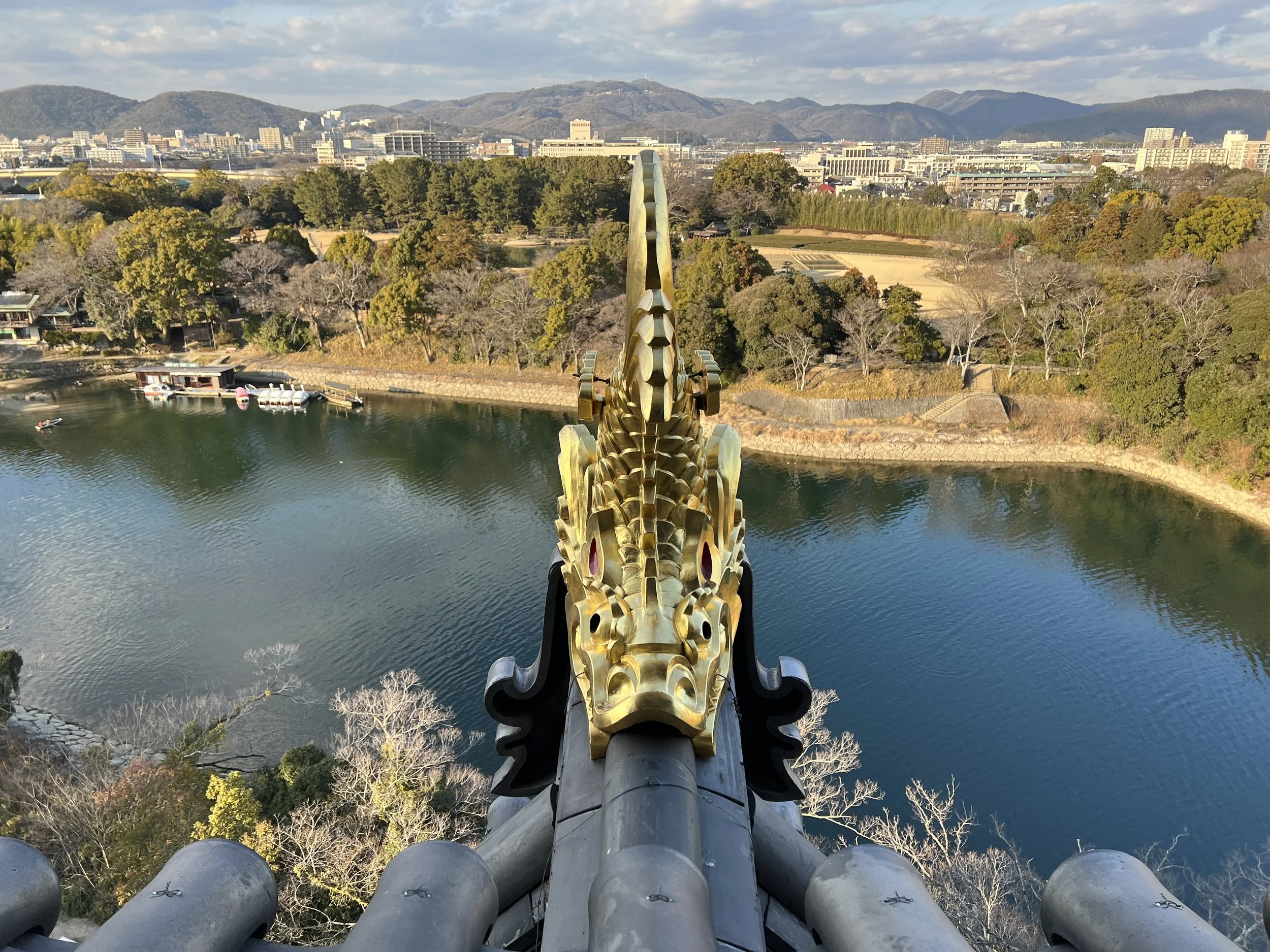
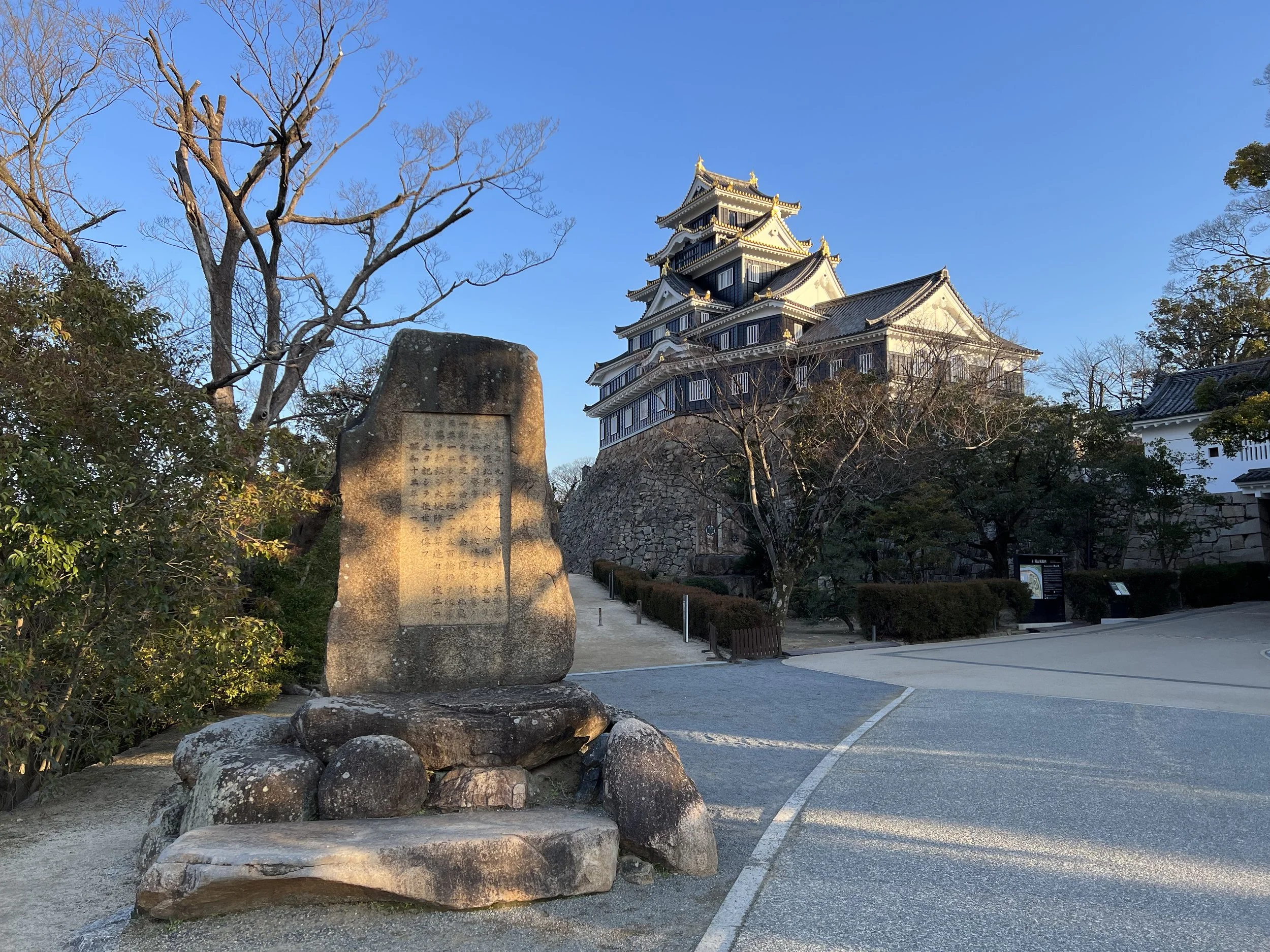
Okayama Castle, often called Crow Castle due to its striking black exterior, was originally constructed in 1597. Unfortunately, it was destroyed during the final year of World War II, but it was reconstructed in 1966. The black walls contrasted sharply with the white window sills, and the golden Shachihoko—mythical creatures with tiger or dragon heads and fish bodies—glimmered on the rooftop. I spent a few moments photographing the castle from every angle before heading inside. With only a handful of other visitors present, the castle felt serene, and I had the place almost all to myself.
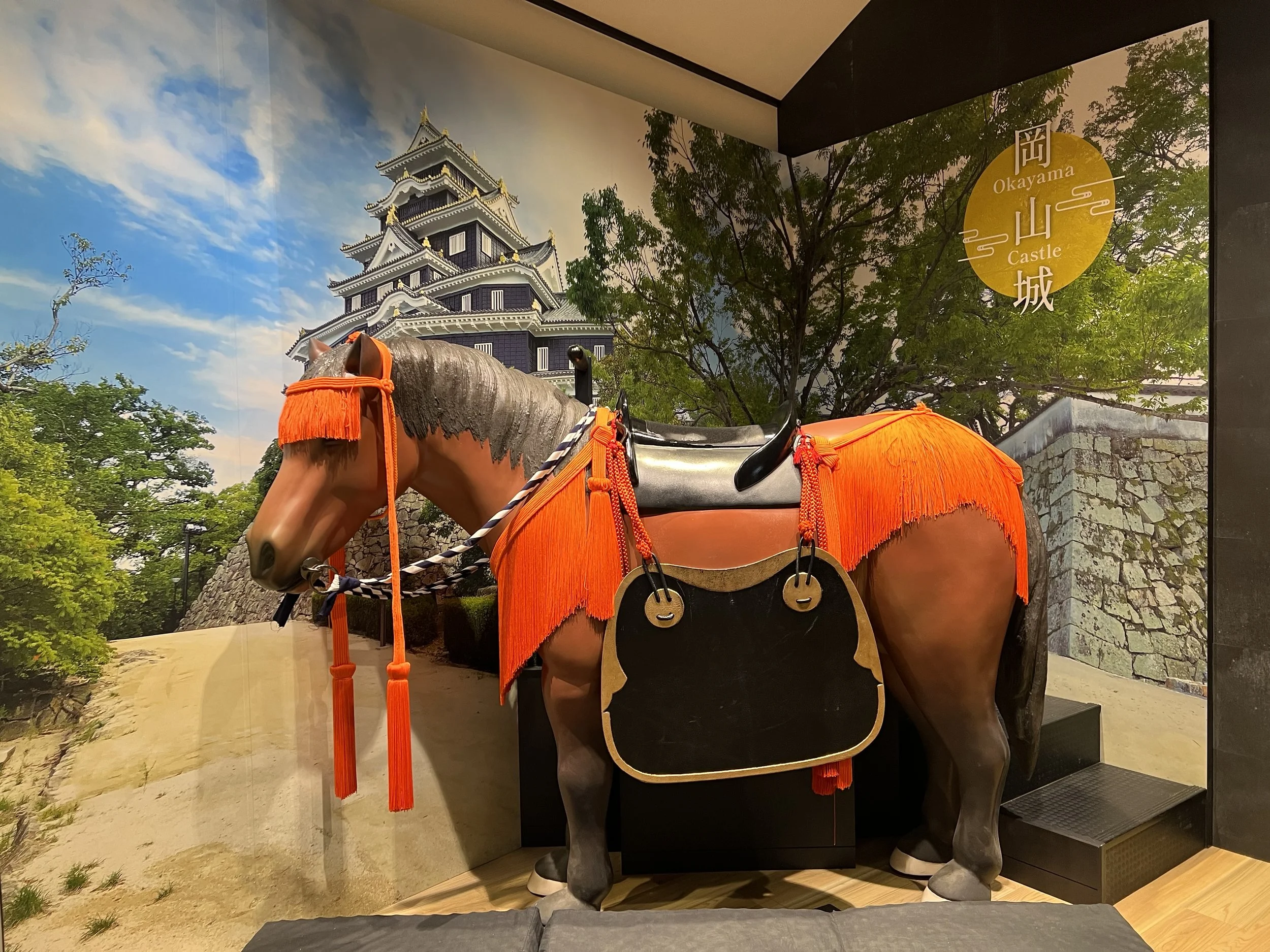
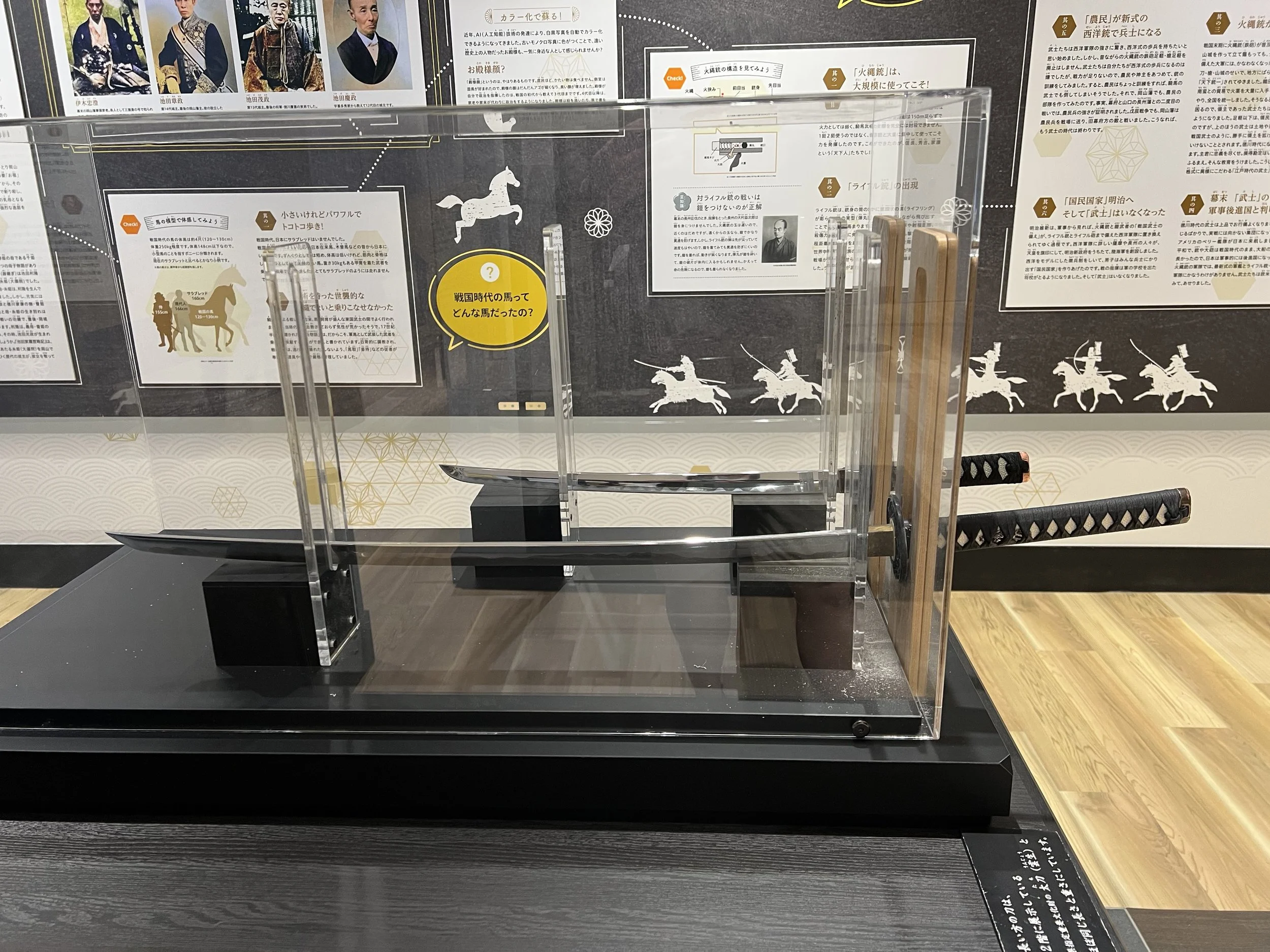
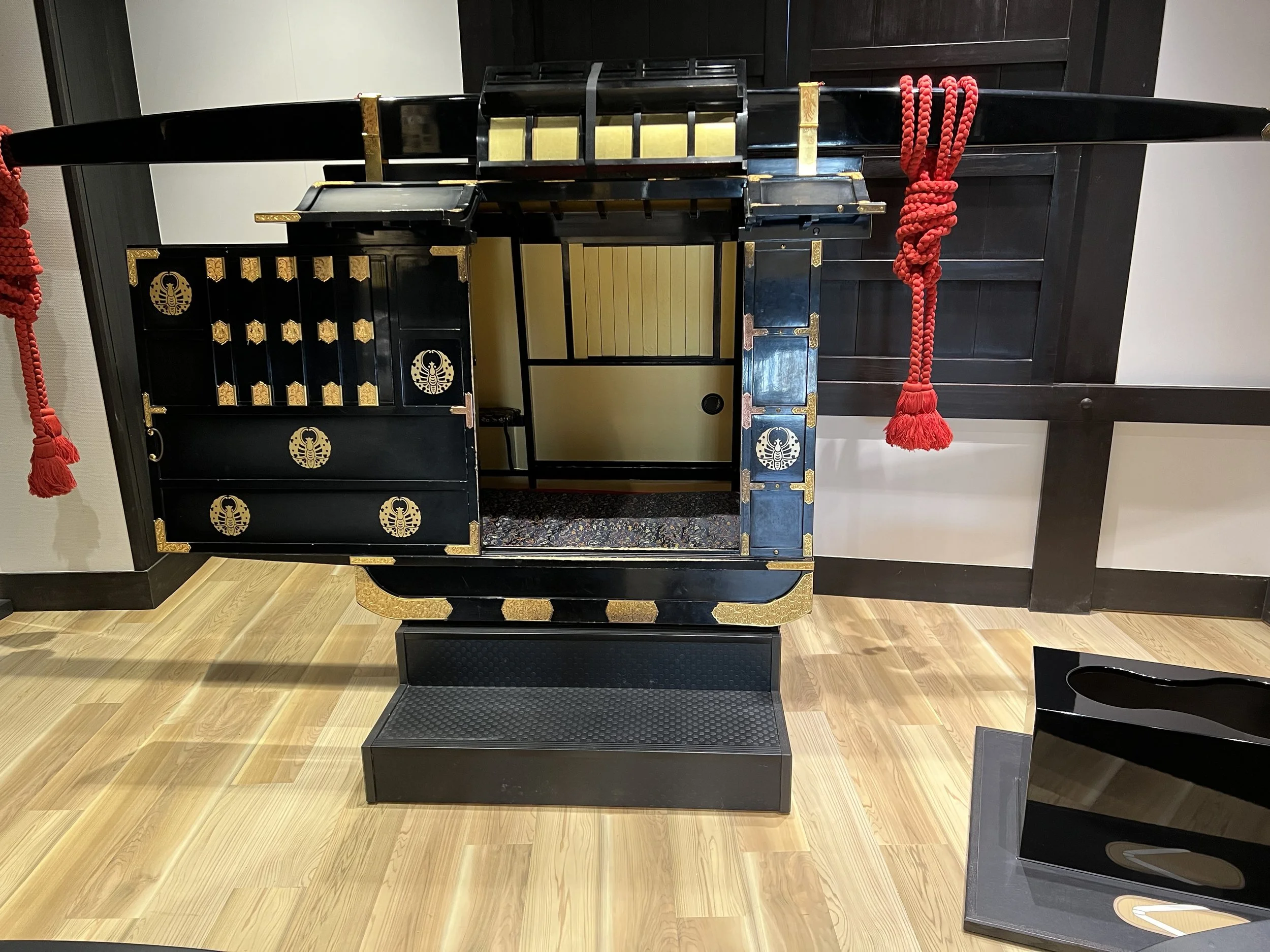
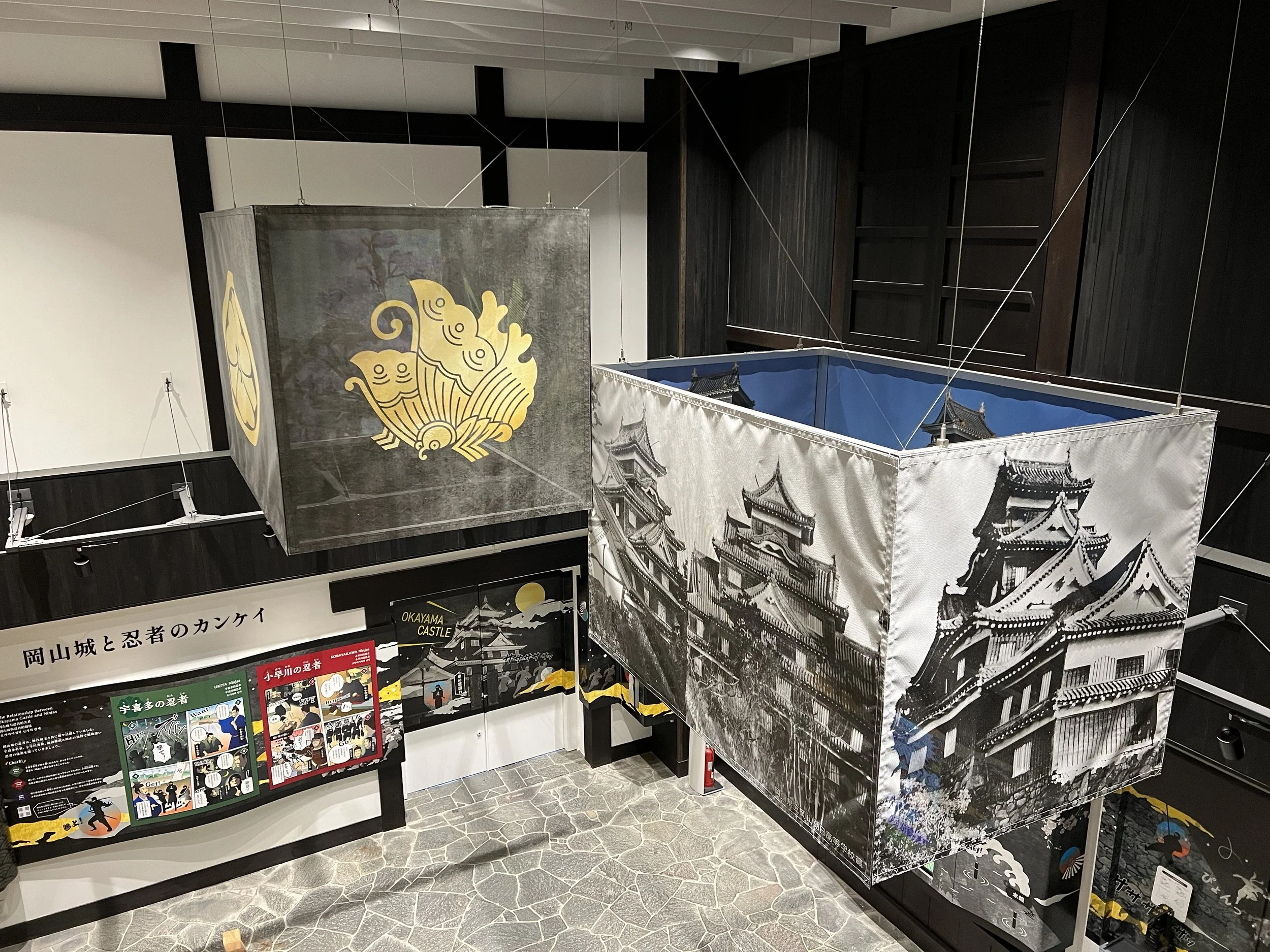
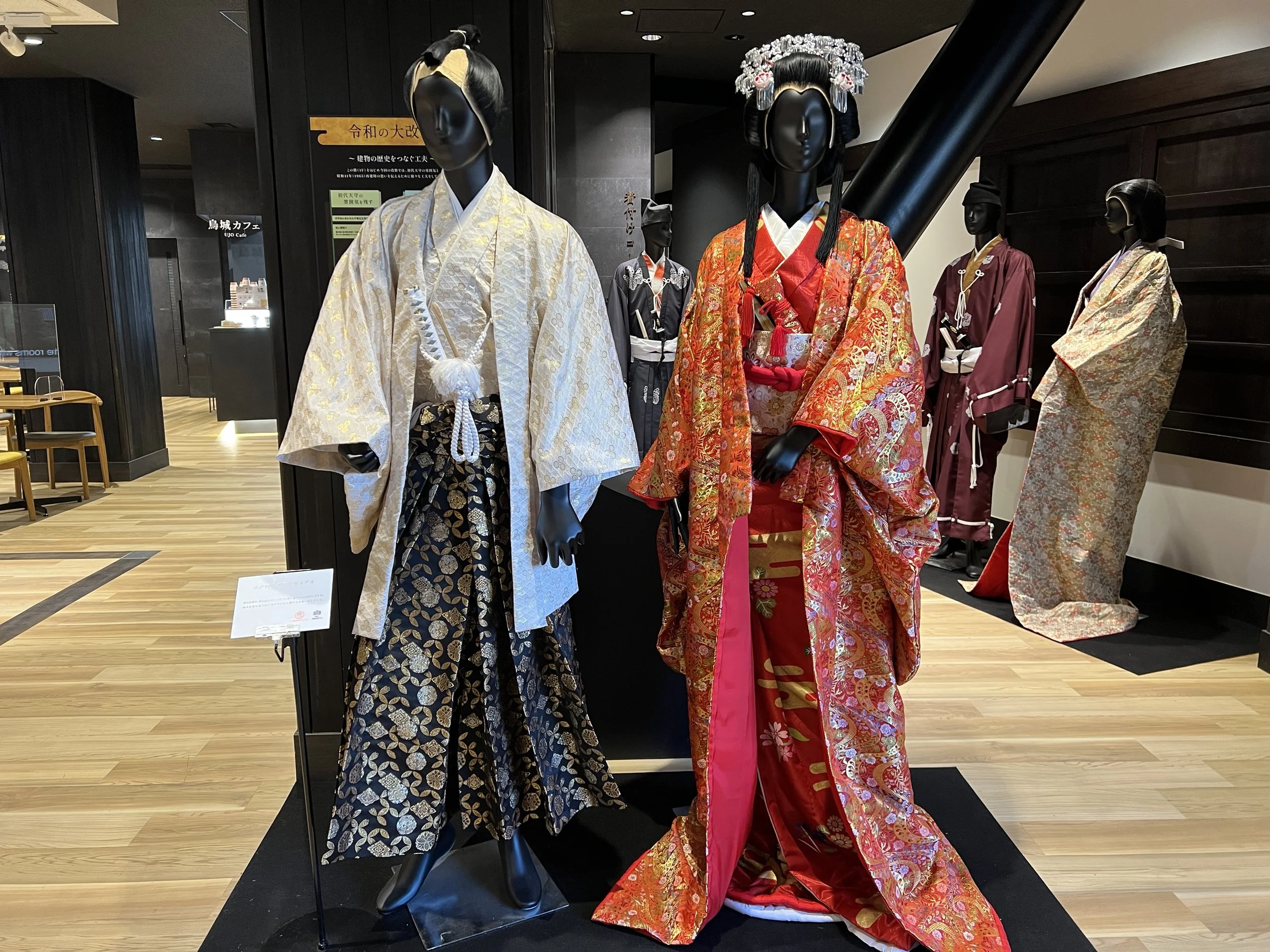
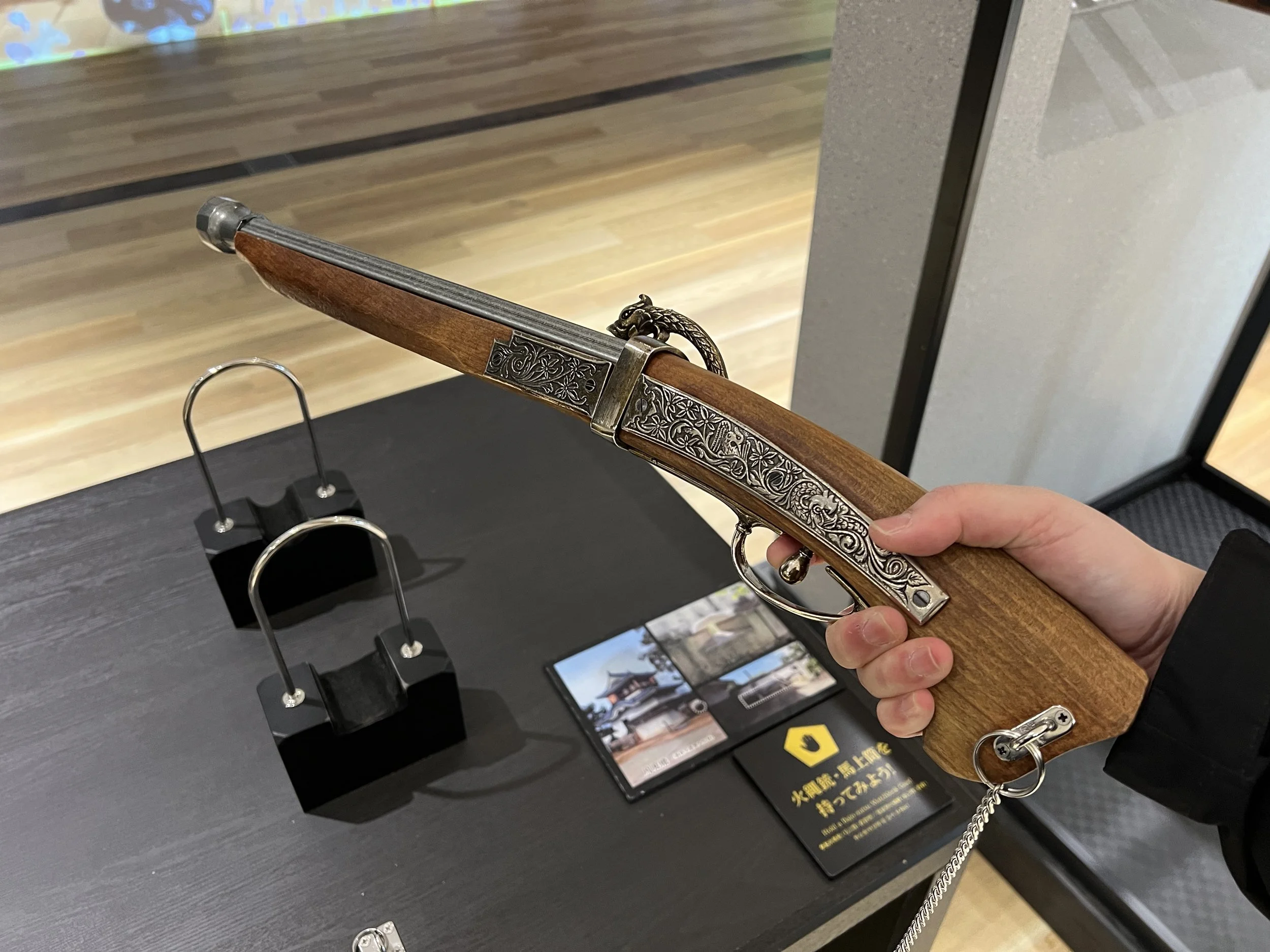
After purchasing my ticket and removing my shoes, I began exploring the interior. While the castle’s exterior preserves the traditional design, the inside has been modernized with interactive displays. I was able to try lifting an actual katana to feel its weight, put on traditional clothing, and even handle replicas of guns from that era. The displays made learning about the castle’s history fun and engaging.
Climbing to the top, I reached the observatory deck, which offered panoramic views of the surrounding city. Across the river, I could spot the famous Korakuen Garden, adding a beautiful backdrop to the castle grounds. Adjacent to the castle park, I noticed a pottery studio offering lessons in Bizen-yaki, a traditional Okayama pottery style. Though it was closed during my visit, I peeked through the windows and made a mental note to try it next time.
Time passed quickly, and after a final walk around the castle exterior, I headed back to my accommodation. Although it was a brief visit, the interactive displays and views made it a fulfilling stop in Okayama.
History & Background
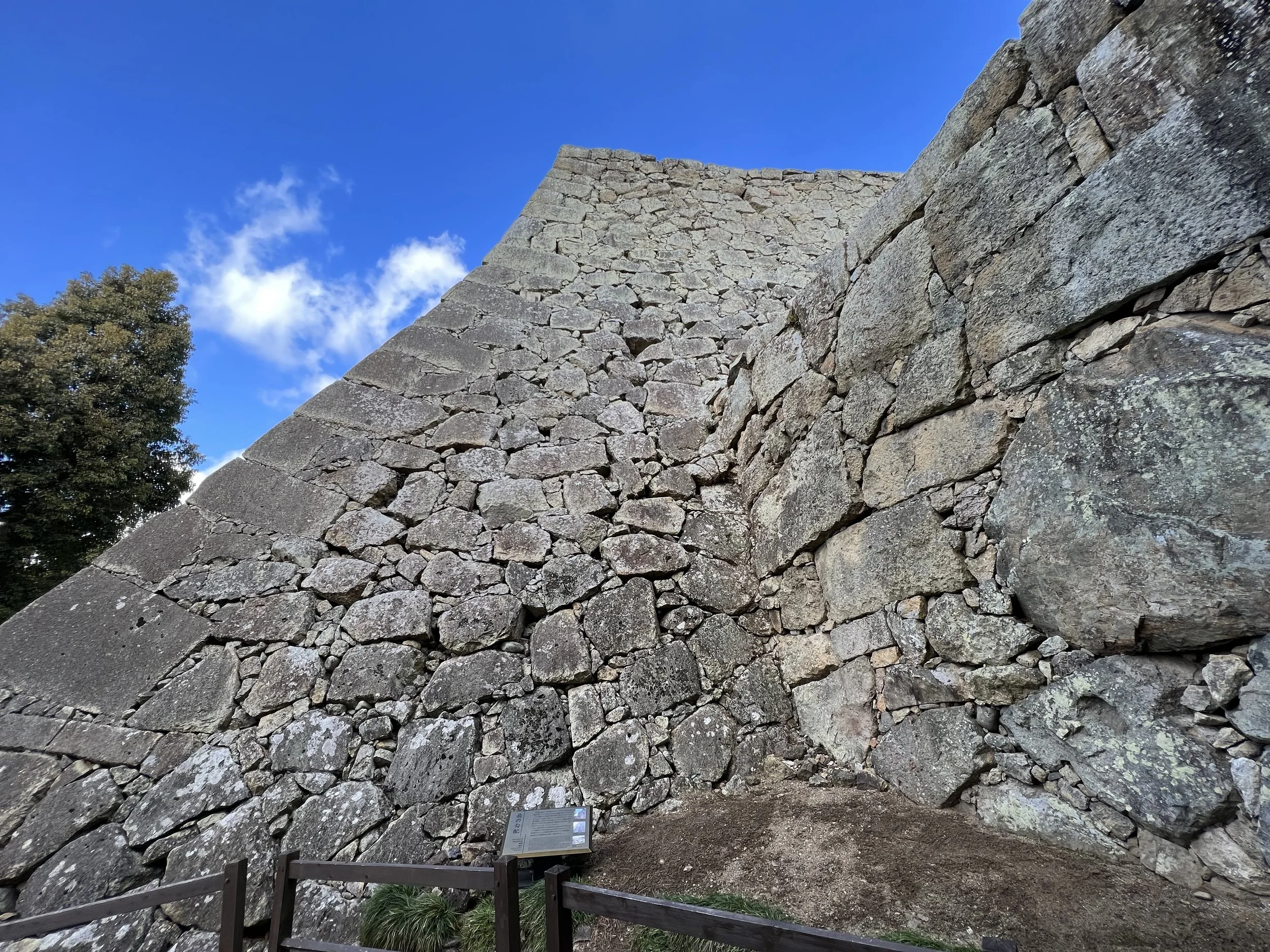
Okayama Castle (岡山城) was built in 1597 by Ukita Naoie and completed by his son, Ukita Hideie. It was constructed as a strategic military fortress and administrative centre, designed with imposing black walls to intimidate enemies—earning its nickname, Crow Castle. During the Meiji era, parts of the castle were repurposed, and much of the original structure was destroyed during World War II air raids. The current reconstruction, completed in 1966, preserves the exterior’s historical appearance while modernizing the interior for educational and tourist purposes. The castle’s proximity to Korakuen Garden, one of Japan’s Three Great Gardens, makes it a natural pairing for visitors interested in history and landscape beauty.
Getting There
Okayama Castle is easily reachable on foot from Okayama Station, about a 20–25 minute walk along flat city streets. Alternatively, visitors can take a local bus or tram for a quicker and more convenient option. From Okayama Station, the tram on the Higashiyama Line stops near the castle, or you can take a city bus, which drops you within a short walk of the entrance. Taxis are also available for a faster, direct route. The walking route passes through part of the city centre, offering opportunities to enjoy local shops and cafés along the way.
Route Overview
Distance: 4.42 km out & back (Okayama Station)
Total elevation gain: 20 m
Duration: 1 hr 01 min (with breaks 1 hr 20 min)
Difficulty: Easy
Cost Breakdown
Entrance Fee: Okayama Castle — ¥400
Food: ¥1,293