Kawaguchi Asama Shrine - Yamanashi, Japan
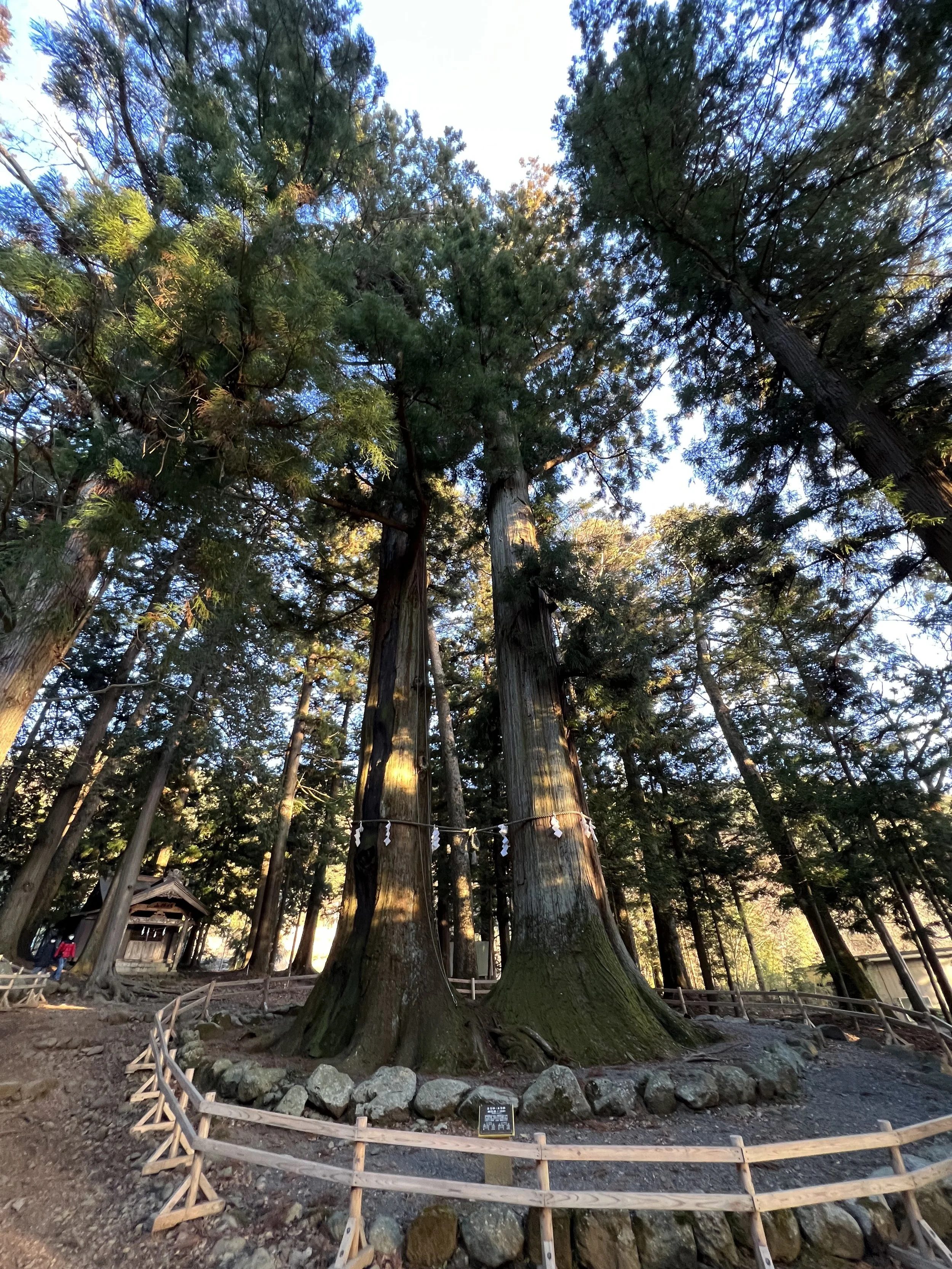
Kawaguchi Asama Shrine was established in 865 following a violent eruption of Mount Fuji, built to appease the mountain’s power. Dedicated to the goddess Konohanasakuya-hime, the shrine is surrounded by ancient cedar trees with some over 1,200 years old and is part of the UNESCO-listed “Fujisan, Sacred Place and Source of Artistic Inspiration.”
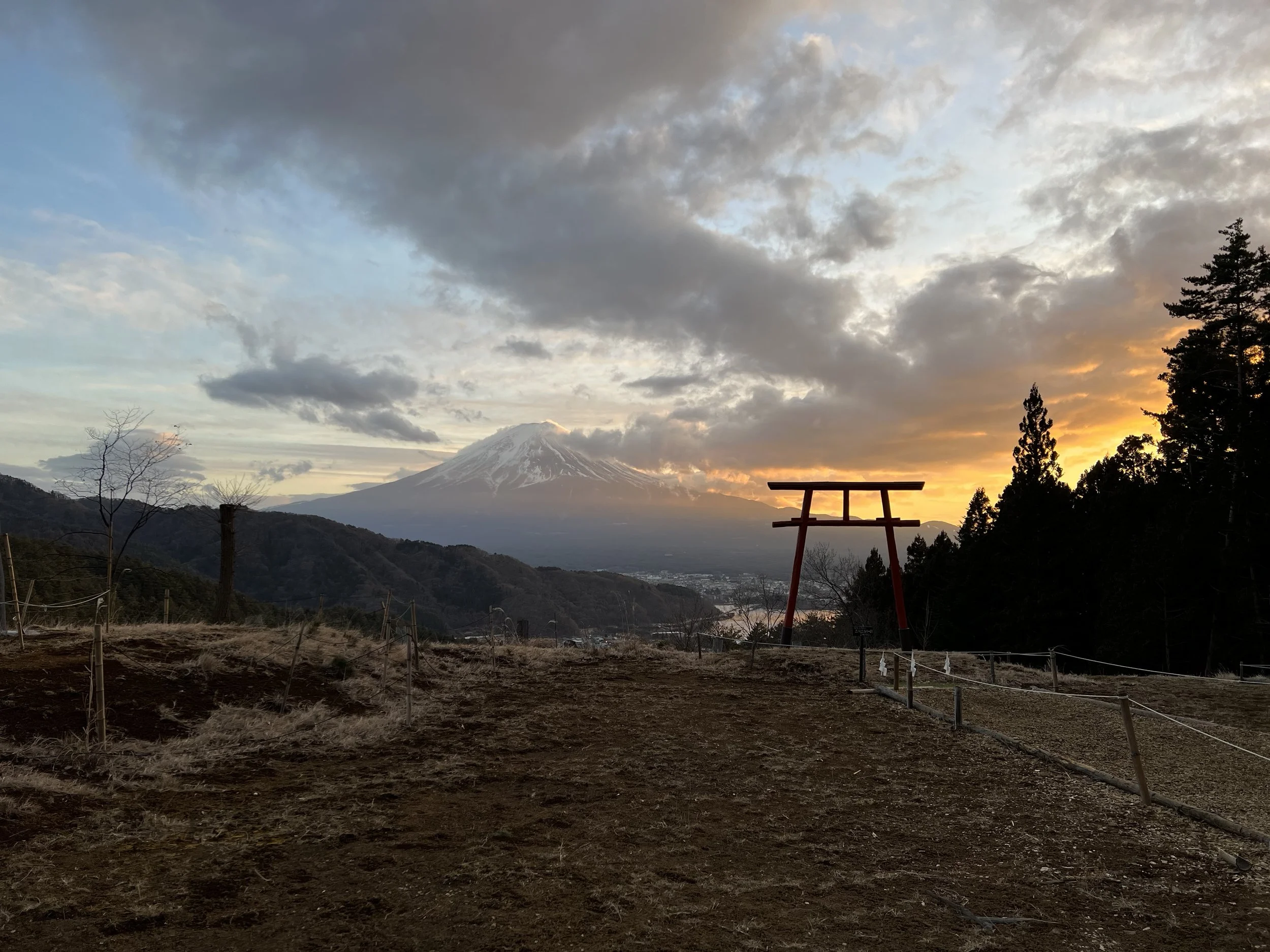
What first drew me here was the famous “torii gate in the sky.” I had seen photos of it online and knew I wanted to try capturing it during sunset. After spending the day exploring Saiko Iyashi-no-Sato Nenba, Narusawa Ice Cave, and Fugaku Wind Cave, I made my way from Kawaguchiko Station toward the shrine. The bus dropped me off near the entrance, and from there, I began exploring.
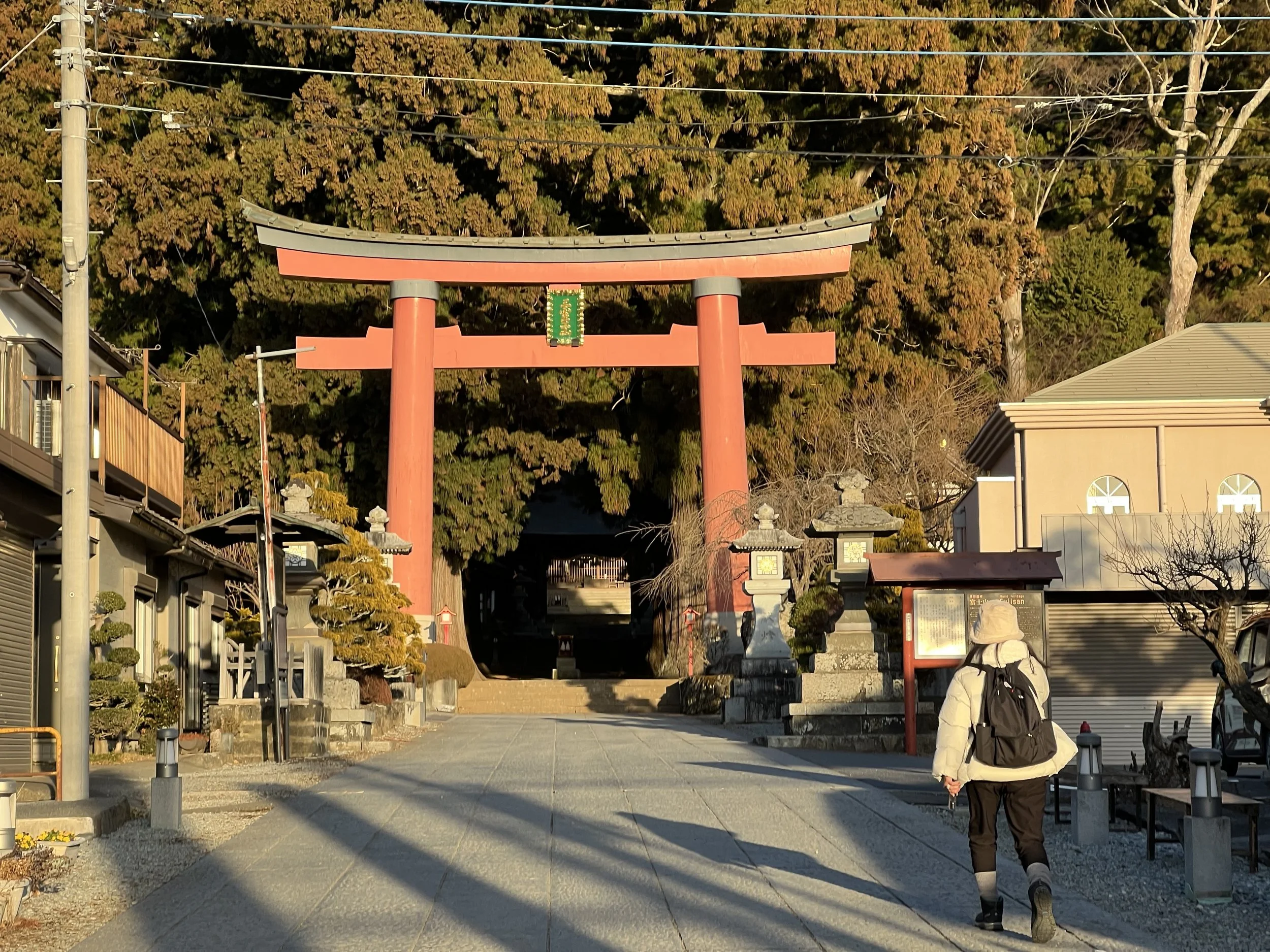
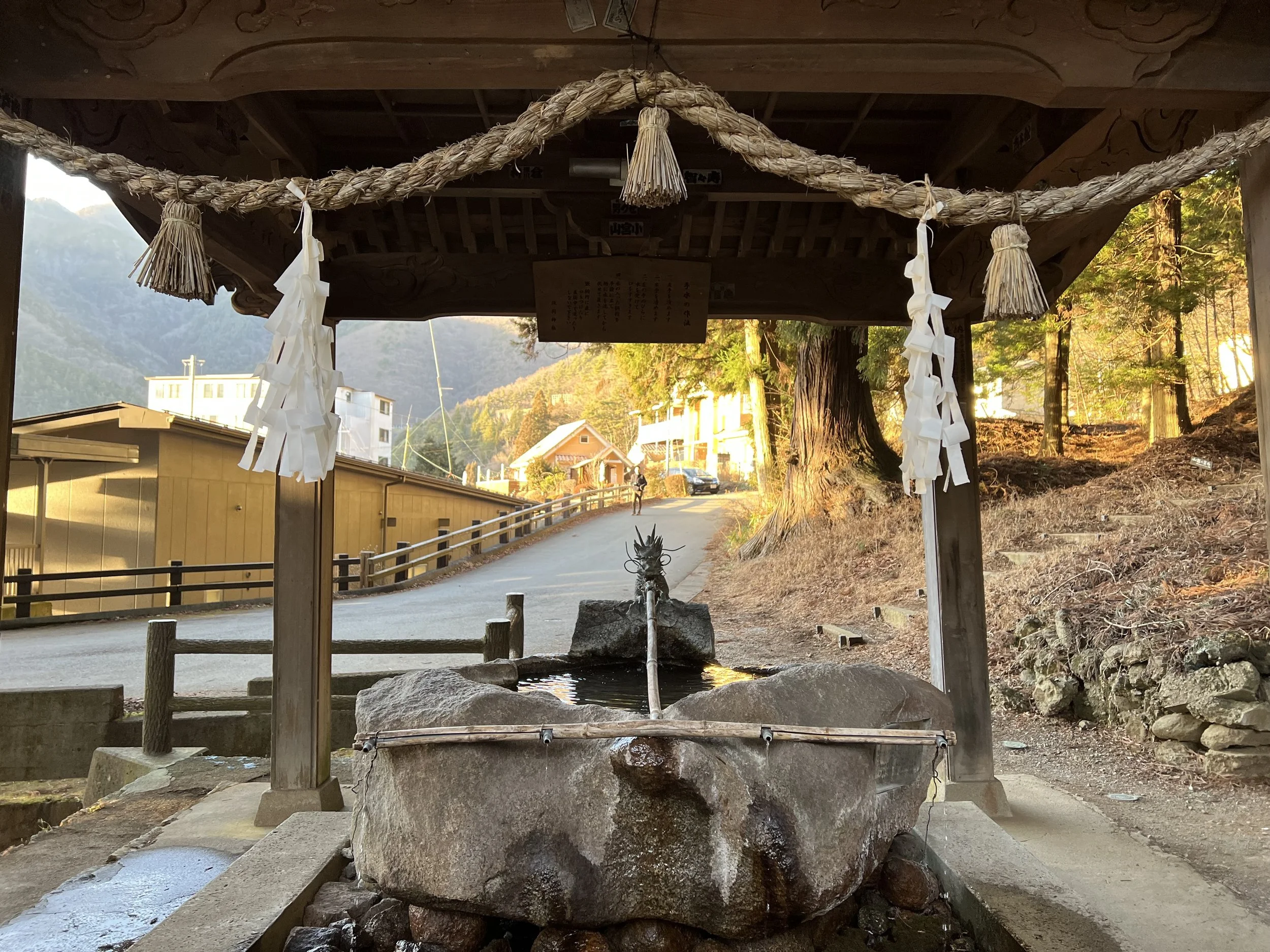
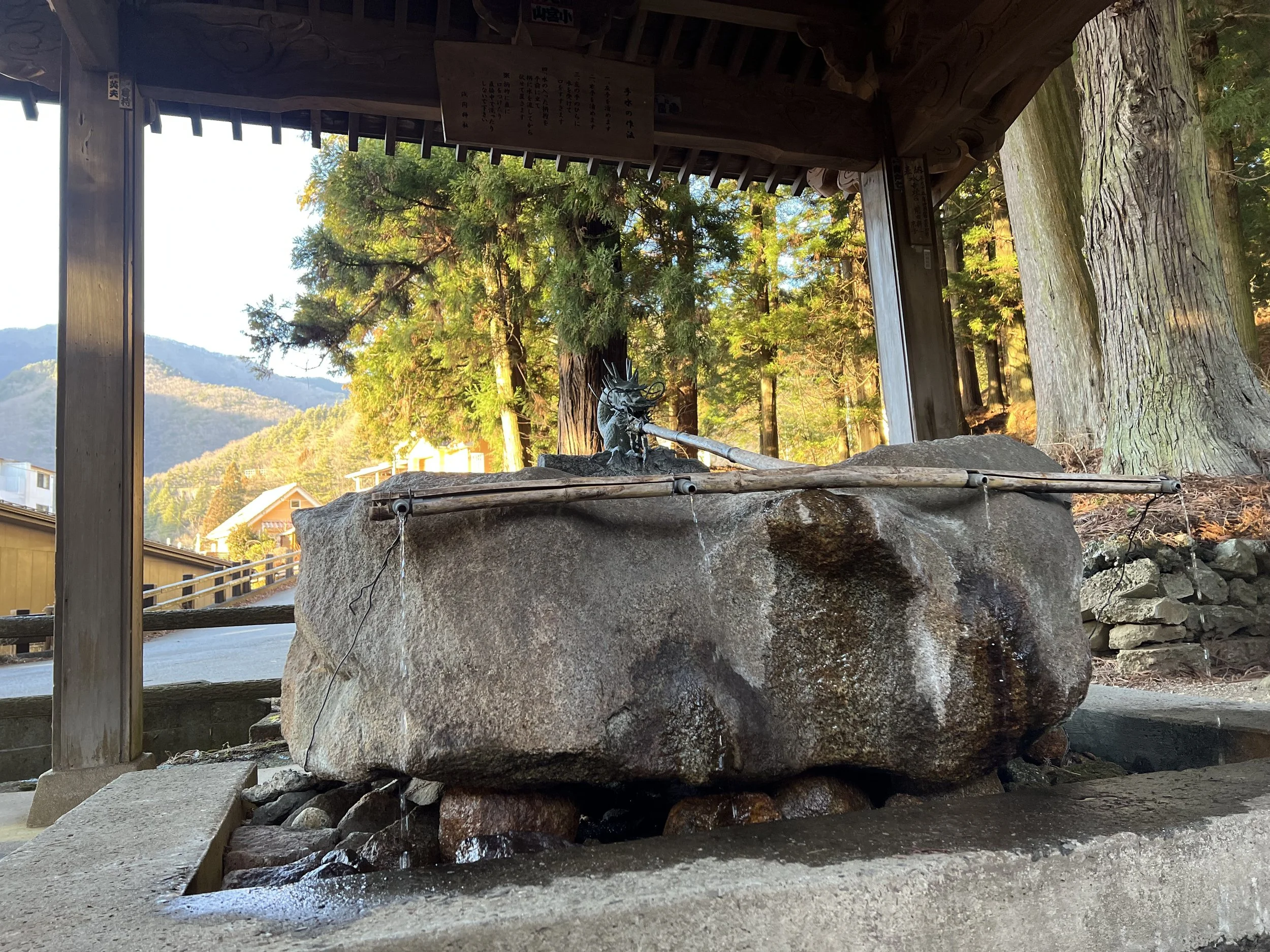
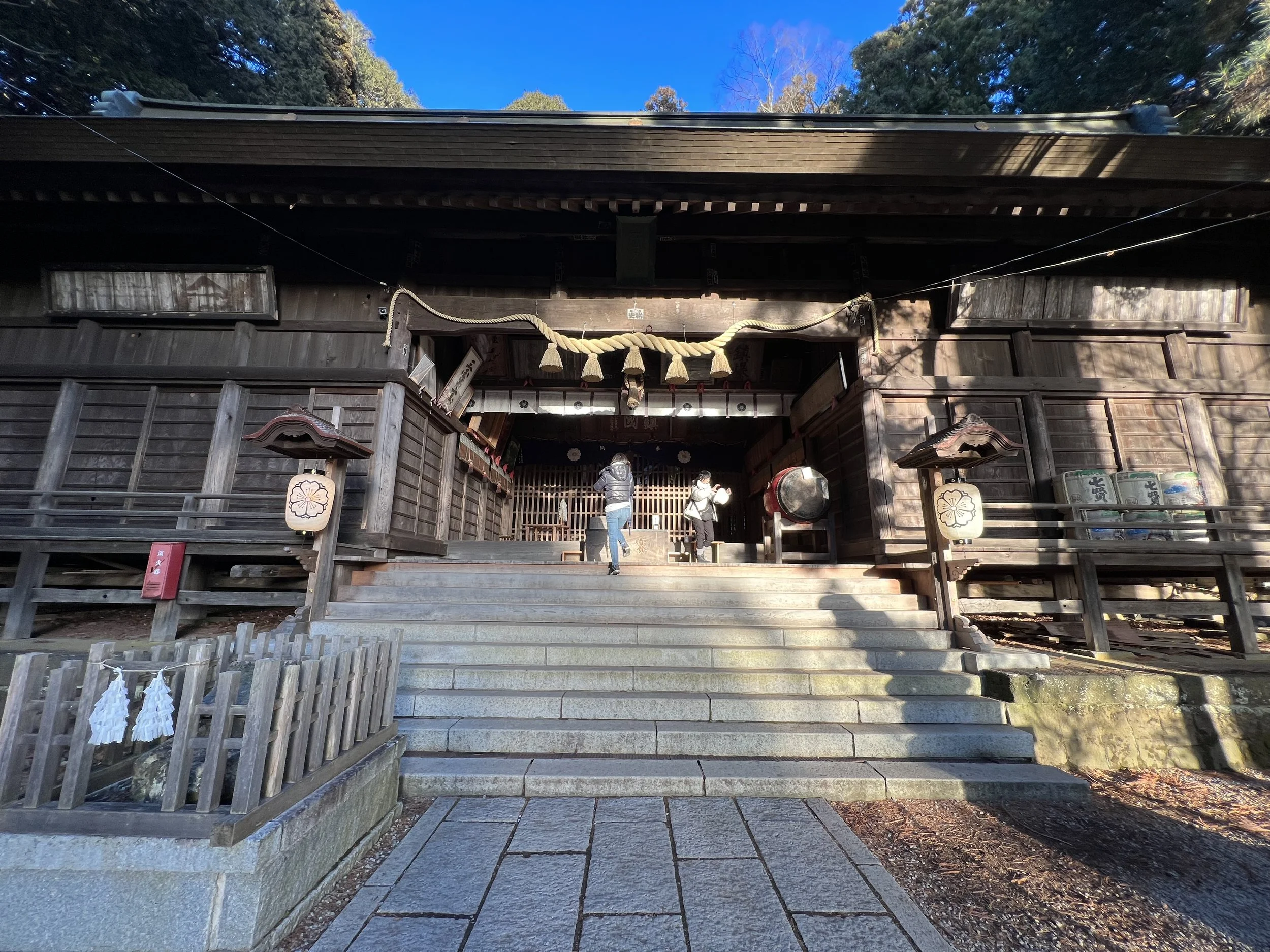
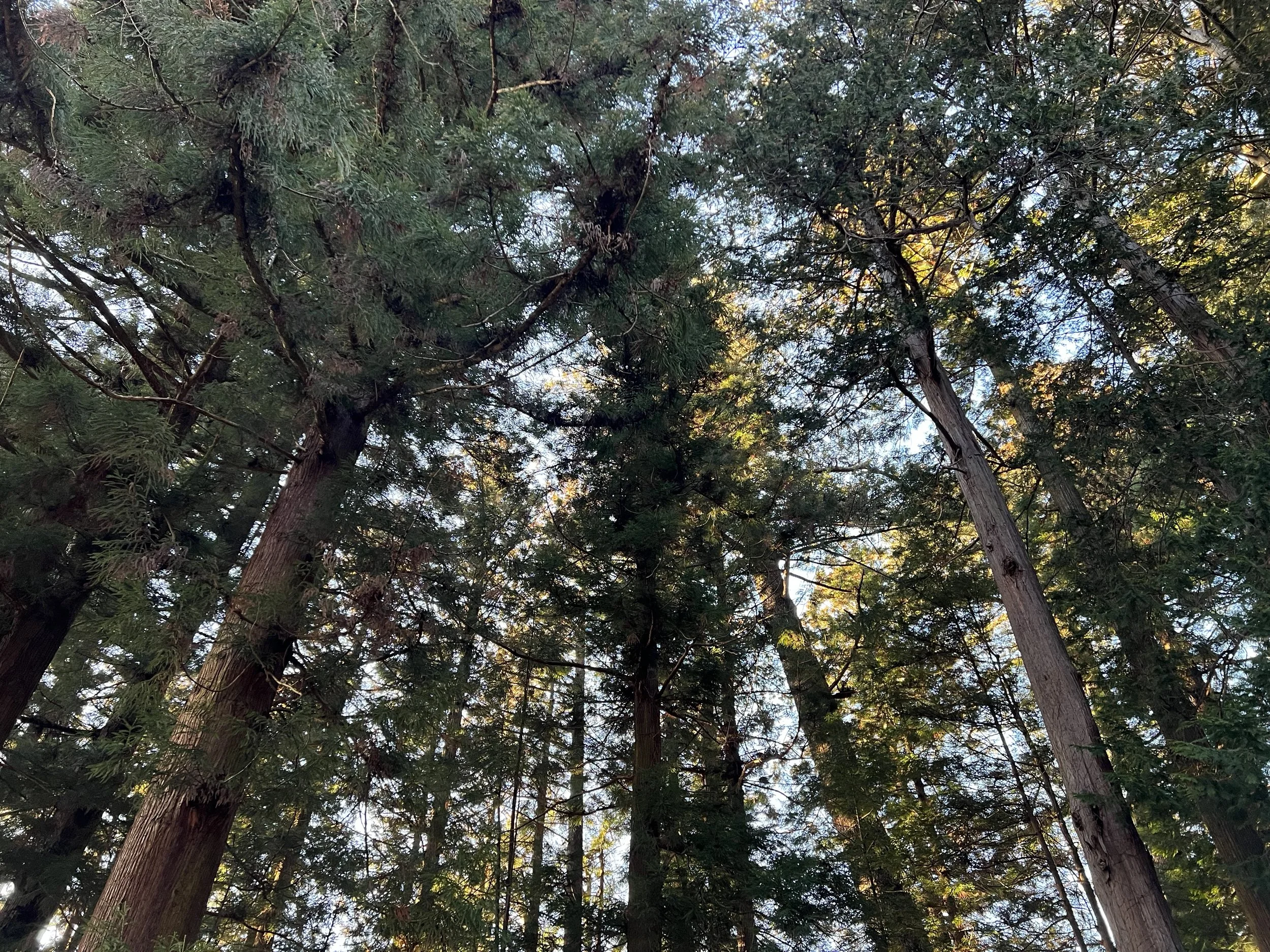
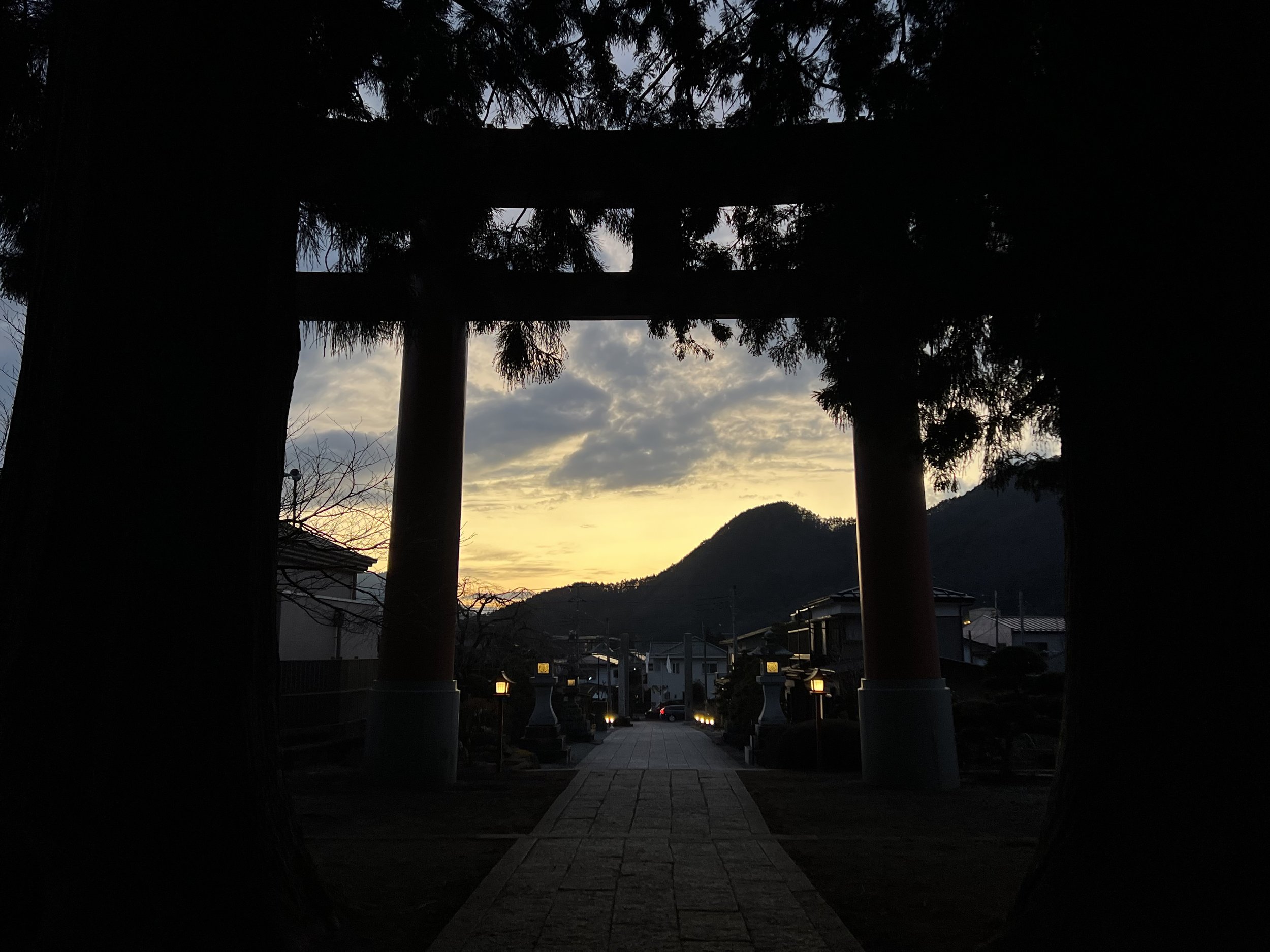
As the sun started to set, a warm orange glow lit up the torii gate at the shrine’s entrance. Walking through it, I was immediately surrounded by towering cedar trees. The atmosphere shifted instantly—it felt quieter, almost otherworldly, like stepping into a different dimension. The shrine grounds are home to seven sacred cedar trees, each considered a deity in its own right. I found myself completely drawn to them, almost forgetting to focus on the shrine buildings themselves.
After making a loop around the shrine, I exited through the back and made my way toward the mountain road behind it. This was the path leading to what I had come for—the Tenku no Torii, or “torii gate in the sky.”
This newer viewpoint was built in 2019 to provide a place for worshippers to face Mount Fuji from higher ground. Since it sits on private land, there’s a small entrance fee to access it. The walk up wasn’t particularly well marked, but I managed to follow the road without too much trouble. Along the way, I passed a luxury-style camping area with impressive facilities. It was easy to imagine how popular this spot would be in the summer, especially with its open views toward Mount Fuji.
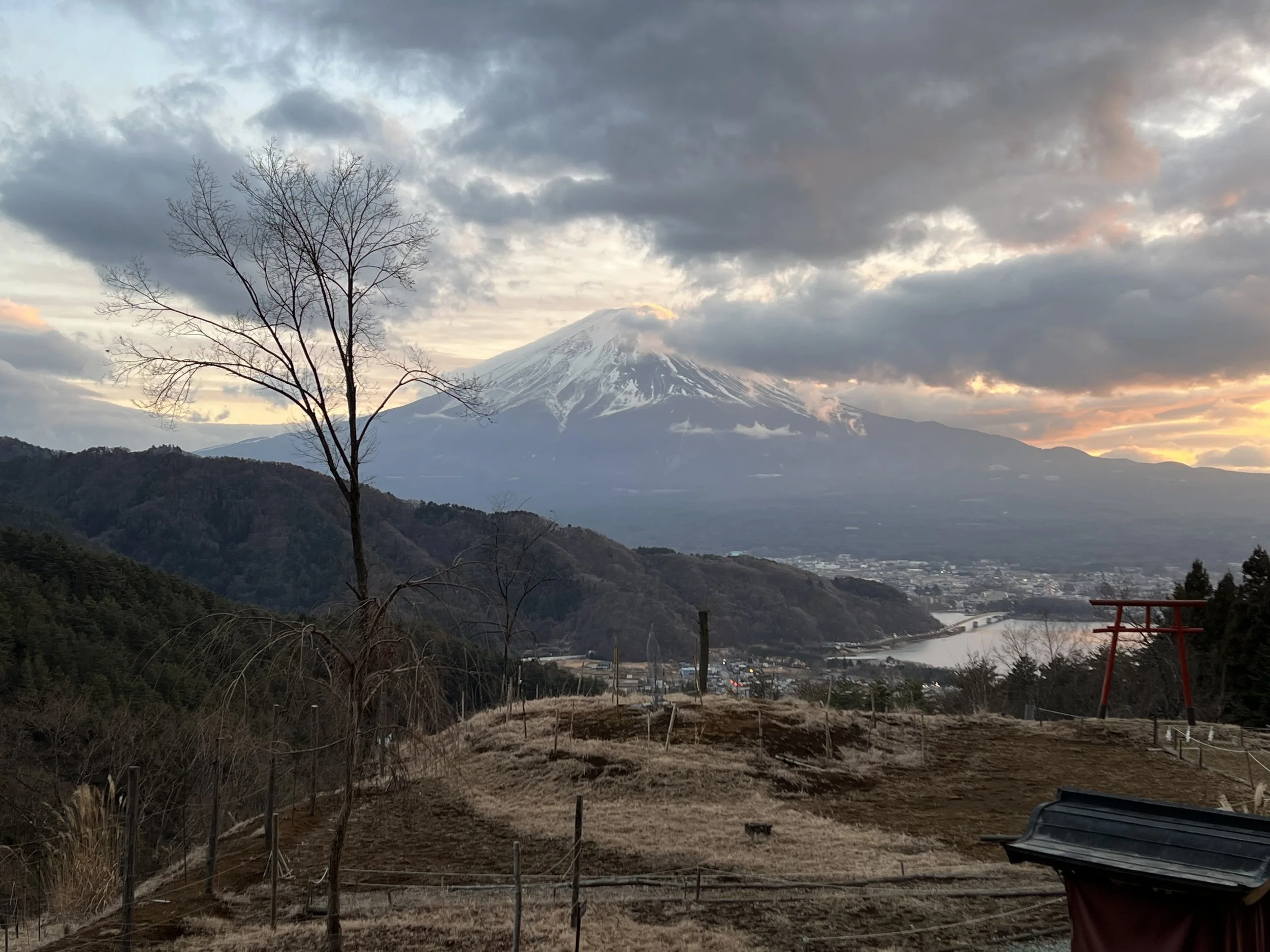
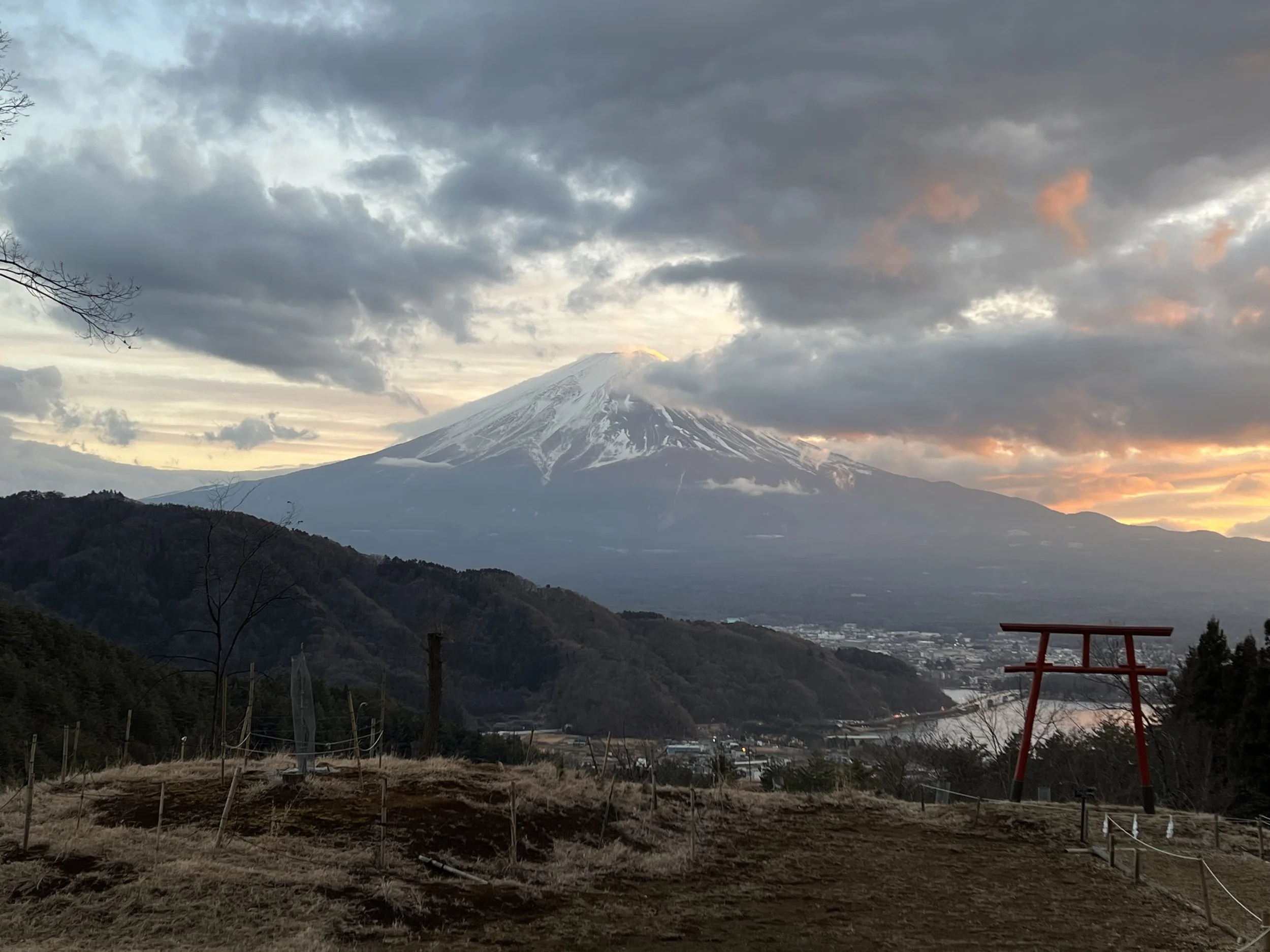
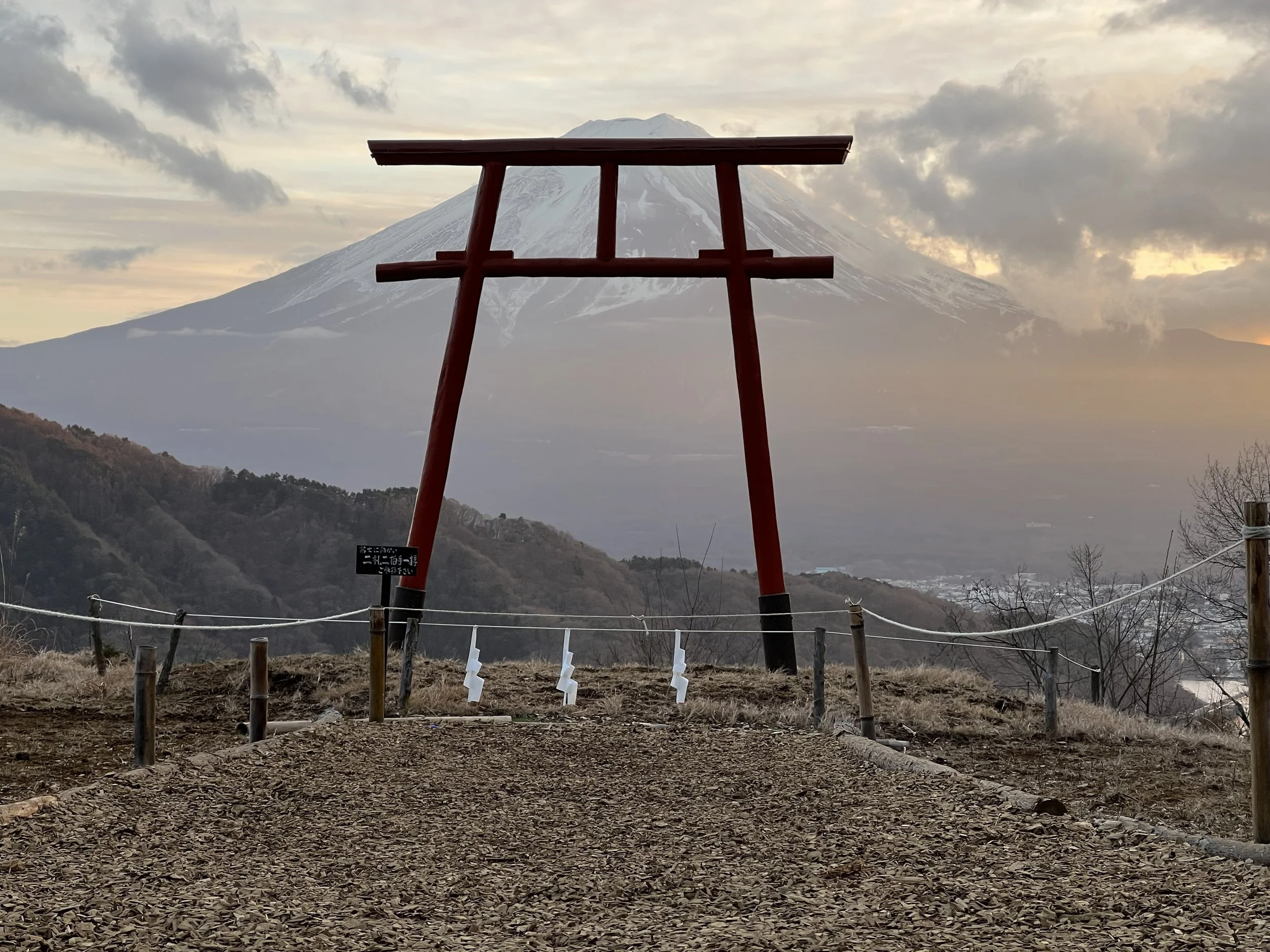
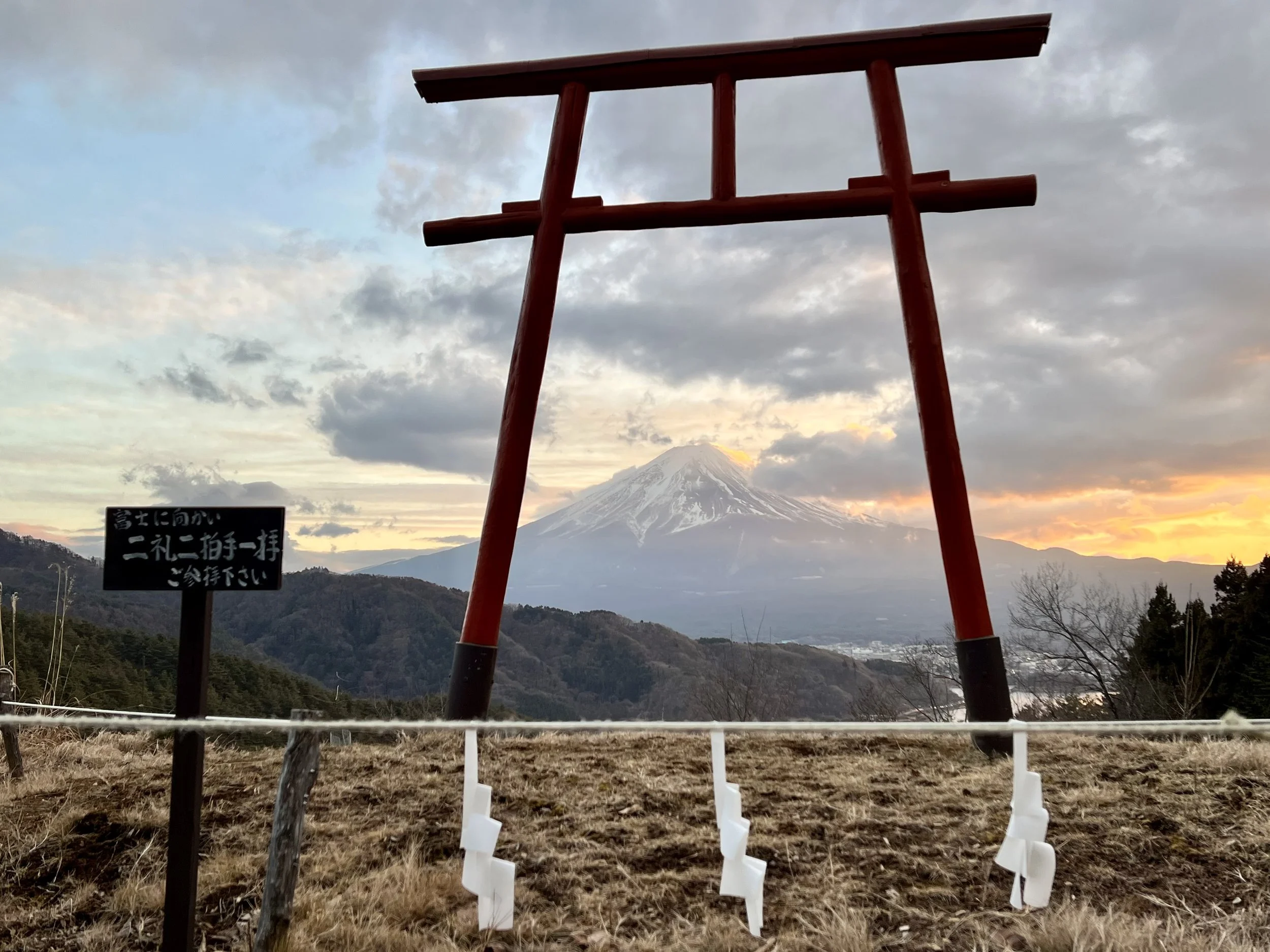
After the steady climb, I finally reached the torii gate. I paid the small fee and stepped into the viewing area and it was absolutely worth it. The timing couldn’t have been better. The soft orange hues of the setting sun, the clear and unobstructed view of Mount Fuji, and the torii gate perfectly framed in the foreground created a scene that felt almost unreal.
There were only a handful of people there, which made it easy to move around and capture different angles without feeling rushed. I spent more time than I had planned, just taking it all in.
Eventually, I realized I had lingered a bit too long and needed to head back down quickly to catch the last bus. I made my way down at a faster pace than I would have liked and ended up heading to a different bus stop closer to the main road. I just barely made the last bus back toward Kawaguchiko Station. I had mentally prepared to walk back if I missed it—but luckily, it didn’t come to that.
History & Background
Kawaguchi Asama Shrine (河口浅間神社) was founded in 865 after Mount Fuji’s eruption in 864, as part of efforts to calm the mountain’s perceived spiritual unrest. The shrine is dedicated to Konohanasakuya-hime, the Shinto deity associated with Mount Fuji and volcanic activity.
The shrine grounds are particularly known for their ancient cedar trees, some of which are over a millennium old and are considered sacred. These trees contribute to the spiritual atmosphere of the site and are protected as natural monuments.
The nearby Tenku no Torii, while a modern addition, reflects the continued cultural importance of Mount Fuji as a place of worship and inspiration. The shrine itself is recognized as part of the UNESCO World Heritage designation for Mount Fuji, highlighting its historical and spiritual significance.
Getting There
From Kawaguchiko Station, visitors can take a local bus toward Kawaguchi or along the northern shore of Lake Kawaguchi. The closest stop is Kawaguchi Post Office Bus Stop, which is a short walk from the shrine entrance.
To reach the Tenku no Torii viewpoint, visitors must walk uphill from the shrine via local roads or trails, which takes approximately 20–30 minutes. The path is not heavily signposted, so navigation may require checking maps along the way. Driving is also an option, though access to the torii viewpoint itself is limited due to its location on private land.
Route Overview
Distance: 4.76 km (Kawaguchi Post Office Bus Stop → Sarumawashi konohanabijyutukan Bus Stop)
Total elevation gain: 101 m
Duration: 1 hr 10 min (with breaks 1 hr 20 min)
Difficulty: Easy
Cost Breakdown
Bus: Kawaguchiko Station → Kawaguchi Post Office Bus Stop — ¥390
Entrance Fee: Tenku no Torii — ¥100