Kashima Shrine - Ibaraki, Japan
Kashima Shrine is believed to have been founded around 600 BC, making it one of the oldest Shinto shrines in Japan and the oldest in the Kanto region. For centuries, it has served as an important spiritual centre for the area. The shrine enshrines Takemikazuchi-no-kami, the Shinto god of thunder and war. In Japanese mythology, this deity symbolizes victory, courage, and strength, which is why students, athletes, and business owners from across Japan come here to pray for success.
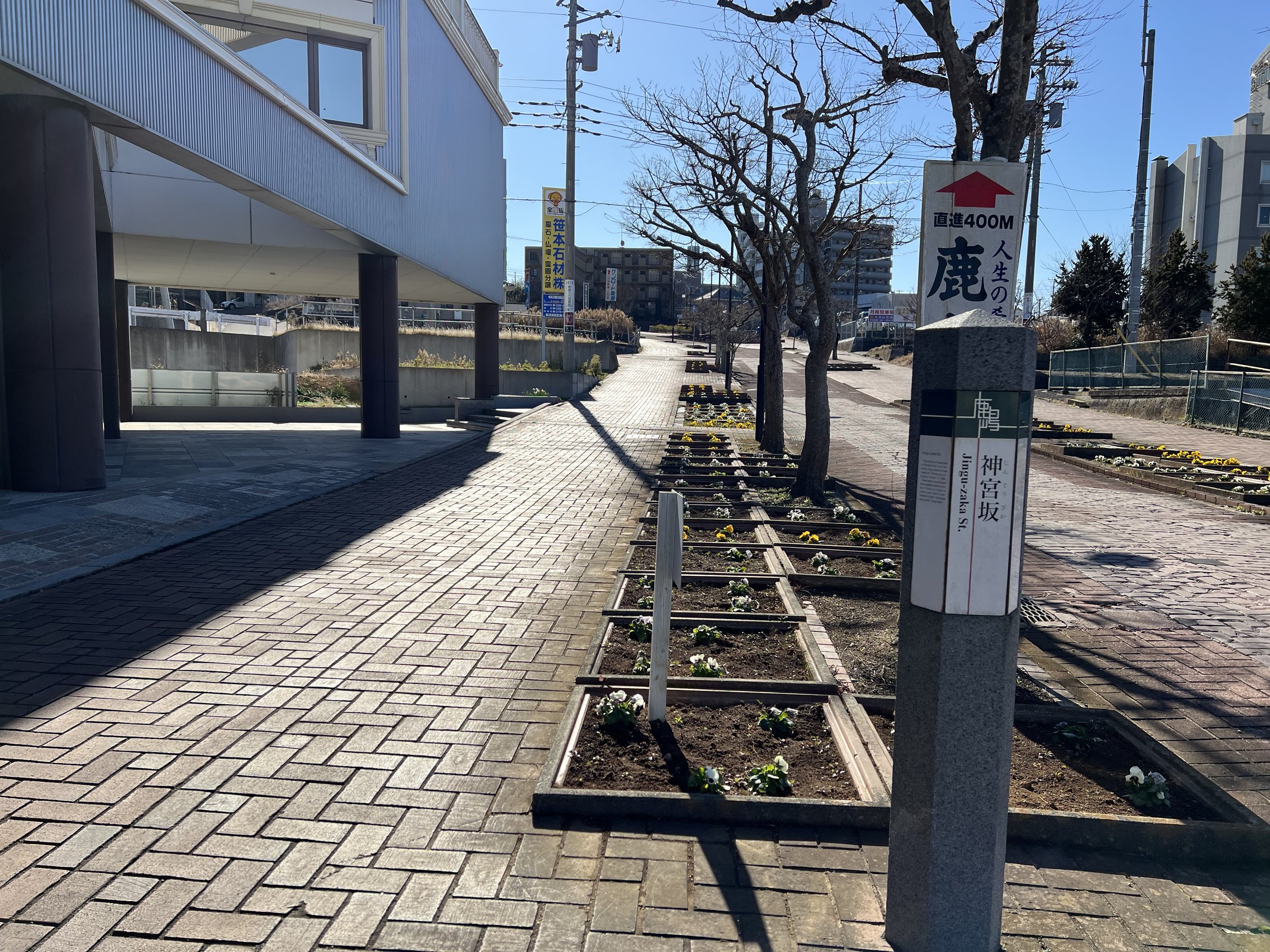
The train ride from Mito Station took about an hour and fifteen minutes, followed by another fifteen-minute walk from the station to the shrine. The route is clearly marked, and even on a regular day there are usually plenty of visitors heading in the same direction—especially during major holidays like New Year.
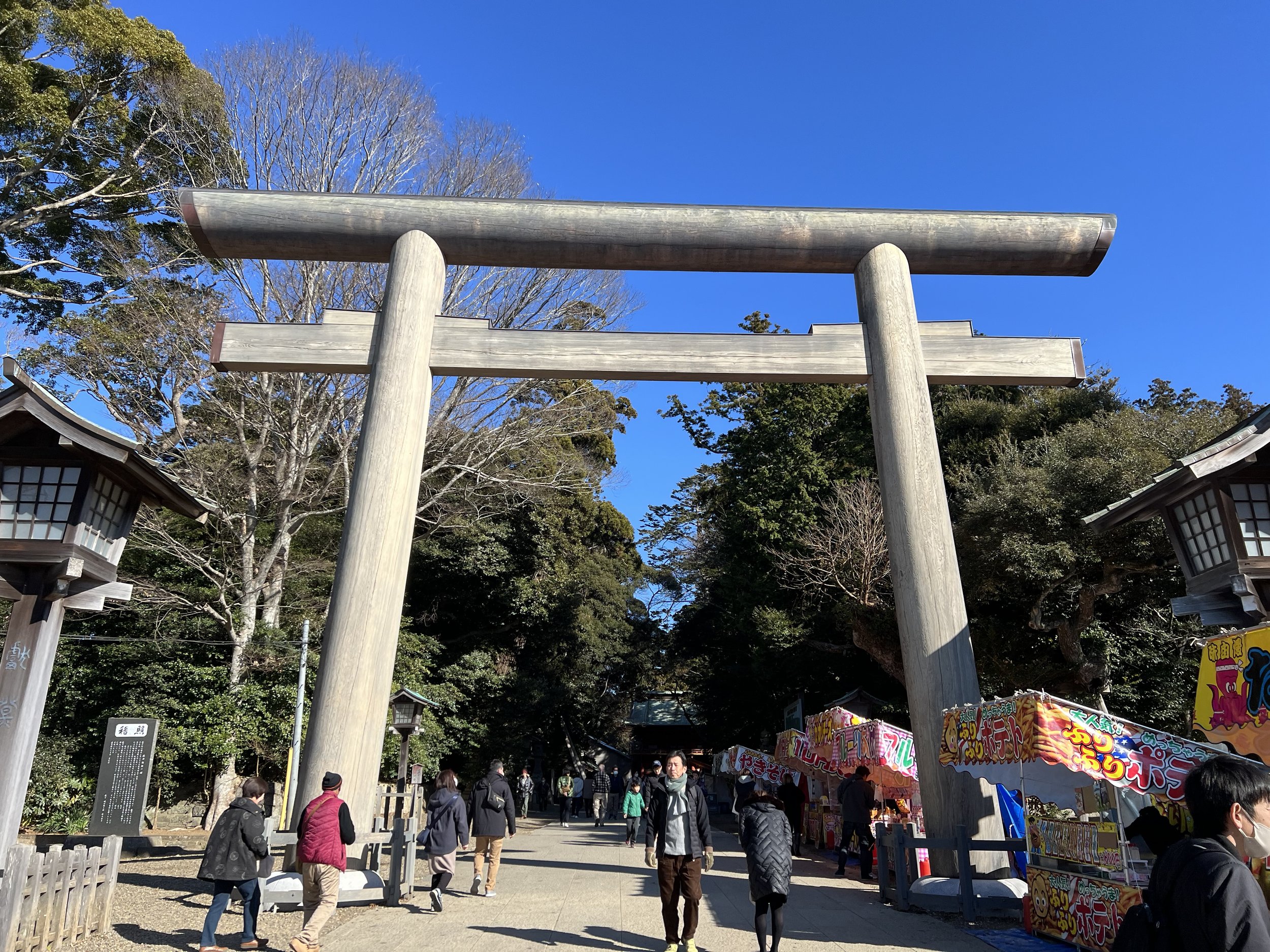
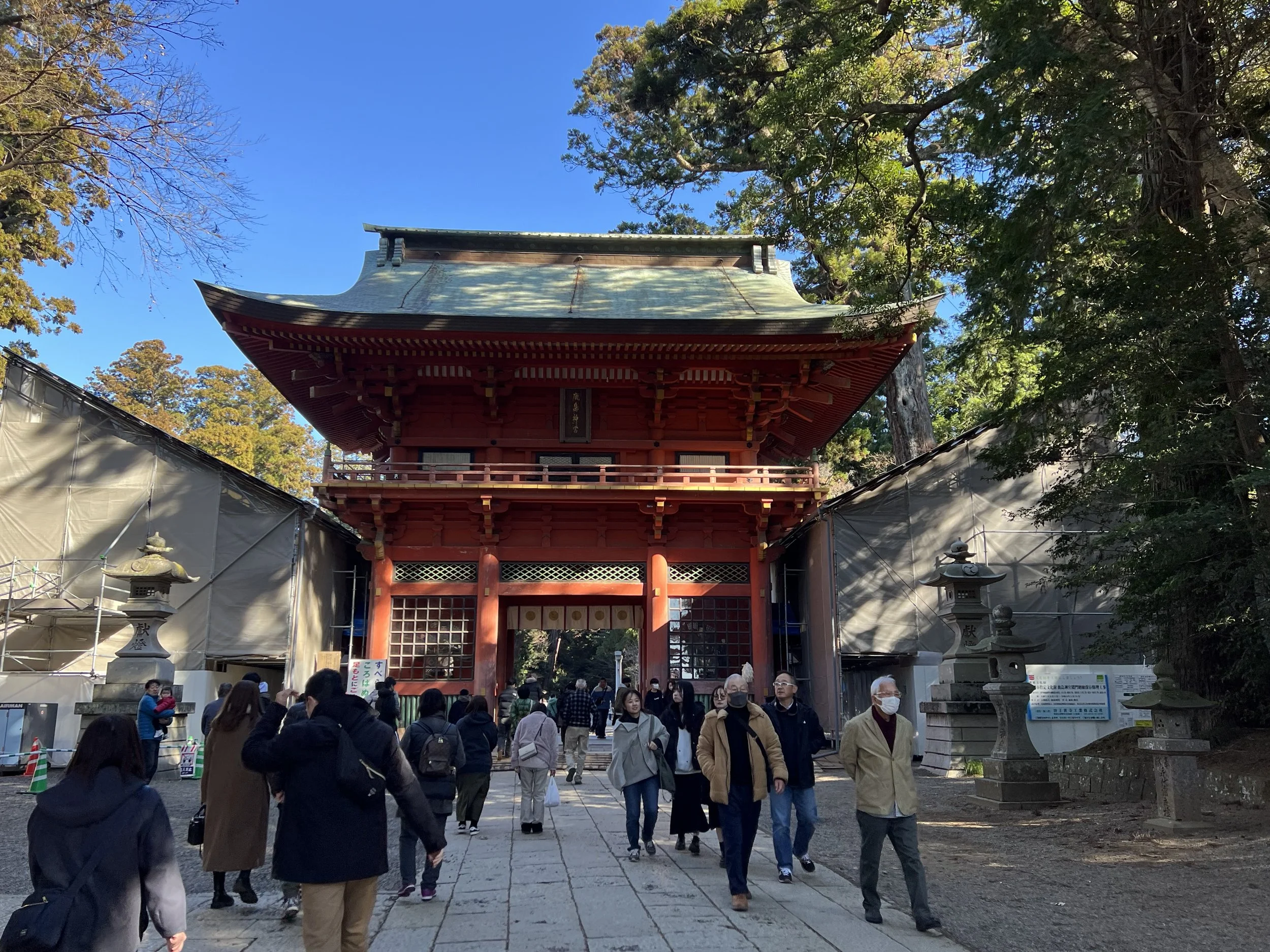
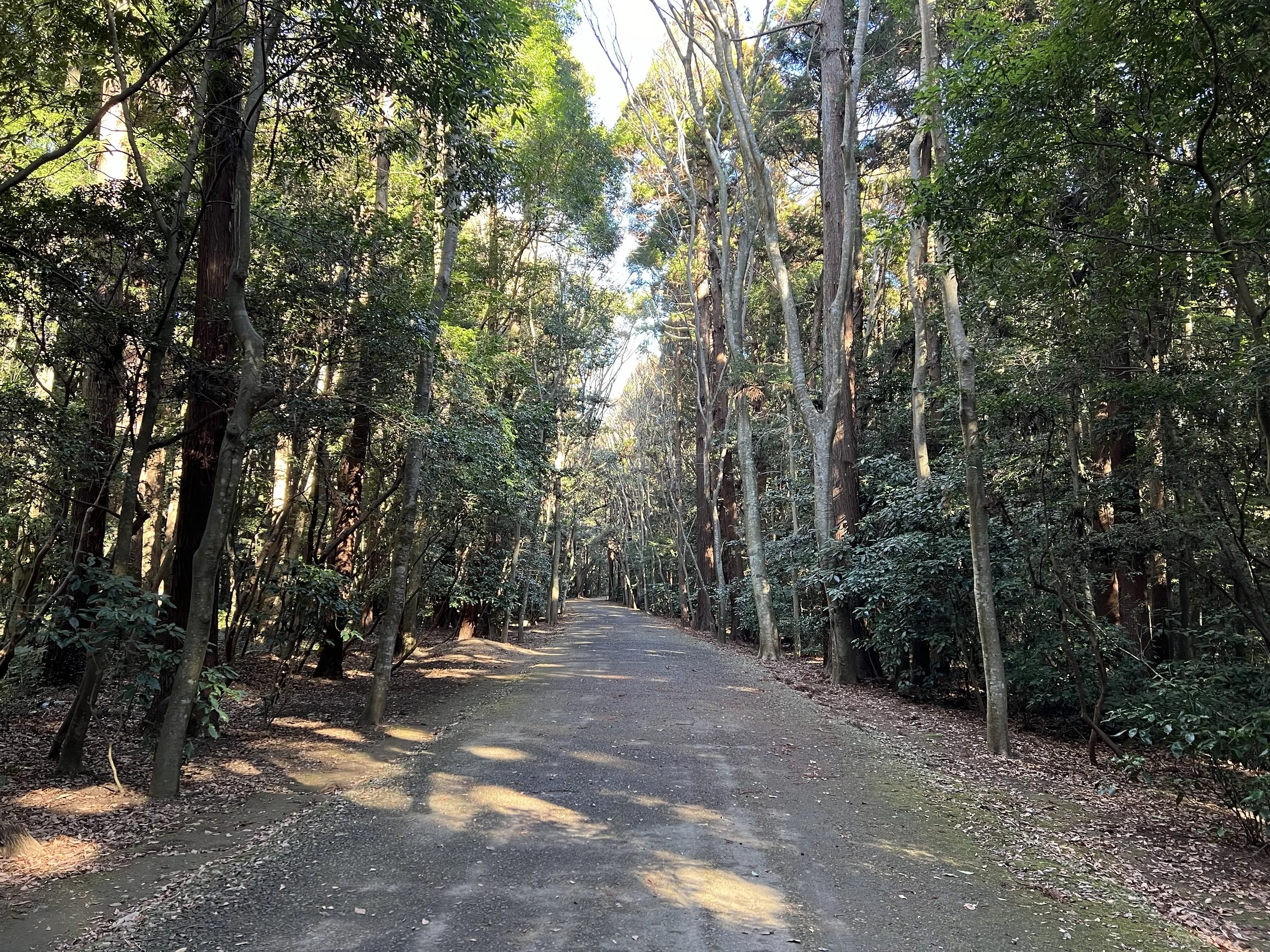
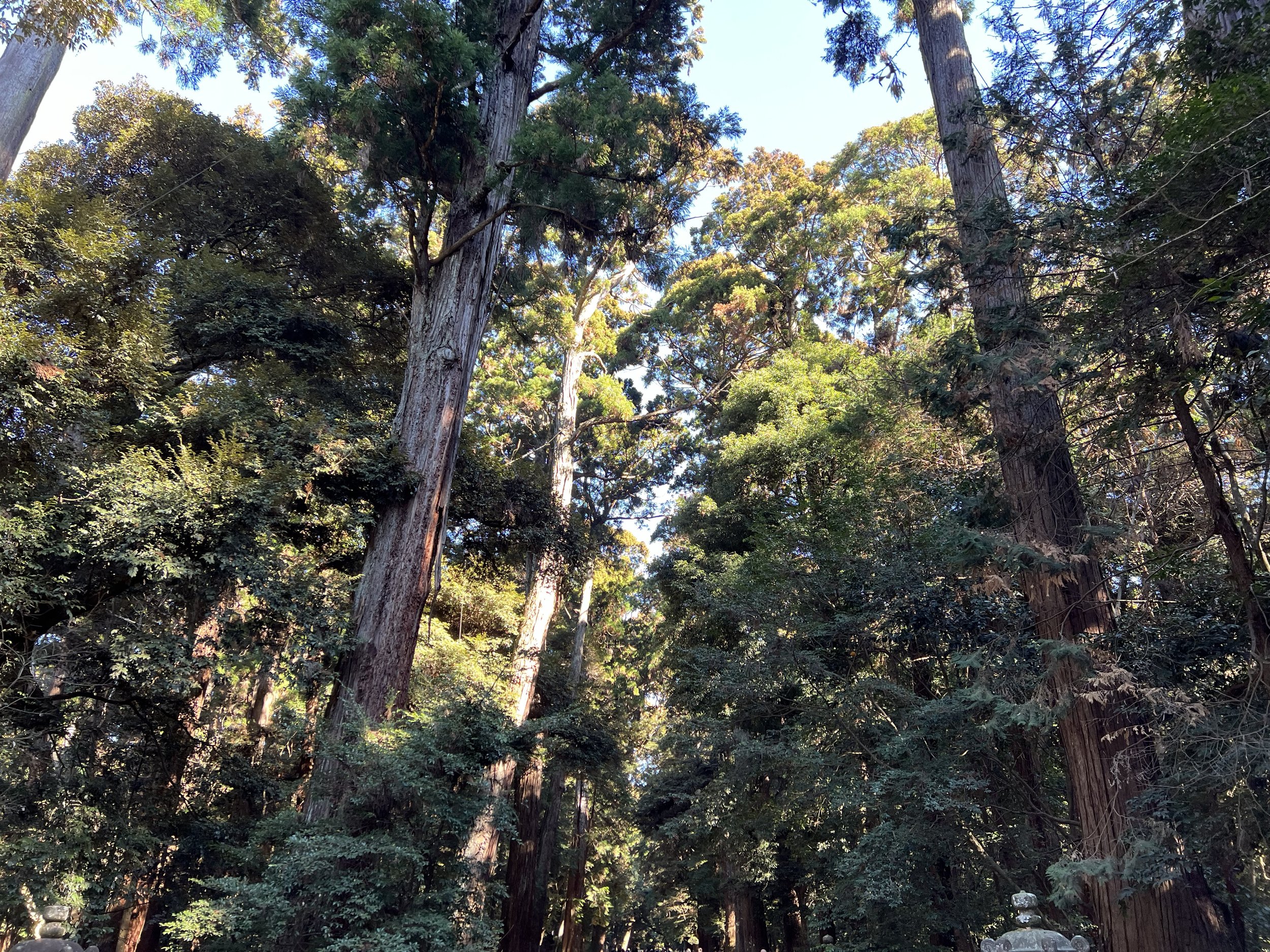
When I reached the massive torii gate marking the entrance to the shrine, there were already quite a few people around, though thankfully I had avoided the peak New Year crowds. I joined the steady flow of visitors walking along the main approach, which gradually leads through the forest toward the inner shrine grounds.
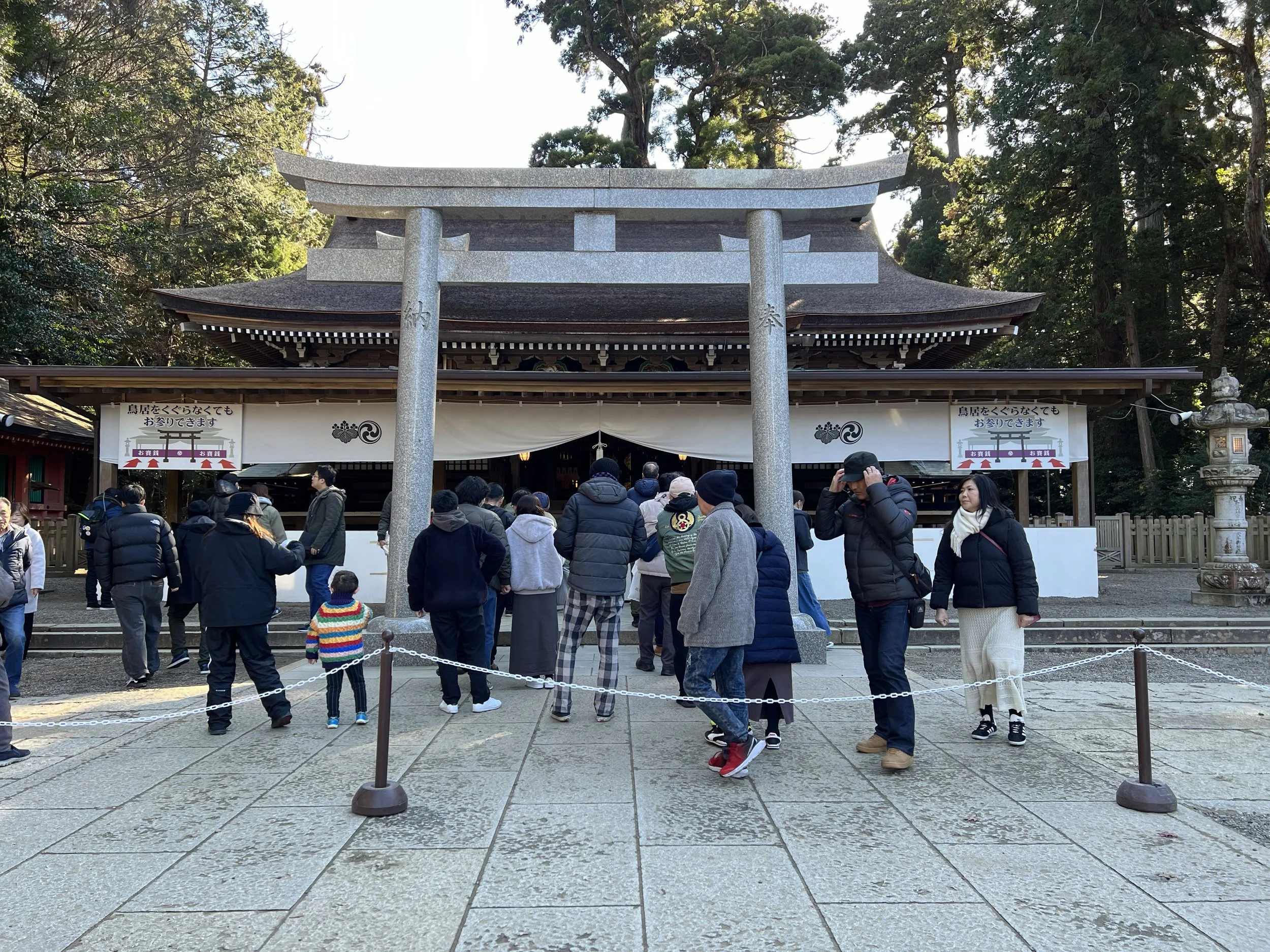
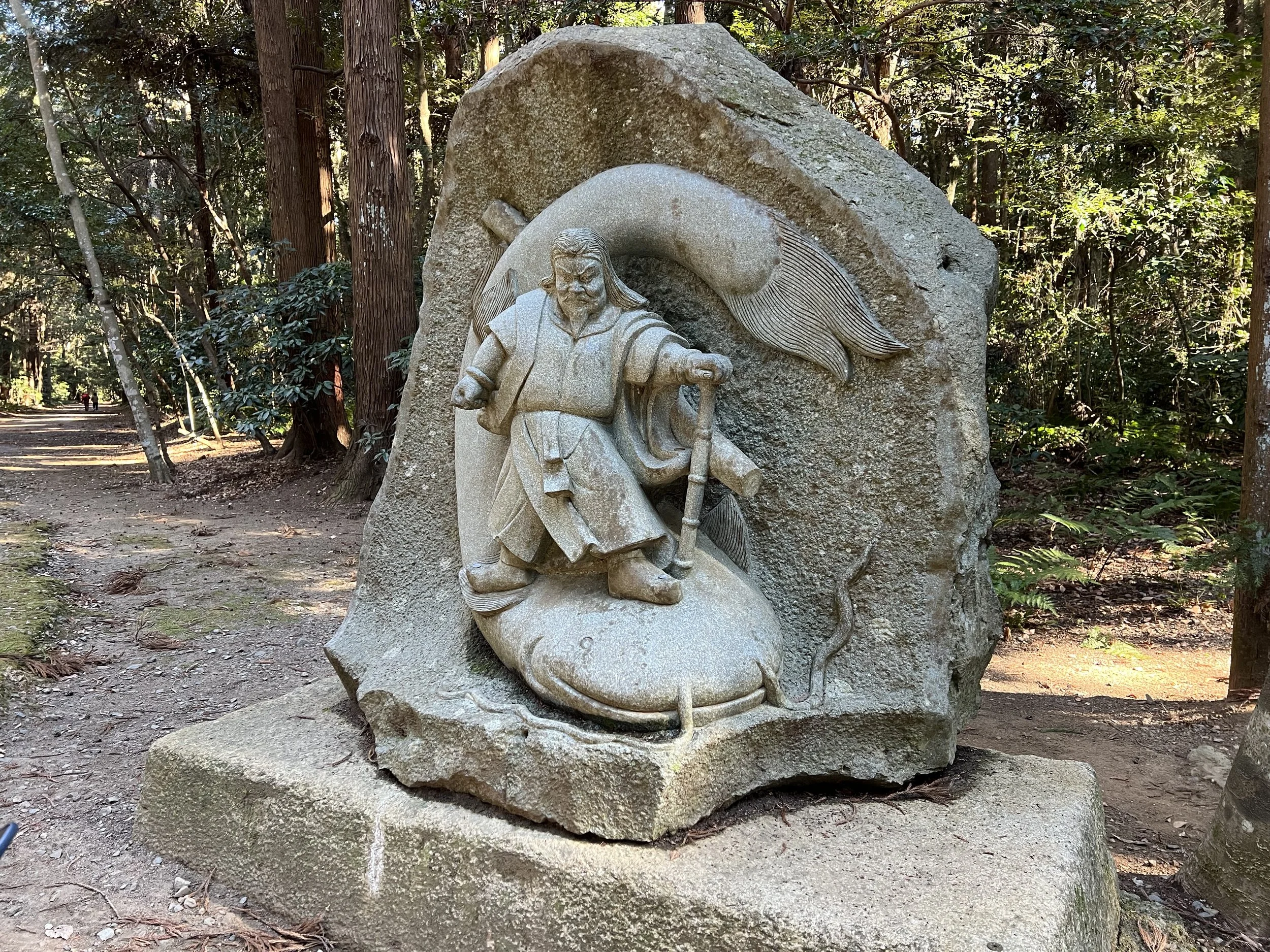
Rather than lining up to make an offering right away, I decided to explore the shrine grounds first. The complex is surprisingly large, with quiet forest paths connecting various sacred areas. One unique feature here is a small enclosure near the inner shrine where deer are kept. Visitors can purchase carrots to feed them. Deer are considered sacred messengers of the gods in Shinto belief, and it is said that the famous deer in Nara were originally brought from Kashima.
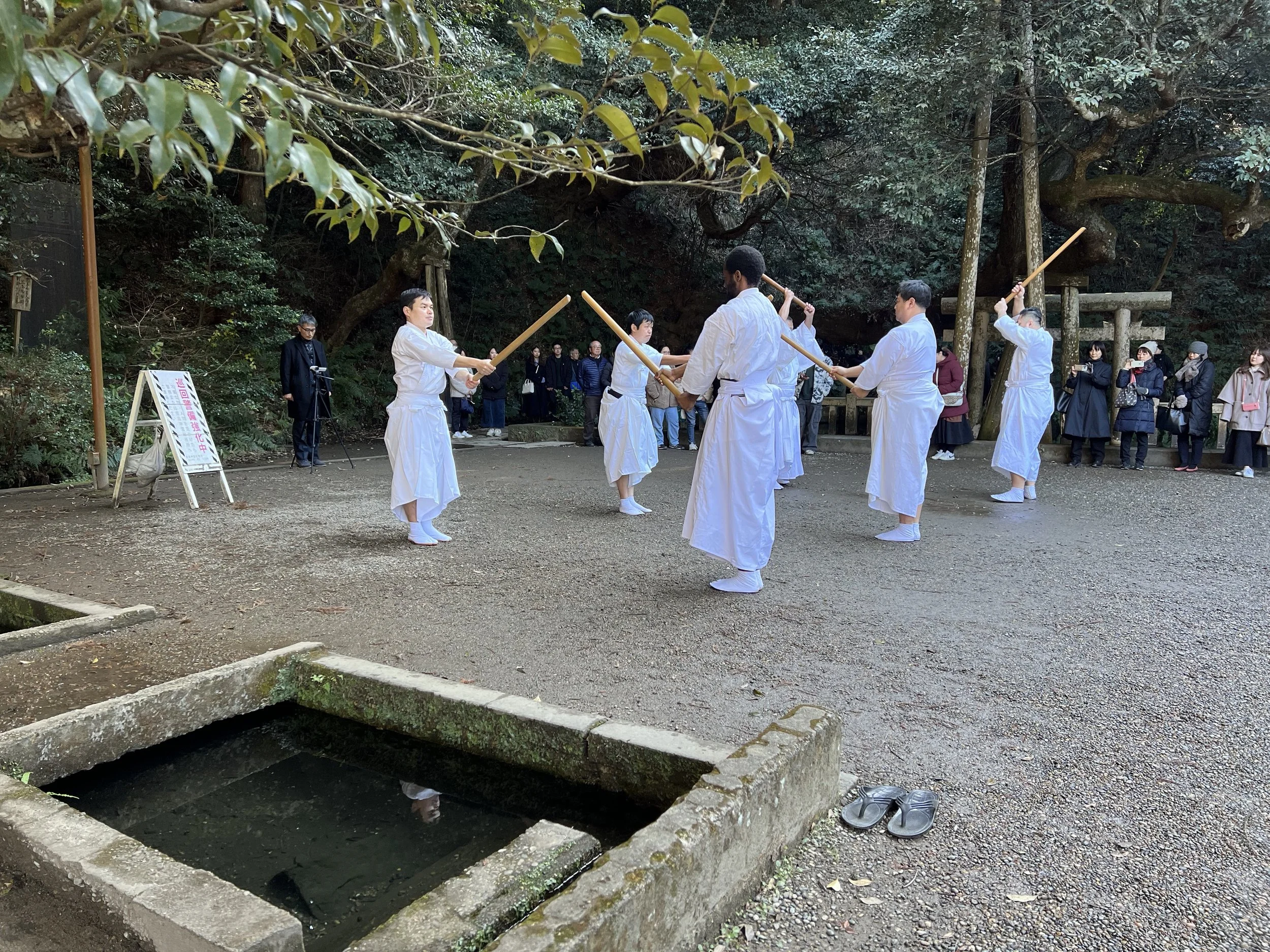
Eventually I reached Mitarashi Ike, also known as the Holy Washing Pond. When I arrived, a performance was about to start. I wasn’t entirely sure what the event was about, but it quickly drew nearly everyone in the shrine toward the pond. Several participants dressed entirely in white performed a series of movements that looked like ritual drills or ceremonial dances. The performance lasted around fifteen minutes, and although I didn’t fully understand its significance, it was fascinating to watch.
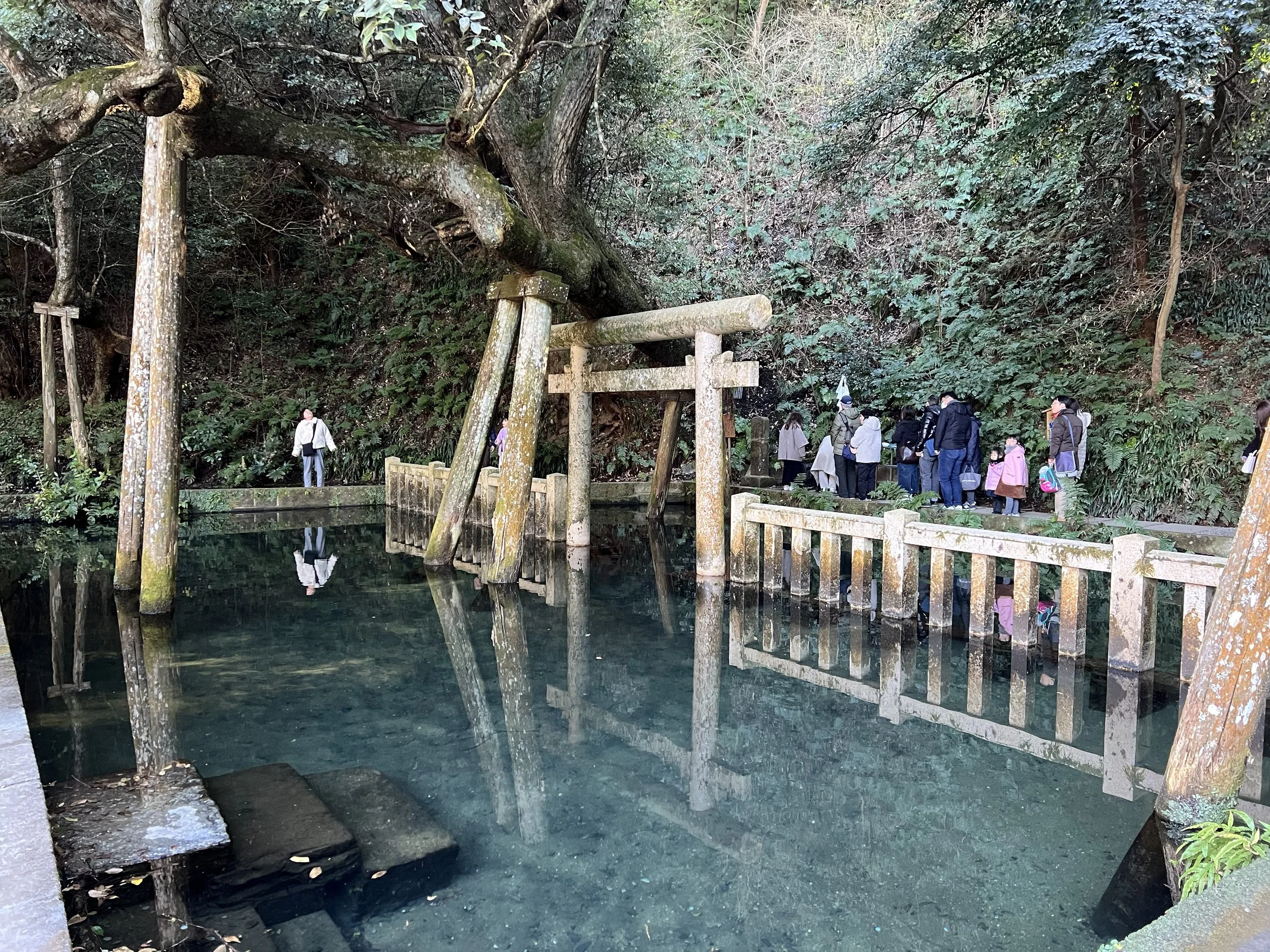
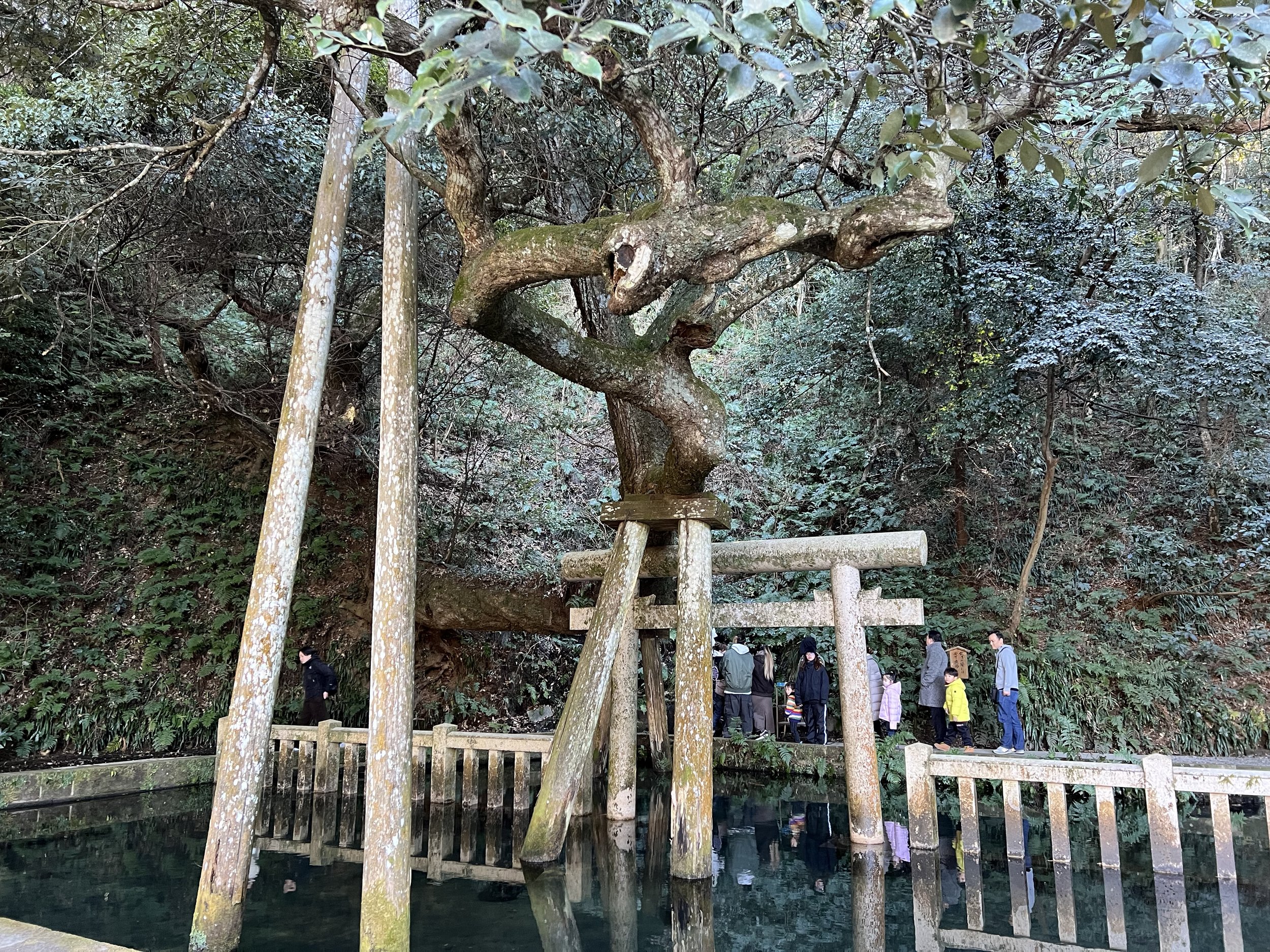
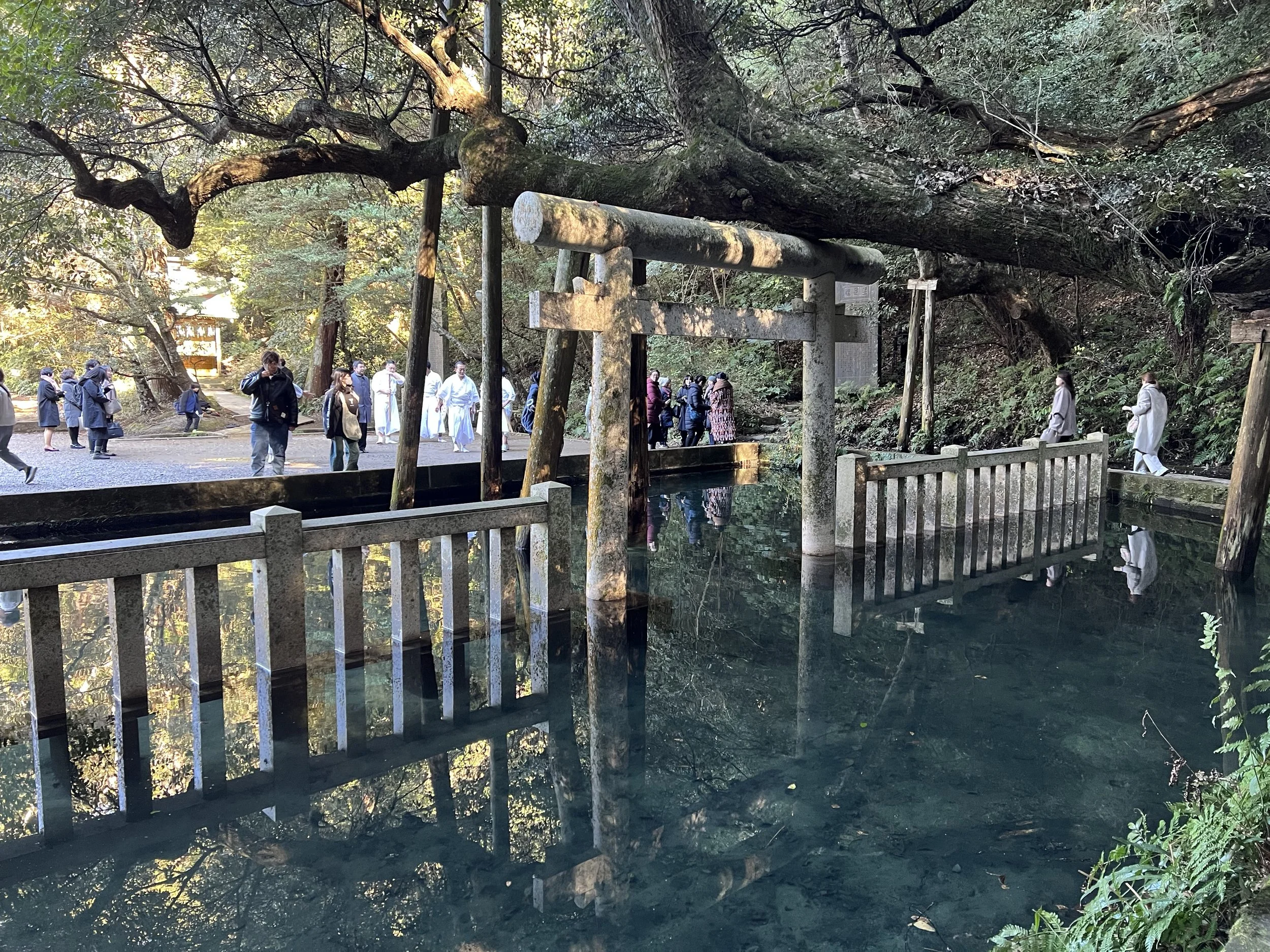
After the performance ended, I walked around the pond itself. Mitarashi Ike is fed by underground spring water and was historically used for ritual purification before worshippers approached the shrine. While that practice is no longer performed here—modern purification basins now stand at the shrine entrance—the pond still holds a sacred atmosphere. The water is remarkably clear, and with the surrounding trees reflecting on the surface, it takes on a gentle green tint. As people walked around the pond, the atmosphere seemed to shift—voices lowered and the entire area grew noticeably quieter.
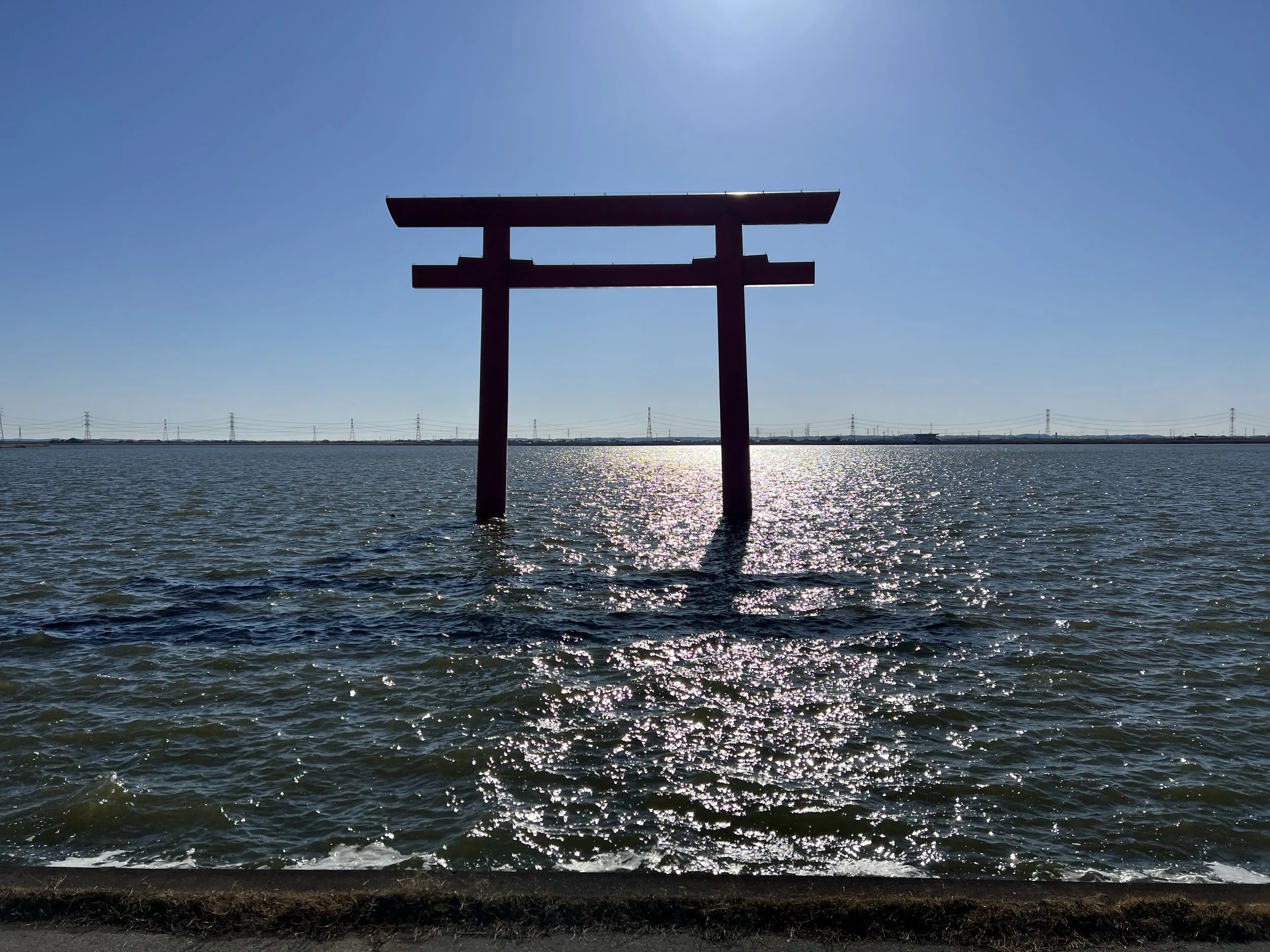
From there, I continued wandering along the forest trails within the shrine grounds before eventually making my way toward the Kashima Jingu West First Torii 2.5 kilometres away. This impressive torii gate stands in Lake Kitaura and rises about 18.5 metres high. Historically, this gate served as an approach for worshippers arriving by boat.
There were very few visitors here compared to the main shrine area. I ended up sitting along the dyke for a while, simply looking out at the torii gate standing in the water. The current structure was built in 2013 using steel to replace the previous wooden gate.
Kashima Shrine turned out to be one of the largest shrine complexes I’ve visited in Japan, and surprisingly I didn’t see many foreign visitors during my time there. Even though it took more than two and a half hours of travel round trip just to visit, the peaceful atmosphere and historical significance made it well worth the journey.
History & Background
Kashima Shrine (鹿島神宮), commonly known as Kashima Jingu, is one of the most important Shinto shrines in eastern Japan. Located in Kashima, it has been a major centre of worship for more than a millennium.
The shrine enshrines Takemikazuchi-no-kami, a powerful deity associated with thunder, martial strength, and protection. In Japanese mythology, Takemikazuchi played a key role in the divine pacification of the land and is regarded as a protector of warriors.
During the samurai era, many military leaders and warriors visited Kashima Shrine to pray for victory in battle. Over time, the shrine also became associated with success in competition, which is why athletes, students, and professionals continue to visit today.
The shrine complex covers a large forested area and contains numerous smaller shrines, sacred ponds, and ceremonial spaces. Its vast grounds and historical importance make it one of the most significant Shinto sites in the Kanto region.
Getting There
Kashima Shrine is located about a 15-minute walk from Kashimajingu Station on the JR Kashima Line in Ibaraki Prefecture. Visitors travelling from Mito can reach the station in approximately 1 hour and 15 minutes by train. From the station, the route to the shrine is clearly signposted and leads directly to the main torii gate.
For those travelling by car, the shrine is about 90 minutes from Tokyo depending on traffic, and parking is available near the shrine grounds.
Route Overview
Distance: 7.02 km out & back (Kashimajingu Station )
Total elevation gain: 88 m
Duration: 1 hr 20 min (with breaks 1 hr 36 min)
Difficulty: Easy
Cost Breakdown
Train: Mito Station → Kashimajingu Station — ¥1,590
Food: ¥332