Iwakuni Castle and Kintaikyo Bridge – Yamaguchi, Japan
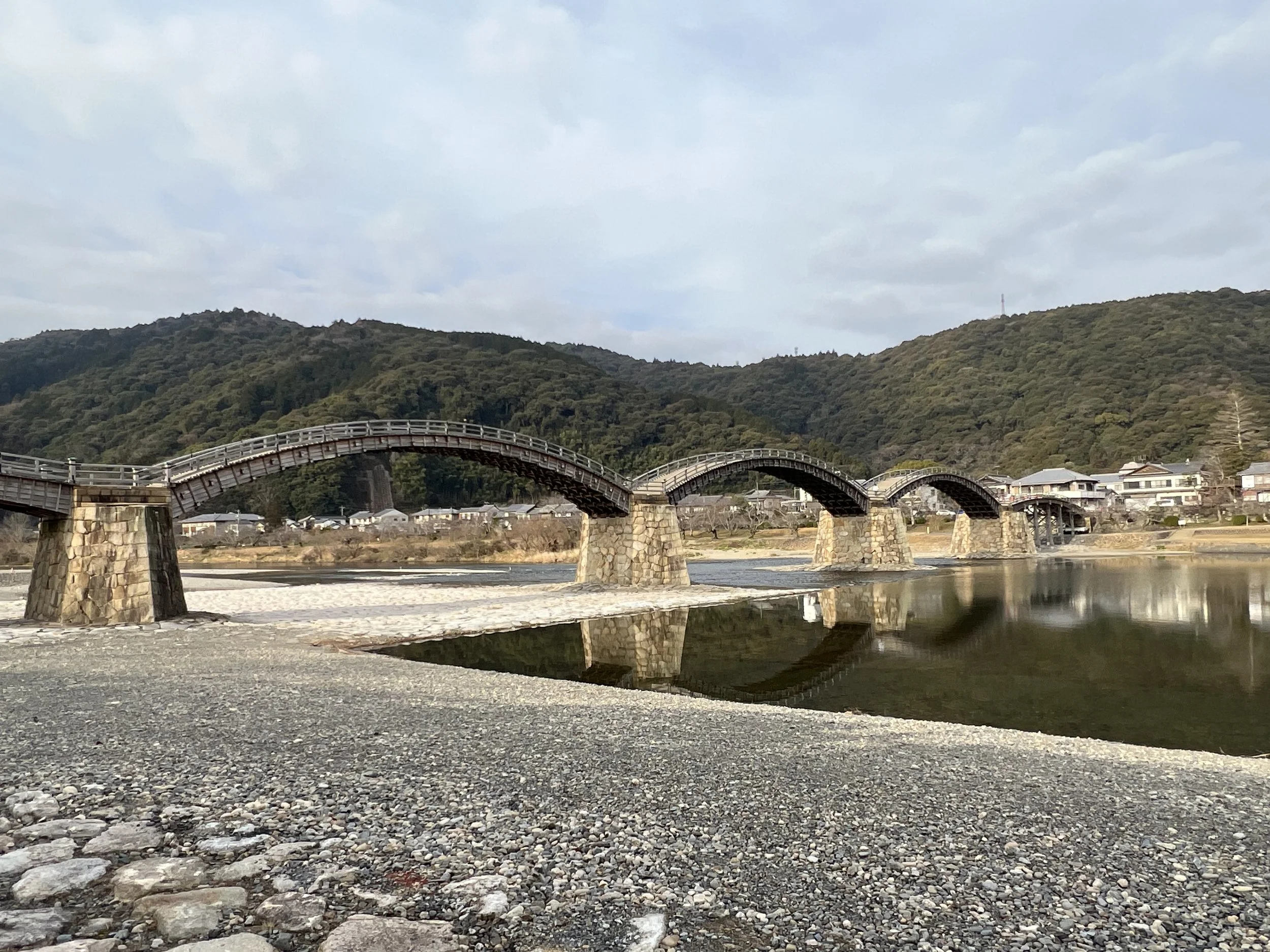
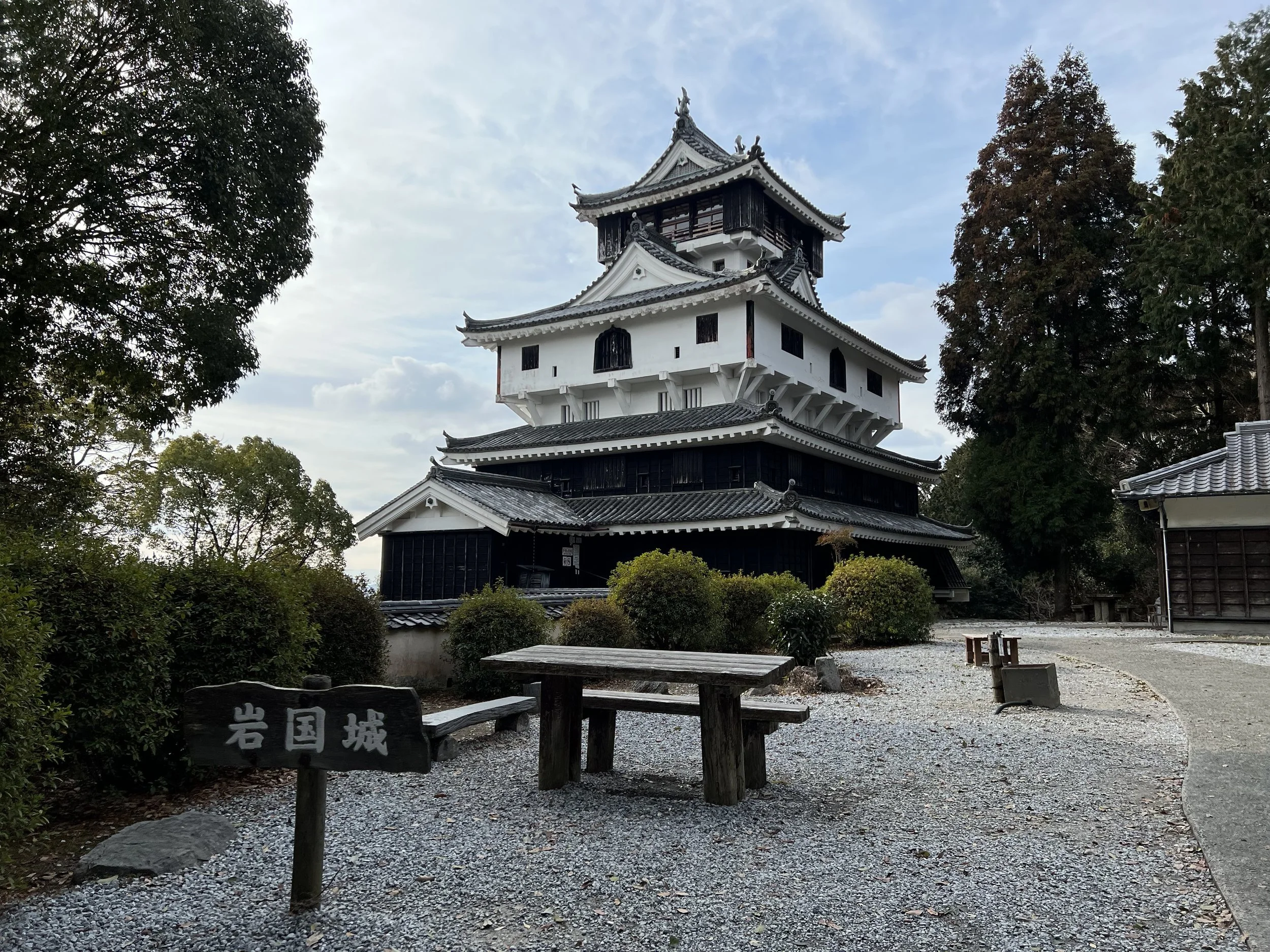
There were two things that drew me to the Iwakuni area: Kintaikyo Bridge and Iwakuni Castle. Kintaikyo Bridge is Iwakuni’s most well-known landmark, an elegant wooden bridge with five bold arches supported by stone pillars spanning the Nishiki River. Iwakuni Castle, built in 1608, sits atop Mt. Shiroyama and was strategically placed for its natural defensive advantages. Surrounded by the river on multiple sides, the terrain effectively acted as a natural moat.
I was staying in Hiroshima, which made this an easy day trip of just over an hour by public transportation. There is a faster train option available, but it costs roughly three times as much. The bus dropped me off just steps from Kintaikyo Bridge, and the view was already impressive. I hadn’t realized there was a fee to cross the bridge, but the ticket booth is clearly positioned right at the entrance.
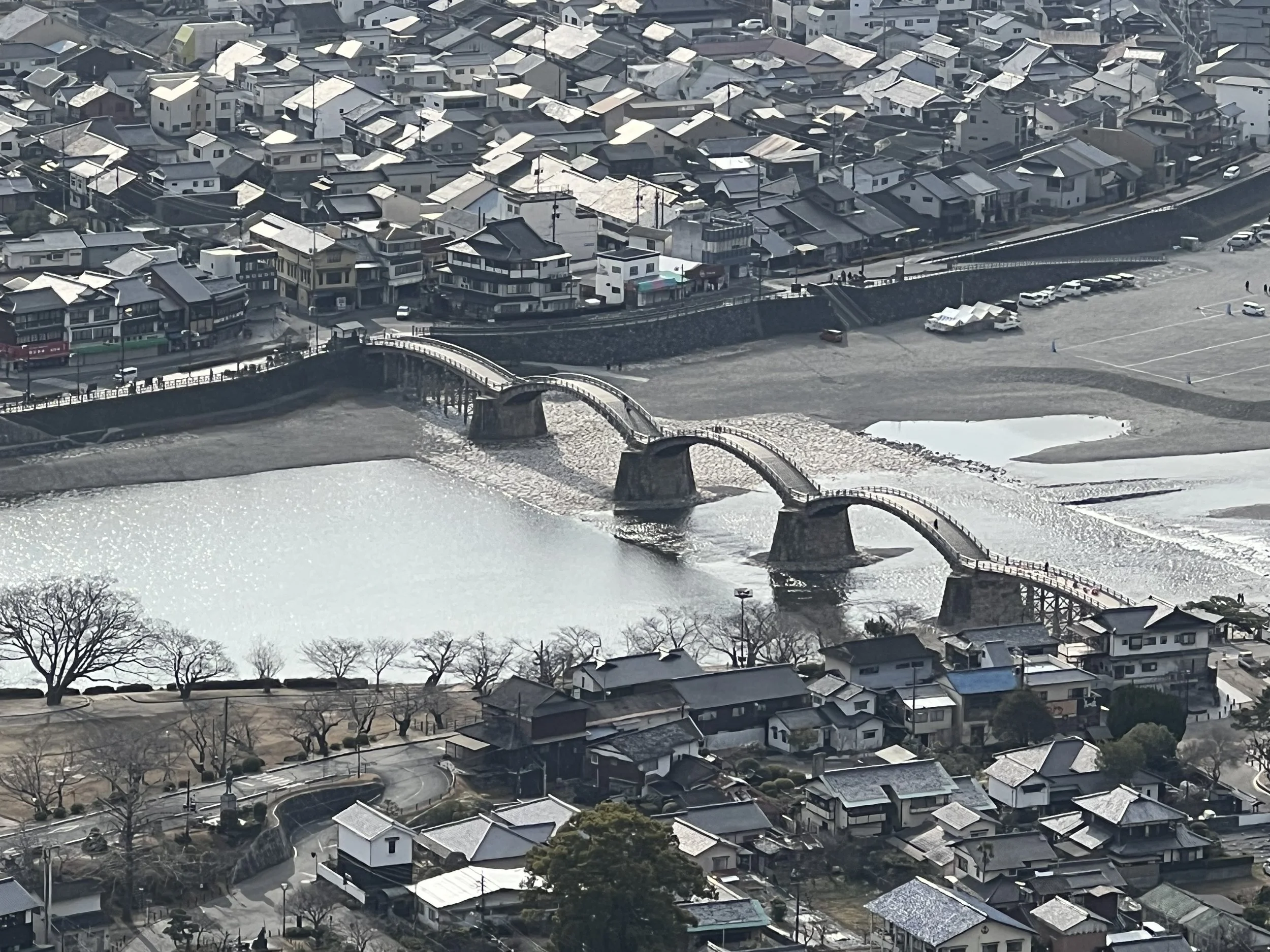
Walking across Kintaikyo Bridge is an experience in itself. I learned that earlier versions of the bridge were repeatedly destroyed by strong river currents and flooding. A more durable design was commissioned by the lord of Iwakuni, but even that was washed away the following year. The bridge was rebuilt several times before being destroyed again by a typhoon in 1950. The current version dates back to 1953 and reflects the traditional design that has become so iconic today. During spring, the bridge is especially photogenic, framed by cherry blossoms with the arches forming a striking backdrop.
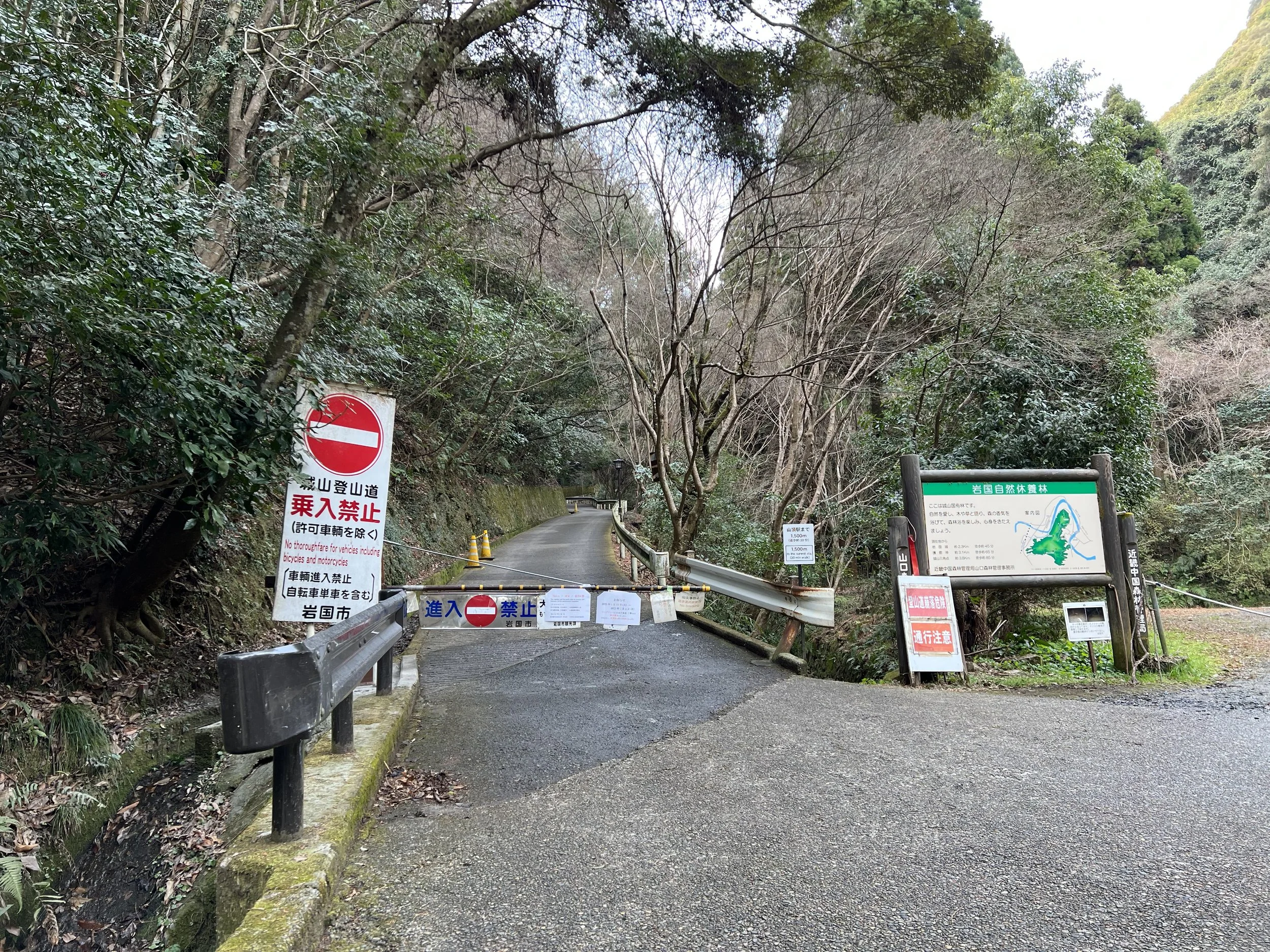
After crossing the bridge, I had planned to take the ropeway up to Iwakuni Castle. Unfortunately, the ropeway was under maintenance, which also meant the castle was closed. I was initially disappointed, assuming I wouldn’t be able to access the castle area at all. After asking a park staff member who was working nearby, I learned that hiking up the mountain was still allowed.
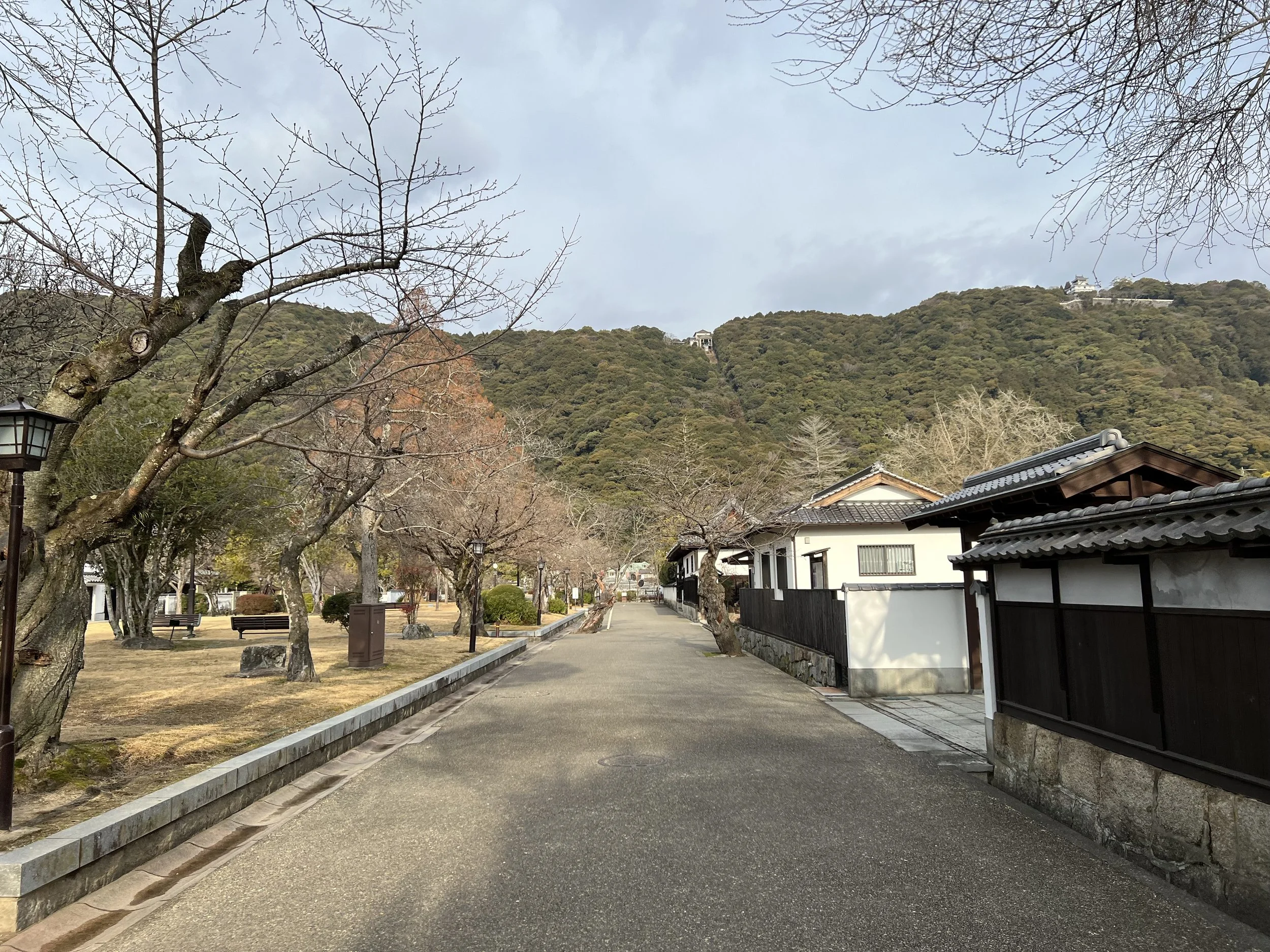
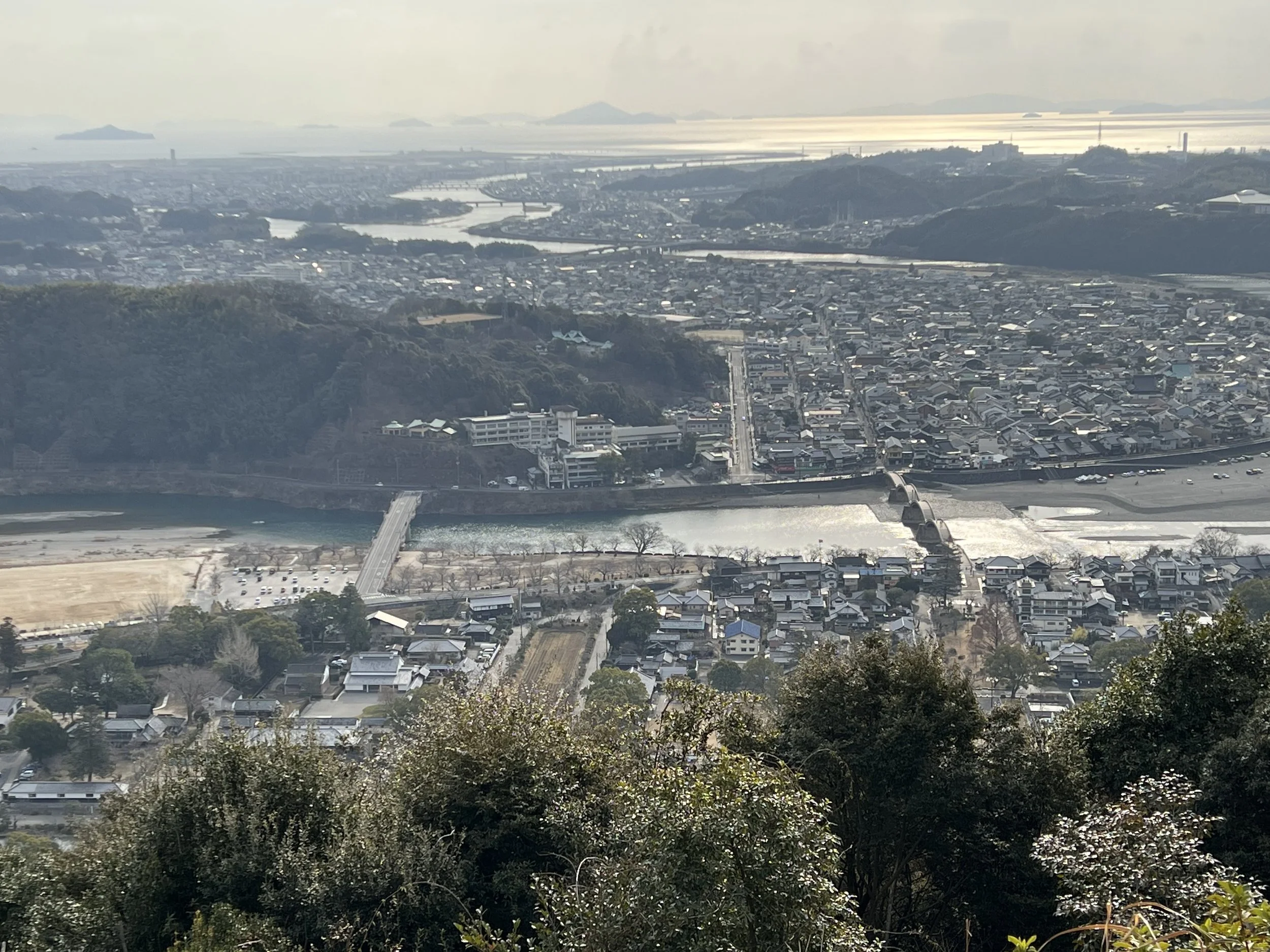
The trail I was directed to was wide and fully paved, broad enough for maintenance vehicles to pass through. It’s generally closed to regular traffic, with access limited to ropeway maintenance crews. The climb itself was fairly straightforward, with a few steeper sections but mostly a gentle incline. Along the way, the views were excellent, offering clear sightlines over the town below and back toward Kintaikyo Bridge. Seeing the bridge from above, with its distinctive five arches, was especially memorable.
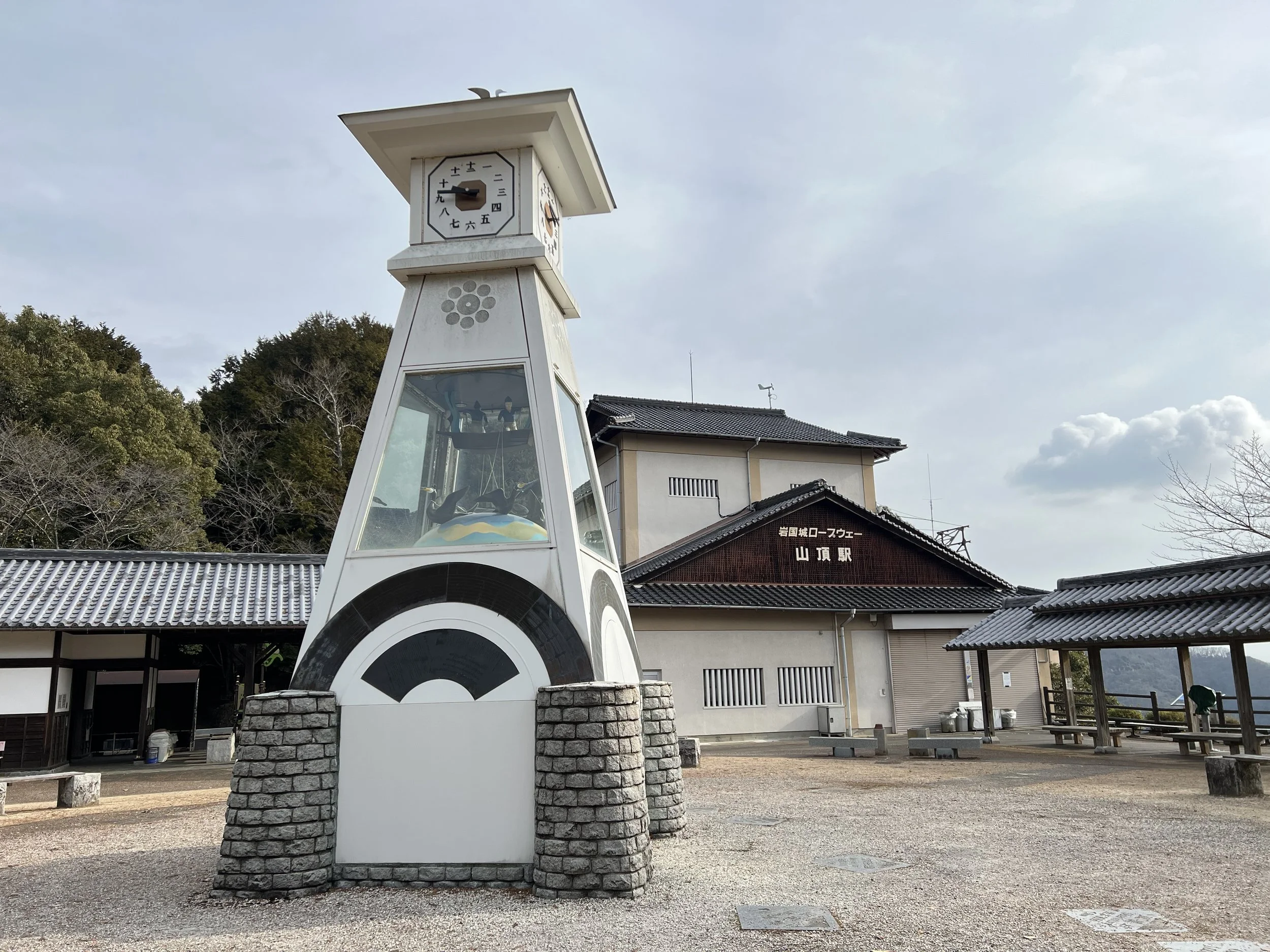
One of my first stops near the top was the ropeway station, where there’s a mechanical clock that plays a melody every fifteen minutes. Watching the clock’s moving parts and animated doors was an unexpected highlight. From there, I continued on to the castle. Although the interior was closed, I was still able to walk around the exterior and explore the castle grounds.
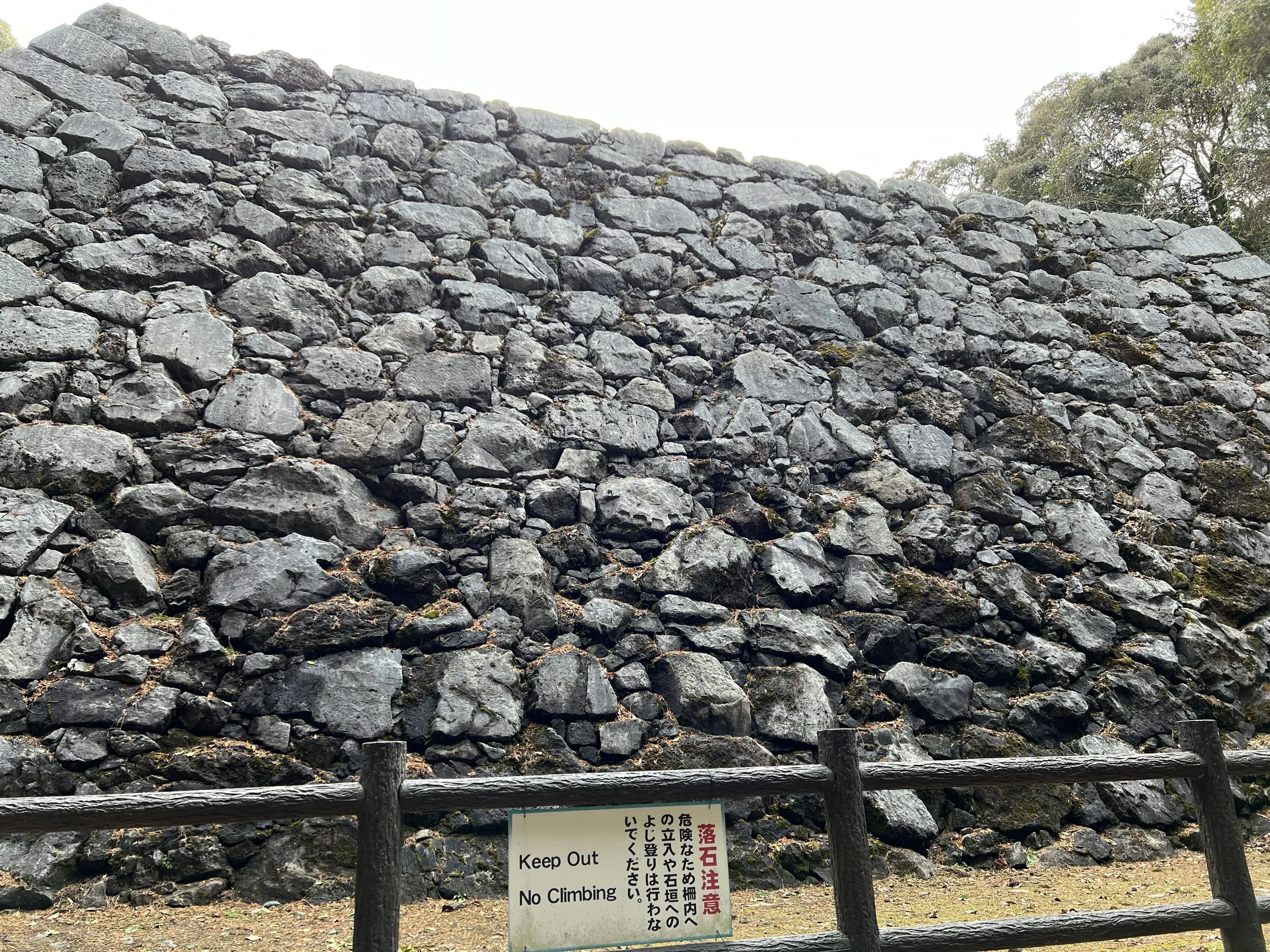
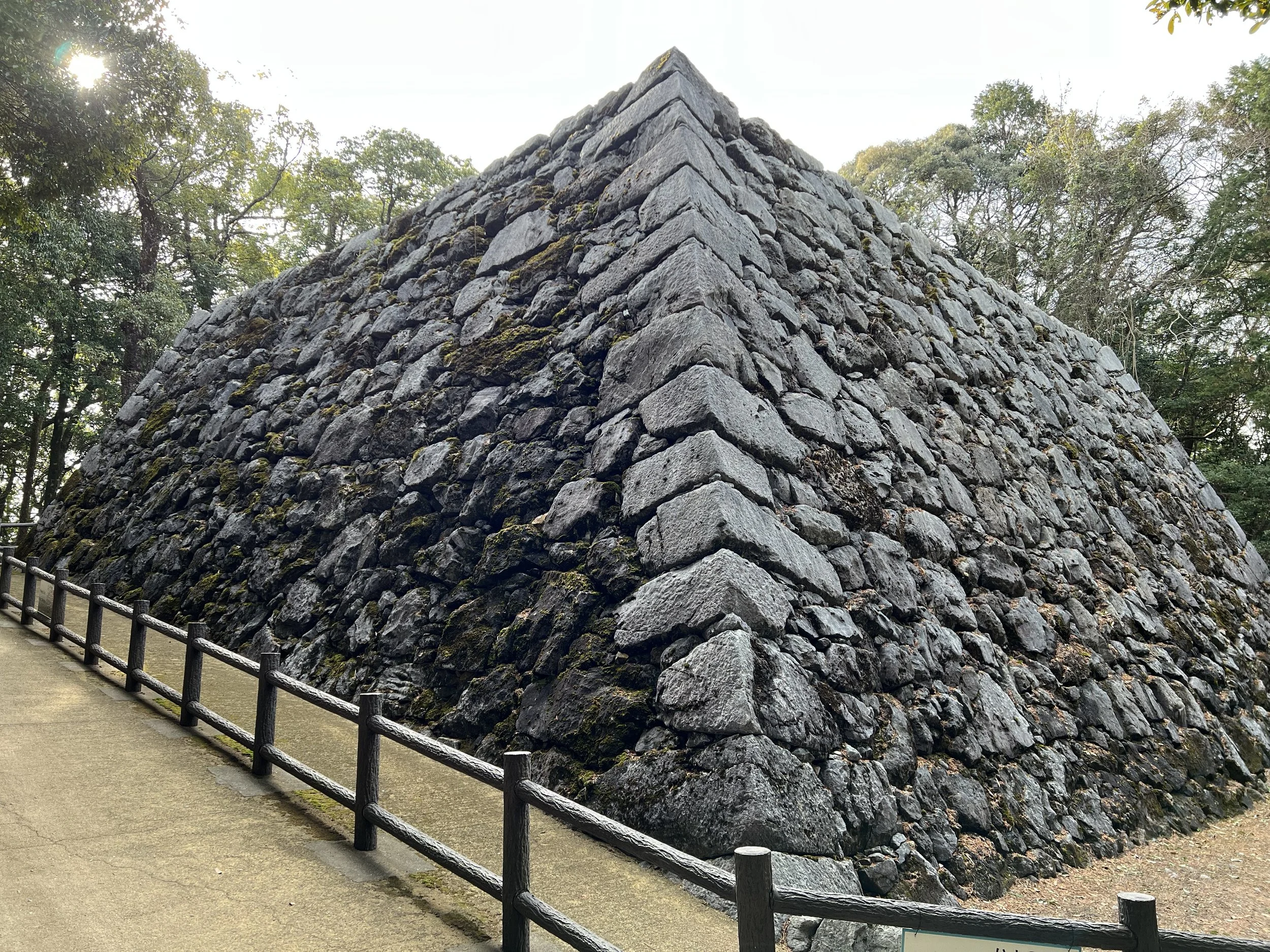
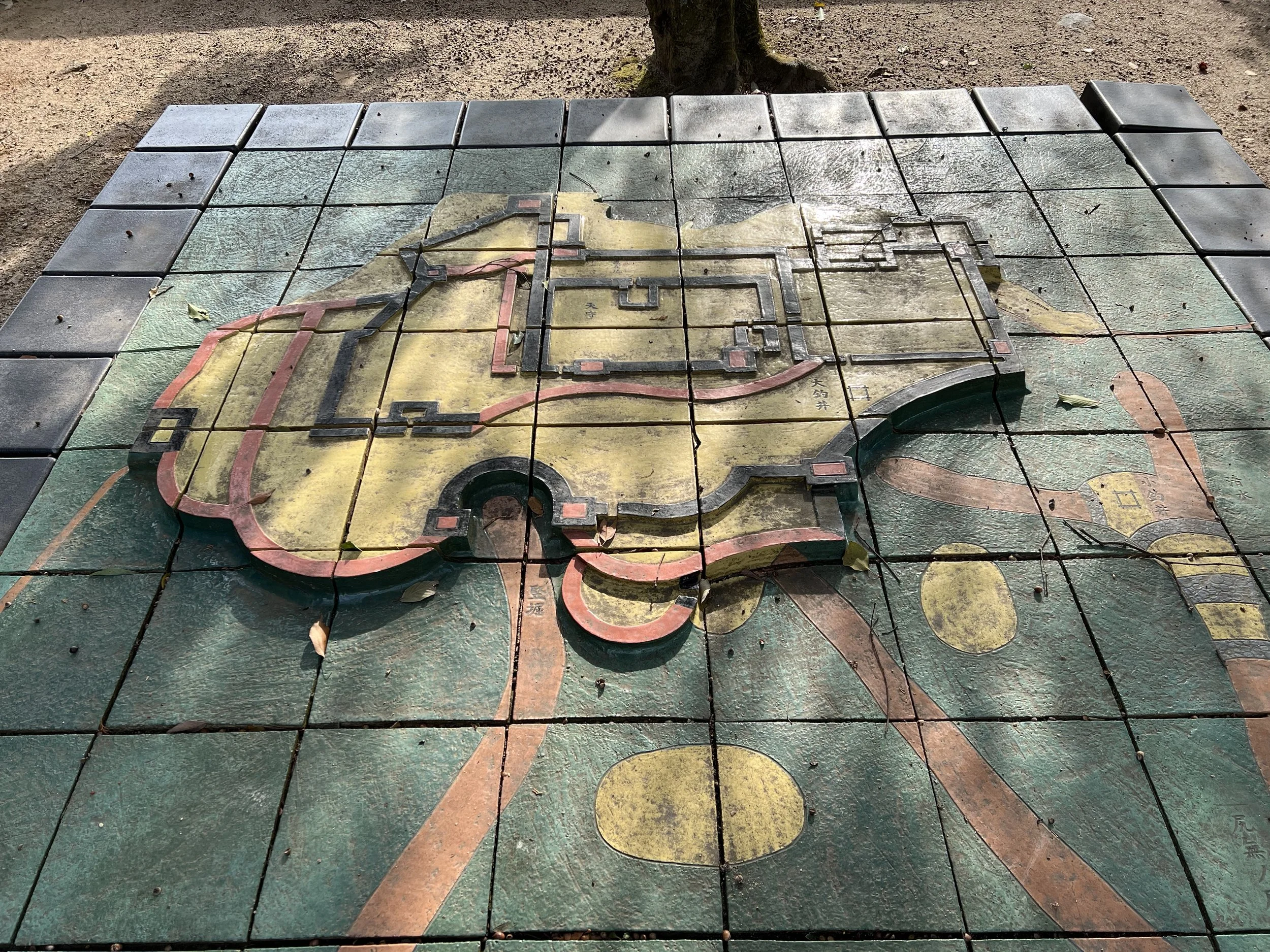
Iwakuni Castle itself had a surprisingly short original lifespan. It was dismantled just seven years after its construction, following a decree by the shogunate limiting the number of castles each domain could maintain. The current structure was reconstructed in 1962 and now functions as a museum displaying samurai swords, armour, and artefacts related to the castle’s history, as well as exhibits about Kintaikyo Bridge. While I couldn’t see the exhibits in person, reading about them gave me a better understanding of the site’s significance.
The castle grounds offer stunning views of Iwakuni below, and I took one last walk around before heading back down the mountain. Although I wished I had checked the ropeway and castle schedule in advance, the visit was still well worth it. Exploring the area on foot added an unexpected element to the day and made the experience even more memorable.
History & Background
Iwakuni Castle (岩国城) was constructed in 1608 by Kikkawa Hiroie, a powerful feudal lord allied with the Tokugawa shogunate. Its position atop Mt. Shiroyama provided excellent defensive advantages, with the surrounding Nishiki River serving as a natural barrier.
Despite its strategic location, the castle was dismantled in 1615 under the Tokugawa shogunate’s “one castle per domain” policy, which aimed to limit the military power of regional lords. For centuries, only the stone foundations remained. The reconstructed keep, completed in 1962, stands today as a historical museum rather than a defensive structure.
Below the castle, the castle town developed along the Nishiki River, where Kintaikyo Bridge (錦帯橋) —first built in 1673—later became a vital crossing and a symbol of Iwakuni’s resilience and craftsmanship.
Getting There
Iwakuni Castle is located in Iwakuni City, Yamaguchi Prefecture. From Hiroshima Station, take a local or rapid train to Iwakuni Station. From there, board a local bus bound for Kintaikyo Bridge and get off at Kintaikyo Bus Stop. The bridge, park grounds, ropeway station, and hiking trail are all within short walking distance from the bus stop.
Route Overview
Distance: 6.75 km out & back (Kintaikyo Bus Stop)
Total elevation gain: 206 m
Duration: 1 hr 32 min (with breaks 1 hr 40 min)
Difficulty: Intermediate
Peak: Mt Shiroyama 200 m
Cost Breakdown
Train: Hiroshima Station → Iwakuni Station — ¥770
Bus: Iwakuni Station → Kintaikyo Bus Stop — ¥300
Entrance Fee: Kintaikyo Bridge — ¥310
Food: ¥690