Cape Nojimazaki - Chiba, Japan
The main reason I wanted to visit Cape Nojimazaki was simple: it marks the southernmost point of the Boso Peninsula. Beyond that geographical distinction, the cape also offers sweeping views over Tokyo Bay and the Pacific Ocean. After finishing my hike on Mount Nokogiri earlier that day, I timed my visit so I could arrive just in time for sunset.
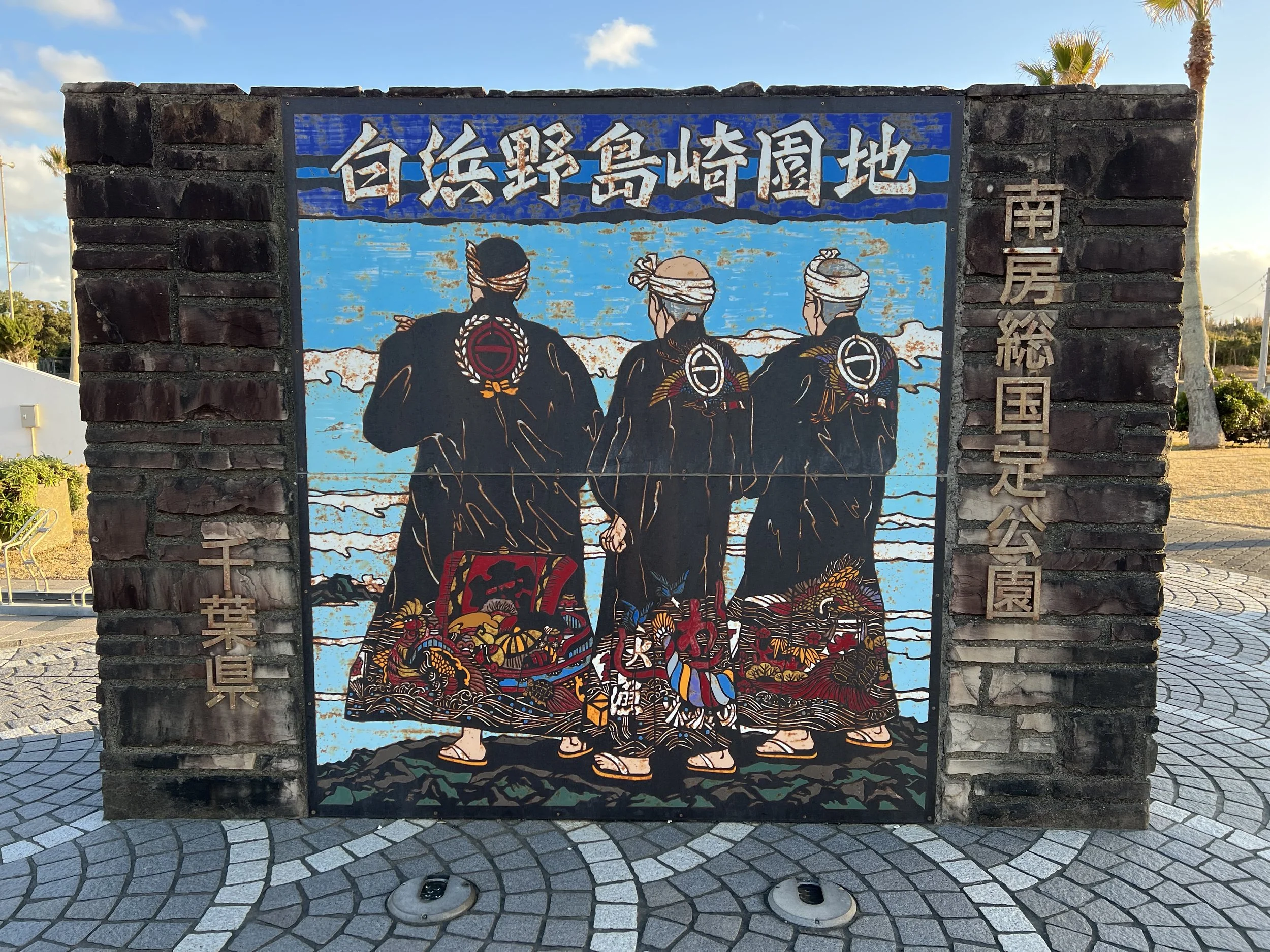
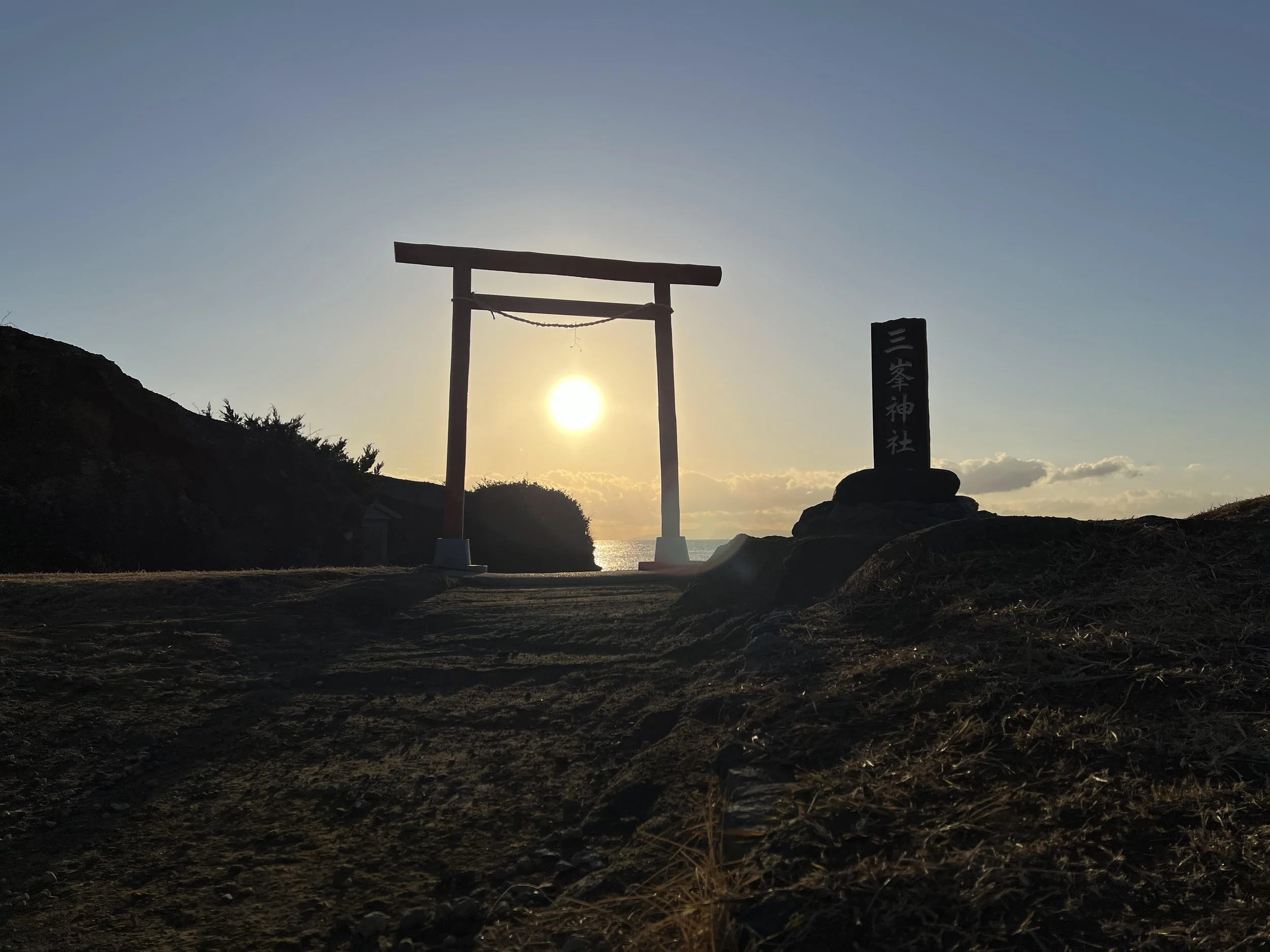
The bus dropped me off about a 10-minute walk from the cape. As I headed toward the coastline, the sky was already beginning to glow orange as the sun slowly dipped toward the horizon. The quiet fishing port was the first thing I passed, with small boats bobbing gently in the harbour. Not long after, I reached the torii gate that marks the entrance to the cape area. Framed by the warm evening light, it made the perfect foreground for a sunset photo before I continued along the path toward the ocean.
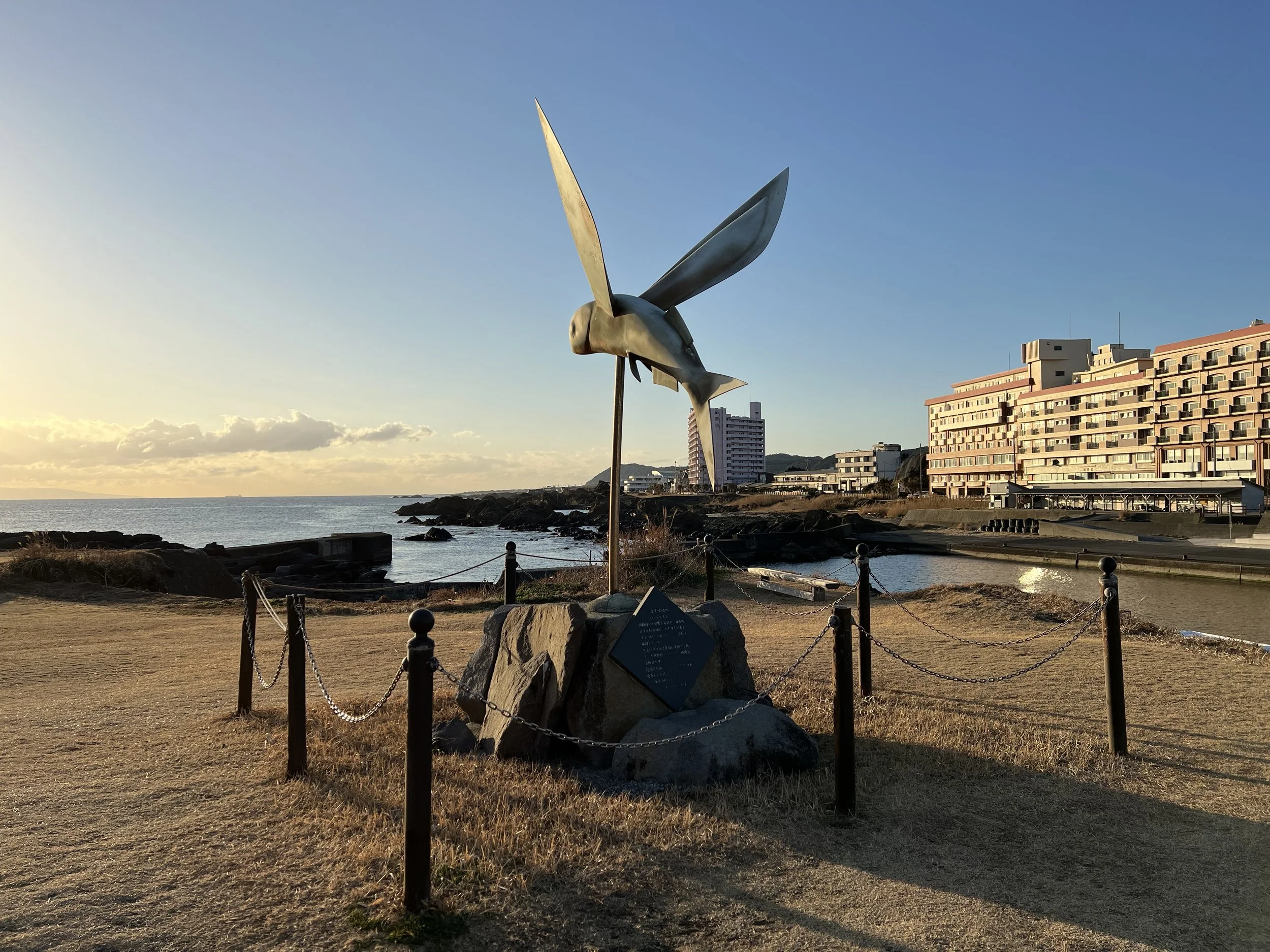
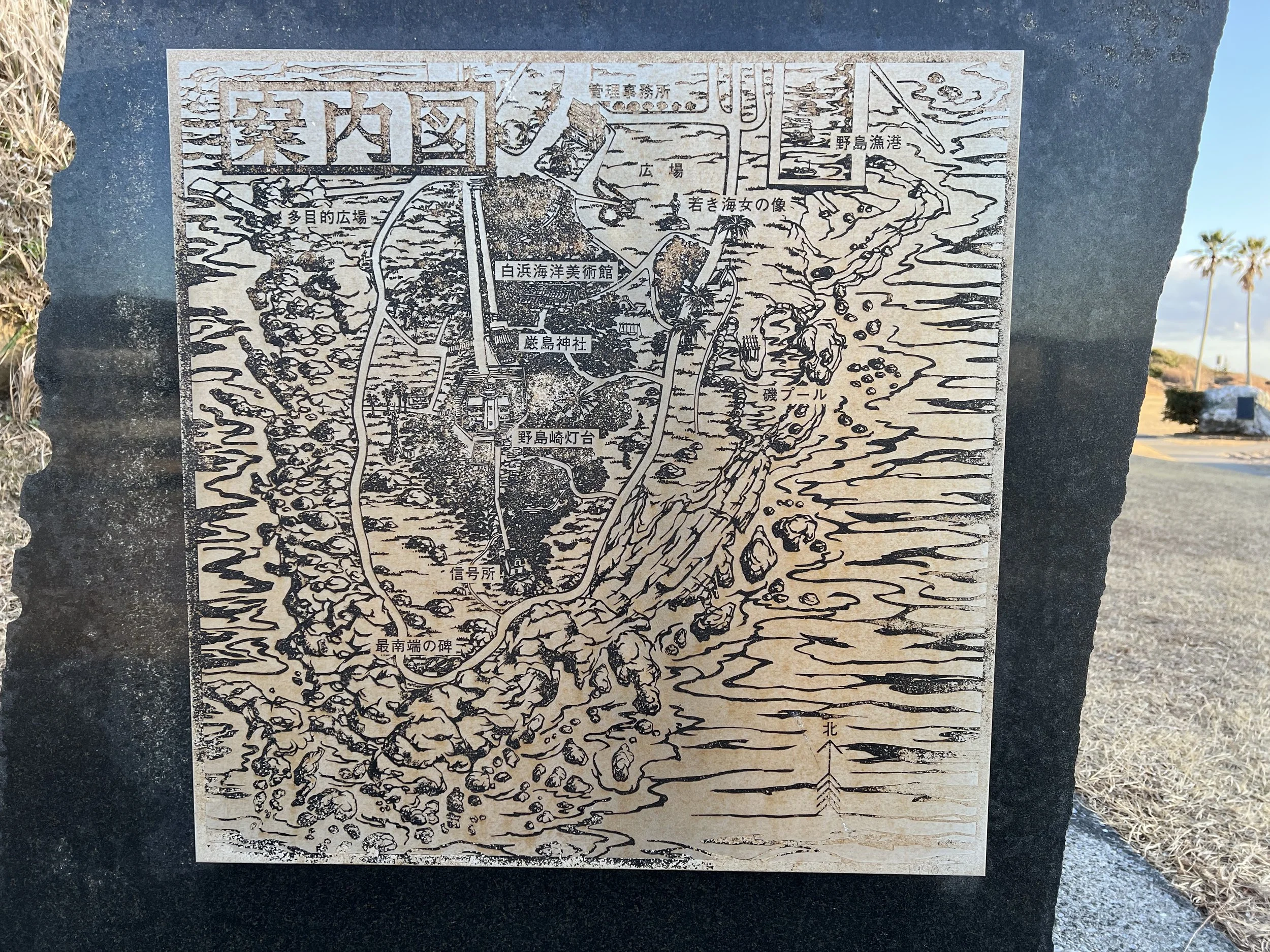
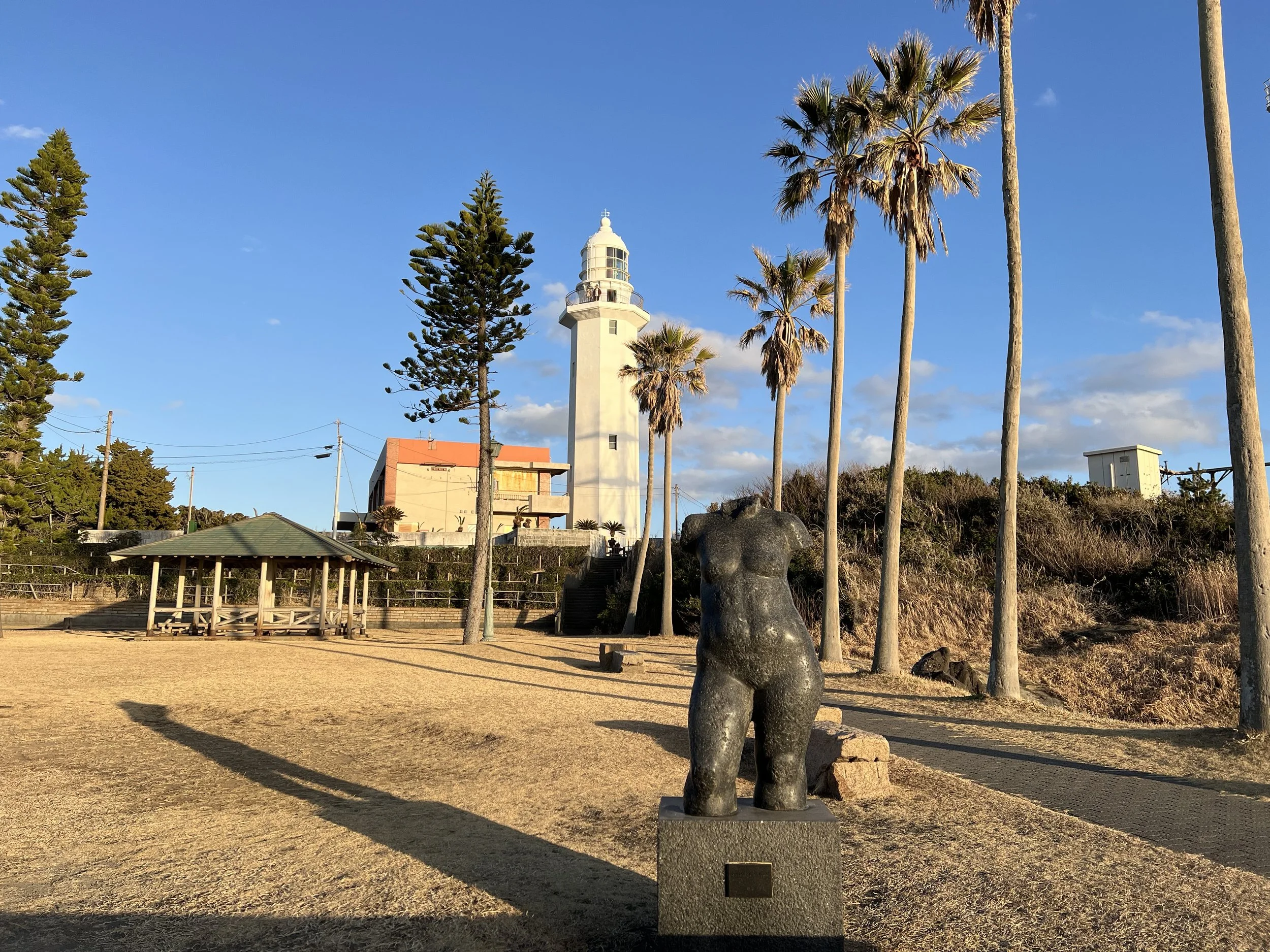
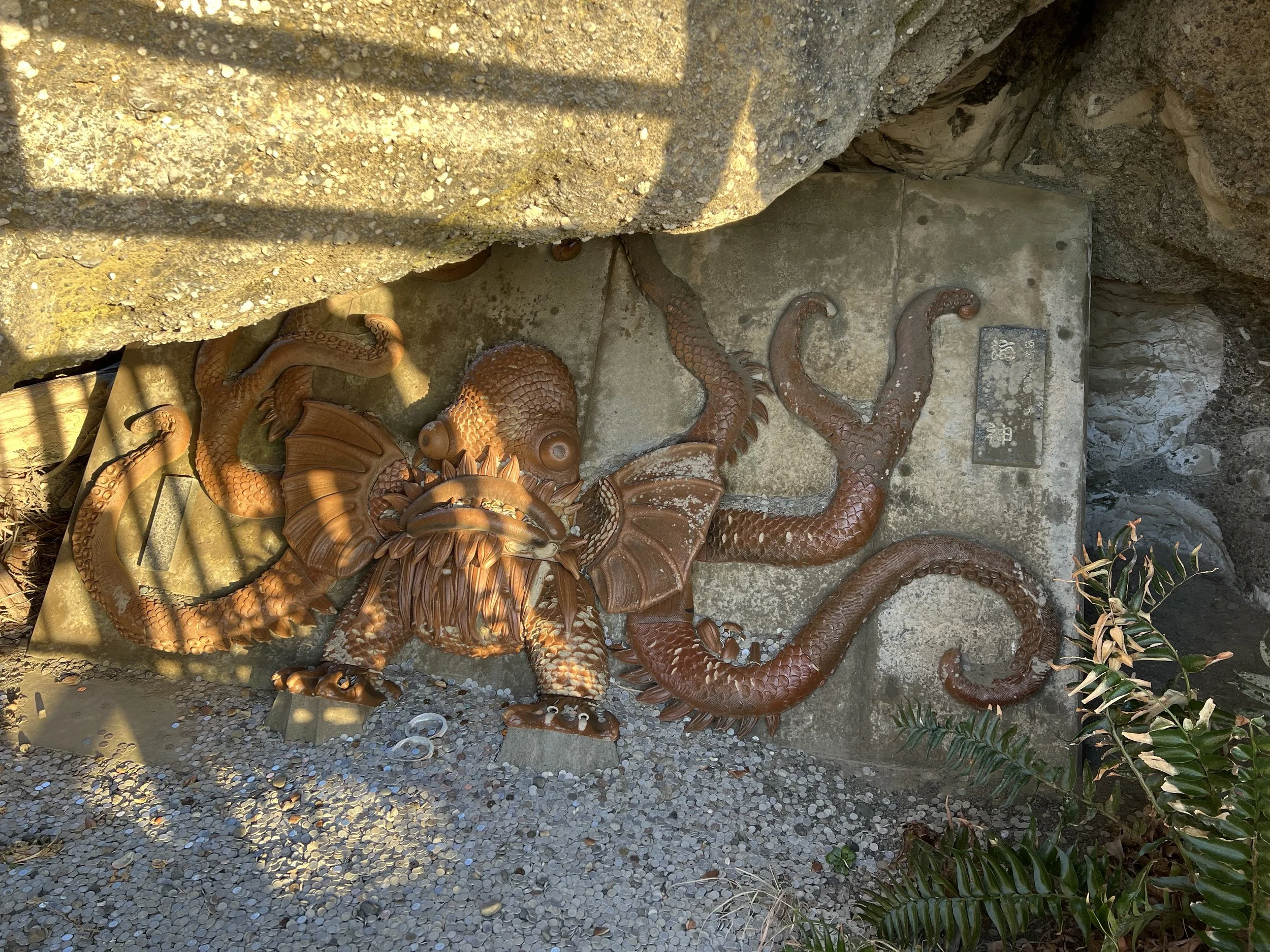
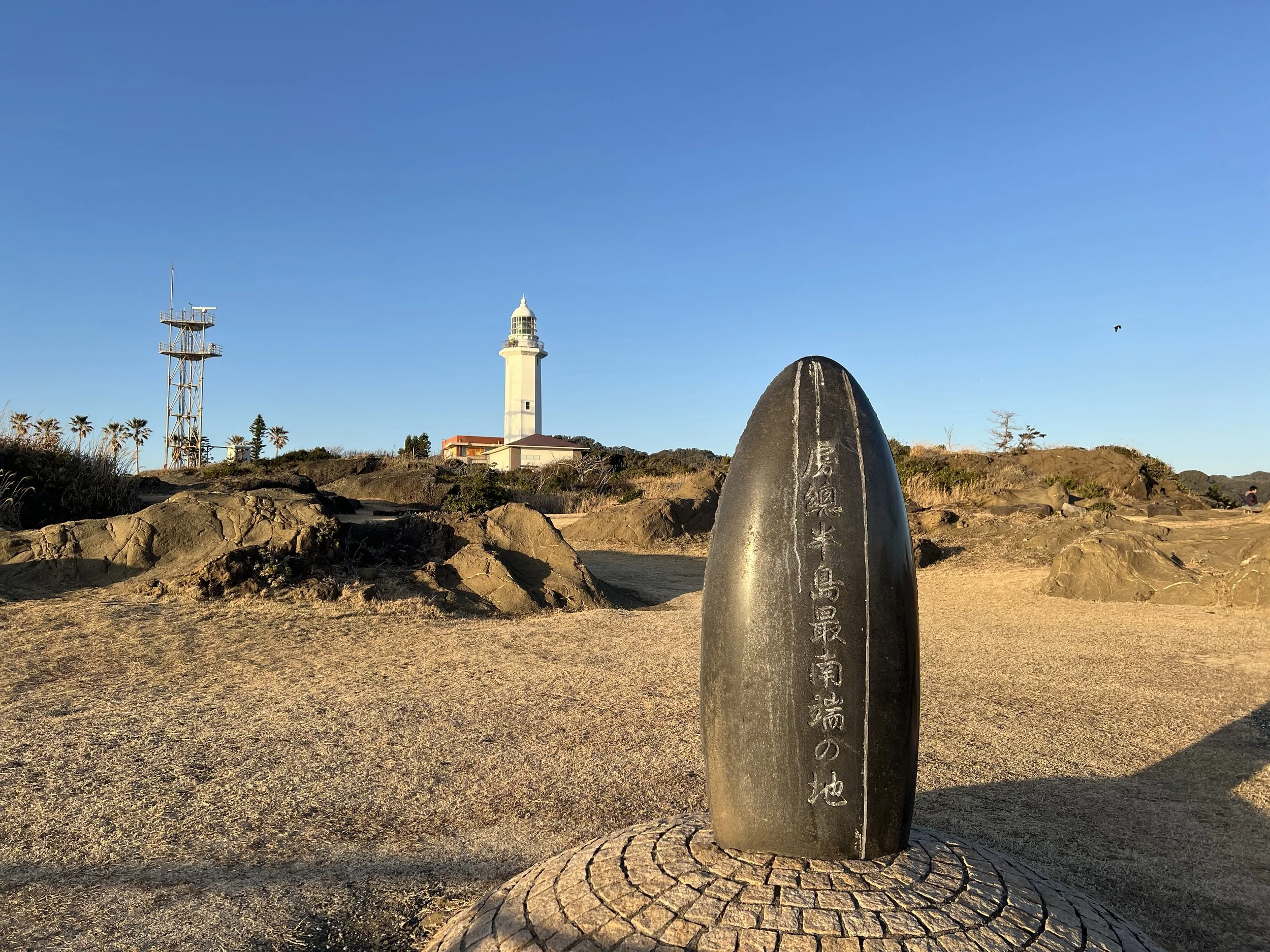
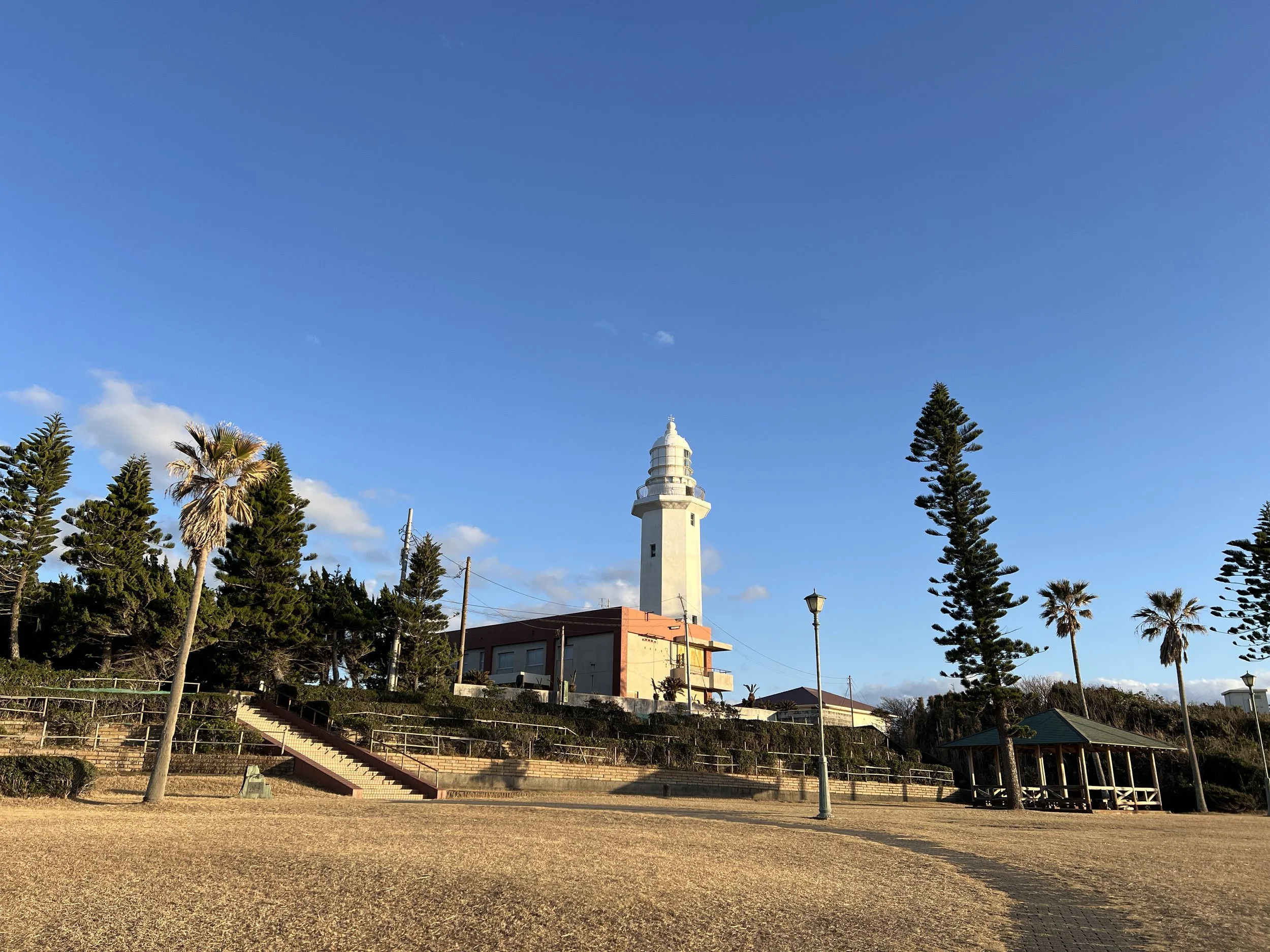
At the centre of the cape stands the historic lighthouse, the most recognizable landmark in the area. The lighthouse itself is open to visitors during the day, but since I had arrived near sunset it had already closed for the evening. Instead, I wandered around the grounds, which are surprisingly interesting in their own right. Scattered around the area were a few art installations, a small seaside shrine, and even a tiny cave tucked beneath a massive boulder near the lighthouse.
While exploring, I learned that the lighthouse here is one of Japan’s earliest Western-style lighthouses, built during the Meiji era by French engineer Léonce Verny. Curious about what actually defines a “Western” lighthouse compared to traditional Japanese designs, I tried looking it up later, but even then the architectural differences weren’t immediately obvious at first glance.
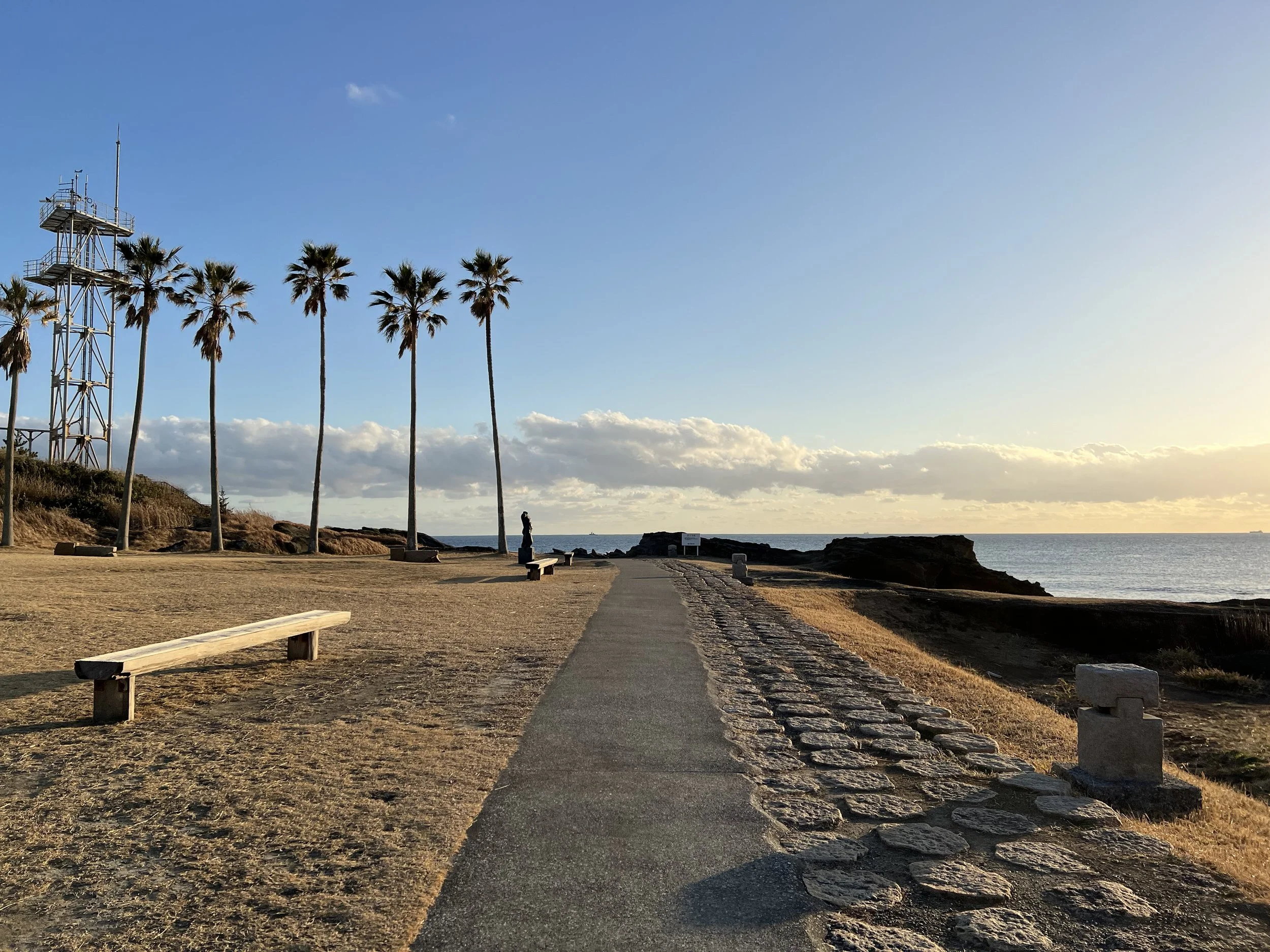
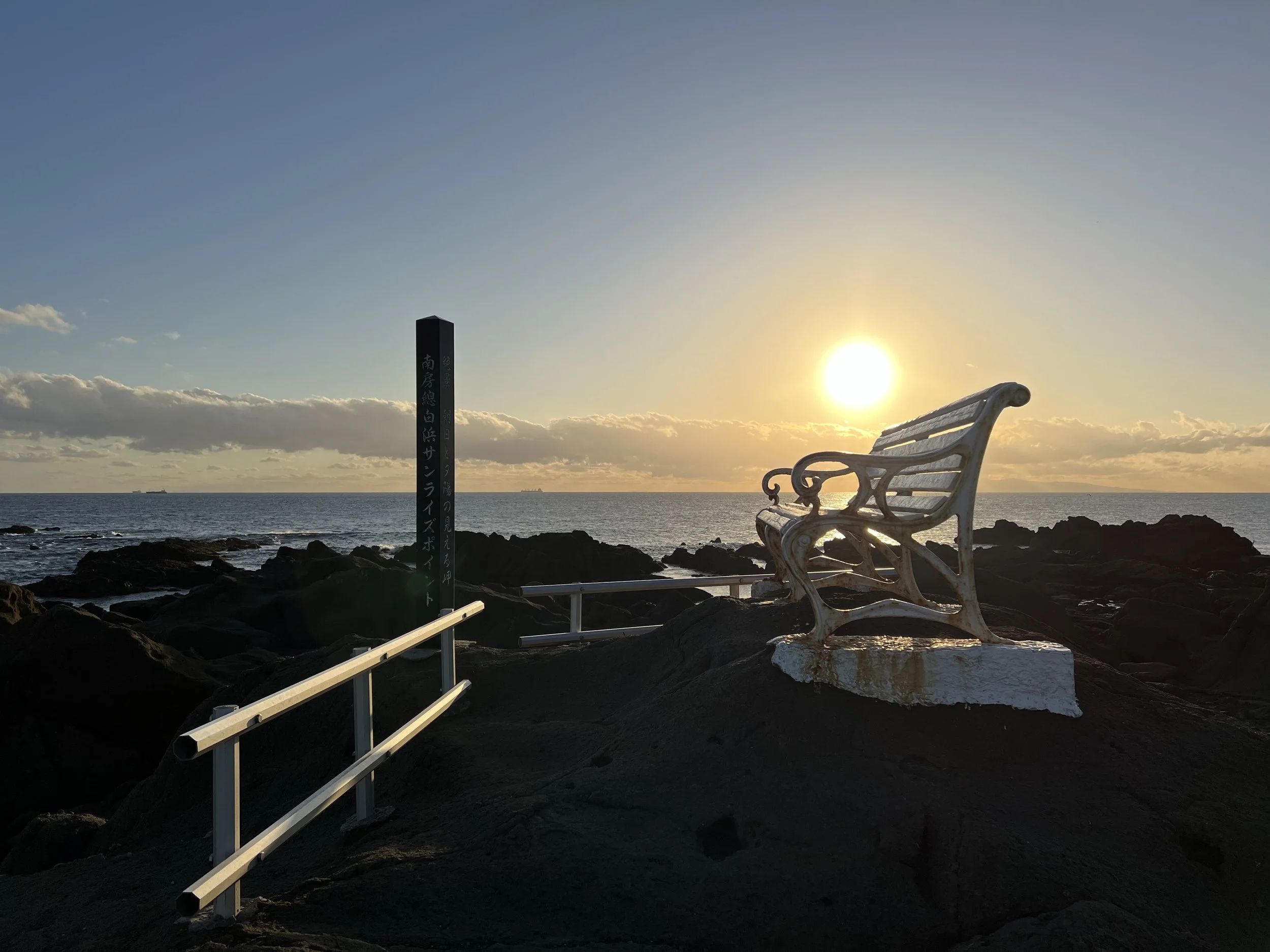
Continuing along the coastal trail, I eventually reached the marker indicating the southernmost point of the Boso Peninsula. Just a little farther along was a bench perched atop a large rock overlooking the ocean. After taking a photo beside the marker, I climbed up the rock to reach the bench.
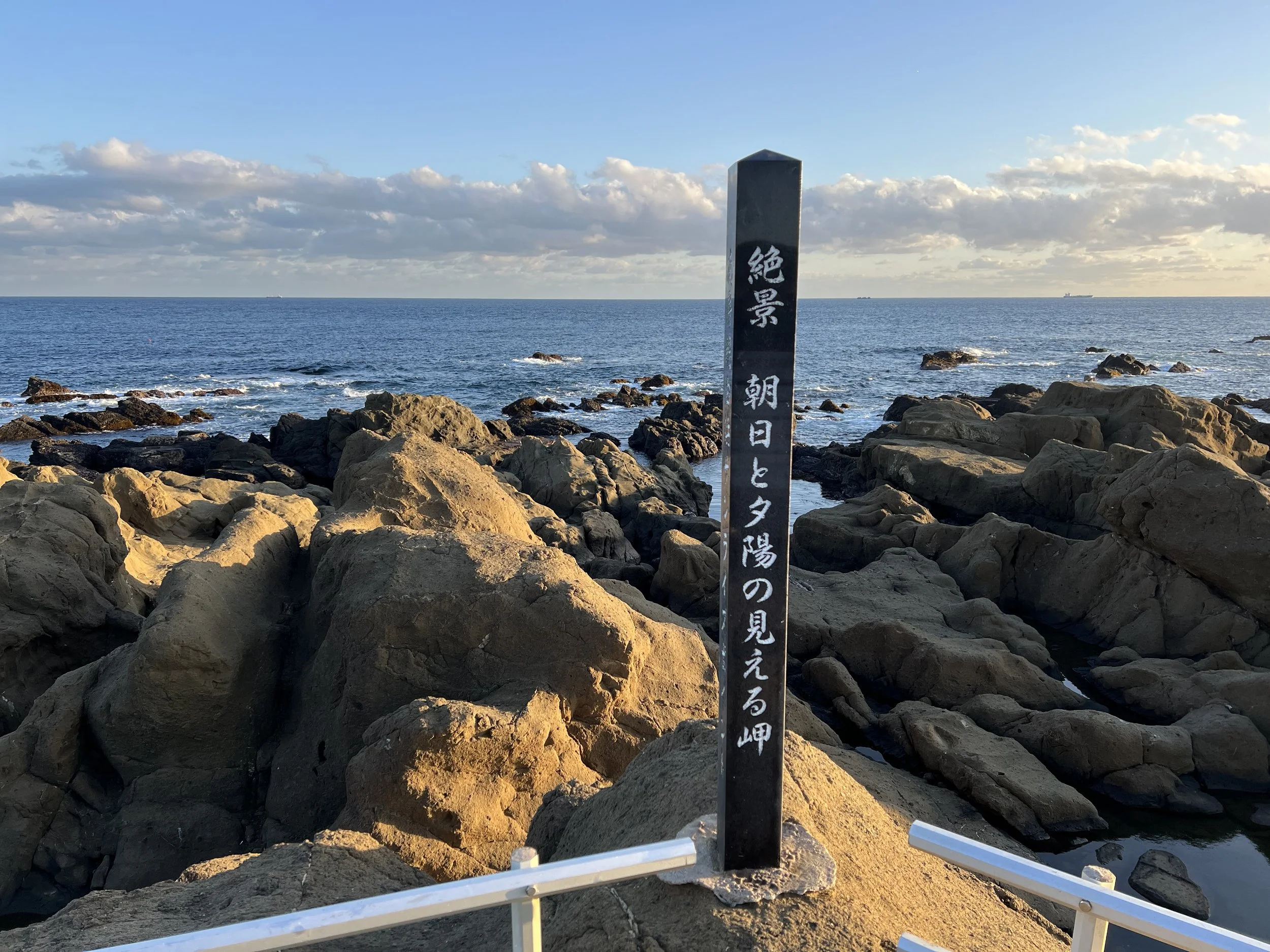
From that vantage point, it was easy to understand why this location is often listed as one of the best sunset viewing spots in Japan. The Pacific Ocean stretched endlessly in front of me while the sky glowed with deep shades of orange and gold. Waves crashed against the rocky shoreline below, adding a rhythmic soundtrack to the view. With the soft evening light and the vast ocean horizon, the setting felt surprisingly romantic.
After taking a few photos from the top, I carefully jumped back down from the rock and continued walking along the path, completing a loop around the cape. With a little time left before my return bus, I found a bench facing the water and simply sat there watching the final colours of the sunset fade from the sky. By the time I made my way back to the bus stop, darkness had settled over the coastline — a peaceful and beautiful end to the day.
History & Background
Cape Nojimazaki (野島埼) sits at the southern tip of the Boso Peninsula in Chiba Prefecture and has long been an important navigational point for ships travelling along Japan’s Pacific coast. Because the peninsula forms the eastern boundary of Tokyo Bay, the surrounding waters have historically been busy maritime routes.
The cape’s most prominent landmark is the Nojimazaki Lighthouse, which was first constructed in 1869 during the early Meiji era. It was designed by French engineer Léonce Verny, who played a major role in introducing Western engineering techniques to Japan during the country’s rapid modernization.
The lighthouse is considered one of Japan’s earliest Western-style lighthouses. Many of the country’s traditional lighthouse structures prior to the Meiji period were smaller beacon towers or wooden structures. Verny’s design introduced more durable stone construction and Western engineering principles to Japan’s coastal navigation system.
Although the lighthouse was heavily damaged during the 1923 Great Kanto Earthquake and later during the Second World War, it was rebuilt and remains an active lighthouse today. Visitors can normally climb to the observation deck for panoramic views over the Pacific Ocean and the coastline of southern Chiba.
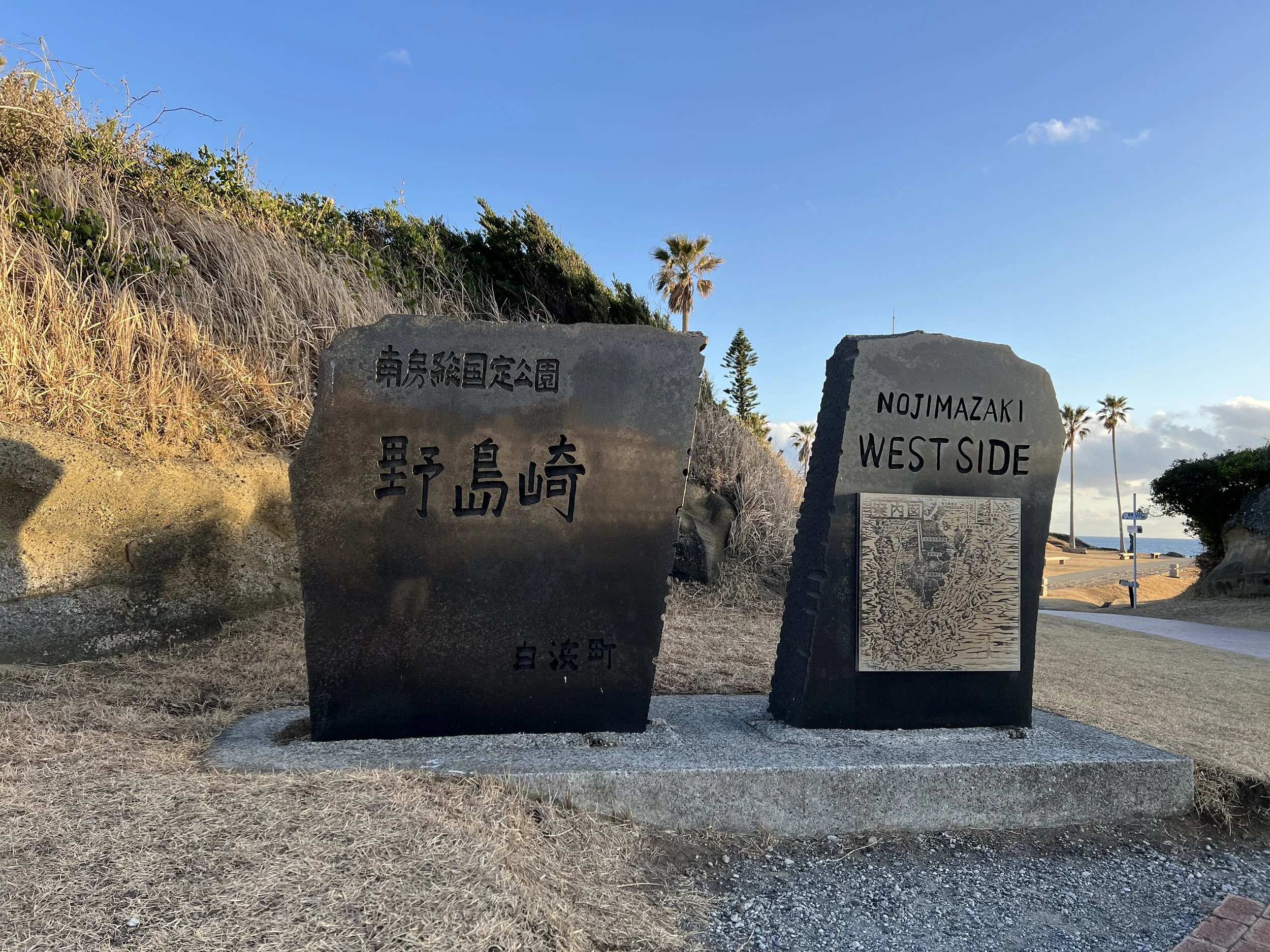
Today the cape is not only a scenic viewpoint but also a small coastal park known for its ocean views, art sculptures, and reputation as one of the best sunset locations in the region.
Getting There
The most convenient rail access point for Cape Nojimazaki is Tateyama Station on the JR Uchibo Line. From Tokyo, travellers can take the JR Sobu Line or limited express trains to Chiba and continue south along the Uchibo Line to Tateyama.
From Tateyama Station, local buses operated by the Nitto Kotsu bus network run toward the southern coast of the Boso Peninsula. Take a bus bound for Nojimazaki and get off at Nojima Cape Lighthouse Bus Stop, which is about a 10-minute walk from the cape area.
Visitors travelling by car can reach the cape in approximately 30 minutes from central Tateyama via Route 410 and coastal roads around the peninsula. Parking is available near the lighthouse and coastal park area.
Route Overview
Distance: 2.18 km out & back (Nojima Cape Lighthouse Bus Stop)
Total elevation gain: 11 m
Duration: 23 min (with breaks 30 min)
Difficulty: Easy
Cost Breakdown
Train: Iwai Station → Tateyama Station — ¥240
Bus: Tateyama Station → Nojima Cape Lighthouse Bus Stop — ¥610