Camino Portugués Coastal - Day 2: Póvoa de Varzim to Amorosa
Planning this stage proved tricky—the distances between towns didn’t line up neatly, and accommodations were either too close (less than 15 kilometres) or too far (over 35). Sujin and I checked several apps but found few good options. Since 15 kilometres felt too short, we decided to push farther, knowing it would be a long day.
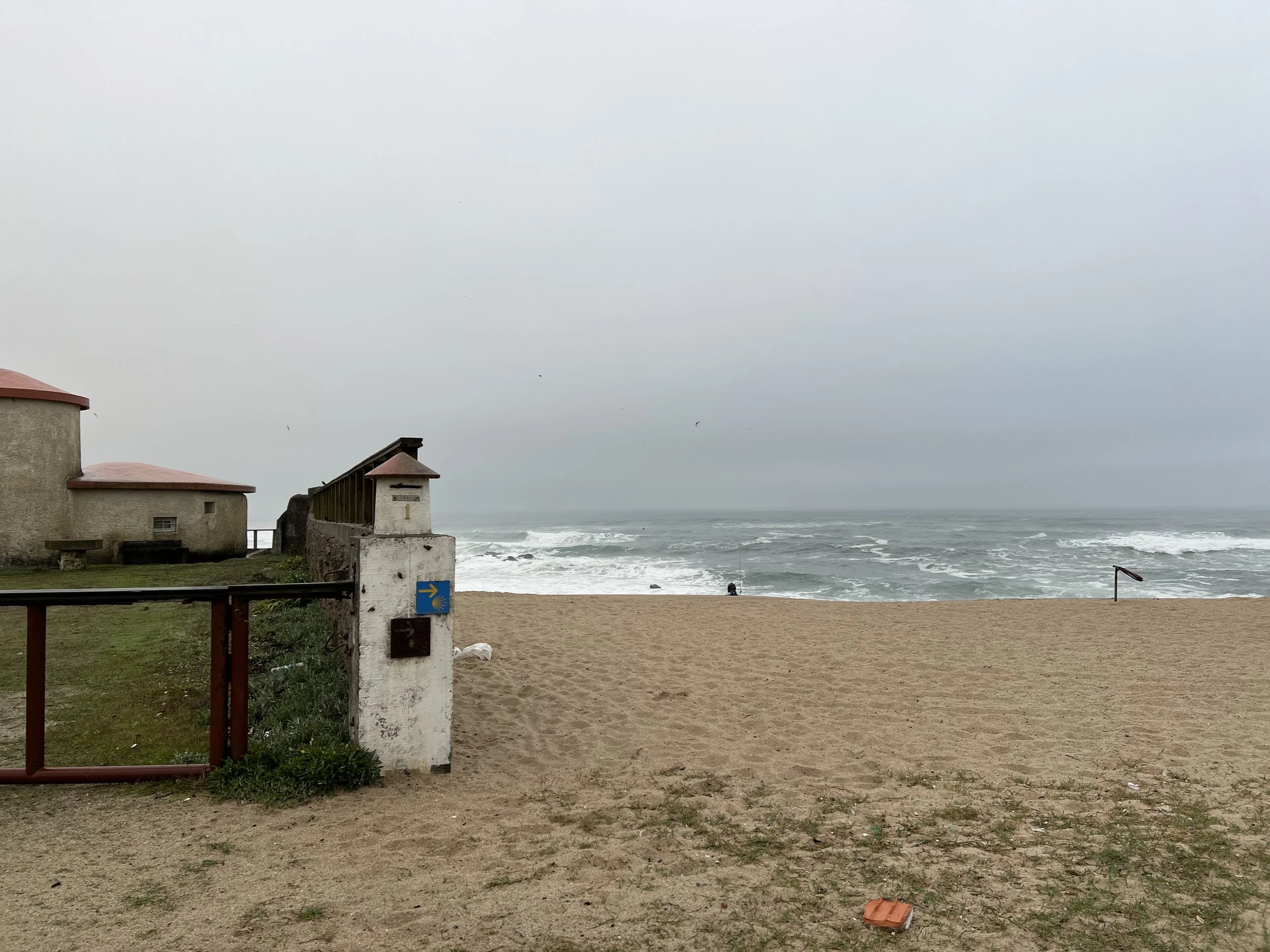
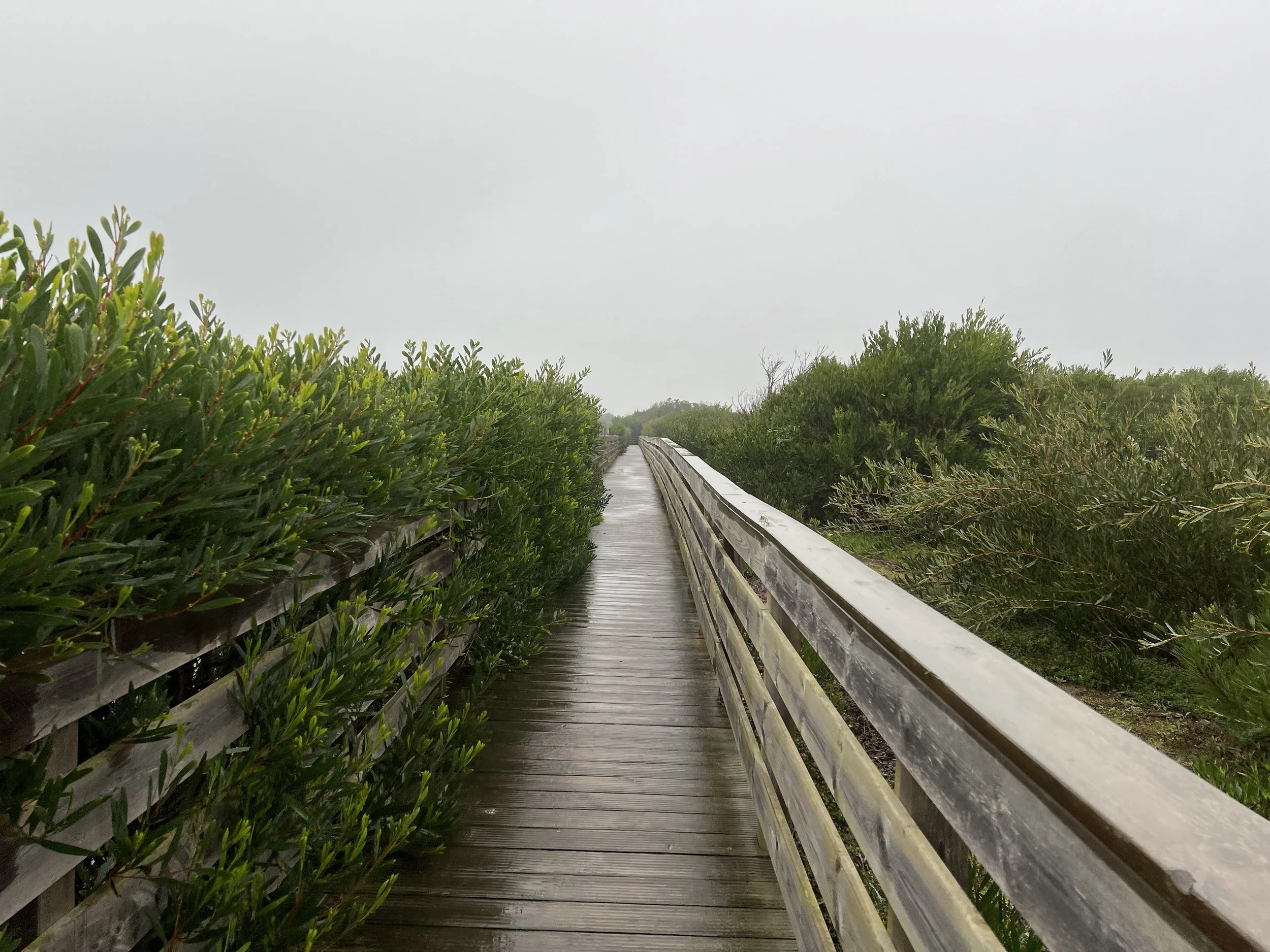
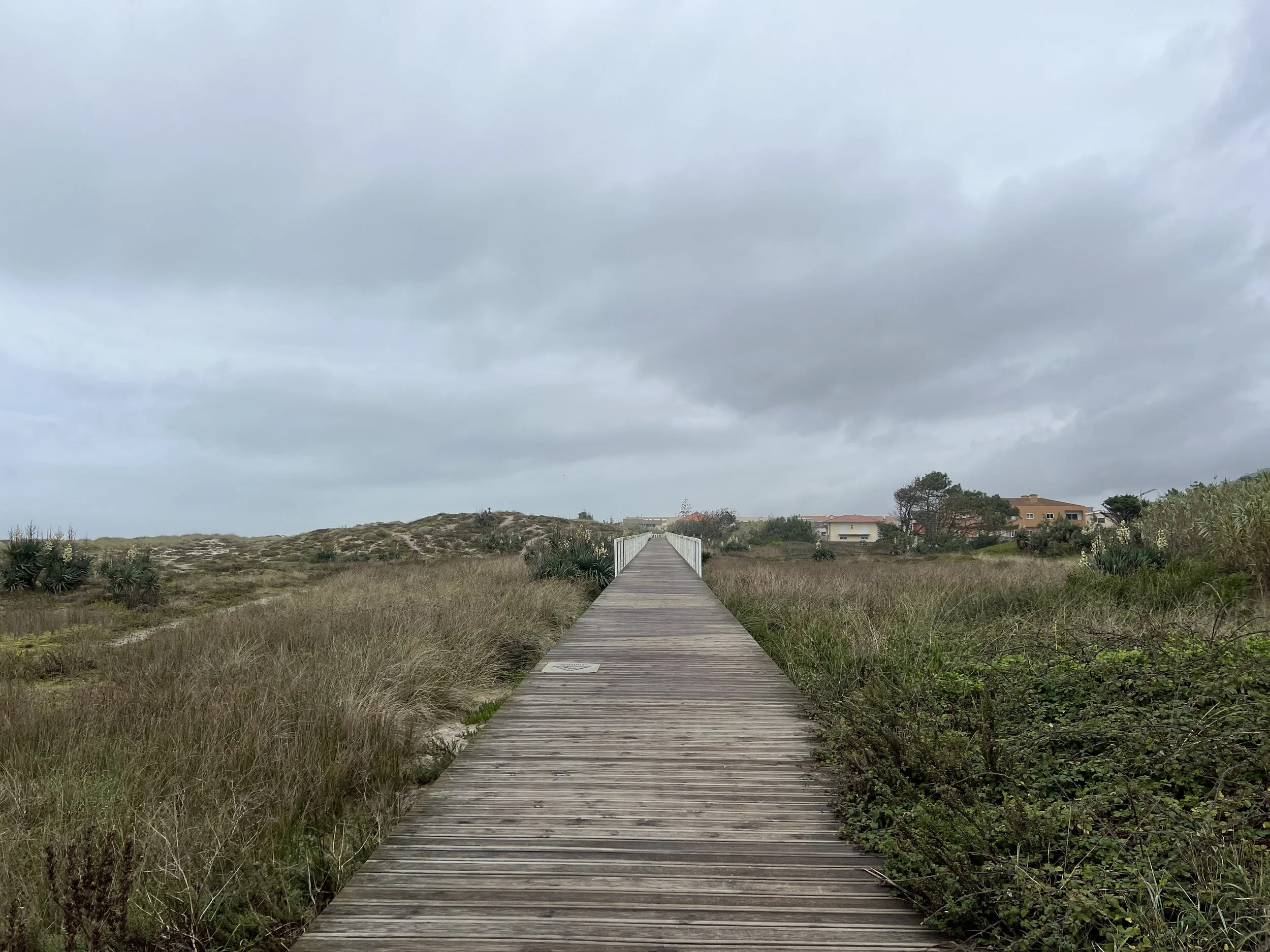
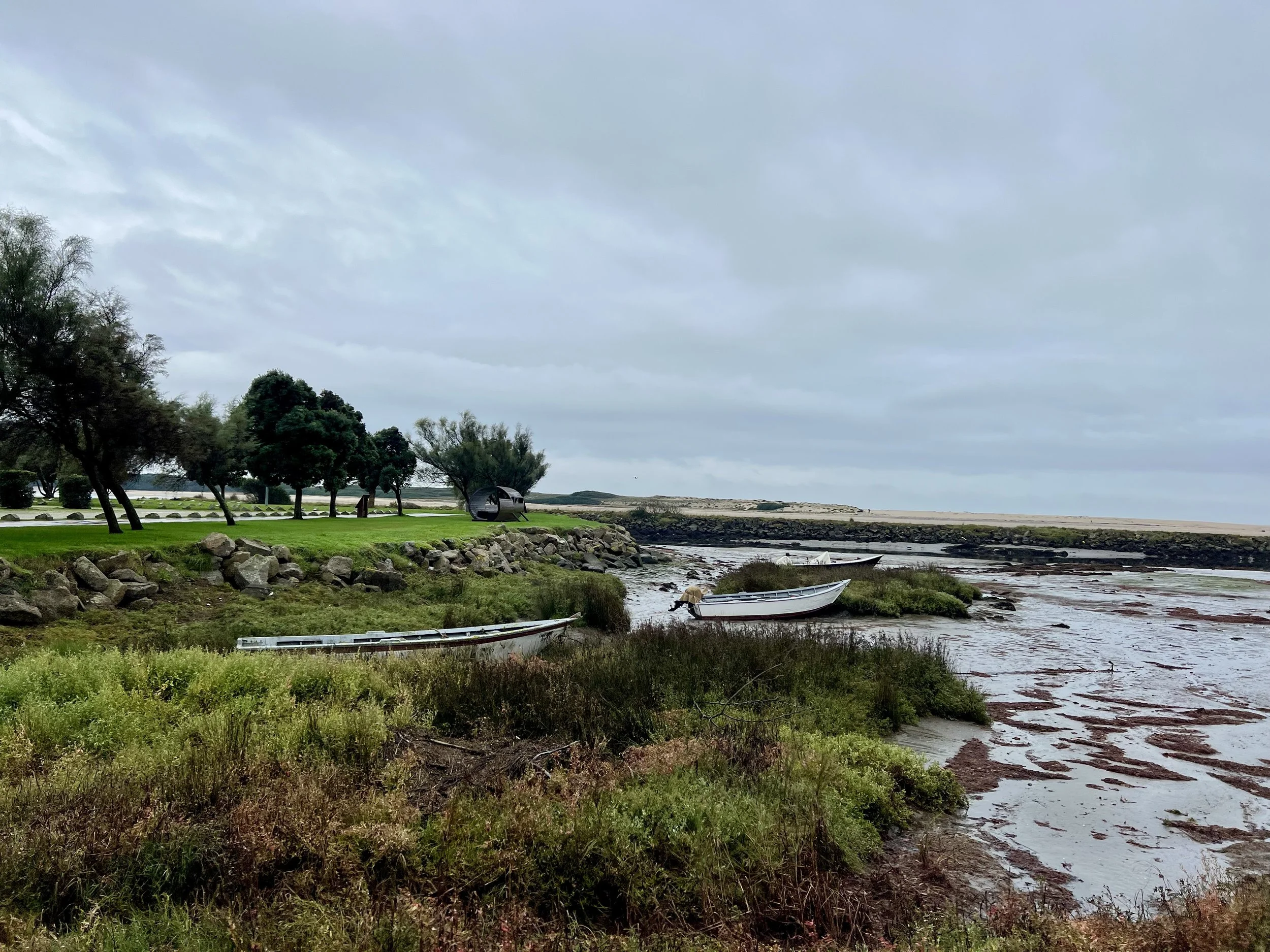
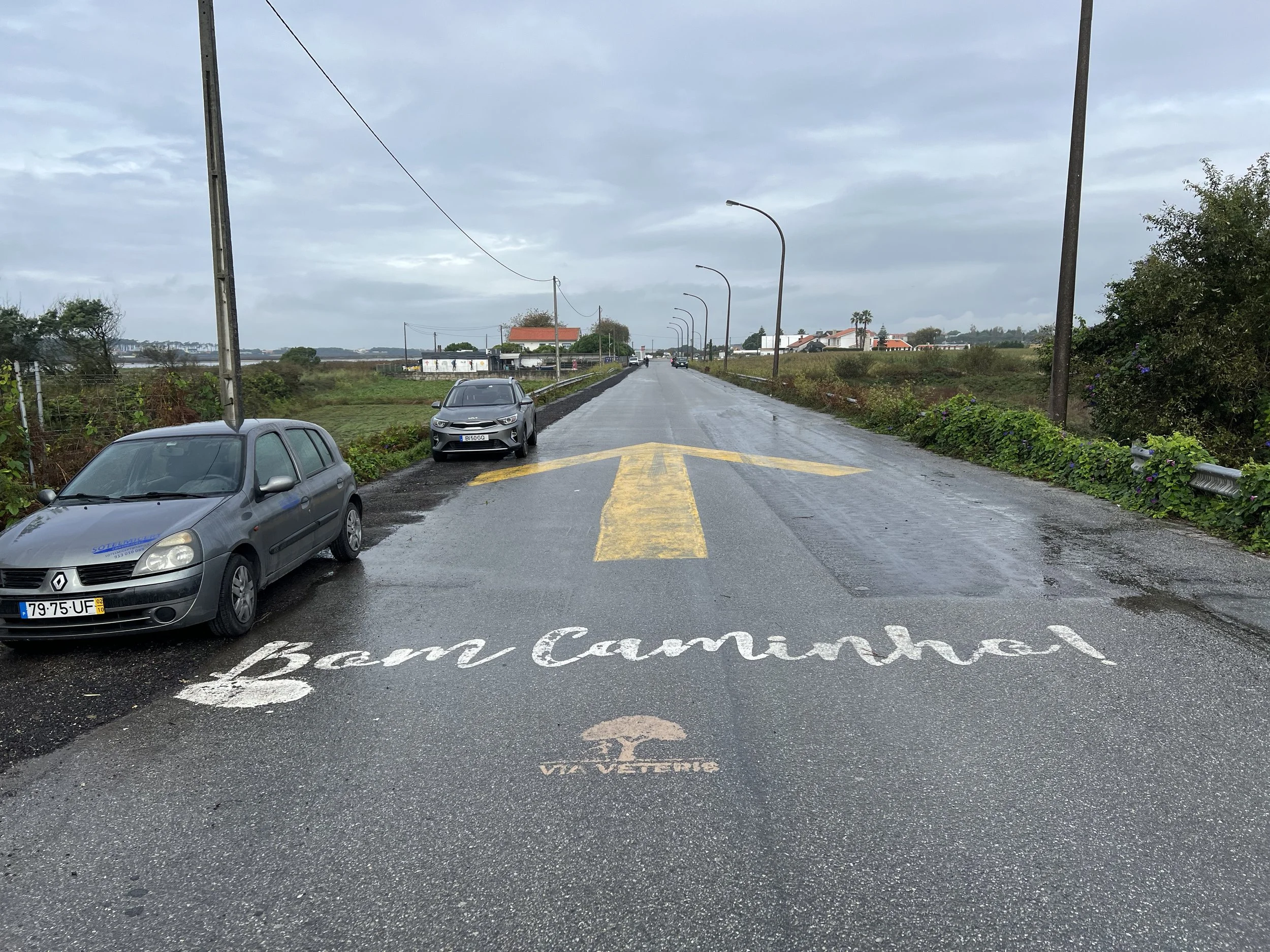
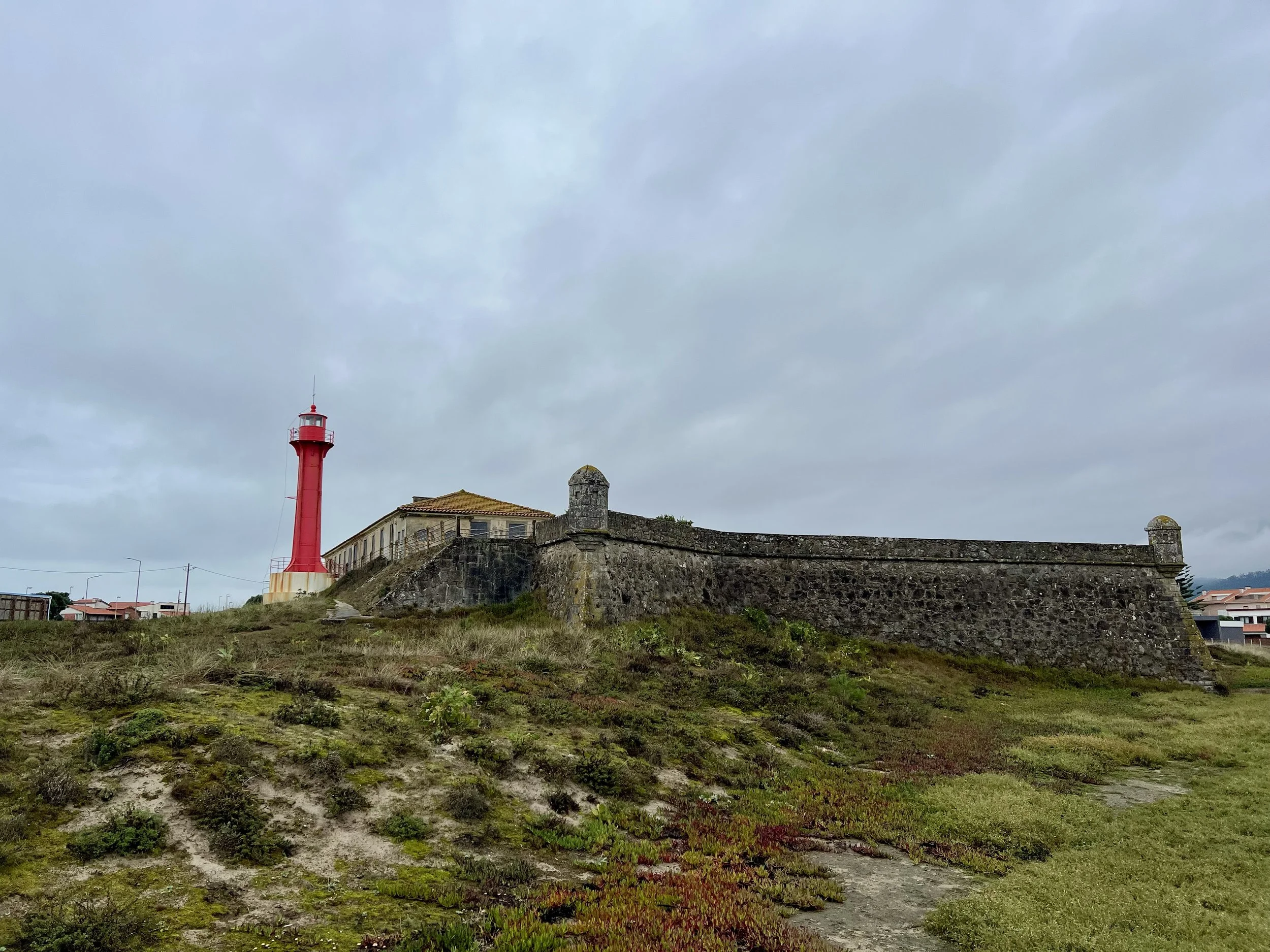
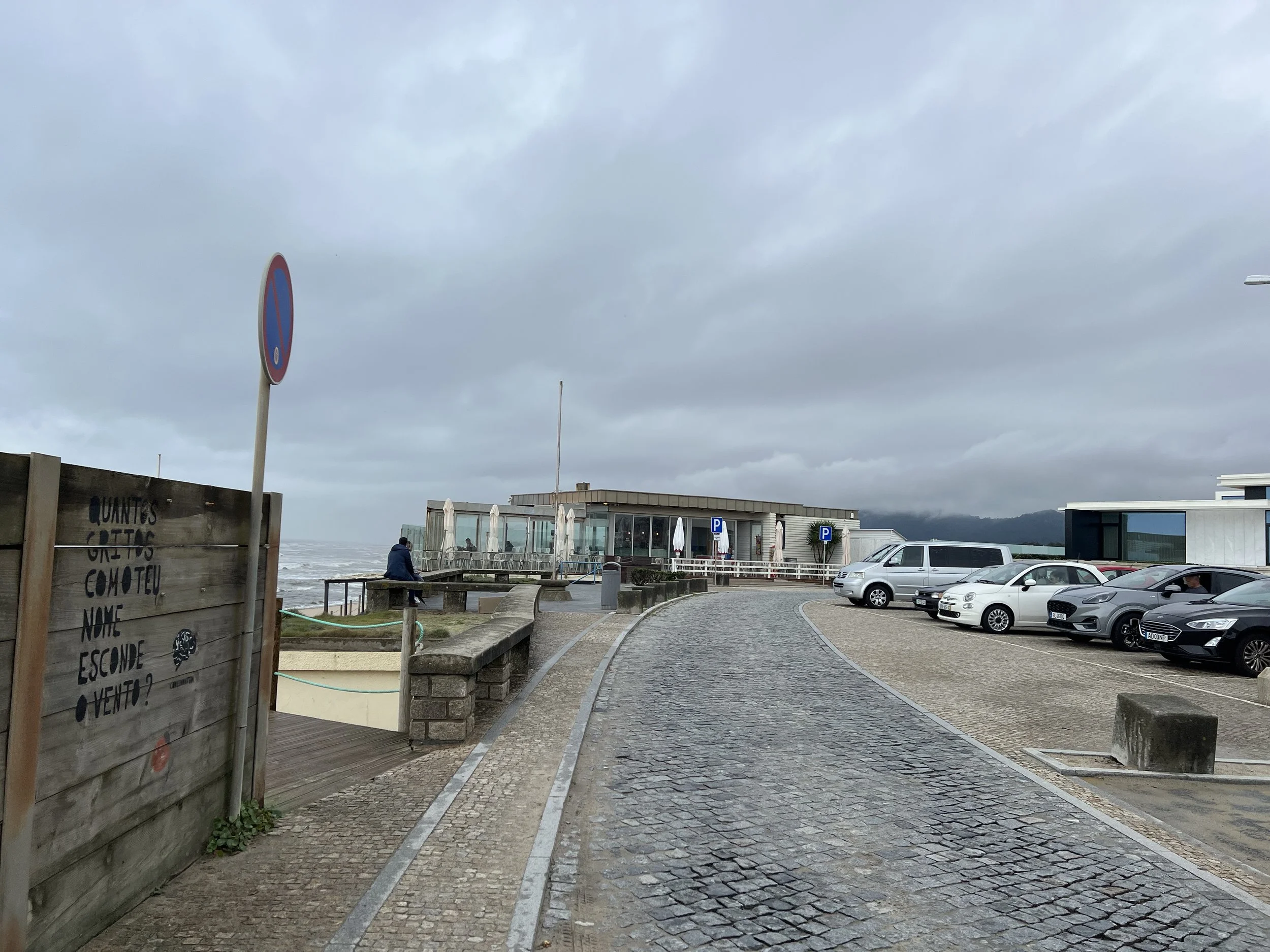
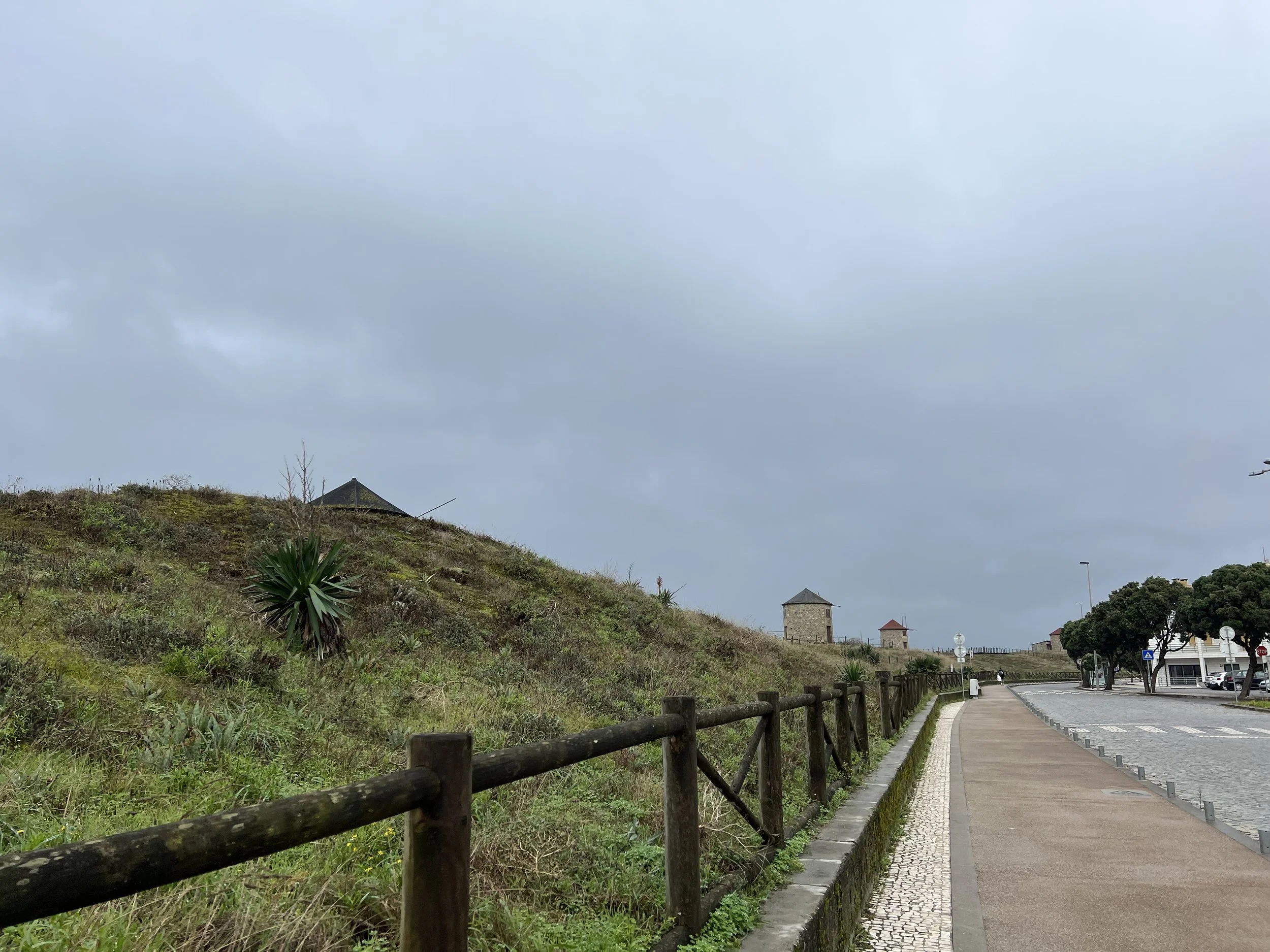
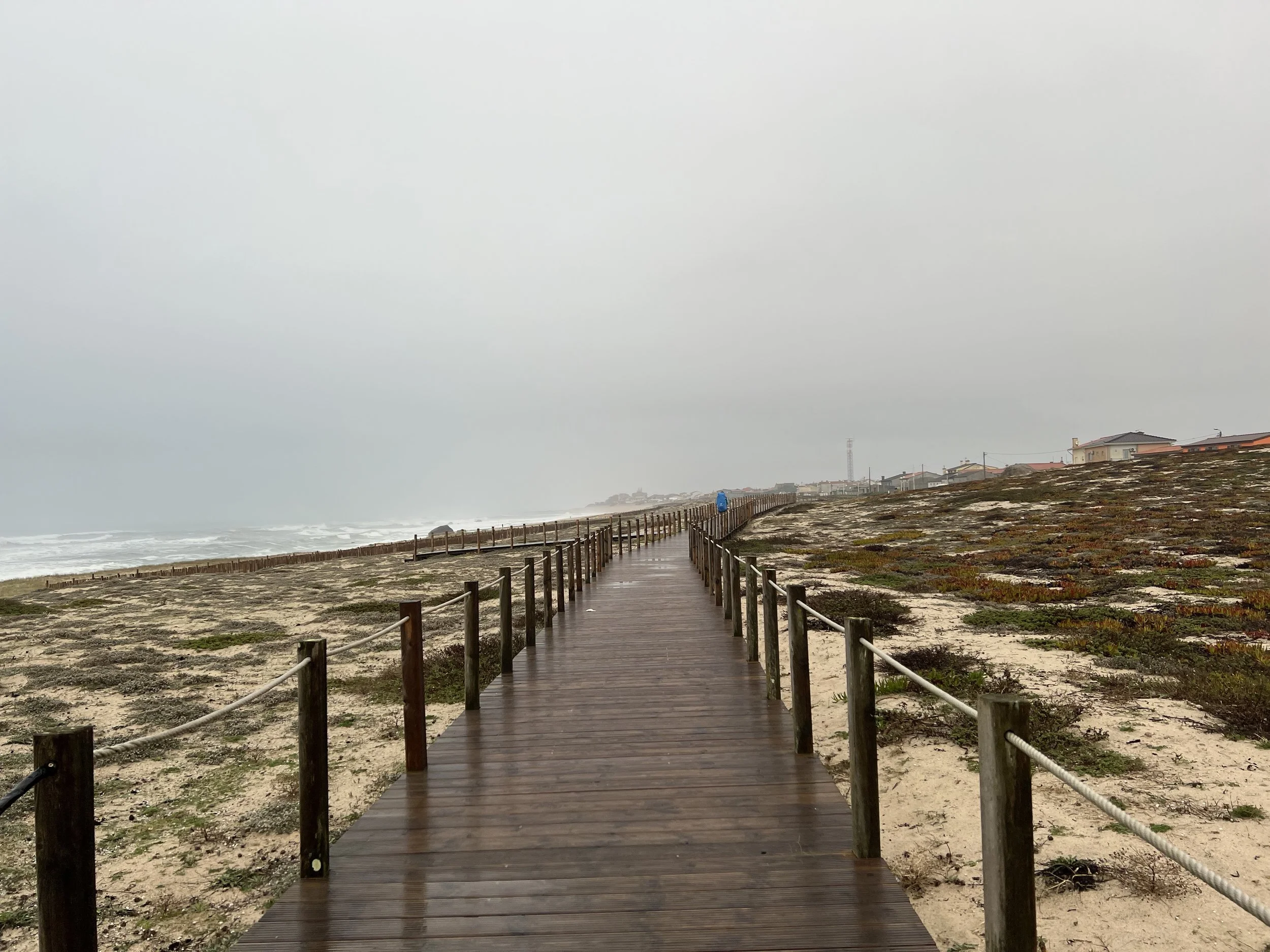
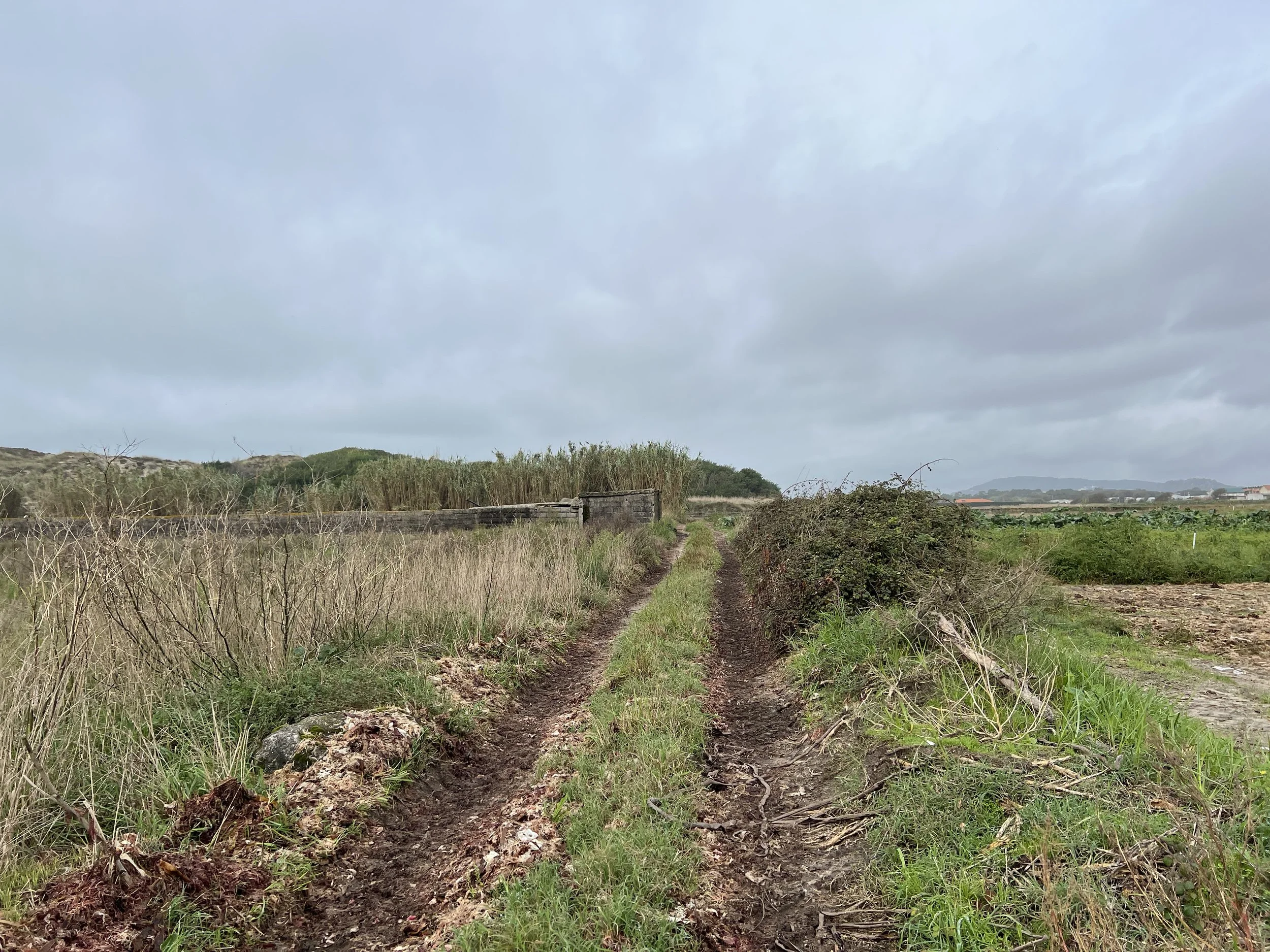
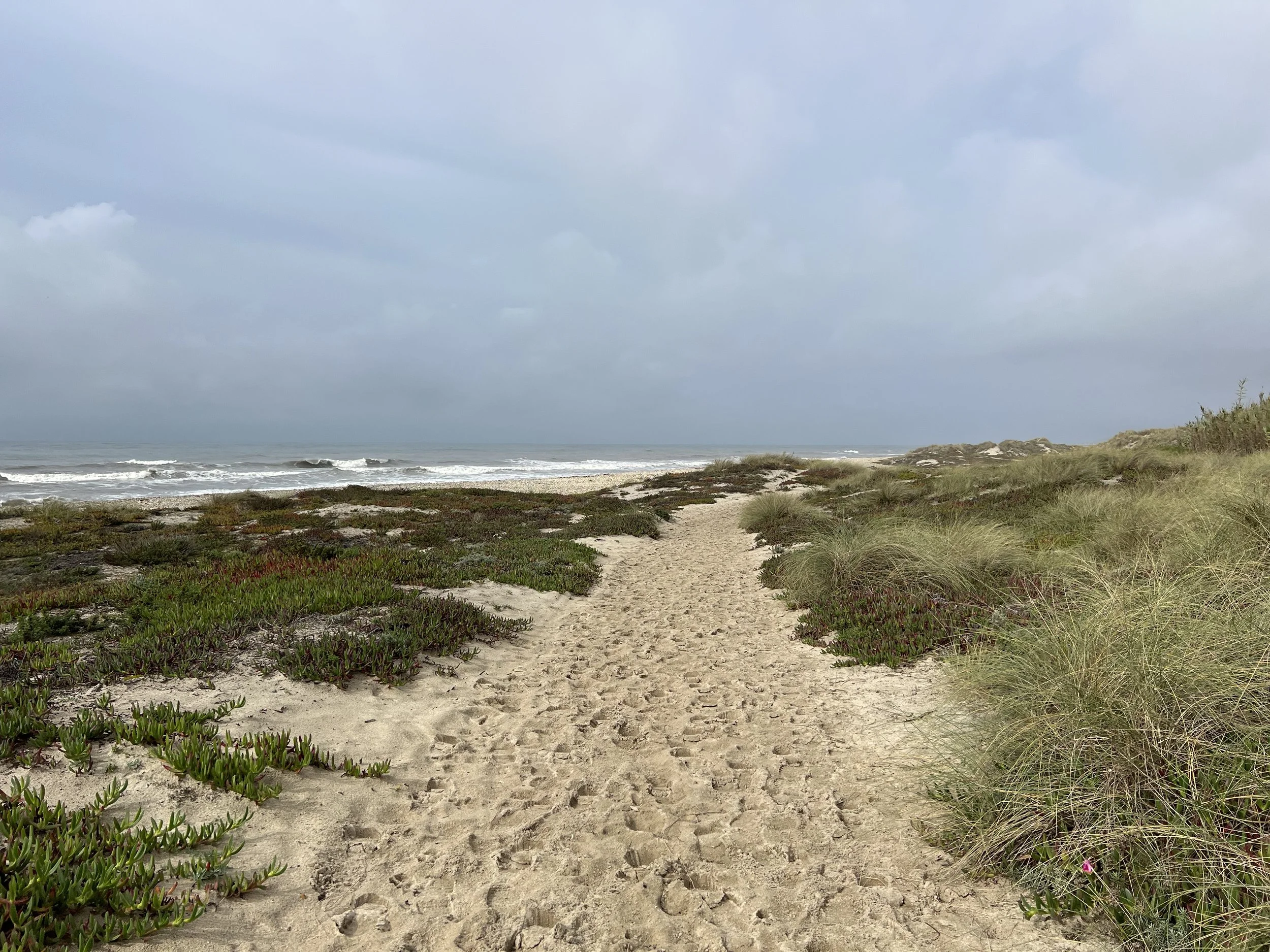
The route led inland for much of the morning, winding through quiet residential areas and stretches of farmland before returning to the coast later in the day. Waymarking was sporadic, and we had to stop a few times to double-check our direction. Some sections required walking directly on the beach—pleasant in theory, but surprisingly tiring in practice. Each step sank into the sand, pulling at already weary legs.
I was grateful I’d packed plenty of water, as there were fewer refill stations than on the Francés. The day began with a light drizzle that soon gave way to sunshine and a cool ocean breeze. Despite the mostly flat terrain, the mix of sand, distance, and minimal shade made it one of those deceptively exhausting days. By the time we reached Amorosa in the afternoon, it was nearly 4 p.m. I dropped my gear, collapsed onto the bed, and let the fatigue settle in—the satisfying kind that comes only after a full day on the trail.
History & Background
This stretch of the Camino Portugués Coastal Route continues north from Póvoa de Varzim through small seaside villages and farmland toward Amorosa, just south of Viana do Castelo. Unlike the previous stage, which follows the shoreline closely, this section detours inland for much of the way before reuniting with the sea—offering a glimpse into the quieter, rural side of northern Portugal.
Historically, these inland tracks were used by fishermen, traders, and pilgrims travelling between coastal settlements. As the Camino evolved, walkers often alternated between inland and coastal paths depending on the tides and weather. The region’s proximity to the Atlantic made it a crossroads of faith and commerce, where maritime traditions and rural life blended seamlessly.
Amorosa, a peaceful seaside village, is known for its wide beaches and laid-back rhythm. While not a traditional pilgrimage hub, it serves as a restful pause before reaching Viana do Castelo—a historic and spiritual waypoint for pilgrims continuing toward Galicia.
Getting There
The walk from Póvoa de Varzim to Amorosa covers approximately 31–33 kilometres, depending on the chosen route. The trail alternates between paved roads, rural paths, and stretches of beach, making it one of the more varied days on the Portuguese Coastal Camino.
Pilgrims beginning their journey in Porto can reach Póvoa de Varzim via Metro Line B (direction Póvoa de Varzim). From Amorosa, local buses and taxis connect to Viana do Castelo, where regional trains and coaches provide onward travel to Porto, Braga, or Santiago de Compostela.
Route Overview
Distance: 37.81 km (Sardines and Friends Hostel → Hotel Areias Claras)
Total elevation gain: 135 m
Duration: 7 hr 3 min (with breaks 8 hr 21 min)
Difficulty: Challenging
For the full day-by-day route breakdown, including distances and duration, see my complete Camino Portugués Coastal route guide.
Cost Breakdown
Accommodation: Hotel Areias Claras (Reserved via Agoda) — €37.2
Food: €39.05