Camino Finisterre - Day 4: Cee to Finisterre
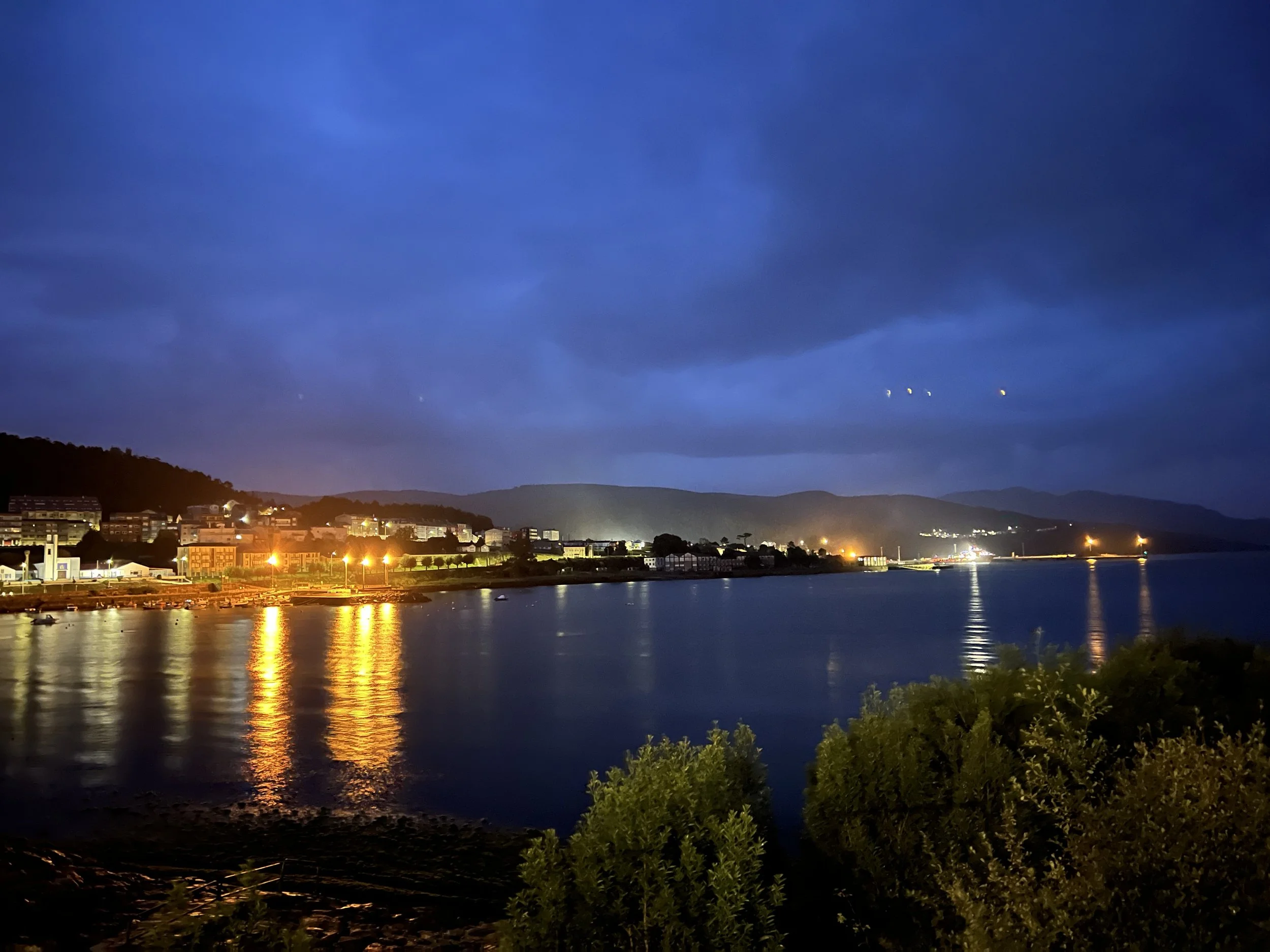
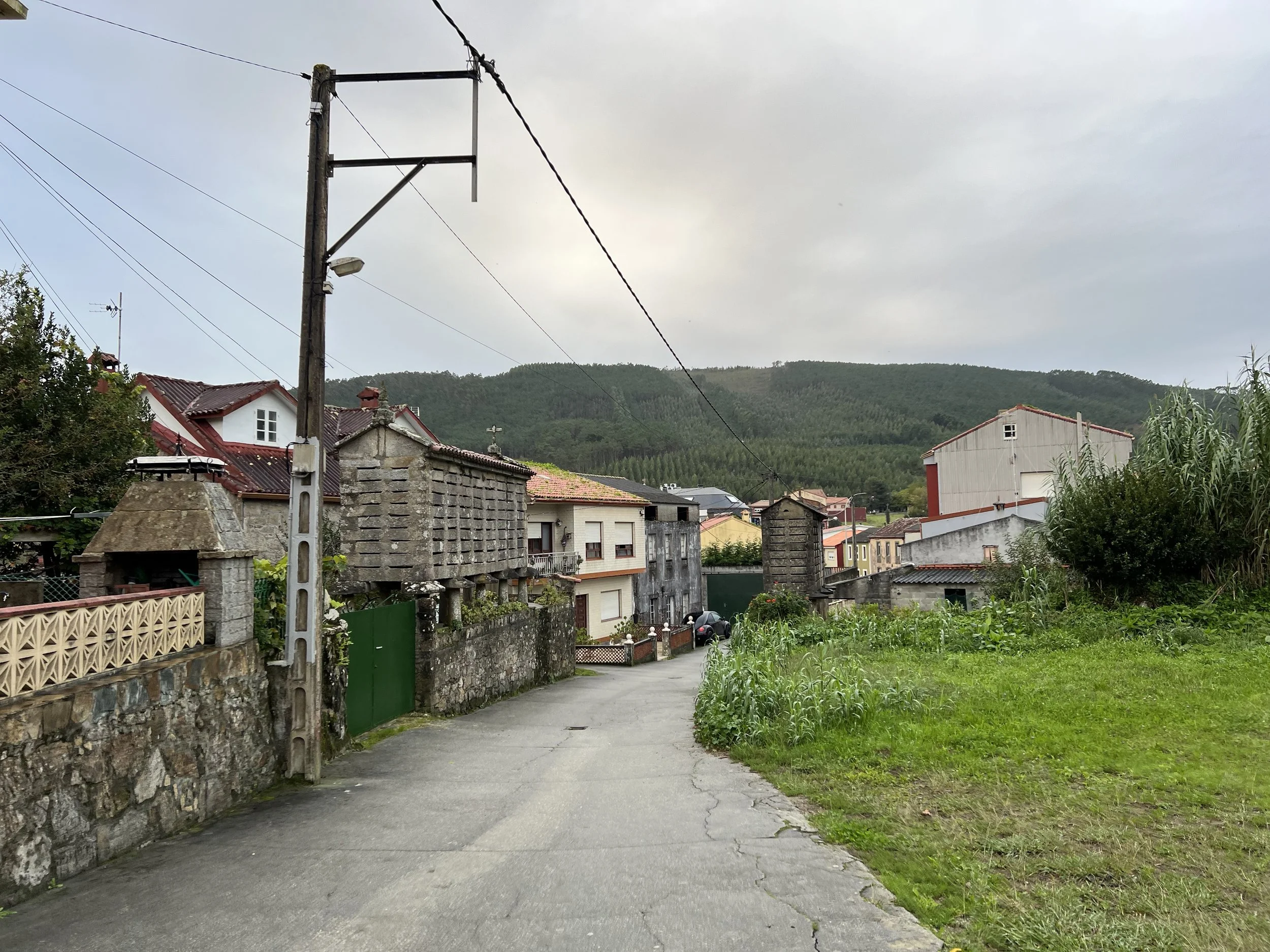
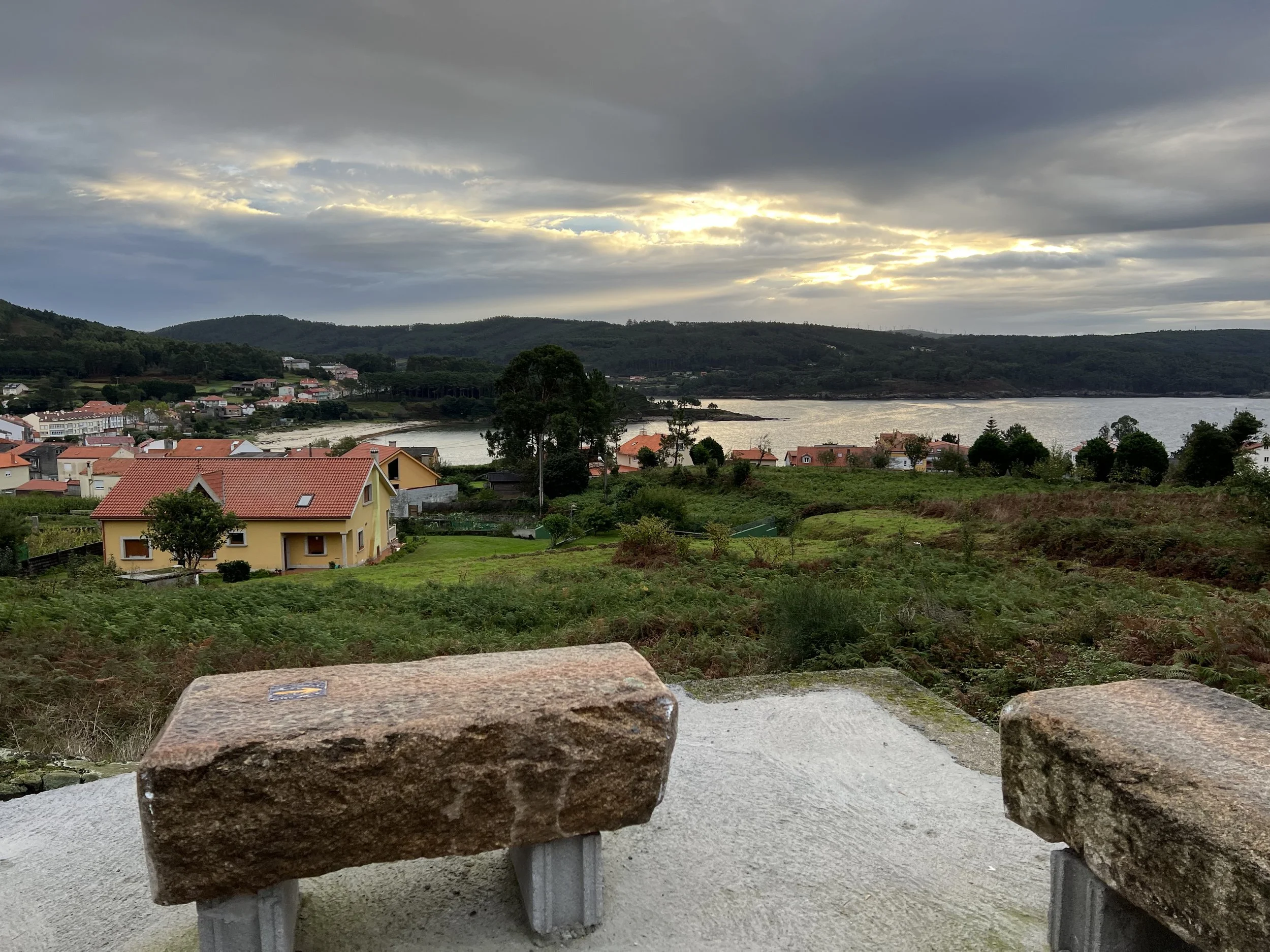
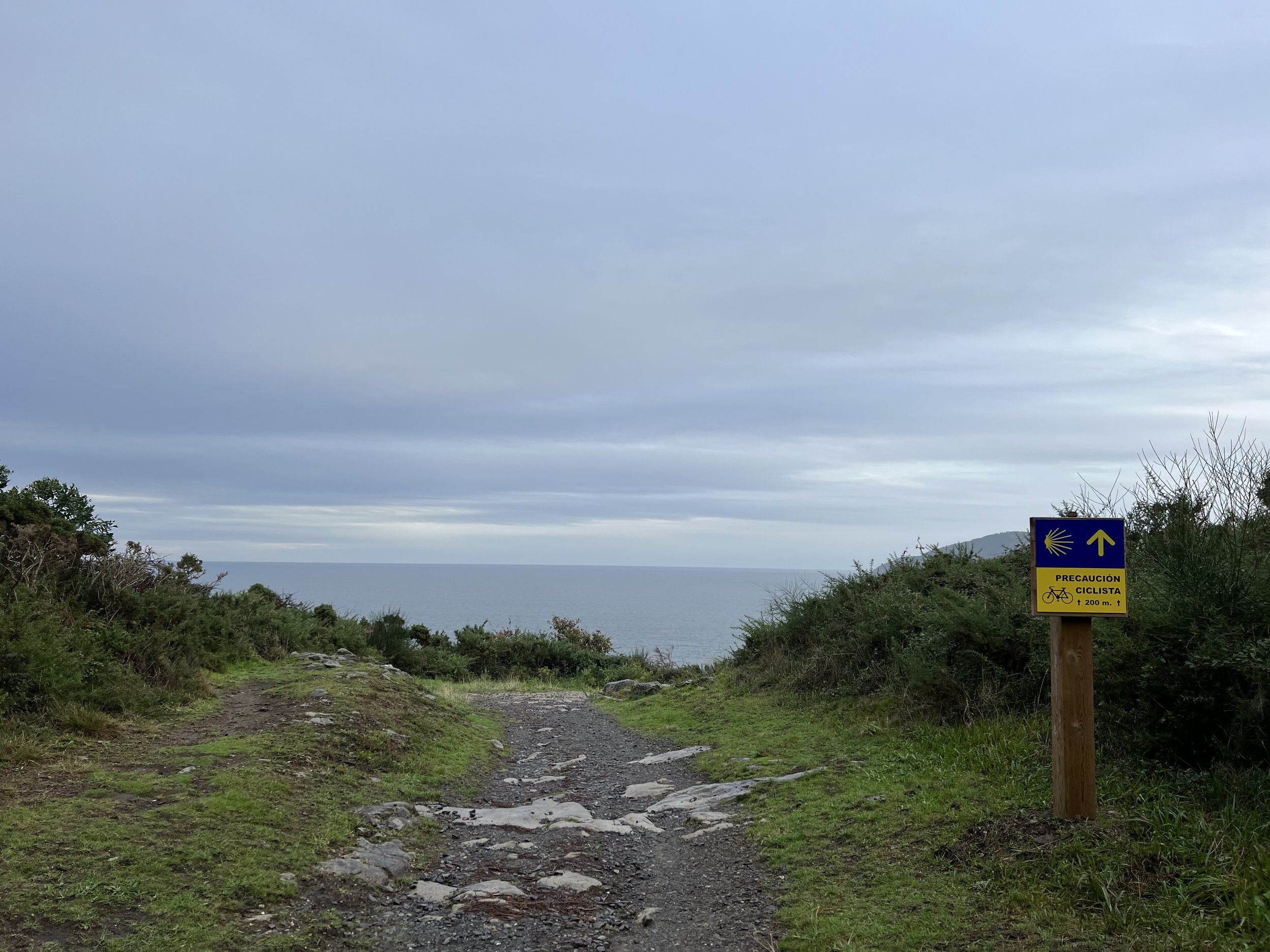
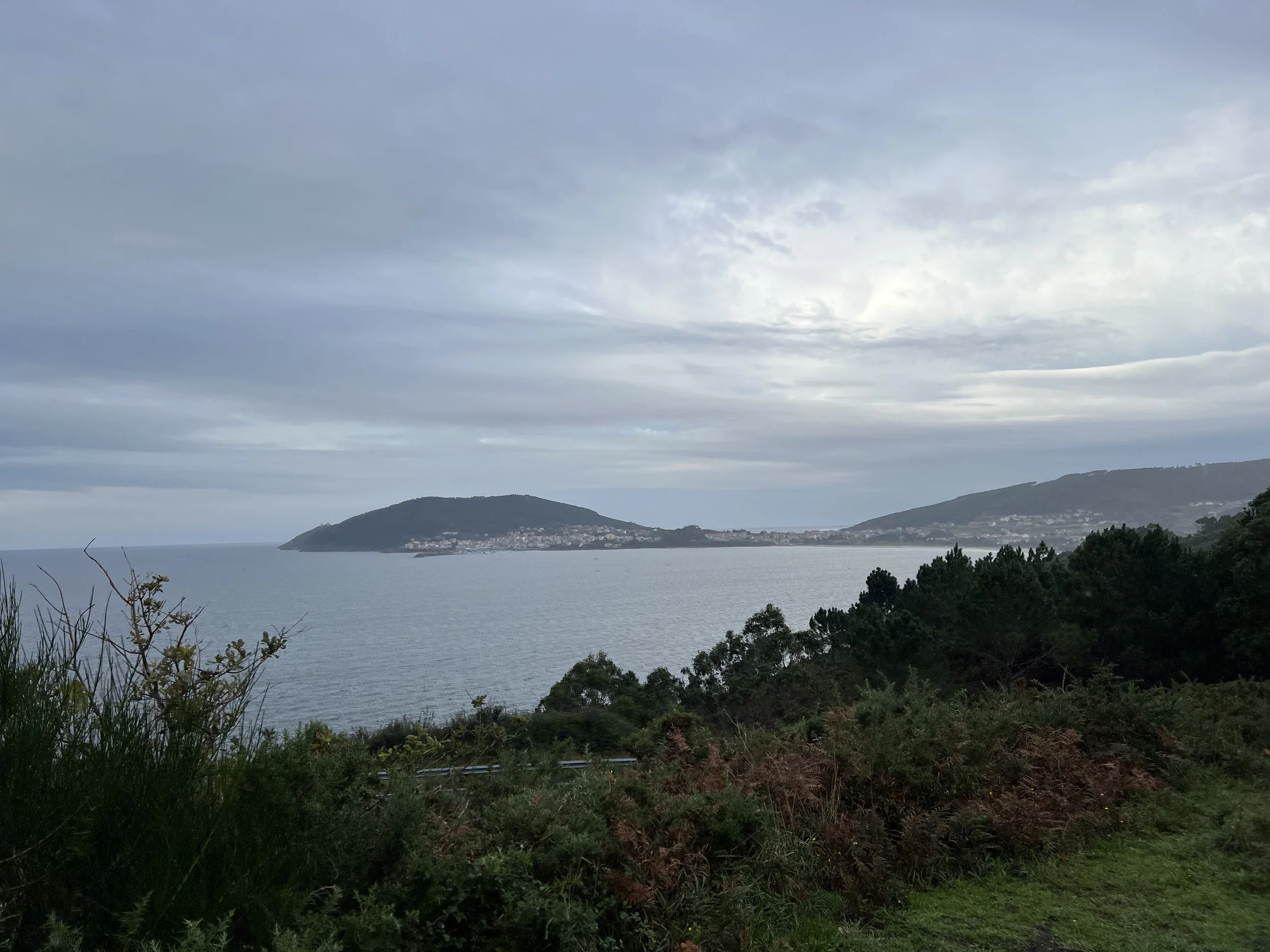
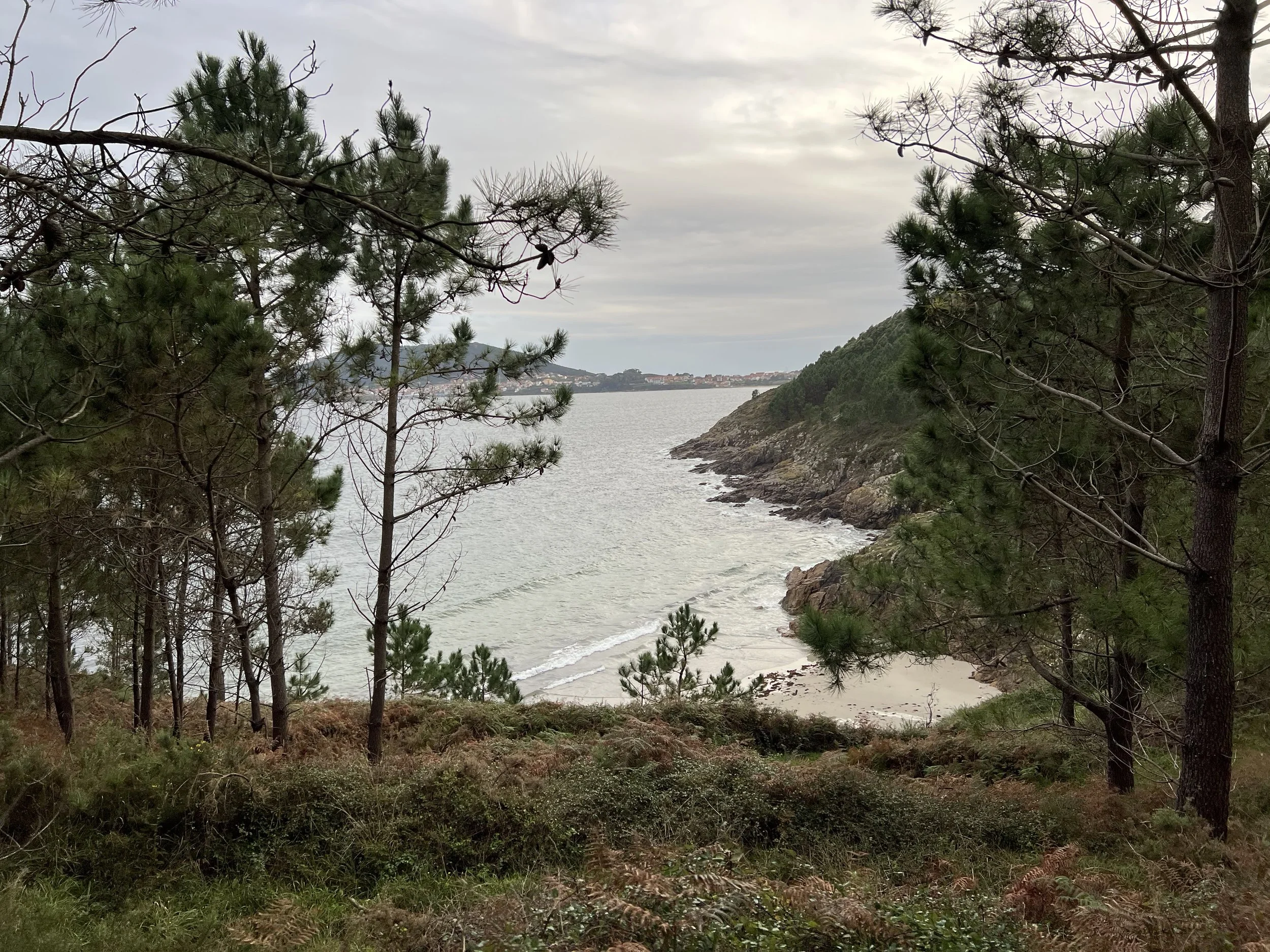
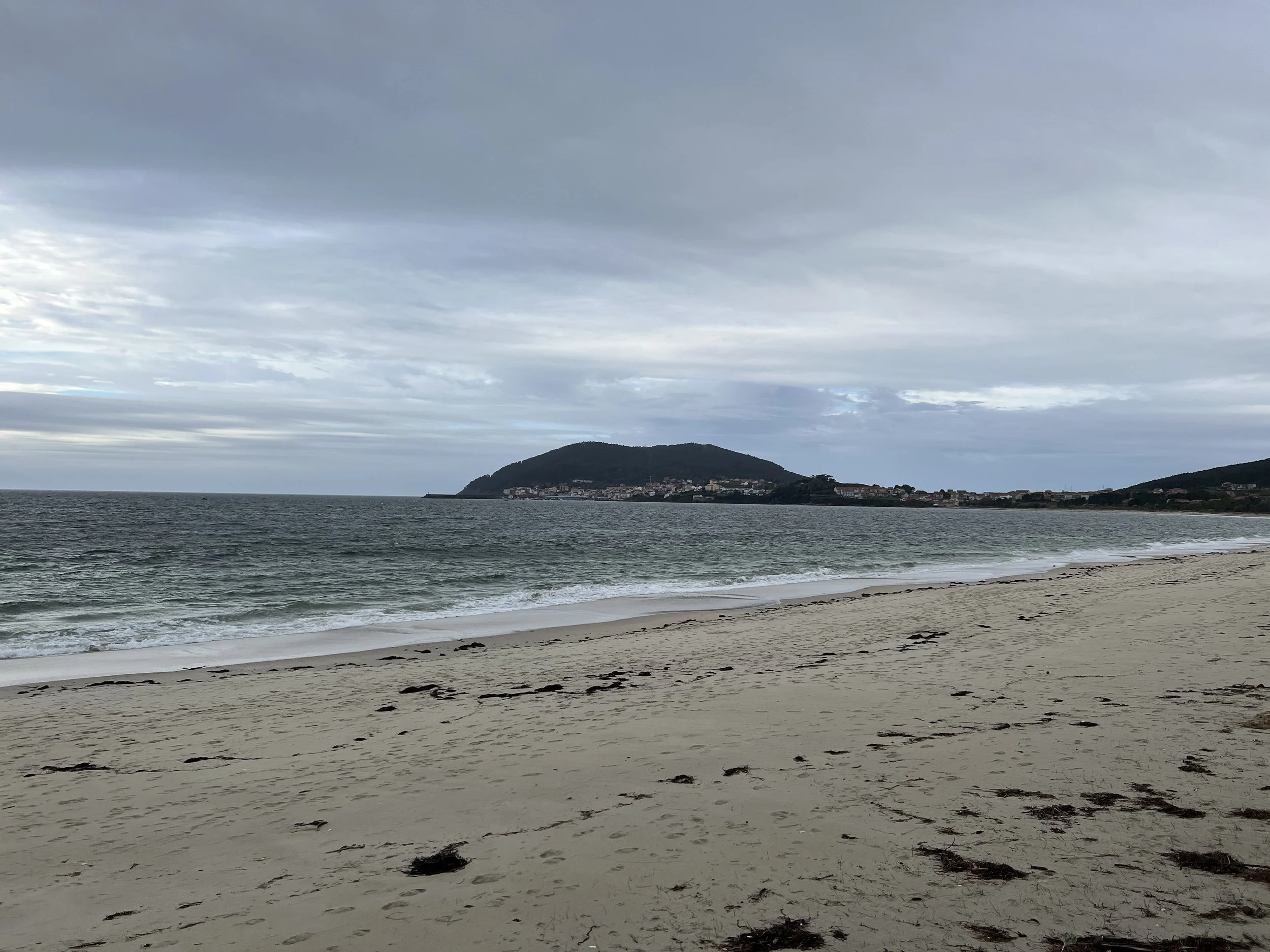
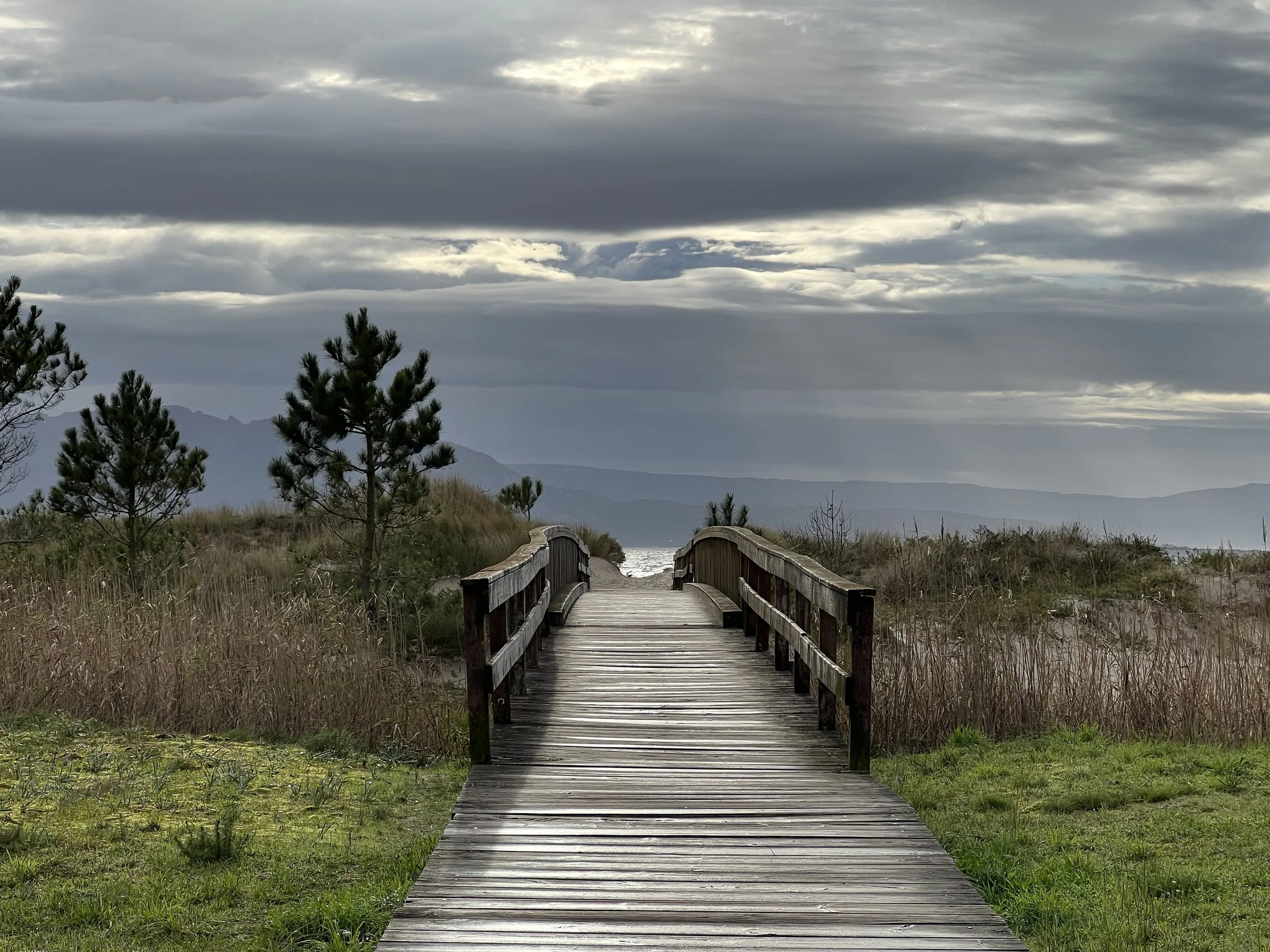
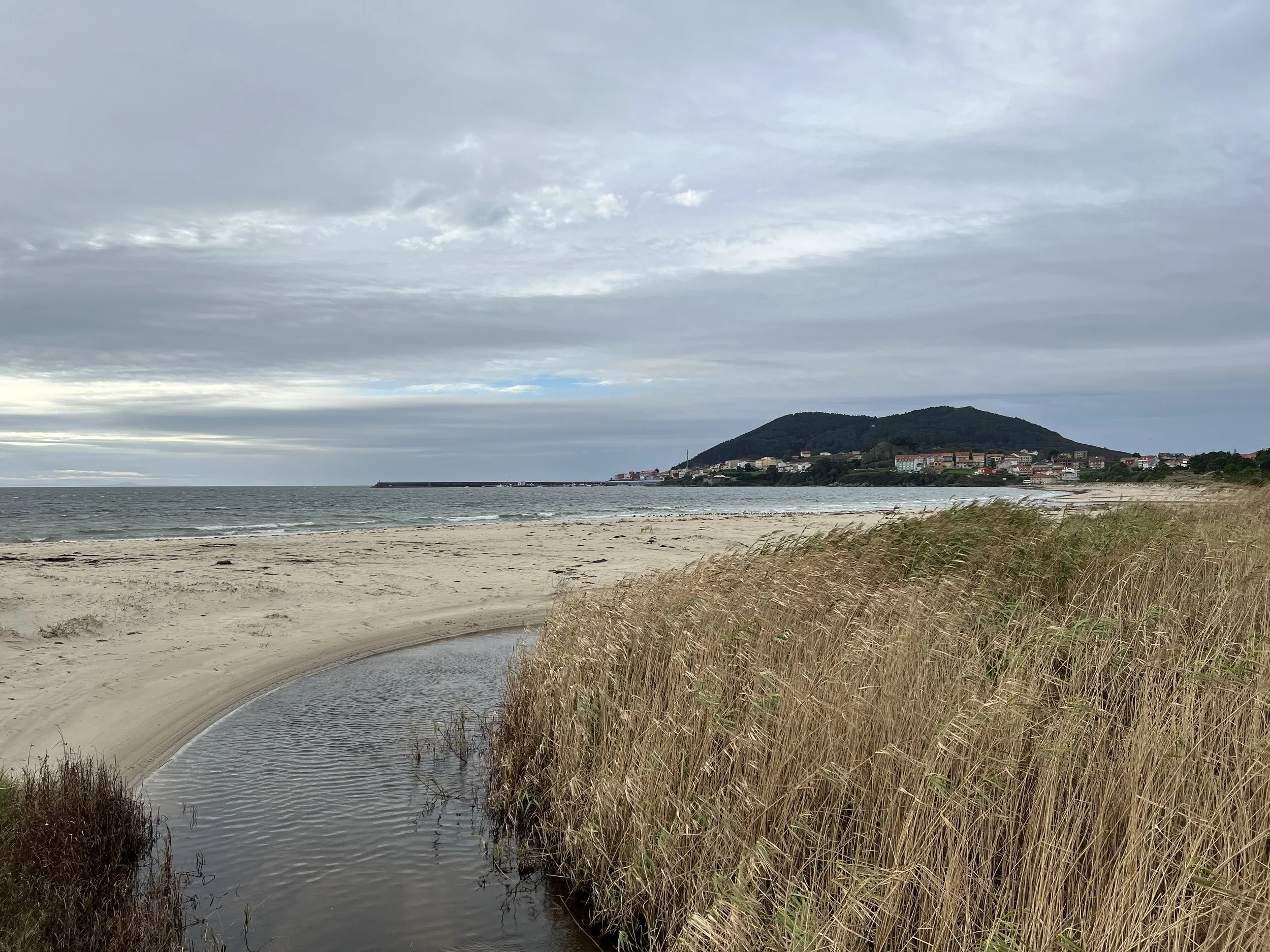
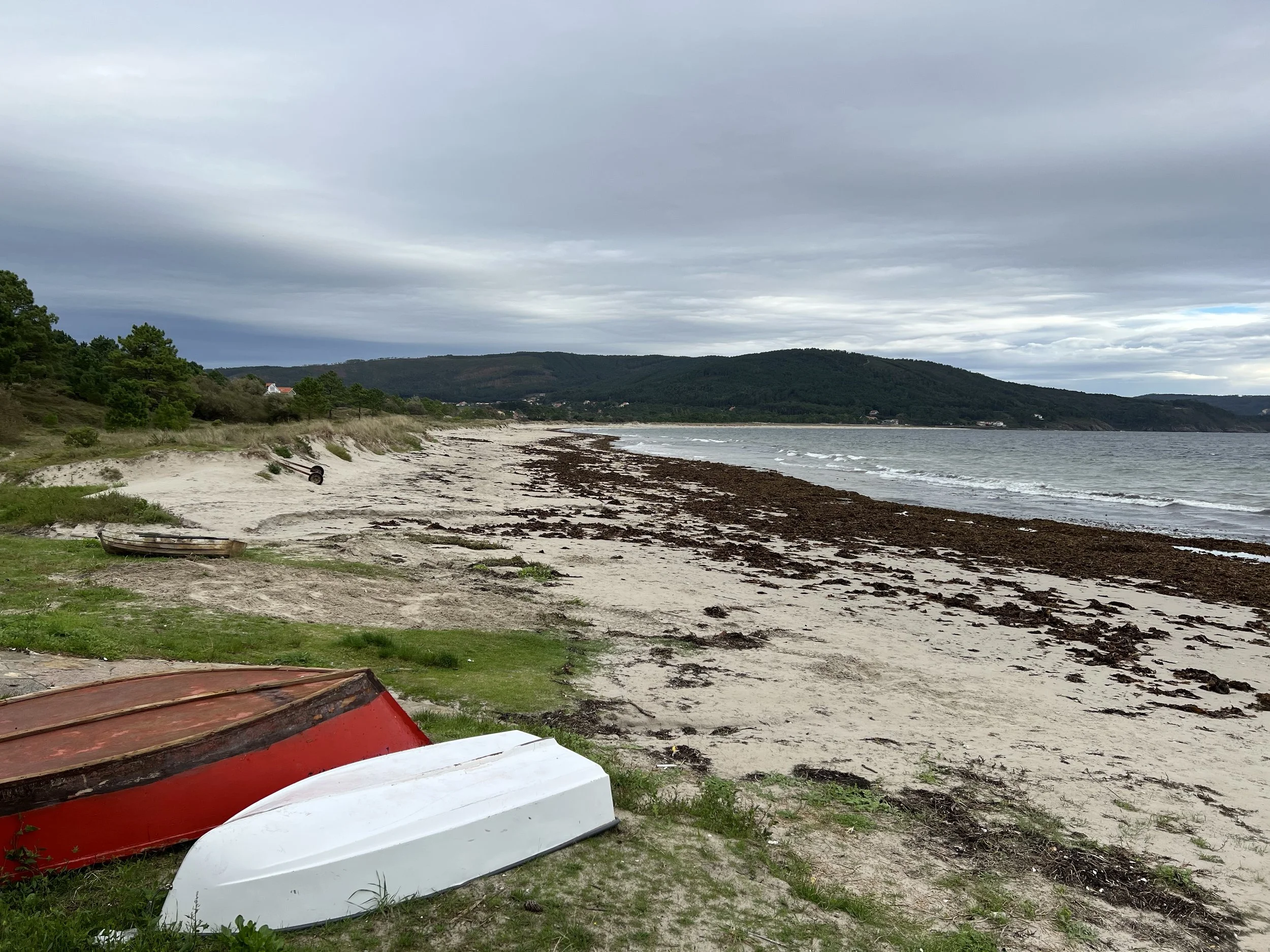
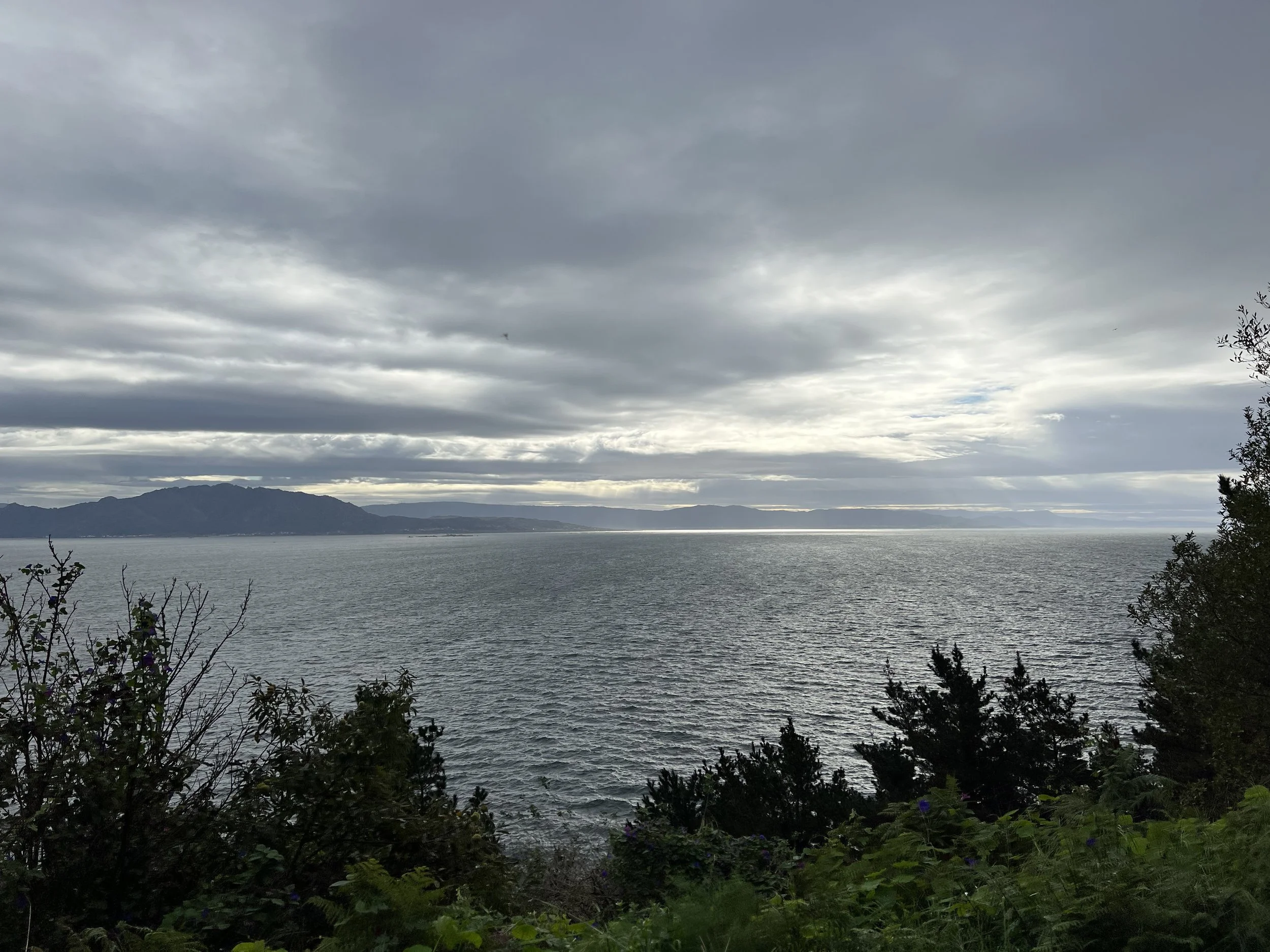
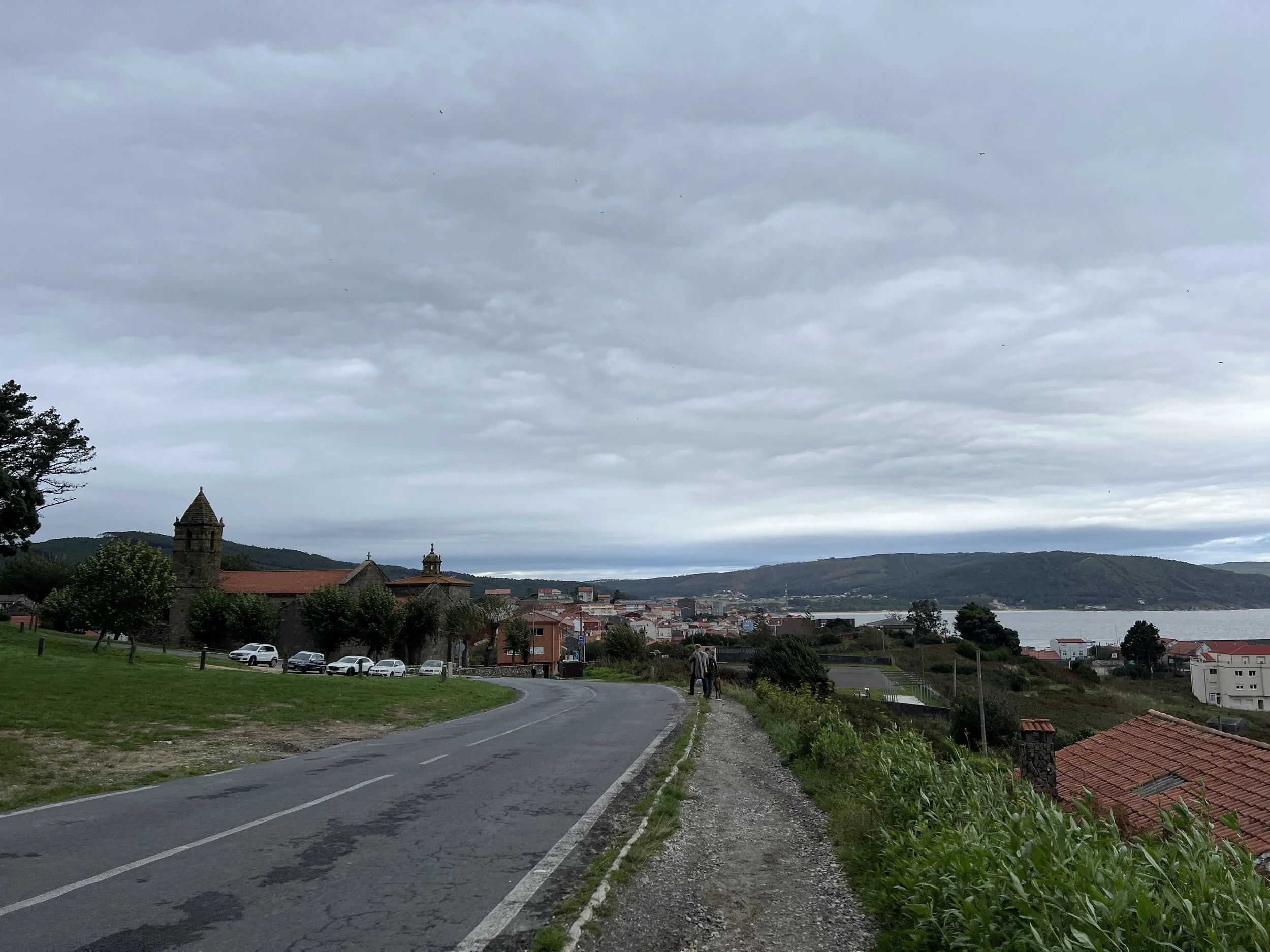
We decided to start later than usual since we had less than 16 kilometres left to walk. It was raining when we left Cee, but soon the skies turned grey and calm, with only a light drizzle now and then. Most of today’s route followed gentle downhills and coastal paths, leading us ever closer to the sea.
When we reached Finisterre, we stopped by the Tourist Information Centre to receive our Finisterrana certificate. The staff checked our pilgrim credentials, added the final stamps, and handed us the certificate—a small but meaningful symbol of completion. Holding it in my hands, I felt the same quiet satisfaction I’d experienced in Santiago, yet this time it carried a different weight—something more personal, more introspective. Even though the true “end” lay a few kilometres farther, it already felt like a farewell.
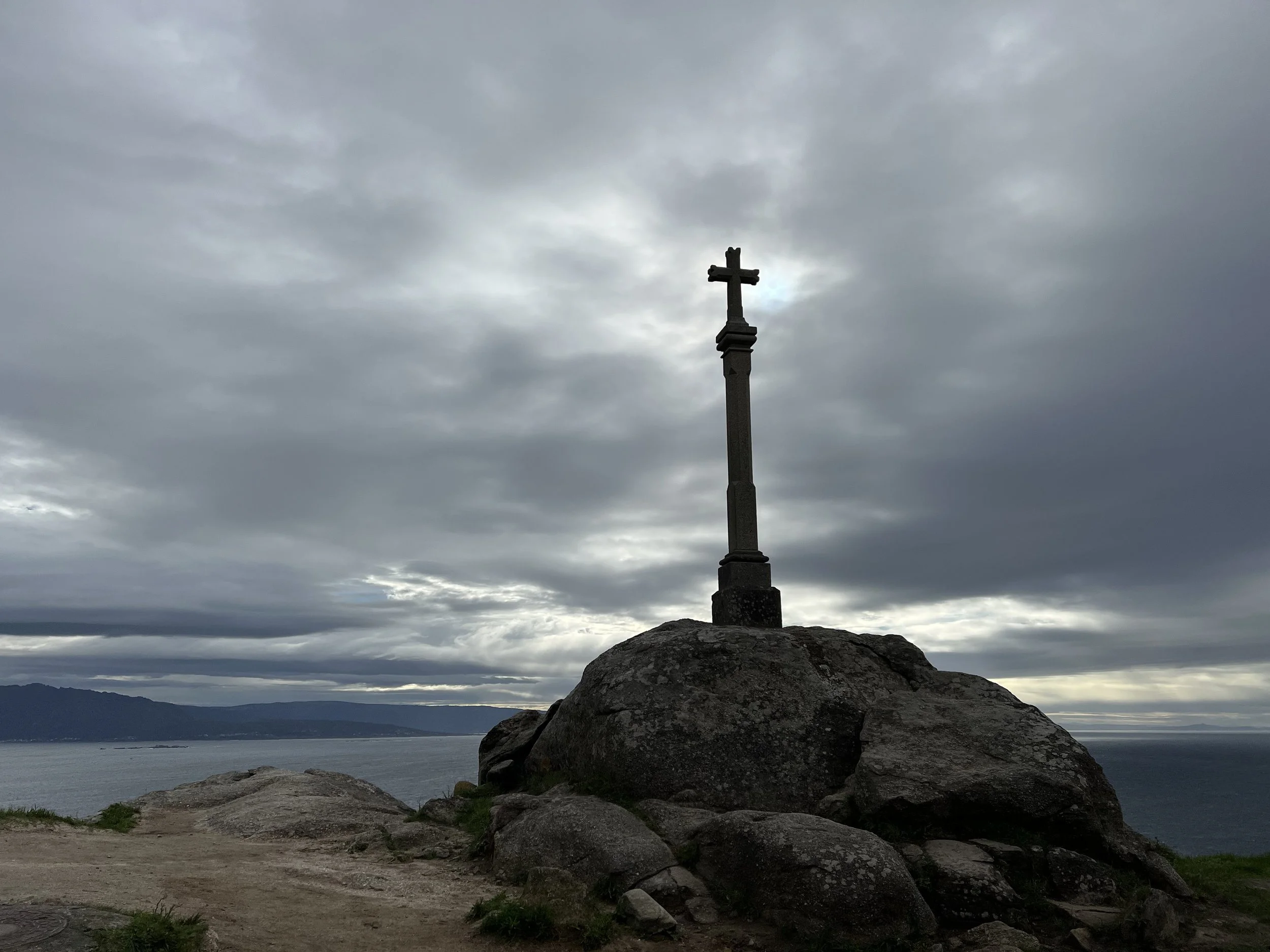
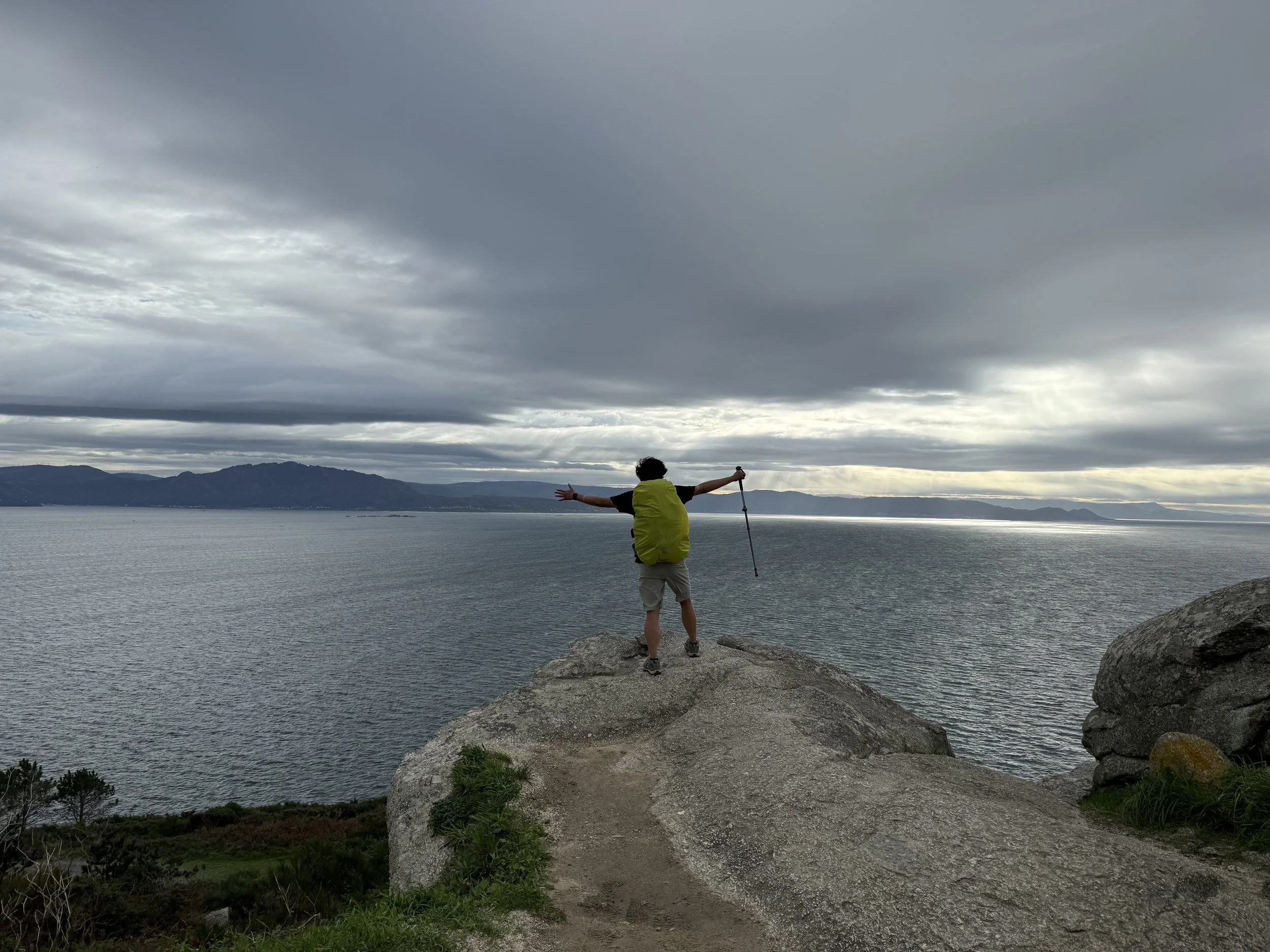
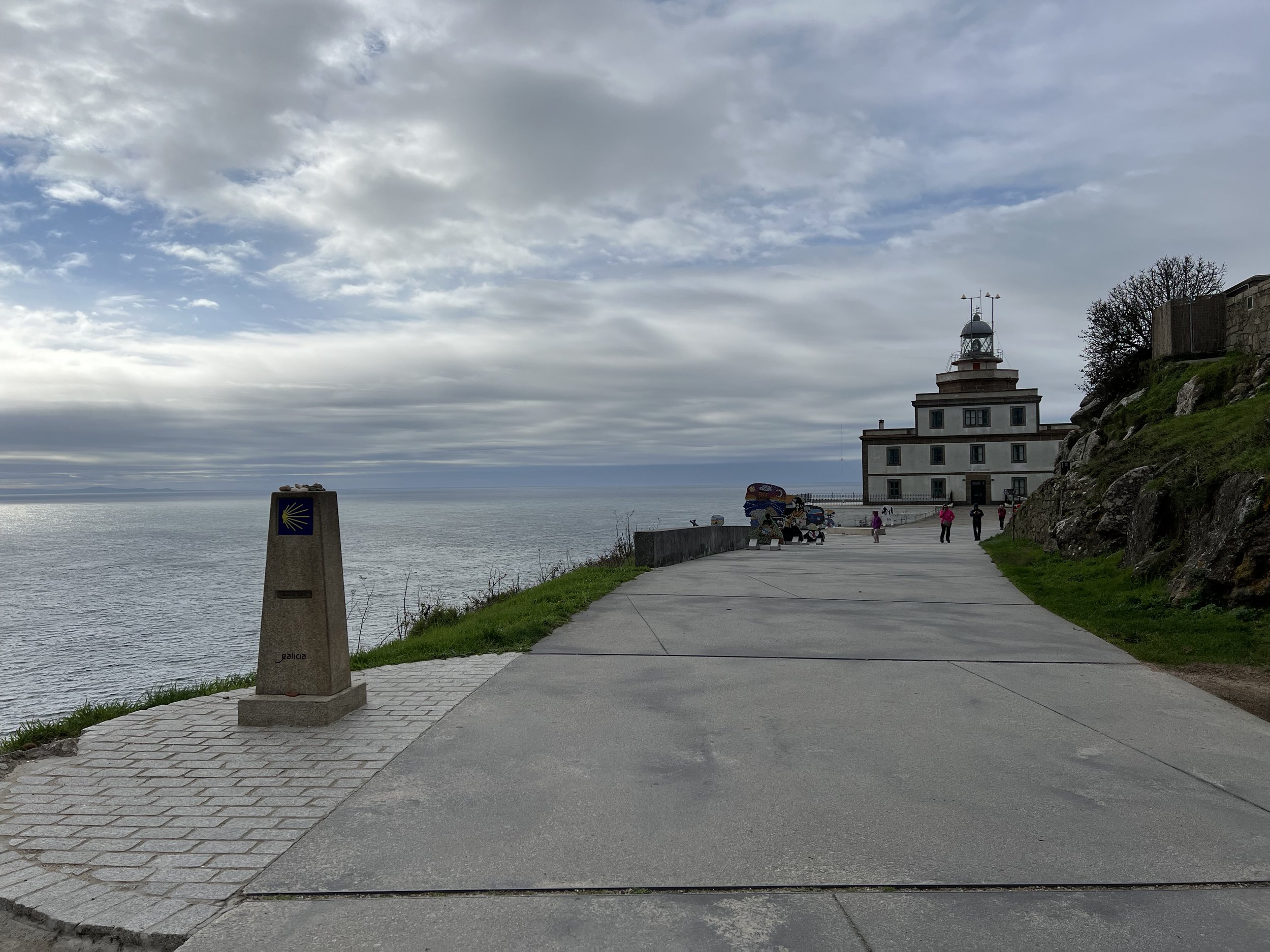
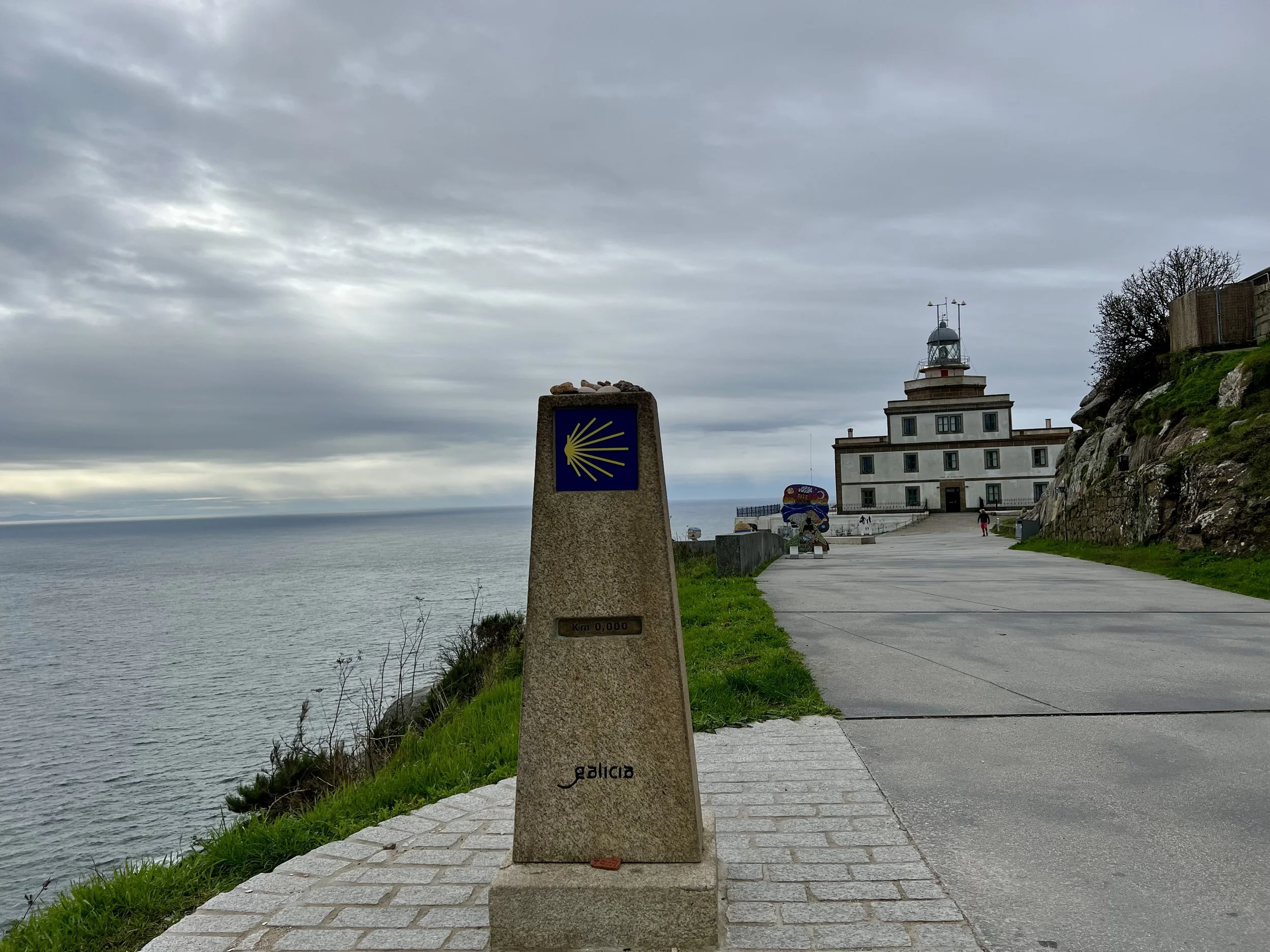
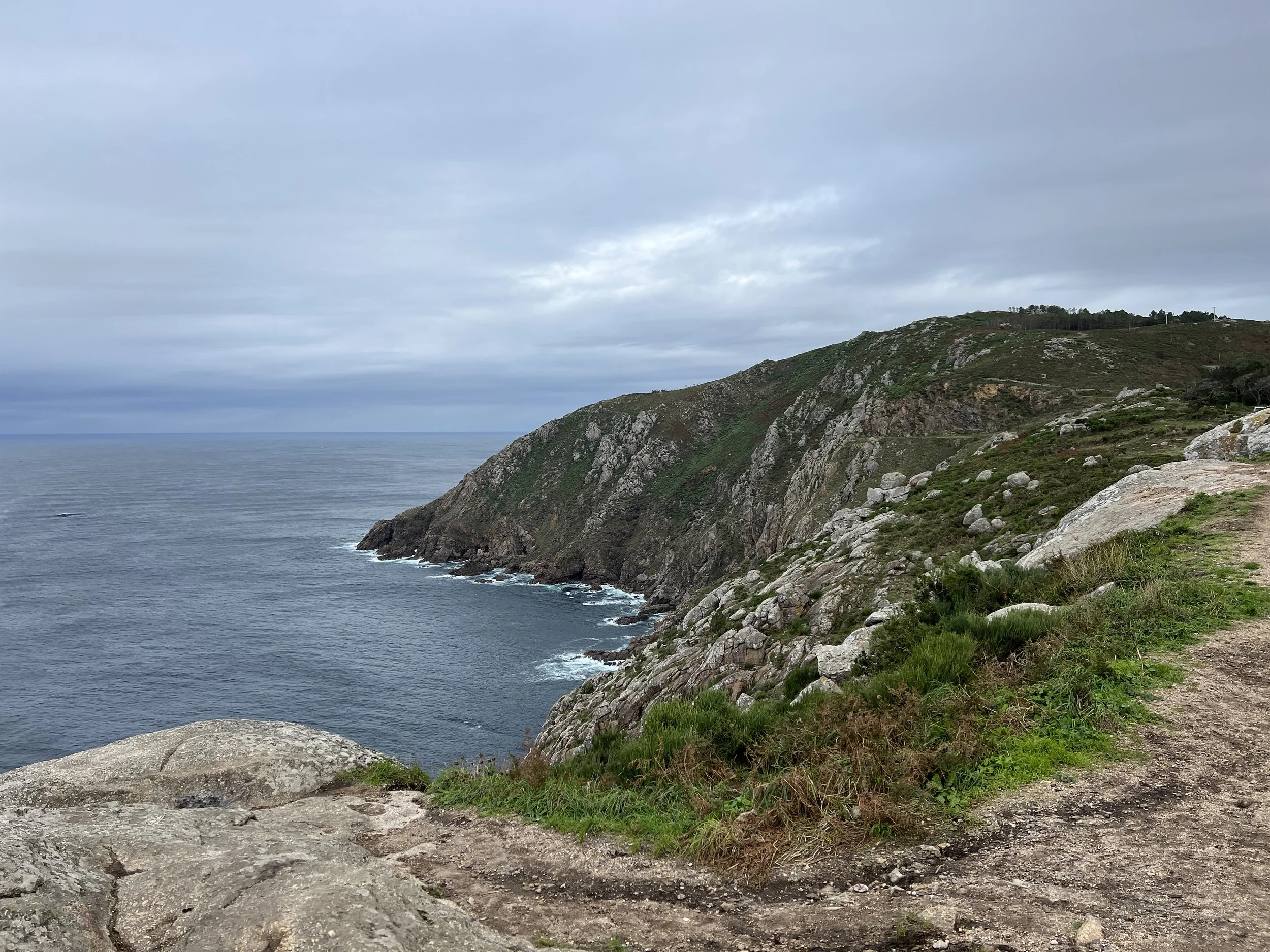
After carefully tucking the certificate away, we continued along the coastal road toward Cape Finisterre, where the famous Kilometre Zero marker stands beside the lighthouse. I noticed my steps growing slower and heavier—perhaps not from fatigue, but because, in my mind, the journey had already ended. The wind picked up as we climbed the final hill, and soon the vast Atlantic opened before us—wild, blue, and endless.
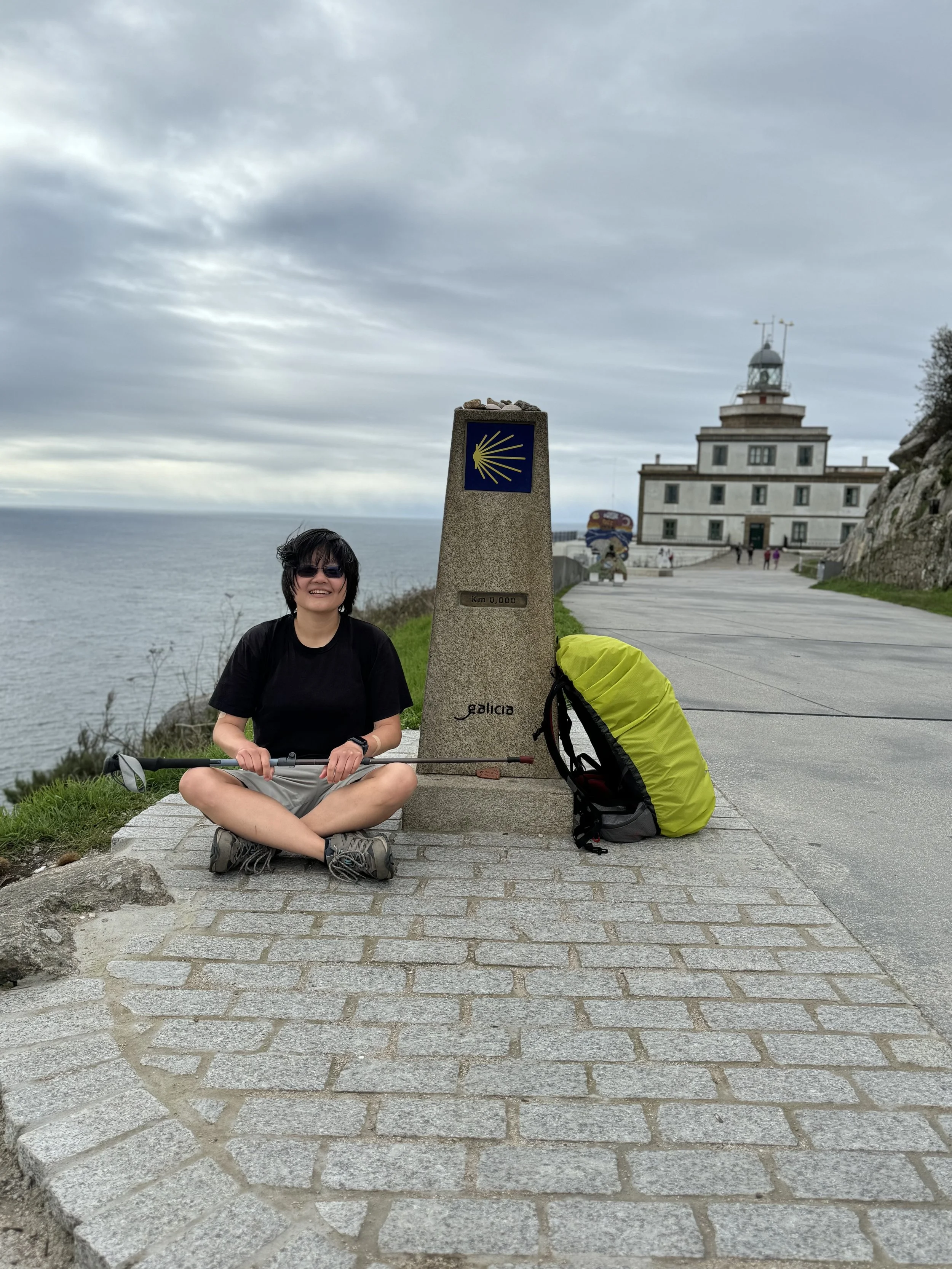
Reaching the Kilometre Zero marker was pure joy. I hugged it, laughed, and took countless photos with my companions. The lighthouse perched above the cliffs felt like a fitting end—a meeting of land, sky, and sea. After a moment of quiet reflection, I bought a small magnet as a keepsake and stood for a while watching the waves crash far below.
The walk back to town felt much shorter, perhaps because my heart was lighter. We had a hearty lunch before catching the bus back to Santiago de Compostela, where we planned to stay another night and explore more of the city. Sitting on the bus, I realized it was my first time using transportation in over a month—and it felt strangely unnatural after so many days of walking everywhere.
History & Background
The final stage from Cee to Finisterre marks the culmination of the Camino Finisterre, the only Camino route that begins in Santiago de Compostela and ends at the Atlantic Ocean. For centuries, pilgrims have followed this coastal path westward to Cape Finisterre, believed in medieval times to be the edge of the known world.
The name Finisterre comes from the Latin Finis Terrae, meaning “end of the earth.” In ancient times, the Romans considered this windswept cape the point where the sun disappeared into the ocean—symbolizing both an ending and a new beginning. Pilgrims traditionally walked the final stretch from Cee or Corcubión to the lighthouse, often burning old clothes or boots as a ritual of renewal and release.
Today, the Camino Finisterre continues to hold deep spiritual meaning for modern pilgrims. Reaching the Kilometre Zero marker beside the lighthouse remains a powerful moment—a symbolic closure to the long road that began in Santiago, and a reminder that every ending is also a return to self.
Getting There
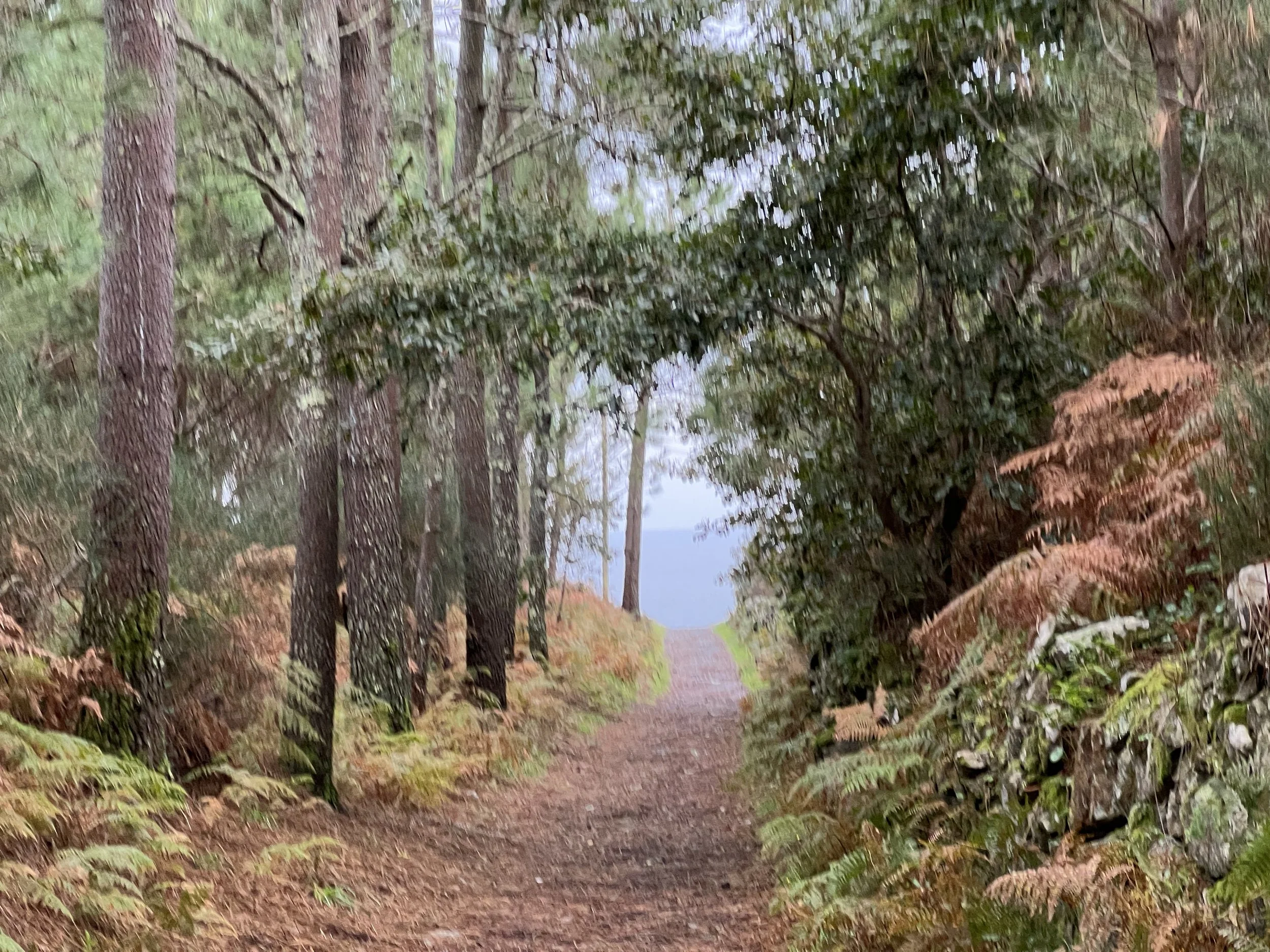
The final stage from Cee to Finisterre spans approximately 15.6 km, following a mix of quiet coastal roads, forest tracks, and seaside paths with gradual ascents and descents. Waymarking is excellent, and services increase closer to Finisterre, with cafés and rest areas in Corcubión, Sardiñeiro, and San Roque. The highlight of the stage is the last 3 km climb to Cape Finisterre, culminating at the iconic Kilometre Zero marker with sweeping views of the Atlantic Ocean.
Walking is the traditional and most rewarding way to complete the Camino, letting pilgrims savour the final coastal scenery and the symbolic “end of the world” experience. For those who need an alternative, regular buses connect Cee and Finisterre, as well as Santiago de Compostela, providing a convenient option to complete the stage without walking the full distance.
Route Overview
Distance: 15.58 km (Albergue “A Casa da Fonte” → Faro de Finisterre)
Total elevation gain: 405 m
Duration: 3 hr 4 min (with breaks 3 hr 28 min)
Difficulty: Intermediate
For the full day-by-day route breakdown, including distances and duration, see my complete Camino Finisterre route guide.
Cost Breakdown
Bus: Monbus Fisterra-Santiago — €7.2
Accommodation: Thostel Albergue (Reserved via Booking.com) — €20
Food: €35.05