Ushiku Daibutsu - Ibaraki, Japan
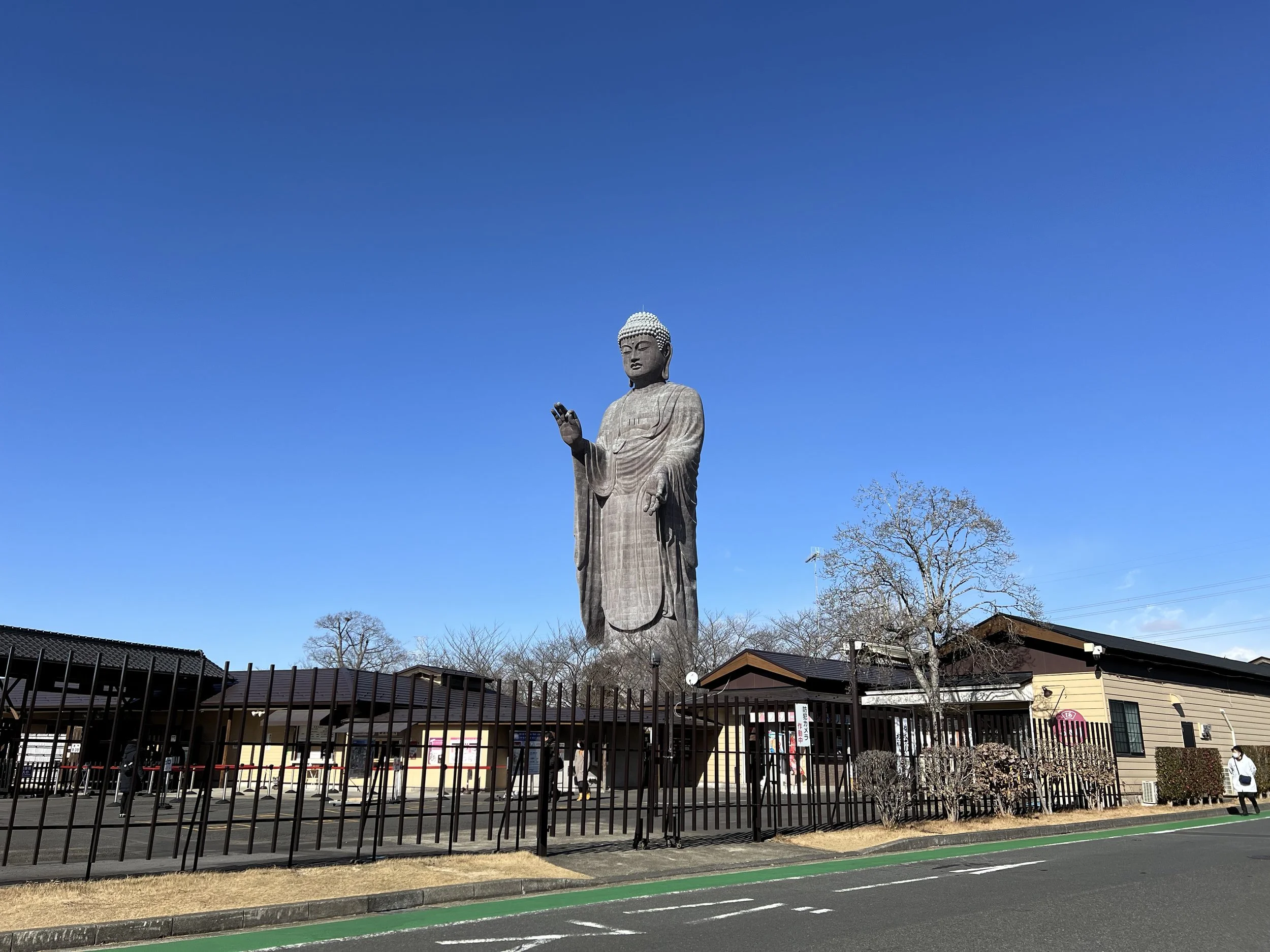
The reason I wanted to visit Ushiku Daibutsu was simple: at 120 metres tall, it’s one of the tallest Buddha statues in the world. Located in Ushiku City in Ibaraki Prefecture, it’s a bit out of the way compared to many major sightseeing spots, but since it was roughly along the route toward my final destination for the day, I decided it was worth making a small detour.
I took the train from Mito Station and transferred to a bus at Tsuchiura Station. The bus dropped me off about a 15-minute walk from the statue. Even from a distance, the giant Buddha was already visible rising above the landscape. As I got closer, the scale of it became more and more impressive.
The first thing that surprised me when I arrived was the enormous parking lot. Apparently during peak seasons, tour buses arrive in large numbers and the site can become extremely busy, sometimes even running out of parking space. Hearing that made me glad I had visited during the off-season, as there were only a handful of visitors walking around the grounds.
After purchasing my ticket, I passed a row of shops selling incense, prayer offerings, and the usual souvenirs. I decided to skip them for the moment and explore the grounds first, planning to check them out later on my way out.
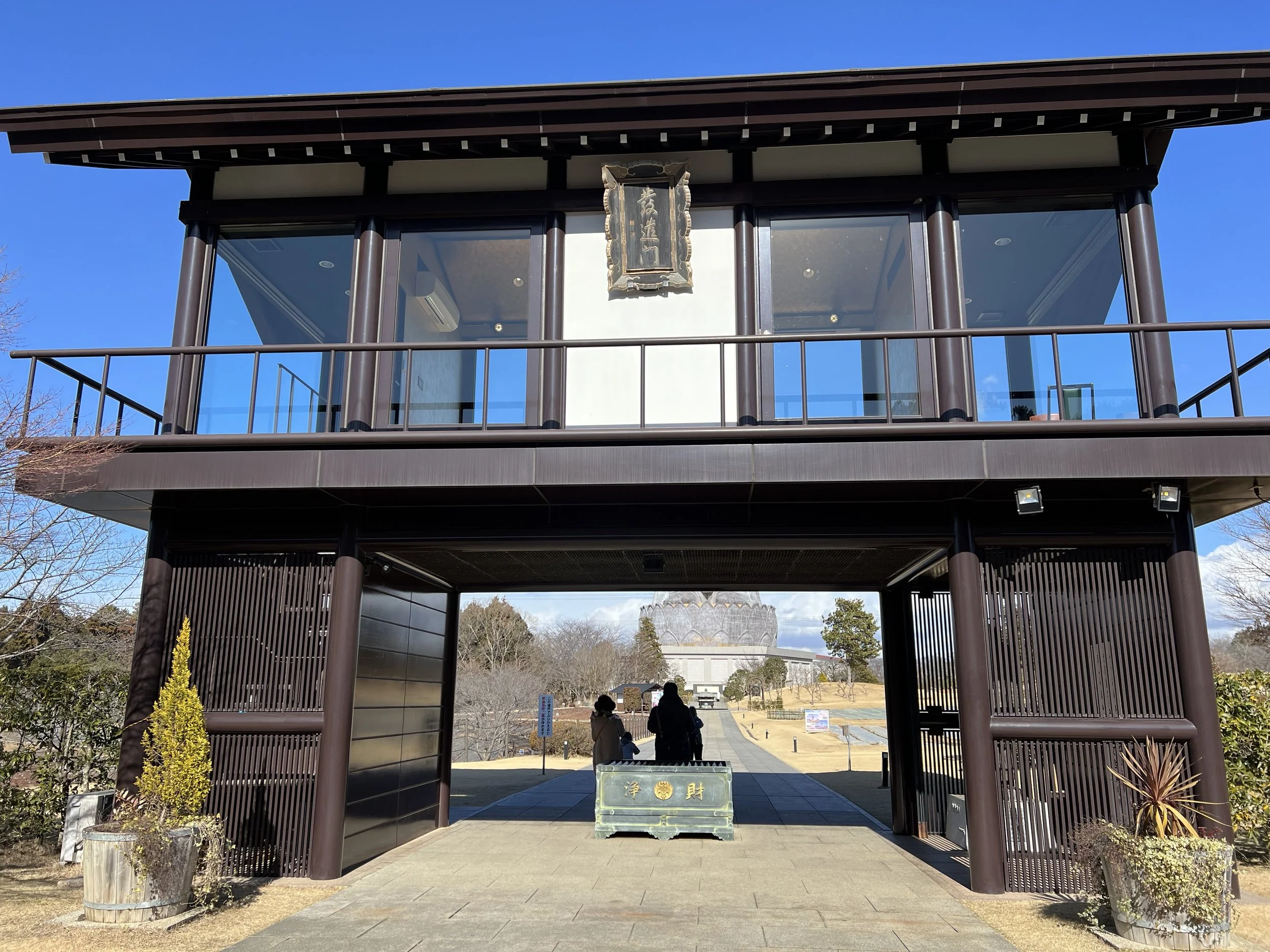
The grounds themselves are quite large, with landscaped paths, ponds, and gardens that gradually lead visitors toward the statue. As I followed the path, I first reached a gate that frames a clear view of the massive Buddha in the distance. The gate itself also features three Buddha images on the second floor, making it a striking entrance point to the temple grounds.
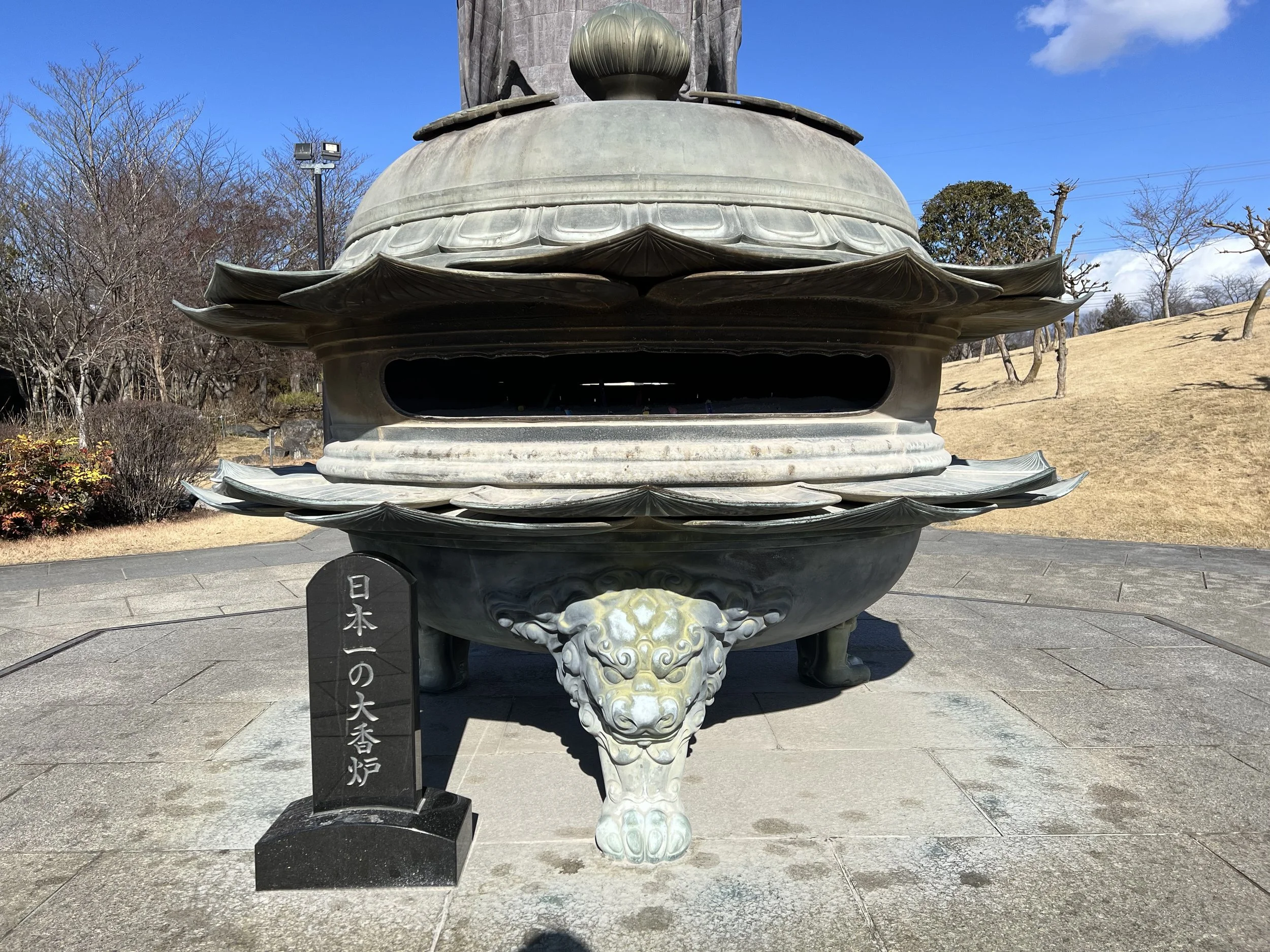
Continuing along the path, I came across what is said to be Japan’s largest incense burner. The scale of it was impressive, and it made sense given the number of visitors who come here to offer incense and pay their respects. Walking around it and continuing toward the statue, I found myself craning my neck just to take in the full height of the Buddha.
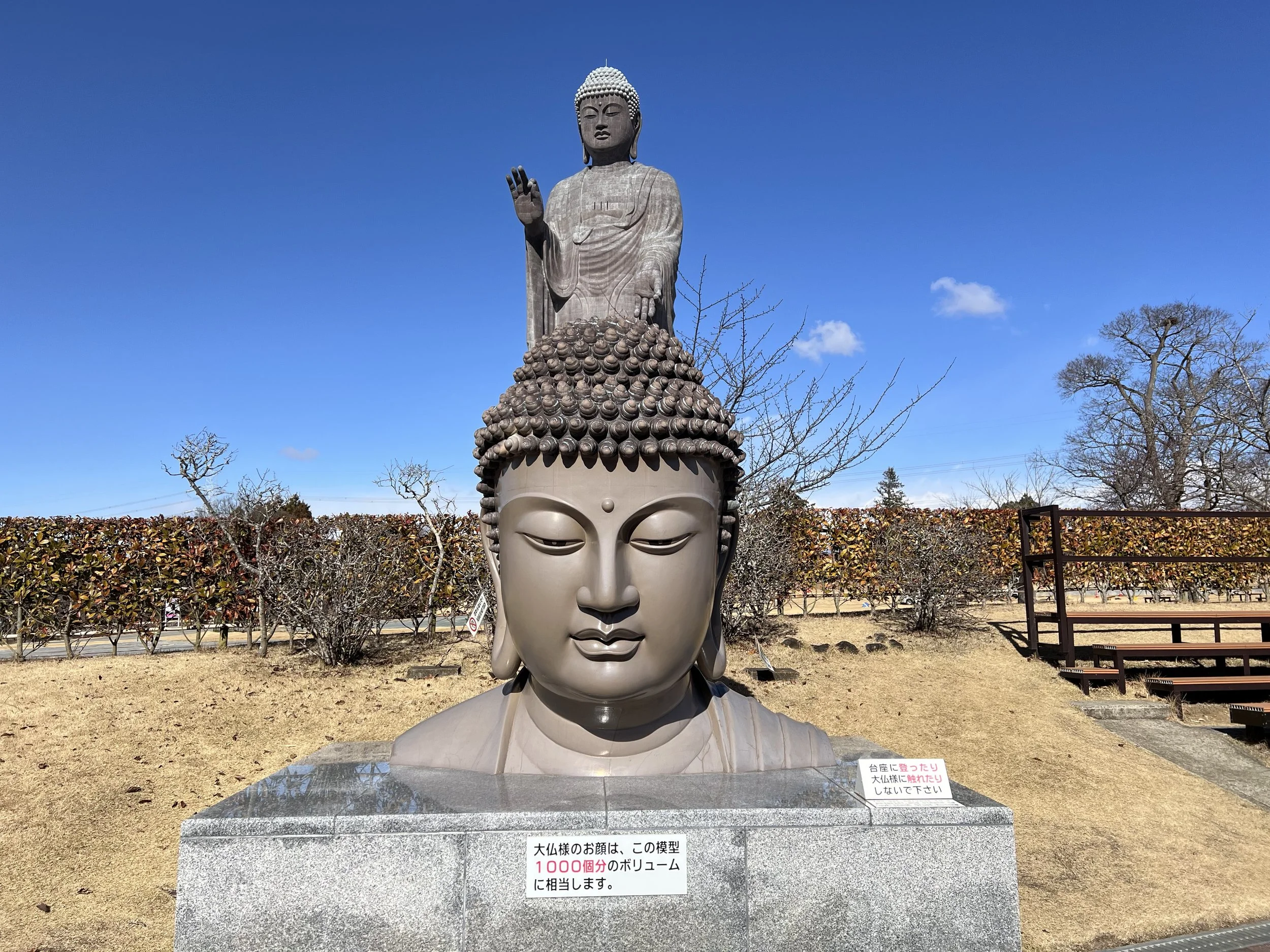
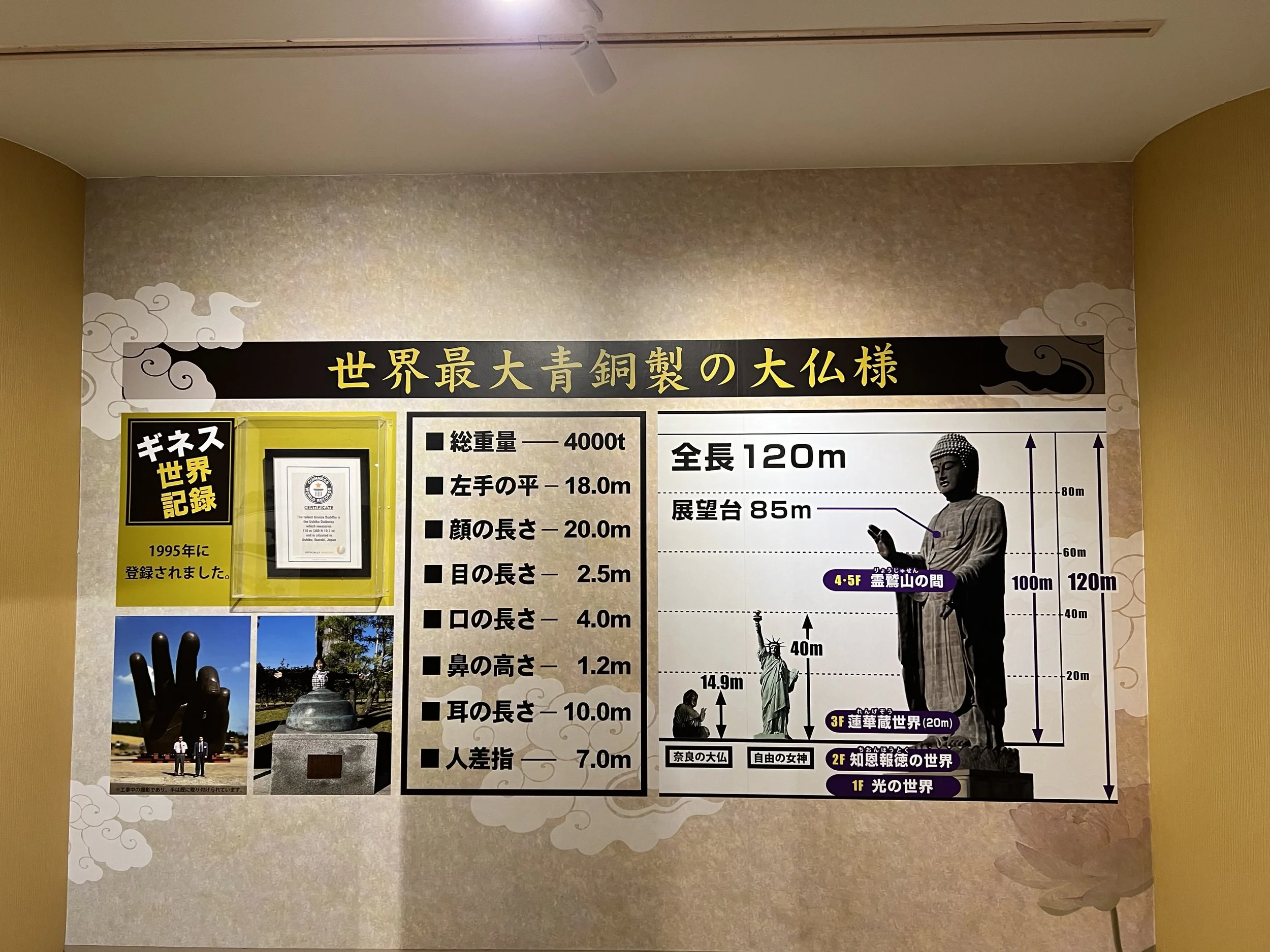
I had read somewhere that the famous Great Buddha at Nara’s Todaiji Temple, which stands about 15 metres tall, could fit into the palm of Ushiku Daibutsu. Seeing the statue in person made that comparison feel very believable. The sheer scale of it is difficult to comprehend until you’re standing right beneath it.
The entrance to the statue is located at the back, where visitors can enter and explore the interior. Inside, the statue contains five floors, and there is an elevator that takes visitors up to the higher levels.
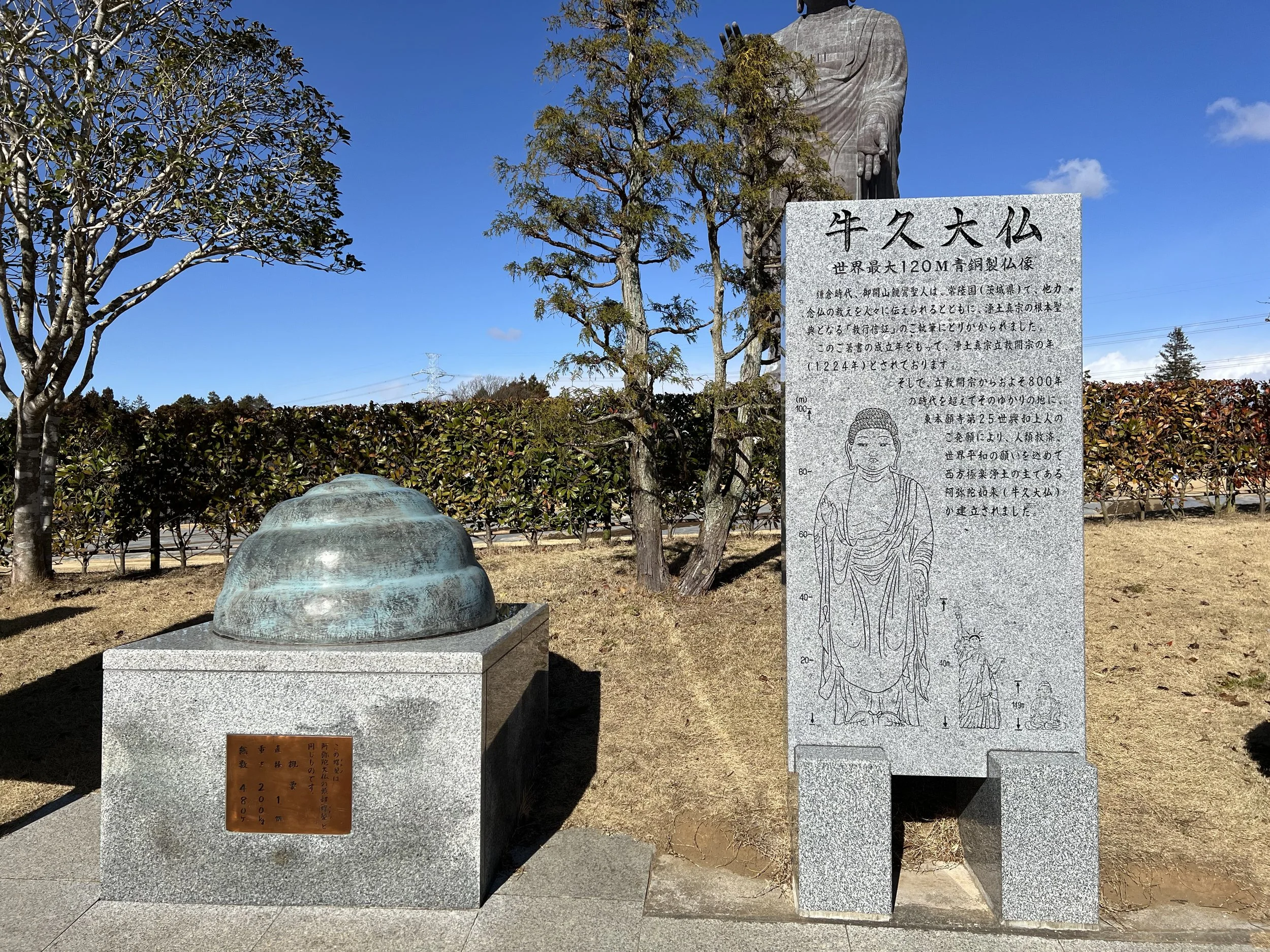
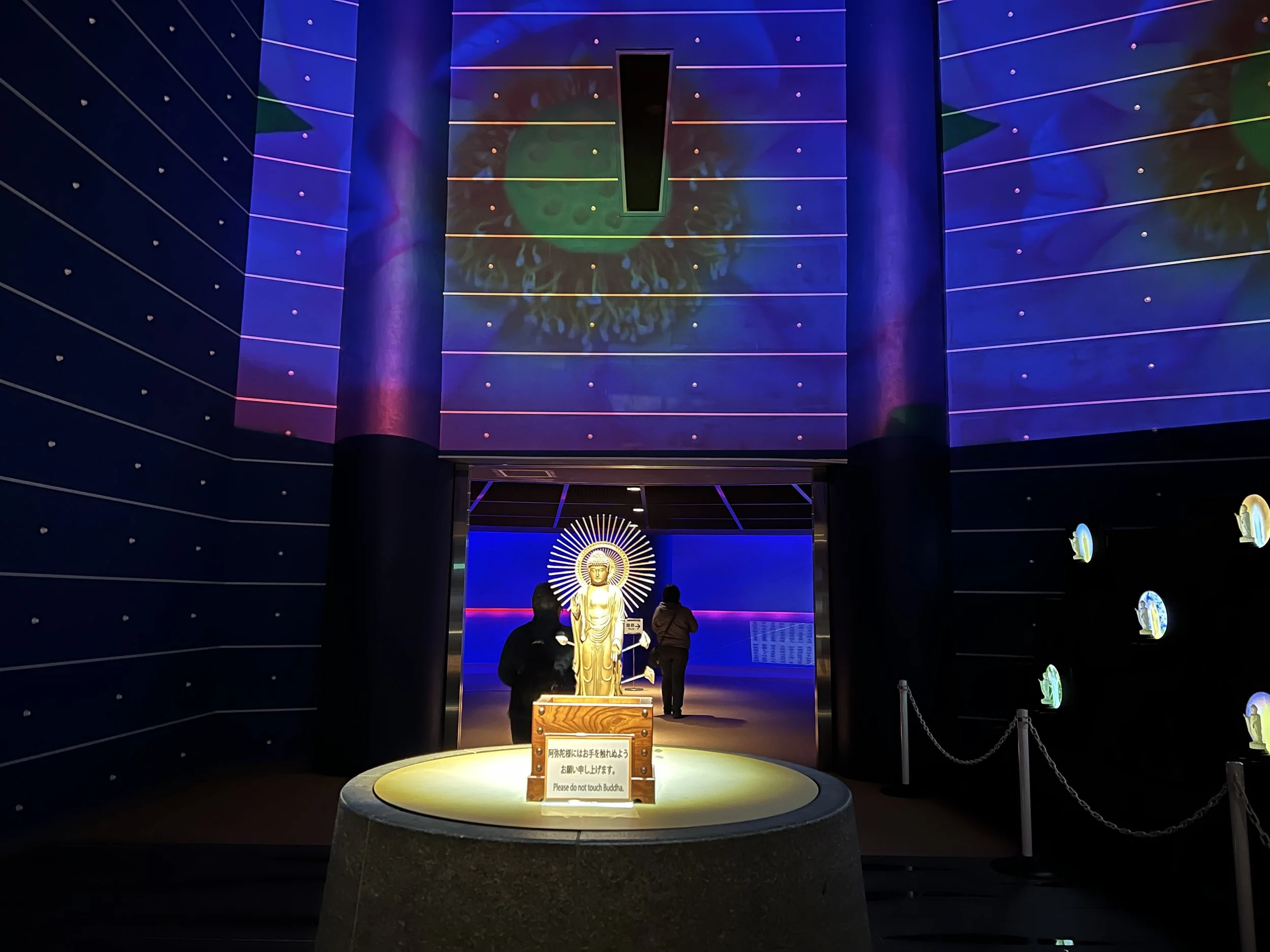
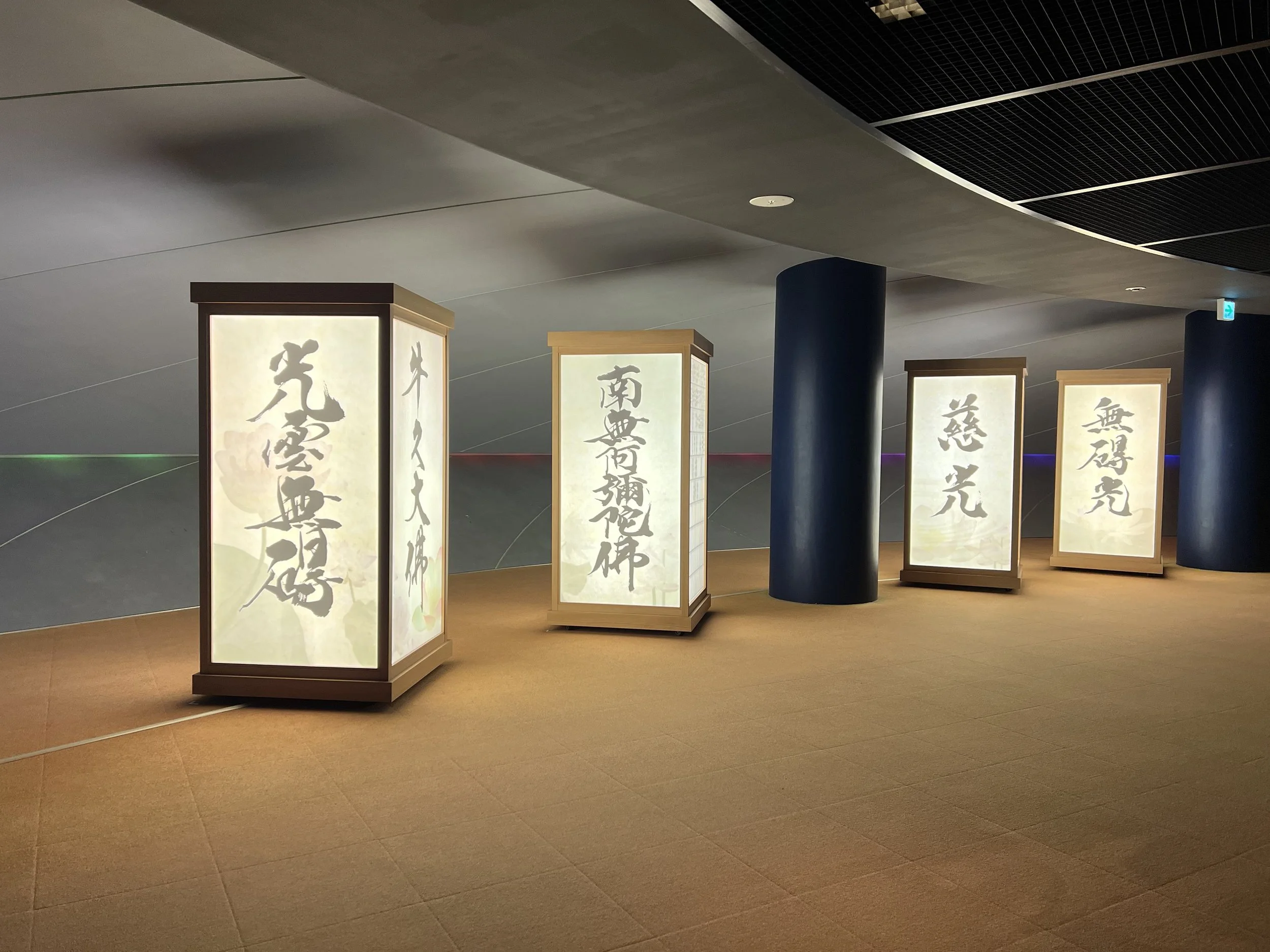
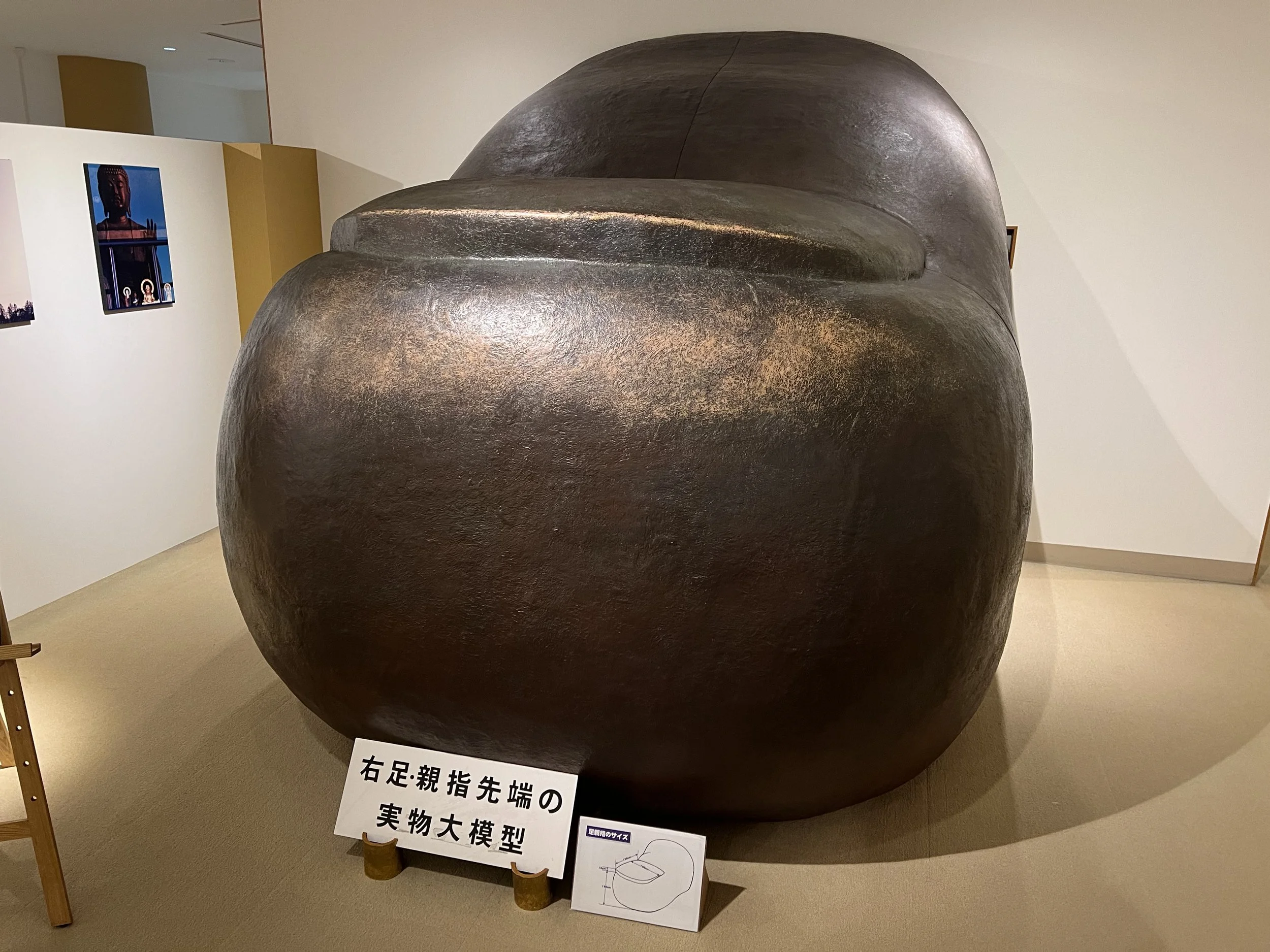
The visit begins on the first floor with a short light show that appears to radiate outward from the Buddha, creating a quiet and contemplative atmosphere. After the show, the path leads through a small museum area displaying information about the statue, including a life-sized model of one of the Buddha’s toes. Seeing the toe replica—about 1.8 metres tall—really helped put the statue’s enormous scale into perspective.
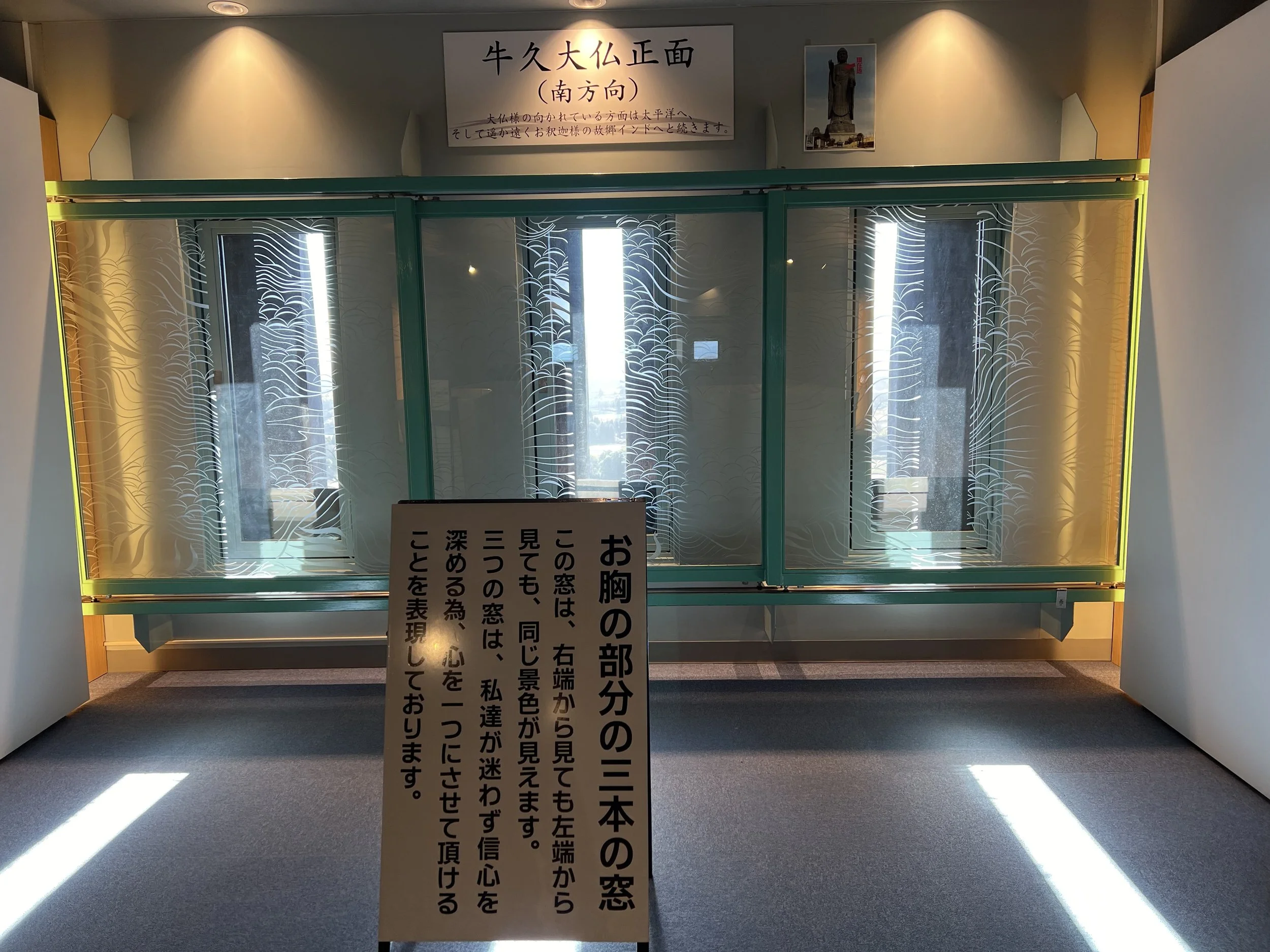
From there, the elevator takes visitors up to the fifth floor at around 85 metres above ground. This level contains a sacred space where relics associated with the Buddha are enshrined. There are also small windows facing the four cardinal directions, offering distant views across the surrounding countryside. Displays along the walls show exactly where you are inside the statue relative to the exterior structure.
After spending some time on the top level, I made my way down the stairs. The fourth floor contains a small shop selling sutras, incense, and prayer beads. Continuing downward, I reached the third floor, which ended up being the most visually striking part of the interior.
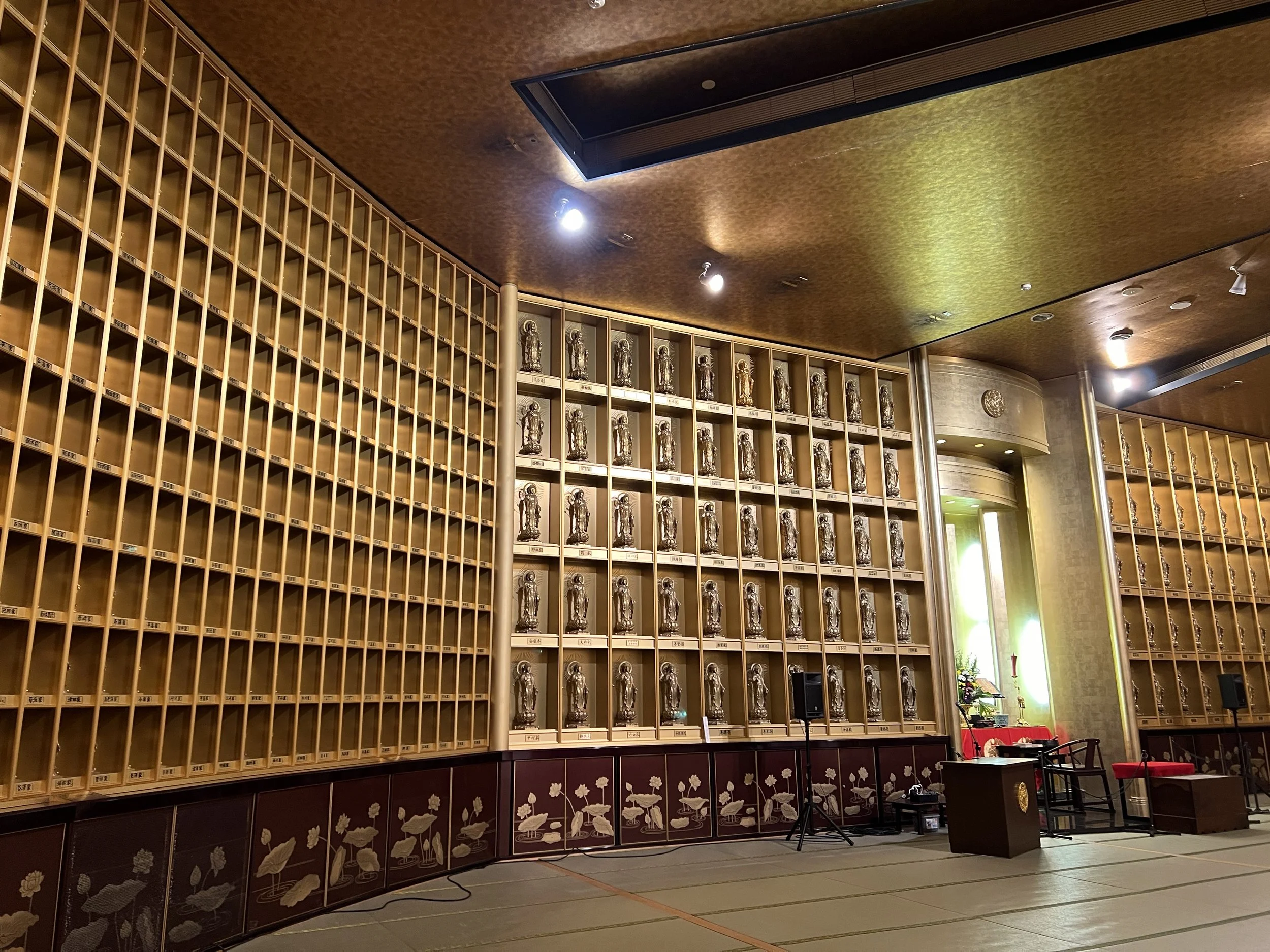
This floor contains a vast golden sanctuary lined with approximately 3,400 small golden Buddha statues. The room glows with warm light reflecting off the statues, and the effect is quite mesmerizing. I ended up sitting on one of the benches for a while just so I wouldn’t have to keep craning my neck to look at all of them.
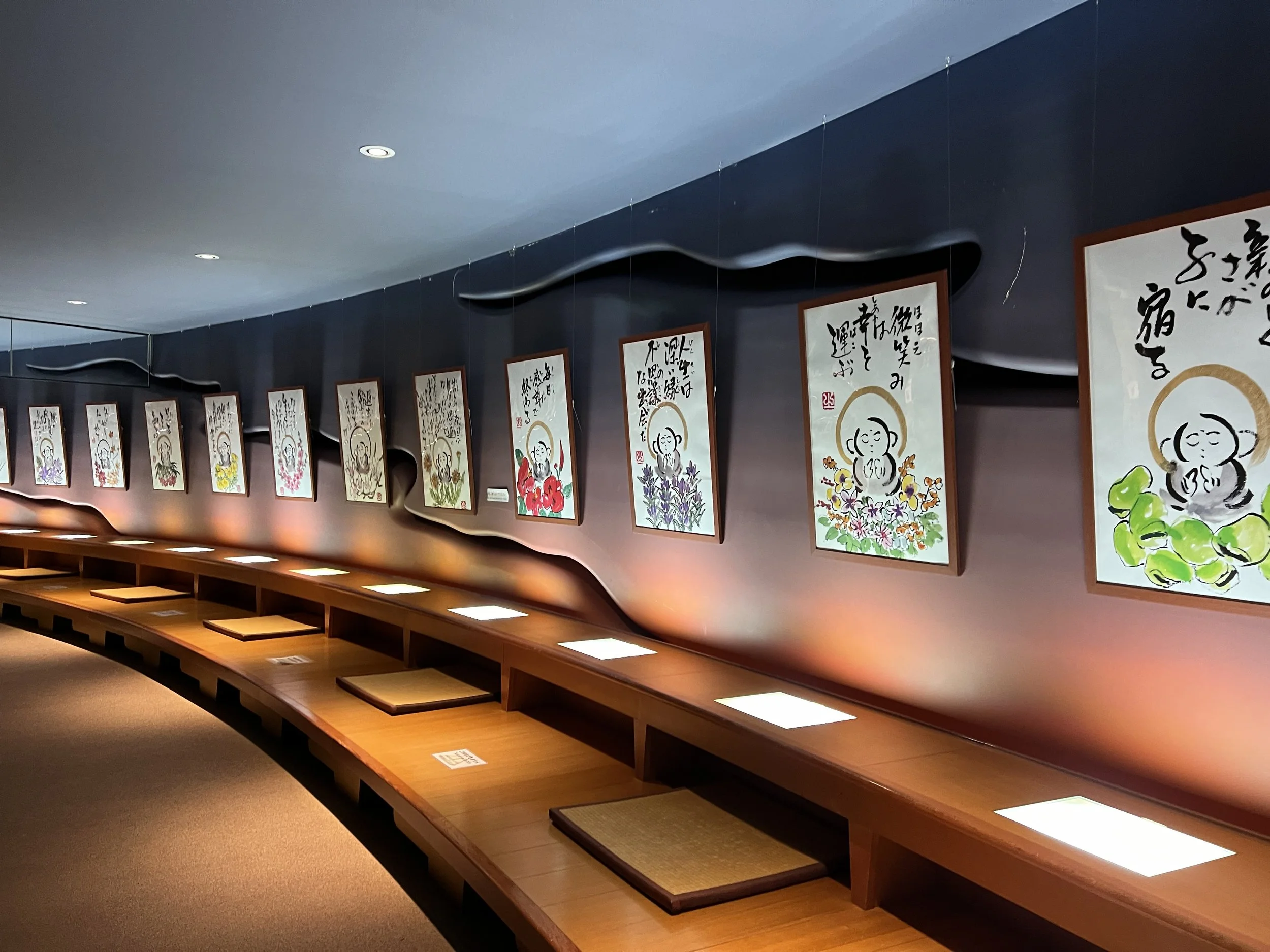
The second floor is a quiet space where visitors can participate in sutra copying, a traditional Buddhist practice of hand-copying sacred texts as a form of meditation. There is a fee if you wish to participate, and the atmosphere inside felt very much like a library—naturally quiet and respectful.
After looking at some of the completed sutras left by previous visitors, I eventually made my way back outside.
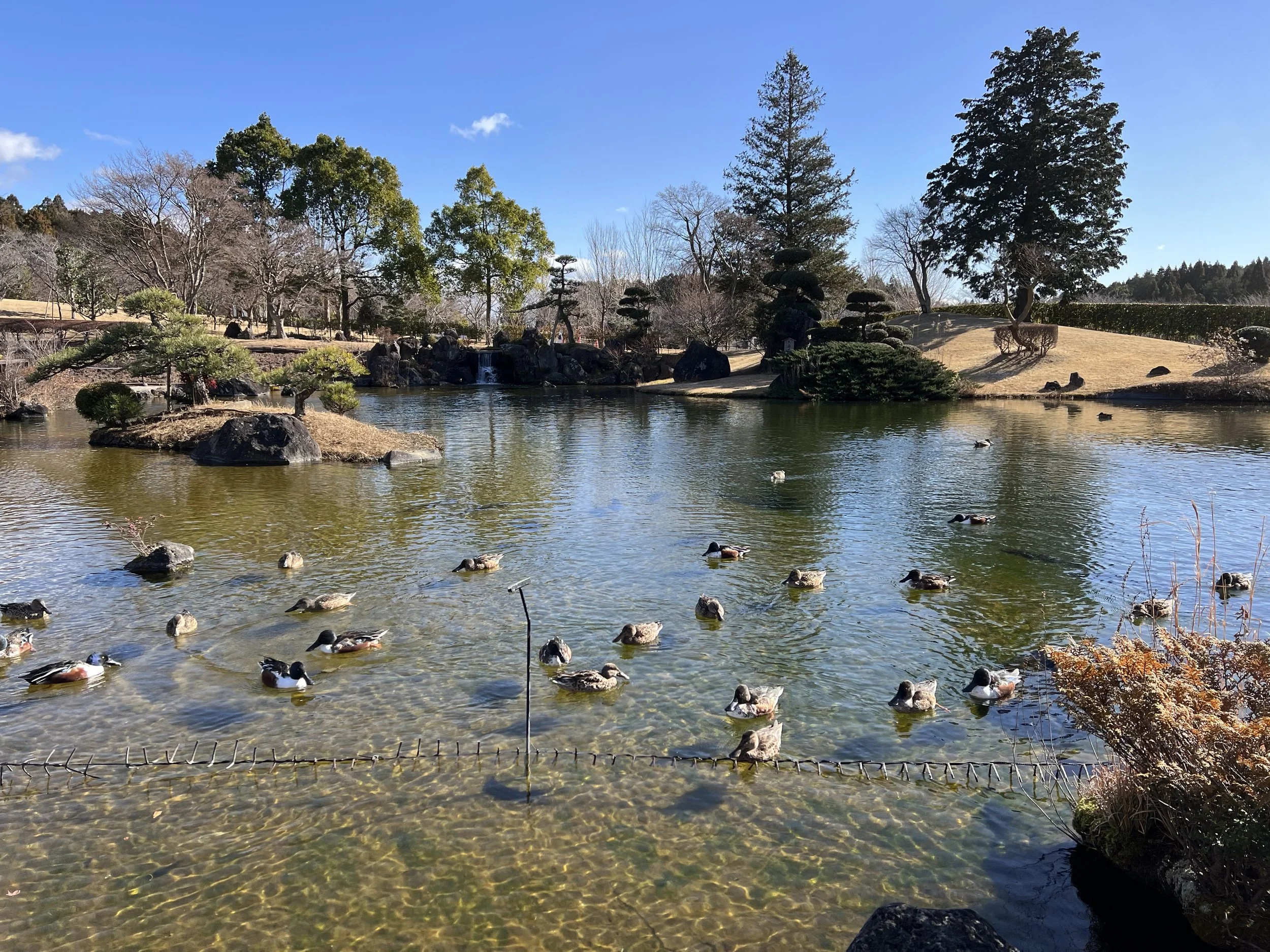
I spent a bit more time walking around the rest of the grounds, circling the pond area and sitting on a bench to enjoy the peaceful setting before heading out. On the way back, I stopped by the souvenir shops near the entrance.
While checking the bus schedule, I realized that my next bus would actually depart from a stop about two kilometres away near the Ami Premium Outlets. After such a calm and spiritual visit inside a giant Buddha statue, it felt a little strange walking toward a large outlet mall to catch my next bus.
History & Background
Ushiku Daibutsu (牛久大仏) is one of the tallest Buddha statues in the world, standing at an impressive 120 metres in height, including its base and lotus platform. The statue represents Amitabha Buddha, known in Japanese Buddhism as Amida Buddha, a central figure in Pure Land Buddhism.
Completed in 1993, the statue was built to commemorate the birth of Shinran, the founder of the Jodo Shinshu sect of Buddhism. The monument serves both as a place of worship and as a cultural landmark attracting visitors from across Japan and abroad.
For scale comparison, the statue’s height far exceeds many famous Buddha statues in Japan. The Great Buddha of Nara stands approximately 15 metres tall, while Ushiku Daibutsu rises to eight times that height.
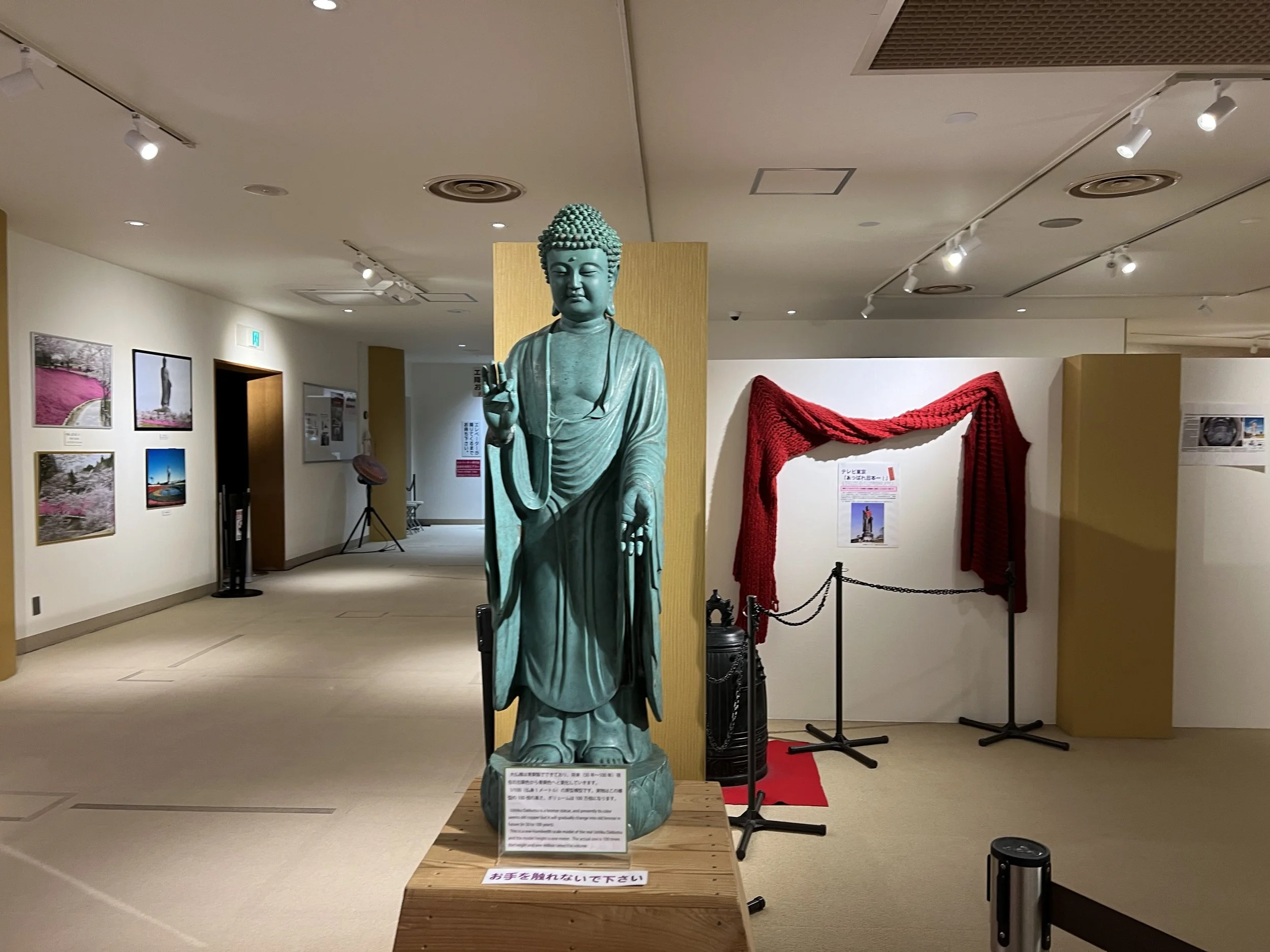
The statue is constructed from bronze panels mounted over a steel frame. Inside, the structure houses multiple floors used for exhibitions, meditation spaces, and religious displays. One of the most notable interior spaces is the golden sanctuary lined with thousands of miniature Buddha statues, symbolizing countless manifestations of the Buddha.
The surrounding temple grounds also include gardens, ponds, and seasonal flower displays, particularly cherry blossoms in spring and cosmos flowers in autumn.
Getting There
The most convenient rail access point for Ushiku Daibutsu is Tsuchiura Station on the JR Joban Line. From Tokyo, travellers can take the JR Joban Line northbound to Tsuchiura.
From Tsuchiura Station, local buses operated by Kanto Railway run toward the Ushiku Daibutsu area. Visitors can take a bus to Canon Mae Bus Stop, which is approximately a 15-minute walk from the entrance to the statue grounds.
Alternatively, travellers can take a bus from Ushiku Station, which also provides access to the statue area.
For those travelling by car, Ushiku Daibutsu is about a 20-minute drive from the Ken-O Expressway’s Ami-Higashi Interchange. Parking is available on-site, and the large parking lot is designed to accommodate tour buses during peak visiting seasons.
Route Overview
Distance: 3.42 km (Canon Mae Bus Stop → Ami Premium Outlets Bus Stop)
Total elevation gain: 34 m
Duration: 40 min (with breaks 50 min)
Difficulty: Easy
Cost Breakdown
Train: Mito Station → Tsuchiura Station — ¥990
Bus: Tsuchiura Statio → Canon Mae Bus Stop — ¥660
Entrance Fee: Ushiku Daibutsu — ¥800