Sakaiminato - Tottori, Japan
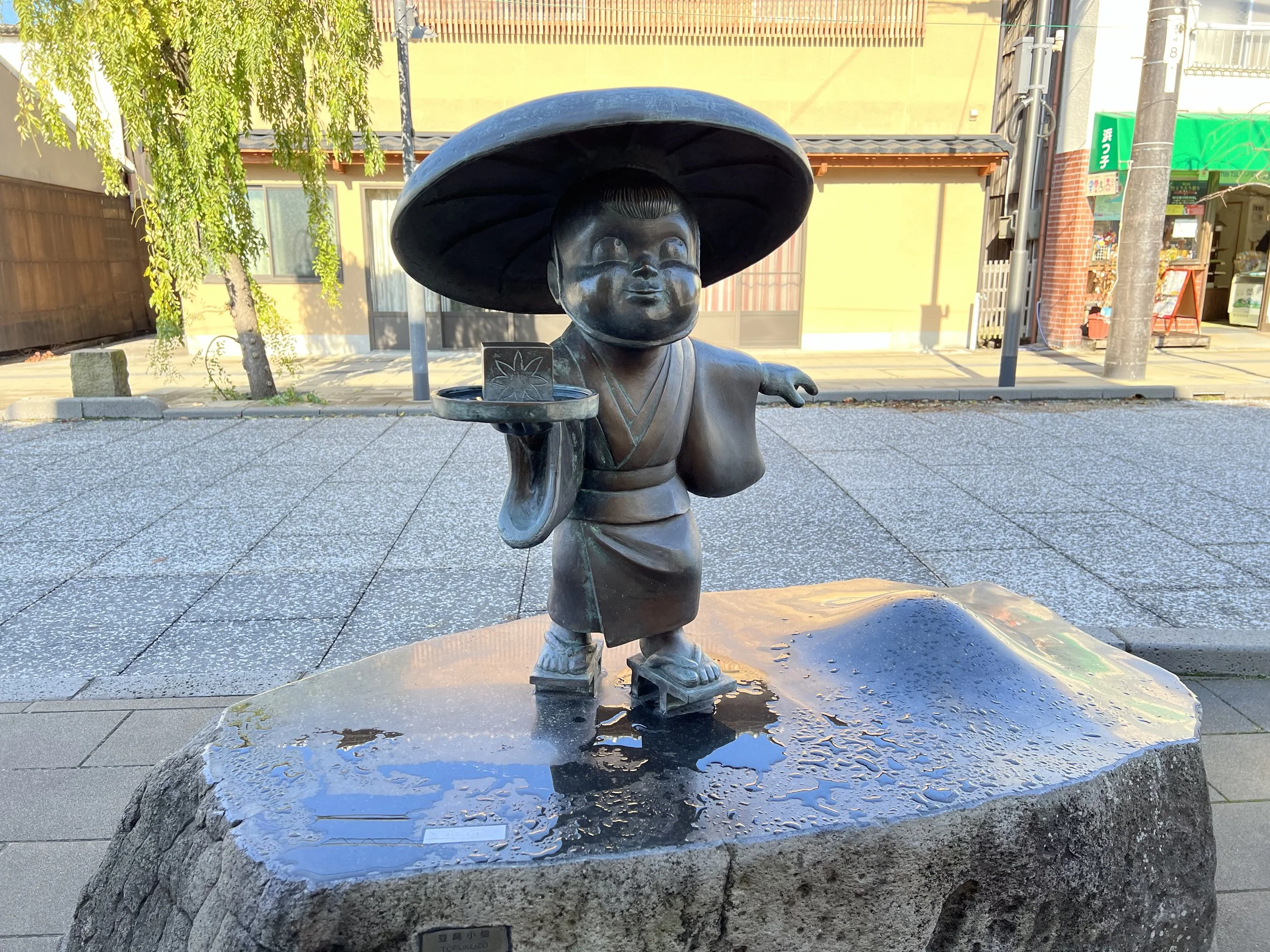
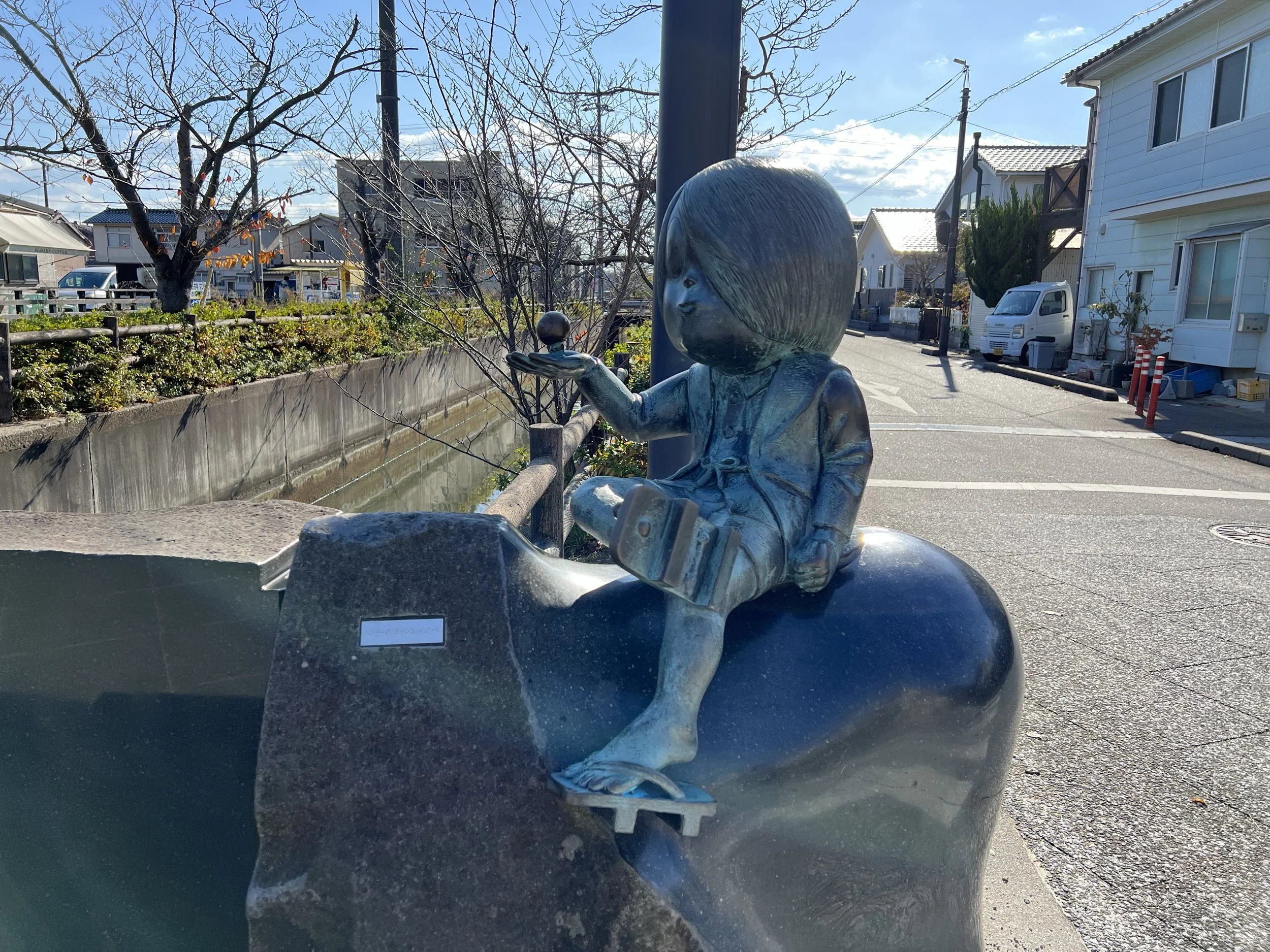
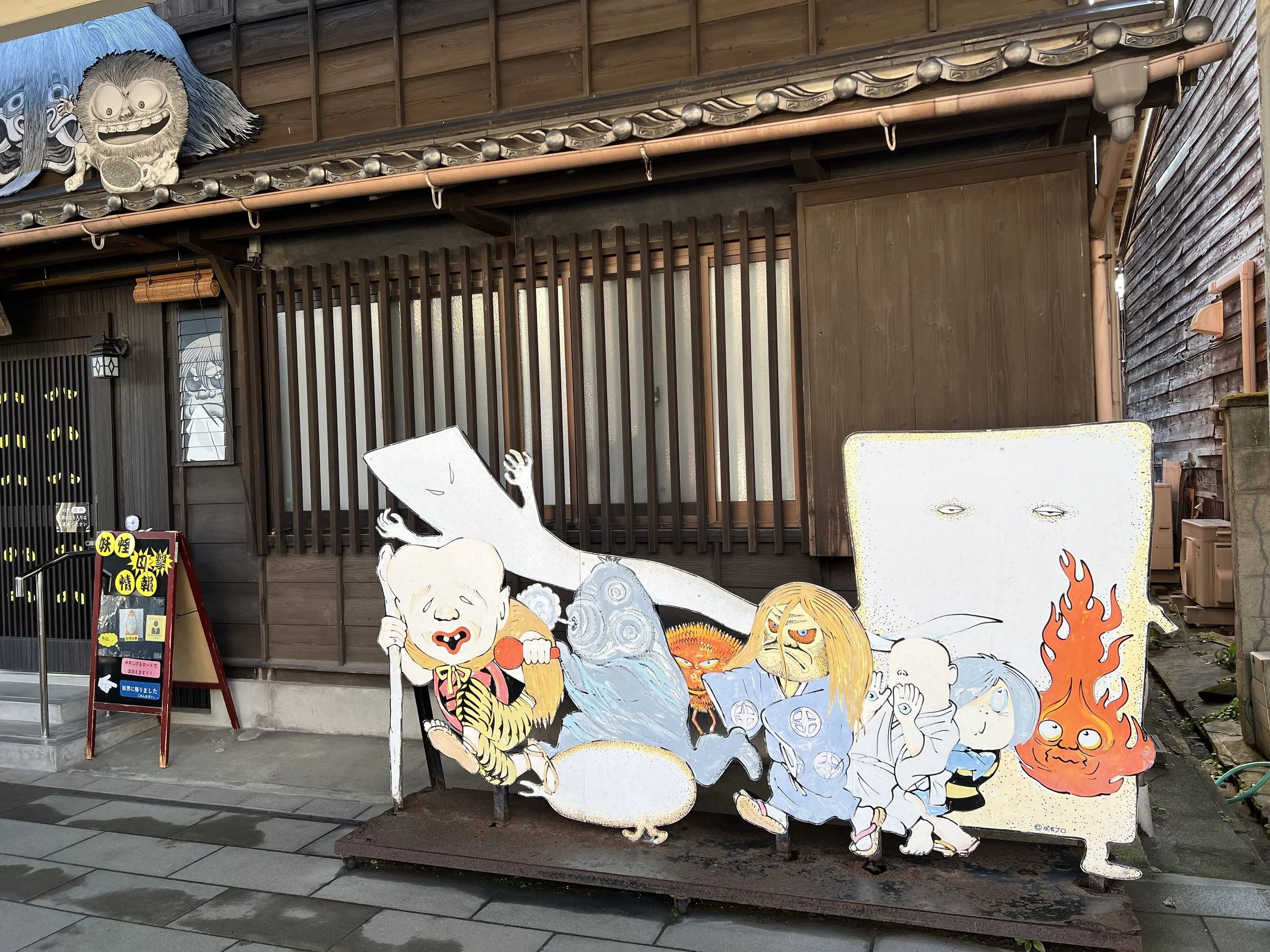
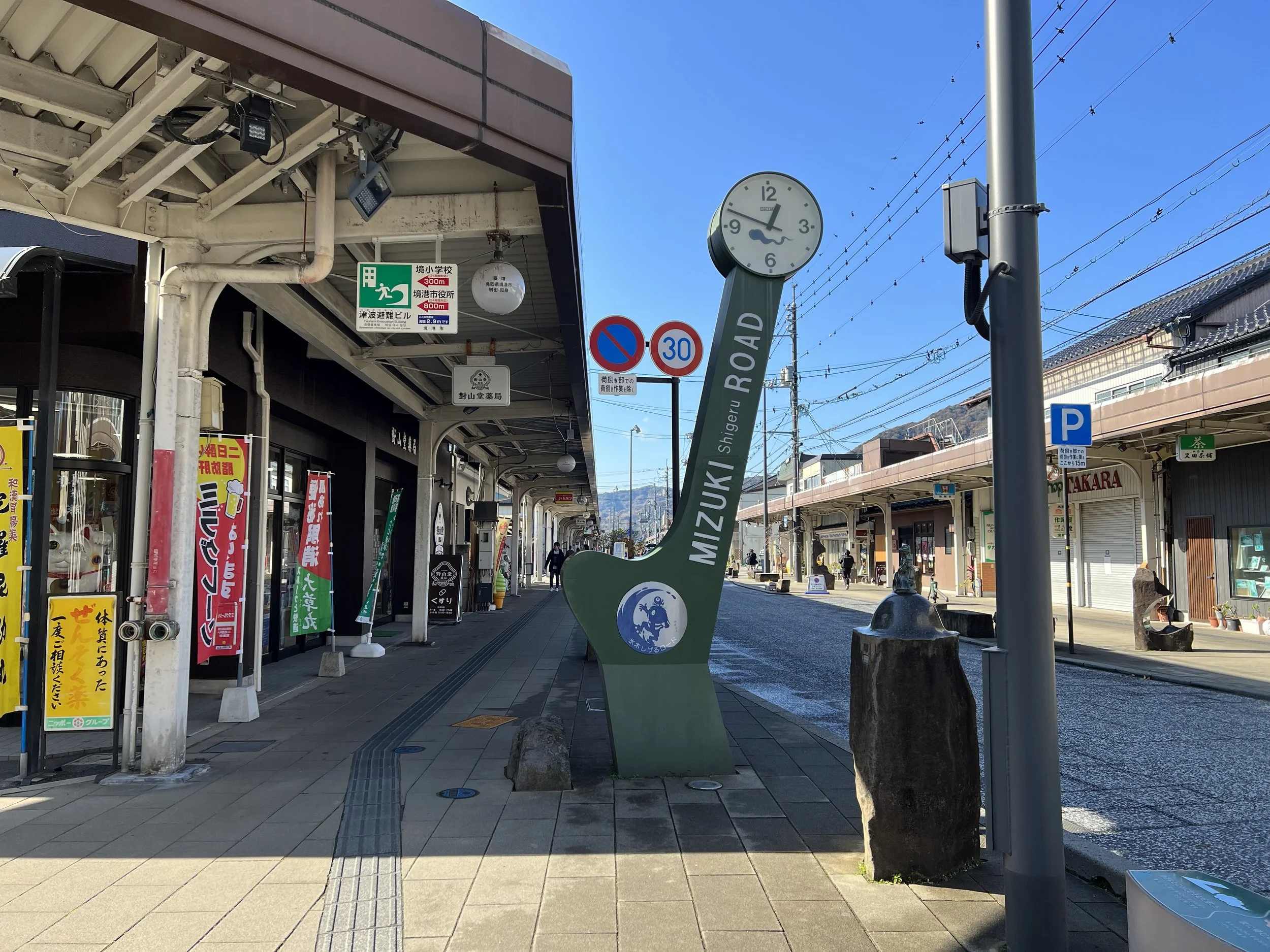
There were two reasons that drew me to Sakaiminato: Mizuki Shigeru Road, a street lined with over 170 bronze statues of yokai (supernatural beings) from the popular manga GeGeGe no Kitaro, and the Eshima Ohashi Bridge, famous for appearing impossibly steep from certain camera angles.
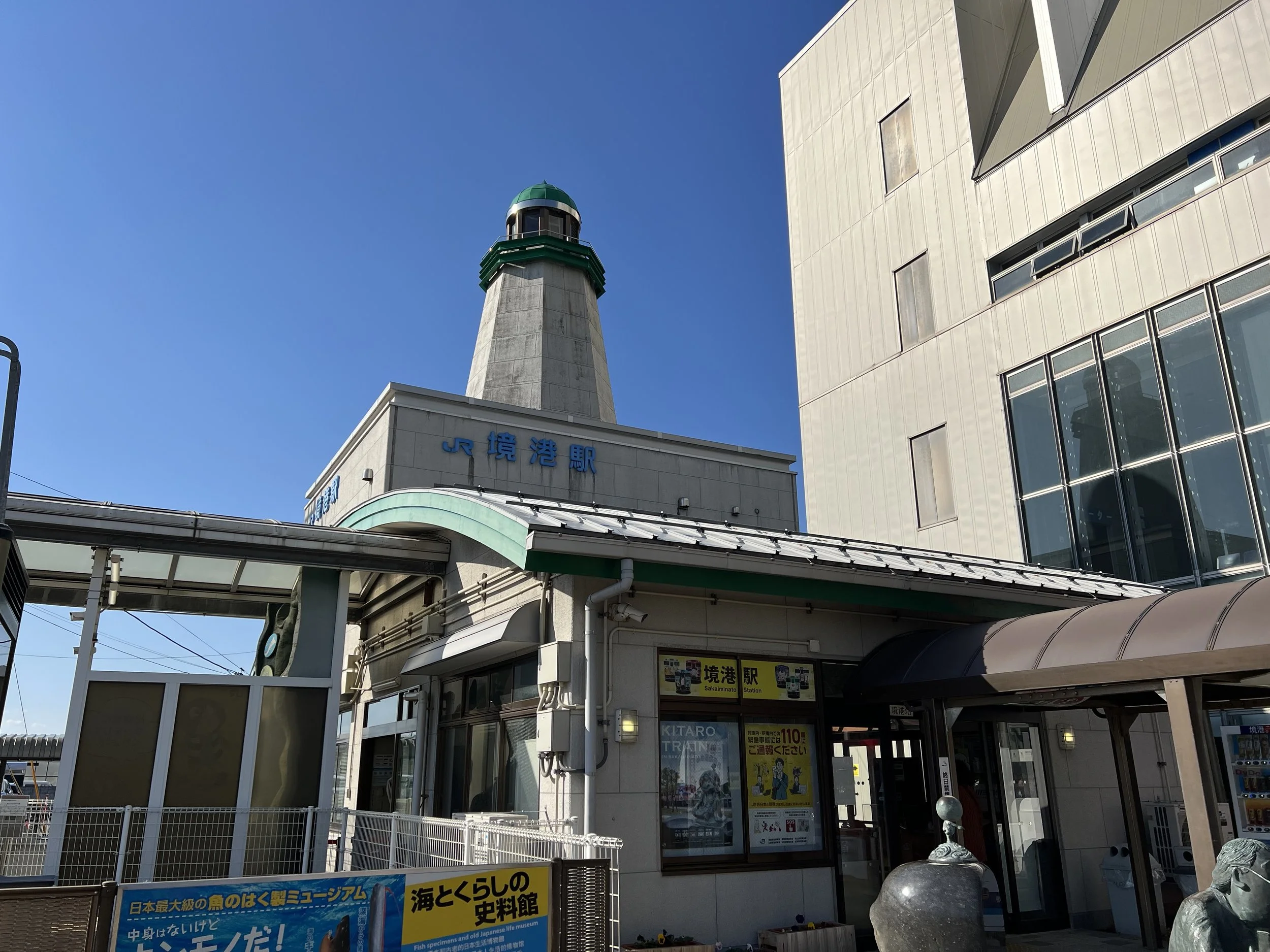
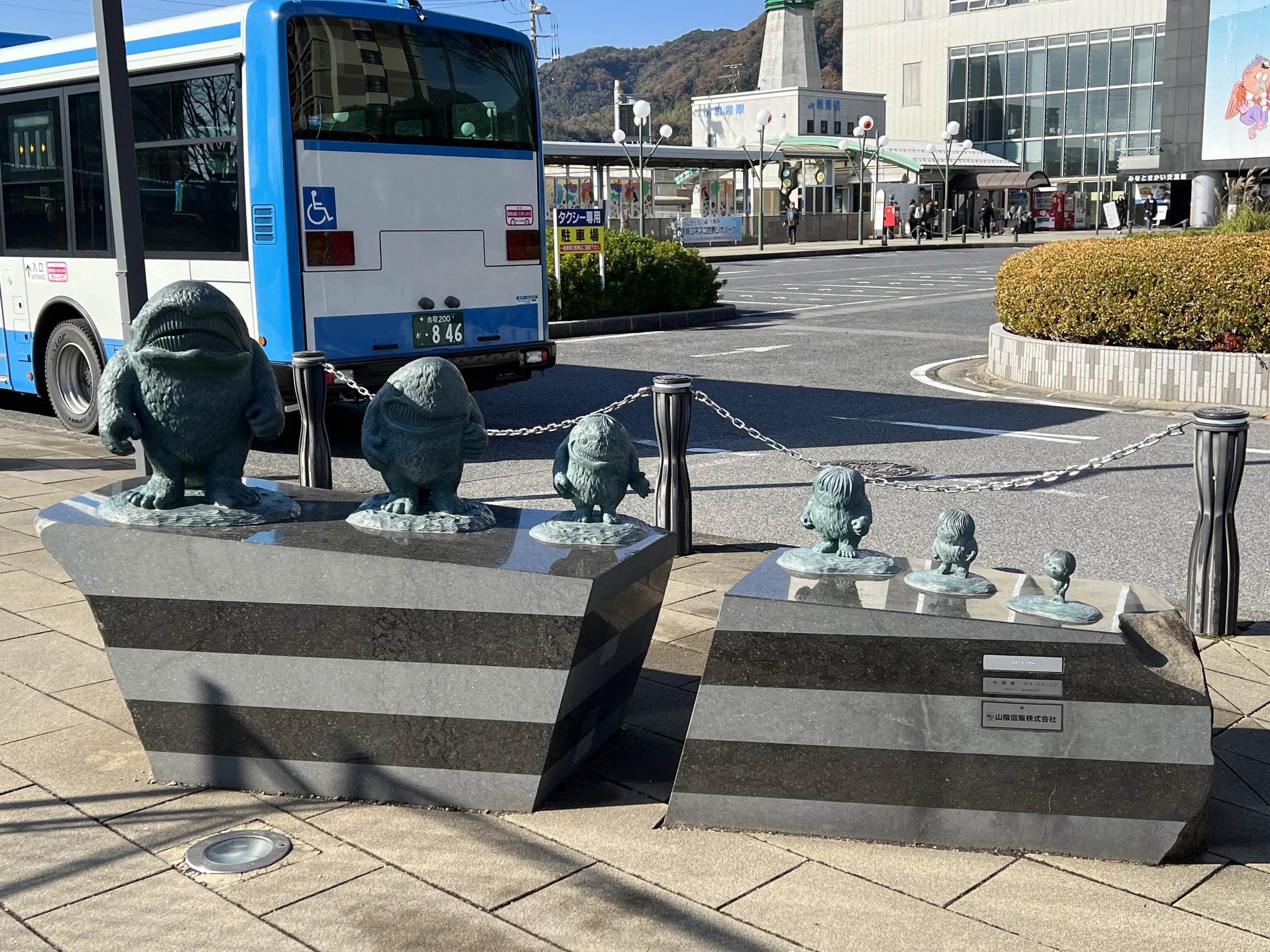
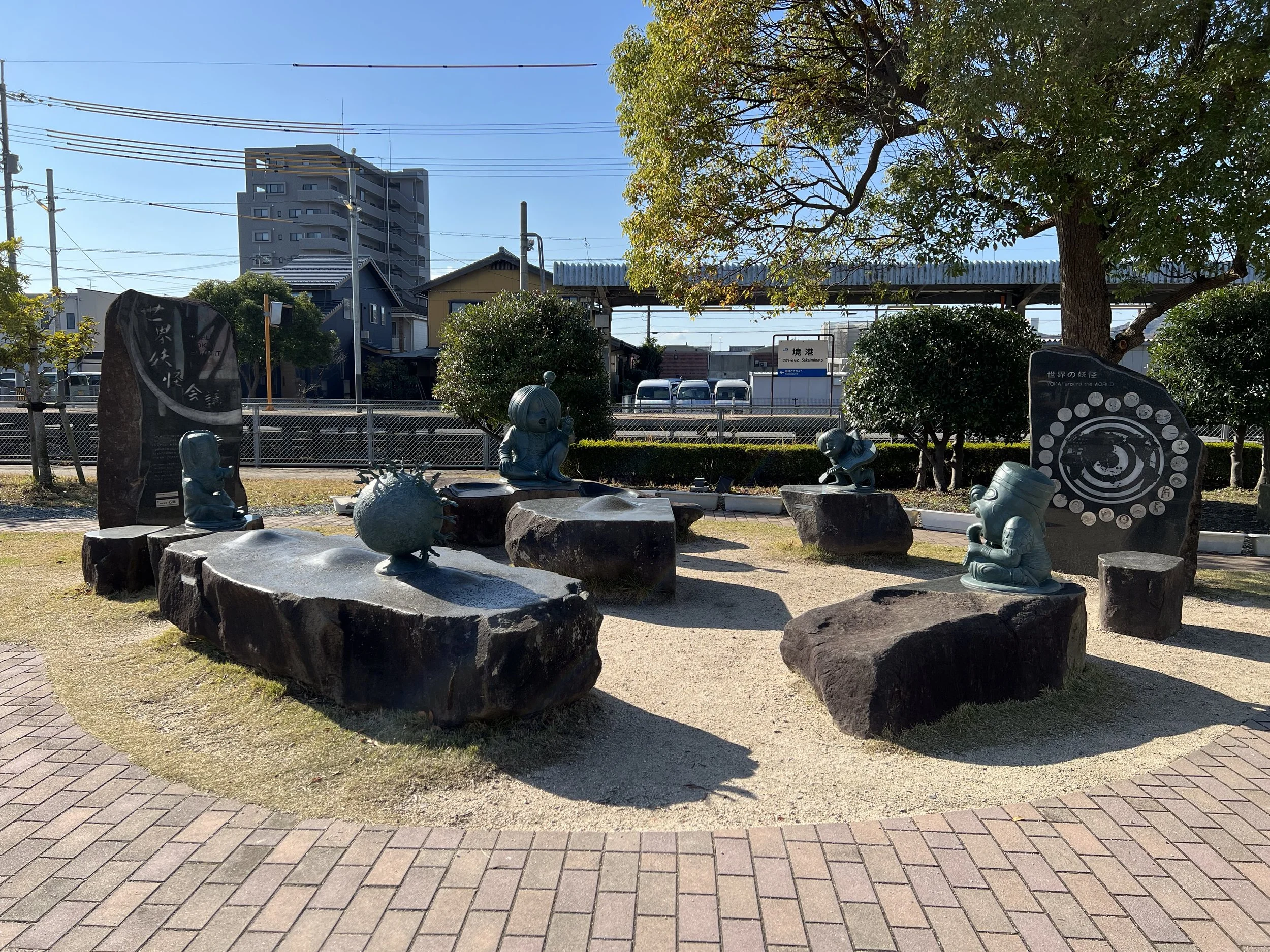
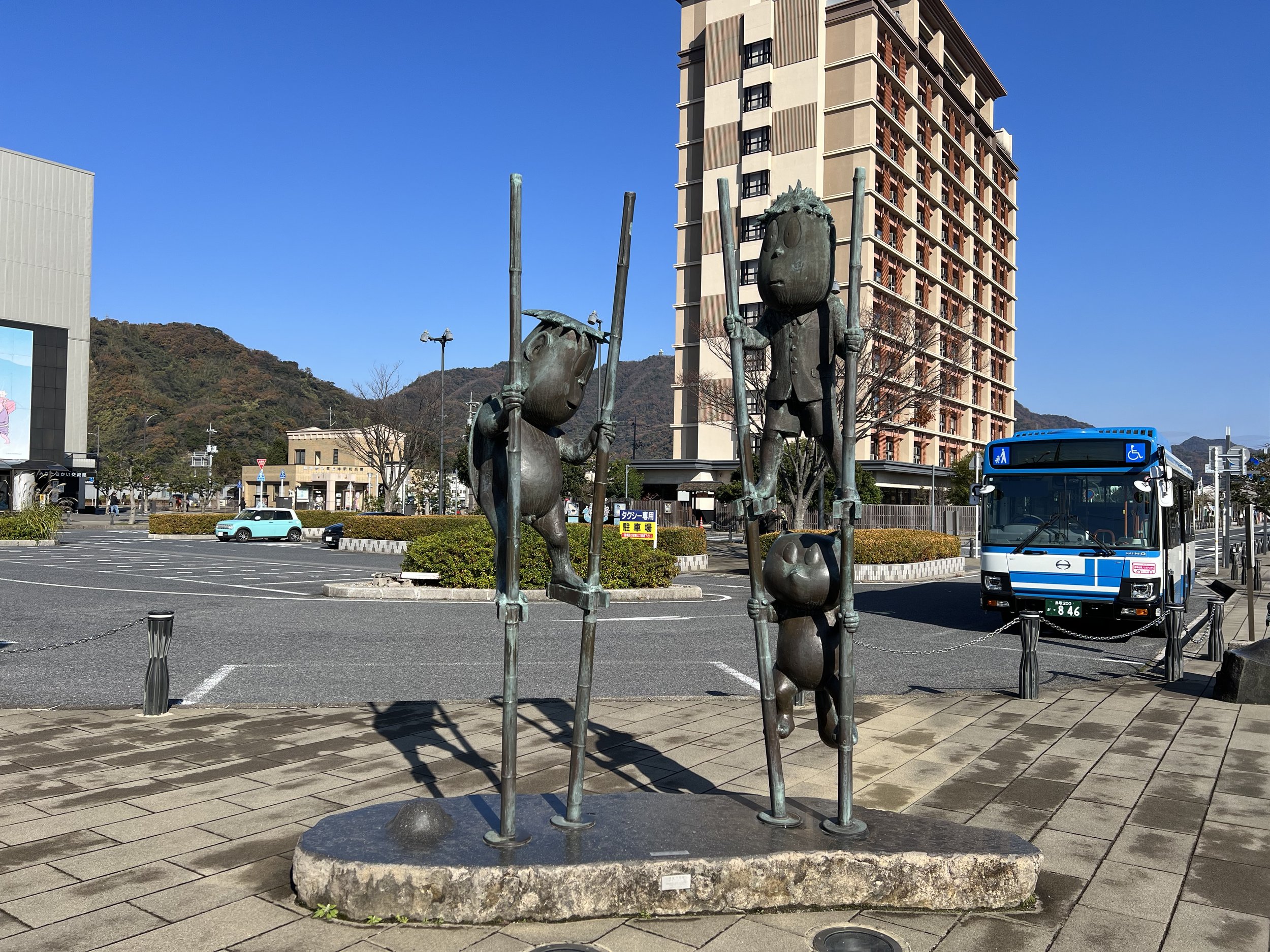
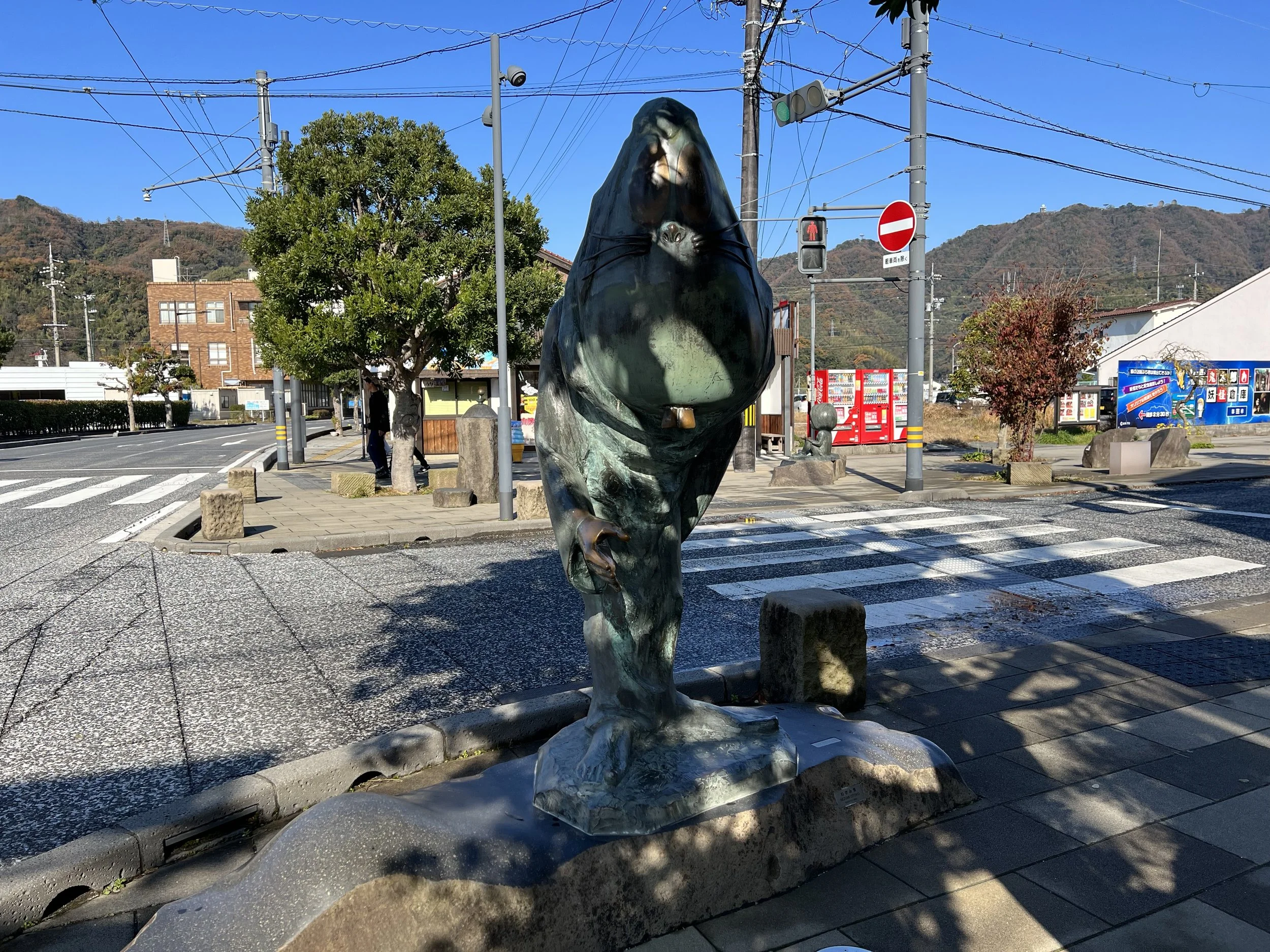
I arrived in Sakaiminato aboard the Kitaro Train from Yonago, which already set the tone for the visit. The station itself resembles a lighthouse, and right outside are several statues of GeGeGe no Kitaro characters welcoming visitors. Nearby, a small park features a “monster gathering spot,” where yokai statues sit casually on benches, inviting people to sit beside them for photos. It felt playful and well thought out.
Before officially starting along Mizuki Shigeru Road, visitors can stop by the tourism office to pick up a yokai guidebook and collect stamps along the route. I skipped it at the time, but later regretted it — it would have made for a great souvenir compared to my self brought stamp book.
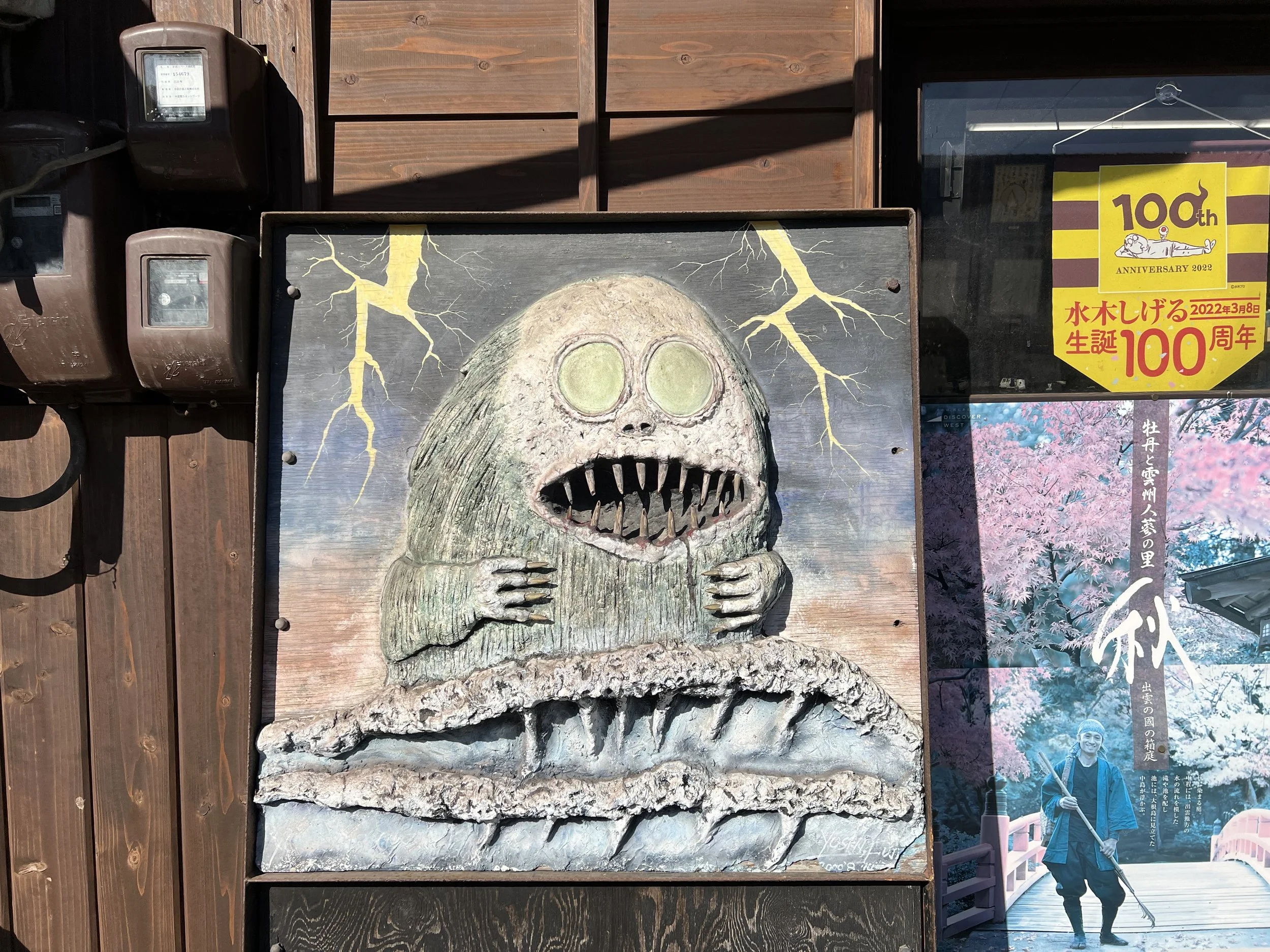
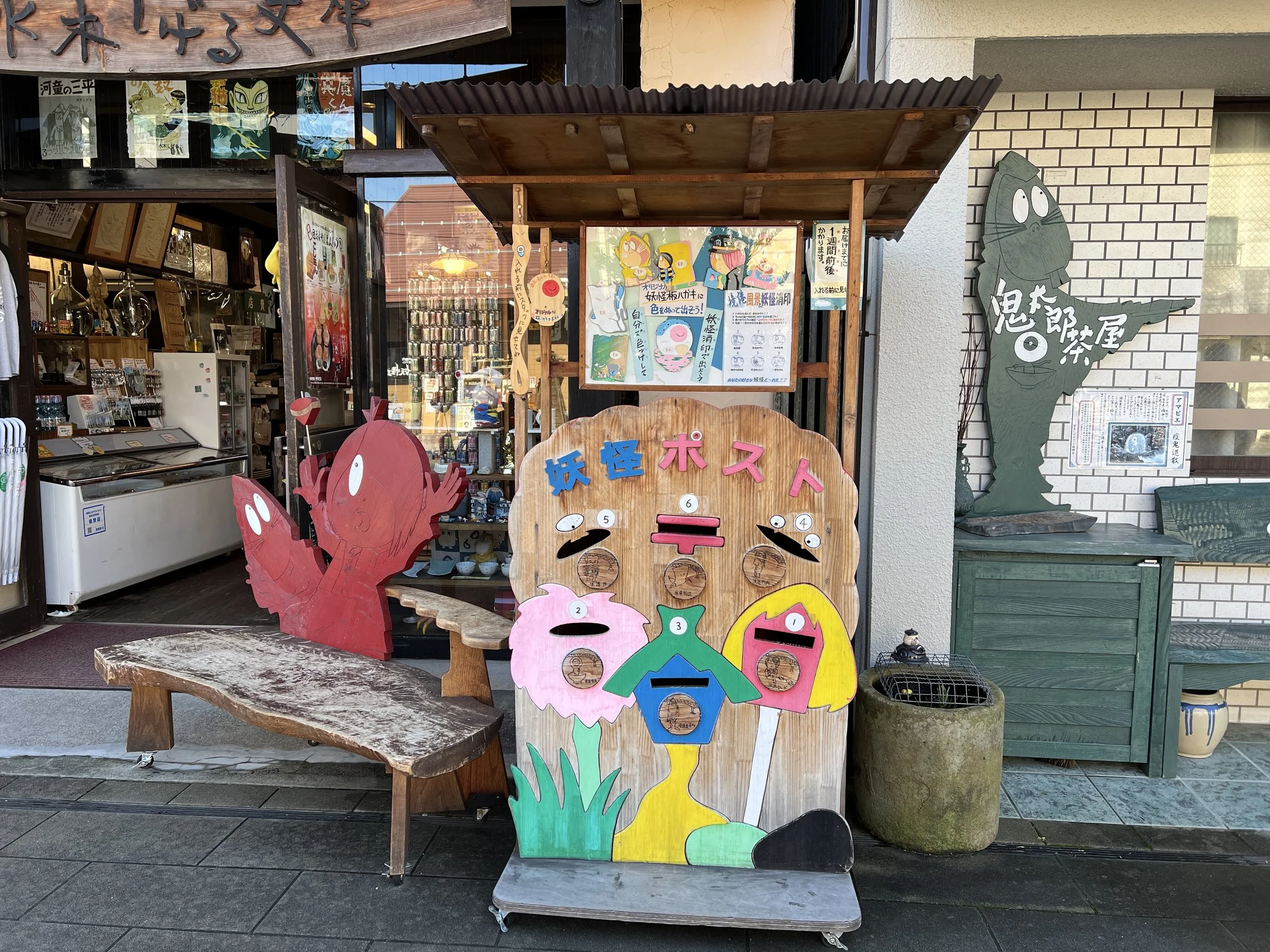
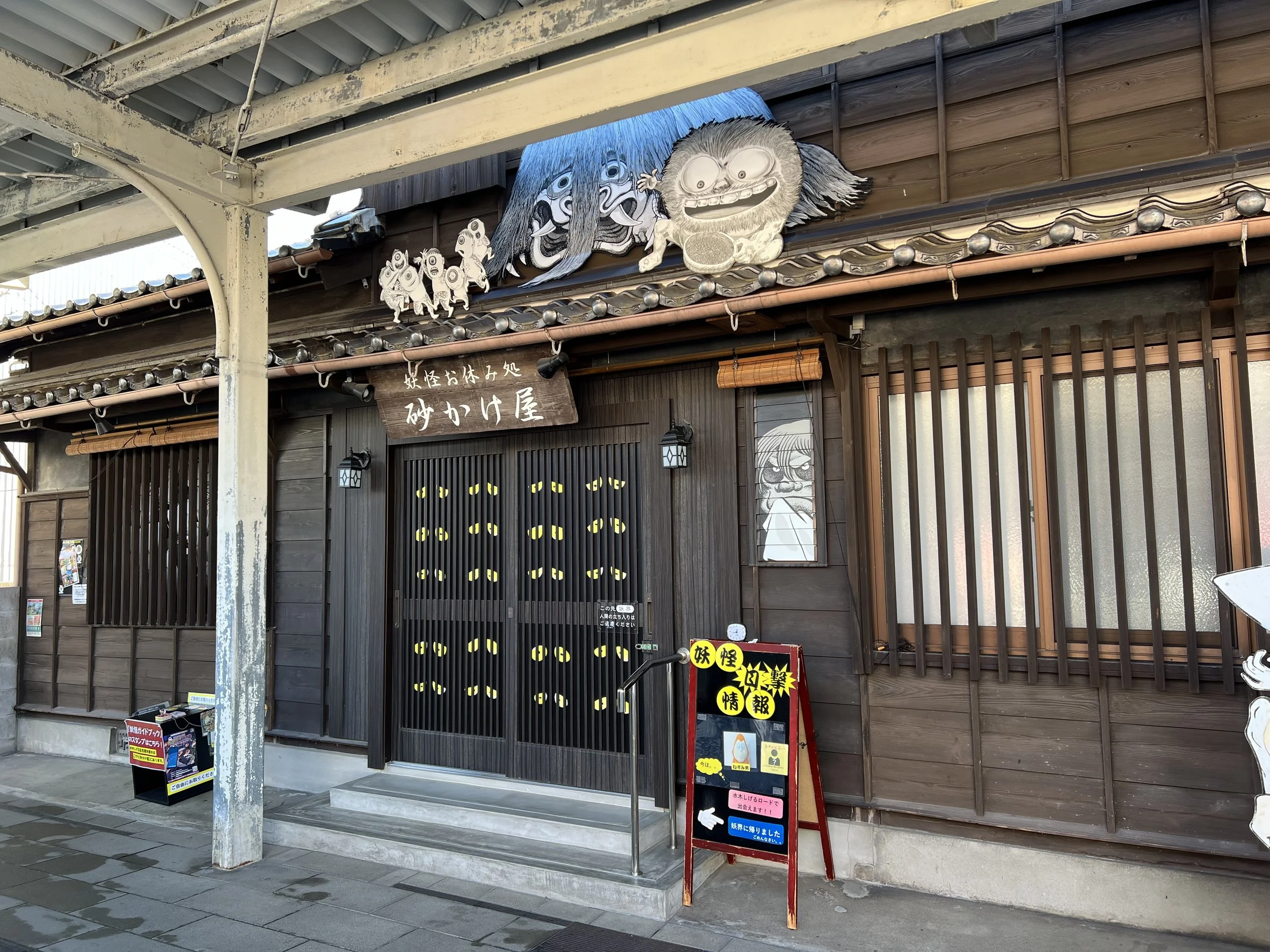
Mizuki Shigeru Road begins near the station and stretches toward the centre of town. I chose to walk down one side of the street and return along the other so I wouldn’t miss any of the statues. Nearly every shop, café, and restaurant along the way incorporates yokai-themed designs, from signage to menu items. QR codes near many statues provide background information, and I found myself frequently stopping to scan, read, and take photos.
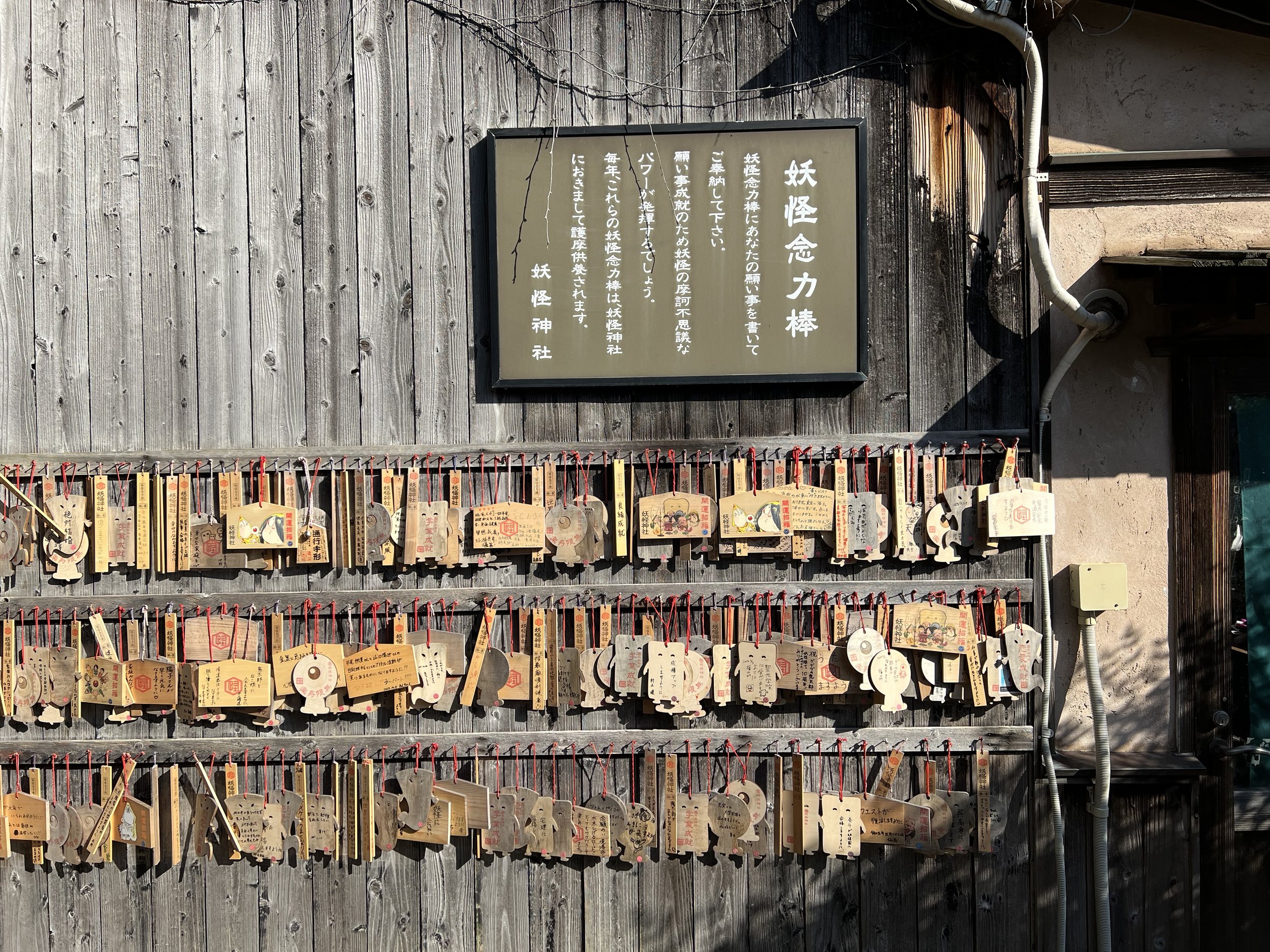
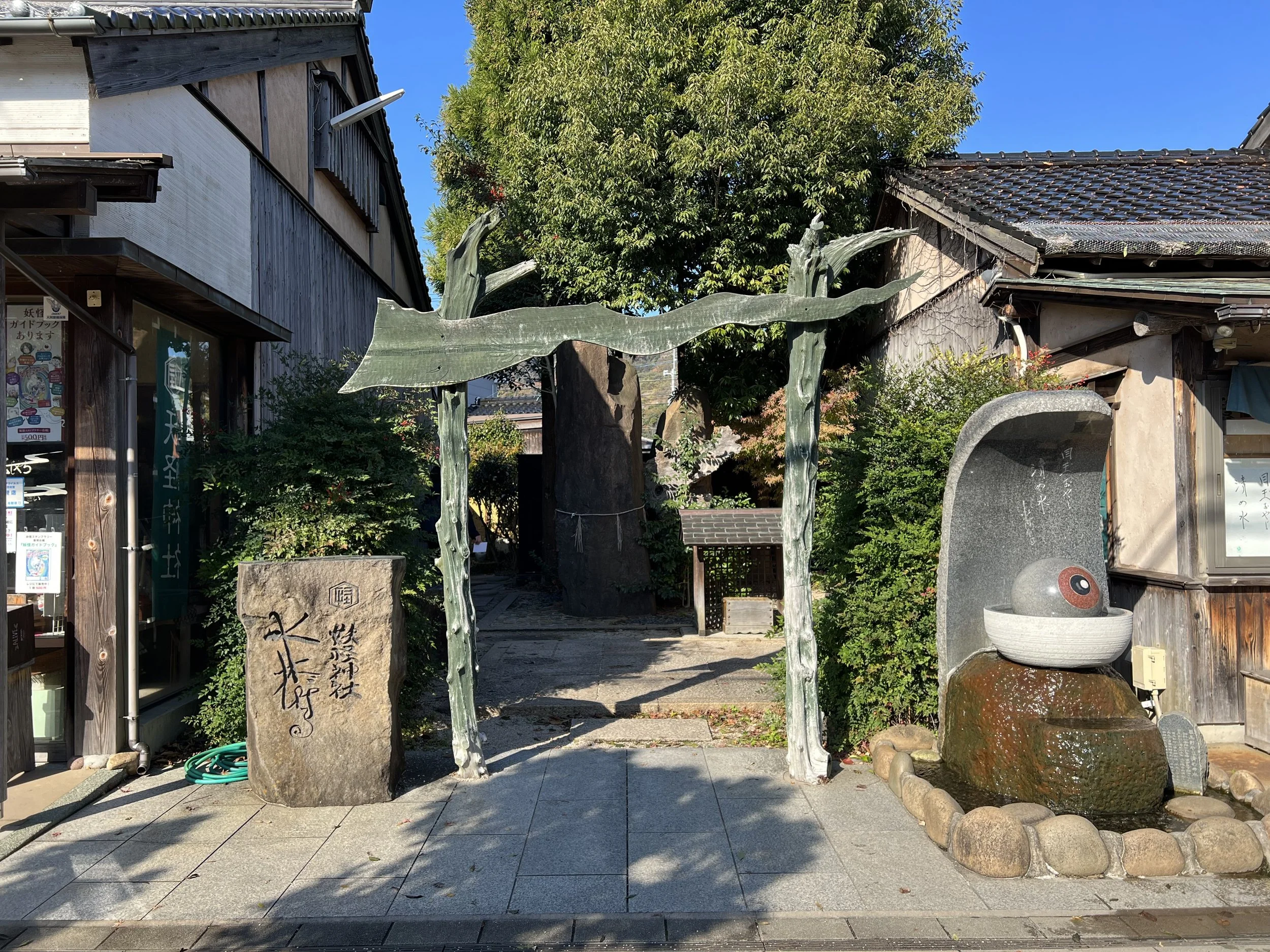
About halfway along the road, I came across the Yokai Shrine. Unlike traditional Shinto shrines, this one is dedicated to protecting the living spaces of yokai. The small shrine grounds contain a massive three-metre granite boulder and a 300-year-old keyaki tree, giving the place a quietly sacred atmosphere despite its whimsical theme.
After reaching the end of Mizuki Shigeru Road, I turned back toward the station before setting off for my second destination: Eshima Ohashi Bridge. Before continuing, I stopped for lunch at a conveyor-belt sushi restaurant near the fishing port. Given Sakaiminato’s reputation for seafood, it felt like the right choice.
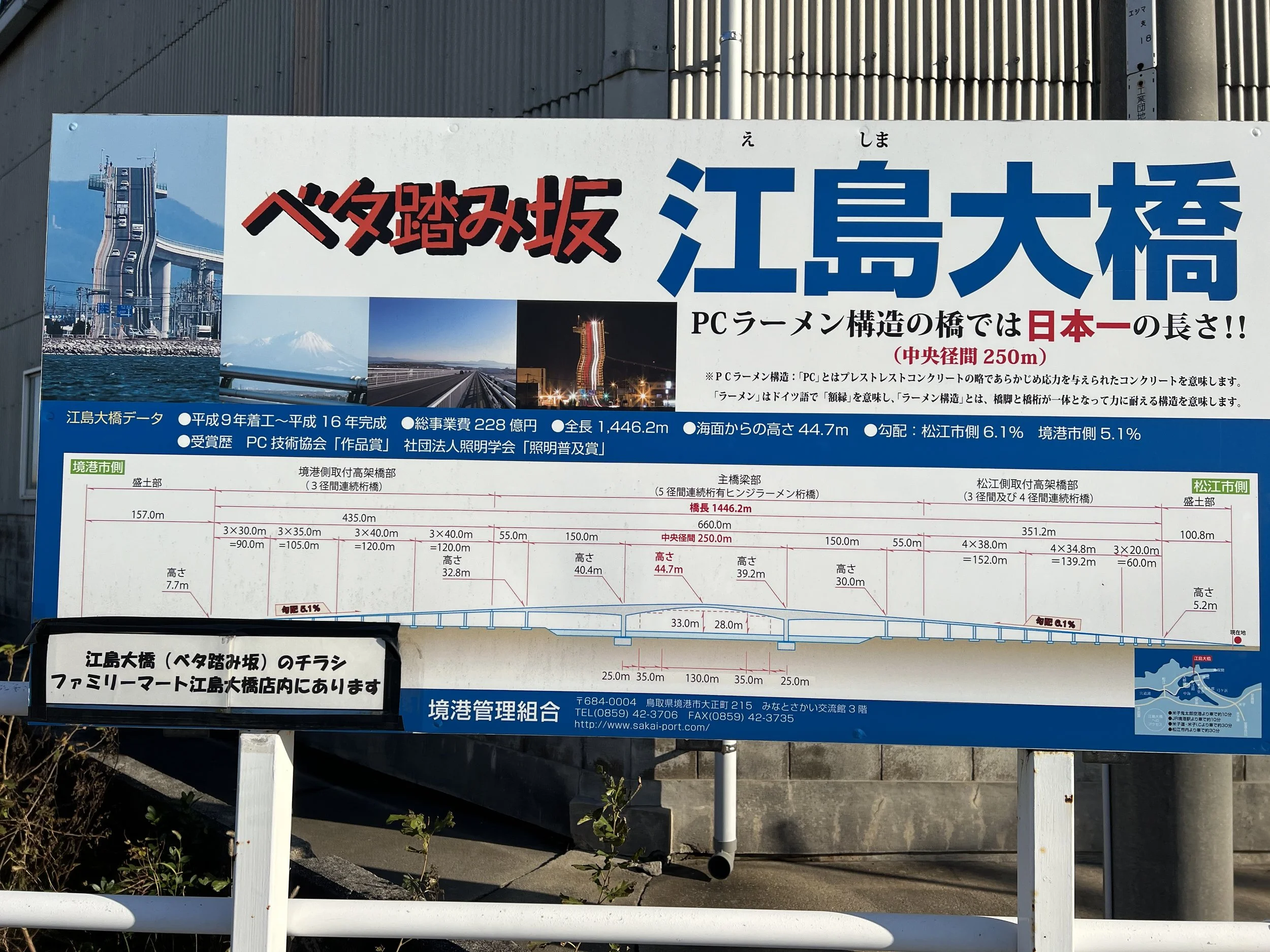
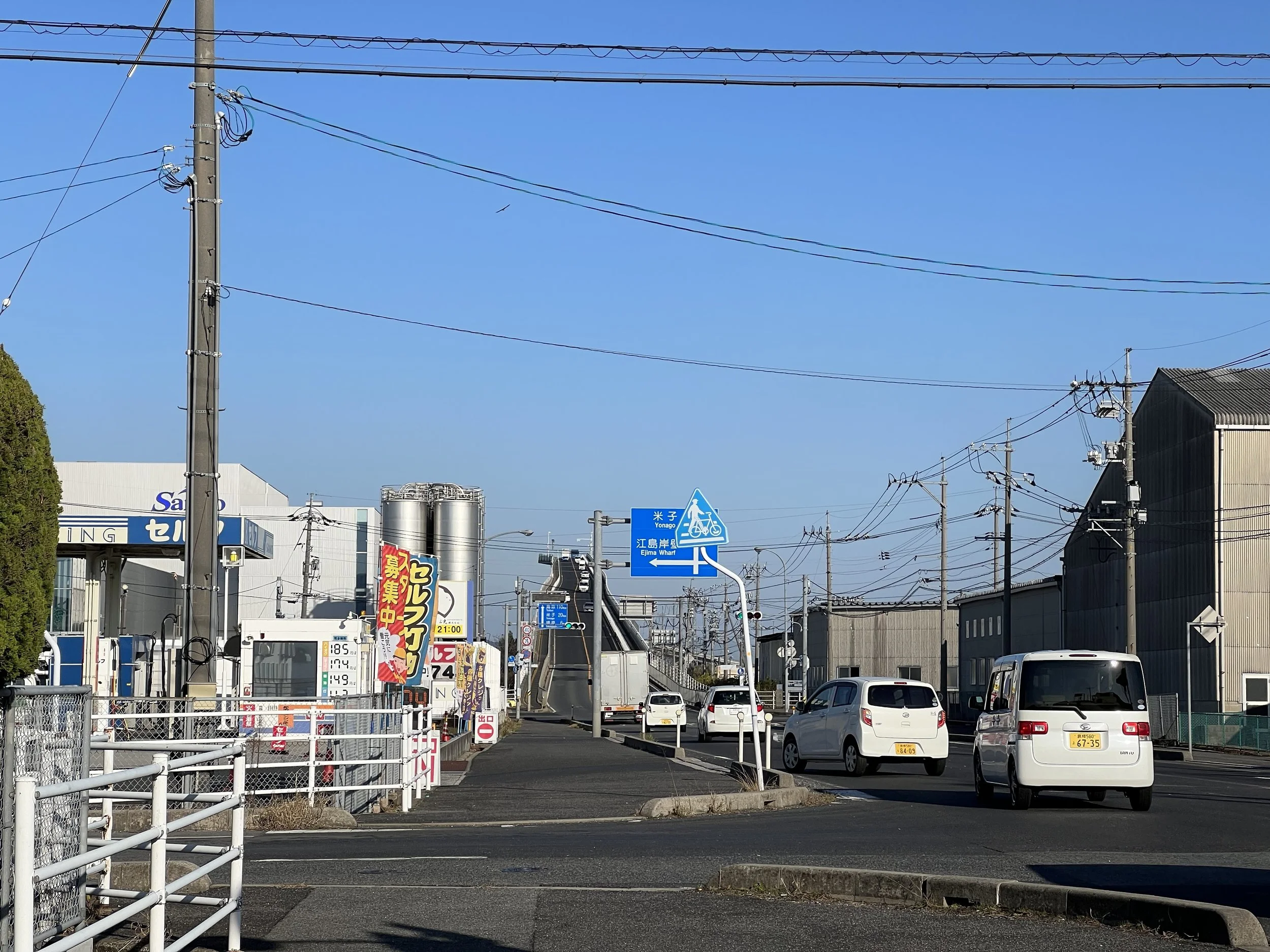
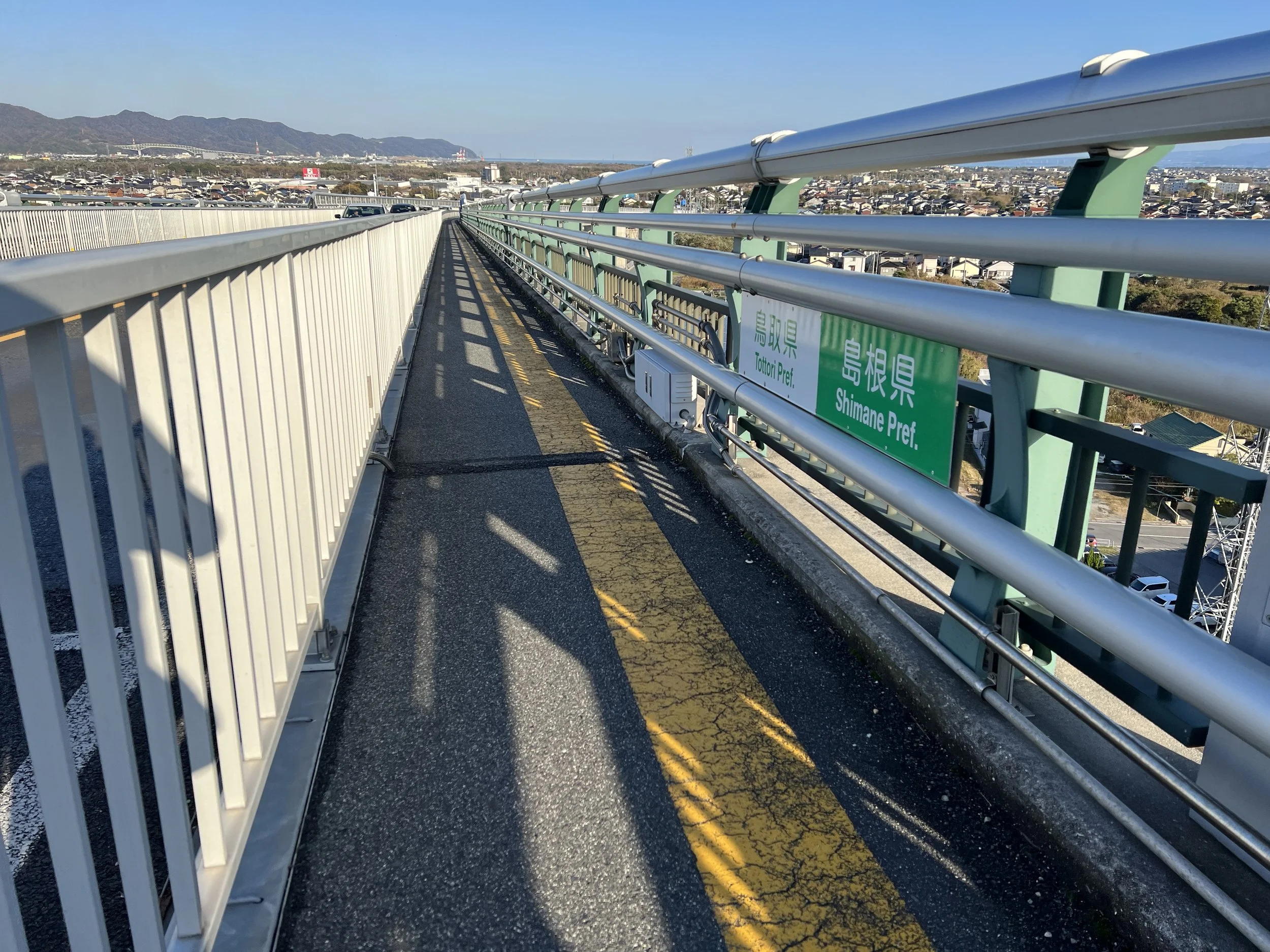
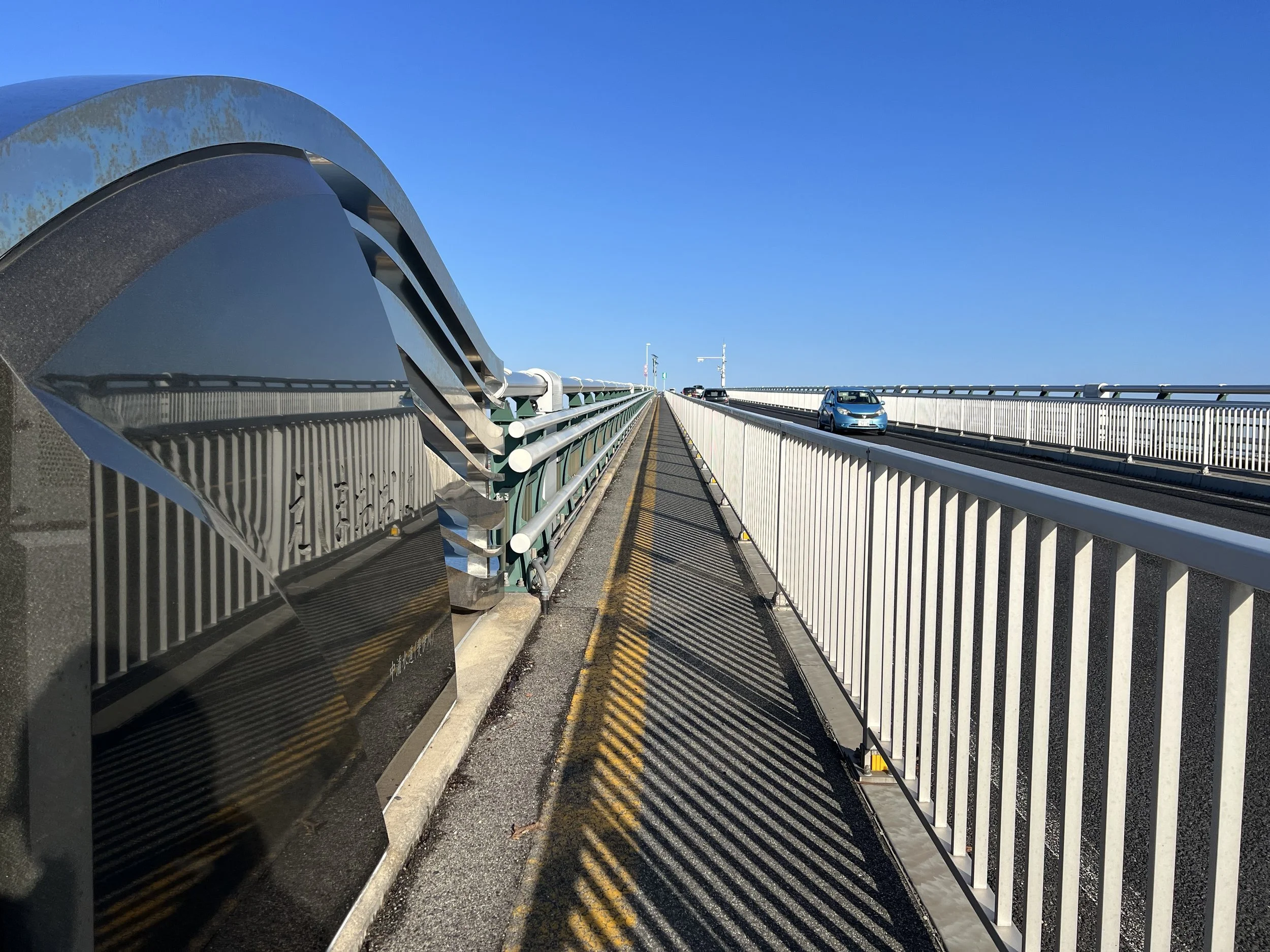
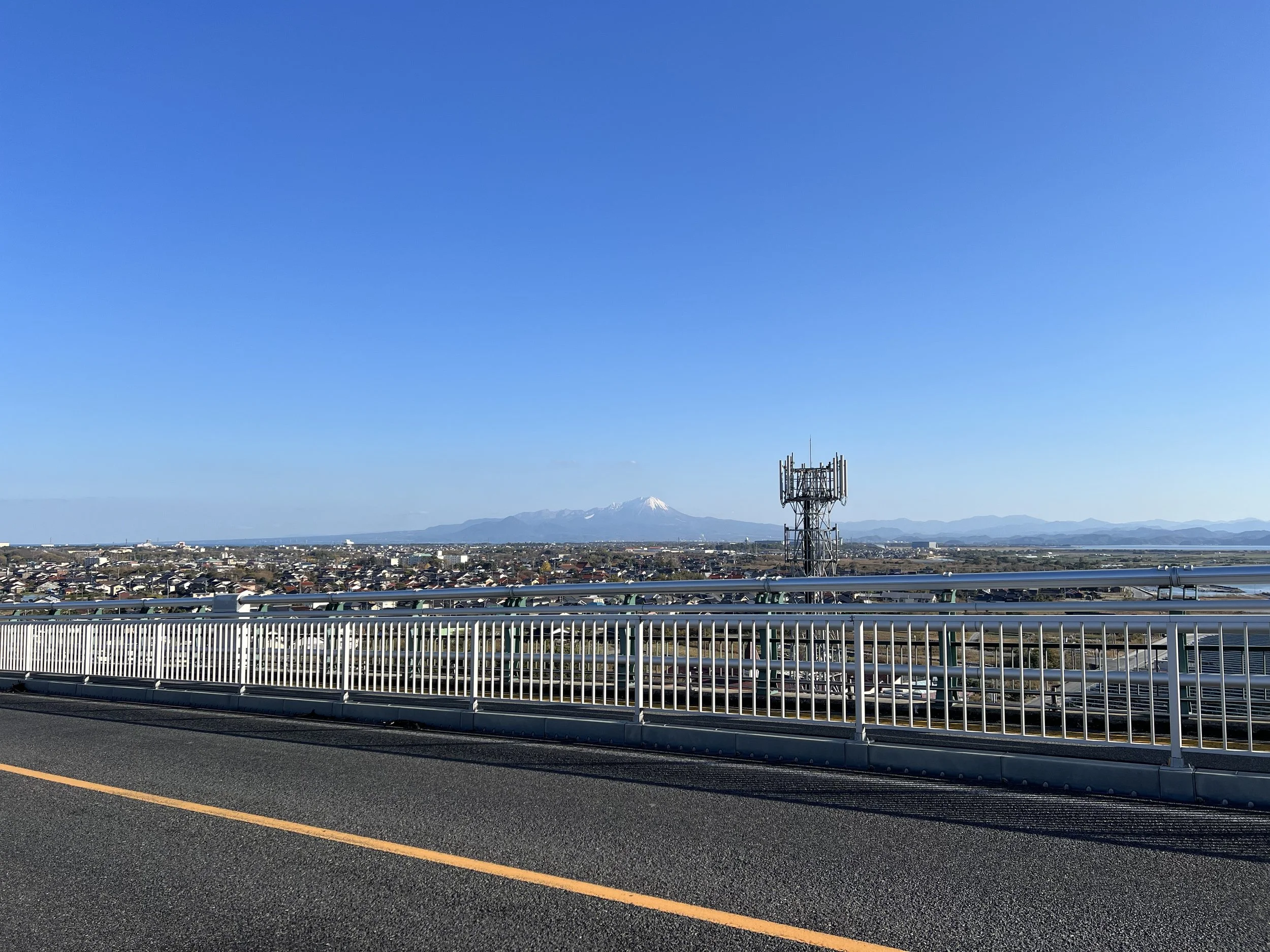
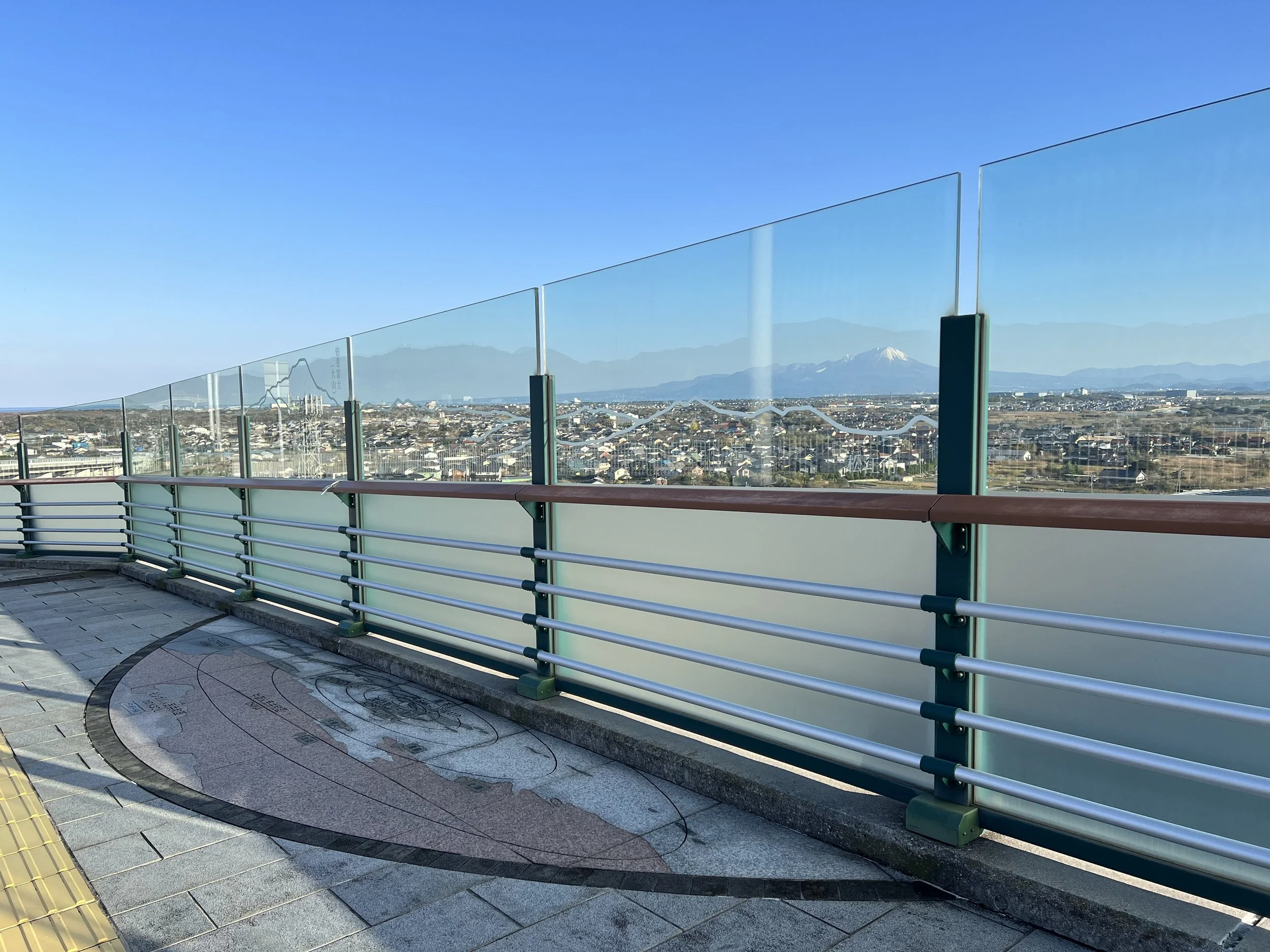
Eshima Ohashi Bridge connects Tottori and Shimane Prefectures and stretches approximately 1.7 kilometres across Lake Nakaumi. While it looks dramatically steep in photographs and commercials, walking across it tells a different story. To see the steepest visual angle, you need to view it from the Shimane side. From the Tottori side, the walk felt gradual, though the views of Mount Daisen and Lake Nakaumi were excellent. About halfway across, I passed a prefectural boundary marker indicating the transition between Tottori and Shimane.
Once on the Shimane side, I searched for a vantage point to capture the famous steep-looking angle of the bridge. Unfortunately, the best viewpoints appear to be on private property, and I wasn’t able to find a suitable public spot. After taking what photos I could, I crossed back into Tottori, sharing the bridge with a few cyclists making their way across.
Even though I didn’t get the exact photo I had hoped for, the day was still incredibly enjoyable. Between the playful energy of Mizuki Shigeru Road and the scenic walk across Eshima Ohashi Bridge, Sakaiminato turned out to be a memorable and well-rounded visit.
Background
Sakaiminato (境港) is a coastal city in Tottori Prefecture best known as the birthplace of manga artist Mizuki Shigeru, creator of GeGeGe no Kitaro. His work played a major role in popularizing yokai folklore in modern Japanese culture. Mizuki Shigeru Road (水木しげるロード) was developed to celebrate his legacy and has become the city’s main tourist attraction.
Eshima Ohashi Bridge (江島大橋), completed in 2004, connects Sakaiminato in Tottori Prefecture with Matsue City in Shimane Prefecture. It replaced a drawbridge to allow larger ships to pass through the channel below. Its dramatic appearance gained international fame after being featured in television commercials, though the steepness is largely an optical illusion created by camera perspective.
Getting There
Sakaiminato is accessible via the JR Sakai Line. From Yonago Station, a major regional hub served by JR San’in Main Line trains, local trains run directly to Sakaiminato Station in approximately 50 minutes. Many services on this line operate as themed Kitaro Trains, though standard trains also run. No reservation is required.
Route Overview
Distance: 11.43 km out & back (Sakaiminato Station)
Total elevation gain: 88 m
Duration: 2 hr 007min (with breaks 2 hr 12 min)
Difficulty: Intermediate
Cost Breakdown
Train: Yonago Station → Sakaiminato Station — ¥330
Food: ¥2,741