Katsurahama Beach - Kochi, Japan
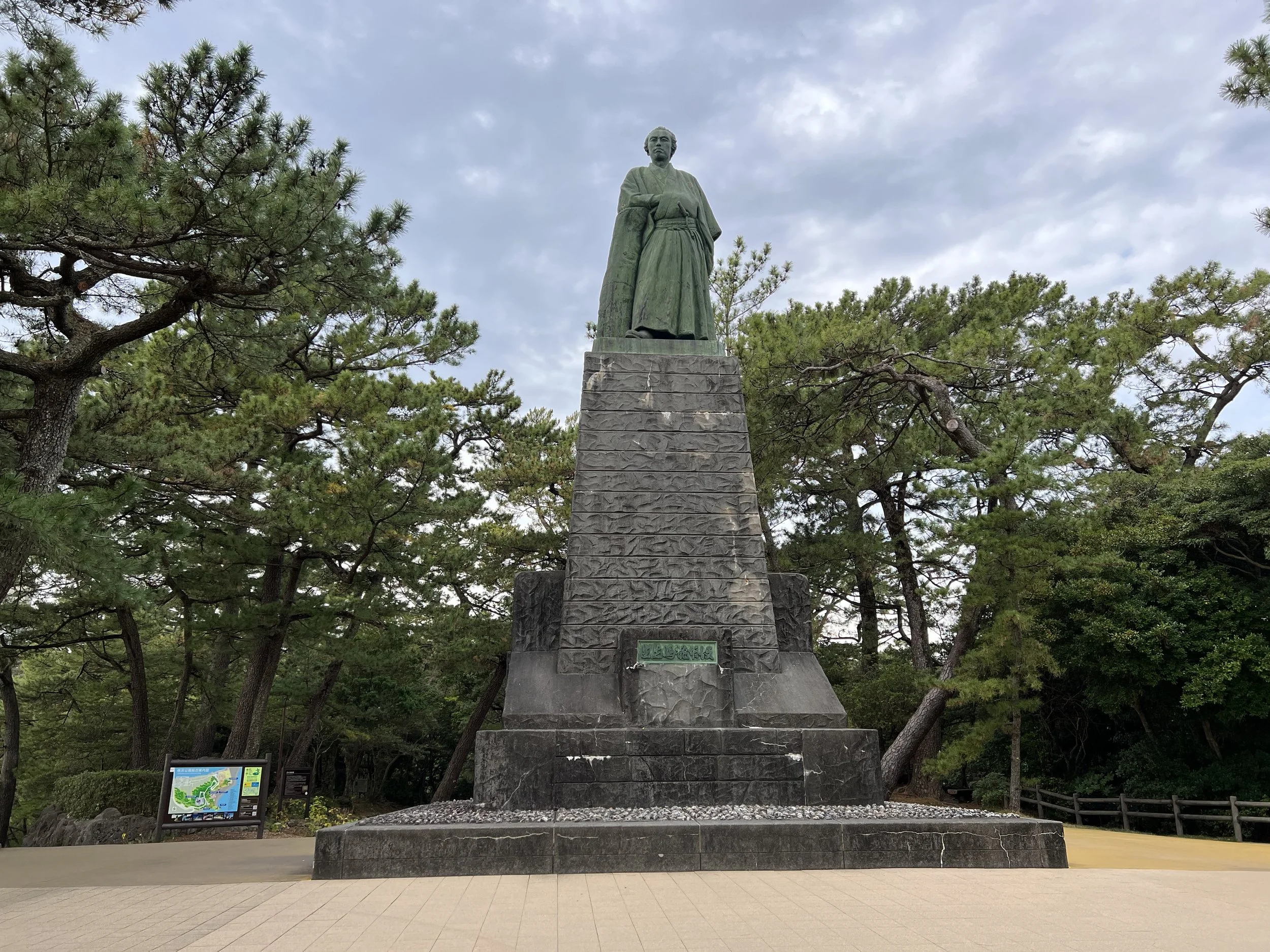
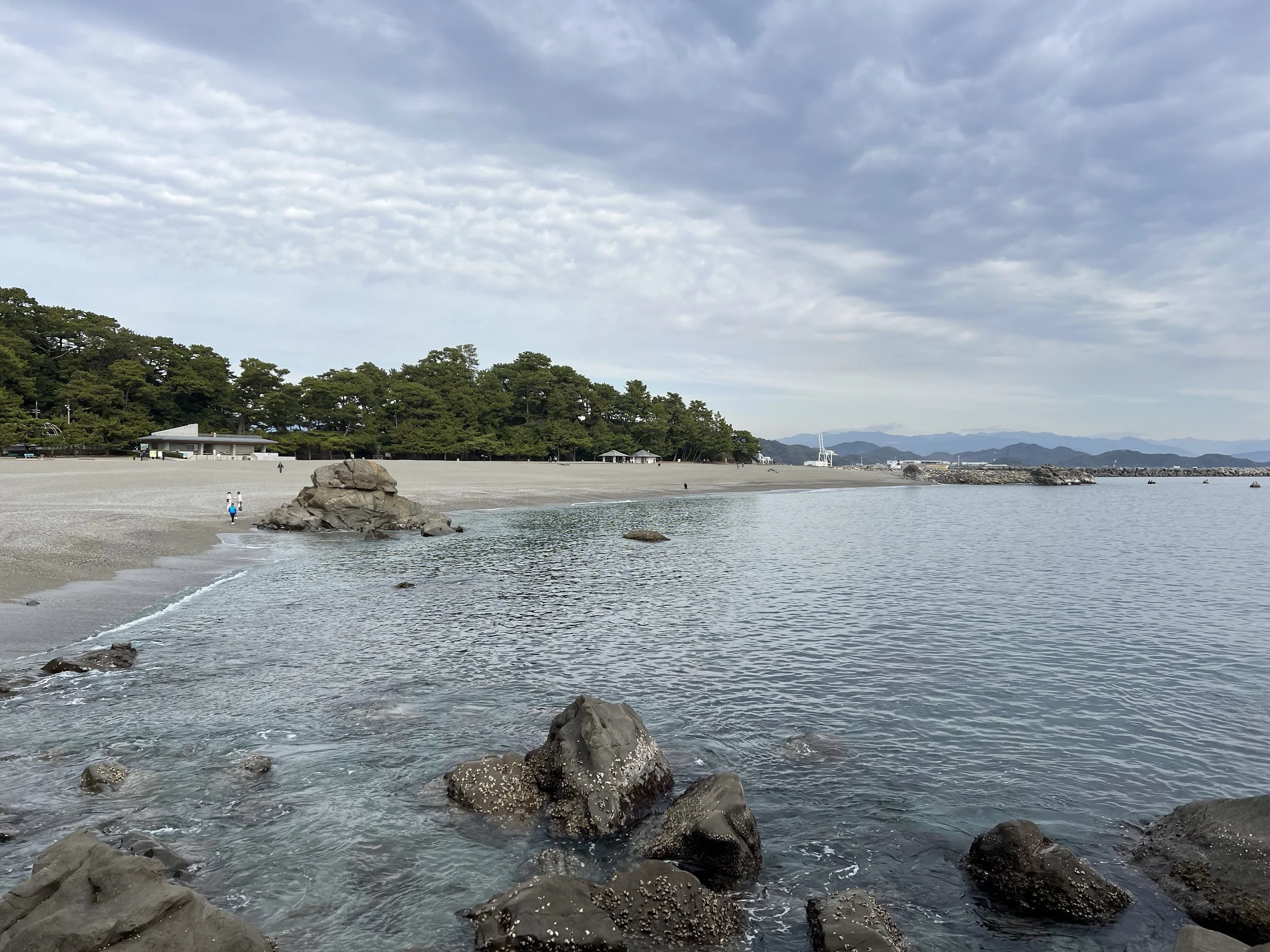
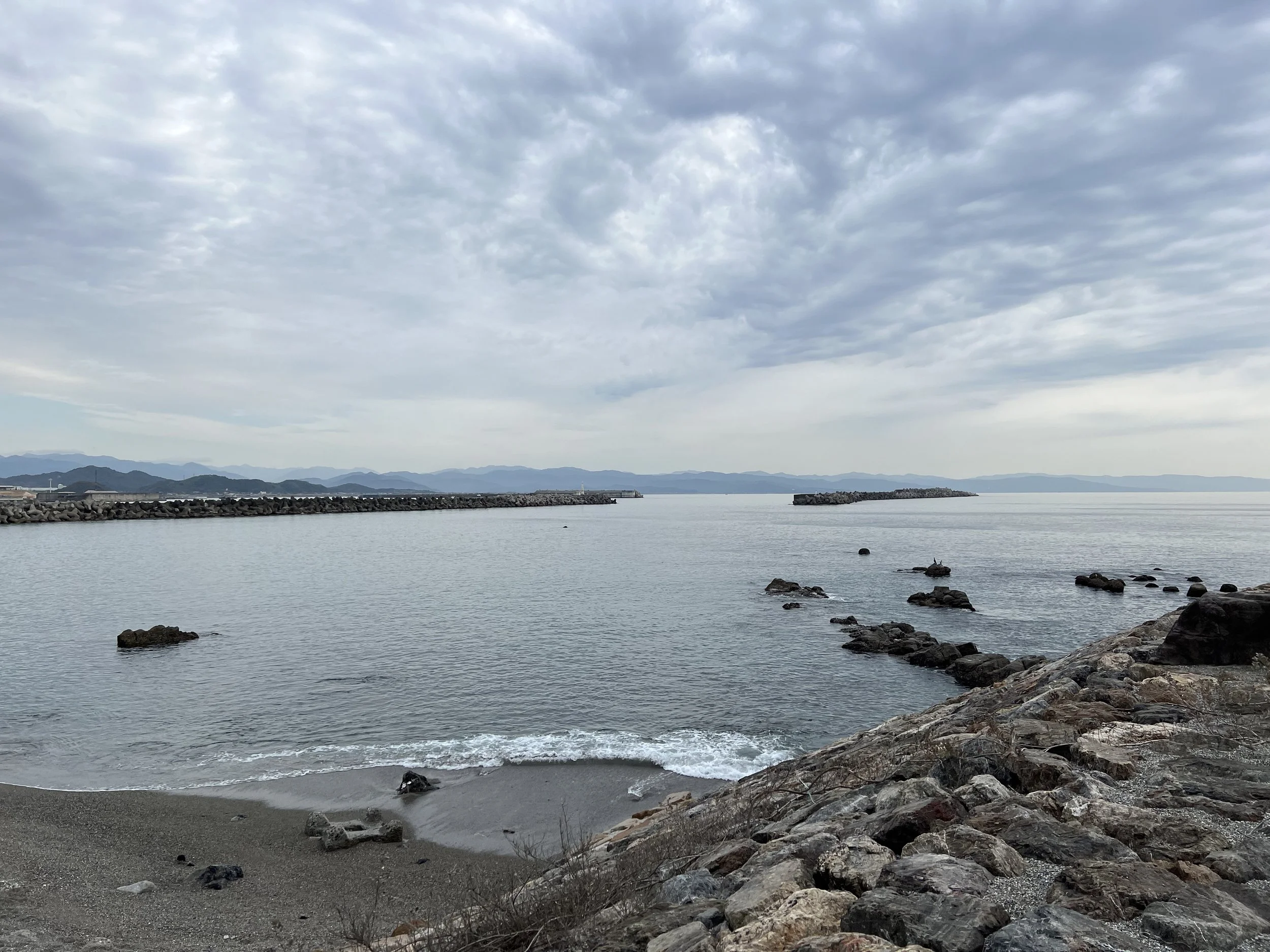
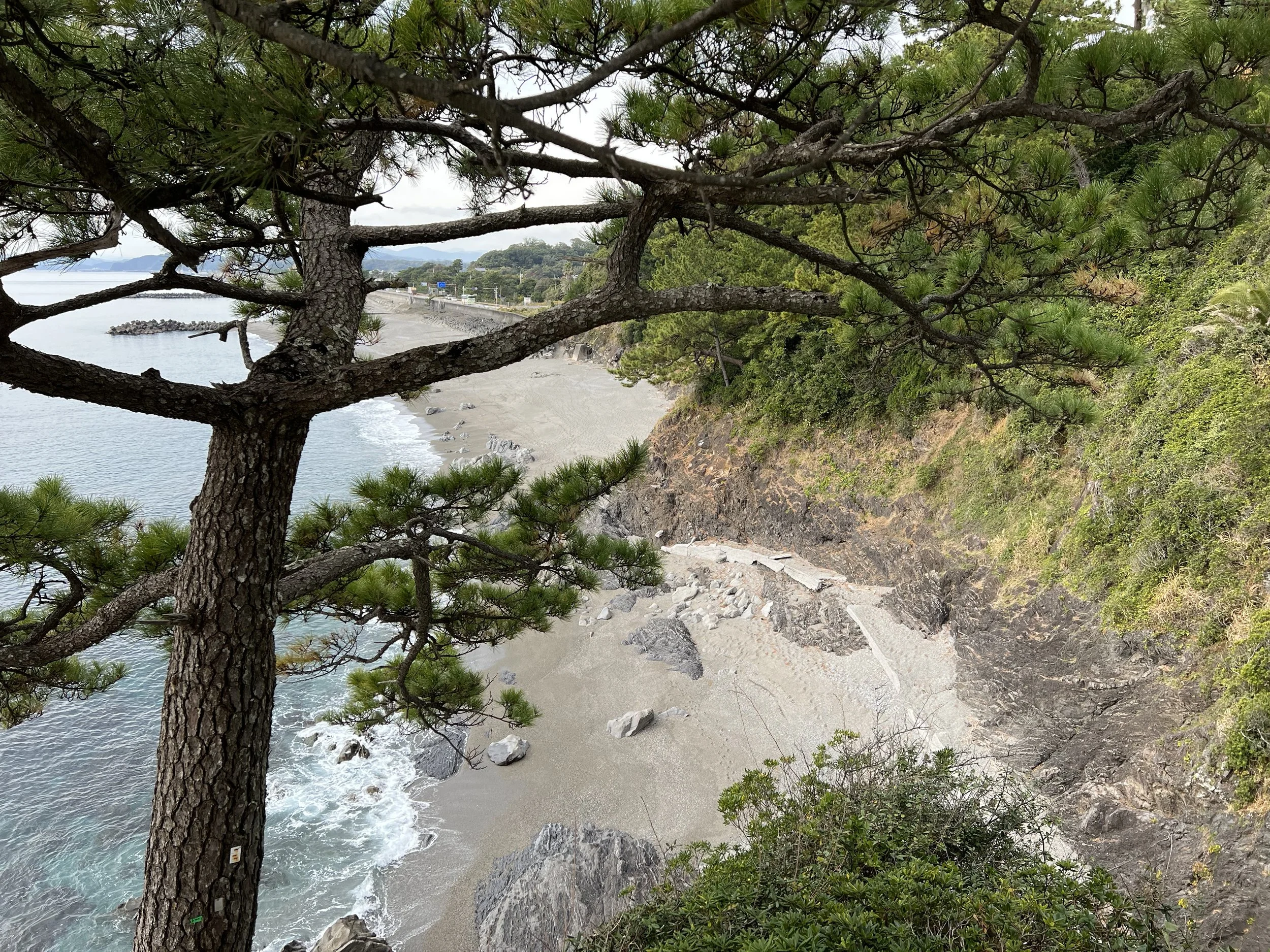
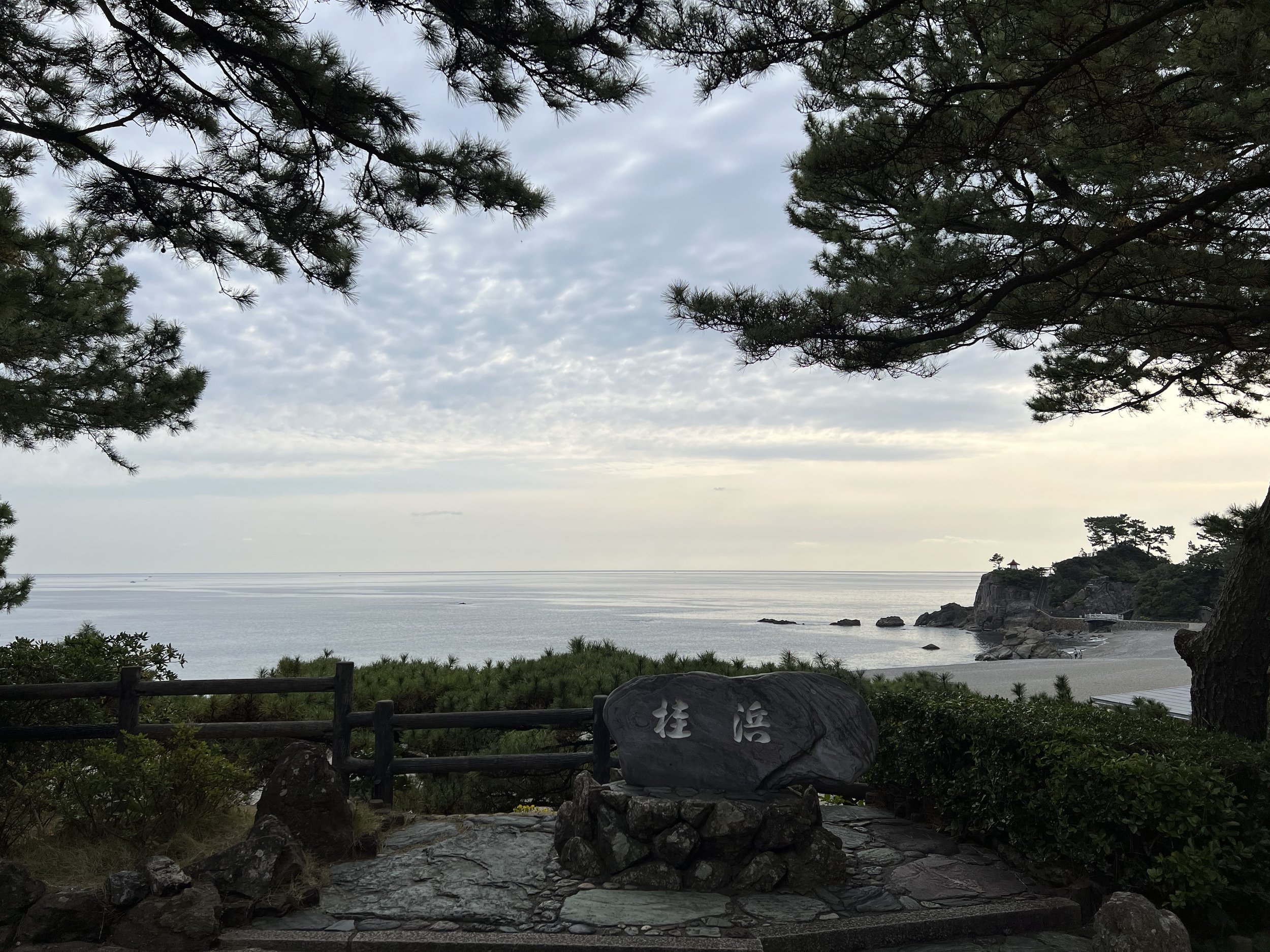
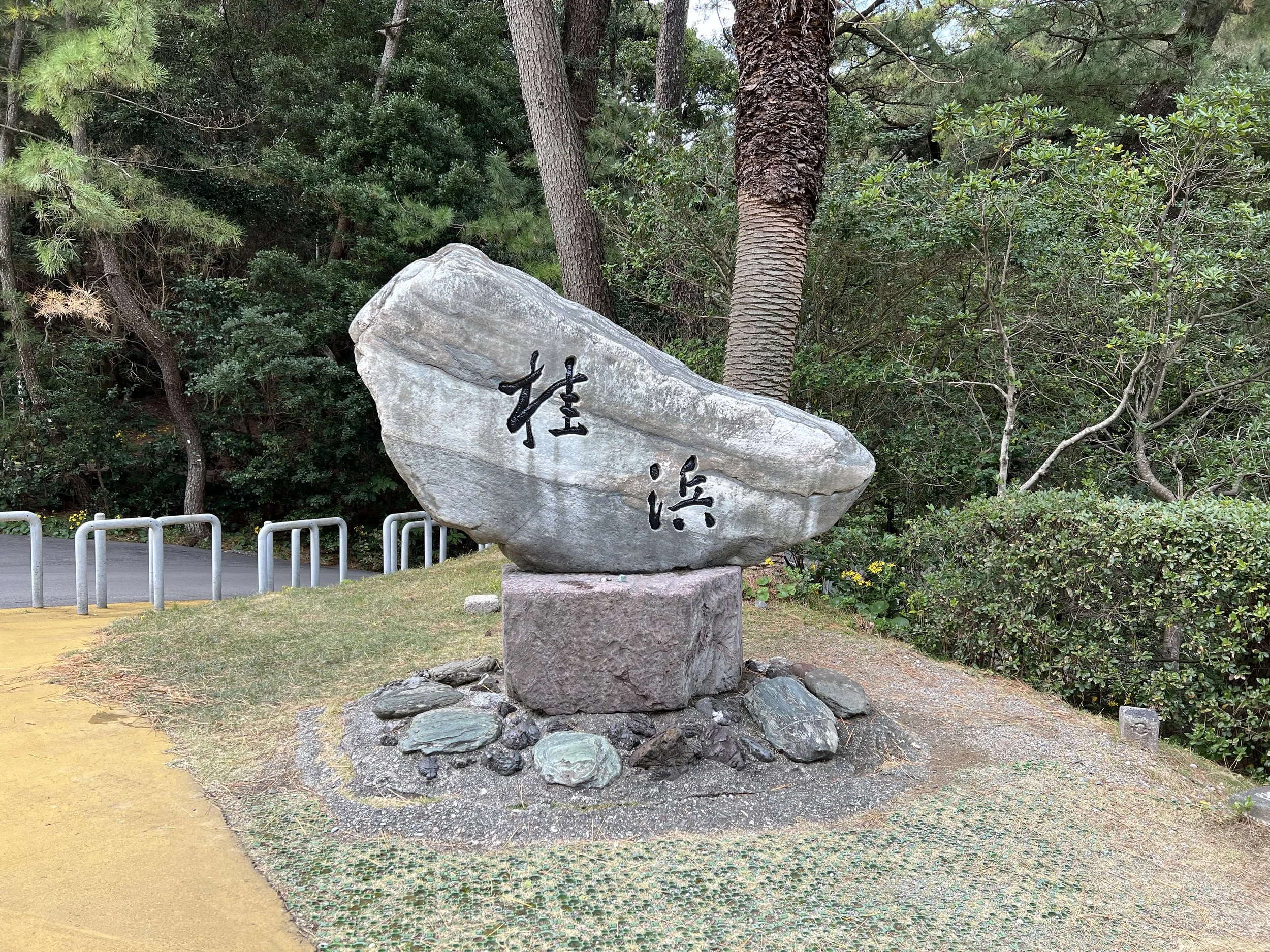
Katsurahama is a scenic beach located south of central Kochi. While the coastline here is striking, swimming is prohibited due to strong ocean currents. The beach has long been celebrated in Japanese culture, immortalized in a well-known folk song that describes its scenery, and it has been regarded as a popular moon-viewing spot since ancient times. The area is also home to a prominent statue of Sakamoto Ryoma, a local hero who played a key role in Japan’s political modernization during the late Edo period.
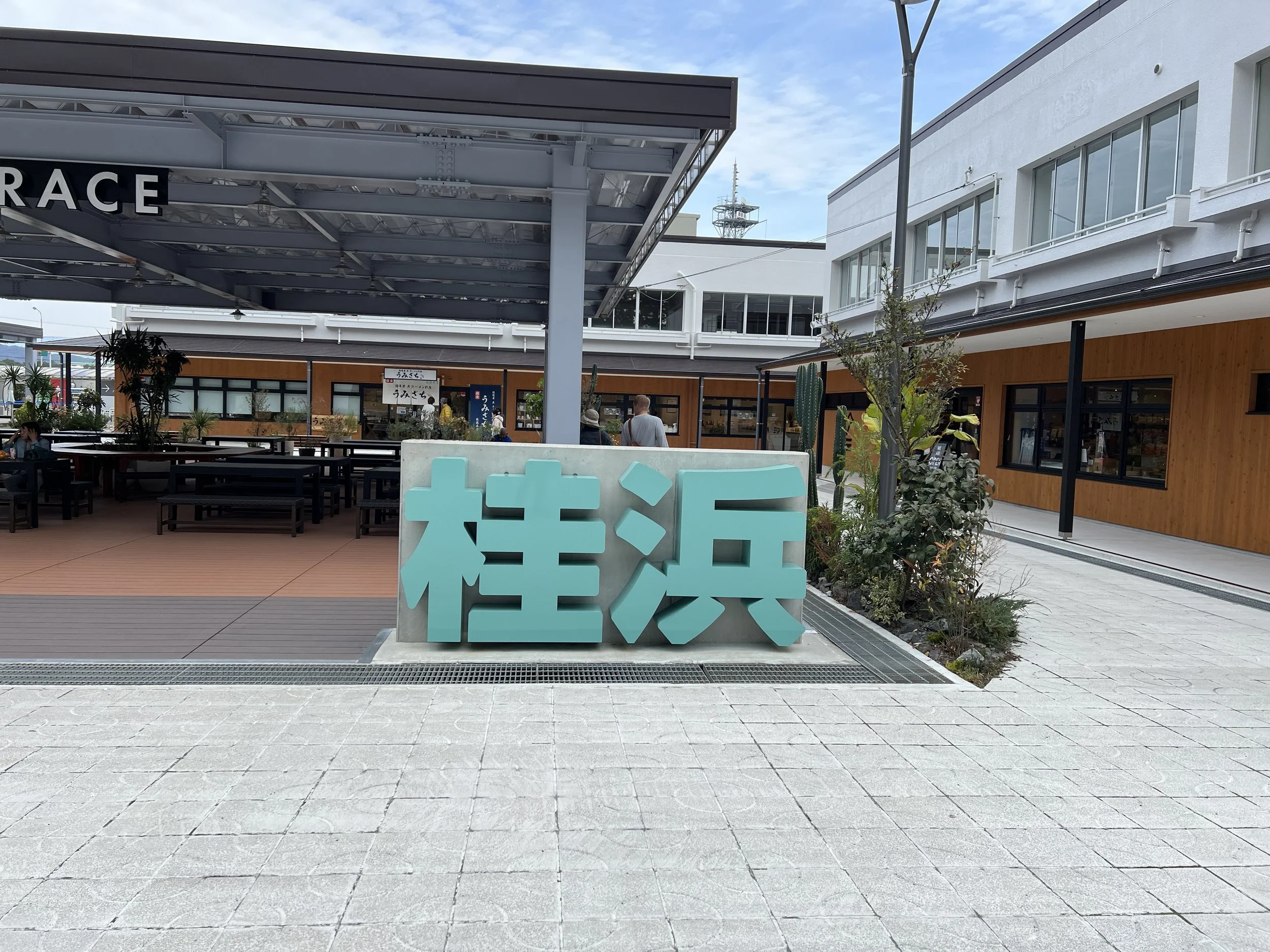
I was visiting one of the Shikoku Henro temples, Chikurin-ji, and making my way toward Sekkeiji Temple. Katsurahama sits roughly midway between these two temples, and having heard about its scenery, I decided to stop to explore the area and have lunch before continuing on. I took a bus from the Chikurin-ji area, which dropped me off near the beach’s shopping zone.
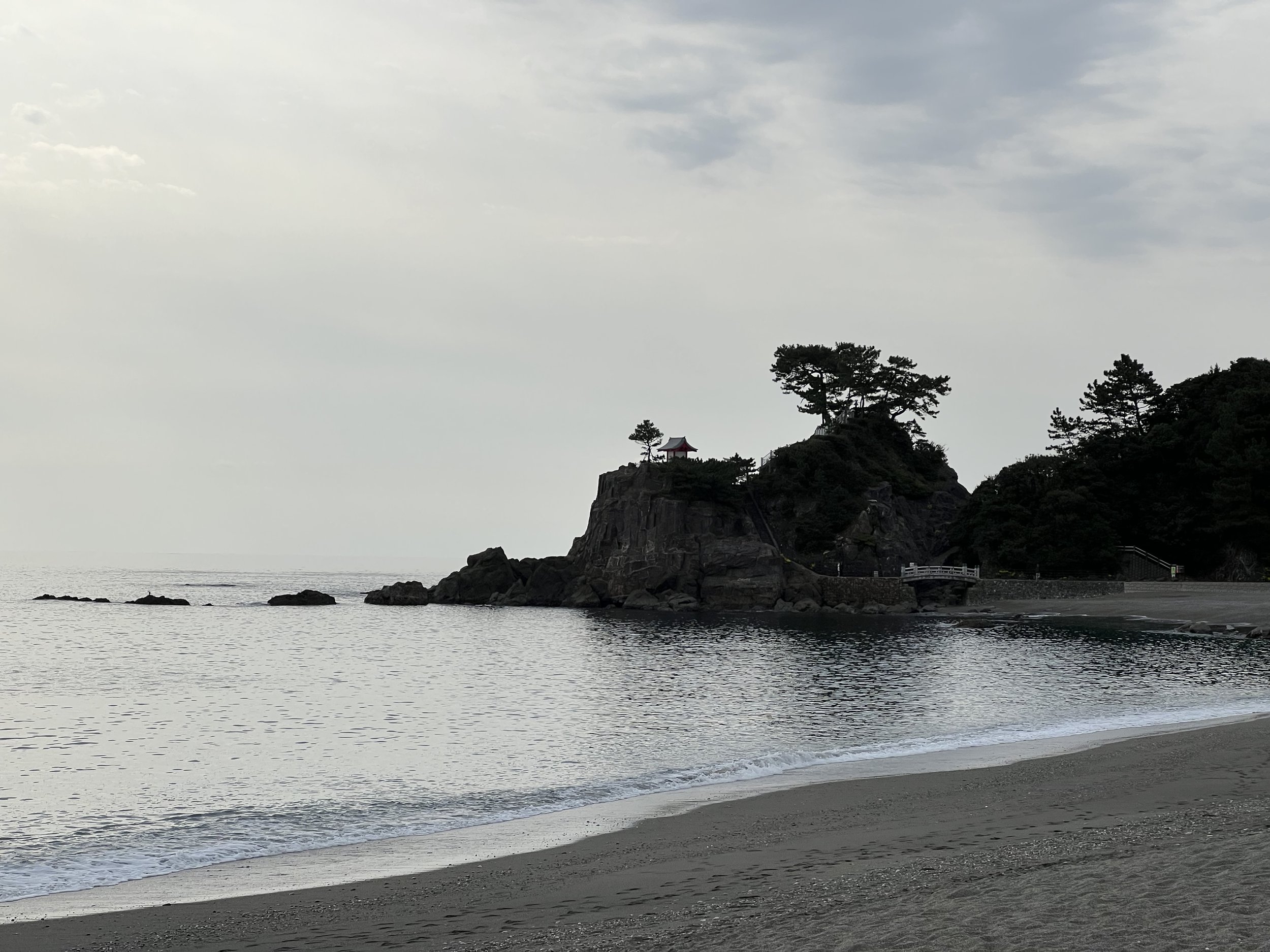
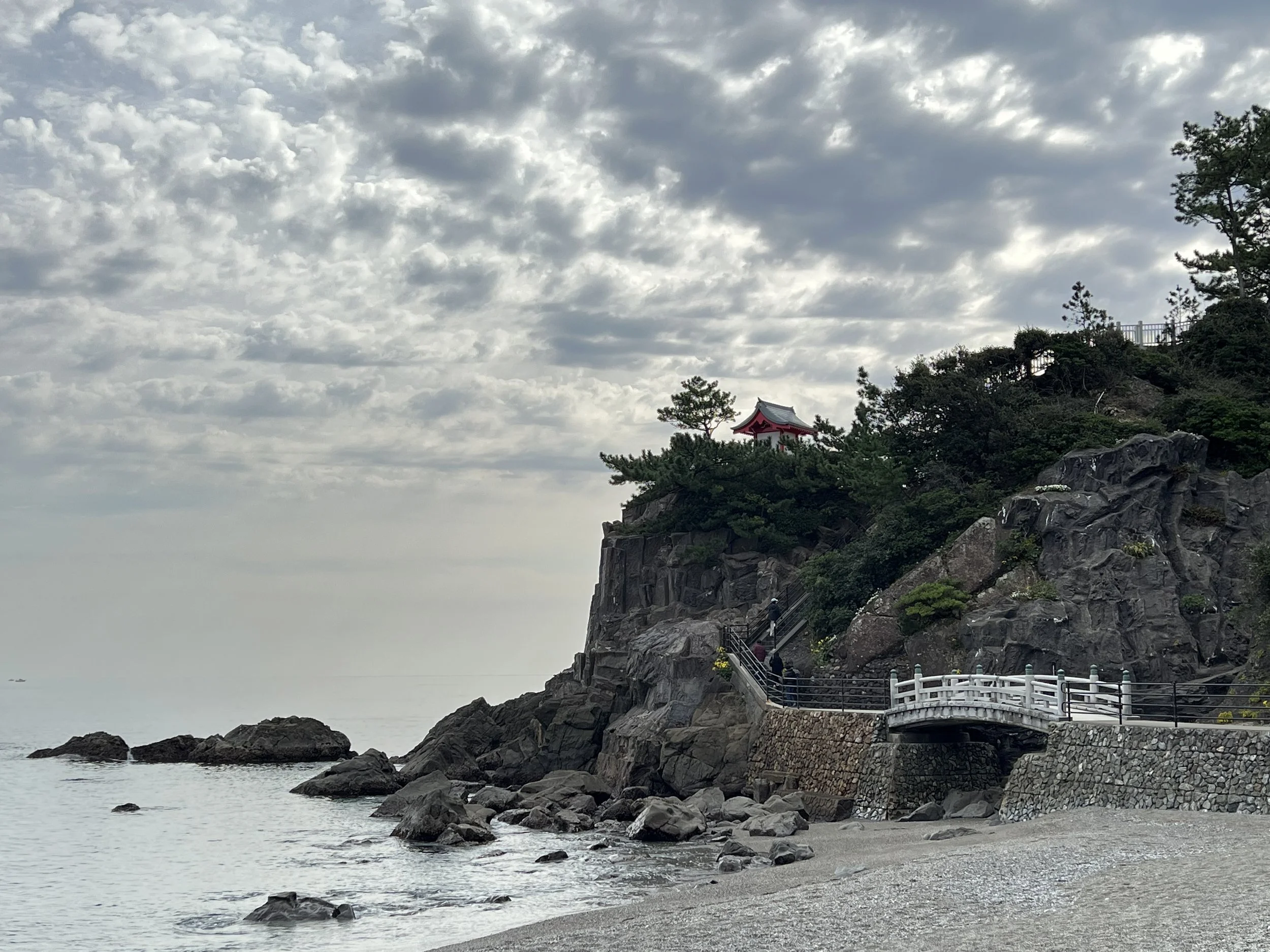
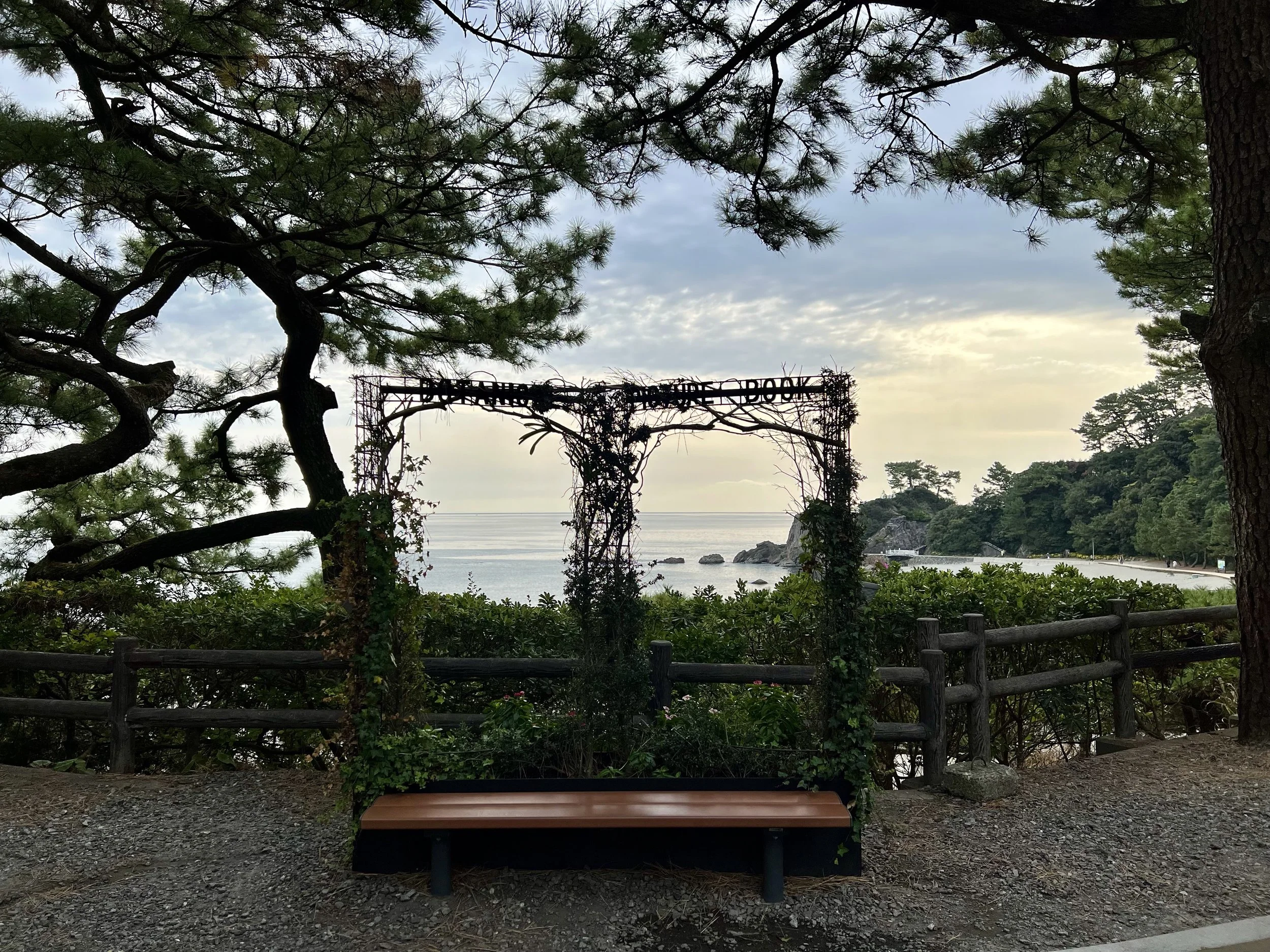
I chose to skip the shops first and headed directly toward the statue of Sakamoto Ryoma. The statue is impressively tall, and I had to tilt my head back to take it in properly. Several groups were already gathered there taking photos. After a brief stop, I continued on toward the beach itself. The sand here is fine and clean, but as swimming is prohibited, the shoreline was relatively quiet. I walked along the coast toward a small bridge known as Ryugu Bridge and then hiked a short distance up to Watatsumi Shrine.
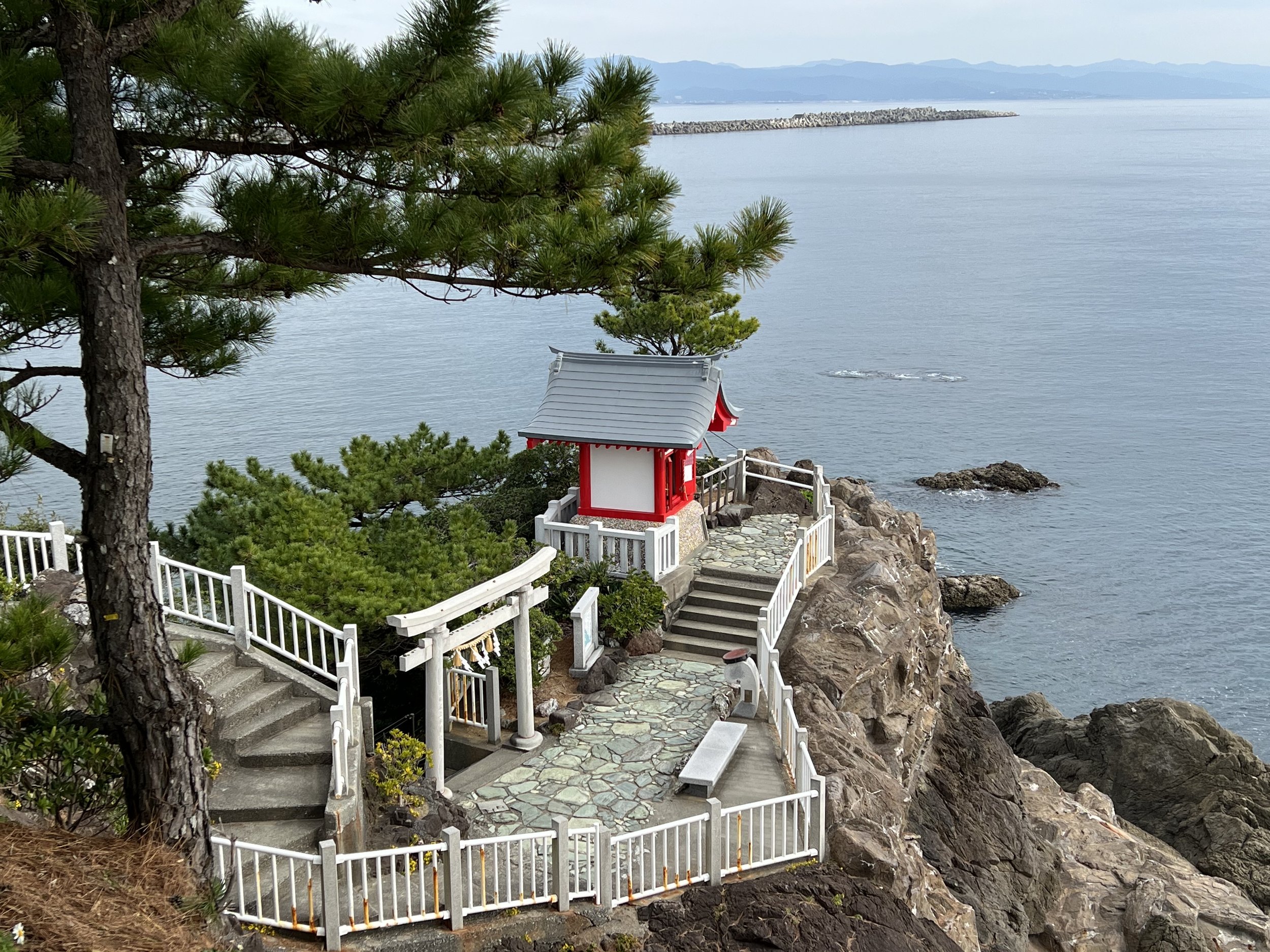
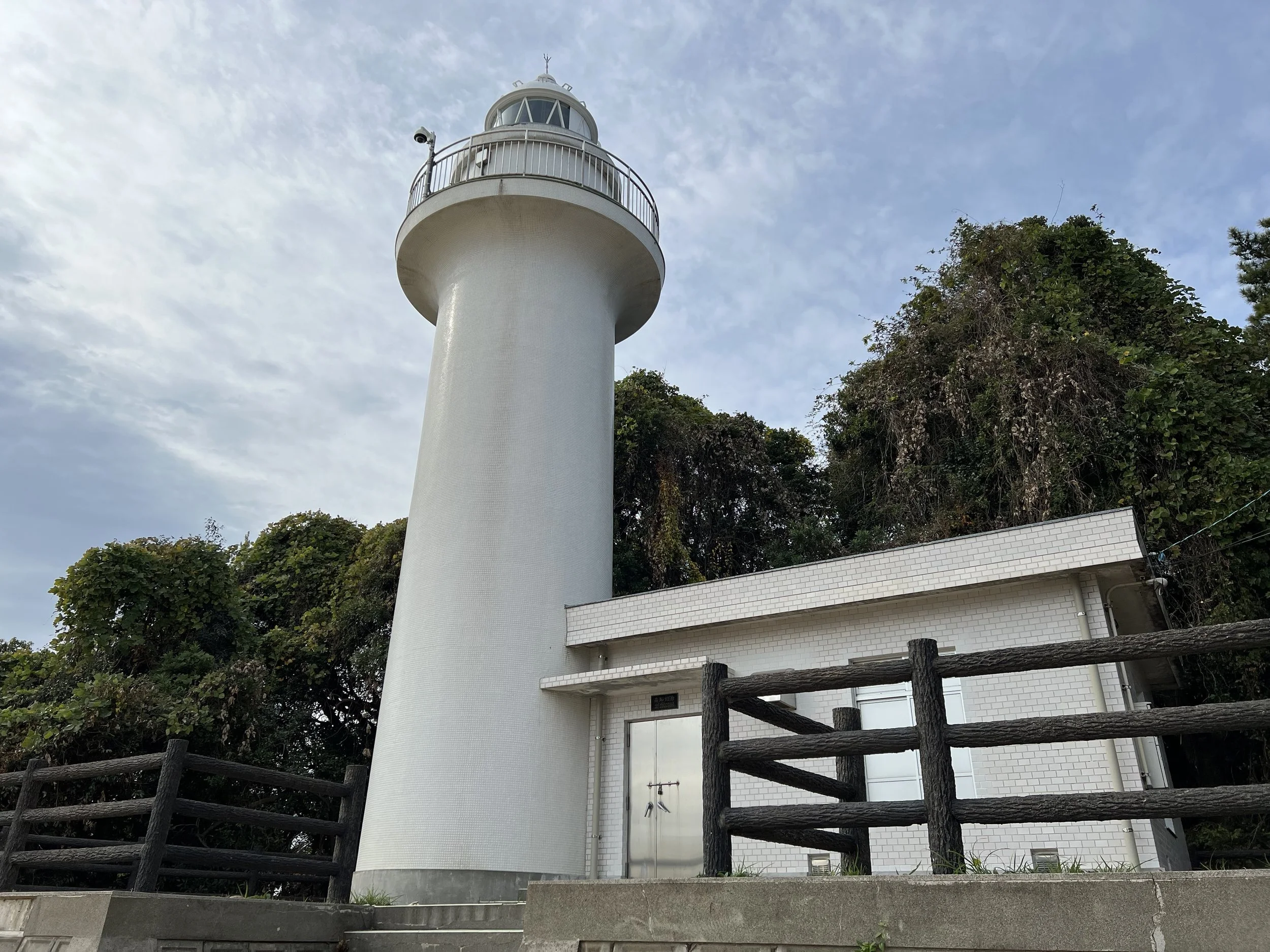
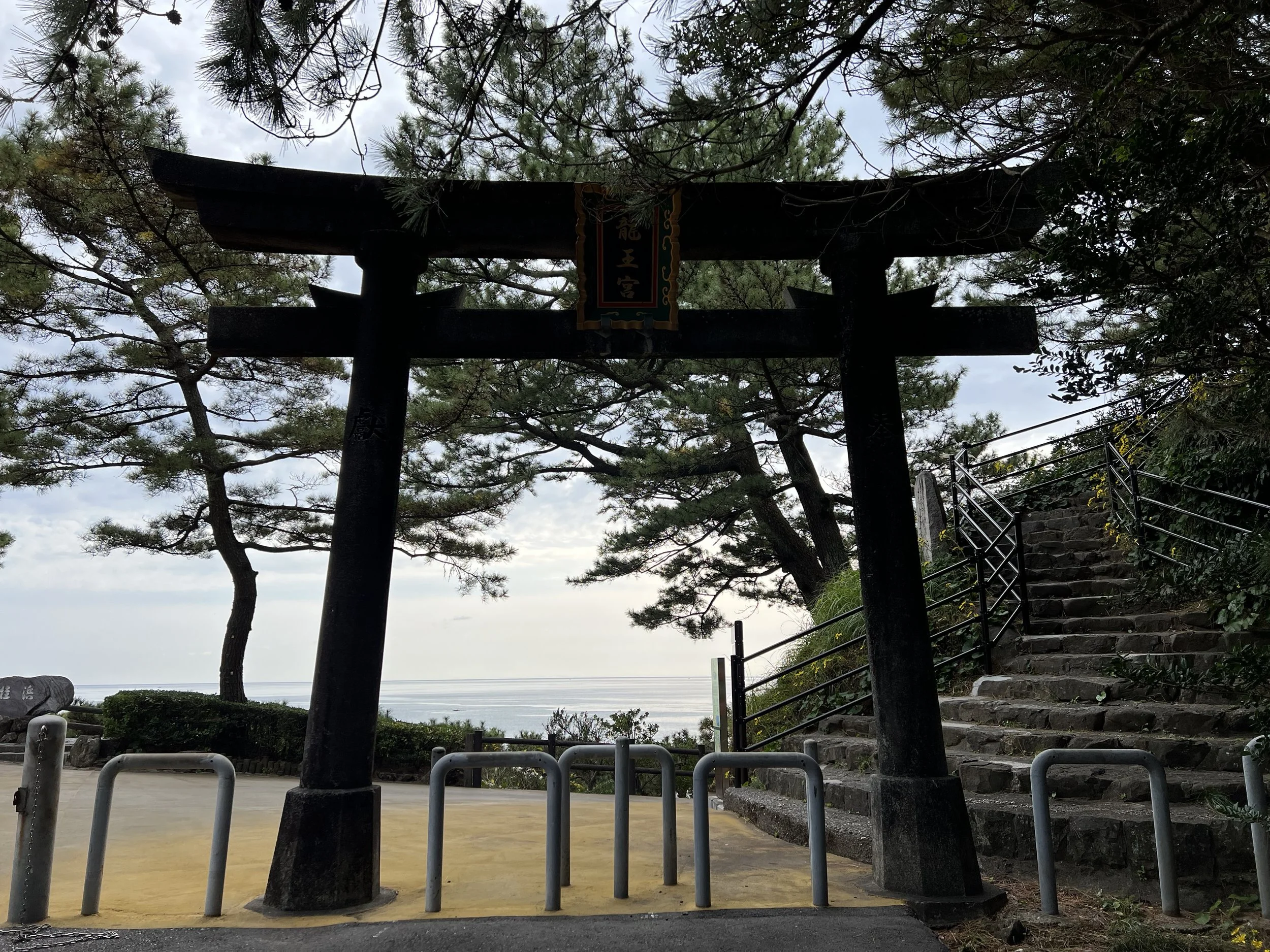
Watatsumi Shrine sits on a hill overlooking the Pacific Ocean and is dedicated to the sea deity Watatsumi, often depicted as a dragon god who governs the ocean and tides. With red shrine buildings framed by pine trees and set against the deep blue of the ocean, the contrast of colours is especially striking. From the shrine, I continued along the trail toward Kochi Lighthouse. Although the lighthouse itself is not open to visitors, it’s possible to get close enough to see it clearly.
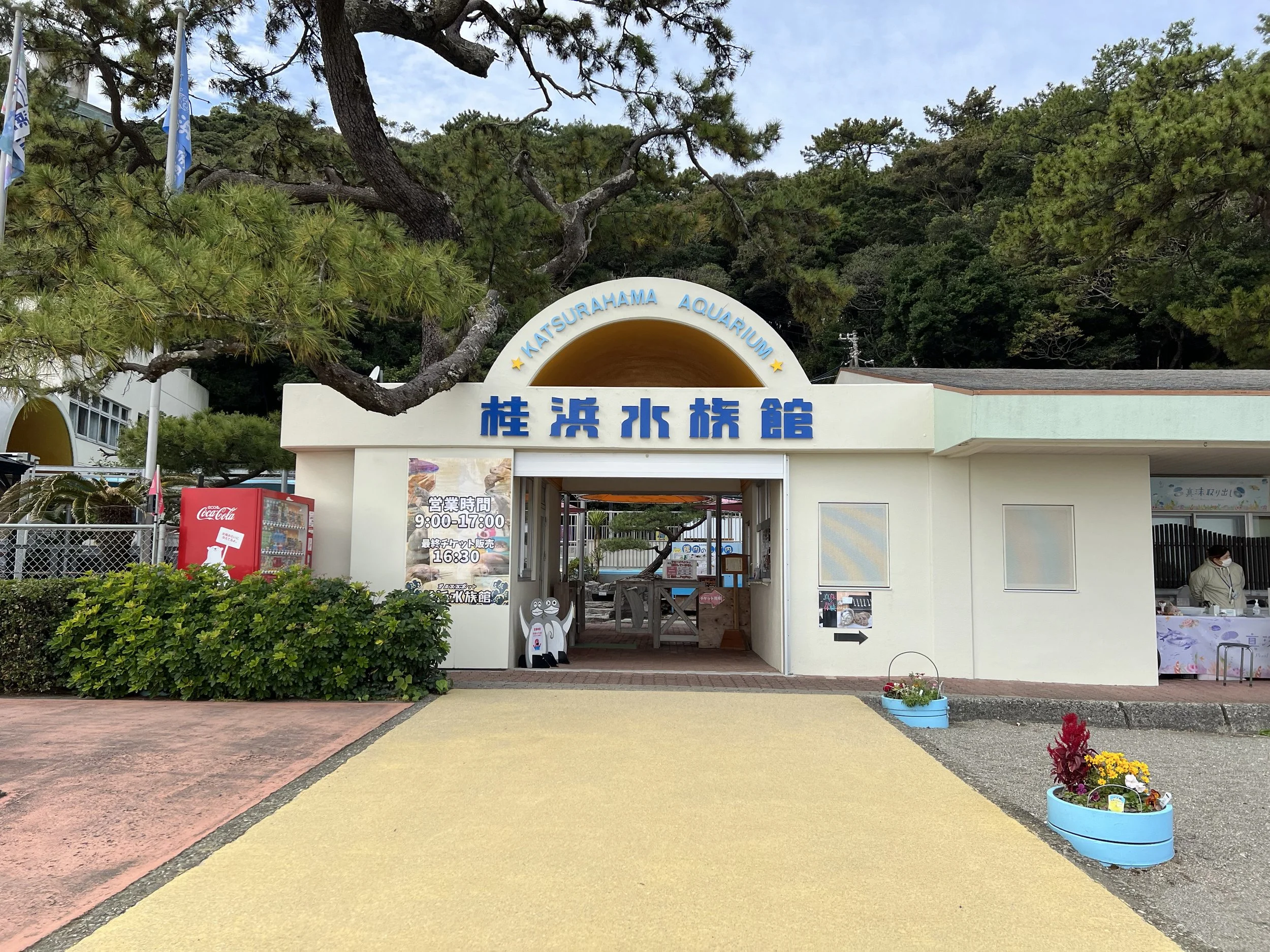
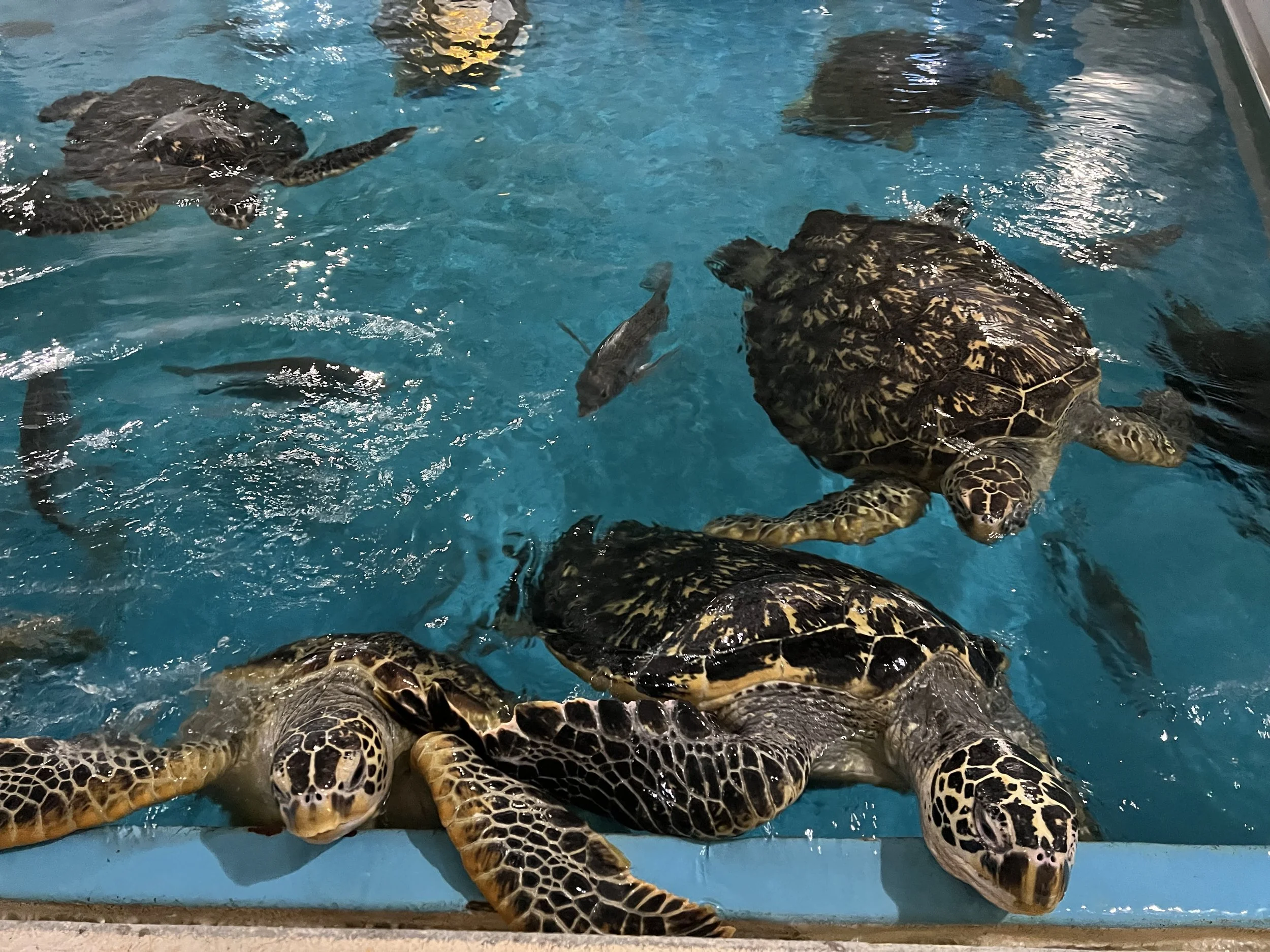
From there, I followed a different path back down toward Katsurahama Aquarium. I debated whether it was worth visiting, as the facility is quite small and the entrance fee seemed relatively high. In the end, curiosity won out. The aquarium houses several sea turtles, and it was fascinating to see them up close. As with many aquariums in Japan, visitors can purchase feed to give to the animals. I watched as the turtles swam eagerly toward anyone holding food.
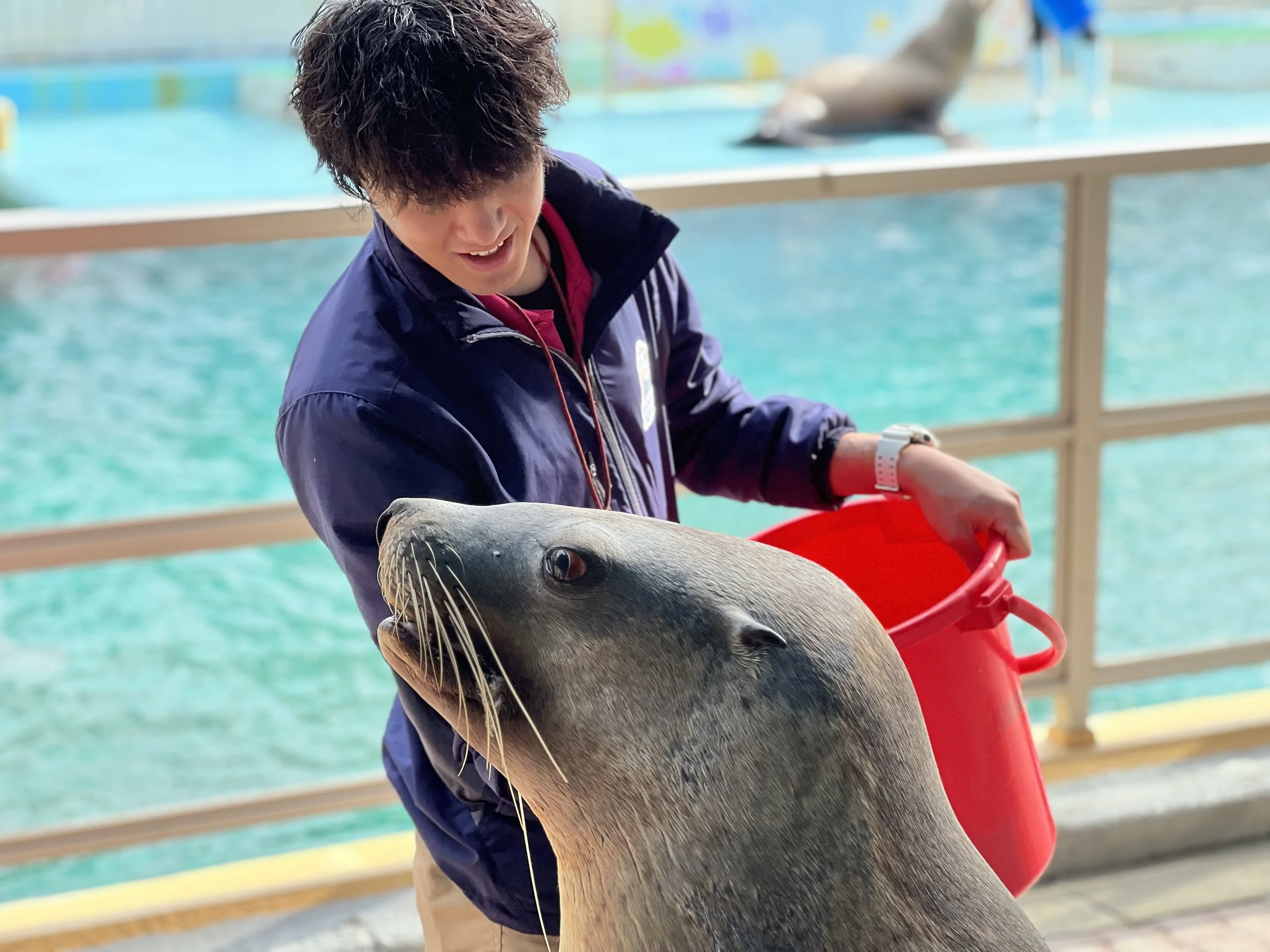
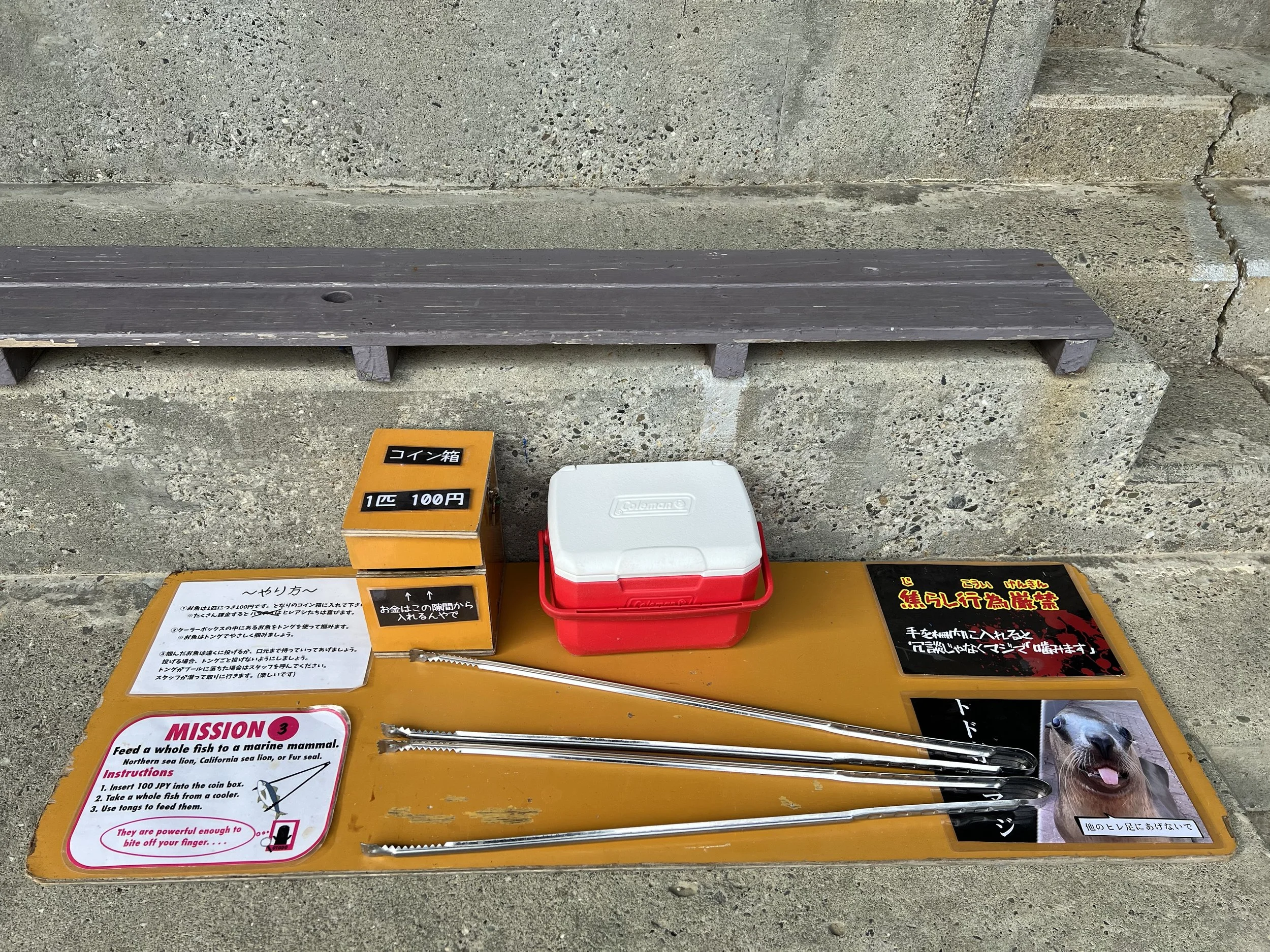
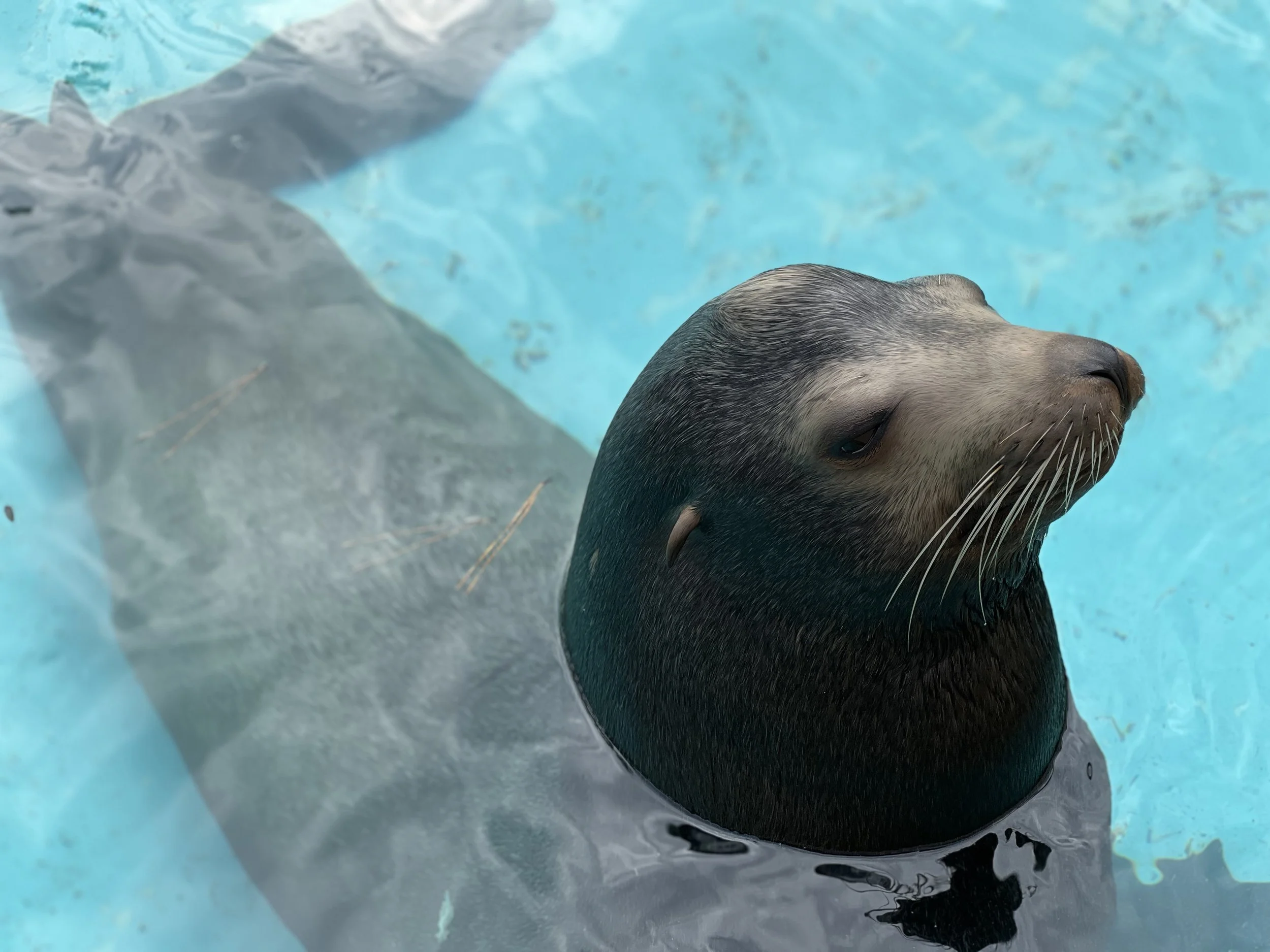
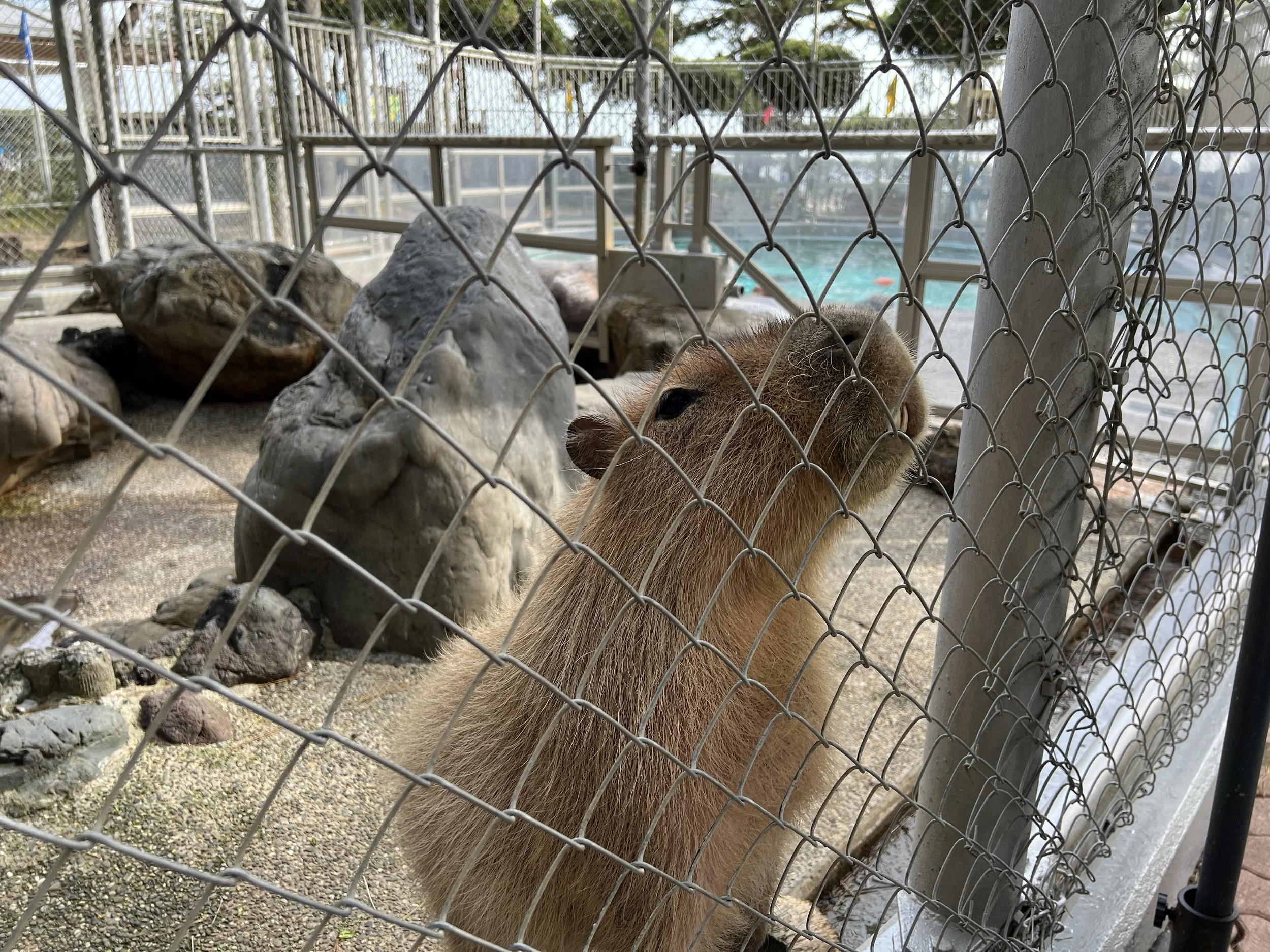
I then moved on to the seal enclosure. Despite the small audience, the seals put on an engaging show, and some visitors purchased fish to feed them afterward. Before leaving, I also stopped by the capybara enclosure, where you can get surprisingly close, albeit separated by a fence. After completing the short circuit of the aquarium, I headed back toward the shopping area.
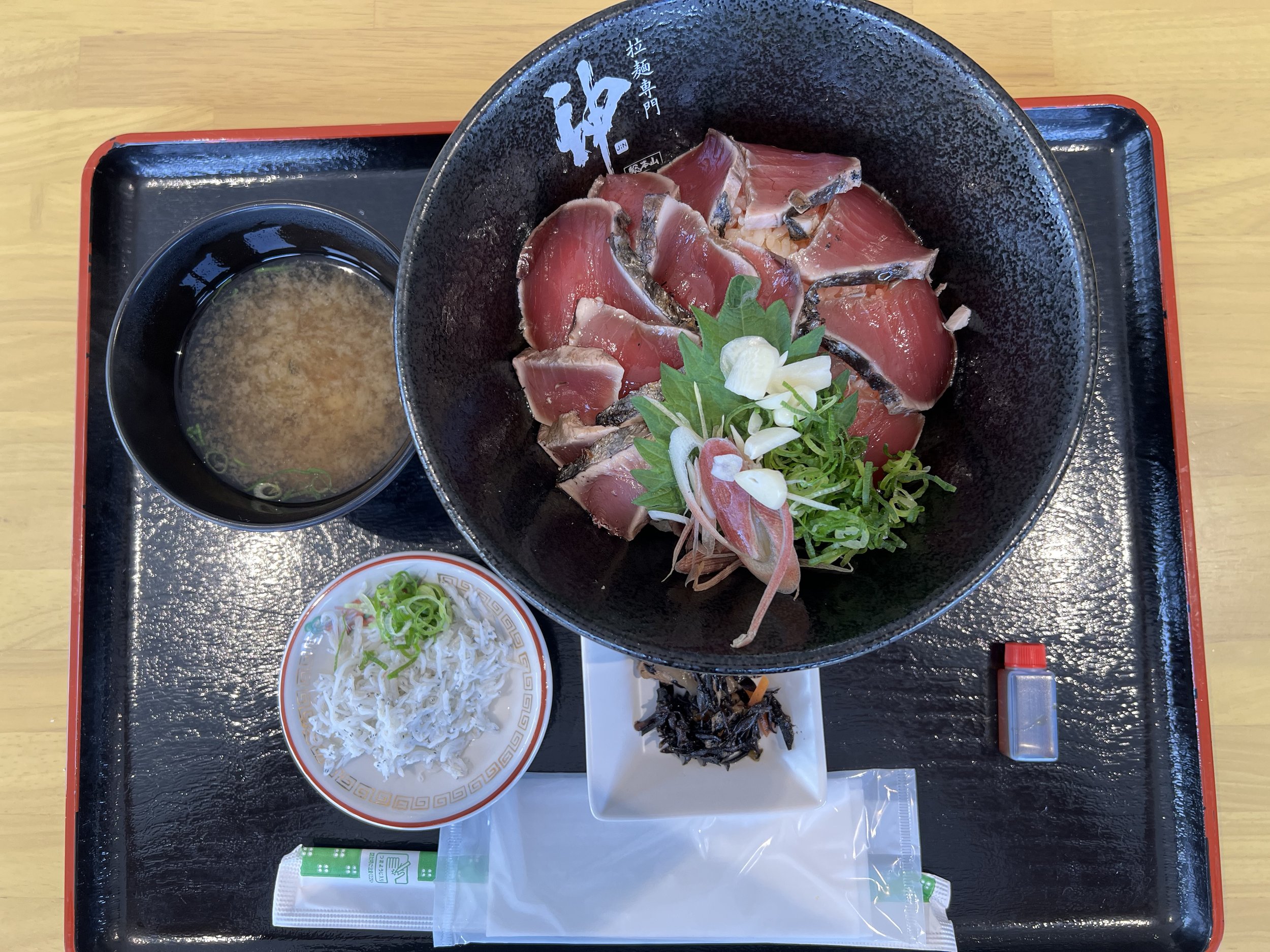
I stopped at a restaurant to try a local specialty, katsuo no tataki, or seared bonito. It was served over rice, accompanied by a small bowl of soup and a side of white fish. The dish was fresh and flavourful, and it made for a satisfying lunch. After wandering through the shops for a bit, I boarded the bus toward Sekkeiji Temple. There are several other attractions in the area, including the Sakamoto Ryoma Memorial Museum, but I didn’t have time to visit on this stop.
History & Background
Katsurahama (桂浜) has been a celebrated scenic spot for centuries, known for its dramatic coastline and cultural associations. It has appeared in traditional folk songs and poetry, particularly those referencing moon viewing, a pastime with deep roots in Japanese history. Due to its strong currents, the beach has never been a swimming destination, instead serving as a place for contemplation and appreciation of nature.
The area is closely associated with Sakamoto Ryōma, one of Kochi Prefecture’s most famous historical figures. Born in Tosa Domain, Ryma was instrumental in the political reforms that led to the Meiji Restoration. His statue at Katsurahama has become one of the region’s most recognizable landmarks, symbolizing both local pride and Japan’s transition into a modern nation.
Getting There
Katsurahama Beach is located south of central Kochi City. Access is via JR Kochi Station, which is served by the JR Dosan Line with connections from major cities including Takamatsu and Okayama. From JR Kochi Station, Kochi Kotsu buses operate services to Katsurahama, stopping at Katsurahama Bus Stop near the beach and surrounding attractions. Bus travel time varies by route and traffic conditions.
Route Overview
Distance: 2.8 km out & back (Katsurahama Bus Stop)
Total elevation gain: 90 m
Duration: 43 min (with breaks 1 hr 34 min)
Difficulty: Easy
Cost Breakdown
Bus: Godaisan Observatory bus Stop → Katsurahama Bus Stop — ¥1,300
Entrance Fee: Katsurahama Aquarium — ¥1,500
Food: ¥1,800