Iiyama Restaurant Kamakura Village 2023 - Nagano, Japan
While researching winter experiences in Nagano, I came across the Iiyama Restaurant Kamakura Village—a unique dining experience that combines traditional snow huts with local cuisine. Looking into it further, I learned that the village began as a grassroots initiative in 2001, created by local volunteers to promote tourism after a nearby ski resort closed. Using unused rice fields during the winter months, a small group of residents came up with the idea of pairing traditional kamakura—igloo-like huts—with a regional specialty, noroshi nabe hot pot. What started with just ten huts gradually grew to more than twenty as the idea gained popularity. Today, the Kamakura Village operates seasonally from late January to late February.
I knew I had to try it. After checking the official website, I found that several options were available, including lunch, afternoon break time, and dinner, along with shuttle bus services and nearby accommodation packages. However, noroshi nabe is only served during lunch and dinner. I also learned that the village is illuminated at night, which looked incredible in photos. Unfortunately, public transportation doesn’t run late enough to accommodate the evening experience, and shuttle bus spots are limited. In the end, I decided to reserve a lunch session.
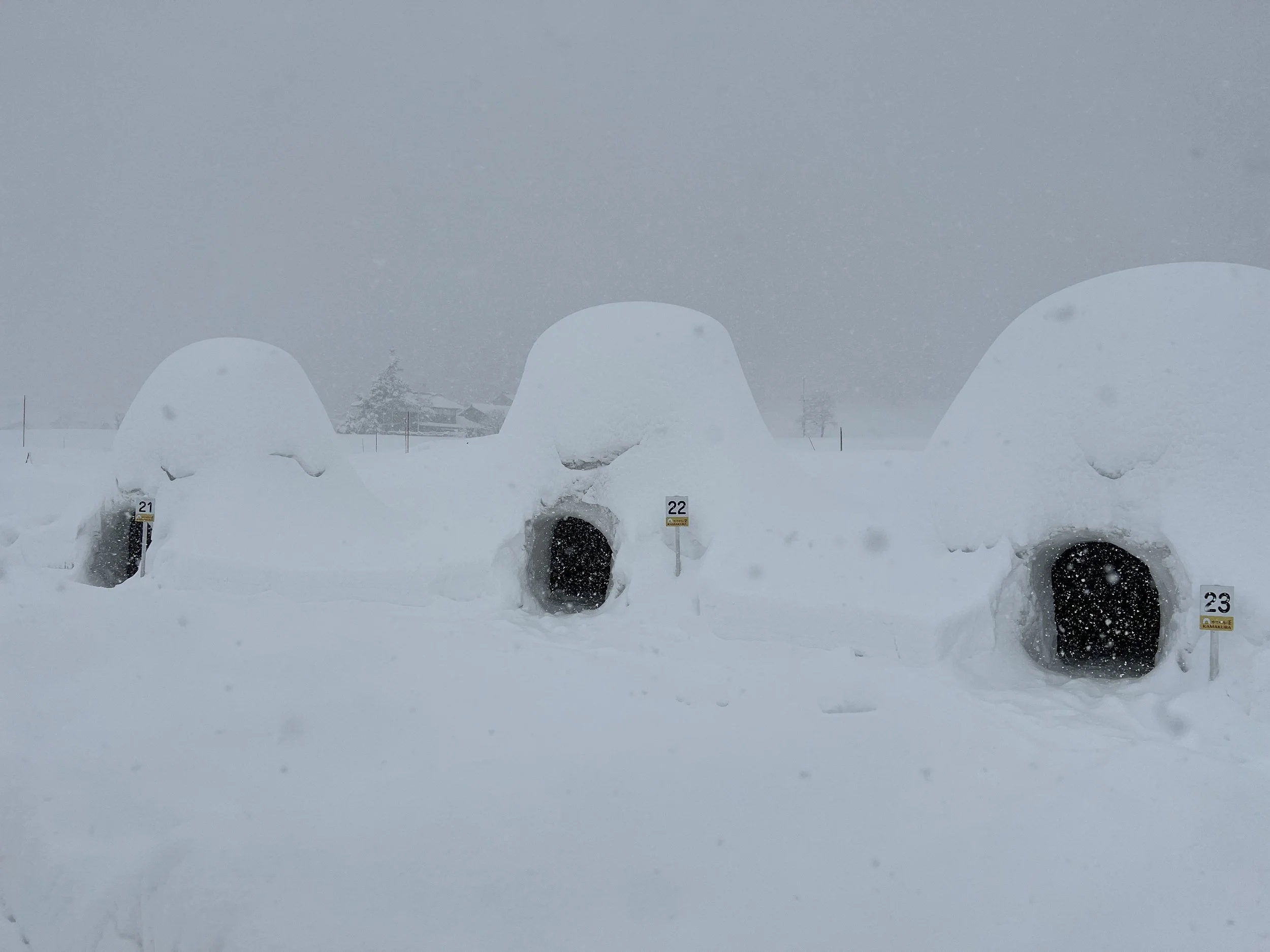
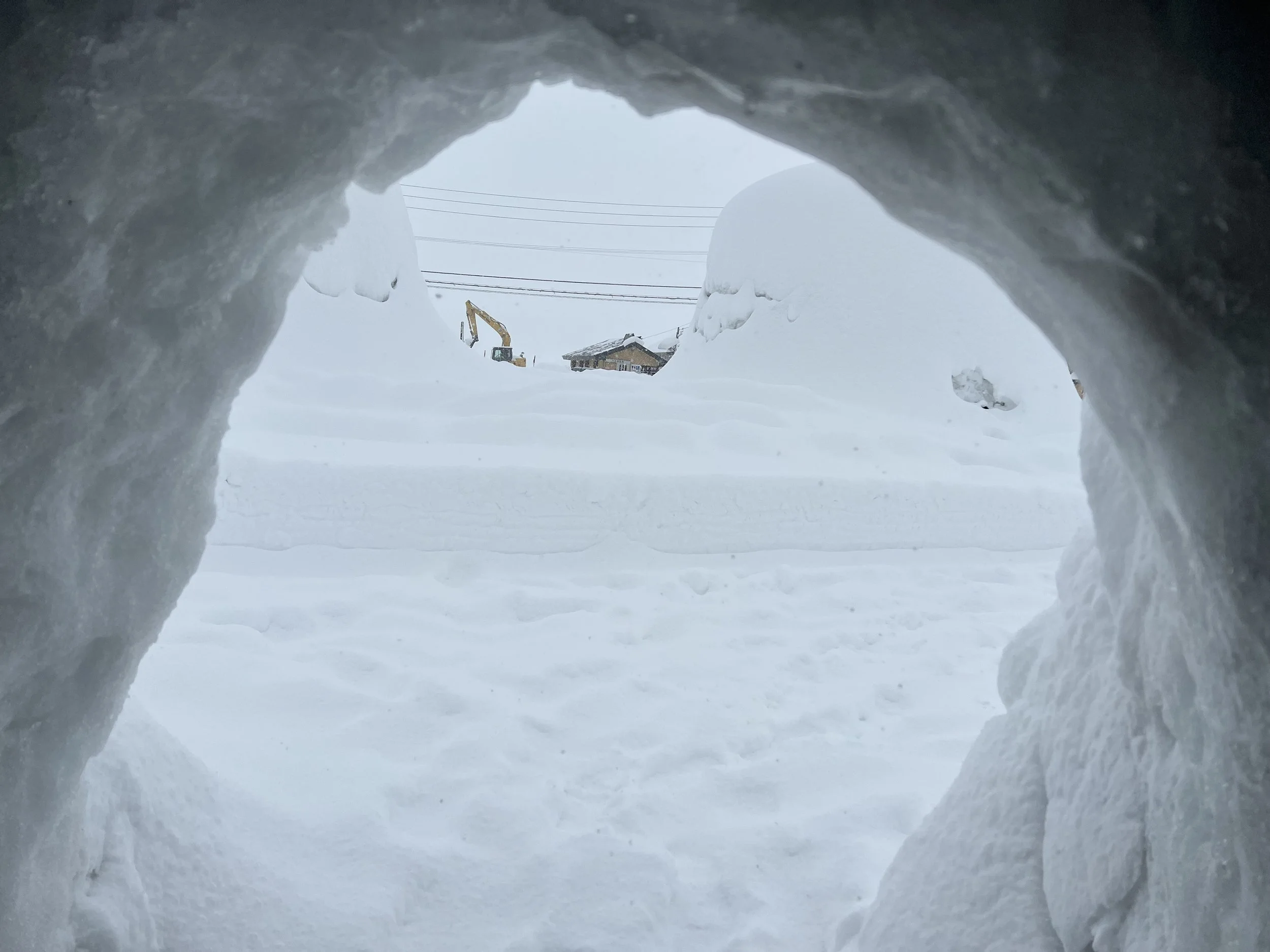
On the day of my visit, I boarded the Shinkansen from Joetsumyoko Station to Iiyama Station. Heavy snow was falling, and I briefly worried about possible delays. Those concerns quickly faded—this region is well accustomed to winter conditions. Snowplows were constantly clearing the roads, and buses were equipped with chains. Despite the weather, my bus was delayed by only five minutes, which was impressive. From Iiyama Station, it didn’t take long to reach the Kamakura Village. After checking in at the ticket booth and giving my reservation number, I was assigned a numbered kamakura. I was told my meal would arrive in about fifteen minutes, leaving me free to explore the grounds.
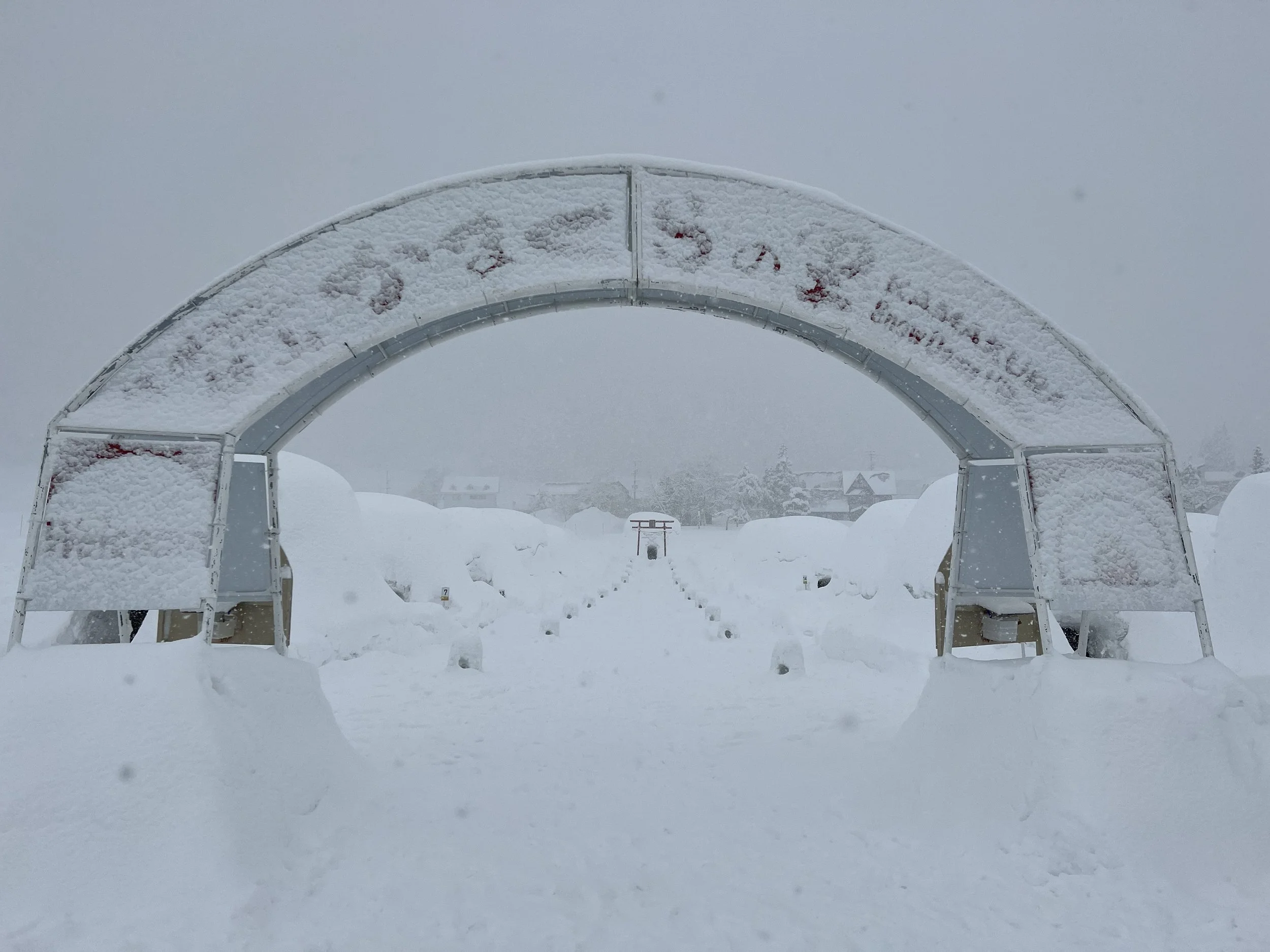
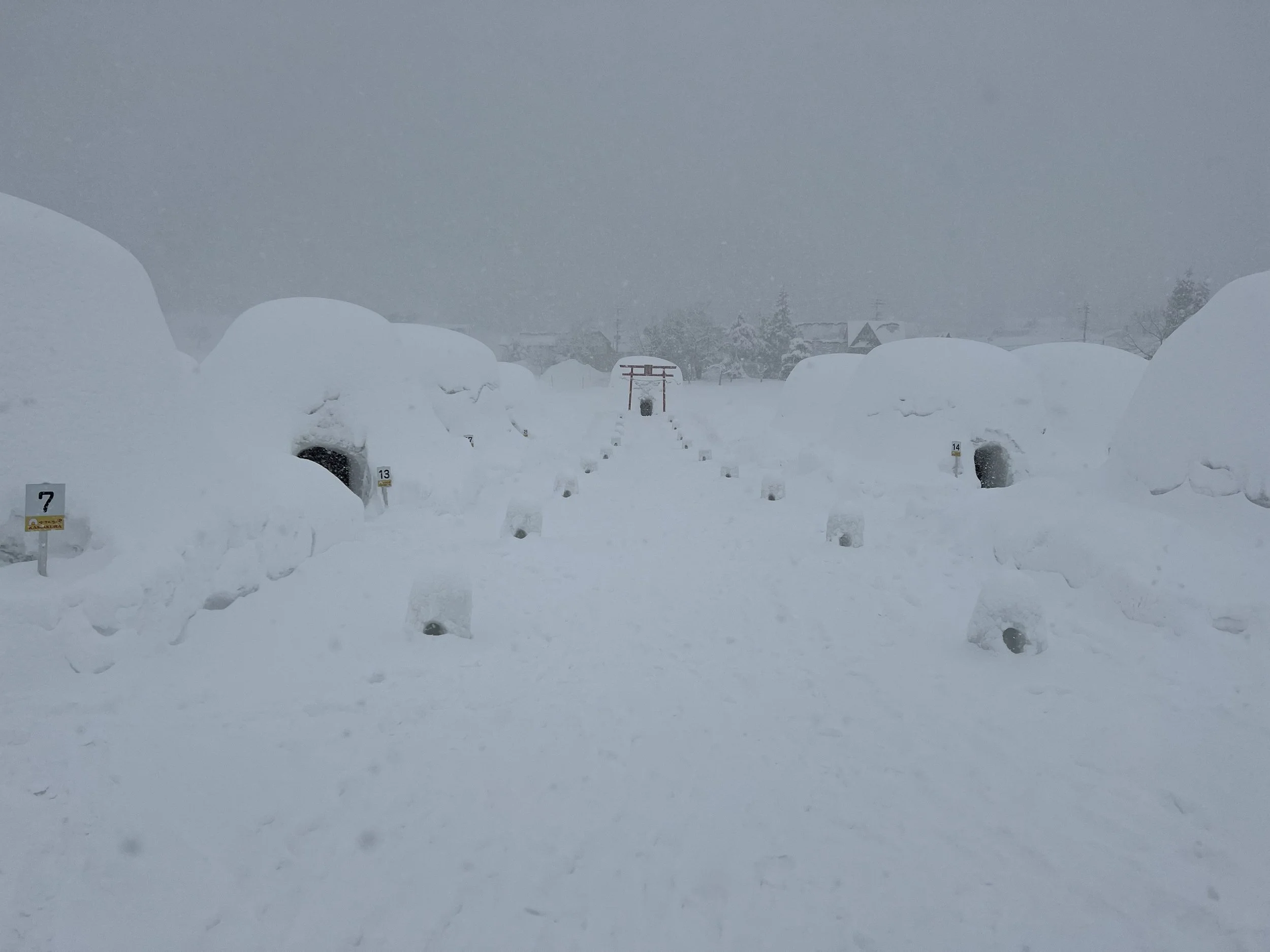
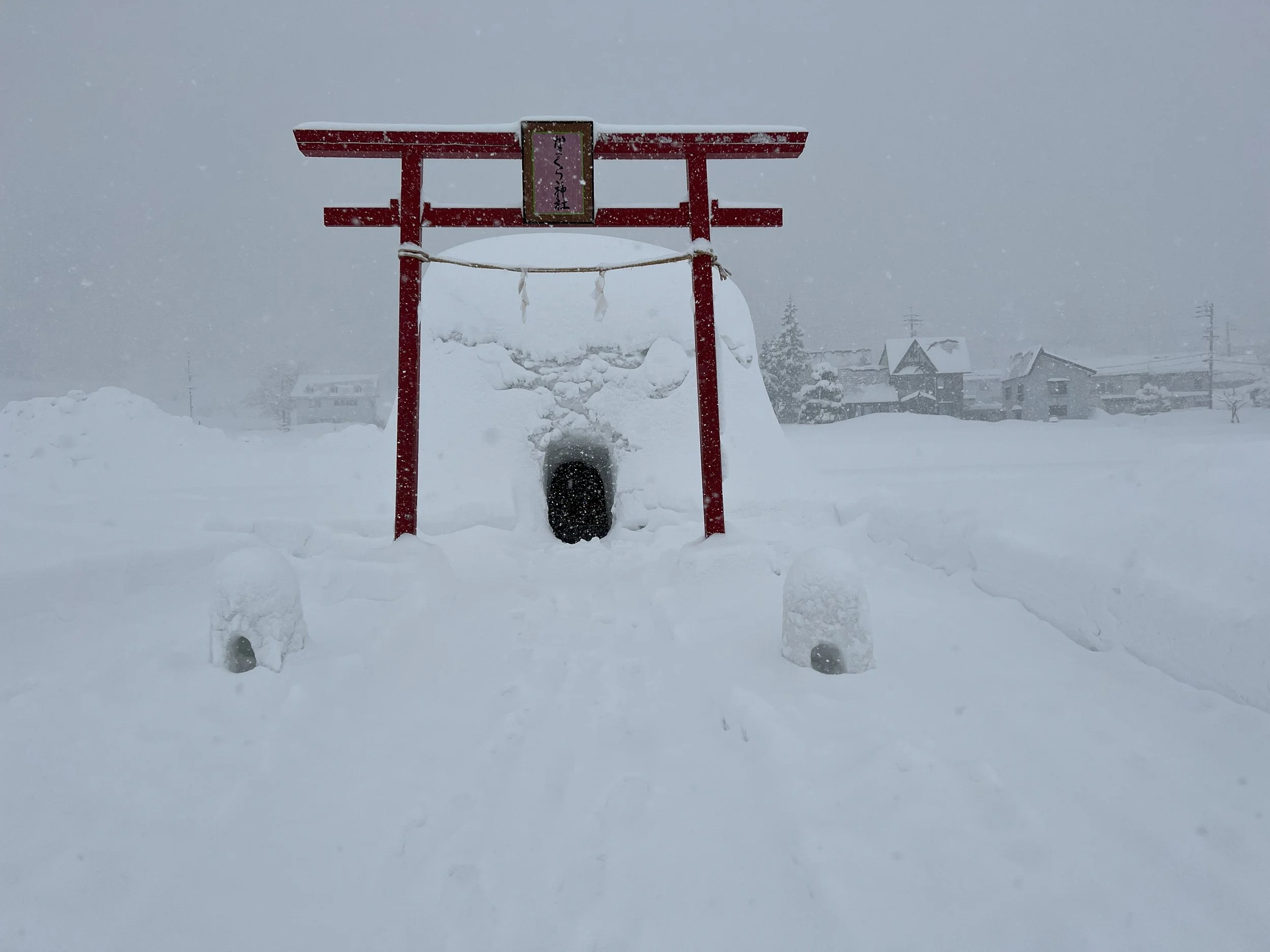
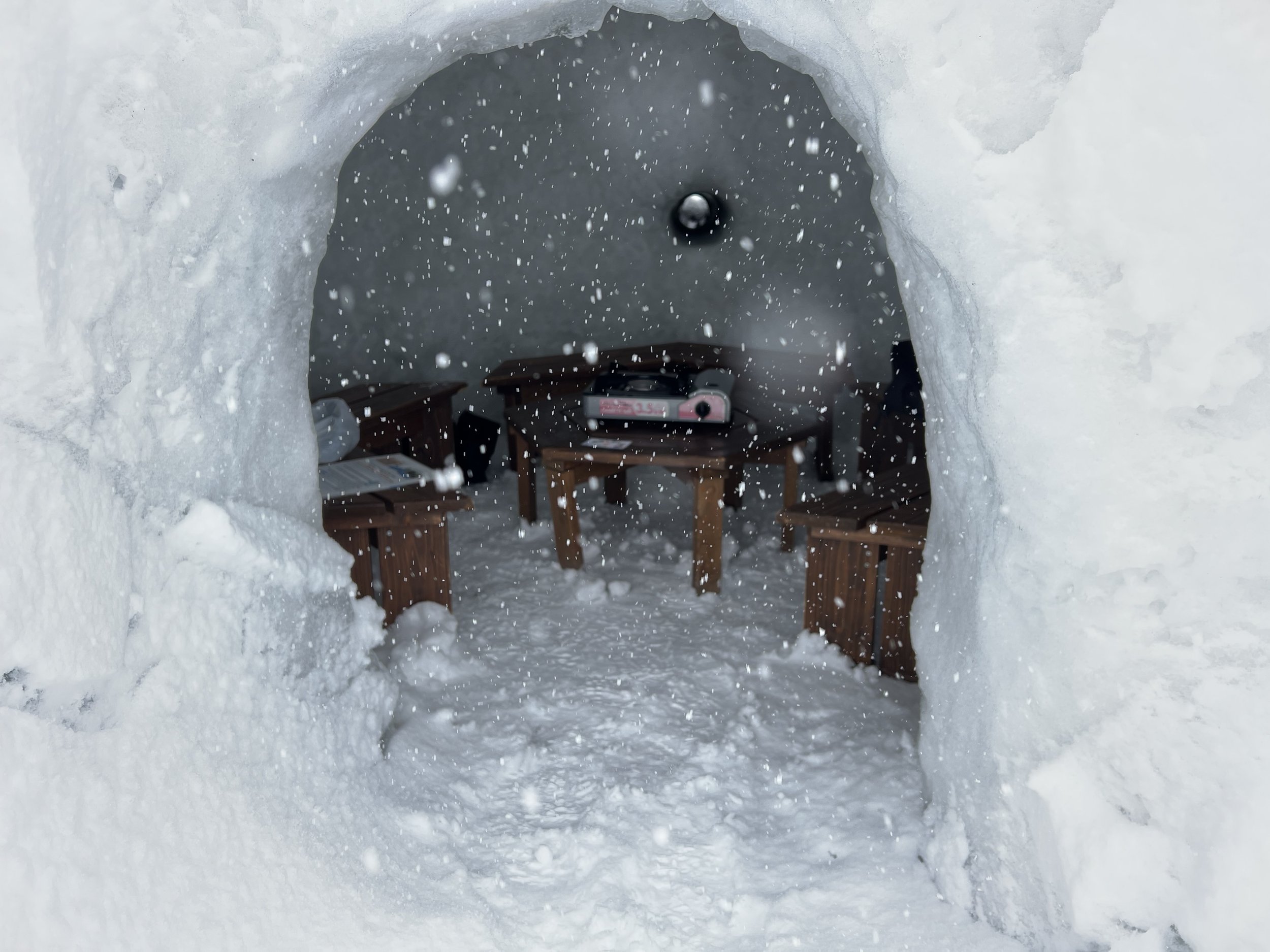
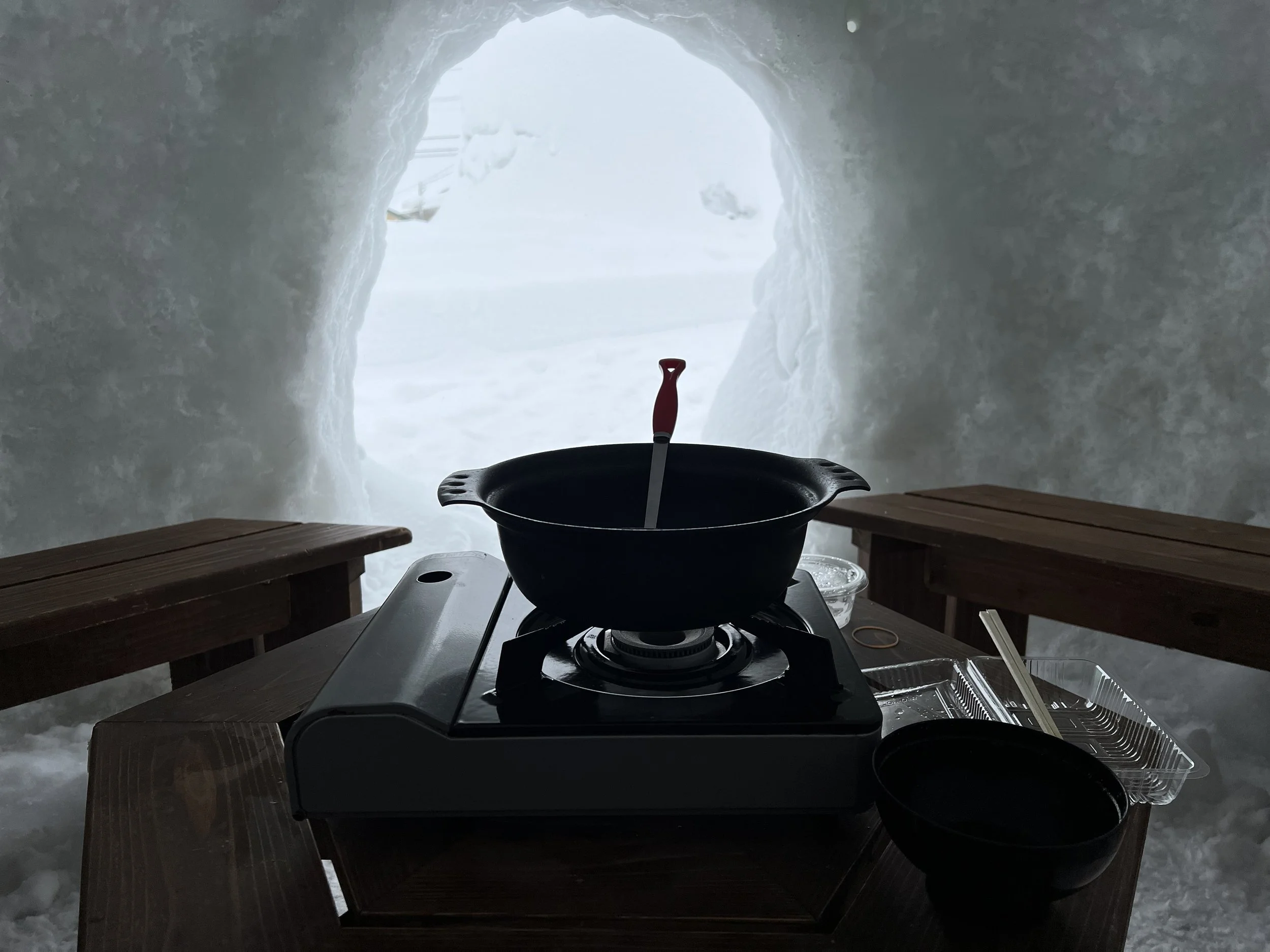
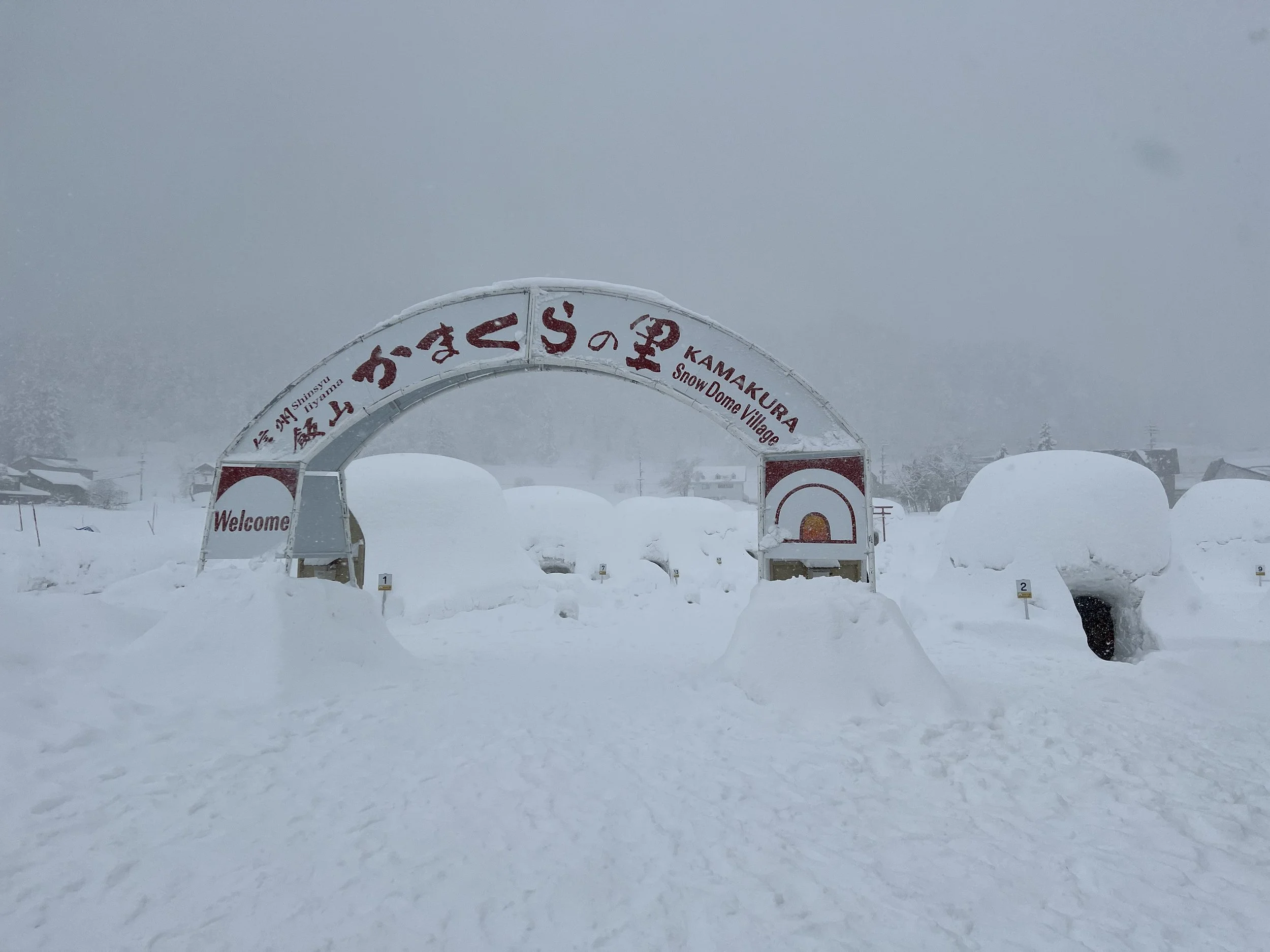
The main entrance sign was still blanketed in snow, which added to the wintry charm. I walked down the central lane with rows of kamakura on either side. At the far end stood a torii gate and a kamakura housing a small altar inside. I spent some time wandering around, taking photos and admiring the snow huts before heading to my own. The entrance required a slight crouch—intentionally designed to help retain heat. Inside, the kamakura was surprisingly cozy, with three small benches comfortably seating two to three people each and a low table in the centre equipped with a butane gas stove. Since I was dining solo, choosing a seat wasn’t an issue.
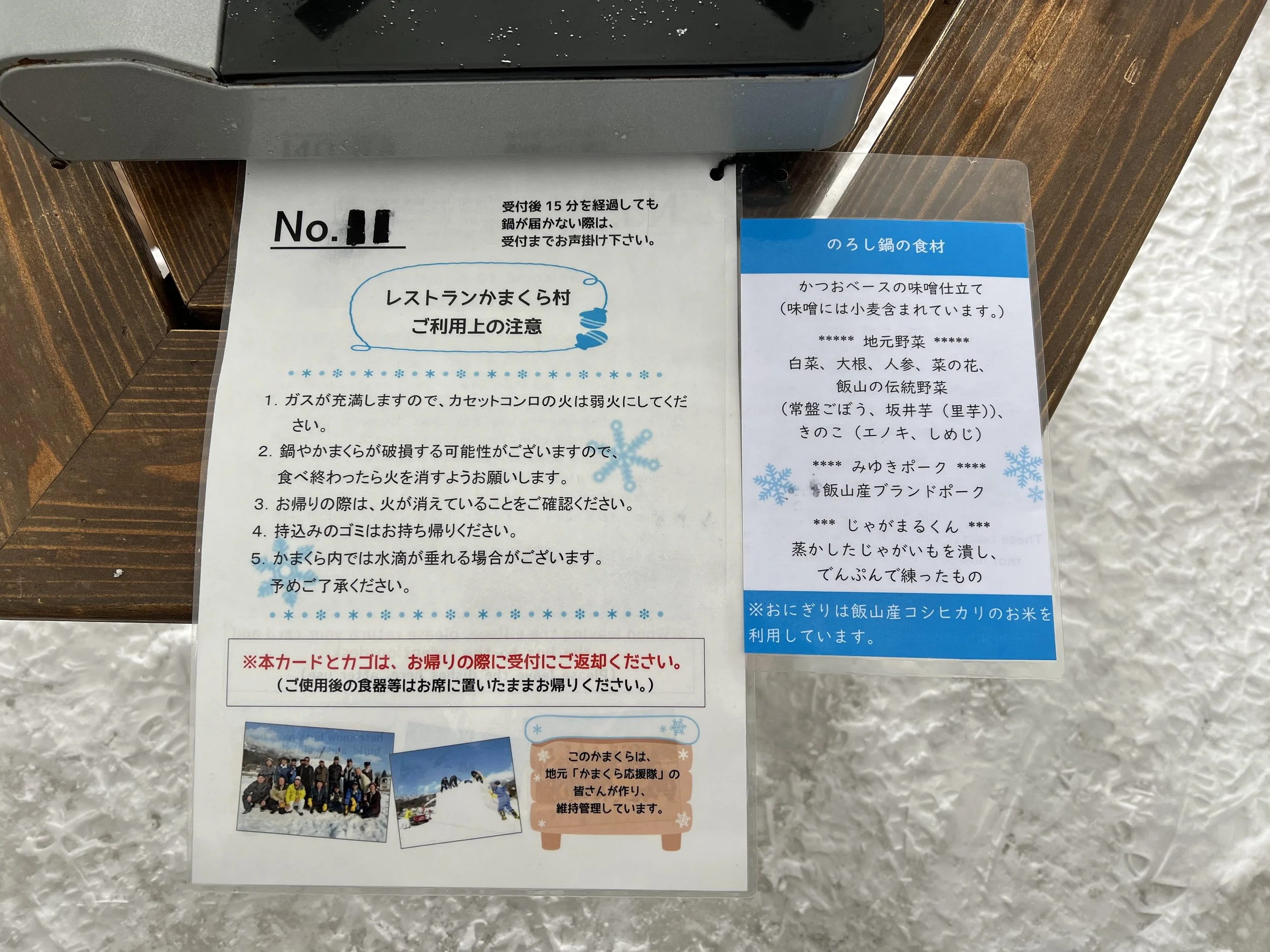
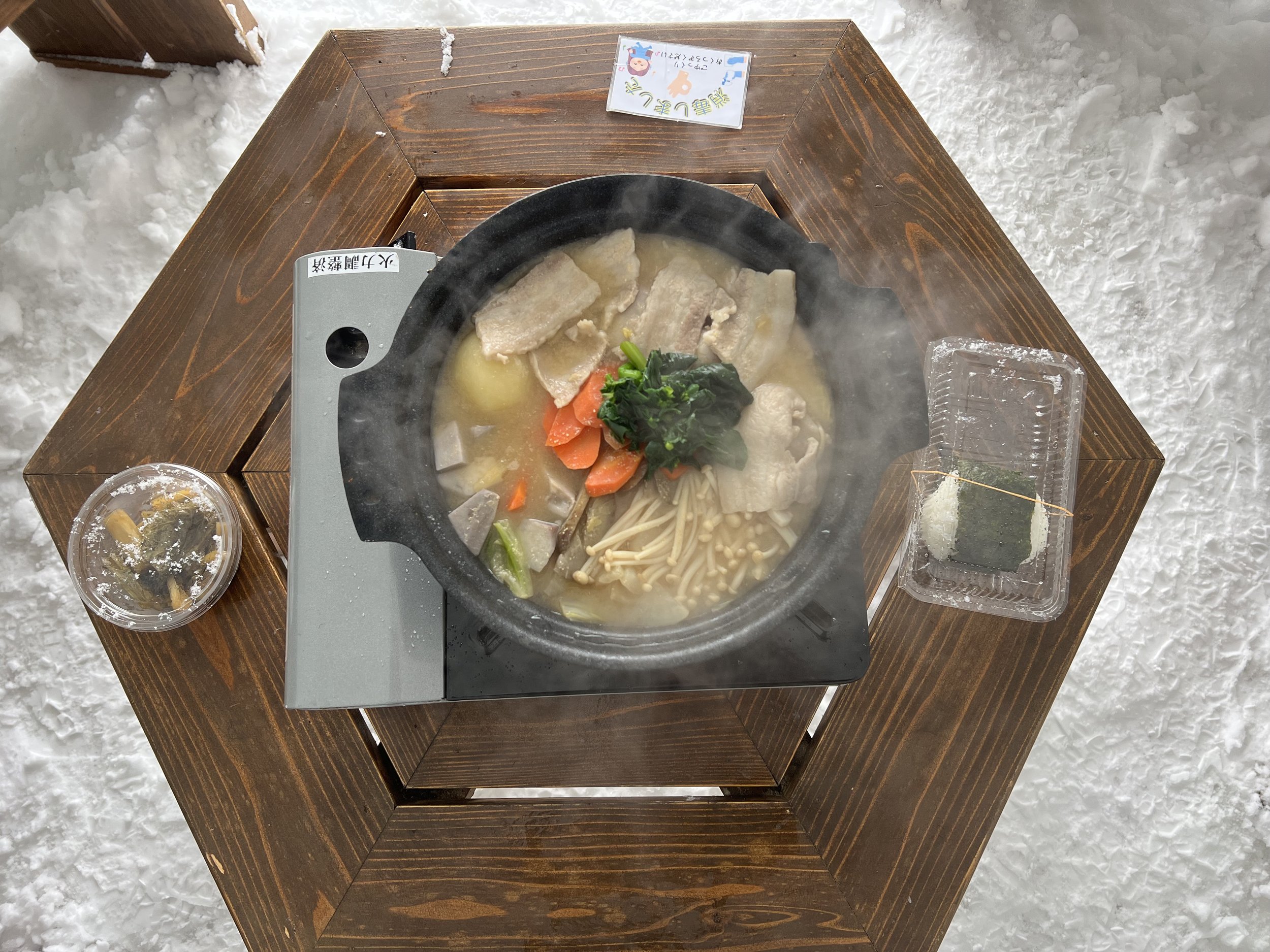
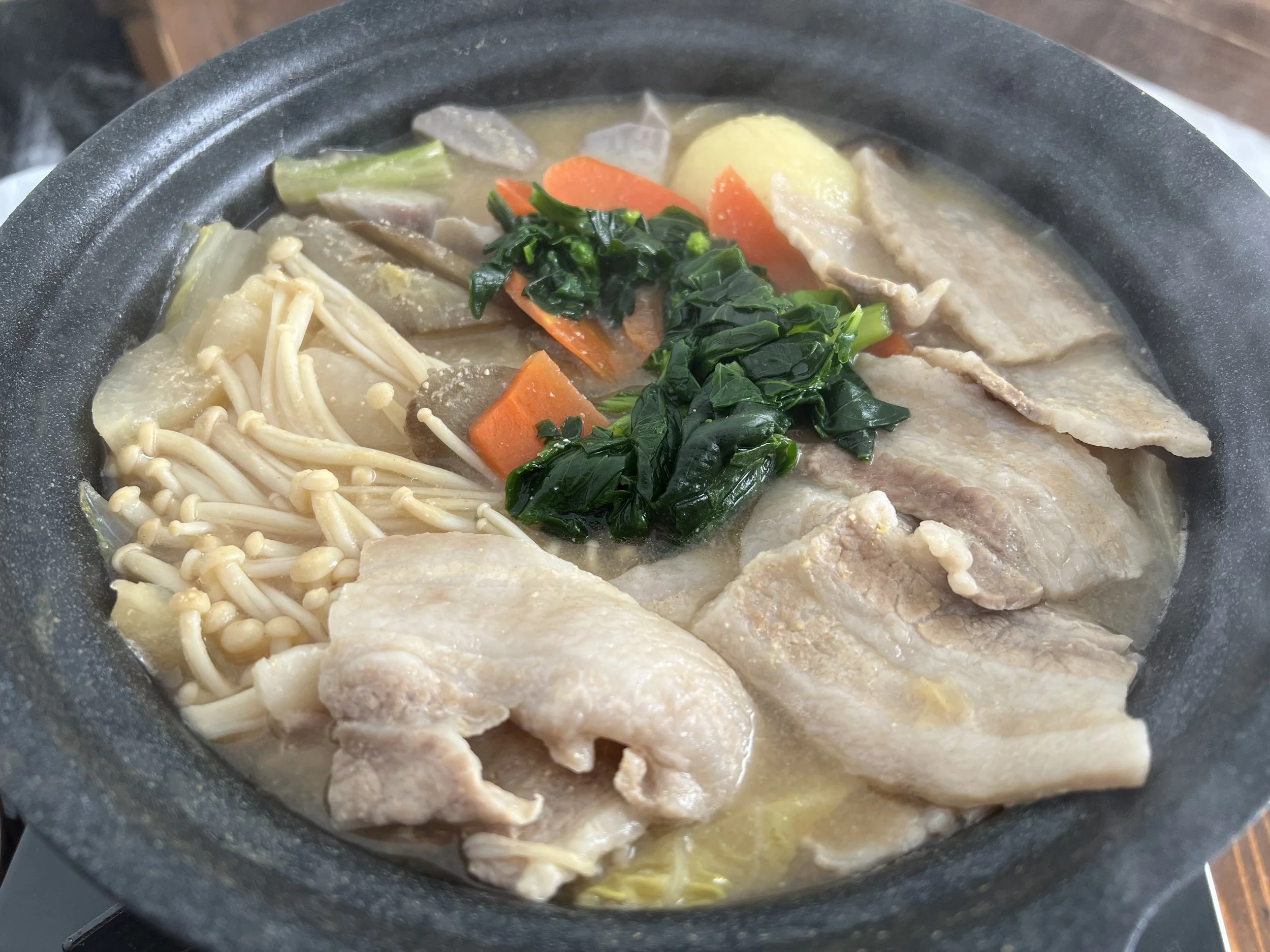
My meal arrived right on schedule: a noroshi nabe hot pot and a rice ball. The nabe is typically intended for two people, but I was determined to give it my best effort. Noroshi nabe is a local specialty dating back to the Sengoku period (1467–1603), made with a Nagano miso base, locally grown vegetables, Iiyama’s Miyuki pork, and an assortment of mushrooms. Served piping hot, it was perfect for the snowy weather. Sitting inside the kamakura as snow continued to fall outside, enjoying a meal made entirely of regional ingredients, felt incredibly special—an experience I know I’ll remember for a long time. I’ll admit, I went a bit overboard and managed to finish the entire pot on my own.
The snowfall showed no signs of slowing, and after checking the bus schedule, I had about thirty minutes before departure. I took one last walk around the village to snap a few more photos before heading to the bus stop. I was relieved to find it covered, sparing me from standing in the snow while waiting. Despite eating far more than I should have, I left feeling thoroughly satisfied—and certain that I’d happily return to experience this again.
History & Background
Iiyama Restaurant Kamakura Village (レストランかまくら村) was established in 2001 as a community-led tourism initiative following the closure of a nearby ski resort. Local volunteers sought a way to bring visitors to the area during winter by combining traditional snow huts with regional cuisine. By repurposing rice fields that lie dormant during the colder months, they created a seasonal attraction rooted in local culture and ingenuity.
The experience centres around noroshi nabe, a historic hot pot dish believed to have originated during the Sengoku period, when signal fires (noroshi) were used for communication. Over time, the dish became a local staple in Iiyama. Today, the Kamakura Village stands as a successful example of rural revitalization, blending tradition, food culture, and winter landscapes into a one-of-a-kind experience.
Getting There
Iiyama City is served by the Hokuriku Shinkansen, which connects it directly with major cities including Tokyo. Iiyama Station functions as the primary transportation hub for the region. From the station, visitors can reach the Shinanodaira area—where Kamakura Village is located—by local bus or taxi. During winter, the city operates regular snow-clearing services on major roads, and public transportation is equipped for snowy conditions, allowing buses and rail services to continue operating throughout the season despite heavy snowfall.
Route Overview
Duration: 2 hr 30 min
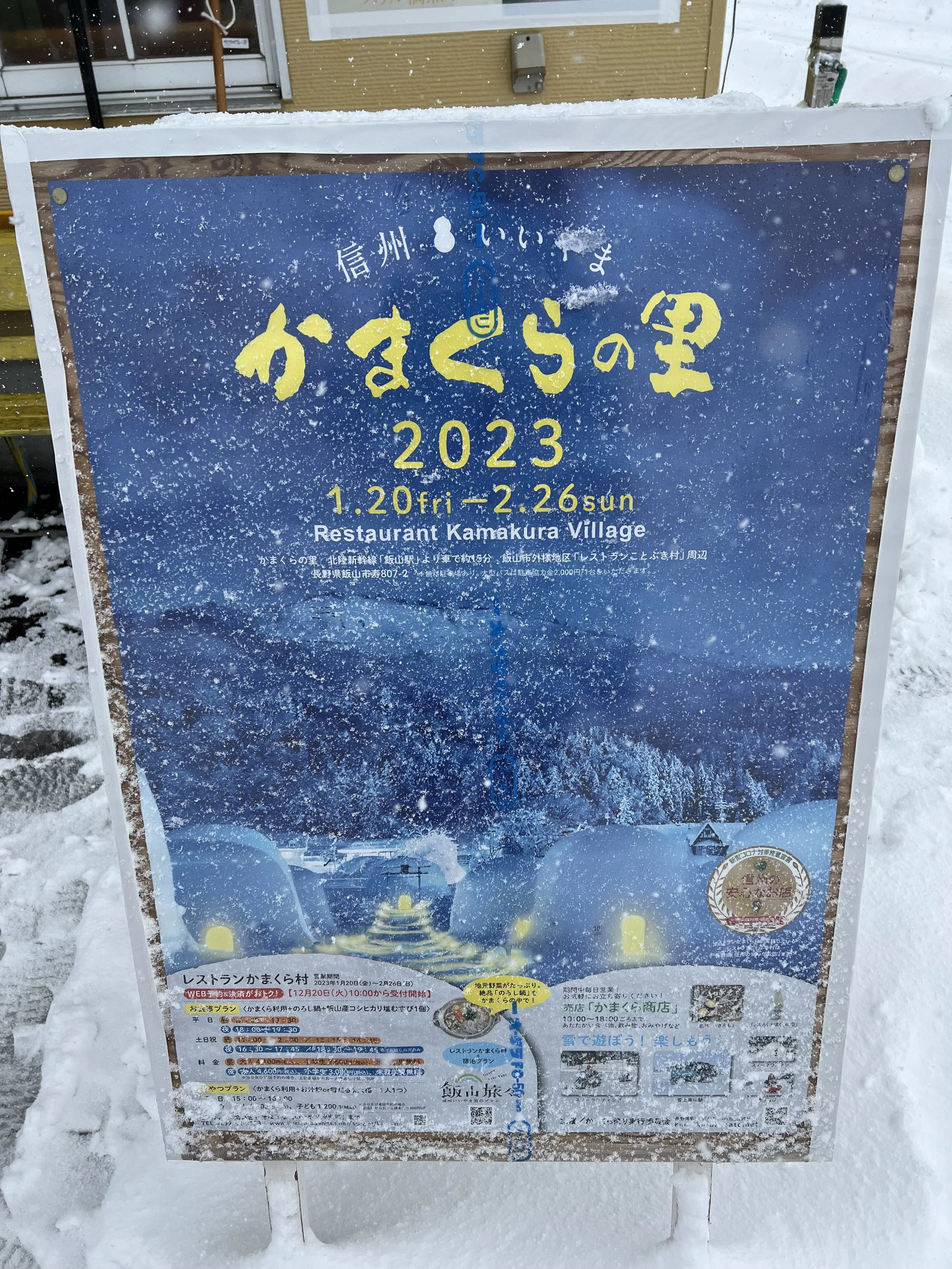
Booking Info: Reservation is a must if you want to enjoy the noroshi nabe, reservation online is open a month prior to the first open date for the kamakura village or with phone reservation a few days before the opening date. I’d recommend online reservation as it’s straightforward and you can book at it earlier. If you want to just visit the village, there is a small admission fee. You can read more about the plans, reservation details, and general info on the official website.
Cost Breakdown
Train: Joetsumyoko Station → Iiyama Station — ¥2,710
Bus: Iiyama Station → Shinanodaira bus stop — ¥300
Food: ¥6,700